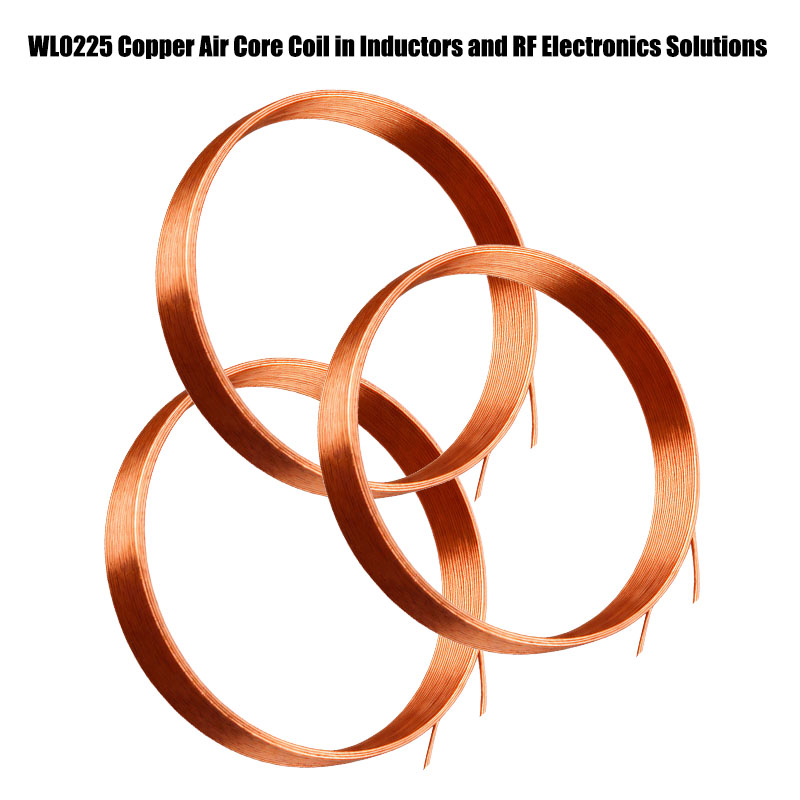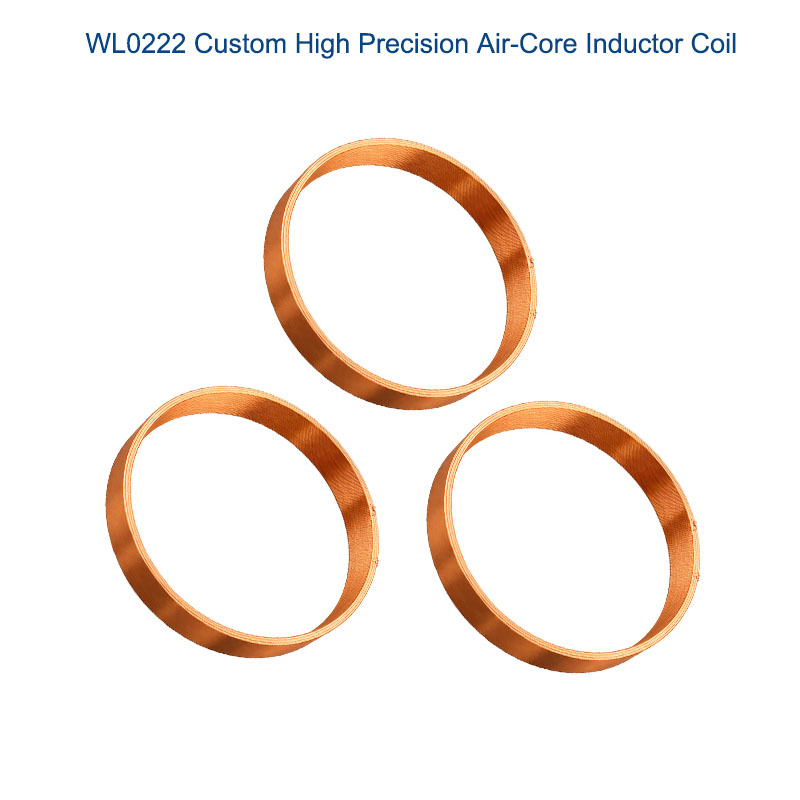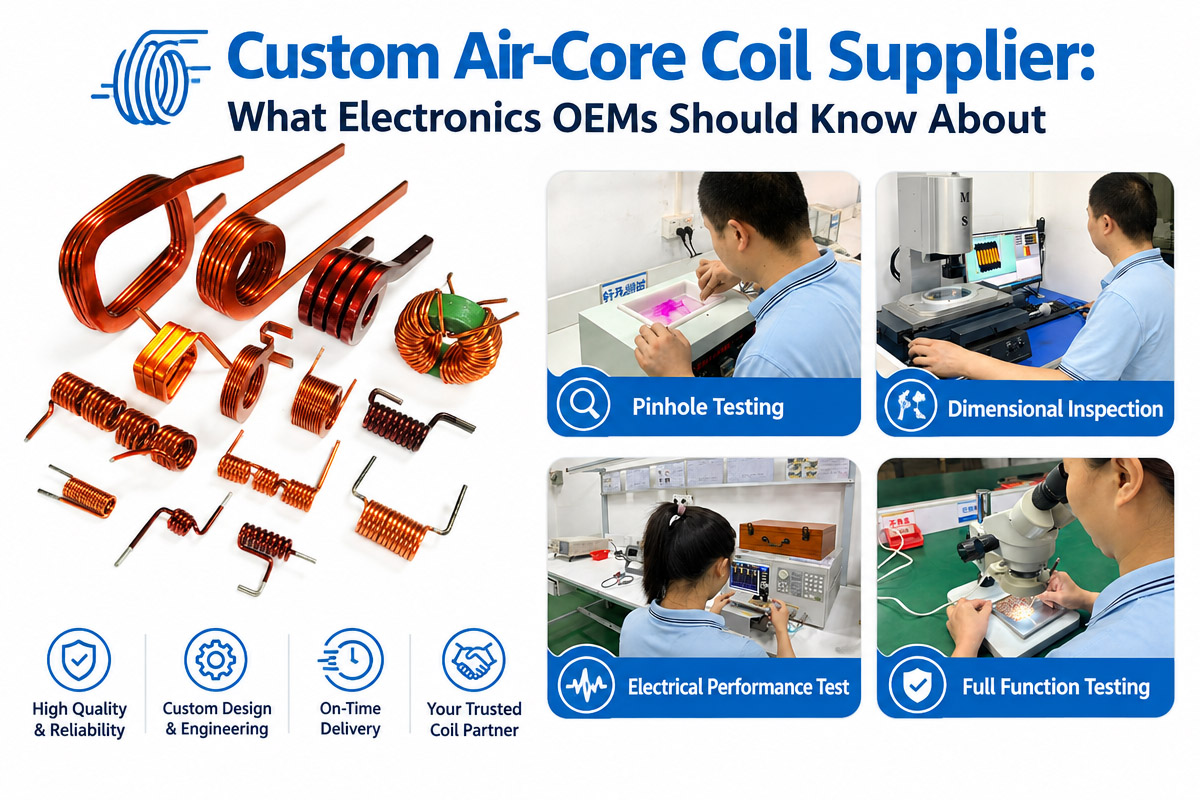
Introduction to Custom Air-Core Coil Supplier
Electronics OEMs face many challenges in choosing the right custom air-core coil supplier. Electrical performance, size and shape, frequency of operation, current-carrying capability, resistance, winding construction, tolerances, mechanical integrity, and manufacturing repeatability are just a few issues that influence the behavior of coils in a finished product.
That can be especially difficult to achieve in cases when the needs of the project’s electrical and mechanical designs cannot be satisfied with standard parts.
A custom air-core coil provides the ability to design the coil winding according to the specifics of the product design, but not vice versa.
The customization adds other considerations that have to be kept in mind by OEM buyers as well. The buyer has to know what kind of information the manufacturer needs, what is important to consider, and how to assess prototypes and assure quality of mass production.
That is why we would like to provide the guidelines on custom air-core coil sourcing.
1. What is an air-core coil?
An air-core coil is a type of electromagnet coil that does not employ a ferromagnetic core material, such as ferrite or iron, to focus the magnetic flux.
Depending on mechanical construction, the winding can be self-sustaining or wound upon a nonmagnetic bobbin or former.
Another distinctive feature is that there is no saturation of the magnetic core. Losses associated with core magnetic materials can be avoided in the case of air-core coil design, so air-core coils can be used in many special high-frequency applications.
Applications include:
RF circuitry
Filters
Oscillator
Matching nets
Communication equipment
Wireless systems
Sensor
Measuring equipment
Audio electronics
Power electronics
Electronic systems in industry
Electronics OEMs often need to use custom air-core coils due to electrical and dimensional specifications that are not satisfied by catalog parts.
2. Why Do Electronics OEMs Require Custom Designs?
Standard specifications of commercially available coils may fit the application well. Still, OEM projects usually have special requirements.
OEM engineers may need a very specific inductance value within the maximum possible diameter, or the product may require a very low resistance value or special lead positions, winding pitch, or frequency of operation.
In that case, the catalog part can make the OEM sacrifice some other features of the design.
The usage of custom manufacturing provides more opportunities.
An OEM engineer can, for example, optimize:
Inductance
Number of turns
Wire diameter
Coil diameter
Winding length—
Turns spacing
DC resistance
Lead configuration
Mechanical shape
Mounting configuration
Thus, the right design of custom air-core coils becomes a part of the OEM’s overall product engineering and not just one component.
3. Start With Electrical Requirements
The main requirement of any custom project is that electrical characteristics are understood well enough.
While it may be obvious that the inductance is important for the product, the buyer should not limit his requests to that characteristic alone.
OEM engineers should provide the following data about the electrical requirements:
Inductance tolerance
DC resistance
Operating current
Peak current
Operating frequency or frequency range
Q requirements
Self-resonant behavior
Expected temperature conditions
The better the supplier knows the operating environment, the better it evaluates the design.
When buying custom air-core coils, do not include in your RFQ only inductance value and physical dimensions if there are other electrical characteristics of the coil that are important for your application.
Coils with similar inductance values of the same size may act differently depending on the wire thickness, geometry, DCR, spacing, and construction of the winding.
4. Keep in Mind the Inductance Tolerance
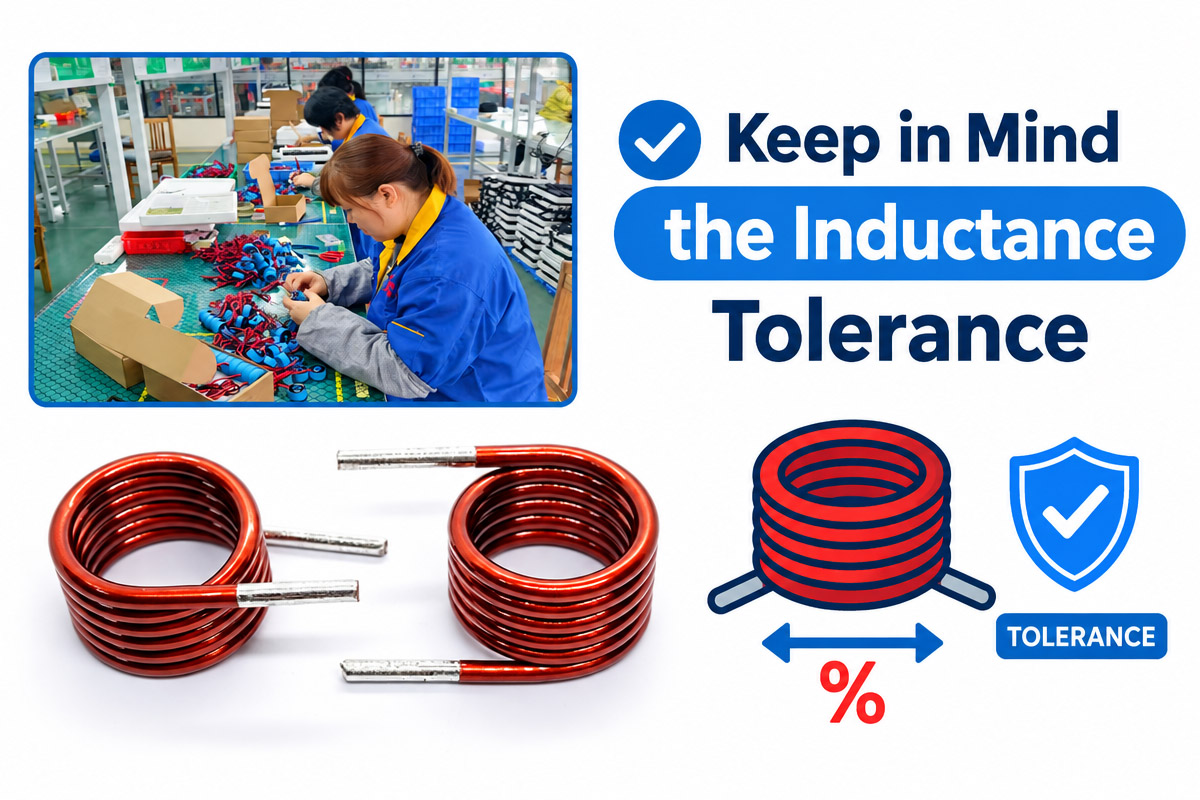
Every made piece is unique.
That is why the OEM engineer has to estimate how precise the inductance should be for his application.
There are technical ways to achieve inductance tolerance, but tighter tolerances mean that production, testing, and sorting will be harder and more expensive.
The goal is not to define the tightest tolerance.
Find out what tolerance you really need.
While buying custom air-core coils, the OEM and manufacturer should discuss the ability of the supplier to maintain the required tolerance in mass production.
That is especially true as volume increases from few engineering prototypes to hundreds of thousands of pieces.
5. Consider DC Resistance
DC resistance, or DCR, can influence performance of the coil greatly.
The losses of power and generation of heat depend on DCR when the current passes through the winding. That can affect the efficiency and voltage drop of the circuit.
Resistance depends on two main factors: the diameter of the wire and the length of the conductor.
Thicker conductors have generally less resistance, but an increase in the wire diameter leads to bigger coil sizes or to a reduction in the number of turns for limited winding length.
That is an engineering compromise.
If DCR is important in terms of product performance, the maximum DCR of the custom air-core coils should be defined.
The buyer should know the measurement method of DCR by the supplier and acceptance criteria.
6. The choice of the wire influences the whole design
The choice of the wire should not be the independent procurement issue.
The diameter of the conductor influences DCR, current-carrying capability, geometry of winding, size of the coil, manufacturability, weight, and cost.
The wire insulation should be chosen as well.
The wire insulation system shall be suitable for the estimated temperature, voltage, environment, and manufacturing process.
The properties of the conductor become more complicated at higher frequencies since AC losses are not the same as the DC resistance anymore.
A reputable manufacturer of custom air-core coils will take into account the whole electrical environment while offering the way of winding.
That is why the actual operating frequency and current should be provided by OEM engineers to the supplier rather than trying to design around inductance alone.
7. Geometry of the coil influences electrical performance
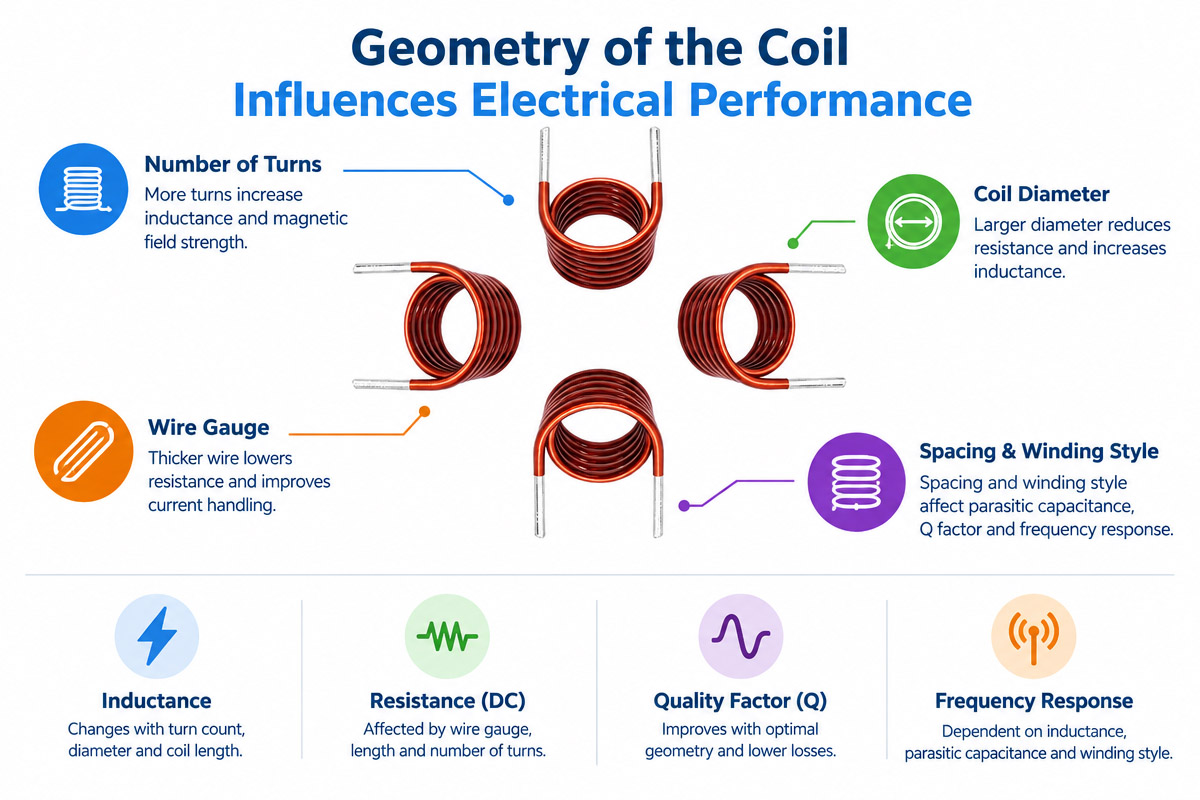
Dimensional parameters that are of importance may include:
ID (Inside diameter)
Outer diameter
Length of the coil
Number of turns
Wire thickness
Turn intervals
Pitch of winding
Changing one variable may affect several others simultaneously.
For example, increasing the diameter of the coil while keeping other parameters constant increases the inductance of the coil.
Changing the turn spacing affects geometry and frequency-dependent behavior.
This interconnection of parameters is one of the reasons why early cooperation of OEM’s engineers with manufacturing company’s engineers is important in the design of custom air-core coils.
OEMs can specify which parameters of the coil are fixed and which can be optimized by the supplier. It is easier for the supplier to improve manufacturability and performance of the product this way.
8. Consider the operating frequency early
When designing the coils, frequency is of importance.
Parameters that do not matter much in low frequencies can be of high significance in high frequencies.
This effect is known as the skin effect—crowds toward the surface of the conductor increase effective resistance to the AC currents. The proximity effect of nearby conductors influences current distribution.
The parasitic turn-to-turn capacitance is another factor that affects the behavior of the coil in high frequencies.
That is why custom air-core coils designed for high-frequency circuits have to be designed for the actual operating frequency.
“OEM buyers should define the desired frequency range during the quotation and engineering phases, not after prototypes have been made.”
9. Ignore Thermal Performance at Your Peril
Temperature can affect the performance of the coil and its long-term stability.
While the amount of generated heat is partially dependent on the DCR and current, the final temperature depends on the ambient conditions and the ability of the component to dissipate heat.
If a coil operates in the closed environment in close vicinity of heat-emitting components, the temperatures experienced by the coil can be completely different from the temperatures during testing in open air.
When purchasing custom air-core coils, OEMs should specify maximum ambient temperature, the current and peak current, duty cycle, ventilation conditions, and adjacent heat sources.
Testing in realistic conditions can help the designer to estimate if the design of the custom air-core coil has sufficient thermal margins before mass production starts.
10. Custom Air-Core Coil Mechanical stability is as important as electrical
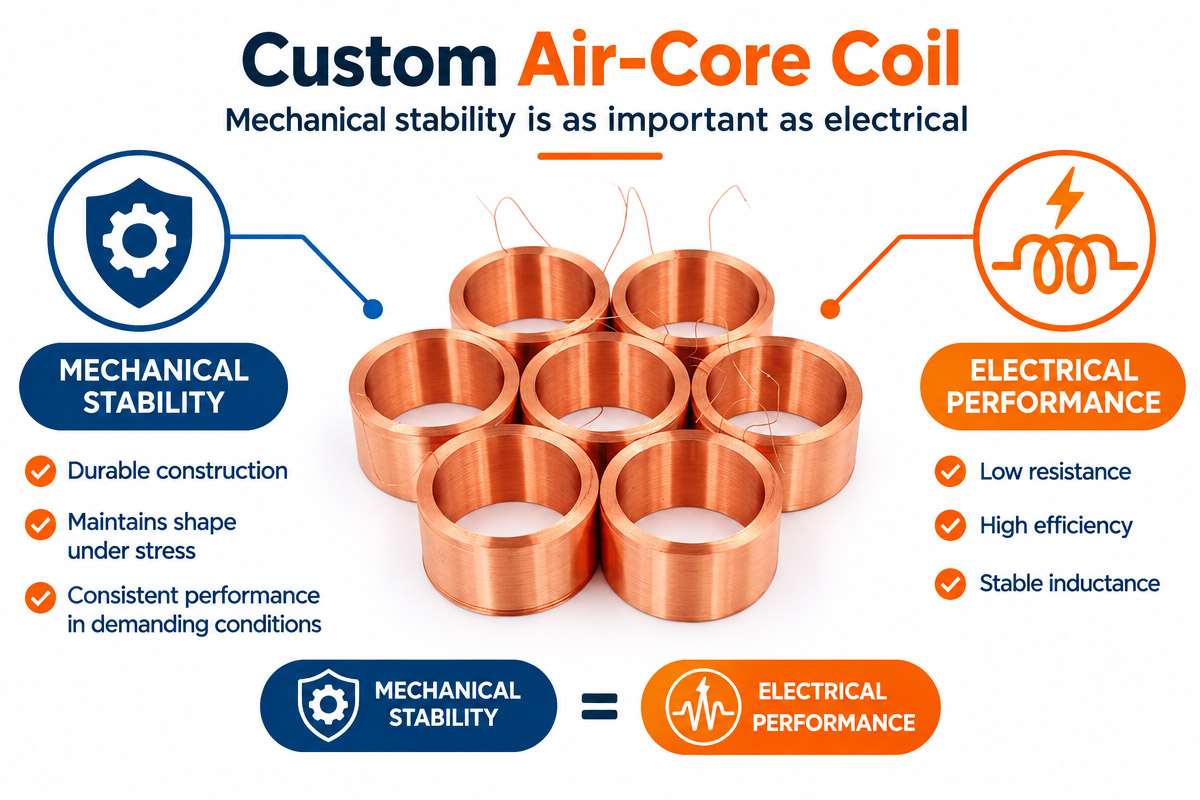
Electric performance receives most of the attention; still, the OEM needs a coil that can preserve its physical integrity during assembly, transportation, and operation.
That is especially important in case of self-supporting air-core designs.
The geometry of the coil influences its electrical performance.
Depending on design requirements, the manufacturer may use special winding technology or techniques of mechanical stabilization of the coil.
That is why, when purchasing custom air-core coils, OEM engineers have to consider mechanical requirements such as vibration, shock, handling, mounting, assembly process, and environmental exposure.
The coil that performed great in the laboratory cannot be the right one if a product experiences substantial vibration and/or mechanical stresses.
11. Specify the Lead and Termination Requirements
It is quite easy to overlook the definition of leads’ characteristics during preliminary design, yet this parameter may have a big influence on assembling efficiency.
Consistent lead shape may be especially important for automated assembly lines.
OEM engineers have to think about mounting the component on the PCB or including it in the assembly.
Drawings for custom air-core coils have to be done in accordance with the important characteristics and tolerances of the leads.
Such an approach helps to avoid getting electrically acceptable but assembling problematic parts.
12. Design for Custom Air-Core Coil Manufacturer
Sometimes prototypes are made using the process, which is not appropriate for mass production.
That is why OEMs should consider the manufacturability (DFM) of the part before finalizing its design.
The manufacturer will consider if the tolerances are realistic, winding geometry can be produced in a repeatable manner, materials are available, inspection is realistic, and the manufacturing process can be scaled.
Design for manufacture is especially valuable when it comes to custom air-core coil design.
Slight changes in the design can make it more manufacturable without sacrificing electrical performance.
Involvement of the supplier early in the process helps you to avoid redesign.
13. Make a Custom Air-Core Coil Prototype Sample Before Mass Production
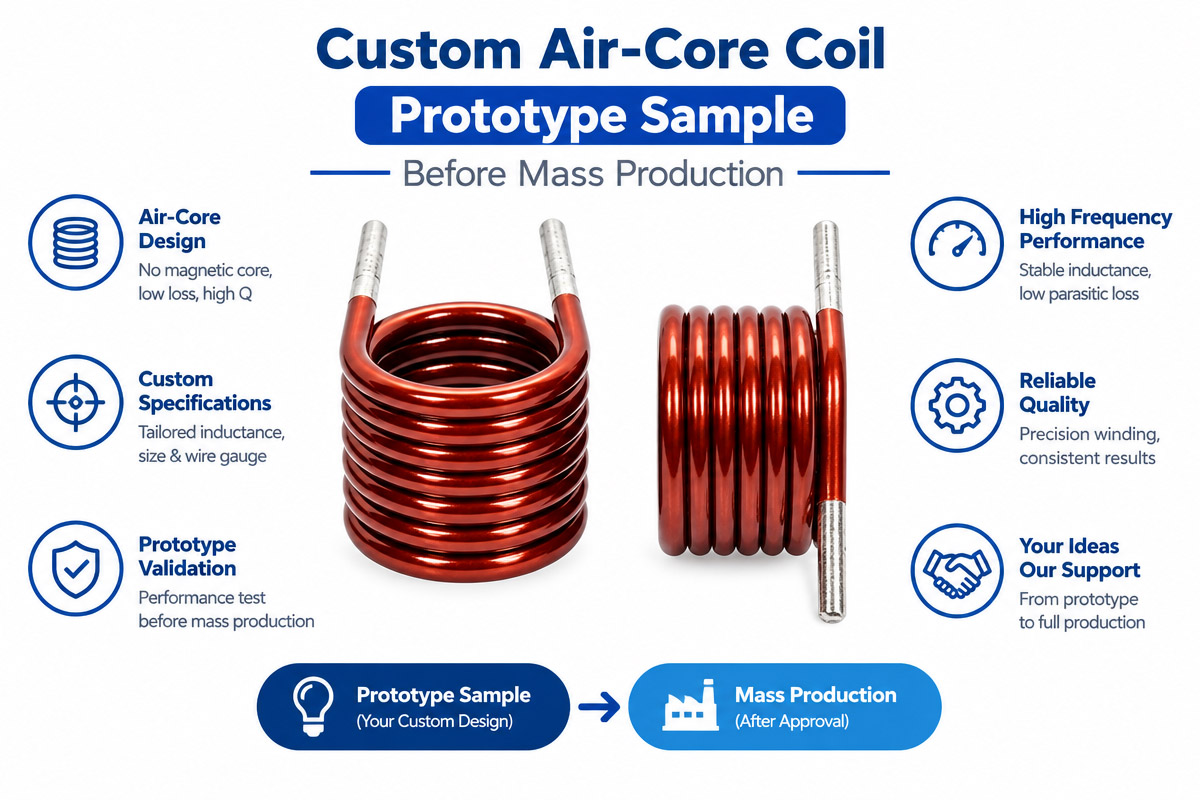
As soon as the part is customized heavily, OEM should not proceed to mass production directly from drawing.
Using prototypes allows you to test the real part in your application.
It may include the following steps:
Inductance.
DCR.
Measurement
Electrical performance
Frequency response
Increase of temperature
Mechanical fit
Assembly interchangeability
Configuration of leads
Performance on the product level
The evaluation of prototypes is an important step in the design of custom air-core coils. Specifications of the component alone do not reveal all interactions in the completed electronic system.
OEM and manufacturer should document the approved design after successful testing and before mass production.
14. Create a Golden Custom Air-Core Coil Sample
The Golden Sample is a physical sample that is approved and will be used as a reference for further manufacturing and quality discussion.
For custom components it can complement drawings and written specifications.
Keeping agreed reference samples after the component has been thoroughly tested and approved by the OEM will help both sides to understand what should be expected in terms of workmanship, dimensions, shape, and other characteristics.
However, a golden sample cannot substitute for measurable specifications.
Critical electrical and mechanical characteristics, for custom air-core coils, should be described with unambiguous tolerances and acceptance criteria.
“Approved documentation and representative samples together can do a lot to clarify production expectations.”
15. Review Manufacturer Quality Controls
OEM buyers need to look beyond a few good samples that a supplier can produce.
The key question here is can the manufacturer produce consistent components, time after time?
Depending on the project, buyers may want to know about controls on incoming wire, winding parameters, dimensional inspection, resistance testing, inductance testing, equipment calibration, traceability, final inspection, and nonconforming products for the supplier.
For high-volume custom air-core coils, process consistency can be as critical as the initial design.
If a component changes gradually from batch to batch of production, it can cause very hard-to-diagnose problems in the OEM’s final product.
Expected volume can influence the production strategy.
16. Consider Production Volume From the Outset
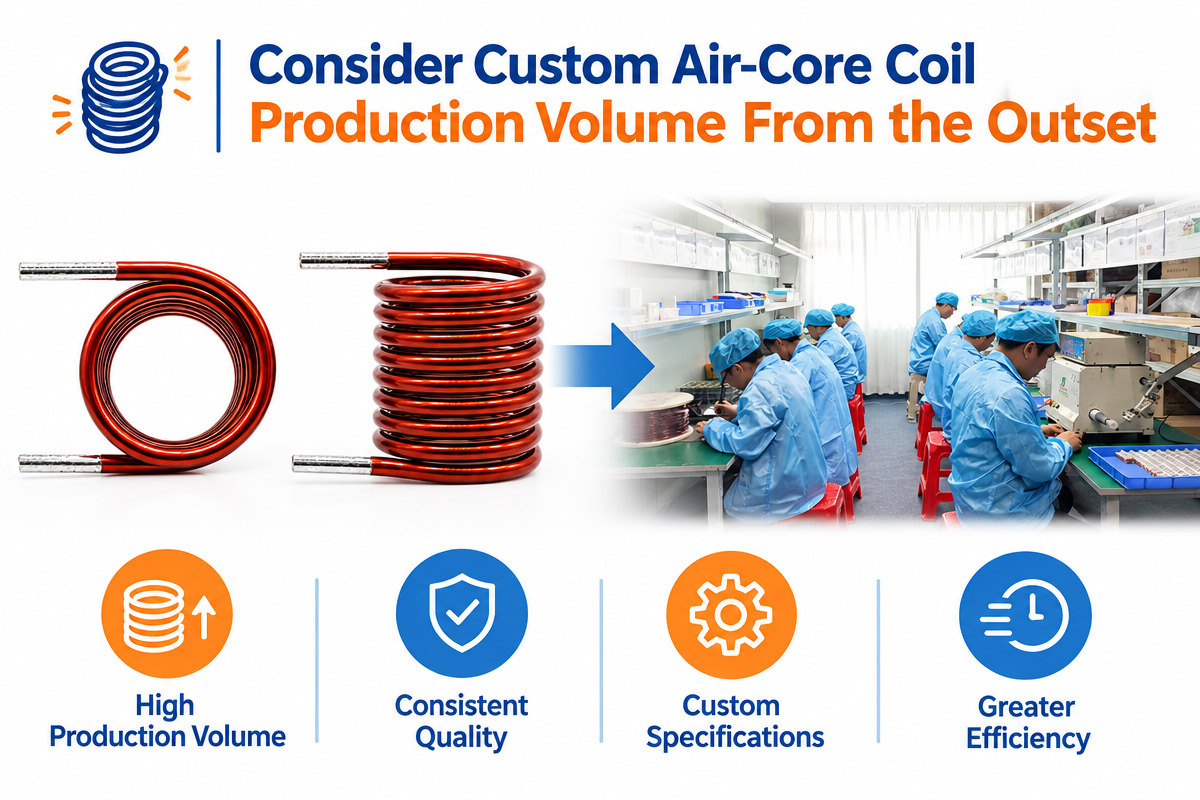
A winding method for 50 prototype pieces may not be the best method for 100,000 production pieces.
OEM customers are supposed to provide suppliers with realistic estimates of prototype quantity, initial production quantity, annual demand, and potential future growth.
Thus, the manufacturer will be able to investigate proper equipment, tooling, material procurement, process automation, testing capacity, and production planning.
If you expect your custom air-core coils to be a long-term product platform, discussing future volume from the outset will help to avoid scaling issues later.
17. Get to Know the True Cost Drivers
The lowest unit price is not always the lowest total cost.
There are several factors that can affect the price of a custom coil, among them raw material consumption, wire type, manufacture complexity, tolerance requirements, testing, tooling, order quantity, packaging, and labor.
Over-specification can increase the cost without improving the performance of the final product.
Therefore, the OEM purchasing teams should cooperate with engineering teams prior to negotiating for custom air-core coils only based on unit price.
A more expensive coil that performs consistently and produces reliably can turn out to be less expensive than a cheaper part that causes incoming inspection failures, assembly problems, line stoppages, field failures, or redesign work.
18. Prepare a Detailed RFQ
If a request for quotation is clear, manufacturers will be able to provide more accurate pricing and technical advice.
An OEM RFQ should include as many applicable requirements as possible, including:
Target inductance and tolerance
Maximum DCR (DC resistance)
Operating frequency
Continuous current
Duration and maximum current
Size of the coil
Wire specifications
Leads configuration and dimensions
Temperature requirements
[Mechanical specifications]
Compliance requirements
Number of prototypes
Production quantities
Annual consumption
Testing requirements
Packaging requirements
Drawings, specifications, reference samples, and application information for custom air-core coils can significantly reduce ambiguity.
Note which parameters are flexible, if any. Then the manufacturer will be able to suggest a more efficient design.
19. Go Beyond Unit Price Choosing a Supplier
Electronic OEMs are often under serious cost pressure; however, when choosing suppliers, one should consider total value.
A qualified coil manufacturer should offer more than a quotation.
Engineering communications, prototype support, manufacturing capability, testing, quality systems, capacity, traceability, lead-time management, and responsiveness can all influence the success of the project.
When comparing suppliers for custom air-core coils, purchasing teams should evaluate both commercial and technical capability.
If the OEM subsequently finds problems with inductance consistency, resistance, dimensions, delivery, or quality, then the lowest quote can cost you more.
20. Establish an OEM-Supplier Long-Term Relationship
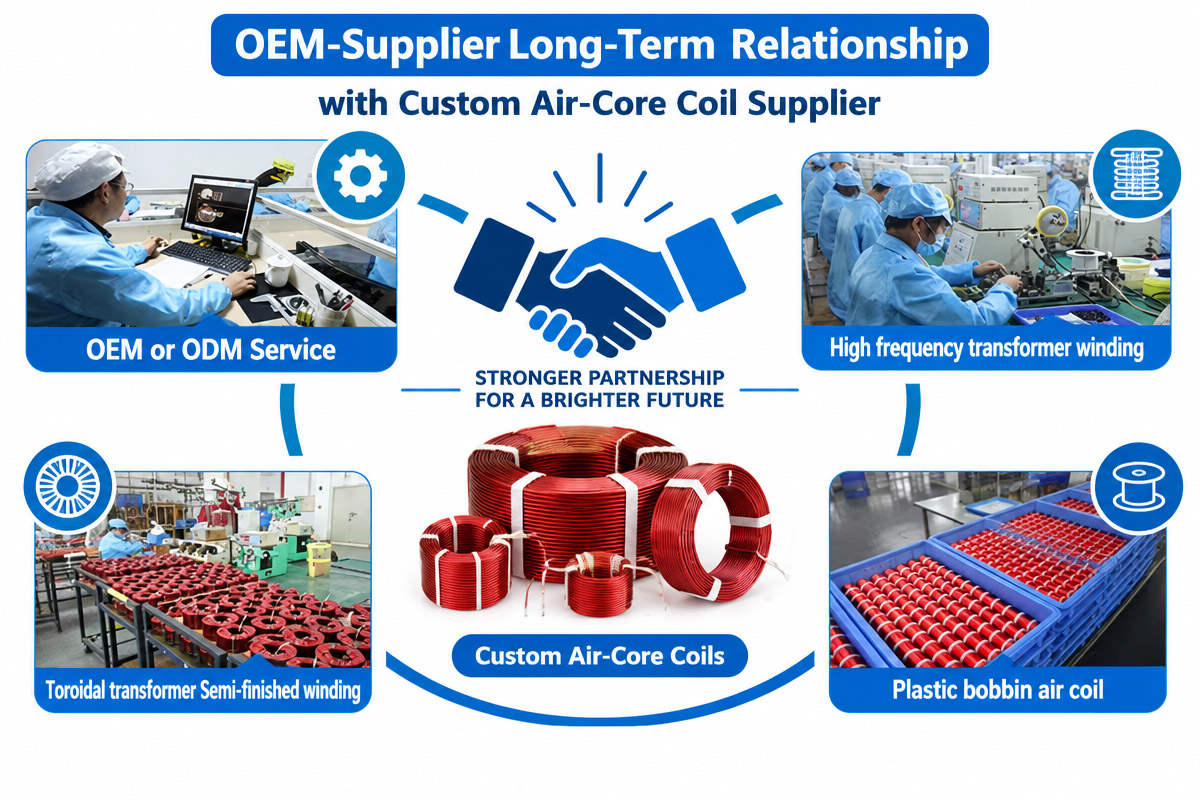
Stable communication between buyer and manufacturer will benefit custom components.
Coil requirements can change as the OEM product evolves. Engineers might want other dimensions, lower resistance, modified leads, tighter tolerances, or a new winding arrangement.
A good supplier will help with these revisions while still offering documentation and production control.
Long-term cooperation will facilitate in-demand forecasting, material planning, quality improvement, and engineering communication.
For OEMs using custom air-core coils in various products, a reliable manufacturing partnership can minimize both technical and supply chain risks.
21. Summary
Although air-core coils are mechanically simple, proper integration of electrical, thermal, mechanical, and manufacturing requirements is necessary for creating a reliable custom part.
Inductance, DCR, wire selection, winding geometry, frequency, current, temperature, tolerances, mechanical stability, lead configuration, testing, and production consistency are all the factors that should be considered by electronics OEMs prior to approving a design.
Equally important is OEM engagement with the manufacturer.
Well-designed custom air-core coils should be more than a number on an inductance drawing. They must be mechanically compatible with the product, perform reliably under real operating conditions, be producible in the required volumes, and meet the OEM’s quality expectations.
OEMs can minimize sourcing risks and create more reliable electronic products by providing complete specifications, validating prototypes, developing measurable acceptance criteria, and selecting a supplier with proven engineering and manufacturing capabilities.
22. FAQs on Custom Air-Core Coils
1. What specifications should I provide when ordering custom air-core coils?
Start with the required inductance and tolerance, maximum DCR, operating frequency, continuous and peak current, coil size, wire requirements, lead configuration, operating temperature, and estimated quantity. You will also be given drawings and information on the final application where possible. The more complete the specification, the easier it will be for a manufacturer to propose a practical design.
2. What is the standard MOQ for custom air-core coils?
Minimum order quantity will depend on the manufacturer, wire type, production process, tooling requirements, and design complexity. Production pricing generally improves with volume, while prototype quantities may be relatively small. OEM buyers should request separate quotes for prototype, pilot-run, and mass-production quantities to see how pricing changes with volume.
3. How should OEM buyers evaluate samples prior to mass production?
Test samples against product requirements and component specifications. Check inductance, DCR, dimensions, mechanical fit, lead position, assembly compatibility, temperature rise, and performance at the intended operating frequency. It is better for OEMs who purchase custom air-core coils to test samples in the final or representative equipment rather than approve them based only on laboratory measurements.
4. Is it possible for the air core coil manufacturer to start from my sample?
Often, yes. An existing sample can provide useful information on dimensions, winding configuration, wire size, leads, and mechanical construction. However, a sample does not necessarily tell the whole story on electrical needs or material specs. Whenever possible, drawings and performance requirements should be provided by the buyer rather than simply reverse engineered.
5. How to make a custom coil cheaper without sacrificing quality?
First, remove specifications that are tighter than what the application really needs. Discuss tolerances, wire choice, dimensions, testing requirements, order quantities, and manufacturability with the supplier. Sometimes a small design change will significantly simplify the manufacturing. Note that the focus of cost optimization should be on creating a stable, repeatable component, not on using cheaper materials.
6. What quality documents should I ask the supplier to provide?
Requirements vary by industry and application. Useful documentation could be inspection reports, material information, electrical test results, compliance declarations, lot traceability, first article data, or other agreed quality records. Prior to placing a production order for custom air-core coils, find out what documents are required to be provided with samples and with regular shipments.
7. How to Choose Between Two Custom Air-Core Coil Vendors?
Compare engineering capability, sample quality, manufacturing consistency, testing equipment, quality controls, production capacity, lead times, communication, traceability, pricing, and ability to handle future design changes. Do not quote suppliers on the basis of lowest price only. For an OEM, the difference in initial unit price is less important than reliable long-term production.
8. What are the most common mistakes OEMs make when sourcing custom air-core coils?
Typical mistakes are incomplete specifications, no specification of operating frequency and current, overly tight tolerances, sample approval without application testing, focus on unit price only, and mass production before the design is fully validated. To successfully source custom air-core coils, engineering and purchasing teams should cooperate with the manufacturer throughout the process from prototype to volume production.