Skip image slider
Air-Core Inductor Coil for Wireless Communication
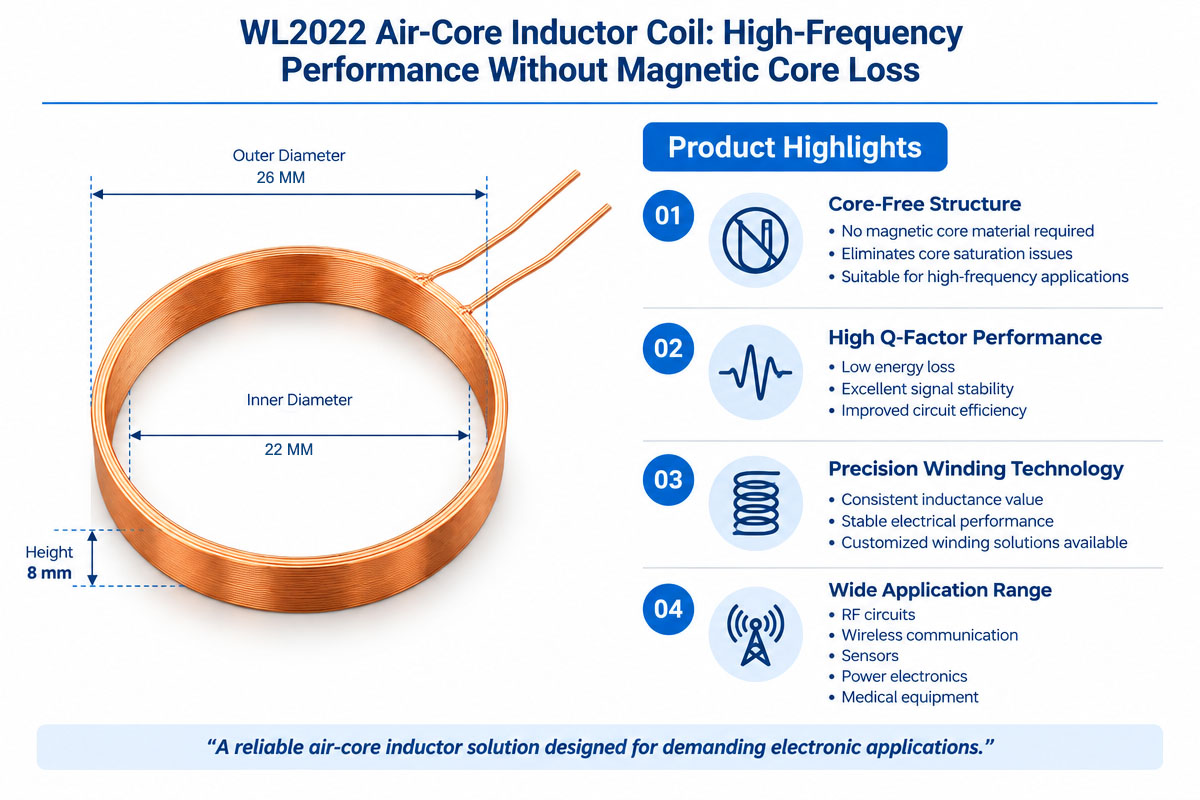
Air-Core Inductor Coil Performance Features Explained
Air-Core Inductor Coil Selection Guide for Engineers
Custom Air-Core Inductor Coil for OEM Electronics
High Quality Air-Core Inductor Coil Manufacturing Guide
Air-Core Inductor Coil Manufacturer and Supplier Guide

WL0222 Air-Core Inductor Coil Electrical Performance Guide

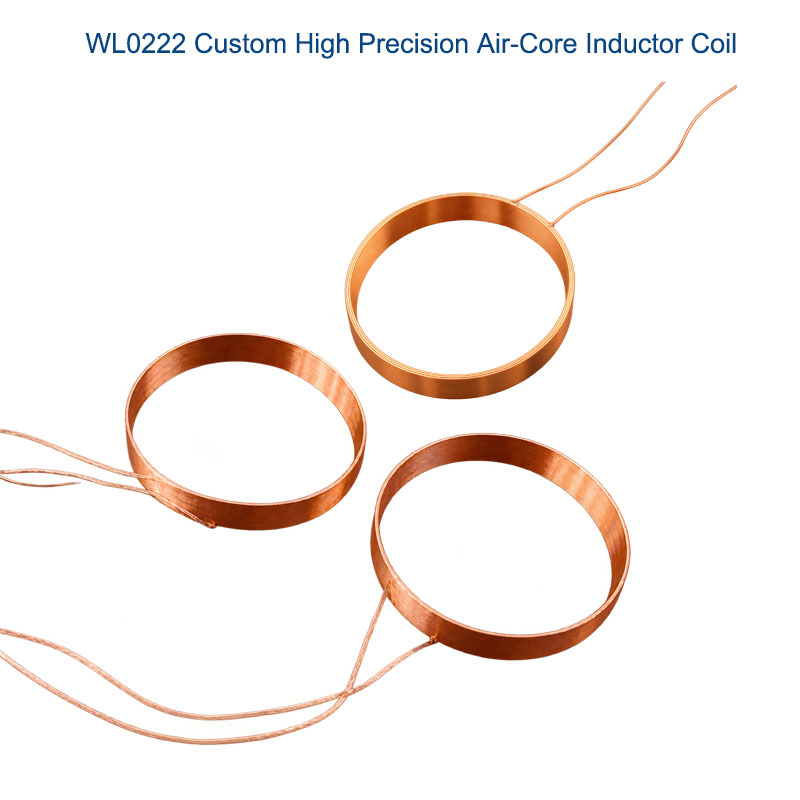
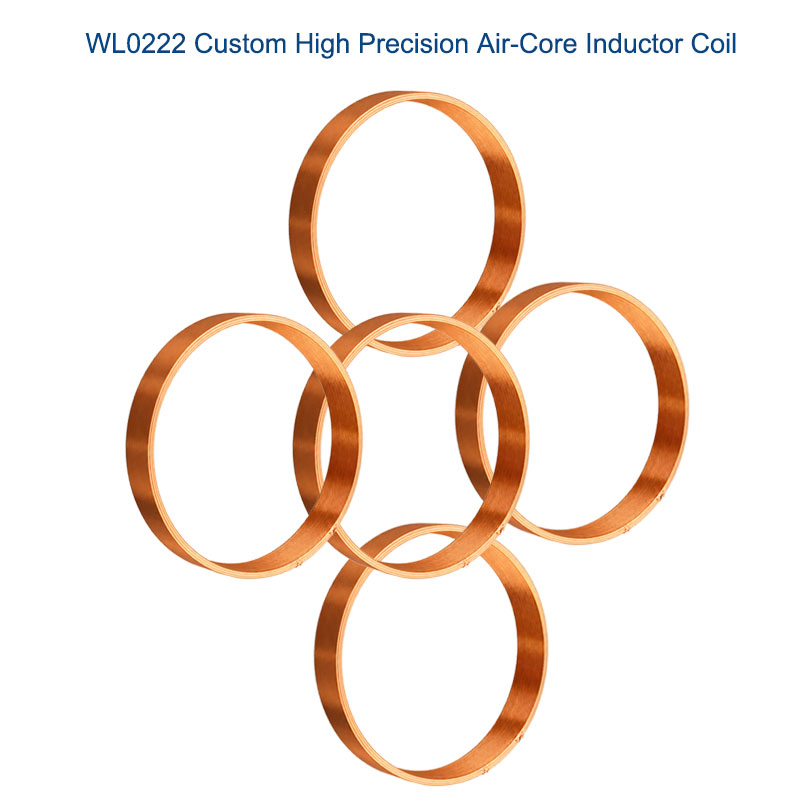
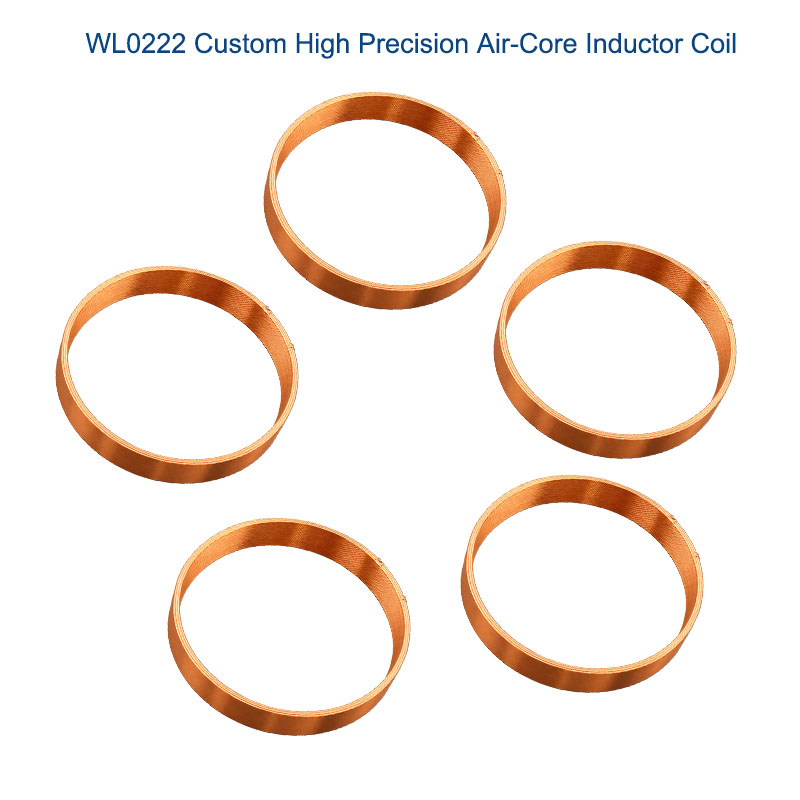
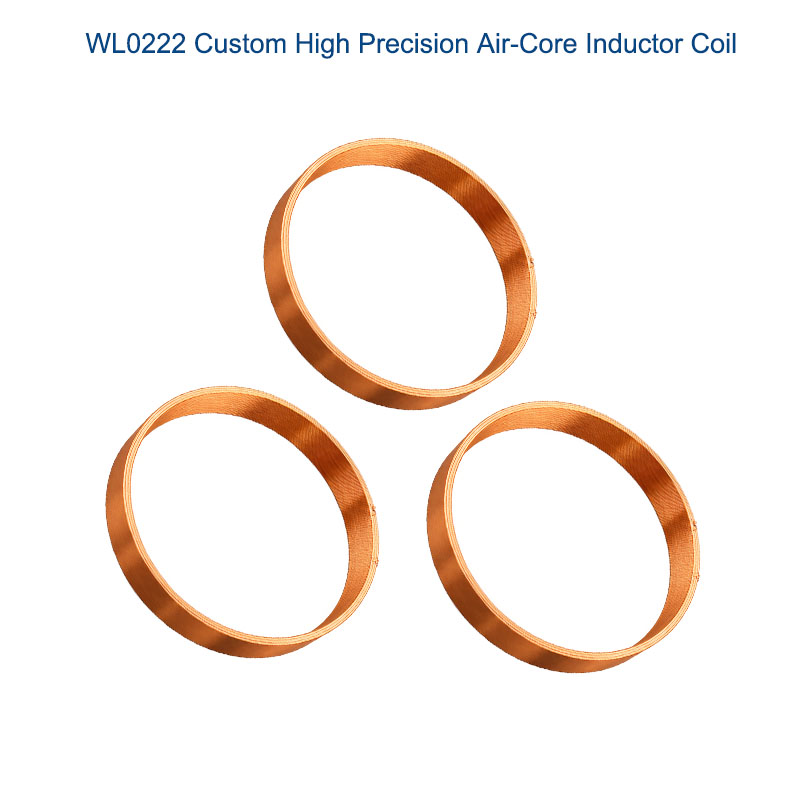
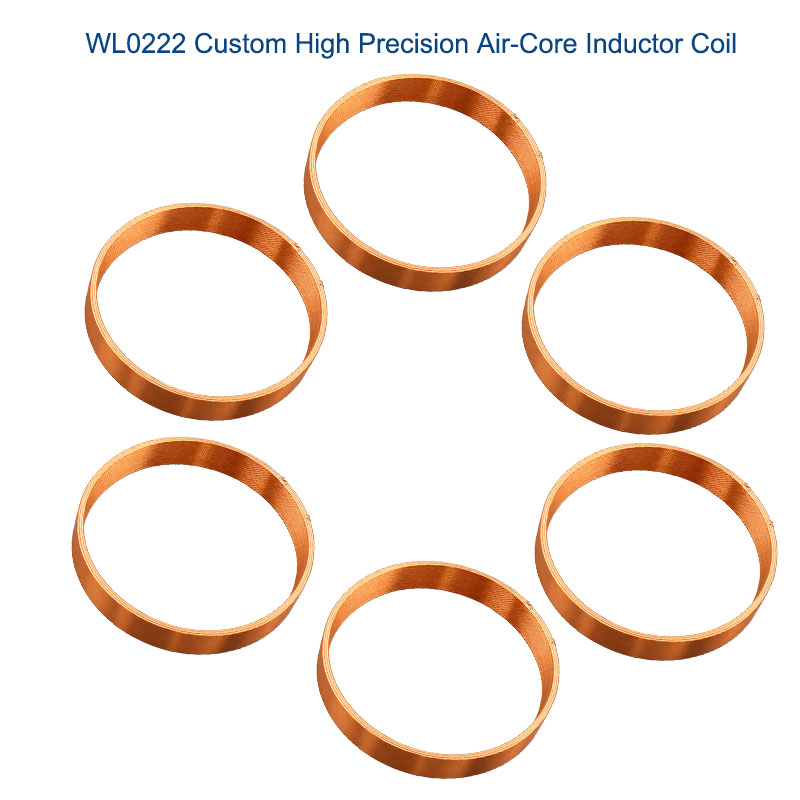
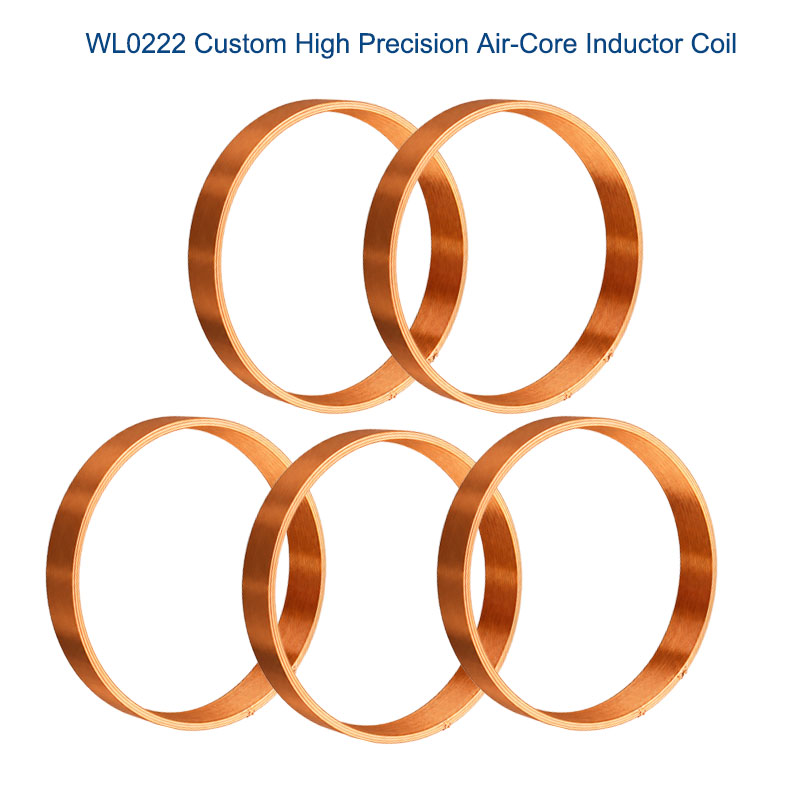
The Air-Core Inductor Coilย isย electronic components designed for high-frequency stability, low energy loss and reliable signal performance. Air-core inductors lack traditional magnetic cores, so they are not subjected to core saturation, and offer excellent performance in RF, communication, wireless and sensor systems.

The air-core inductors are produced with quality copper wire and state-of-the-art winding technologies. The wire diameter, coil size, inductance value and operating frequency are all flexibly customizable. They are widely used in electronic circuits that require accuracy and efficiency.

Custom air-core inductor solutions help engineers optimize circuit performance from prototype to mass production. Air-core inductors are perfect for the telecommunications, automotive electronics, medical devices, aerospace systems and consumer electronics industries.

Custom Air-Core Inductor Coil Product Overview

The air-core inductor coil is a precision electronic component providing reliable inductance performance without using magnetic core materials. They are made of quality conductive wire with winding structures carefully controlled. These coils are available in different sizes, shapes, inductance ranges, and frequency specifications to meet various application requirements.

Air-core inductors are designed for high-frequency circuits, offering excellent signal quality, low energy loss, and stable electrical properties. They are great for RF communication, wireless systems, sensors, and advanced electronic devices. With custom OEM solutions, manufacturers can adjust the coil performance to the design and technical requirements of the product.

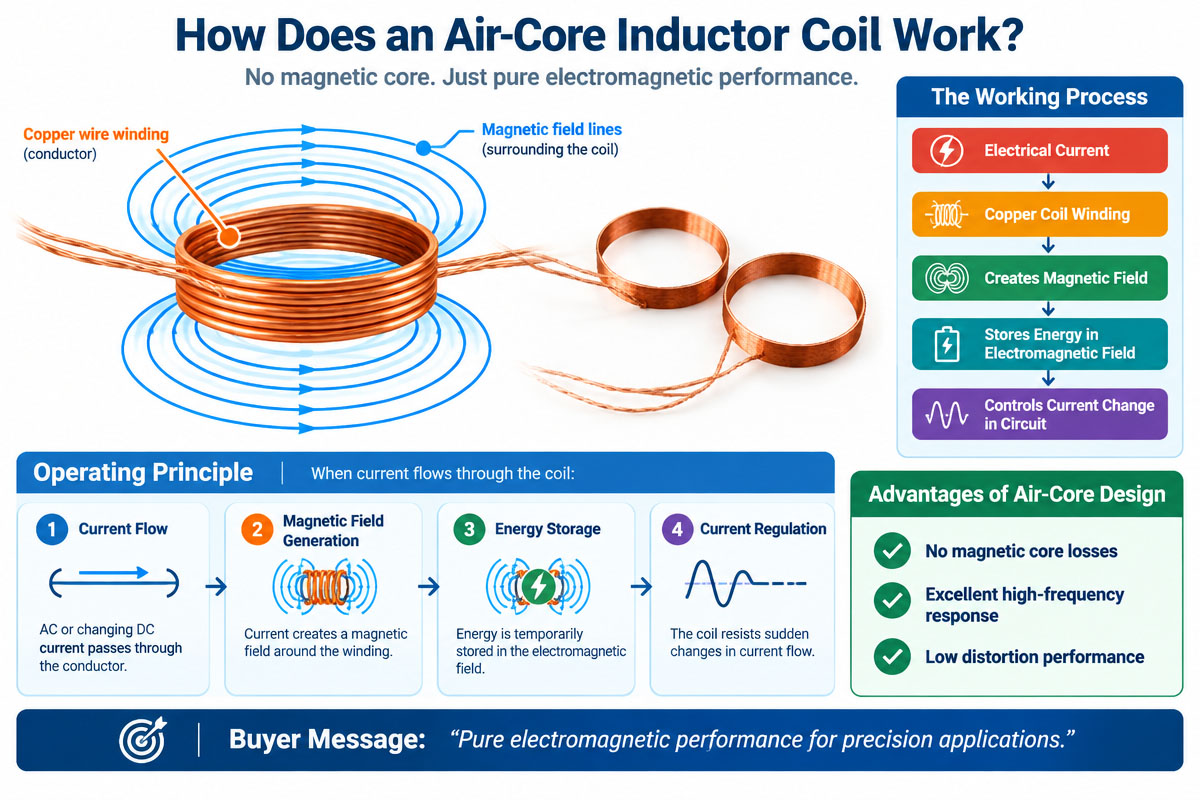
How Air-Core Inductor Coil Works?

Air-core inductor coil functions based on the principle of electromagnetic induction. When the electric current flows through the coil winding, a magnetic field forms around the conductor. The magnetic field stores energy in it temporarily.

Any changes in the current will affect the magnetic field and hence induce a voltage that opposes the changes in current. This property makes the inductor control current flow, filter signals, and transfer energy in electronic circuits.

Air-core inductors lack magnetic core material, so they do not have issues such as magnetic saturation and core losses. This makes them well-suited for high-frequency applications where signal accuracy and low distortion are important.

Coil performance depends on the following factors:

Amount of turns

Wire diameter

Coil shape

Working frequency

Value of inductance

Features of Air-Core Inductor Coil

Air-core inductor coils for electronic applications offer some important advantages. First, their free construction minimizes magnetic losses and increases high-frequency performance. They are linear, since they are not magnetically saturated. Precision winding technology provides for stable inductance and consistent electrical performance. Air-core inductors are customizable with respect to shapes, sizes, wire material, and frequency requirements. Also, they are lightweight and thus appropriate for small electronic devices. Air-core inductors feature low signal distortion, high reliability, and high electromagnetic efficiency. These are important features in RF systems, communication devices, sensors, and electronic equipment.


Custom Air-Core Inductor Coil Product Video

Custom Air-Core Inductor Coil Product Detailed Display

Custom Air-Core Inductor Coil Technical Datasheet

Item Description
SMD Air Inductor Coil Enameled copper wire
Wire Diameter 0.1 (AWG options available)
Winding Type Single-layer round or sectional ย winding
Core Material Air (non-magnetic) copper wire
Footprint length 30-50 mm
Encapsulation Optional varnish, epoxy, or coating
Mounting Through-hole / Custom

Electrical Specifications (Typical)

Parameter Description
Inductance Range 0.3 ยตH โ€“ 100 ยตH (customizable)
Inductance Tolerance ยฑ2%, ยฑ5%, ยฑ10%
DC Resistance (DCR) Custom
Q Factor High Q, optimized for frequency range
Self-Resonant Frequency High, application-dependent
Operating Frequency kHz to MHz range
Rated Current Custom per design
Insulation Resistance โ‰ฅ10 Mฮฉ

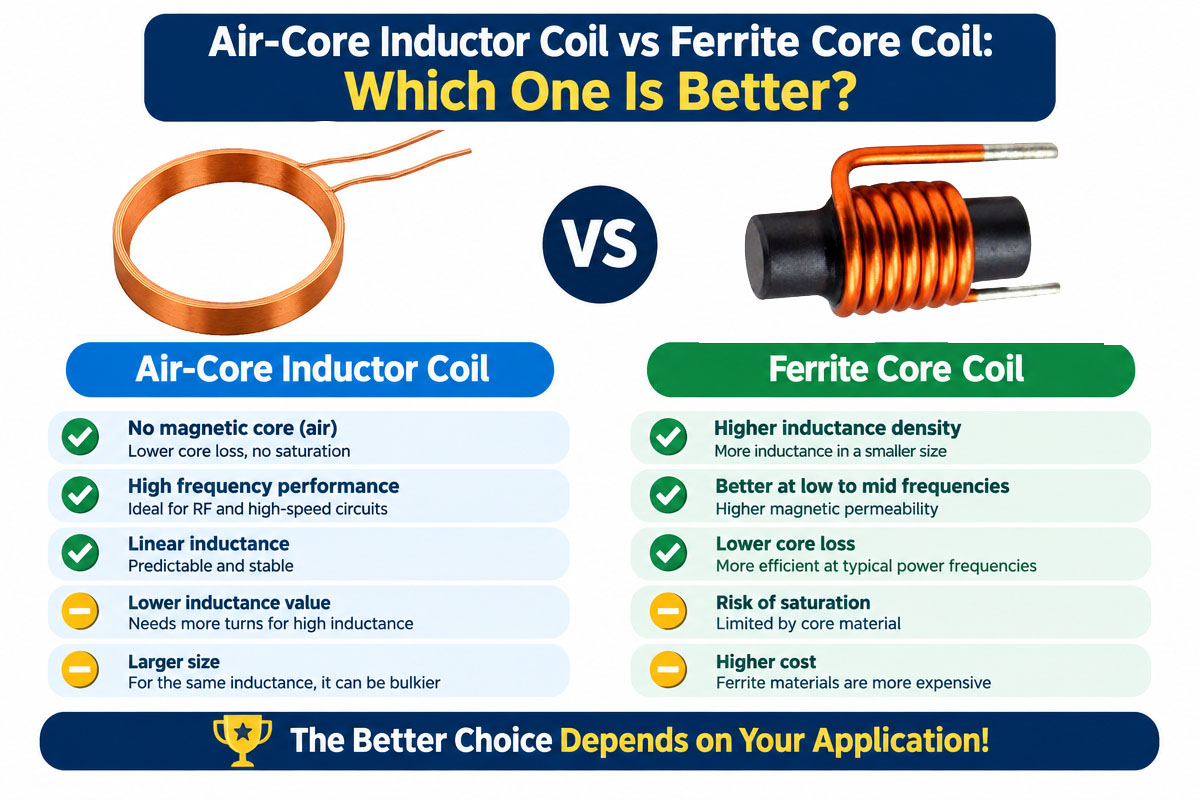
Air-Core Inductor Coil vs. Ferrite Core Coil. Which Is Better?

Air-Core Coil vs Ferrite Core Inductor which one is better

Air-core inductor coils and ferrite core coils are both common electronic components but have different performance characteristics suitable for different applications.

Difference in Structural Design

The basic difference lies in the core material: air-core inductors have air as the magnetic medium, while ferrite core coils use magnetic ferrite material to increase inductance.

Ferrite cores have higher magnetic permeability, which allows getting high inductance values in small coils. Air-core inductors depend only on coil geometry and winding.

Performance in High Frequency

Air-core inductors are better suited for high-frequency applications, as they donโ€™t experience ferrite core losses. They provide stable performance in RF circuits, communication systems, and precise signal applications.

Ferrite core coils have higher losses at certain frequencies but are good for power applications when you need high inductance.

Energy Efficiency

Air-core coils donโ€™t experience magnetic saturation and hence have good linearity. This makes them suitable for applications when the accuracy of the signal is critical.

Ferrite core coils have better energy storage capacity due to their magnetic properties.

Size Matters.

Ferrite core coils are more compact, as you can get higher inductance in a smaller package. And this is why they are useful when the space on the PCB is limited.

Air-core coils may be larger, especially when you need higher inductance values.

Application Comparisons

Applications of Air-Core Inductors:

RF communications

antennae systems.

Wireless devices

filters of high frequency

accurate sensors

Applications of ferrite core coil:

power electronics

EMI filter

Transformiumโ„ข

energy storage circuitry

Which One Should You Choose?

Feature Air-Core Inductor Coil Magnetic Core Inductor
High Frequency Performance Excellent Depends on core material
Core Loss Very Low Higher at certain frequencies
Linearity Excellent May vary due to saturation
Q-Factor High Application-dependent
Customization Highly flexible More limited
RF Signal Quality Excellent Good for many applications

It depends on the needs of your application.

When you need to choose an air-core inductor coil:

High frequency stability

reduced signal degradation

great linearity

radio frequency performance

When you should: Choose a ferrite core coil.

higher inductance density

small size

high energy storage capacity

Each of the technologies has its own strengths. The right choice depends on the frequency range, power requirements, size limitations, and performance requirements. Due to low loss and stability, air-core inductors remain relevant for advanced high-frequency electronic systems.

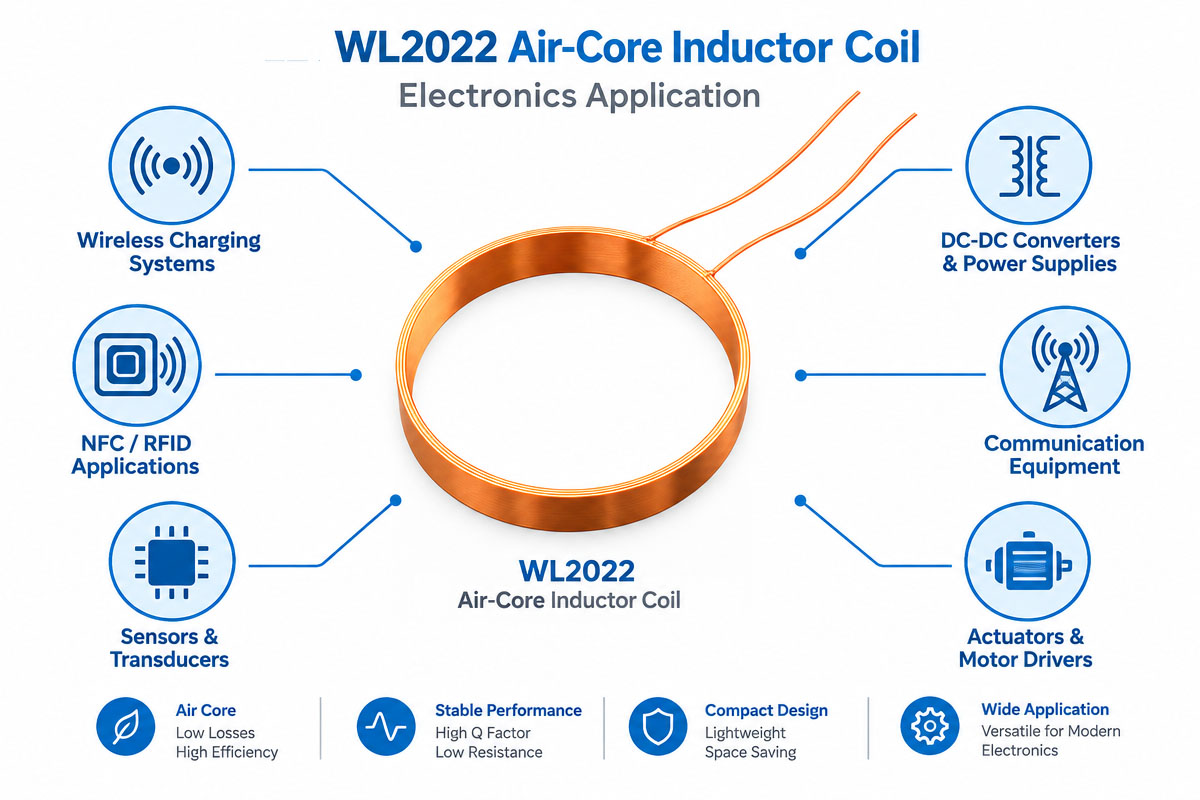
Air-Core Inductor Coil Electronics Applicaitoi Guide

Air-Core Inductor Coil For Electronics Application

Air-core inductor coil is widely used in electronic circuits, especially in those where the coil is exposed to strong magnetic fields. The advantage of air-core inductor coil is that it does not saturate, which means that it can operate in a wide range of current levels without losing inductance. This makes it perfect for circuits where the current level is variable, for example, in radio frequency (RF) circuits and power supplies. Air-core inductor coil is used in transformers, where it is used for transferring energy from one circuit to another without the use of magnetic core. Air-core inductor coil is used in various other applications such as filters, oscillators and resonant circuits.

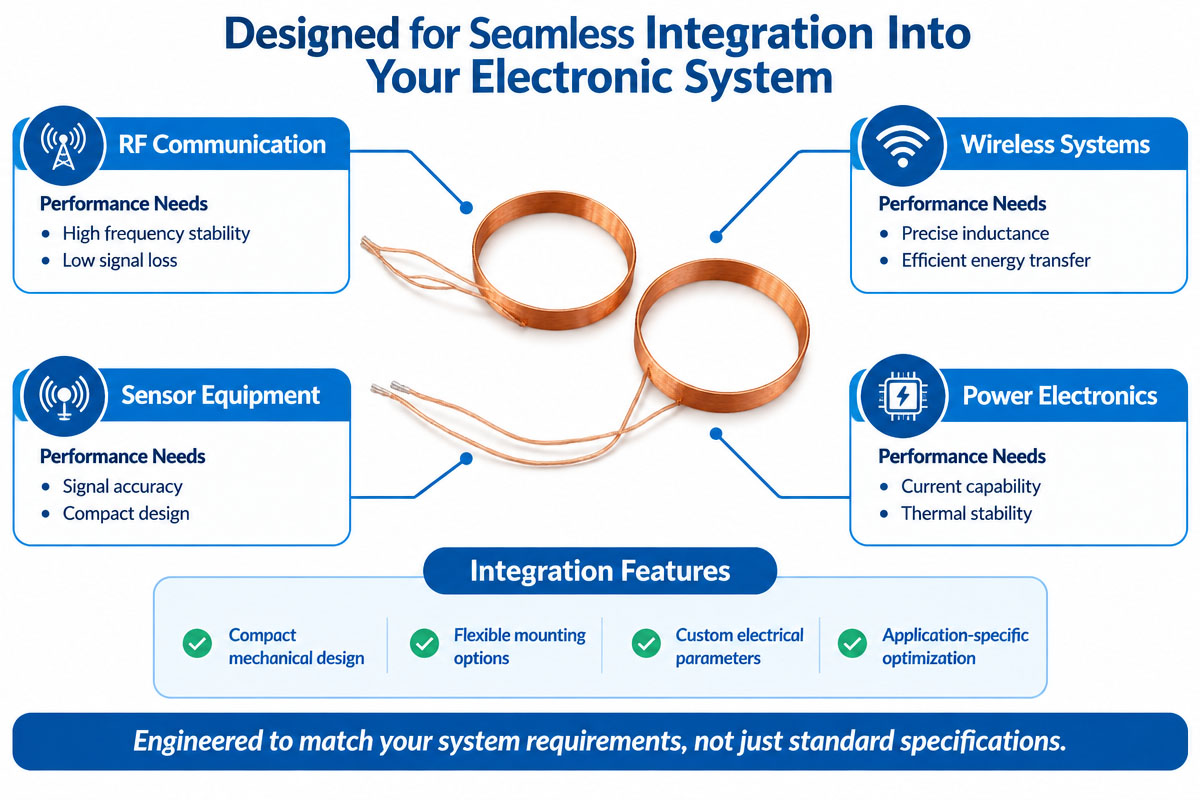
Air-core inductor coils are used in electronic systems that require high-frequency performance, accuracy and low signal interference.

RF Communications System

Air-core inductors are widely used in radio frequency circuits, antennas, transmitters and receivers because of their high-frequency performance.

Wireless Technology

Air-core coils are commonly used in wireless communication devices and charging systems due to their efficient electromagnetic coupling and low energy loss.

Applications for sensors

Stable inductance and accurate signal processing are essential in precision sensors. Air-core coils are used in measurement and detection systems.

Medical Electronics Division

High quality inductors are required in medical equipment in signal control and electromagnetic applications.

Consumer Electronics

Air-core coils are used in smart devices, communication products and advanced electronic equipment for efficient circuit designs.

Industrial Electronics Air-core inductors are used in automation systems, control equipment and high-frequency industrial apparatus because of their robustness and stable electrical properties.

With increasing demand for high-speed electronics and wireless technologies, air-core inductor coils become increasingly important as a solution for modern electronic systems.

ย Reasons Why Air-Core Inductor Coil Becomes Popular for RF Communication System

High-frequency stability, low signal losses, exact impedance control and reliability of electronic components become necessary when designing RF (radio frequency) communication systems. Thanks to the progress in wireless technology, air-core inductor coils are gaining popularity in RF communication systems due to the unique electrical characteristics and absence of limitations of traditional magnetic core components.

Your Trust Partner For Air Core Coil Solutions

1. Great High Frequency Performance

One of the main advantages of air-core inductors is great performance at high frequency.

The air-core design does not include magnetic material, like ferrite or iron-core inductors. This results in the following reduction of:

Core losses

The effect of magnetic saturation

Dependence on frequency of performance

The reduction of energy loss becomes particularly relevant as RF systems operate at high frequencies. Air-core coils have stable inductance characteristics and can be used in communication circuits which require precise signal processing.

2. Reduced Signal Losses with High Q-Factor

Quality factor (Q-factor) plays an important role in RF circuit design. High Q-factor means low energy loss and increased efficiency.

Air-Core Inductor Coils typically offer:

Reduction of resistance losses

Improved signal quality

Higher circuit efficiency

Increased frequency selectivity

These features make them very useful in RF filters, matching networks, oscillators and tuning circuits where accurate signal is essential.

3. Better Linearity and Signal Stability

In order to process properly the weak and sensitive signals the RF communication systems must not experience the effect of magnetic saturation of magnetic core inductors which causes non-linearity.

Air-core inductors can provide:

Constant inductance values

Linear performance

Decrease of distortion of the signal

Predictable electrical performance

And this is why they are so suitable in applications like wireless communication modules, receivers, transmitters and antenna circuits.

4. Suitable for antenna matching circuits

In order to transmit and receive signal the antenna system has to be properly impedance matched.

Air-Core Inductor Coils are widely used in:

antenna tuning circuits

impedance matching networks

RF filters

signal coupling circuits

and design flexibility allows optimizing such parameters as:

Value of the inductance

coil size

number of rounds

wire specifications.

This increases antenna efficiency and reliability of the communication.

5. Low Electromagnetic Interference (EMI)

RF systems are extremely sensitive to unwanted electromagnetic interference. Incorrect component selection can lead to signal degradation.

Air-core coils help to reduce unwanted effects by providing:

stable magnetic field behavior

reduction of parasitic effects

control of RF circuit.

This helps to transmit signal in complex electronic environment.

6. Custom Design Capability

RF products of today often require customized components due to the limitation in space and unique electrical requirements.

Air-Core Inductor Coils can be customized according to:

frequency of operation

inductance range

coil size

mounting structure

thickness of the wire

environment of application.

This is why they are so suitable for OEM and ODM electronic product development.

7. Compatibility with Advanced Wireless Technologies

The growing demand in faster and reliable wireless communication is one of the reasons why air-core inductors are used in many RF-related technologies including:

5G communication equipment

RF front-end circuits

signal filtering

frequency matching networks

IoT devices

wireless sensor modules

low-power communication systems

Bluetooth and Wi-Fi Products

RF tuning circuits

signal processing modules

satellite and aerospace communication

high-frequency communication systems

precision radio frequency equipment.

8. Electronic Design: Small and Lightweight

Although air-core coils may require different designs than magnetic core inductors, the simplicity of their construction offers advantages for specialized RF applications.

Advantages are . . .

lightweight construction

flexibility of mechanical design

smooth integration into custom systems

reduction of material complexity.

This allows implementing small and power efficient RF devices.


Air-Core Inductor Coil Advantage and Disadvantage

Custom Air-Core Inductor Coil Advantages and Disadvantages

Advantages of Air-Core Inductor Coil

Air-core inductor coils have great performance for high-frequency applications. They do not use magnetic core materials and minimize magnetic losses without core saturation. They have excellent linearity, stable inductance, and low signal distortion. They have a lightweight design and a flexible design, so they are appropriate for customized electronic products.

They are especially important for RF communications, wireless systems, and precise circuits requiring signal accuracy.

Disadvantages of Air-Core Inductor Coil

Air-core inductors generally require more winding area than inductors with magnetic cores, as they lack materials to increase the magnetic flux density. This could mean larger physical sizes to achieve high inductance values.

They could also be less inductive than ferrite core designs in low-frequency power applications.

Thus, air-core inductors are especially appropriate for applications where the importance of frequency performance, signal accuracy, and low loss prevails over maximum inductance density.

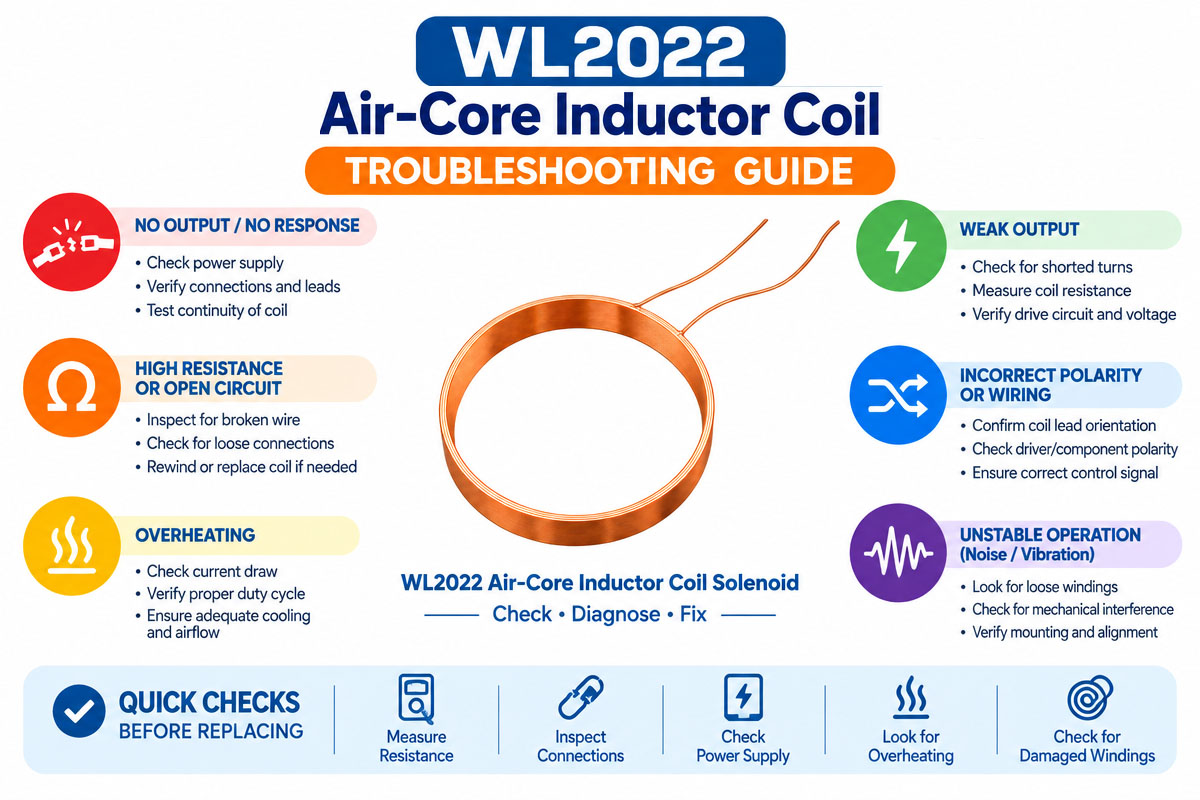
Air-Core Inductor Coil Troubleshooting Guide

Custom Air-Core Inductor Coil Troubleshooting Guide

Cause: Incorrect winding turns or design parameters.

Solution: Check coil dimensions, wire specifications, and measuring methods.

Problem 2. Overheating.

Cause: Current too high for the coil or wire resistance too high.

Solution: Use thicker wire or redesign the coil structure.

Problem 3: Loss of Signal

Cause: Low Q-factor or incorrect frequency matching

Solution: Improve the winding design and operating frequency.

Problem 4: Damage by Machine

Cause: Vibration or insufficient packaging protection.

Solution: Better methods of fixation and packaging protection of the coil.

Problem 5: Poor Quality of Production

Cause: Manufacturing variations.

Solution: Use controlled winding methods and inspection procedures.

Most failures of air-core inductor coils can be avoided with regular testing and careful selection of suppliers.


Air-Core Inductor Coil FAQs

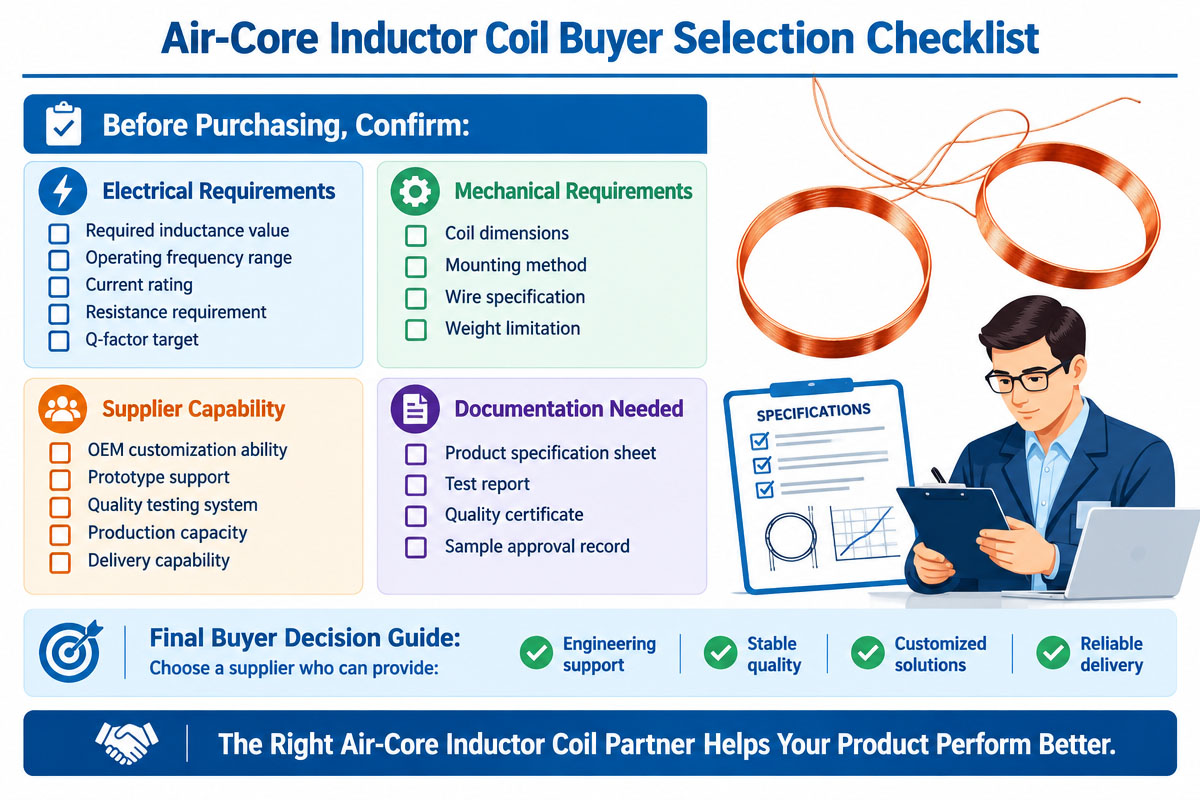
1. What Should I Consider Before Purchasing An Air-Core Inductor Coil?

When looking for the air-core inductor coil, there are several technical parameters you should take into consideration, including the value of the inductance, working frequency, current rating, Q-factor, coil size, and application needs. Also, it is important to know whether the supplier can offer custom OEM solutions, prototype samples, electrical test reports, and stable mass production capacity. A professional supplier will understand your circuit requirements and advise the appropriate coil design rather than simply provide off-the-shelf products.

2. Why Should I Pick An Air-Core Inductor Coil Instead Of Ferrite Core Coil?

Air-core inductor coils are preferable when your application requires high-frequency stability, low signal losses, and excellent linearity. They donโ€™t use magnetic core materials and avoid such problems as core saturation and magnetic losses. They are used in RF communications, wireless systems, sensors, and precision electronic circuits. But ferrite core coils may be better when you need higher inductance in a small size. The right choice depends on the frequency, power, and design requirements of your circuit.

3. Can I Get My Air-Core Inductor Coils Customized?

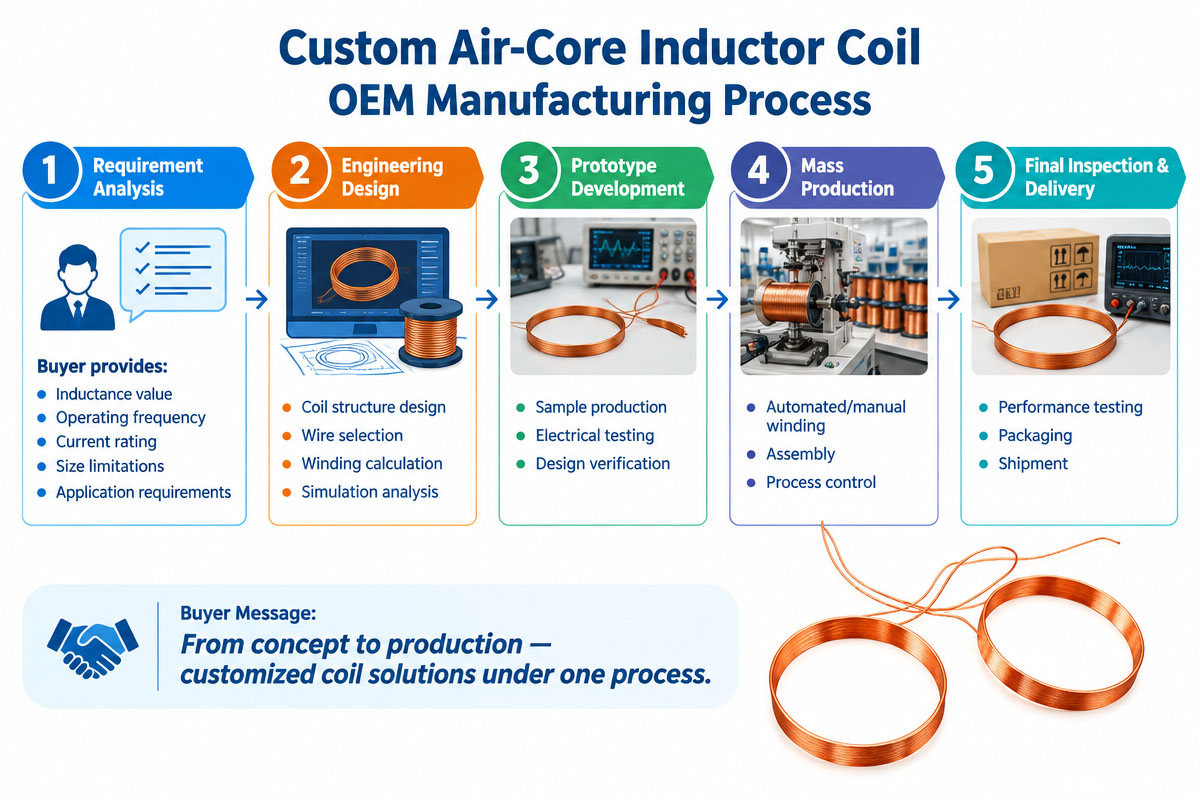
Yes. Air-core inductor coils can be customized to fit the needs of your application. Buyers can request changes to coil diameter, wire diameter, winding method, inductance, frequency range, installation method, and electrical performance. Typically, OEM manufacturers collaborate with the buyer from the preliminary design analysis to mass production. Custom solutions ensure the appropriate coil design, fitting the mechanical space and performance criteria of your circuit.

4. How To Determine Proper Inductance Value For My Application?

The selection of proper inductance value depends on the application and operating conditions of your circuit. The buyer should consider the signal characteristics along with the required frequency range, voltage, current, and impedance. Typically, the engineer calculates the inductance needed based on the circuit design and performs tests of the performance. The collaboration with an experienced supplier can help in optimizing the coil design and avoid such problems as unstable frequency performance, overheating, or insufficient performance.

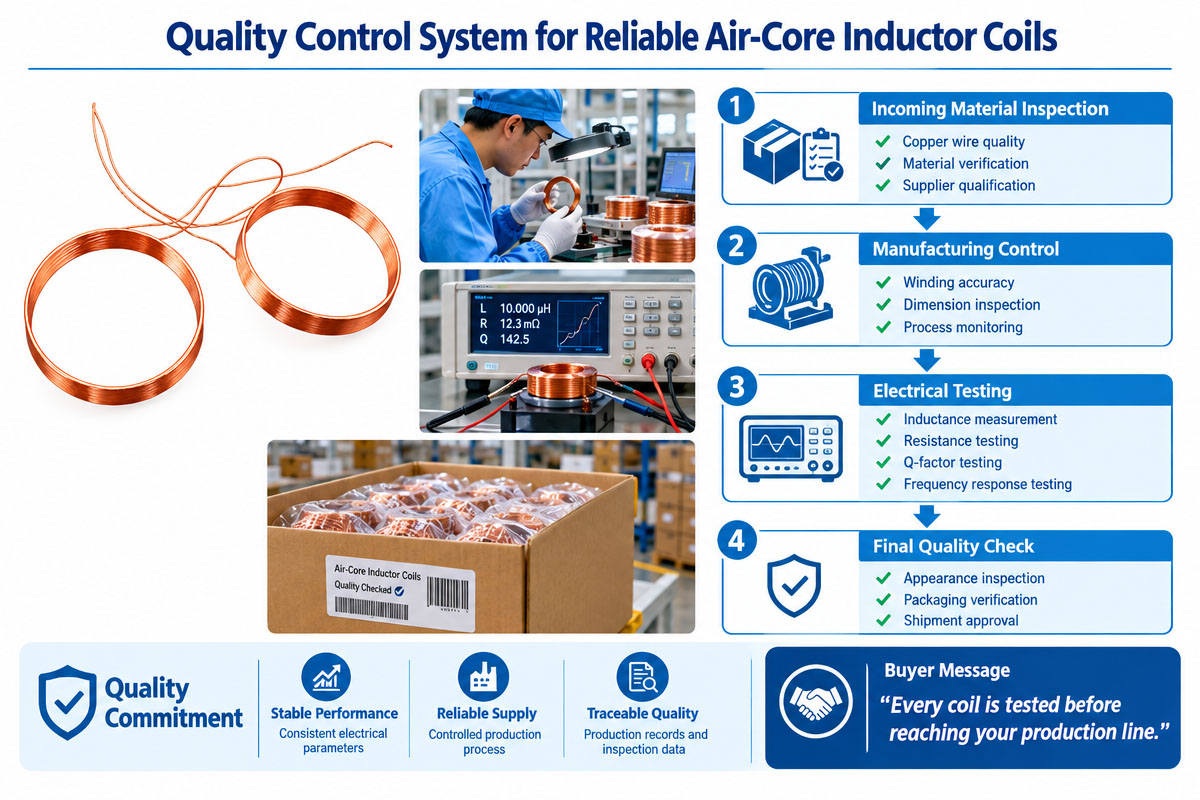
5. What Quality Tests Should I Ask When Buying Air-Core Inductor Coils?

When buying Air-Core Inductor Coils, the buyer should ask his supplier about the quality inspection process and availability of test reports. Typically, quality inspection includes the following steps:

inductance measuring

resistance test (DC)

measurement of the Q-factor

frequency response measurement

dimensional inspection.

The professional manufacturer has proper controls in the production process in order to ensure all the coils meet the electrical specification requirements and reliability criteria.

6. What Are The Common Problems With Air-Core Inductor Coils?

Typical problems include incorrect inductance values, high resistance, unstable frequency performance, overheating, or mechanical damage. The reason for these problems may be improper design of the coil, improper wire selection, operating conditions, or manufacturing process. The buyers can reduce the risks of the problems by verification of technical specifications, sampling before production, and selecting reliable suppliers with strong engineering support and quality management.

7. What Information Do I Need To Provide To Supplier Of Air-Core Inductor Coils?

The buyers should provide the following to get a precise quotation and design recommendation:

required inductance value

frequency of operation

maximum current

voltage requirements

coil sizes

installation method

application environment

quantity required

special performance conditions.

Proper technical information allows to design the appropriate coil solution and optimization of the development process.

8. Where Do I Find Reliable Air-Core Inductor Coil Manufacturer?

The buyers should select a manufacturer based on engineering capabilities, production experience, quality control system, customization capabilities, and delivery reliability. Important parameters are

โœ“ OEM/ODM project support โœ“ โœ“ Prototype & test capability โœ“ Stable quality of production โœ“ Technical communication assistance โœ“ Experience with similar applications โœ“ Inspection and record keeping.

Selecting a proper supplier guarantees stable product performance, reduced development risks, and supply reliability.

How to Choose an Air Core Inductor Coil?

Choosing the right air-core inductor coil requires balancing the electrical, mechanical, and application requirements.

1. Determination of the Inductance Value

2. Determine the inductance

You have to determine the inductance value you would like to use. The inductance is measured in microhenries (uH) or millihenries (mH). The inductance directly affects the filtering and energy-storing capabilities of the circuit.

3. Checking the Operating Frequency

Air-core inductors are mostly used in high-frequency applications. You have to ensure that the coil operates at the required frequency.

4. Checking the Current Rating

The coil has to be able to withstand the expected current without overheating. Choose the wire size and design according to the operating conditions.

5. Checking Q-Factor

The higher the Q-factor, the lower the energy loss and the more efficient. High-Q designs are usually required for RF and communication applications.

6. Examining the Physical Sizes

Make sure that you know about the installation space, mounting requirements, and mechanical constraints before selecting the coil size.

7. Checking Environmental Conditions

You have to take into consideration the temperature range, vibration, humidity, and operating environment for long-term reliability.

8. Selecting Custom OEM Capability

For special applications, working with an experienced manufacturer allows you to customize:

Coil diameter

Wire thickness

Round number

Inductance amount

Frequency response

9. Quality Checking

Electrical testing, inspection reports, and reproducibility in production are the key criteria for a good supplier.

Engineers and buyers can choose an air-core inductor coil delivering stable performance, long service life, and optimized circuit performance.

Tips to Avoid Common Mistakes in Air-Core Inductor Coil Design

Do not choose an inductance value without taking into account the operating frequency.

Do not forget about the wire resistance and thermal performance.

Do not ignore the coil spacing and winding accuracy.

Do not use the wrong coil size for the available installation space.

Always check the prototype before mass production.

Take the electromagnetic interference into account while designing circuits.

Check Q-factor requirements for high-frequency applications.

Do not use suppliers without quality control capability.

Get A Free Quote Now

Contact Form

Related Products

Related News

Scroll to Top

Get A Free Quote Now !

Contact Form
If you have any questions, please do not hesitate to contact us.
Weilong Solenoid Company Culture