Solenoid Lock Guide: Types, Working & Applications
Introduction
A solenoid lock referred to as a solenoid lock makes use of electromagnetic force in the management of a latch or a bolt. Once electric current passes through the solenoid, the magnet will lock or unlock the solenoid lock by moving the plunger or armature.
A solenoid lock is often utilized in access control systems, intelligent lockers, vending machines, industrial cabinets, and security devices due to the fast response time, ease of use, and high reliability of the solenoid lock system.
Chapter 1: What Is a Lock with a Solenoid?
A solenoid lock is a type of lock that makes use of electric currents in the management of the locking and unlocking of the lock.
Important Features
Works when the electricity is turned on
Transfers electrical energy into straight-line motion
Can be made fail-safe or fail-secure
Works with locks that are often used
Small and easy integration with electronic devices
A solenoid lock is faster and more effective in comparison with the regular electric lock and can be utilized with automated devices.
Chapter 2: Different Kinds of Solenoid Locks
There are various solenoid locks, and these are classified based on the design and the operation of the solenoid locks.
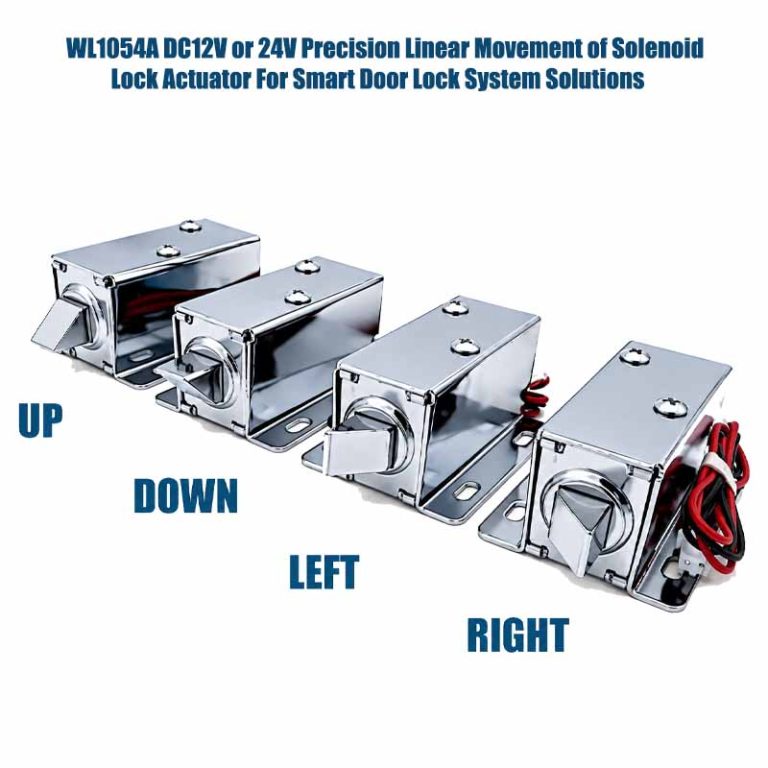
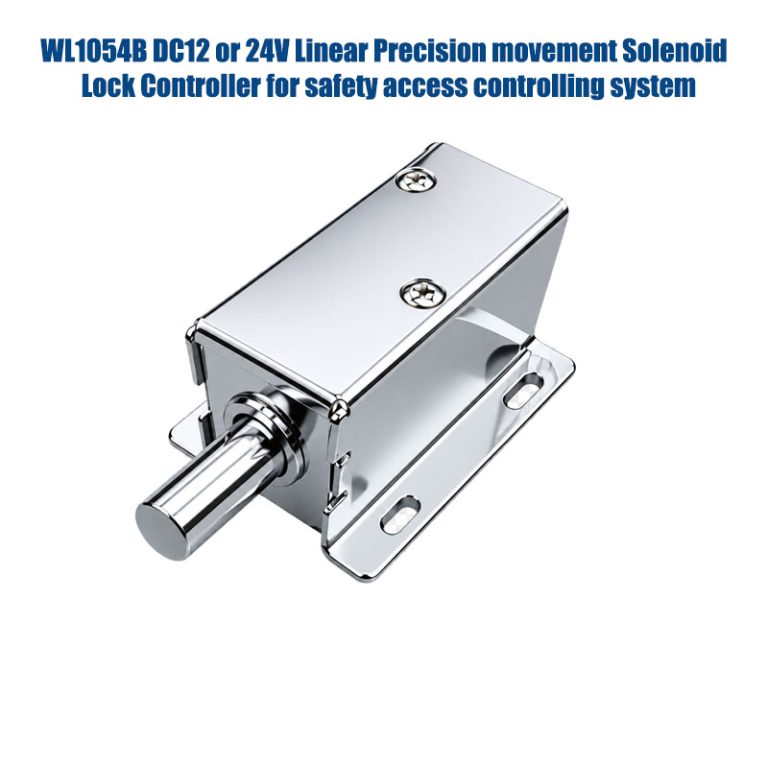
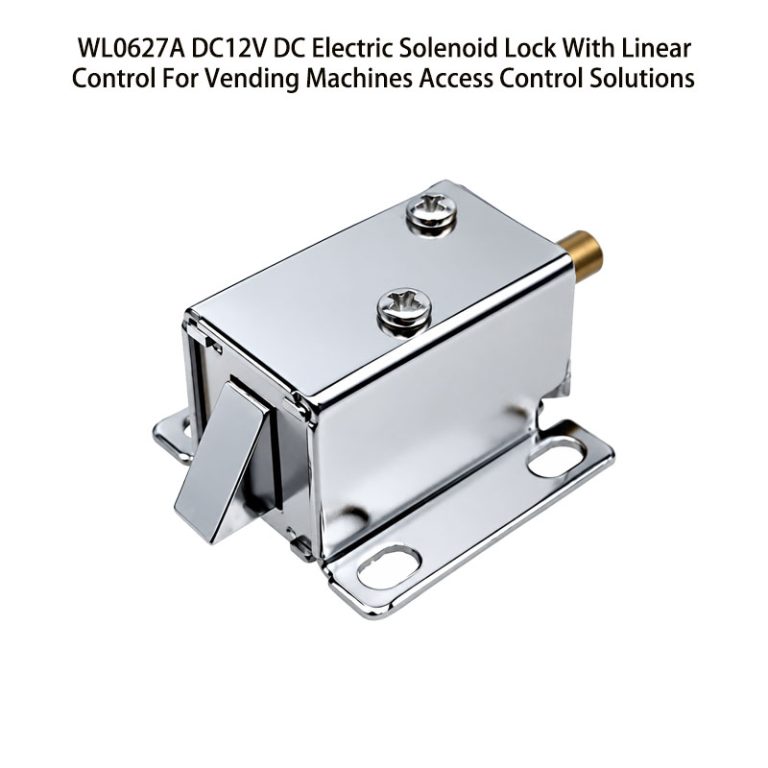
- Lock with a Push-Pull Solenoid
A push-pull solenoid lock is the most commonly used solenoid lock.
Characteristics
Utilizes a linear solenoid for the management of the lock
Utilizes gravity or a spring for the reset
Works by receiving electric currents
Strong and simple in design
Common Uses
Intelligent cabinets
Vending machines
Parcel lockers
Industrial equipment enclosures
- Small Round Lock with a Solenoid
Also called retaining electromagnet lock and cylindrical solenoid lock.
Characteristics
Small and round in shape
Makes a firm grip
Has a fixed armature plate
Easy to assemble
Uses
Smart lockers
Drawers that operate electronically
Small machines that operate things electronically
- Magnetic Lock (Electromagnetic Lock)
Magnetic locks don’t have any mechanical parts. They lock doors using the power of electricity.
Main Features
No mechanical parts that move
Must be constantly powered in order to lock
Very quiet operation
Has a strong grip
Uses
Doors that have access control
Security for offices
Security for emergency exits
Chapter 3: How the Solenoid Lock Works
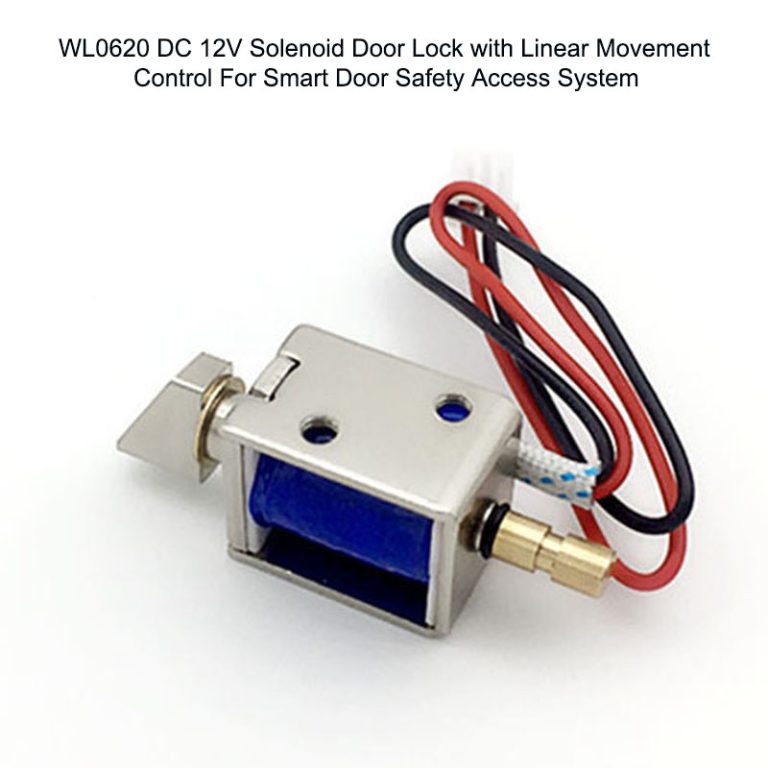
A normal solenoid lock has the following parts:
- Coil of the Solenoid
A copper wire that has a core that has a magnetic field when plugged in.
- Plunger (Armature)
A part that moves in a straight line when the solenoid’s magnetic field attracts it
- Latch or Bolt
The part that locks the door in place.
- Return Spring
The part that resets the solenoid when the electricity goes off.
- Housing
Usually made of steel and aluminum in order to last a long time.
- Interface for Power and Control
Most solenoid locks operate at 12V DC and 24V DC. They operate through access systems, relays, and microcontrollers.
Chapter 4: How Solenoid Locks Work
It is quite easy to use a solenoid lock.
Power On
The solenoid’s coil receives electricity.
Making a Magnetic Field
The solenoid makes a magnetic field when the electricity is on.
Moving the Plunger
The magnetic field attracts the plunger or armature.
Action by machines
The latch or bolt can be moved when you press the plunger to lock or unlock.
Reset Power Off
The return spring resets the plunger when power is turned off.
Fail-Safe and Fail-Secure Modes
Lock That Wonโt Fail
Unlocks when electricity is turned off
For emergency exits
Fail-Safe Lock
Locks even when electricity is turned off
For equipment that has to be safe
Chapter 5: Why Solenoid Locks Are So Popular
ations are becoming increasingly popular too.
- Demand for Smart Security
We need electronic security and control for modern buildings.
- Putting automation together
Itโs easy to put solenoid locks together with:
Systems that use RFID technology
Control of access via a keypad
Devices that can be connected to the Internet
Systems for smart homes
- Small Size
Because theyโre small, theyโre great for:
Clever lockers
Machines that sell things
Cabinets for delivering packages
- Quick Response
It takes virtually no time to lock and unlock a solenoid lock. Therefore, theyโre great for:
Things that happen very quickly
- Cost Effectiveness
Solenoid locks are cheap to make because theyโre not powered.
Chapter 6: Pros and Cons Pros
Quick Response
It takes nearly no time to lock and unlock a solenoid lock.
Easy to integrate
Works well with most electronic control systems.
Small Size
Great for small spaces and embedded systems.
Very reliable
Fewer moving parts means less wear and tear on the machine.
A lot of different designs
There are push, pull, hold, and magnetic types.
Restrictions
How much power it uses
Some solenoids have to have power constantly.
Making Heat
The solenoid coil could get warm since it is always powered.
Holding Force is Limited
Small solenoid locks are generally intended for light-duty applications.
Chapter 7: Solenoid Lock Datasheet (Typical Specifications)
Rated Voltage: 12V DC / 24V DC
Operating Mode: Intermittent or Continuous
Stroke Distance: 5 โ 20 mm
Holding Force: 5 โ 200 N
Power Consumption: 5 โ 20 W
Response Time: 50 โ 200 ms
Operating Temperature: -10ยฐC to 60ยฐC
Service Life: 100,000 โ 1,000,000 cycles
Note: Specifications vary depending on design and customization.
Chapter 8: How to Use Solenoid Locks
Many businesses use solenoid locks frequently.
Systems for Controlling Access
Doors to the office
Gates used for security
Exits in case of emergency
Smart Gadgets
Smart lockers
Lockers used to deliver packages
Smart cabinets
Business Tools
Machines used to sell things
Automated teller machines
Machines used to sell tickets
Systems for Industry
Electrical cabinets
Control panels
Machines used to keep people safe
Chapter 9: How to Choose the Best Solenoid Lock
You have to consider some things before you can select the best solenoid lock.
- Required Holding Force
Determine how much force is required to hold the door shut.
- Voltage Requirement
Some typical voltages are:
12 Volts DC
24 Volts DC
Select according to the power source you have available.
- Duty Cycle
Determine if the solenoid lock needs:
Occasional use from time to time
Constant use and never stops
- Length of the Stroke
The stroke of the plunger should match the locking mechanism.
- Conditions in the Environment
Things such as:
Temperature
Wetness
Installation outside
- Structure for mounting
Ensure that the lock design fits well in the place where it will be installed.
- Level of Security
Decide between fail-safe and fail-secure design based on your security needs.
In conclusion
In modern times, solenoid locks have come to be a very efficient way of locking things up. They can be used to satisfy a wide range of needs for power, electricity usage, and security level because they come in a variety of styles, including push-pull solenoid lock, cylindrical lock, and magnetic lock.
Solenoid lock has come to be an essential part of smart security devices and automation devices because it is compact, has a rapid response time, and can easily be connected to an electric current.
Weilong manufacturer can offer you full service for a custom solenoid lock solution, from design and development to mass production.
Frequently Asked Questions (FAQ)
The solenoid lock makes use of moving parts, unlike a magnetic lock, where only electromagnetism is used.
There are normally closed and normally open solenoid lock designs:
Normally Closed (NC) means it is always locked even when it has no power.
Normally Open (NO) means it remains unlocked even when it has not been powered on.
The most commonly used voltages for solenoid locks include 12V DC and 24V DC.
Yes, they can, but they have to be designed for continuous use or have a holding mechanism.
Yes, they can be used outside as long as they have a weatherproof case and waterproof parts.