


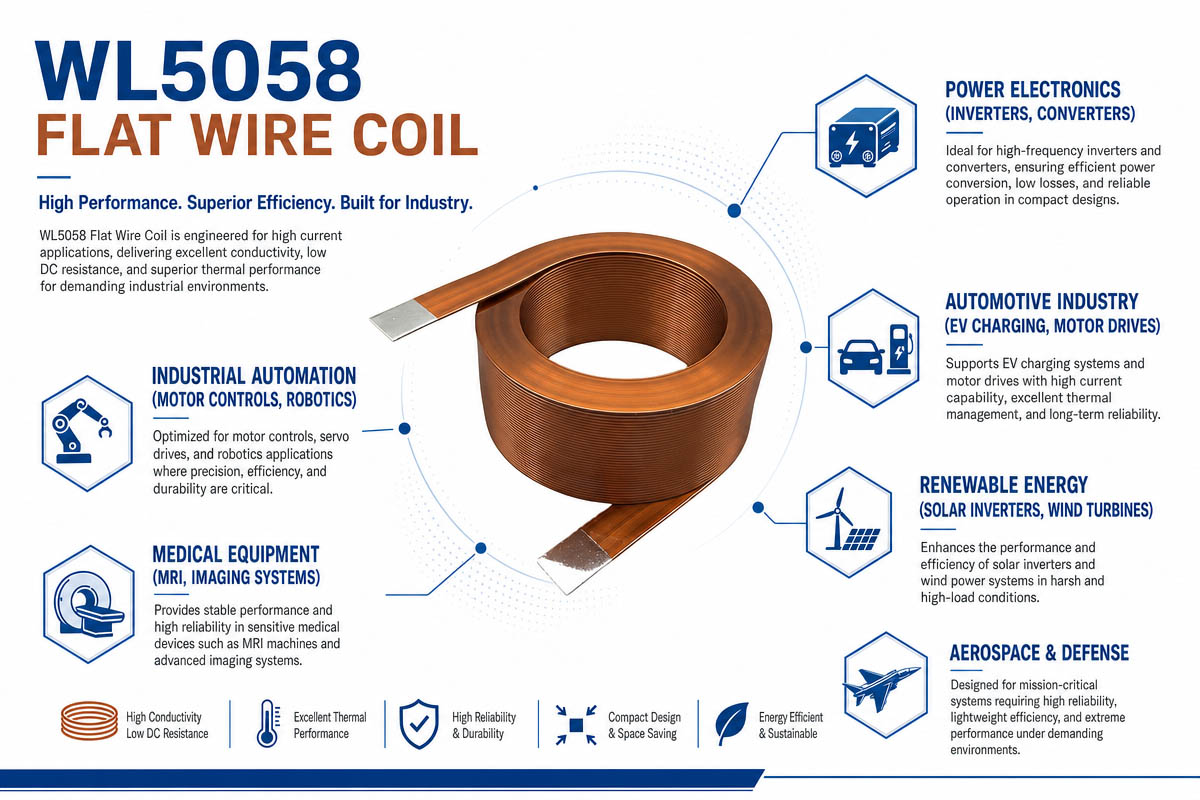
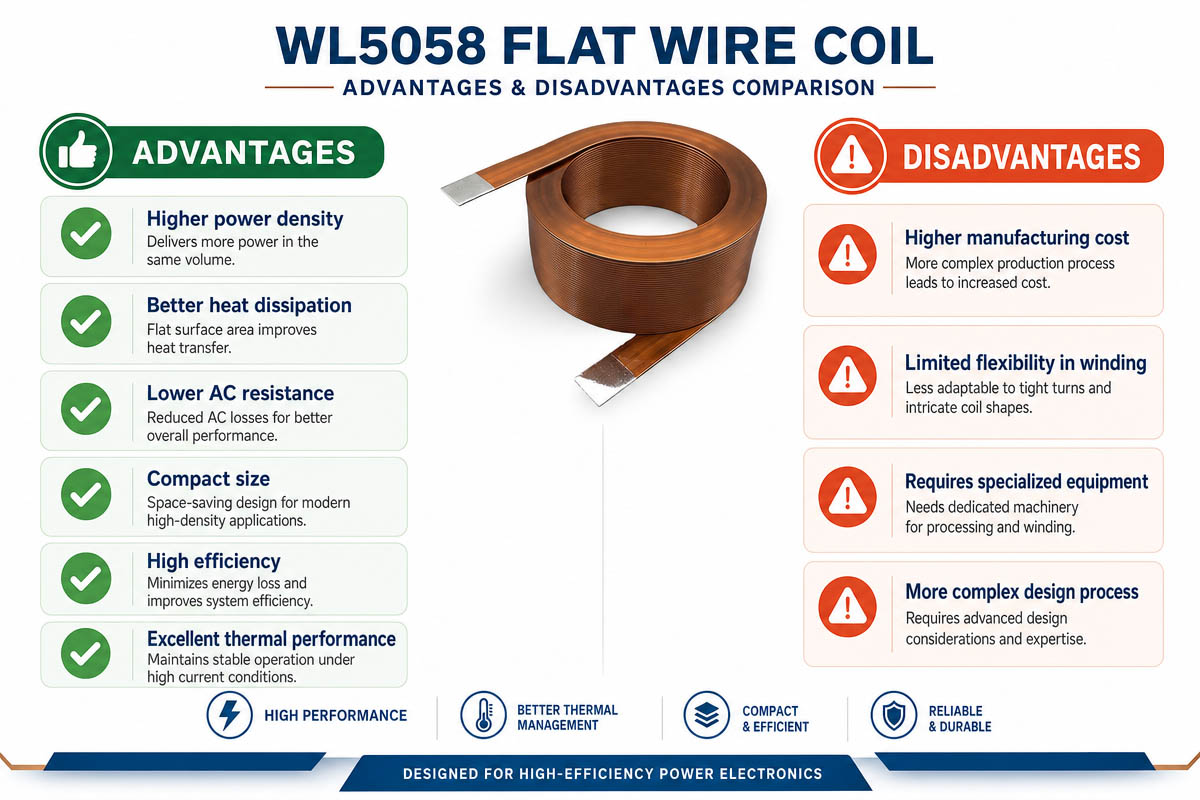
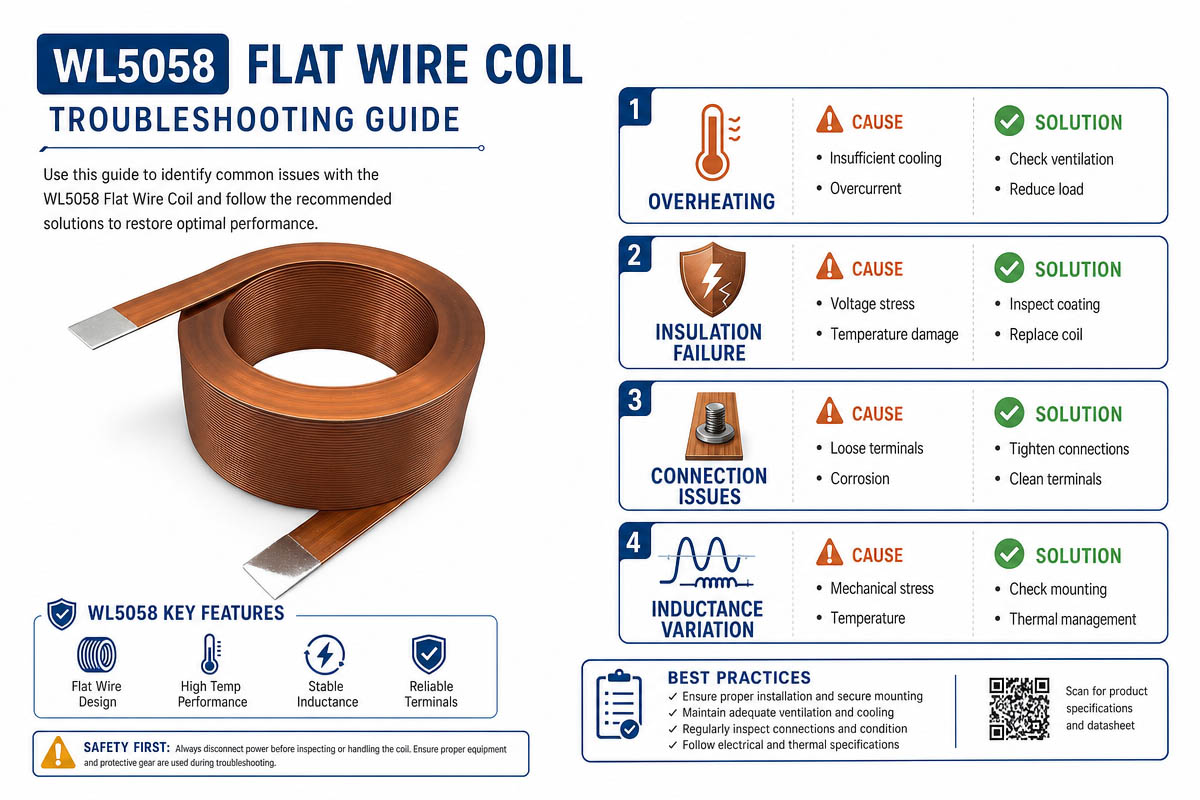
Flat Wire Coil Selection Tips
Here are tips on how to select a proper flat coil.
A common mistake made by flat wire coil users is not considering the application’s current requirements. Not taking into account the operating current causes the coil to overheat. Voltage, resistance, and operating current are vital.
Another common error during the selection is ignoring the temperature of the surrounding environment. A high operating temperature requires better cooling and insulation.
Often, buyers select flat coils based on prices, not quality. Cheaper products are made with cheaper materials, including lower-grade copper wire.
Selecting the wrong size also leads to failures in future use. A flat coil of inappropriate size will not fit the place for mounting.
Furthermore, users often do not take into account whether flat coils will work in a continuous or an intermittent manner.
Neglecting environmental factors such as humidity, dust, or vibrations results in failure in further use of flat coils.
To avoid all of these mistakes, it is better to cooperate with manufacturers and discuss technical details of a flat coil.
Flat Wire Coil Specification Guide
Selection of a proper flat wire coil requires careful consideration of many factors.
First of all, find out electrical specifications of flat wire coils, namely operating voltage, current, resistance, inductance, and power requirements. All of these parameters influence flat wire coils’ performance and heat dissipation.
Second, evaluate space constraints. Flat wire coils are very compact, but the size of the coil matters, and it needs to fit the space.
Third, look at thermal performance. This heat needs to be managed if you want flat wire coils to operate properly.
Fourth, verify the duty cycle. Flat wire coils are required to operate in either continuous or intermittent modes. Proper cooling and better insulation are required for continuous-duty operations.
Fifth, choose the right material. Copper flat wire is the best material for manufacturing flat wire coils.
Sixth, take into account environmental conditions and the surrounding environment (e.g., humidity, dust).
Seventh, evaluate the magnetic performance of a flat wire coil.
Eighth, ensure the manufacturer is reliable and has a good quality management system.
Ninth, check the industry certifications of the manufacturer.
Finally, ask the manufacturer to test flat wire coil prototypes.


