Choosing a Ferrite Coil Inductor Antenna
The first step in choosing a ferrite coil inductor antenna is to understand the frequency of operation. Different ferrite materials are optimal for different frequency ranges, and you should choose the right ferrite core to get the best efficiency.
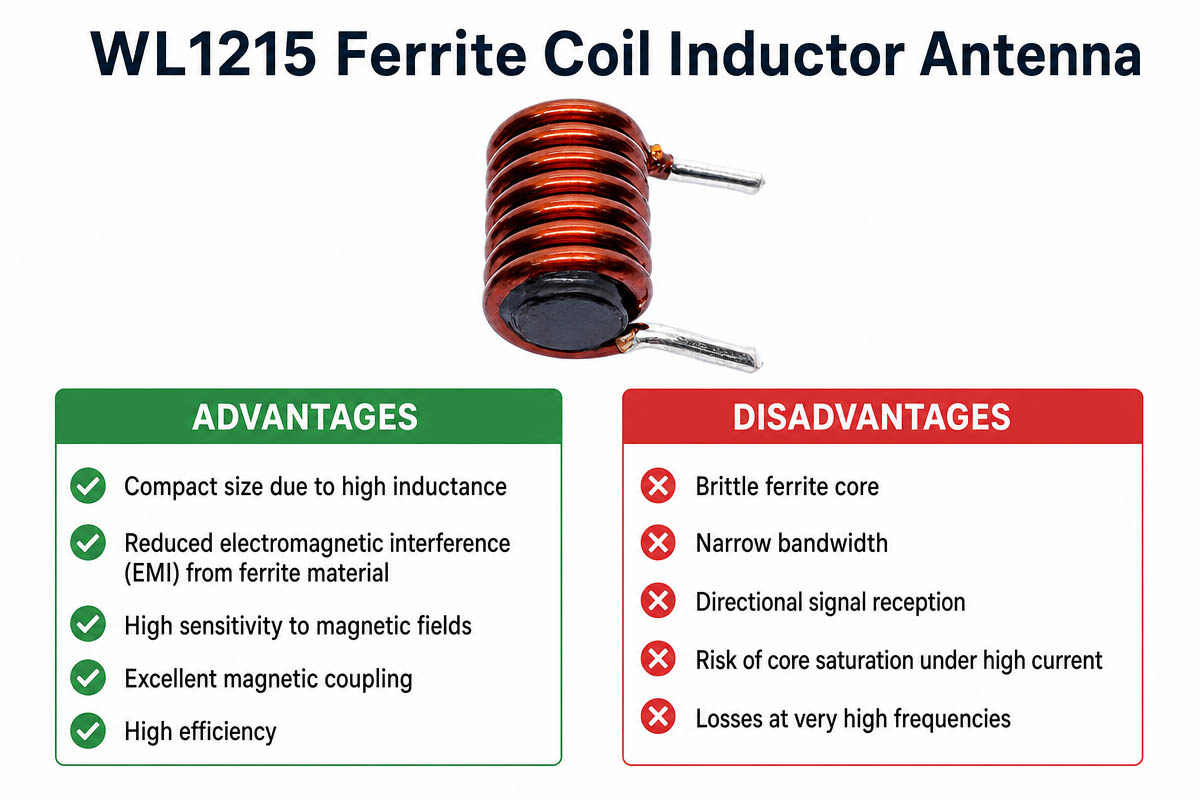
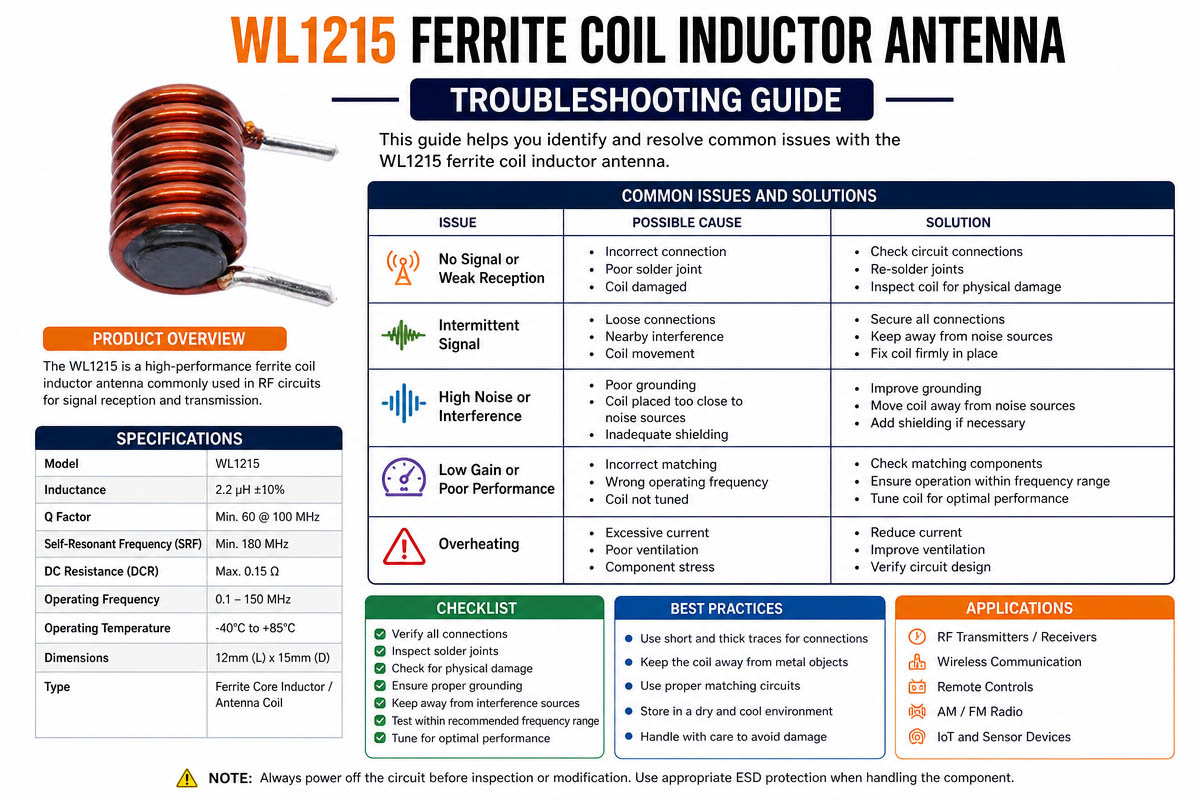
After that, consider inductance values and the quality factor (Q). Higher inductance increases sensitivity at lower frequencies, while an optimized Q factor will ensure efficient reception of the signal with minimum losses.
Also, you should think about the physical size of the antenna and the available space for mounting. Small electronic devices require small ferrite antennas, which do not affect their electrical parameters.
The number of coil turns, wire diameter, and winding will have a direct influence on inductance, resistance, and signal quality. Precision winding ensures consistent performance and reliability in manufacturing.
It is important to take into account environmental conditions. Ferrite materials with good thermal stability are required for high-temperature industrial environments. Long-time reliability requires moisture resistance, vibration resistance, and mechanical stability.
For wireless communication systems, impedance matching to RF circuits is crucial to ensure the best efficiency of signal transfer.
Another important criterion is the ability to personalize. The experienced OEM manufacturer can customize the ferrite material, winding design, inductance tolerance, frequency of operation, and connector configuration based on your requirements.
Last but not least, you should choose a manufacturer with in-house manufacturing, automated winding equipment, advanced testing equipment, and strict quality control procedures. OEM certifications, engineering support, fast prototyping, and steady manufacturing capacity will help to reduce development cycles and to ensure product consistency.
The right ferrite coil inductor antenna improves the reliability of the communication, expands the working range, reduces interference, and provides stable performance for the whole life of the product.
Tips to Avoid Ferrite Coil Inductor Antenna Design Mistakes
Choosing the appropriate ferrite material for frequency of operation.
Do not use too many coil turns, as it will increase resistance.
Increasing inductance without degradation of the Q factor.
Maintaining tension while winding.
Making sure of proper impedance matching.
Minimizing parasitic capacity.
Reducing electromagnetic interference.
Keeping enough distance from the metal parts.
Checking operating temperature range.
Prototype testing before mass production.
Using precise winding equipment.
Checking the frequency response with RF equipment.
Taking the mechanical vibration resistance into consideration, for example.
Choosing the right insulating materials.
Collaboration with experienced antenna engineers while developing the product.