Skip image slider
Miniature Latching Solenoid for Access Control Guides
Miniature Latching Solenoid Features and Benefits
Miniature Latching Solenoid for Cabinet Locks solutions
Miniature Latching Solenoid for Vending Machines equipment
Miniature Latching Solenoid for Smart Furniture
Miniature Latching Solenoid for Compact Robotics solutions

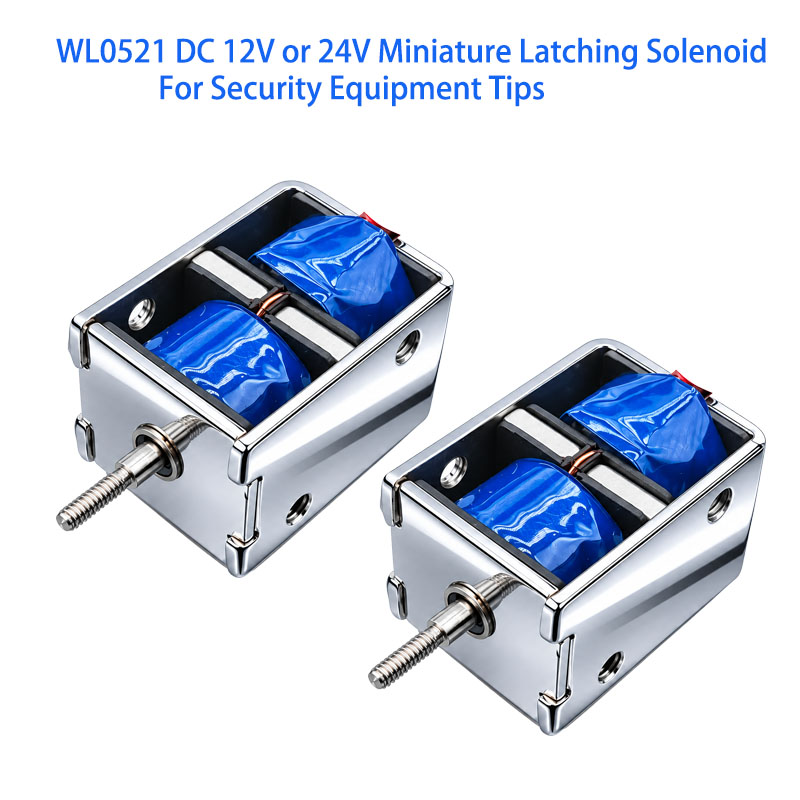
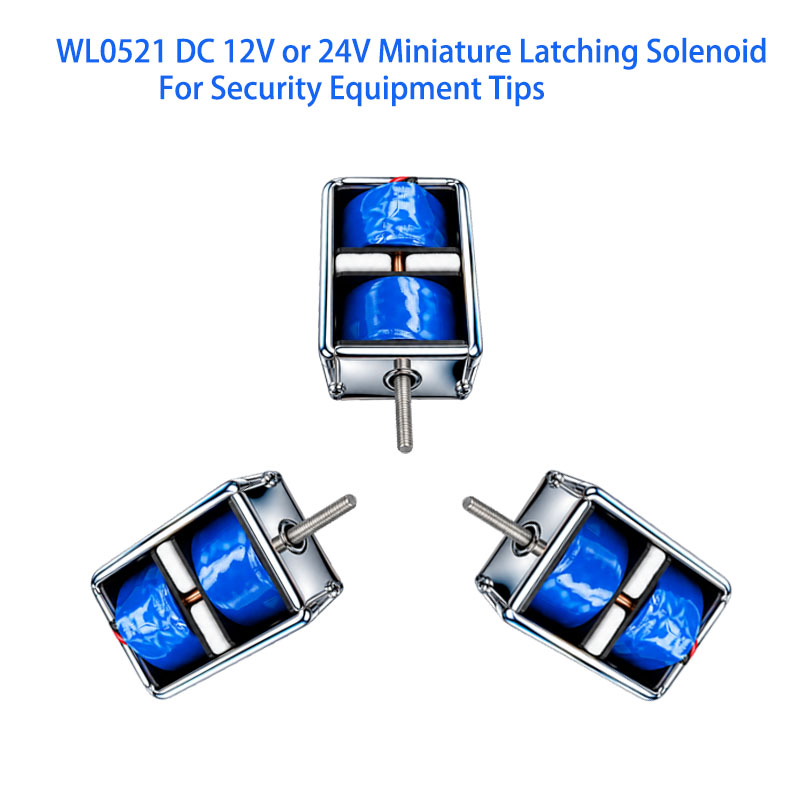
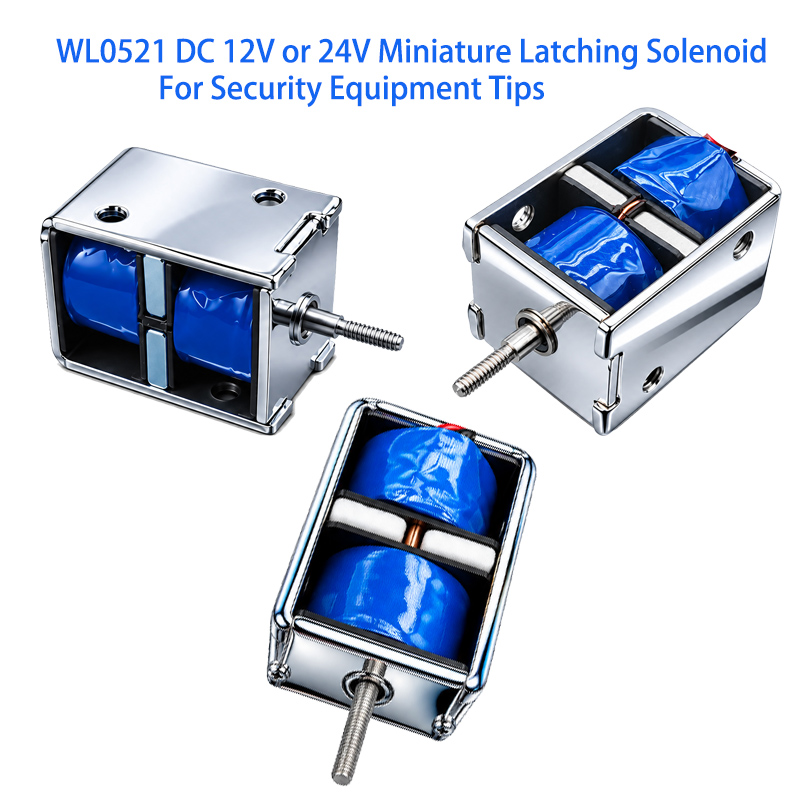
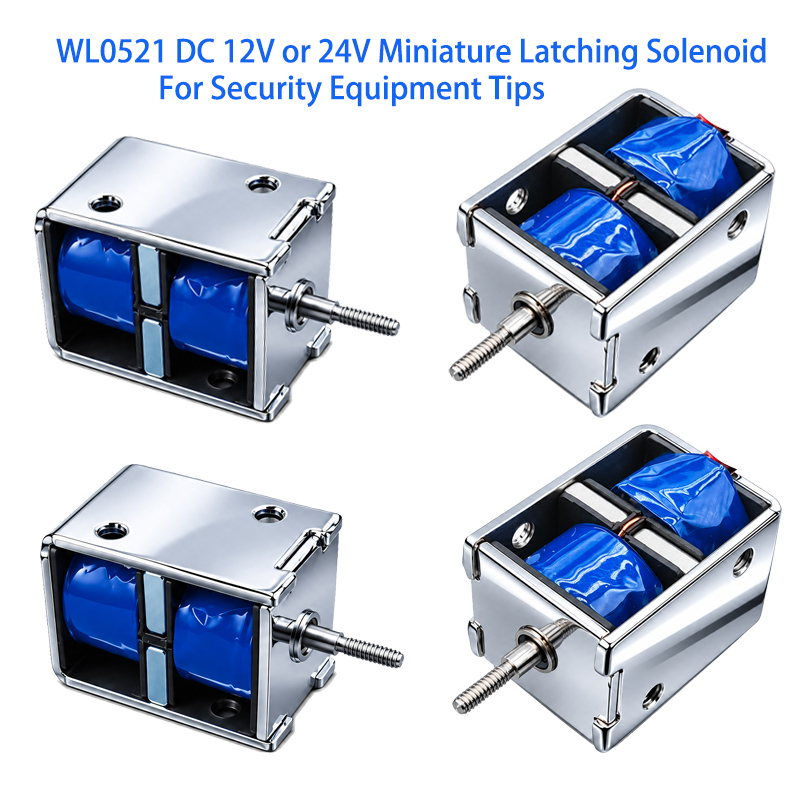
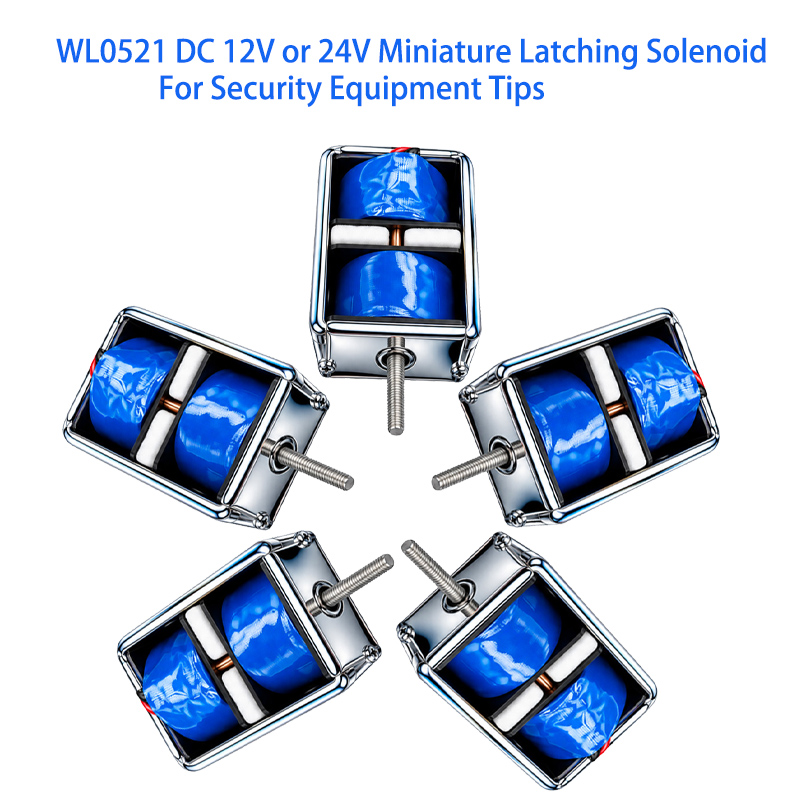
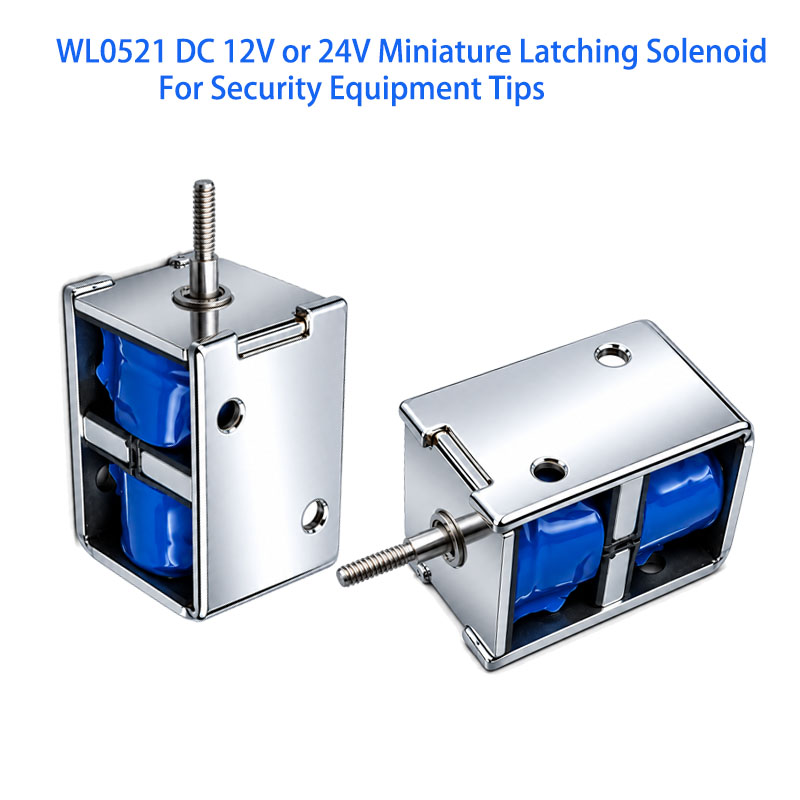
WL0521 Miniature Latching Solenoid for Smart Lock Systems Tips

A miniature latching solenoid is a low-power-consuming electromagnetic actuator applied in small industrial devices, smart electronic locking systems, and automation equipment. The main aim of a miniature latching solenoid is to give controlled linear movement, keeping a set position without permanent electricity consumption.

Miniature latching solenoids usually have a construction including a copper coil, magnetic core, plunger, a permanent magnet, and a spring. Depending on the specific design, a plunger in such an actuator can be both extended and retracted through electrical pulses for safe locking, unlocking, switching, and positioning. Due to their low power consumption and energy-saving properties, miniature latching solenoids can be effectively applied in such devices as smart cabinet locks, electronic door locks, vending machine locks, and medical apparatus.

Miniature Latching Solenoid Product Overview

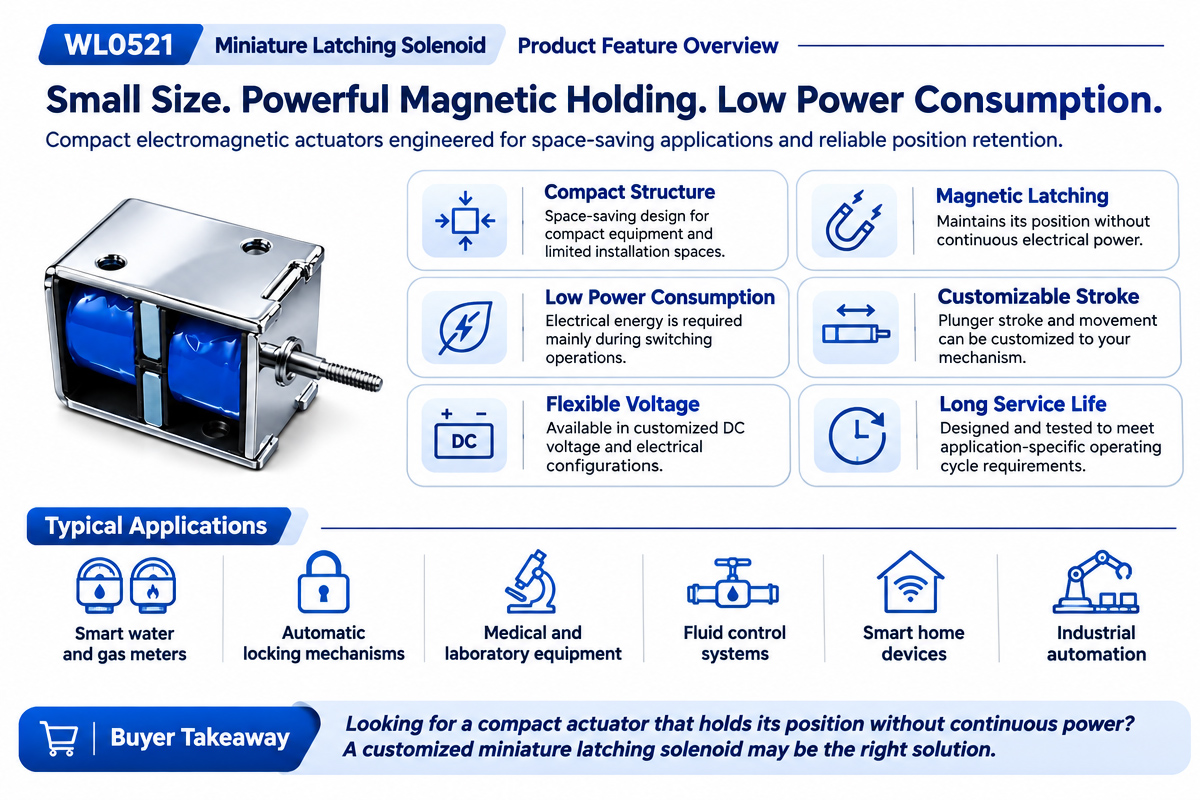
The miniature latching solenoid is a small electromechanical actuator optimized for effective linear actuation and retaining position by magnetic means. The most typical constructions of miniature latching solenoids include an electromagnetic coil, a magnetic frame, a plunger that is capable of moving, a permanent magnet, and an optional spring. Depending on the magnetic design, a particular model can have a capability of single-position or dual-position latching. The specifications are of great importance, such as voltage, pulse duration, stroke length, holding force, operating force, dimensions, and environmental resistance. They are usually used in electronic locks, industrial control systems, automated cabinets, and other devices that operate on battery power. OEM customizable designs can fit particular requirements on mounting, connectors, mechanical interfaces, and performance parameters.

How A Miniature Latching Solenoid Works?

Representation of miniature solenoid actuators; the real latching mechanism depends on the manufacturer.

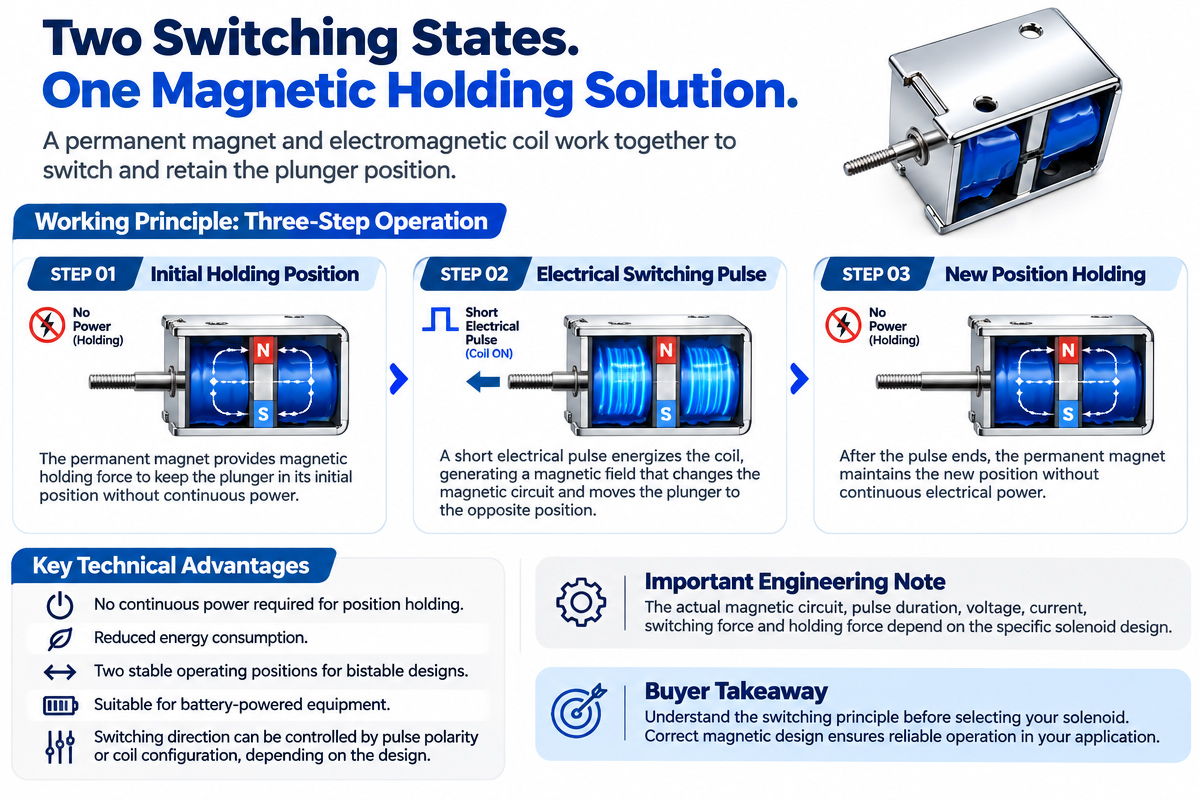
The basic principle of the work of a miniature latching solenoid actuator is the combination of magnetic latching and electromagnetic force. When the current flows through the actuator’s coil, there appears a temporary magnetic field moving a ferromagnetic plunger in the actuator. When the current stops, there remains a permanent magnetic field holding the plunger in the latched position.

The working cycle

Step 1 โ€“ Electro-Pulse

An electrical pulse is sent to the solenoid coil, creating a magnetic field.

Step 2 – Move the plunger.

The plunger is moved against the external loads and spring forces to the necessary position by the electromagnetic force.

Step 3 โ€“ Locking with magnets

When the pulse finishes, the plunger remains at a fixed position without current flow because the magnetic field is permanent now.

Step 4 โ€“ Motion Release/Reverse

The position of the plunger is reversed by a pulse in another direction, a separate releasing circuit, or some other mechanism suggested by the manufacturer of a particular device. A single latching design can move the plunger back after releasing it.

Remark: Don’t confuse single-latching and bi-stable solenoids! A single latching unit can hold the plunger in just one position, while the bi-stable can hold the plunger in two positions.

Main Features of Small Latching Solenoids

Miniature latching solenoids provide the following properties useful for industrial and commercial products. Small dimensions enable the installation of the actuator in a small space. The permanent magnet construction lets the solenoid hold the plunger at a set position without an energy flow, saving power and making the actuator energy efficient. The temporary pulses needed for positioning reduce the heating and make the device suitable for a battery-powered design. Also, depending on the manufacturer of a particular device, there could be offered various voltages, stroke lengths, holding forces, and mountings.

Besides, thanks to a correct design of the electromagnetic system, a fast actuation of the actuator and repeatability of a mechanical movement are possible. Other advantages are low standby consumption, OEM customization, and control with electronic controllers. All these factors make miniature latching solenoids indispensable components for modern smart locking and automation systems.

Custom Miniature Latching Solenoid Product Video

Custom Miniature Latching Solenoid Detailed Display

Miniature Latching Solenoid Technical Data Sheet

Brand Weilong Technology Model Number WL0521
Rated Voltage (V) DC 5V or 24V Rated Power (W) 3-10W
Work Model Pull Push Type Holding Force (N) 50 GF, push force: 100 gf
Stroke (mm) Customized Reset Time(s) 1S
Service Life 200 Thousand Times Certification CE, RoHS, ISO9001,
Material Carbon Steel Housing Lead Wire Length (mm) 200
Install Style mounted screw hole for easy setup Tolerance of Dimension ย +/-ย  0.1 MM
Water-proof ย None Insulation Class B
Hi-Pot Test AC 600V 50/60 Hz 2s Non-excitation Holding Force 0
Working Temperature -10ยฐC-100ยฐC Duty Cycle 1-100%
Thread Depth (mm) / Payment Term TT, or LC At Sight
Sample Order Yes Warranty 1 Year
MOQ 500 pcs Supply Ability 5000 pcs per week
Delivery Time 30 Days Port of Loading Shenzhen

Miniature Latching Solenoid VS.

Non-Latching Mini Solenoid Complete Guide
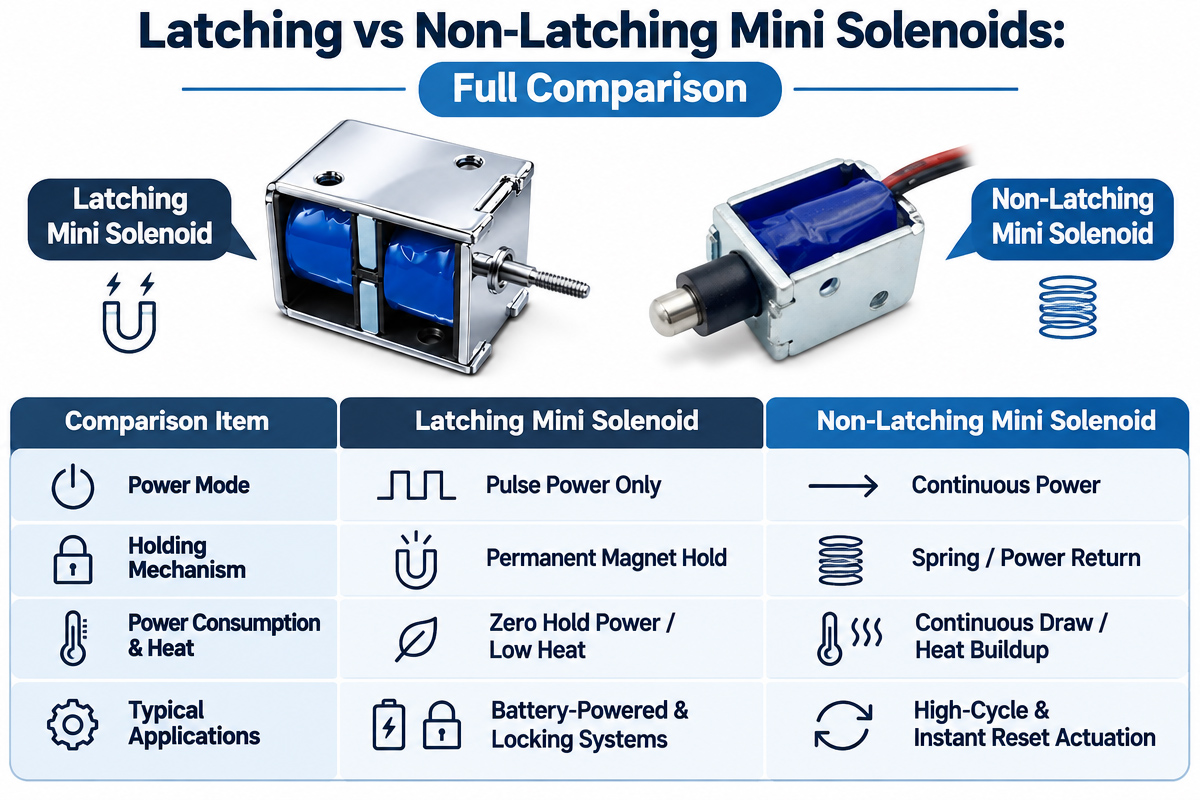
Minimatur Latching Solenoid VS Linear Solenoid Differences and Selection Guide

Miniature and latching mini solenoids are two types of electromagnetic actuators that turn electrical energy into the motion of plungers.

These actuators are widely used in the design of compact electromechanical systems, industrial automation, electronic locks, medical equipment, and vending machines.

The actuators might look the same, but their mode of operation, energy consumption, control requirements, and suitability in particular applications will be very different.

It is important to understand these differences, as they will help you select the appropriate actuator.

1 Modus operandi

The miniature latching solenoid moves the plunger using electromagnetic forces and retains the plunger in the desired position with the help of a magnetic retention system when the electrical pulse is turned off.

Depending on the design, the actuator might retain one position or two with the help of a permanent magnet or bistable magnetic structure.

The miniature non-latching solenoid will move the plunger while the coil is energized and will return it to its starting position in case there is no electric current.

Thus, the main difference is whether the device needs a power supply to retain the commanded position.

2. Energy consumption

The first parameter, where there is a big difference is the efficiency of electrical power.

Miniature latching solenoids use electrical energy only to actuate the mechanism or change the position. When the plunger reaches its magnetically latched position, the electrical current can be stopped.

Typically, a non-latching mini solenoid is held in a position by an electrical pulse constantly powered.

The difference makes latching actuators very attractive in battery-powered smart locks and remote-operated devices.

Nonetheless, a conventional solenoid may prove to be very effective if the application needs only intermittent and quick movements.

3. Generation of heat

Passage of the electrical current through a solenoid coil causes heat generation.

Continuous energization of the solenoid generates additional heat and should be taken into account when calculating coil ratings and designing thermal dissipation channels.

Miniature latching solenoids usually dissipate less heat on average as the coils are powered briefly.

However, pulse duration too long or too frequent switching may still cause overheating in this type of actuator.

None of the actuators can be operated outside the limits of manufacturers’ electrical and thermal specifications.

4. Holding force

Miniature latching solenoids retain their position magnetically. Holding force depends on the magnetic circuit design, position of the plunger, air gap, and mechanical load.

While energized, a non-latching solenoid creates electromagnetic force. Its force depends on the current and position of the plunger.

You cannot compare these forces according to their nominal values.

Engineers need to take into account the force vs. stroke graph, release requirements, temperature, and actual load.

Locking system. . . Ideally, in case it is possible, a mechanical latch should bear the security load.

5. Requirements for the control circuit

Latching actuators require somewhat more complex electronic control than non-latching ones.

A bistable miniature actuator usually changes position by changing the current polarity through the coil. It means usage of an H-bridge or reversing polarity driver.

There are some solutions with separate coils for setting and resetting.

A non-latching mini solenoid needs a simpler switching circuit, for example, a transistor or MOSFET.

Nevertheless, in the case of constant-duty work, some additional features may be required: current regulation, thermal protection, or reduction of holding current.

The best solution will depend on overall electrical design.

6. Design of mechanical

Both kinds of actuators are available in compact designs and are supplied with various mounting options, plunger profiles, strokes, and operating forces.

Miniature latching solenoids have additional features to retain magnetic holding. It makes the mechanical design more complex.

Non-latching actuators use springs to return to their default positions automatically.

Neither type of actuator is always smaller and more powerful.

Its actual size and performance depend on force and stroke requirements, magnetic material, coil design,. and conditions of operation.

7. Reliable operation and durability

Both types of actuators can provide reliable performance if appropriately selected and designed.

Latching solenoids do not require continuous energization of the coil but also have pulse timing, magnetic retention, and releasing control issues to solve.

Non-latching solenoids can provide more straightforward behavior in the default state but have the risk of thermal stress during long-term work.

Both actuators are subjected to the mechanical wear, contamination, misalignment, corrosion, and impacts.

“Engineers must request endurance test data and test the performance of the actuator in real-world mechanical and thermal conditions.”

8. Cost Comparison

Simple design of magnetic circuit and control for conventional mini solenoids usually means lower initial component costs.

Latching miniature solenoids may require initial investment because of special materials such as permanent magnets and more complex magnetic circuits or control systems.

However, lower holding energy allows decreasing the operational and battery replacement costs.

The total cost must cover the actuator, driver circuit, power source, battery, maintenance, and lifetime.

9. Suitability For Usage

Miniature latching solenoids can be especially useful in applications where the position is required to be held for long periods of time with low power consumption.

The common example is smart locks and electronic cabinets.

Non-latching solenoids are used in applications that require returning to the default position when the power supply is removed.

It is a good option for automatic release systems, machine tool actuators, and certain safety controls.

The choice depends not only on the normal mode of operation but also on what happens in case of power loss.

10. Which Solenoid?

Use a miniature latching solenoid if you require low consumption, magnetic position retention, and high battery efficiency.

In case you need simple control and the default position, choose the non-latching mini solenoid.

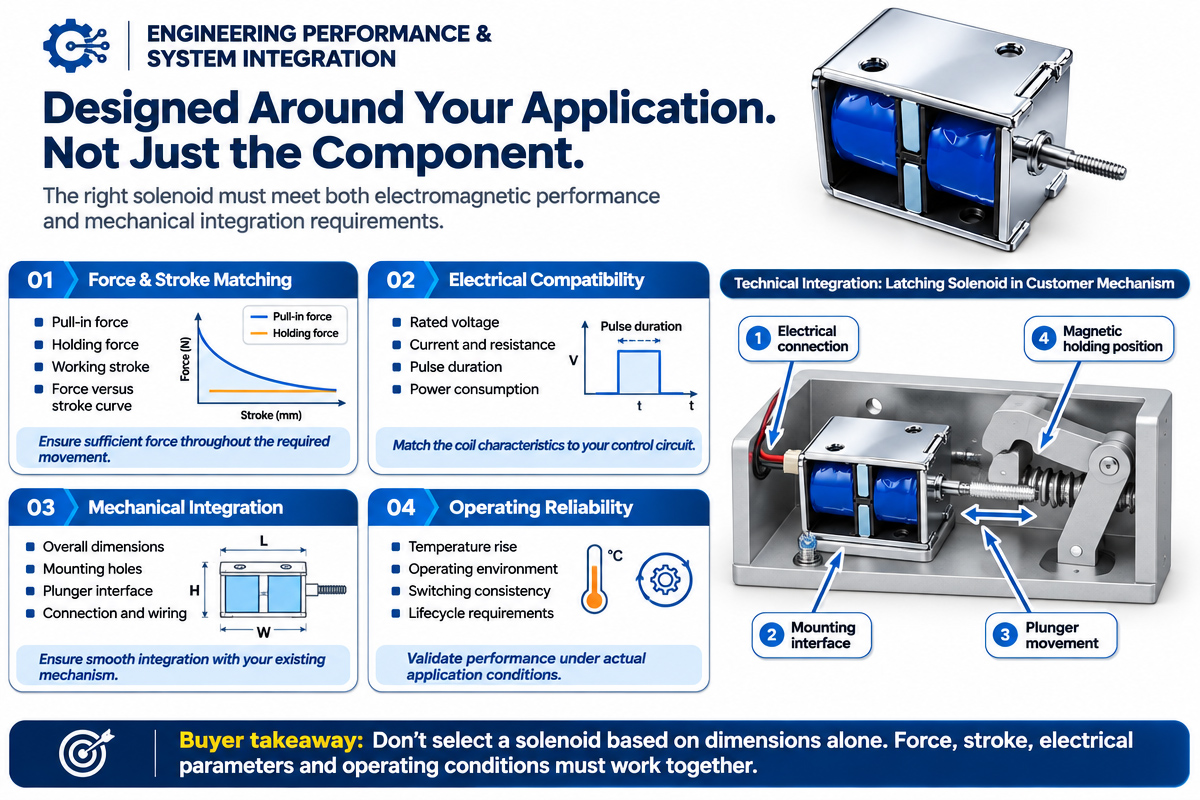
For both of them, it is necessary to check out force, stroke, voltage, duty cycle, thermal limitations, conditions of environment, and mechanical integration.

It is extremely important to test a prototype, as the actual performance of the actuator will depend on the overall system, not on the solenoid only.

11. Technical features comparison chart

Parameter: Miniature Solenoid with Latching and Non-Latching Miniature Solenoid

Principle of operation Electromagnetic actuation with magnetic latching Electromagnetic actuation without magnetic latching

Continuous holding power Not needed in the magnetically latched state Normally it is needed to hold the energized position.

Consumption of power Low for infrequently switching Normal, depending on the energization period

Generation of heat Low average heating normally Higher in the case of continuous energization

Behavior in a de-energized state Usually returns to the default state Holds latched state

Control electronics may require polarity reversal and multi-coils. Usually utilizes a simple on/off switch

magnetic electric force or external mechanism for maintaining the position

The return mechanism usually uses magnetic switching and sometimes springs. A spring or external mechanism is used in the non-latching kind.

Initial cost probably higher Usually lower in simple designs

Cost for battery-powered devices Good for long retention periods Excellent for short duty periods

Smart lock applications Good for low power smart locks Useful where automatic return is required

Design complexity is usually simpler.

Thermal issues: Pulse duration and repetition rate Energization time and duty cycle

OEM customization: Usually yes, yes.

12. An Example of Power Consumption in a Smart Lock

Let’s take two actuators. Both consume 6 W when energized.

Comparison of interactive energy consumption of smart locks

Operating daily

Normal holding time when energized: seconds per each operation

Solenoid holding

0.1 s pulses each day

Solenoid non-latching

Holding each day energized

Energy latching

Non-latching energized holding energy

Coil energy is illustrative only. Assumes 6 W energized power, a 0.1 second latching pulse per each operation, and the required holding time for the non-latching solenoid. Real devices may require multiple pulses, reduction of holding current, etc.

This example demonstrates the energy savings that latching actuators can offer in applications with long retaining periods of a position.

It does not mean that latching solenoids always consume less energy. Actual comparison depends on the frequency of switching, holding time, electrical efficiency, and design of the actuators.

 

Miniature Latching Solenoid Industrial Application

Custom Miniature Latching Solenoid For Industrial Application

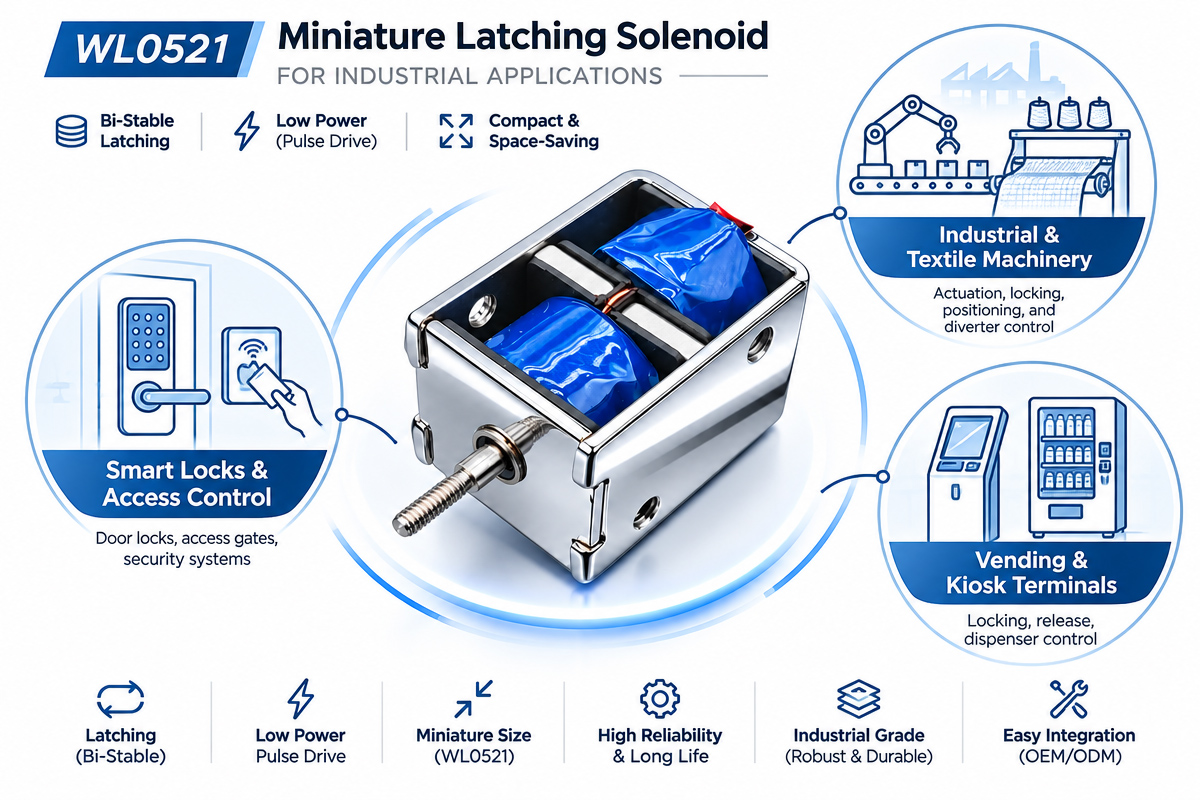
The compact design and low power consumption made miniature latching solenoids widespread in industry, commerce, and electronics.

Use in Smart Locking Systems: Electronic door locks, cabinets, and lockers use latching solenoids for controlling locking systems without constant power consumption.

Applications in Industry and Commercial Equipment: Miniature latching solenoids can be installed in automated machinery and equipment performing such functions as positioning, interlocking, releasing, and others.

Used in Access Control Equipment: Latching solenoids can be used in safety systems, electronic safes, and other devices that have limited access and can perform both locking and unlocking.

Use in Vending Machines: Automated vending machines use the small latching actuators for locking of product compartments and access panels.

Use in Medical Equipment: Depending on the level of reliability and regulations of a particular product, latching solenoids can be used to perform locking and positioning.

In smart home systems, small latching actuators can be effectively installed in furniture and other household devices connected to electronic controls.

Application in battery-operated IoT systems: Remote monitoring units and wireless locks using the pulse-driven actuators to save the batteries.

In metering equipment, latching mechanisms are applied in smart meters and other devices for secure access control.

Robots: Small latching solenoids can be used for positioning and other movements of the robot’s elements.

It should be noted that all these applications depend on the force, stroke length, environment, and safety requirements.

Why Miniature Latching Solenoids Have Become Popular in Smart Locking Systems

There are several major problems associated with the development of battery-powered and remotely operable smart locks, which the use of miniature latching solenoids solves.

1. Smart locks run on batteries: energy efficiency

A smart lock spends a lot of time waiting for an access request. A latching solenoid consumes electrical energy exclusively to change its state but does not consume energy to hold the latched position continuously.

This working principle is especially advantageous for wireless smart locks, electronic lockers, and remote locking devices.

2. Compact Integrations

Today’s smart locks require actuators to be compact enough to fit tight spaces inside door frames, cabinets, drawers, and electronic housings.

Miniature latching solenoids allow the creation of compact mechanical locking assemblies.

3. Minimal Standby Heating

The coil is heated when powered continuously. A latching solenoid does not require a continuous current to hold it latched. In applications when the state is changed rarely enough, it results in decreased average heat generation.

4. Ability To Be Controlled Electronically

Many miniature latching solenoids can be driven by microcontrollers, appropriate MOSFETs, or H-bridges.

They become advantageous to use in integration with RFID access control devices, Bluetooth locks, connected cabinets, and industrial control electronics.

5. Mechanical Position Holding

A properly selected latching solenoid will retain its state when the normal power supply is interrupted.

However, it remains up to the designer whether to keep the lock in the retained state or to unlock it. The security grade is not determined only by magnetic position retention.

6. Flexibility of Design for OEM

The actuator can be customized with respect to size, plunger design, stroke length, and electrical and mounting parameters to be compatible with particular locks.

It provides the opportunity for customization of smart lock devices without copying mechanical construction.

7. Potential Reduction of Operating Energy Costs

The initial component price of latching actuators can be higher, but the minimal holding energy decreases the battery replacement and maintenance cost.

The cost reductions will be determined by the frequency of operations, pulse power consumption, the consumption of controller electronics, and overall system design.

Smart Lock Example Applications

Smart locks application Key benefit

Electronic cabinet locks Efficient mini actuator and compact size

Smart parcel lockers Pulse-based locking and unlocking process

Locking of doors that are run by batteries Energy-saving actuator

Storage cabinets that use RFID access Efficient integration with electronic controllers

Small and configurable mounting Smart furniture

Access panels for industry Position held by magnetism

Electrical safes controlled mechanical actuation in the security system.

Technical Note: Do not forget about the miniature latching solenoid as a part of the locking assembly. “Security is not just the actuator but also the geometry of the bolt and latch, enclosure, controller, tamper resistance, and mechanical construction.”


Miniature Latching Solenoid Advantage and Disadvantage

Mininature Latching Solenoid Advantage and Disadvantage Guide

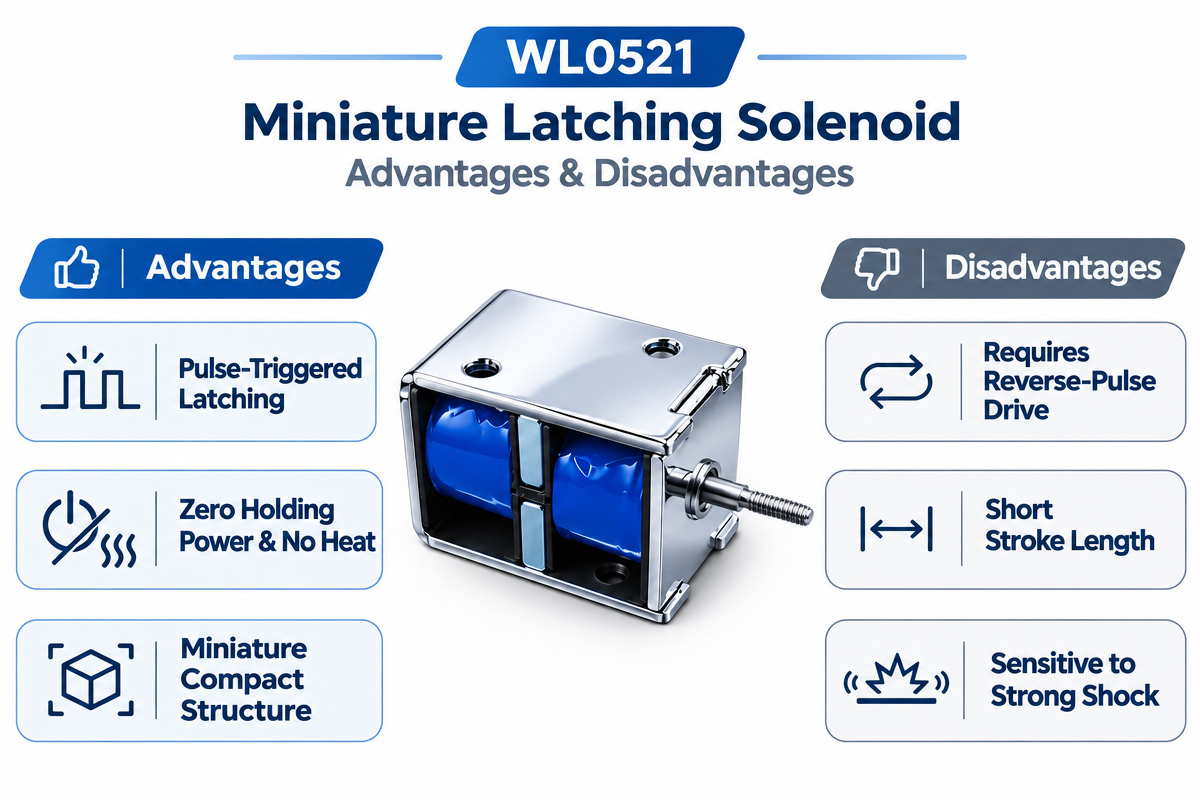
Miniature Latching Solenoid Advantage

Low Power Consumption: Miniature latching solenoids work with short pulses and retain their position without a continuous power flow, making them appropriate for use in battery-powered systems.

Low Heat Production: Typically, the short pulses of a miniature latching solenoid cause less heating of the coil compared to constantly held systems.

Compact Design: The small size enables it to be integrated into electronic locks, cabinets, and intelligent and industrial devices.

Position Retention: The latching design ensures that the position is retained without constant energization of the coil provided that external loads do not exceed the limit ratings.

Longer battery life: Standby power consumption is low, resulting in increased periods between battery replacements.

Flexible Integration: There is a possibility of OEM customization with different voltages, strokes, mounting arrangements, and mechanical interfaces.

Miniature Latching Solenoidย  Disadvantage

More Complicated Electronics Required: Some miniature latching solenoids require the use of more complicated electronics to provide reverse polarity, H-bridges, and special pulse control.

High Initial Price: The special magnets used in a latching actuator make it costlier compared with regular solenoids.

Shorter Strokes: Miniature latching solenoids often lack longer strokes compared to larger actuator designs.

Retention in Latched State on Power Failure: Sometimes the actuator retains position after turning off the power, which may not be desirable for some applications.

Susceptibility to Magnets: Miniature latching solenoids could be affected by strong magnets and mechanical impacts.

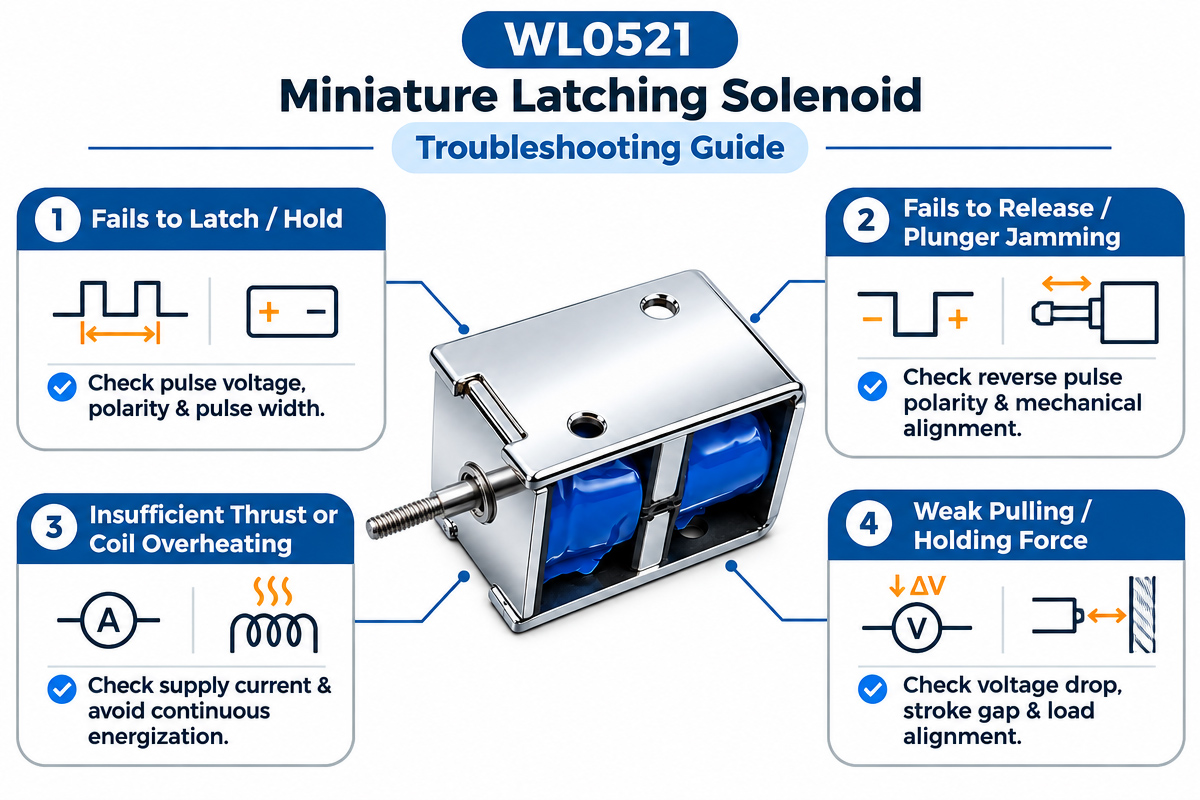
Miniature Latching Solenoid Trouble Shooting Guide

Custom Mininature Latching Solenoid Troubleshooting Guide

The use of miniature latching solenoids may involve some problems caused by electric failure, mechanical resistance, improper control pulses, and environmental factors. To find the origin of a problem, one should troubleshoot systematically.

1. Solenoid Fails to Activate

To troubleshoot, you need to test voltage, coil continuity, driver output, and pulse amplitude.

2. Plunger Fails to Lock

To troubleshoot, you need to inspect the magnetic latching mechanism, plunger alignment, and mechanical loads.

3. Solenoid Fails to Unlock

To troubleshoot, you need to test the polarity of pulses, operation of the driver, and release mechanisms.

4. Overheating

To troubleshoot, you should check the pulse length, frequency, and pulse voltage levels.

5. Insufficient operating force

To troubleshoot, you need to check the battery voltage, coil resistance, mechanical load, and temperature.

6. Intermittent Operation

To troubleshoot, you should check the connections, broken wires, unstable pulses, vibration, and other mechanical factors.

7. Unusual Noise

To troubleshoot, you should inspect plunger alignment, securing of the actuator in a particular position, plunger impact surfaces, and excess mechanical gaps.

8. Reliability Reduced

To troubleshoot, you need to inspect for contamination, corrosion, spring weakening, and wear.

For precise diagnostics, you have to measure waveforms of electrical current in the actuator while it works.

Custom Compact Miniature Latching Solenoid FAQs

1. Miniature latching solenoid. What is it and how it works?

Miniature latching solenoids are small electromechanical actuators that change position by mechanically moving a plunger when powered by an electrical pulse. While normal solenoids have to stay continuously powered to remain in the energized position. Latching solenoids require energy only to change positions and retain them in the locked state with the help of a mechanical locking system or magnet. Thus, this actuator is perfect for use in battery-powered equipment and electronic devices.

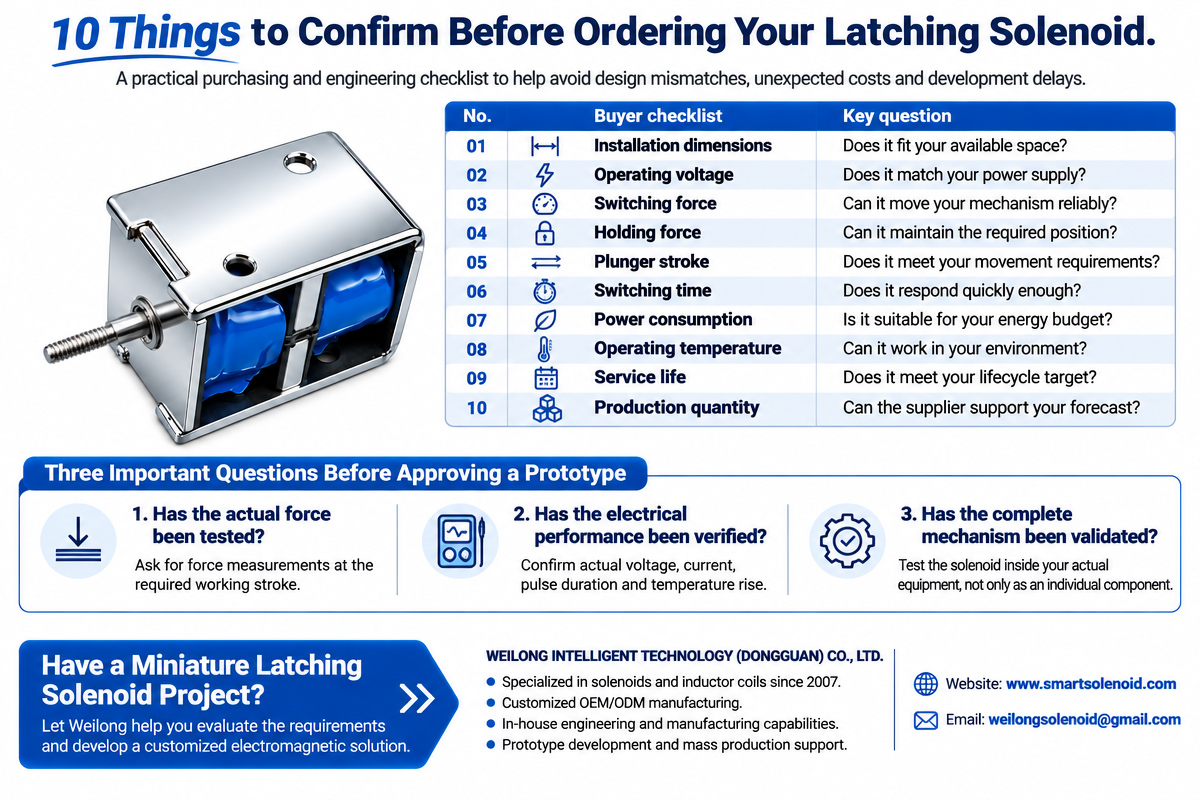
2. What do I have to consider when choosing a miniature latching solenoid?

The buyer has to pay attention to some key parameters of miniature latching solenoid: force of actuation, stroke length, energy consumption, physical sizes, pulse duration, and operating voltage. Also, mounting, operating temperature, expected lifetime, and requirement for single or dual-coil control should be considered. Choosing a model with suitable mechanical and electrical parameters allows reliable operation of the actuator.

3. What are the advantages of using miniature latching solenoid instead of regular one?

The main advantage is reduced power consumption, as miniature latching solenoids need energy only for position changing. Other advantages are decreased heat generation, a compact design, and the ability to operate for a long time staying at a certain position. These features allow miniature latching solenoids to be used effectively in portable medical devices, smart locks, electronic cabinets, and battery-powered control systems.

4. Can a miniature latching solenoid be modified for special application?

Yes, it is possible. Manufacturers of miniature latching solenoids offer customization options of such parameters as operating voltage, stroke length, actuation force, housing dimensions, plunger profile, and mount design. Additionally, buyers can ask to produce special materials and environmental protection. In cases of OEM development, the manufacturer is provided with a complete list of requirements and technical drawings.

5. What is the output force of miniature latching solenoid?

Force depends on solenoid size, coil design, operating voltage, stroke and magnetic construction. Miniature solenoids are designed for applications with limited space, so force capabilities of them are quite different from model to model. It is recommended for buyer to check force and stroke specifications of the manufacturer and verify that the available force is sufficient for application in real working conditions.

6. How long does a tiny latching solenoid operate?

The lifetime of a miniature latching solenoid is dependent on its mechanical design, actuation frequency, load conditions, environmental conditions, and electrical driving. Correct selection and usage allow obtaining a reliable actuator that can perform many actuation cycles. The lifetime information should be obtained from endurance tests performed by the manufacturer, and the rating and operating conditions of such tests should be verified.

7. How much does a miniature latching solenoid cost? What is affecting the price?

The price of the miniature latching solenoid is determined by the size of the solenoid, force, operating voltage, materials used, complexity of manufacturing, additional options, and quantity of actuators. Standard models are less expensive than custom-made solenoids, and OEM bulk orders may be eligible for discount prices. Price quotes should contain information about minimum order quantity, tooling cost, sample cost, production lead time, and shipping details.

8. How to find a good manufacturer or supplier of miniature latching solenoids?

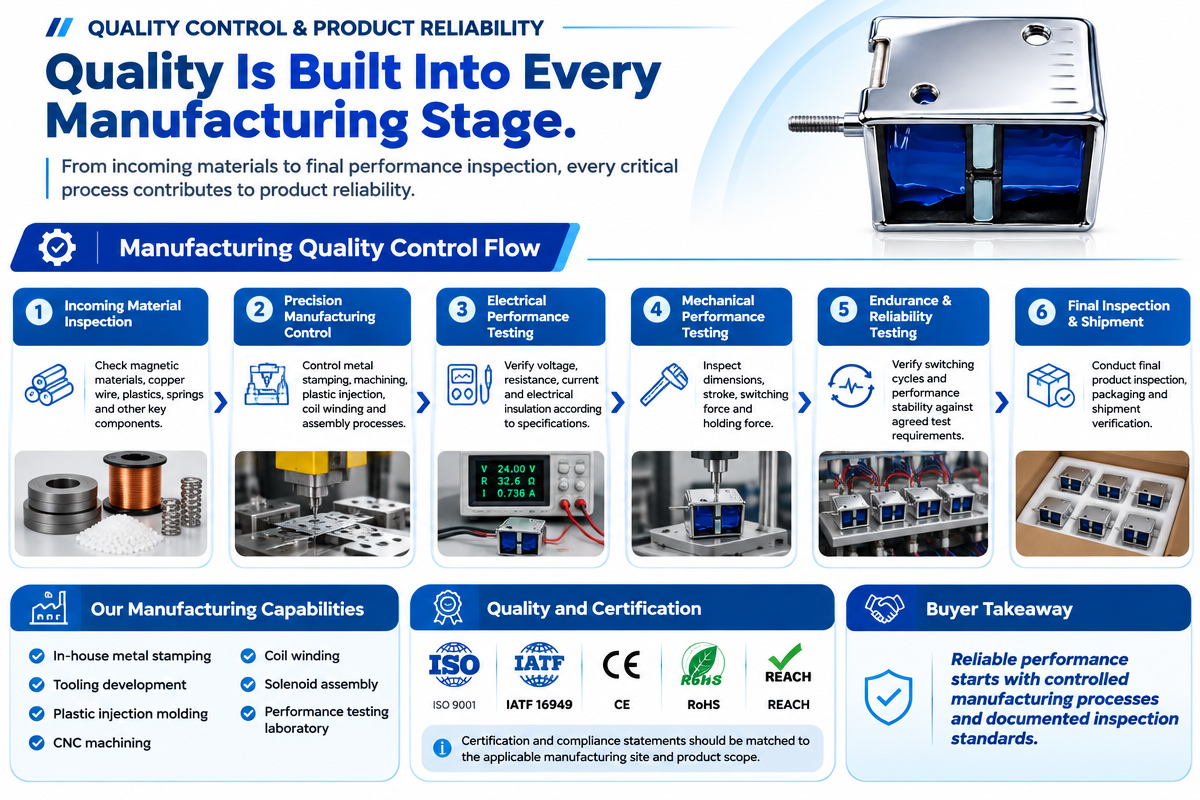
When choosing the right suppliers, buyers need to take into account factors like experience in manufacture, technical capability, quality control, customization, and delivery time. Kindly make a request for the technical specification sheets, engineering samples, and relevant product certification and testing documents before making your bulk purchase. The best supplier will also ensure easy communication and technical support after sales.

How to Choose a Miniature Latching Solenoid

The selection of miniature latching solenoids presupposes a comprehensive evaluation of all electrical, mechanical, environmental, and performance aspects. The following steps can help an engineer in choosing an actuator for his needs:

1. Find Operating Voltage

Select a latching solenoid appropriate for your power supply. Typically, the solenoid can work with 3V, 5V, 6V, 12V, or 24V DC power supplies. Check the voltage range and available pulse current.

2. Stroke Length Evaluation

This parameter shows how far the plunger will travel with pushing the actuator. Select an appropriate stroke, allowing you to perform the required mechanical movement without wasting.

3. Determine the operating force.

This is the force the solenoid develops during its working stroke, considering such parameters as friction, spring resistance, and mechanical loads. Please note that there are different specifications for operating and holding force.

4. Latching Configuration Identification

Identify if the actuator needs to retain position in one or in two positions.

5. Pulse Parameters

It should be checked that the required pulse duration, polarity, current, and maximum allowed energization values are able to be used to design an appropriate driver circuit for supplying the required pulse energy.

6. Mechanical Sizes

It should be assessed using such parameters as actuator length, diameter, holes for fixing, plunger shape, and installation space.

7. Environmental Conditions

Such factors as temperature, humidity, vibrations, dust, and corrosion should be evaluated to choose appropriate material and design of the actuator.

8. Evaluate the reliability and service life

Request for the ratings and data on the number of mechanical cycles, specific application reliability information, and endurance testing results.

9. Check the solenoid’s compatibility with the control circuit

It should be estimated if the solenoid needs to be powered by reversed polarity, separate driving circuits, and others.

10. OEM Customization

Discuss customization possibilities on stroke length, connectors, mounts, voltage range, and other design aspects in the case of a particular OEM product.

The final step would be prototyping and evaluating the performance under realistic conditions. Just to select an actuator on the maximum operating voltage or holding force may result in poor performance.

Common Design Mistakes to Avoid When Using a Miniature Latching Solenoid

Incorrect solenoid selection or integration can cause unreliable movement, excessive power consumption, overheating, and premature mechanical failure.

Common design mistake Recommended solution
Insufficient actuation force Evaluate force across the complete working stroke, not only at the end position.
Incorrect pulse duration Follow the manufacturer’s pulse specifications and validate at minimum supply voltage.
Ignoring startup current Size the driver and power supply for actual coil current and transient requirements.
Confusing holding and operating force Verify both values separately under realistic mechanical loads.
Excessive mechanical friction Improve plunger alignment, guide tolerances, and latch geometry.
Incorrect coil polarity Confirm the required polarity sequence before connecting the driver.
Insufficient thermal protection Limit pulse duration and repetition according to the coil’s thermal rating.
Inadequate electrical protection Use a suitable transient suppression method that does not interfere with release or polarity reversal.
Ignoring magnetic interference Evaluate nearby steel parts, magnets, and external magnetic fields.
No position feedback Add a position sensor when the controller must verify successful locking or unlocking.
Poor environmental protection Consider moisture, dust, corrosion, vibration, and operating temperature.
No mechanical tolerance allowance Account for manufacturing tolerances, thermal expansion, and assembly variation.

Minimize battery voltage requirements: your smart lock must work in a close-to-battery-dead condition.

Avoid using the plunger as the lock’s main body. If the actuator does not have adequate strength, a dedicated mechanical latch must be used for preventing forced entry.

Emergency operation in case of power loss

Do an endurance test for repeated actuation under realistic operating conditions


Get A Free Quote Now

Contact Form

Related Products

Related News

Introduction to DC Solenoid Movement and it is application DC solenoid movement devices are a necessary constituent of contemporary industrial […]

Scroll to Top

Get A Free Quote Now !

Contact Form
If you have any questions, please do not hesitate to contact us.
Weilong Solenoid Company Culture