
Skip image slider
Electromagnetic Pump Integration With Control Systems
Electromagnetic Pump Solutions for Compact OEM Equipment
Industrial Electromagnetic Pump Selection Guide
Electromagnetic Pump Flow Rate and Pressure Explained
Electromagnetic Pump Maintenance and Repair Guide
Industrial Electromagnetic Pump Installation Guide

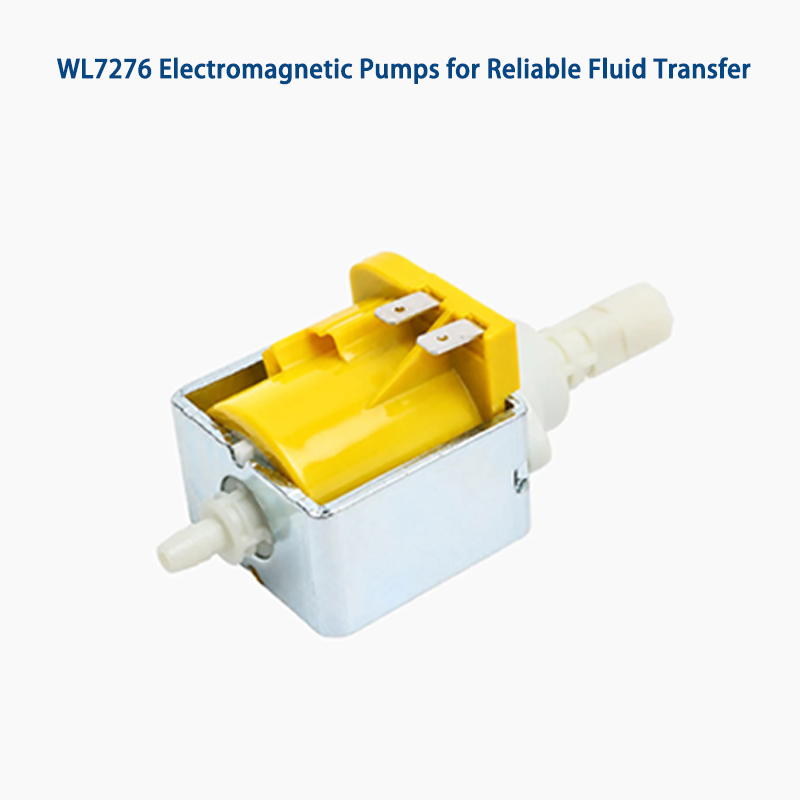
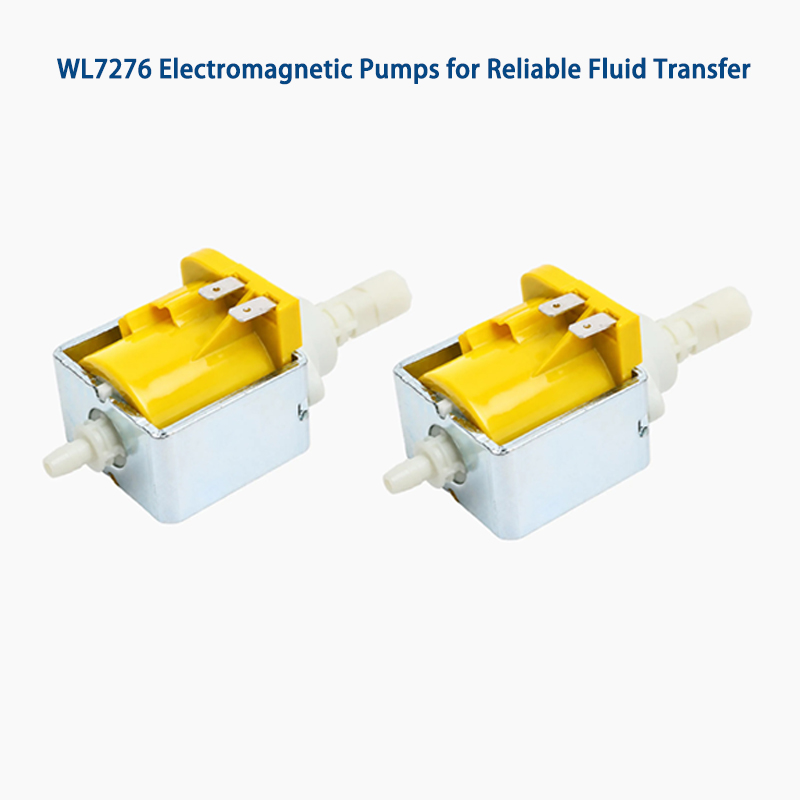
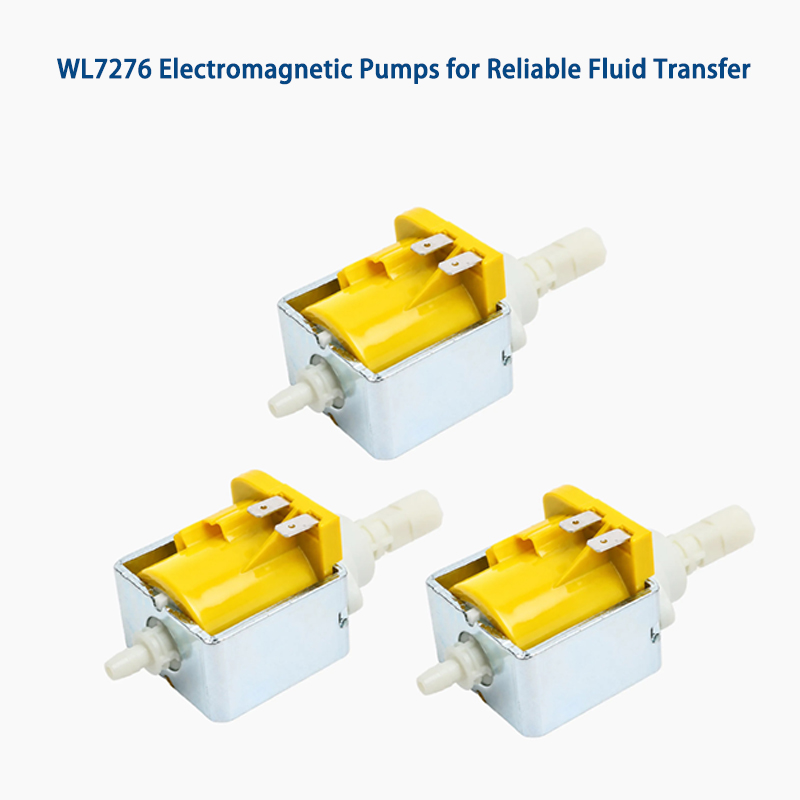
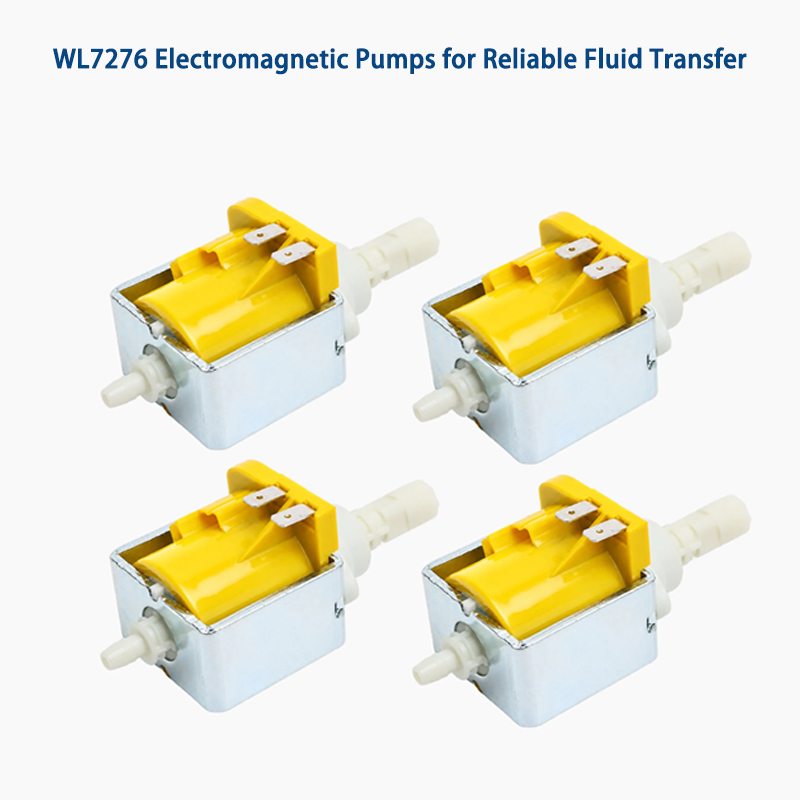
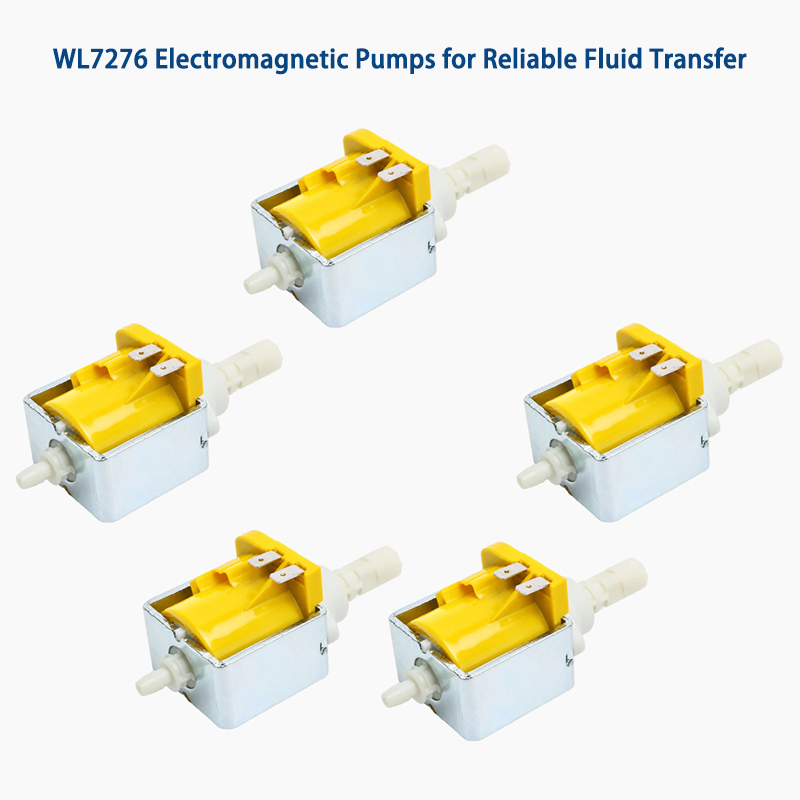
WL7276 Compact Electromagnetic Pumps for Industrial Systems

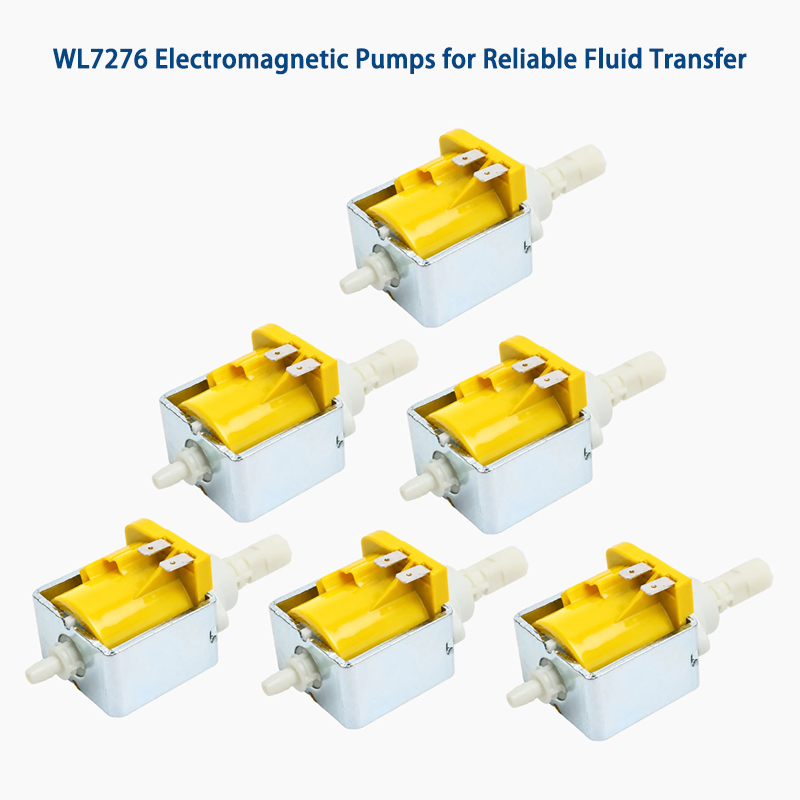
Electromagnetic pump is a pump operated electrically and used for controlled movement of liquid in industrial and commercial equipment. Electromagnetic force drives an internal pumping mechanism which allows moving liquid through compact piping with electrical control. The pump itself can be constructed from solenoid actuated diaphragm, piston or another reciprocating mechanism. Electromagnetic pumps are perfect for applications which require automatic operation, compact installation, repeatable fluid delivery and electrical control. Typical applications include water treatment equipment, chemical dosing equipment, laboratory equipment, medical devices, beverage equipment and industrial automation equipment. Material choice, operating voltage, flow rate, pressure capacity and liquid compatibility are important purchasing factors. For OEM applications, manufacturers can provide special connections, coil specifications, mounting dimensions and electrical configurations. Correct choice of the electromagnetic pump can ensure better performance of the equipment.

Electromagnetic Pump Description

What is an electromagnet pump?

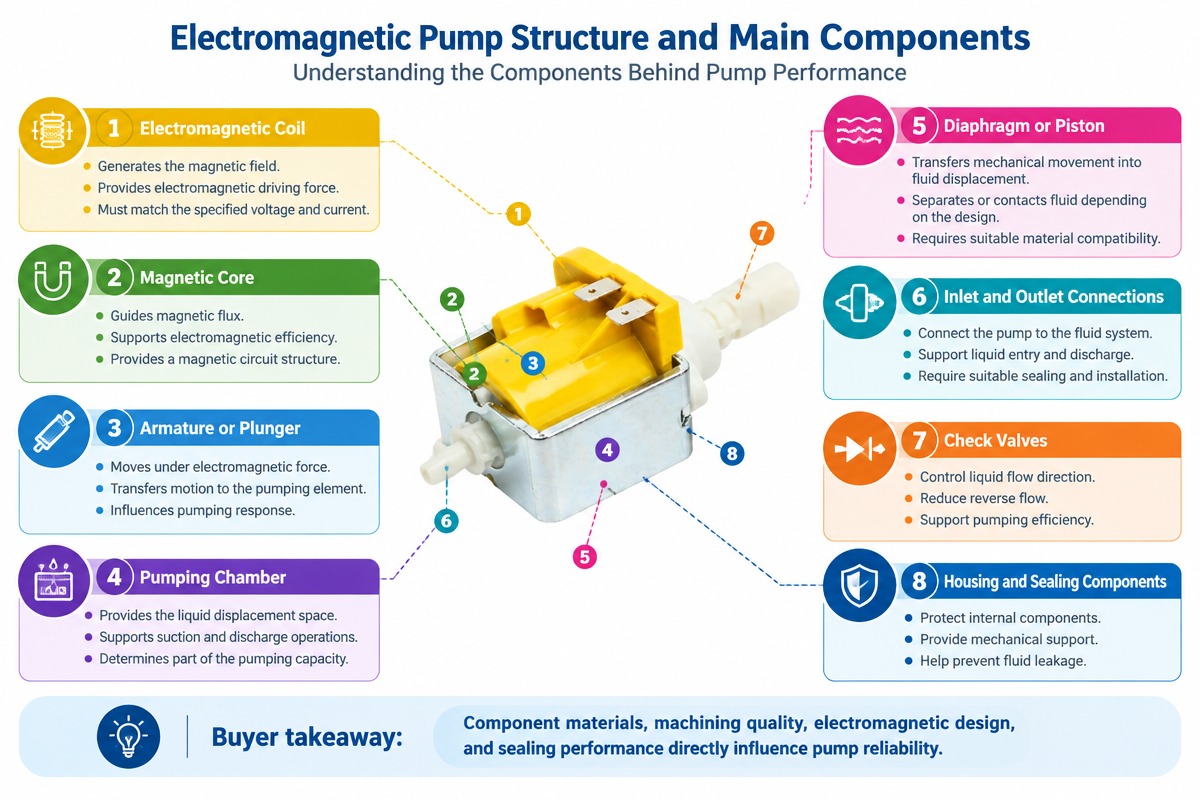
Electromagnetic pumps are pumps which operate using electromagnetic force to provide the pumping. Many compact industrial designs feature energized solenoid coil which generates magnetic field that acts upon the internal armature, piston or diaphragm and creates pressure change which draws liquid into the pumping chamber and expels it from the chamber through the outlet . Electromagnetic pumps can be used for controlled, intermittent and continuous fluid delivery depending on the design. They are widely used in dosing devices, lab equipment, water treatment systems and automation equipment. They are electrically operated and compact in size, making them ideal for applications where convenient fluid control is needed.

What is an electromagnetic pump work?

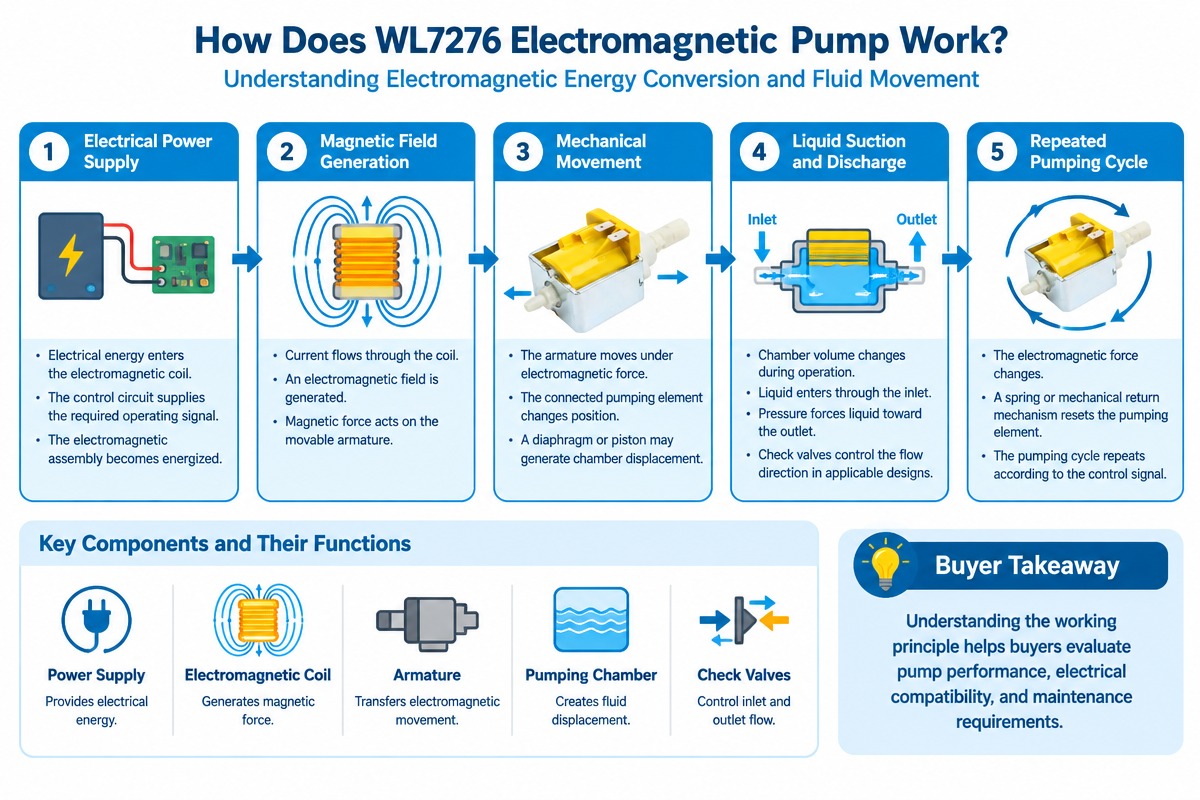
The electromagnetic pump is basically a pump which transforms electrical energy into mechanical movement using electromagnetic force. The structure of the pump defines the sequence of operation.
First of all, the electromagnetic coil is energized. When current flows through the coil magnetic field appears around the magnetic assembly.
Second, the magnetic field attracts or repels the armature which is connected to the pumping element, such as diaphragm or piston. This movement leads to the change of the volume of the pumping chamber.
Third, the volume of the chamber increases and liquid is sucked into the chamber through the inlet . Inlet check valve prevents reverse flow.
Finally, when magnetic force stops acting or the coil gets de-energized, the spring or another mechanical system returns the pumping element into the original position. The volume of the chamber decreases and the pressure increases which results in expulsion of the liquid through the outlet check valve.
This process repeats according to the design of the pump and electrical control signal.
The final flow performance depends on frequency of pumping, volume of the stroke, operating voltage and resistance of the fluid. Some electromagnetic pumps are equipped with electronic control systems to control operating intervals and pumping cycles.
The Main Features of an Electromagnetic Pump
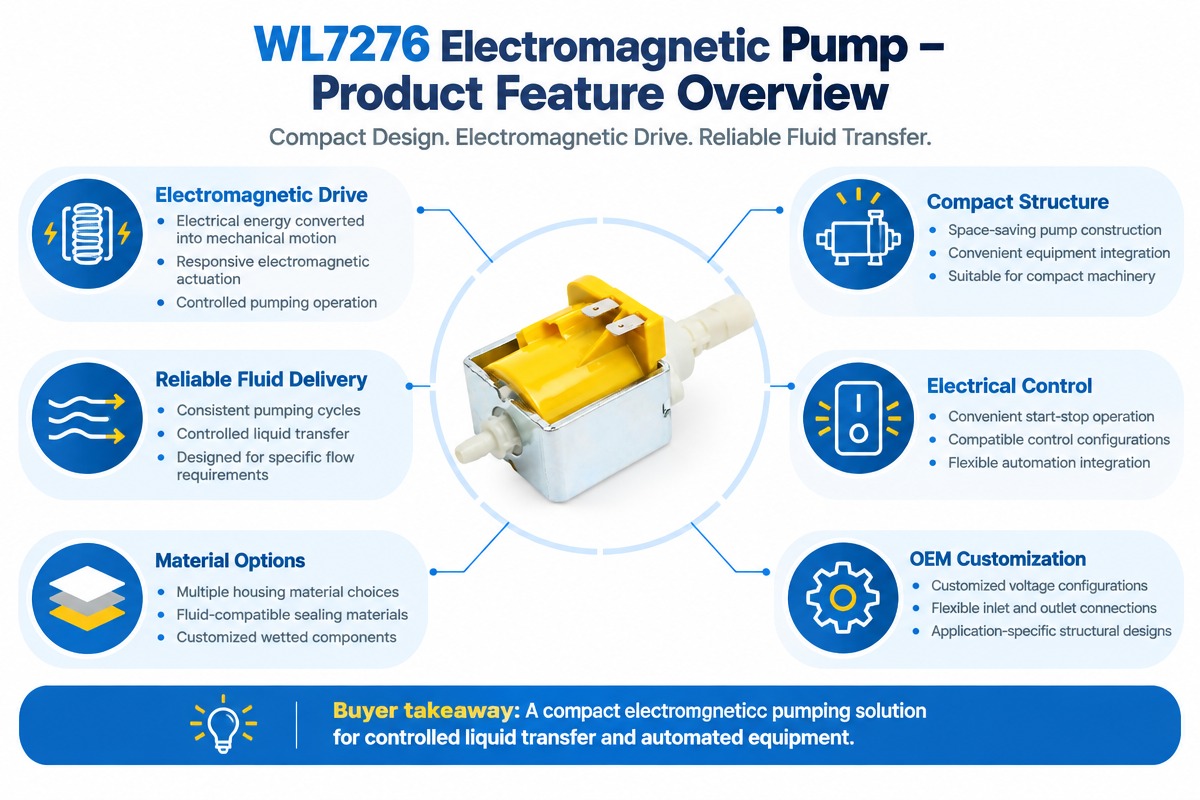
Electromagnetic pumps are compact, electrically controlled and easily integrated with automation equipment. Many reciprocating designs use electromagnetic drive mechanism that converts electrical energy into pumping without using conventional rotating motor. The pump provides controlled flow, repeatable pumping cycles and easy start/stop operation, depending on the design. The compact dimensions allow installing it in compact equipment. The housing, diaphragm, seal and valves can be made of different materials depending on the fluid compatibility requirements. Other features may include quiet operation, timing adjustment, special electrical connections and control interface. The performance depends on the pump specifications and operating conditions

Electromagnetic Pump Video

Electromagnetic Pump Detail Display

Electromagnetic Pump Data Shee

Brand

Weilong Technology

Model Number

WL7276

Rated Voltage (V)

DC 12V or 24 V

Rated Power(W)

ย 3-5W

Work Model

2 Ways Valve

Water Flow Rateย  (N)

1.2-2 L/ Per Minute

Resistance

25 ฮฉ

Reset Time(s)

0.3 Sec. On, ย 0.3 ย Sec. Off

Service Life

I Millioin Times

Certification

CE,ROHS,ISO9001,

Material

Carbon Steel Housing with Telfon Plated Coating

Lead Wire Length(mm)

72

Install Style

Adjustable Screw

Tolerance of Dimension

ย +/- ย 0.1 MM

Water-proof

ย None

Insulation Class

F ย ย 155 Degree

Hi-Pot Test

AC 750V 50/60Hz 2s

Non-excitation Holding Force

0

Working Temperature

-15ยฐC-180ยฐC

Duty Cycle

1-100%

Thread Depth(mm)

/

Payment Term

TT, or LC At Sight

Sample Order

Yes

Warranty

1 Year

MOQ

1000 pcs

Supply Ability

5000 pcs per Week

Delivery Time

30 Days

Port of Loading

shenzhen

Why does the electromagnetic pump have such popularity?

Electromagnetic pumps are becoming increasingly important due to the increasing demands for small, electrically controlled and reliable fluid handling in the modern equipment.

The main reason is their easy integration with electronic control systems. Electromagnetic actuation allows synchronizing the pumping operations with timers, sensors, switches and programmable controllers.

Another advantage of electromagnetic pumps is their compact design. Many designs can be easily incorporated into laboratory equipment, medical equipment, water treatment equipment and automation equipment with limited installation space.

Repeatable pumping cycles offered by electromagnetic pumps are also advantageous since they are useful in dosing and dispensing applications .

Different configurations are provided by manufacturers for various voltage requirements, connection types, housing materials and fluid compatibility. They are attractive for OEM equipment manufacturers due to their flexibility.

Automatic operation reduces manual fluid handling and simplifies equipment management.

With the growth of industrial automation, precision dispensing and compact equipment, electromagnetic pumps become a more efficient solution for specialized fluid handling applications.

Electromagnetic Pump Applications

Electromagnetic Pump Design for Demanding Industrial Use

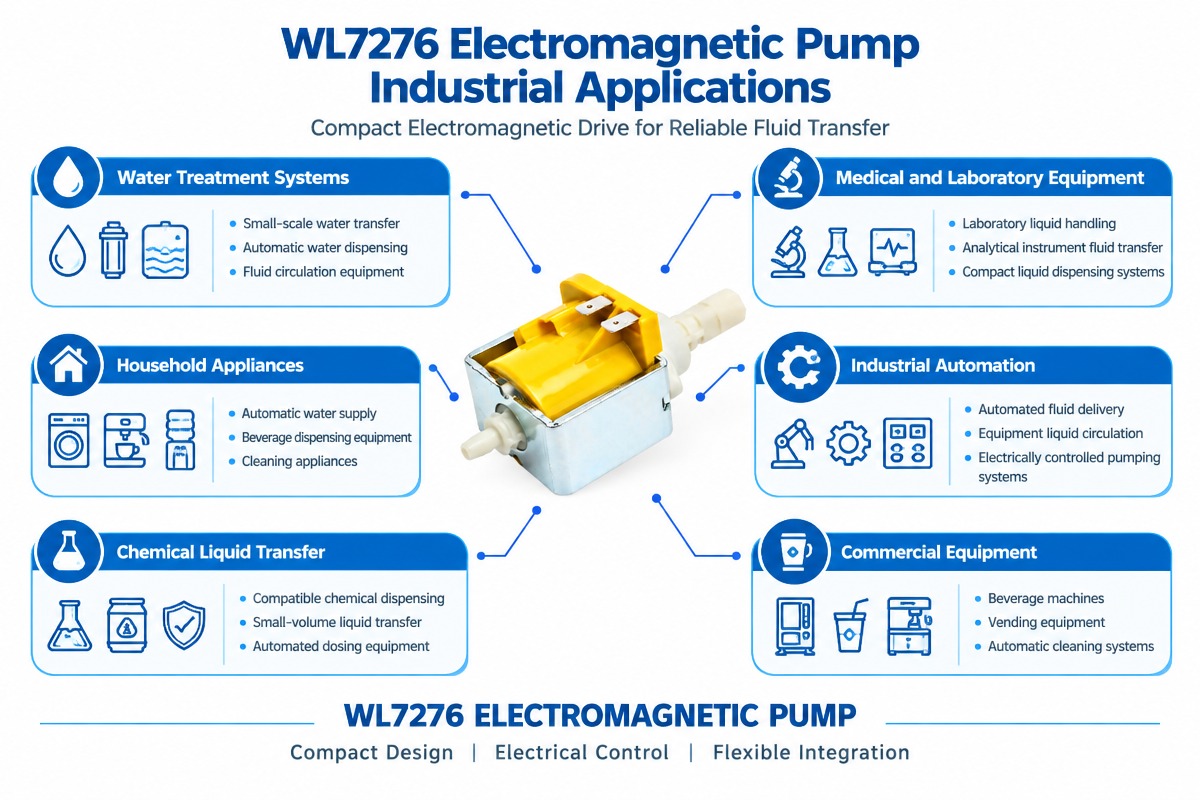
Electromagnetic pumps are extensively used in industrial and commercial equipment requiring controlled fluid delivery, compact installation and convenient electrical control .

1.Water Treatment Systems

Electromagnetic pumps are used in water treatment equipment to circulate liquids, dose chemicals and control water delivery. The electrical operation allows automatic control of equipment.

2.Chemical Dosing Machinery

Electromagnetic pumps can be used for the transfer and dosing of chemicals. Handling of the acidic, alkaline or corrosive liquids requires material compatibility.

3.Medical Devices

Controlled liquid delivery in medical and healthcare devices can be achieved using electromagnetic pumps. The proper selection of the pump is required to meet the requirements of hygiene and safety.

4.Laboratory Equipment

Electromagnetic pumps can be used for controlled reagent delivery and liquid transfer in laboratory analyzers, testing equipment and sample preparation systems.

5.Food and Beverage Equipment

Electromagnetic pumps used for the dosing of liquids, beverage preparation and water delivery can be selected. โ€œVerify food contact material requirements.

6.Industrial Automation

Electromagnetic pumps are used in automated manufacturing equipment to dose liquids, lubricate and manage process fluids.

7.Domestic appliances

Electromagnetic pumps are also used in some coffee machines, cleaning equipment, water coolers and other equipment requiring compact fluid delivery.

8.Printing and Cooling Machinery

Specialized pump designs can be used to supply ink, cleaning fluids or cooling liquids in compatible equipment.

For these industries, the right pump has to be selected taking into account flow, pressure, temperature, fluid properties and operating frequency.

Electromagnetic Pump Adv. & Disadv

Electromagnetic Pump Advantages and Limitations Explained

Electromagnetic Pumps Pros and Cons

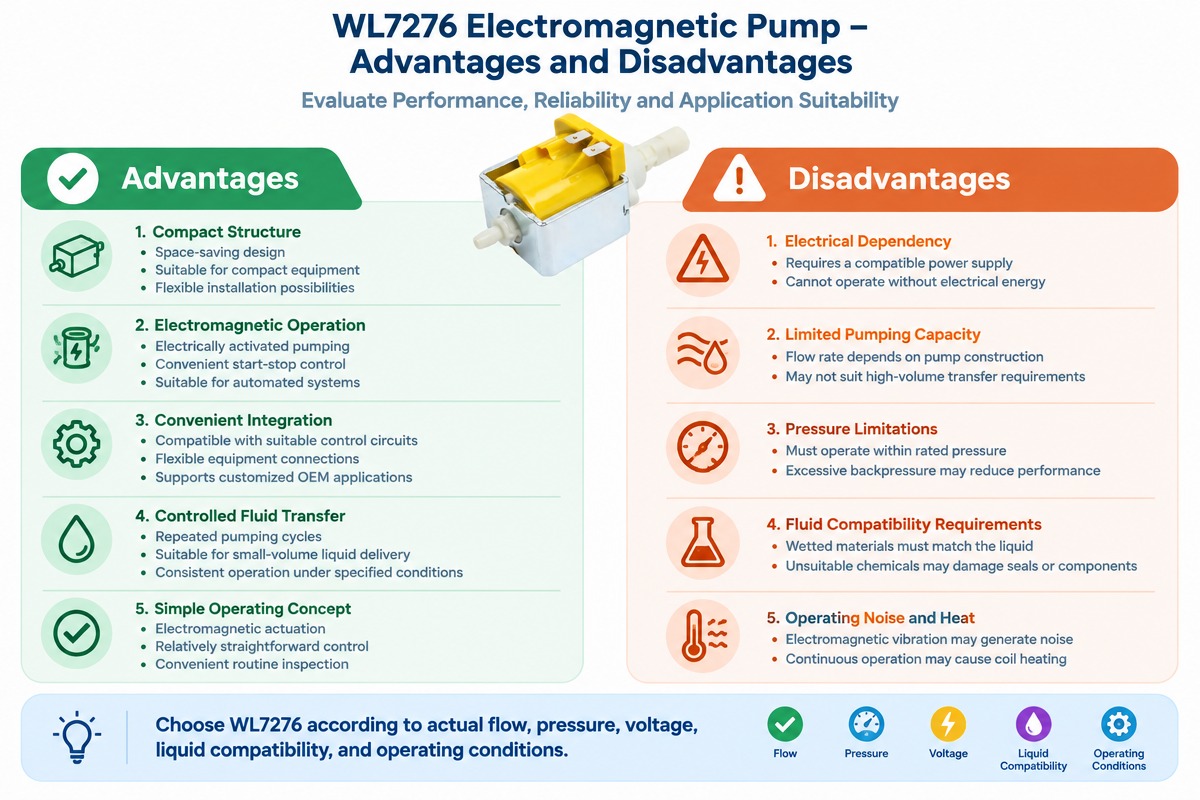
Electromagnetic pumps have a lot of advantages for compact fluid handling equipment, but their disadvantages should be considered before purchasing.

Advantages

1.Compact Design: Many electromagnetic pump models are easy to use with small equipment and integrated machinery due to their compact design.

2.Electrical Control: The pumps can be controlled using electrical signals, switches, timers and compatible electronic controllers.

3.Easy Automation: Integration with sensors and programmable logic controllers for coordinated automatic fluid delivery.

4.Repeatable Pumping Cycles: Designs can be developed to provide repeatable pumping cycles for dosing and dispensing applications.

5.Flexibility: Manufacturer can offer various coil voltages, housing materials, liquid connections and mounting options.

6.Reduced Mechanical Complexity: Many reciprocating electromagnetic designs do not require rotating motor assemblies.

Disadvantages

1.Limited Flow Capacity: Small designs may have insufficient flow capacity for large industrial applications.

2.Pressure Limitations: Maximum discharge pressure depends on the pump design and electromagnetic driving force.

3.Coil Heating: Continuous operation or high switching frequency can cause temperature increase.

4.Fluid Compatibility: Incorrect material selection can result in corrosion, swelling, leaks or premature component failure.

5.Electrical Dependence: The pump requires adequate electrical supply and control circuit to operate.

6.Operating Noise: Some designs may vibrate or make clicking sounds during operation.

After understanding of these pros and cons, the buyer can select the right pump for his application.

Electromagnetic Pump Features for Modern Applications

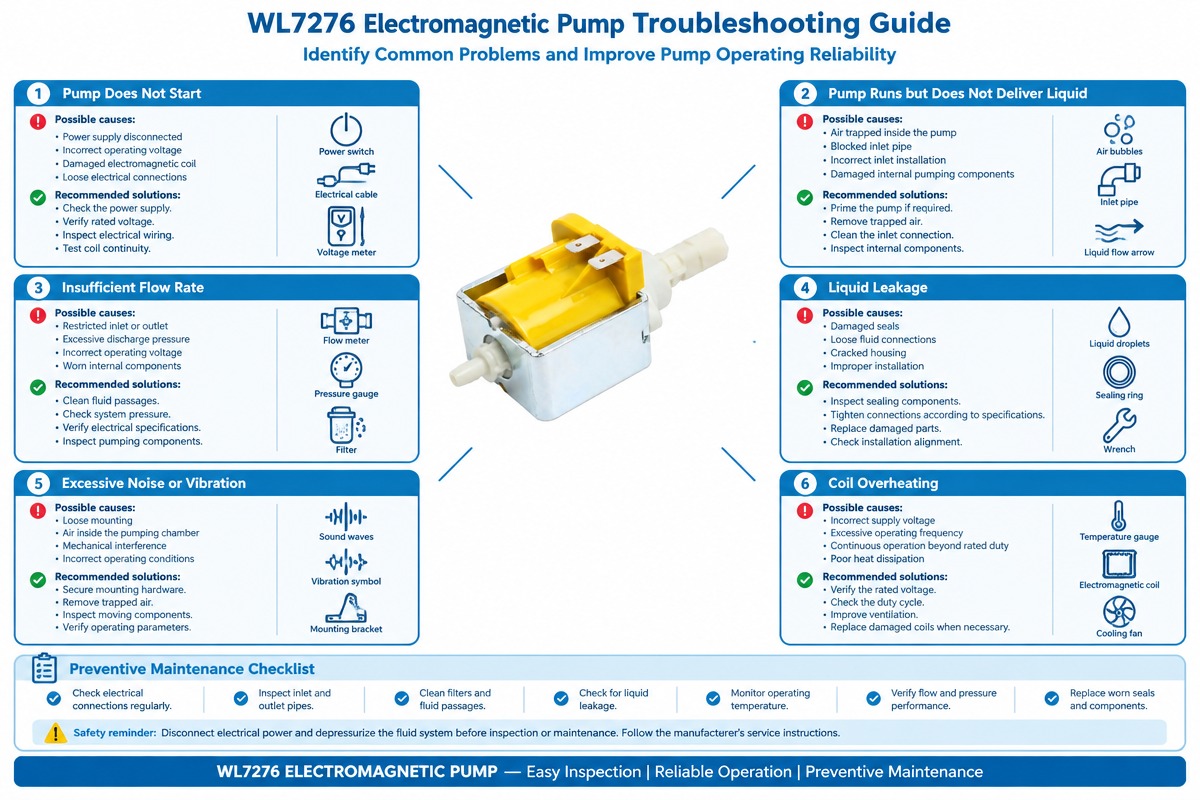
Electromagnetic Pump Troubleshooting

Electromagnetic pumps can suffer from operational problems caused by electrical problems, fluid contamination, mechanical wear or improper installation. Periodical checking will help to prevent problems from affecting the entire system.

1.The Pump Will Not Start

The reasons are wrong voltage, loose connections, broken coil or controller malfunction.

Solutions: Check power supply, electrical connections, coil resistance and control signals. Repair or replace broken electrical components.

2.Low Flow Rate

The causes are blocked inlet filters, restricted tubing, faulty check valves or high discharge pressure.

Solution: Check inlet and outlet passages, clean filters, check operation of valves, compare operating pressure with the rated specification.

3.The Pump Operates but Does Not Deliver Liquid

The causes of this problem are air entrapped in the pumping chamber, no liquid supply, improper installation or faulty internal valves.

Solution: Check liquid supply, prime the pump if necessary, check tubing connections, check valve direction and seal.

4.Unusual Noise or Vibration

The causes are loose installation, mechanical wear, unstable power supply or wrong operating frequency.

Solutions: Tighten the pump, check internal parts and electrical operation condition.

5.Heating of the Coil

Causes are overvoltage, operation at high frequency, insufficient cooling or operating outside the duty cycle specifications.

Solution: Check electrical specifications, increase the ventilation, follow the manufacturer’s duty cycle requirements.

6.Leaking of Liquid

The causes of this problem are damaged seals, loose connections or incorrect material selection.

Solutions: Check wetted parts and replace damaged seals. Use compatible replacement material.

Always disconnect electrical supply before maintenance. Follow the safety instructions of the manufacturer.

FAQ for Electromagnetic Pump

1. What is an Electromagnetic pump?

Electromagnetic Pump – An electrically powered pump that uses an electromagnetic force for creating a pumping action. Depending on the type of pump construction, it is capable of pumping liquids via solenoid operated diaphragm or piston, or using an electromagnetic induction principle. It finds usage in industrial automation, chemical dispensing equipment, water purification plants, laboratory devices and liquid dispensing machines.


2.How does an electromagnetic pump work?

It is a device that converts electrical energy into a pumping action. In case of the solenoid type of construction, an electromagnet field is created with the help of an energized coil, which in turn moves a movable armature connected to the diaphragm or piston. This way the volume of the pumping chamber changes and allows the liquid to be sucked in through the inlet and discharged via the outlet port.

3. What are the most important benefits of an electromagnetic pump?

Among the most valuable benefits there are compact construction, easy electrical control and flexible integration into automation process. Depending on the type of construction electromagnetic pumps can also offer simple mechanical construction, convenient installation and custom connections. These factors make these pumps suitable for use in compact devices and special fluid handling applications.

4. What kind of liquids can be pumped with the help of an electromagnetic pump?

Depending on the material and construction an electromagnetic pump can handle various liquids. Typical applications include water, cleaning solutions, chemicals and industrial fluids that can be handled by the device. While choosing the pump it is necessary to take into account the following parameters: the liquid viscosity, temperature of the liquid, concentration of the chemicals, presence of particles in the liquid and compatibility of the materials with the pump housing, diaphragm, seals and valves.

5. How to choose the appropriate electromagnetic pump?

It is necessary to consider such parameters as the required flow rate, operating pressure, voltage, current consumption, duty cycle and installation dimensions. Also one should take into account the properties of the fluid, the wetted materials, the inlet and outlet connections and control requirements. For OEM projects: Discuss custom electrical specifications, mounting structure and fluid connections with the manufacturer.

6. Which industries use electromagnetic pumps?

The applications for electromagnetic pumps include water purification plants, chemical dosing equipment, laboratory devices, medical devices, beverage dispensers, industrial automation machines, printing machines and home appliances. They are used when there is need for a compact construction, electrical actuation and controlled delivery of the liquid.

7. What affects the performance of an electromagnetic pump?

Some of the factors that may affect the performance of the pump are blocked inlet filters, faulty check valves, air in the pumping chamber, high discharge pressure, worn diaphragms and improper voltage. Performance may be influenced by fluid contamination and improper installation. Proper maintenance and regular inspection, cleaning and validation of the electrical specification will help you to avoid any problems.

8. Can electromagnetic pumps be customized for OEM applications?

Yes. OEM and ODM allow the majority of manufacturers to customize for the specific requirements of the equipment. Customization options may include coil voltage, power ratings, pump size, housing type, diaphragm type, inlet and outlet connections, mounting structure, electrical interface. It is necessary to provide the application details and technical requirements.

How to Choose an Electromagnetic Pump

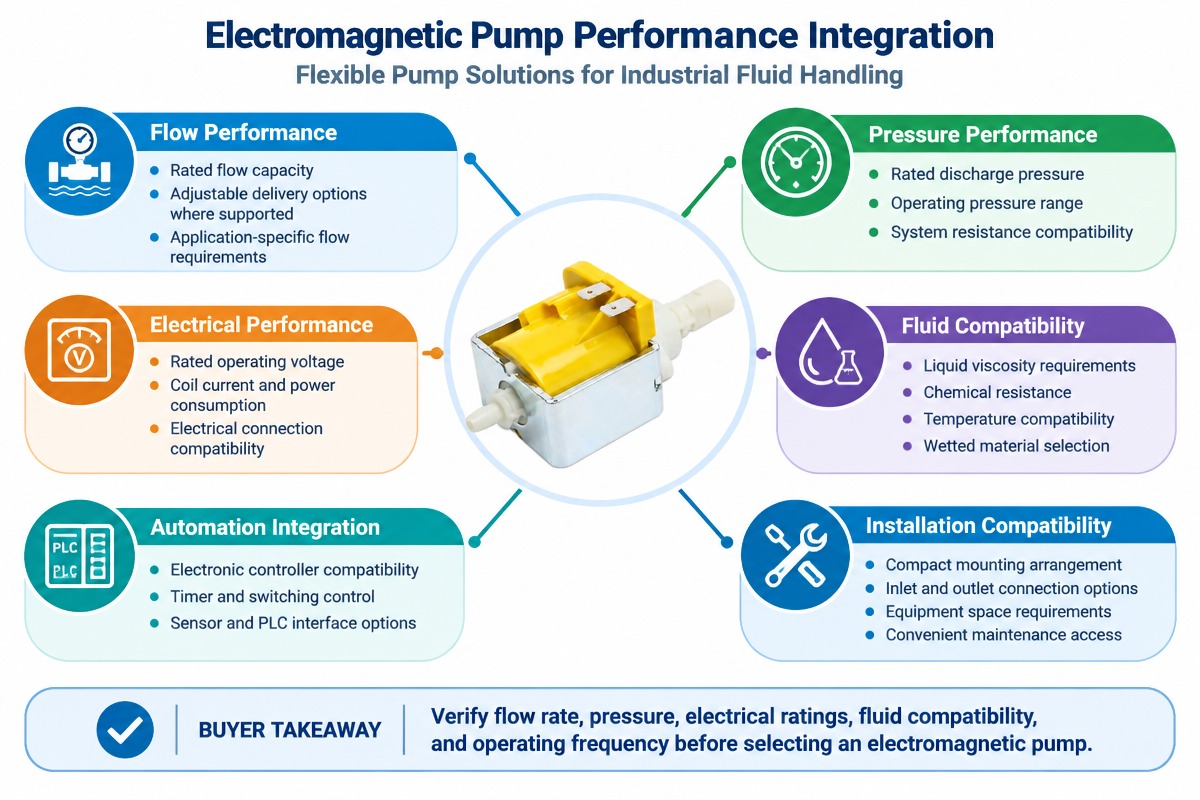
The correct selection of the electromagnetic pump depends on assessment of application requirements, fluid characteristics, electrical and installation parameters. The proper pump will deliver the required flow performance and will operate reliably in equipment.

1.Determine the Required Flow Rate

Determine the volume of liquid that has to be transferred in a certain time period. Consider whether the application requires continuous operation, intermittent operation or dosing. Select a pump that suits the flow rate range and has enough margin of operation.

2.Pressure Assessment

Determine the discharge pressure, inlet conditions and total resistance of the system. The higher discharge pressure is, the lower the flow rate is. โ€œDo not just consider the maximum flow rate, but compare the flow-pressure performance chart provided by the manufacturer.

3.Electrical Parameters Check

Operational voltage , current , power consumption , frequency and electrical connection type . The electromagnetic coil has to match the power supply available. Determine whether the pump will be directly switched or a separate controller will be required.

4.Fluid compatibility assessment

Determine the chemical composition, viscosity, temperature and purity of the fluid. Choose the appropriate materials for the pump housing, diaphragm, seals, valves and internal wetted components. In case of corrosive liquids, check the chemical compatibility with the manufacturer.

5.Operating frequency and duty cycle assessment

Determine the run time for each cycle and the frequency of pump cycling. Continuous and intermittent duty may impose different requirements on the thermal and service life of the pump. Check the duty cycle rating provided by the manufacturer.

6.Installation Conditions Check

Check available space for the pump installation. Check the mounting dimensions, inlet and outlet sizes, tubing connections and wiring layout. The compact pump should still have enough space for maintenance and ventilation.

7.Control Functionality Assessment

In case of automatic operation of the pump, check its compatibility with timers, sensors, programmable logic controllers or external controllers. Check required control signals and switching capability.

8.Quality of Manufacturers Assessment

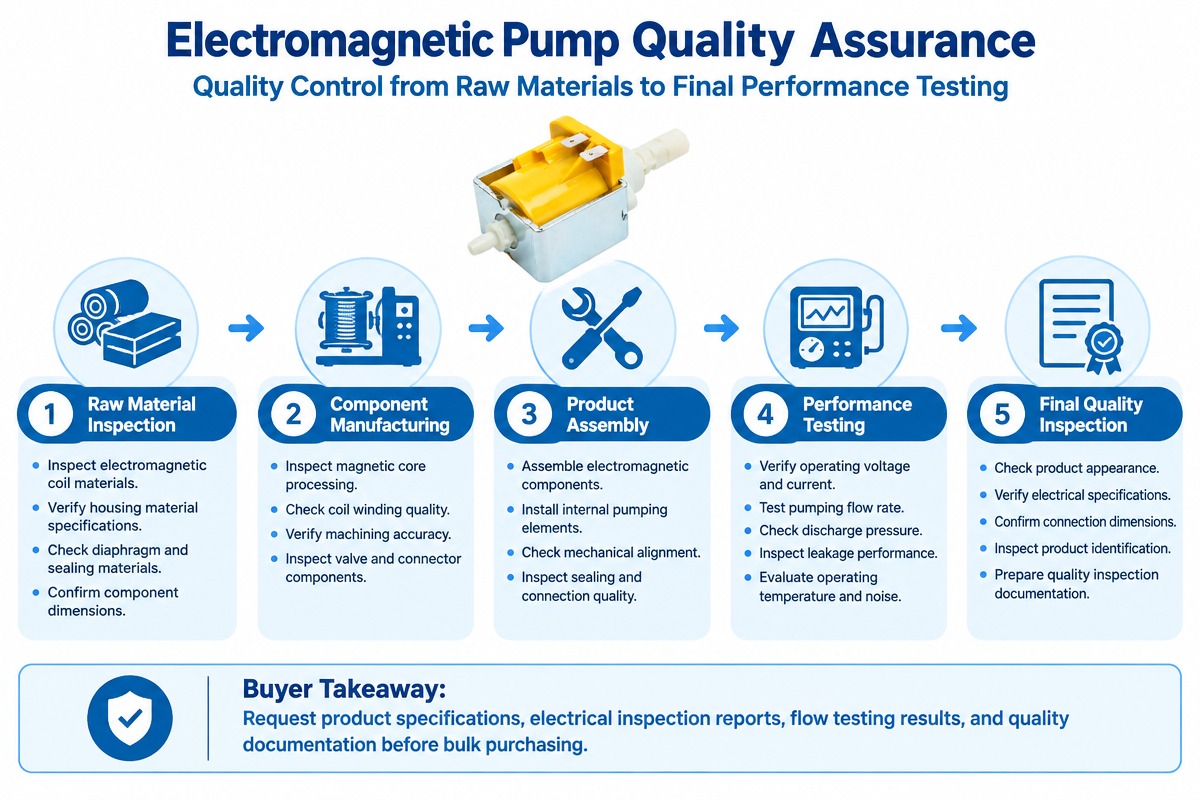
Product specifications, sample testing, quality control procedures, warranties and technical support. OEM Projects: Discuss custom dimensions, materials, electrical specifications and connections.

Reliable fluid delivery, better integration and reduced maintenance costs are guaranteed by the correct selection of the electromagnetic pump.

Tips to Avoid Common Mistakes in Electromagnetic Pump Design

1.Incorrect flow calculation: Do not select a pump based on maximum flow rate. Consider the pressure, tube resistance and volume to be delivered.

2.Fluid compatibility checking is skipped: Check the chemical resistance of all wetted parts, including diaphragms, seals, valves and pump housings.

3.Incorrect voltage selection: The power supply voltage and current have to match the specified voltage and current of the electromagnetic coil.

4.Bad thermal design: Take into account the coil heating, operating frequency, ambient temperature and duty cycle.

5.Wrong valve selection: In reciprocating designs, the material, sealing capability and response characteristics of the valve have to match the fluid and operating conditions.

6.Installation space is not provided: Provide enough space for mounting, wiring, tubing connections and servicing.

7.Insufficient electrical protection: Assess the need for overcurrent protection, short circuit protection, grounding and electrical interference.

8.Not keeping the fluid clean: Contamination and particles can damage internal valves and reduce the pump performance. Use proper filtration if necessary.

9.Insufficient testing: Test the pump under realistic pressure, temperature, voltage and operating cycle conditions.

10.Unclear manufacturer’s specifications: Verify the performance curve, material specifications, tolerances and inspection before production.

Well engineered designs will reduce the risk of failures and increase reliability of the equipment.
Get A Free Quote Now

Contact Form

Related Products

Related News

Scroll to Top

Get A Free Quote Now !

Contact Form
If you have any questions, please do not hesitate to contact us.
Weilong Solenoid Company Culture