How to Choose a Proportional Solenoid Valve
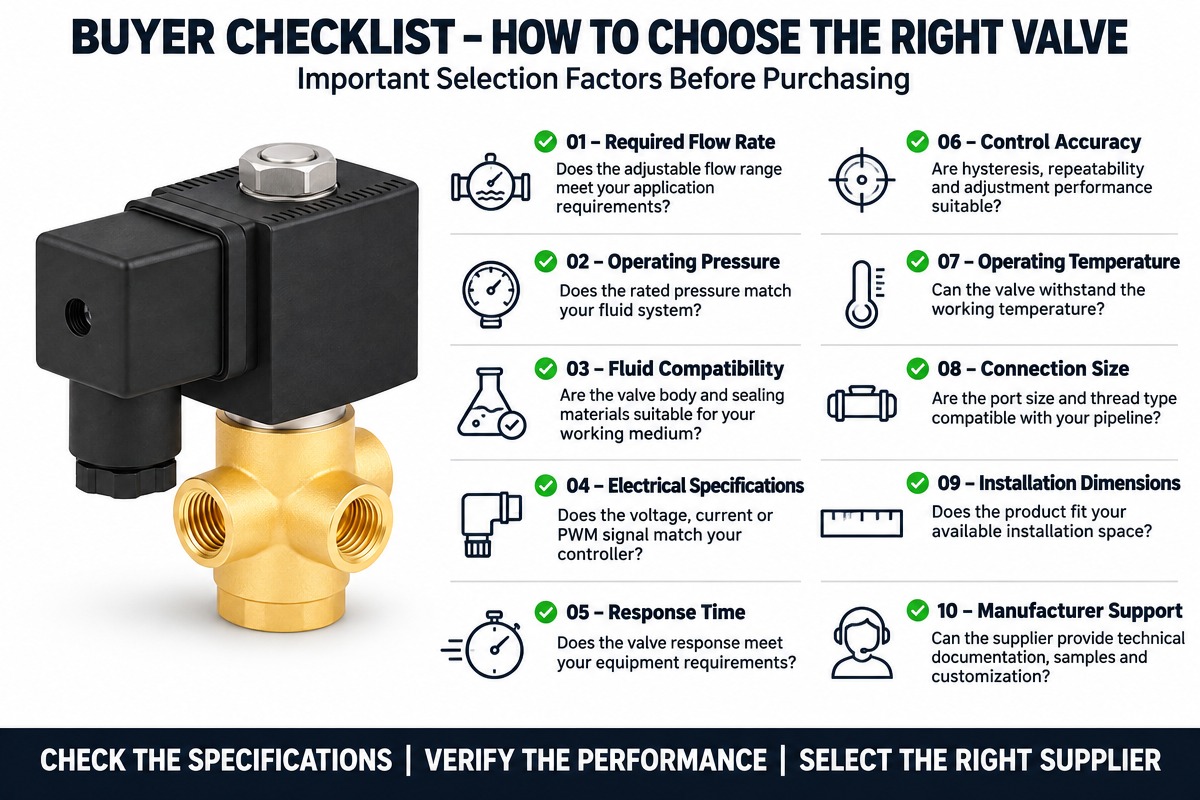
Operating conditions, flow, electrical specifications, and installation compatibility should be considered while choosing a proportional solenoid valve. The following factors can help to make a proper choice.
1. Calculate the Required Flow Rate
Estimate the minimum and maximum flow that is required by the equipment. Choose the valve with adjustable flow rate within this range. An oversized valve will be hard to adjust precisely at low flow rates, while an undersized valve will limit system capacity.
2. Verify Operating Pressure
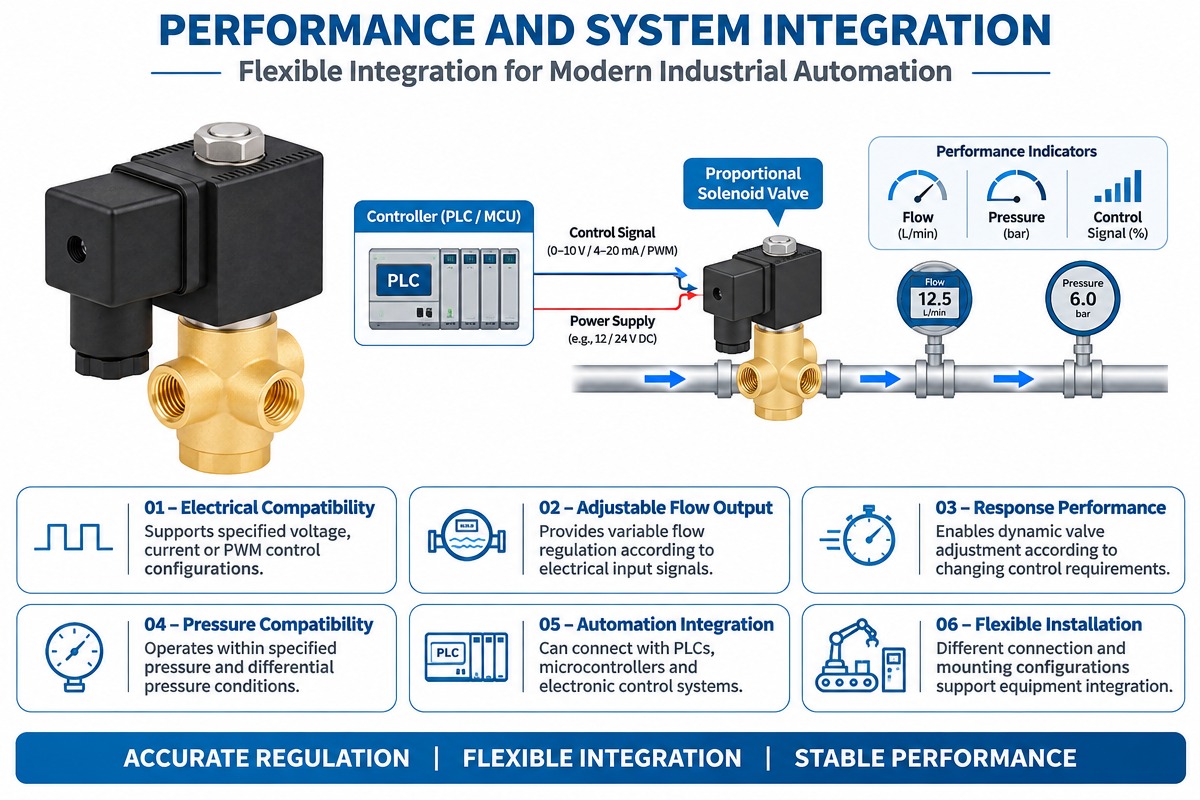
Check minimum, normal, and maximum operating pressure. Check the rated pressure and differential pressure of the valve. Make sure that the chosen model is suitable for the actual operating conditions.
3. Check for fluid compatibility.
Indicate the operating fluid, e.g., water, air, oil, or chemical liquids. Choose appropriate materials for the valve body and sealing elements. Consider the corrosion resistance, temperature, and chemical compatibility.
4. Electrical Specifications Assessment
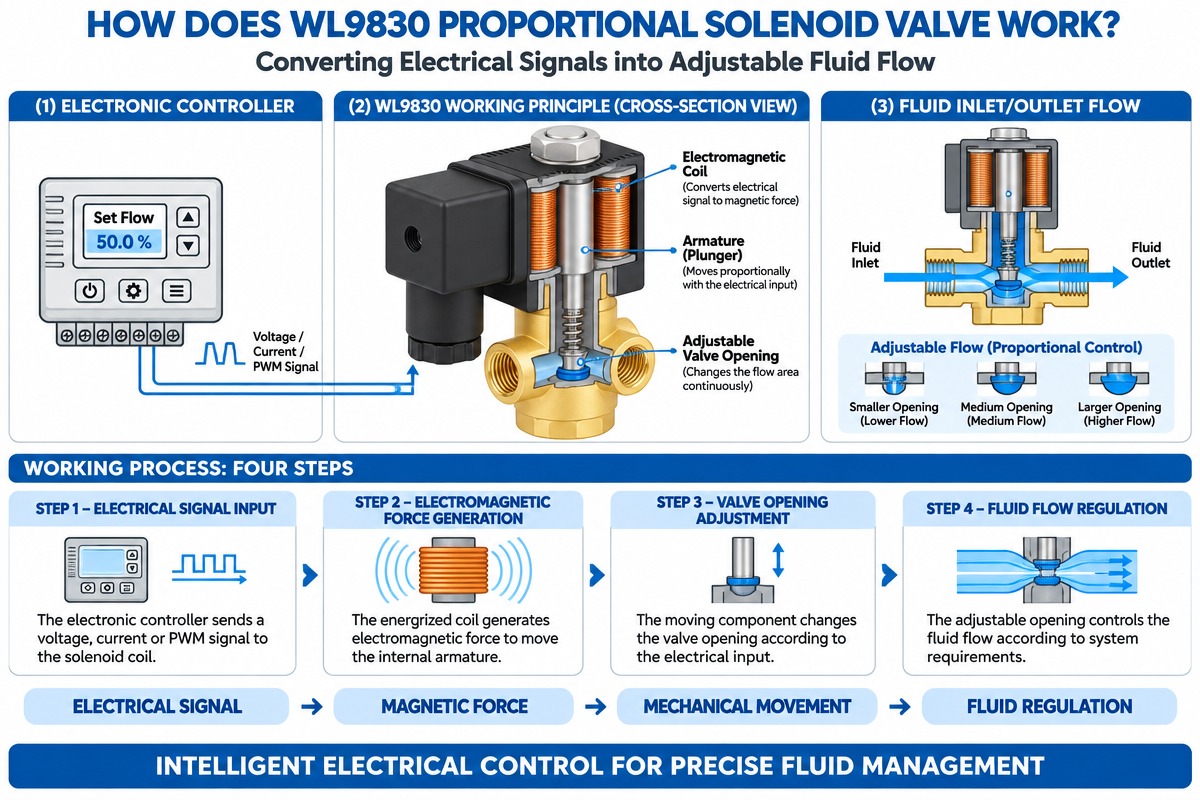
Check voltage, current, and control signal. The most common control options are 0-10V, 4-20mA, and PWM. Make sure that the valve is compatible with the controller and power supply.
5. Consider both response time and accuracy.
If you need to adjust flow rate frequently, it is reasonable to consider such factors as response time, hysteresis, repeatability, and control accuracy. It can be used for high-accuracy applications that use closed-loop feedback.
6. Review Valve Construction
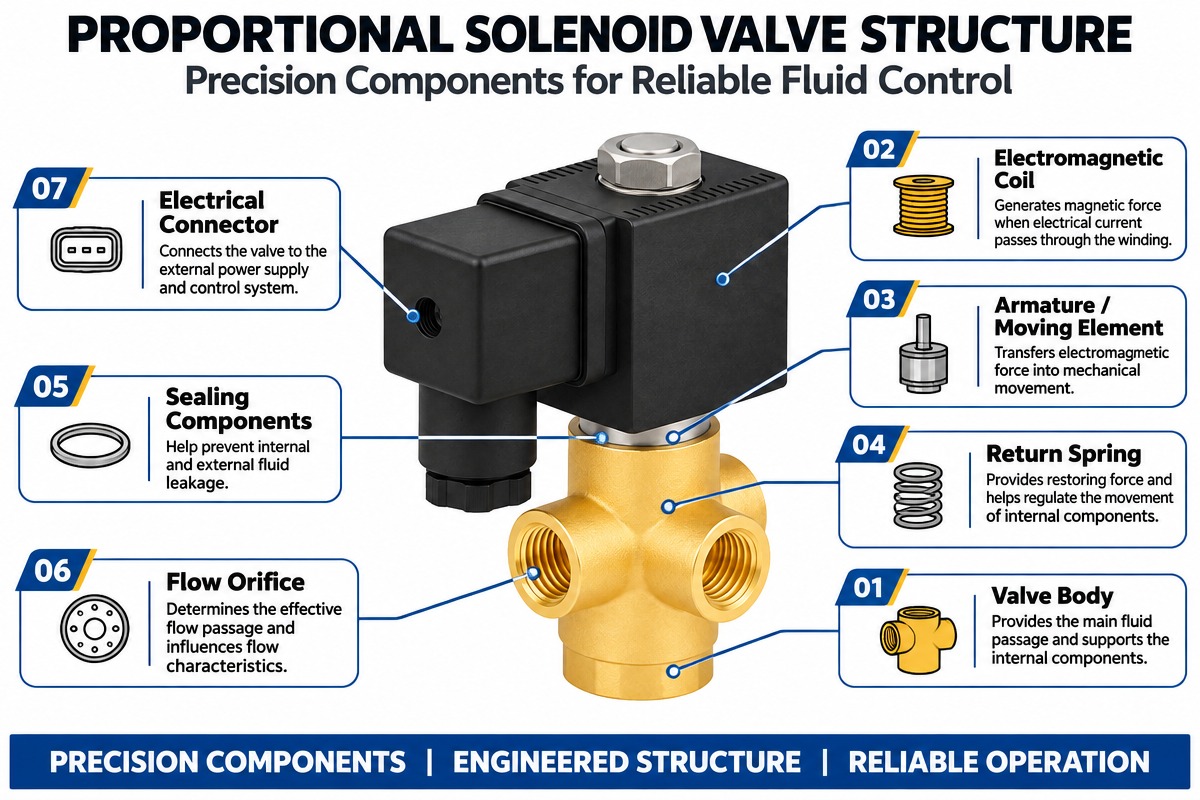
Inspect the valve body, coil, armature, spring, seals, and internal flow passage. The construction should be able to meet the application operating and maintenance requirements.
7. Verify Installation Compatibility
Check the port size, type of the thread, mounting direction, electrical connector, and overall dimensions. Make sure that the valve is installable without additional changes to the pipeline.
8. Environmental factors assessment
Consider operating temperature, humidity, vibrations, contamination, and installation environment. Choose appropriate materials and protection levels.
9. Compare Manufacturers
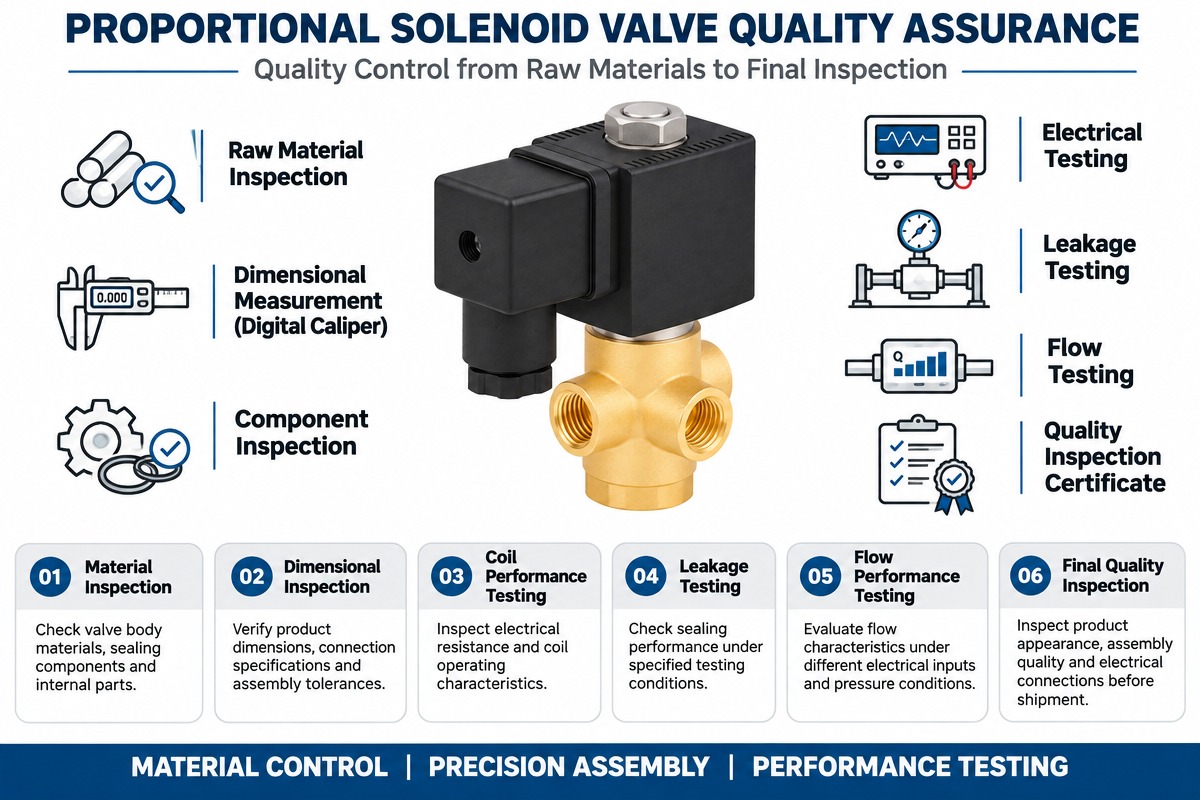
Evaluate the product quality, technical documentation, testing procedures, customization options, and after-sales service.
Finally, get technical specifications, performance curves, and samples if necessary. Choosing the right proportional solenoid valve can help to improve flow control, automation, and reliable equipment operation.
Tips to Avoid Common Pitfalls in the Design of Proportional Solenoid Valves
Designing a proportional solenoid valve is a complex of electromechanical and hydraulic performance and electronic control. 1. Avoiding common mistakes will help to improve the reliability and control accuracy of your product.
1. Miscalculation of Electromagnetic Force
The coil should create the sufficient force within the desired operating range. The wrong calculation of forces can lead to insufficient displacement or unstable valve position.
2. Wrong Spring Selection
The spring stiffness and preload are directly dependent on the electrical input for valve movement. The wrong spring selection can cause increased hysteresis and inaccurate adjustments.
3. Improper Flow Passage Design
Wrong orifice size results in high pressure drop, low flow rate, or insufficient adjustment accuracy. The passage should be matched with the required operating range.
4. Fluid Compatibility Issue
The valve body and seal materials should be compatible with the operating fluid. Otherwise, corrosion, swelling, leaks, and premature wear can happen.
5. Ignoring Electrical Compatibility
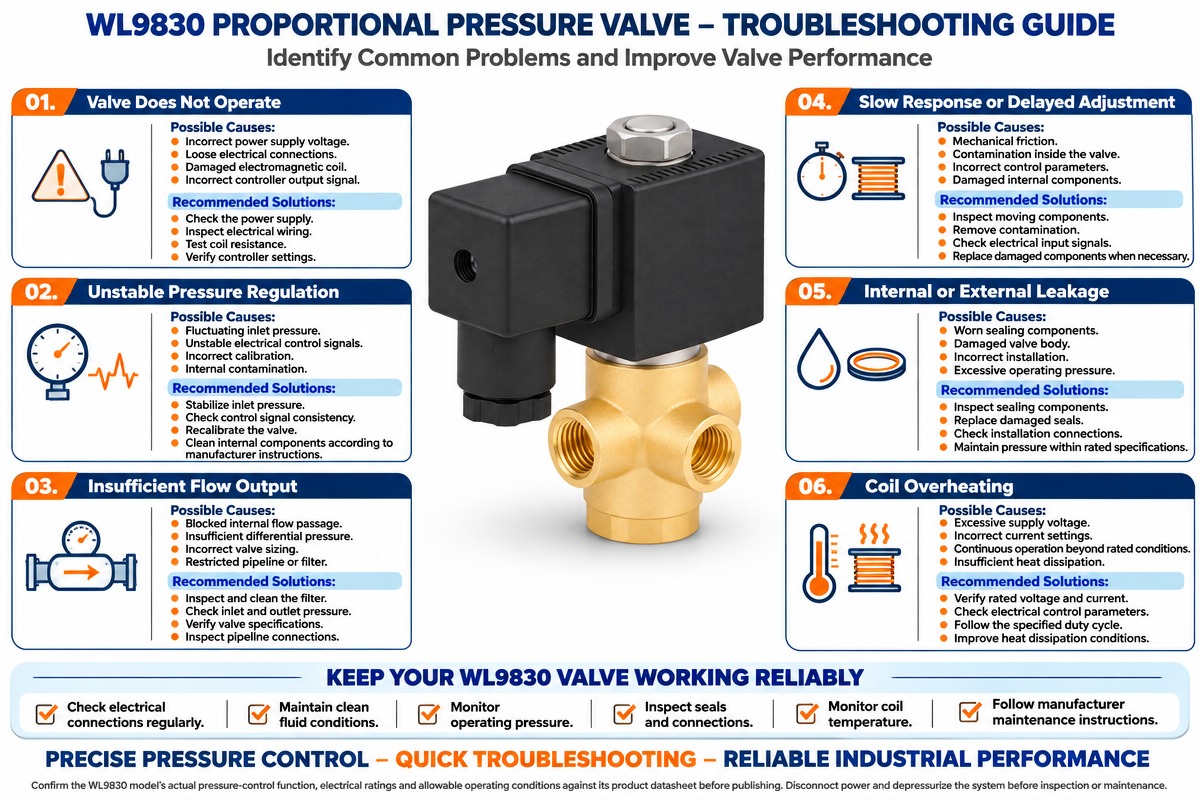
Rated voltage, current, and control signal should be matched to the electronic controller. Coil resistance. The incorrect electrical design may cause overheating or non-uniform operation.
6. Contamination Protection Ignored
Contaminants can clog small internal passages. Consider filtration needs and fluid cleanliness.
7. Thermal Management Ignored
The coil temperature should be in the rated operating range. Consider heat generation, insulation materials, and running duty cycle.
8. Inadequate Performance Testing
Check the valve flow characteristics, response time, leakage, hysteresis, and repeatability in different operating conditions.
A full product validation process can help to reduce performance risks and ensure product reliability.