
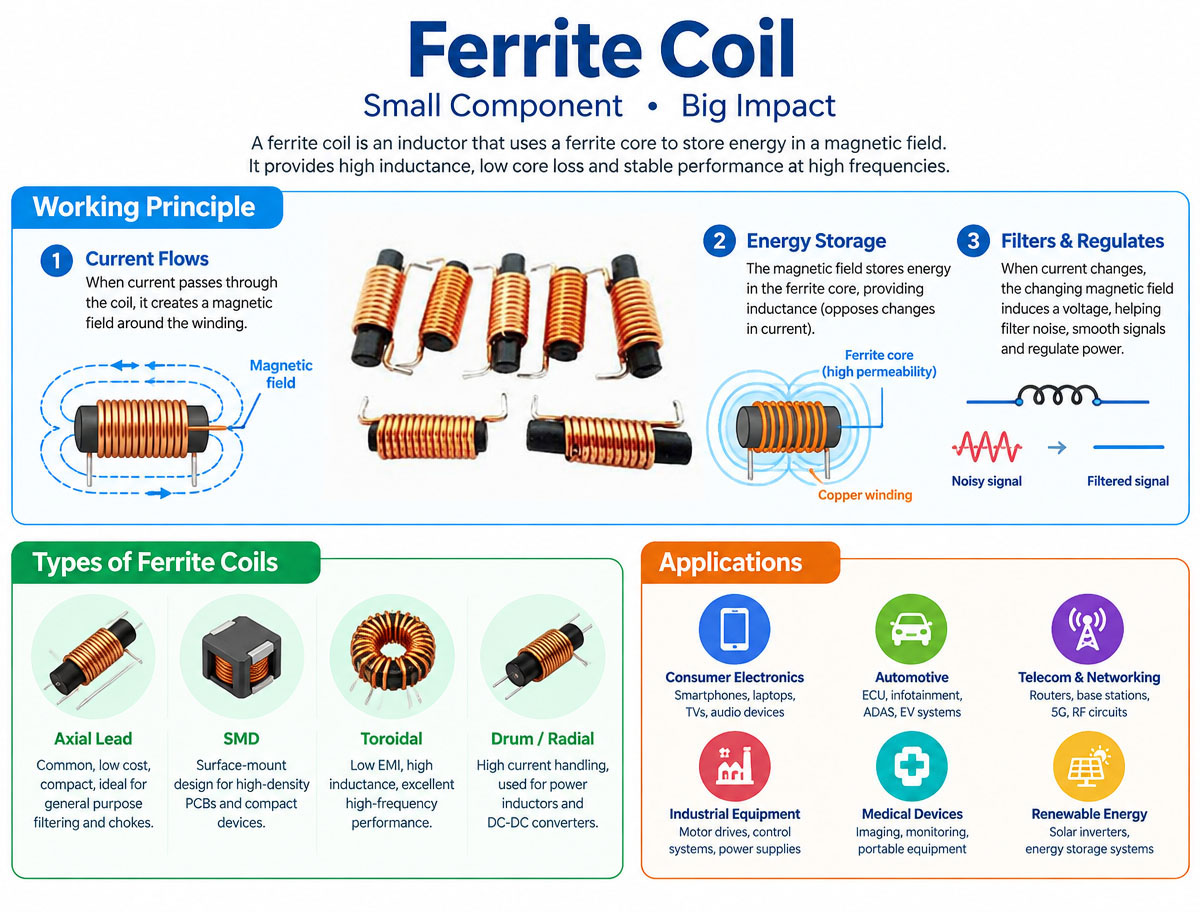
1. Introduction to Ferrite Coil Explained
Ferrite inductors are essential elements of modern circuits and electronic assemblies and are used for the creation of inductance, signal processing, EMI suppression, and RF circuitry.
These components are employed in communications equipment, power supplies, radio receivers, machinery, and many other types of electronic products.
Knowledge about the operation principles and features of ferrite coils can help the engineers, electronic equipment manufacturers, and designers choose the right inductors for their application.
Normally, a ferrite inductor is a coil of an insulated wire wound over a ferrite core. The ferrite core influences the created magnetic field. Therefore, the component obtains its inductance.
When designed correctly, a ferrite-core inductor can have a larger inductance with fewer turns of the winding than the equivalent air-core inductor. Nevertheless, the performance is affected by factors such as the core geometry, material permeability, frequency, and operating temperature.
In this post, we will talk about working principles, construction materials, applications in various industries, pros and cons, and other important issues related to selecting ferrite coils.
2. Ferrite Inductor Definition
Ferrite coils are electromagnetic devices that consist of a winding and a ferrite magnetic core.
Ferrite is a ceramic magnetic material made of iron oxide and other metal oxides. Such material has good magnetic properties and relatively high resistivity, which is needed for inductor and transformer applications.
There are three main elements in the explanation of a ferrite inductor:
Copper winding. Carries an electrical current and generates a magnetic field. Ferrite core. A magnetic path that affects the inductance and losses in the coil.
Insulation and support structure. Provides protection and mechanical stability for the winding.
Ferrite inductors can have various inductance values, frequencies, current ratings, and physical dimensions.
These devices are commonly used in RF reception, filter design, switching power supply systems, EMI control, and magnetic sensors.
When the material of the core is selected properly, the ferrite core inductor achieves greater inductance and more compact dimensions than the air core inductor.
3. Ferrite Coil Principle of Operation
The principle of ferrite coil operation is based on the effect of electromagnetic induction and magnetic properties of ferrite materials.
When electric current flows through the copper coil, a magnetic field is created in the vicinity of the winding.
The core of ferrite changes the distribution and strength of the magnetic field and magnetic flux coupled to the winding.
Diagram of a ferrite core inductor with winding (simplified). Not to scale.
Step 1. Electric current through the winding
During the passage of current through the copper wire, the magnetic field appears in its proximity.
The force of the magnetic field depends on the current, number of turns, geometry of the winding, and properties of the material around the wire.
Step 2. Ferrite Core Affects the Magnetic Flux
Ferrite materials have much higher permeability than air.
Consequently, the presence of a core changes the flux and inductance of the coil.
Step 3. Energy Storage in the Magnetic Field
When the electric current is flowing, the inductor stores energy in its magnetic field.
The energy storage can be calculated using the next equation: Where:
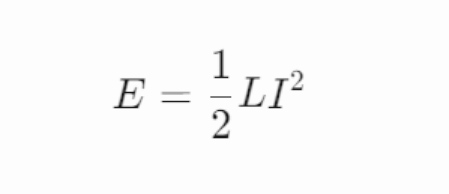
EEE = energy stored in joules
LLL = inductance, henries
III = current in Amps
Step 4. Coil Opposes Change of Current
When the change in current occurs, there is the voltage created by the change of the magnetic flux.
Ferrite inductors are useful for filtration and energy storage and resonant circuits.
As you can see from the principle of ferrite coil operation described above, selection of a magnetic core material plays a crucial role in getting the proper electrical performance.
4. The Types of Ferrite Coils
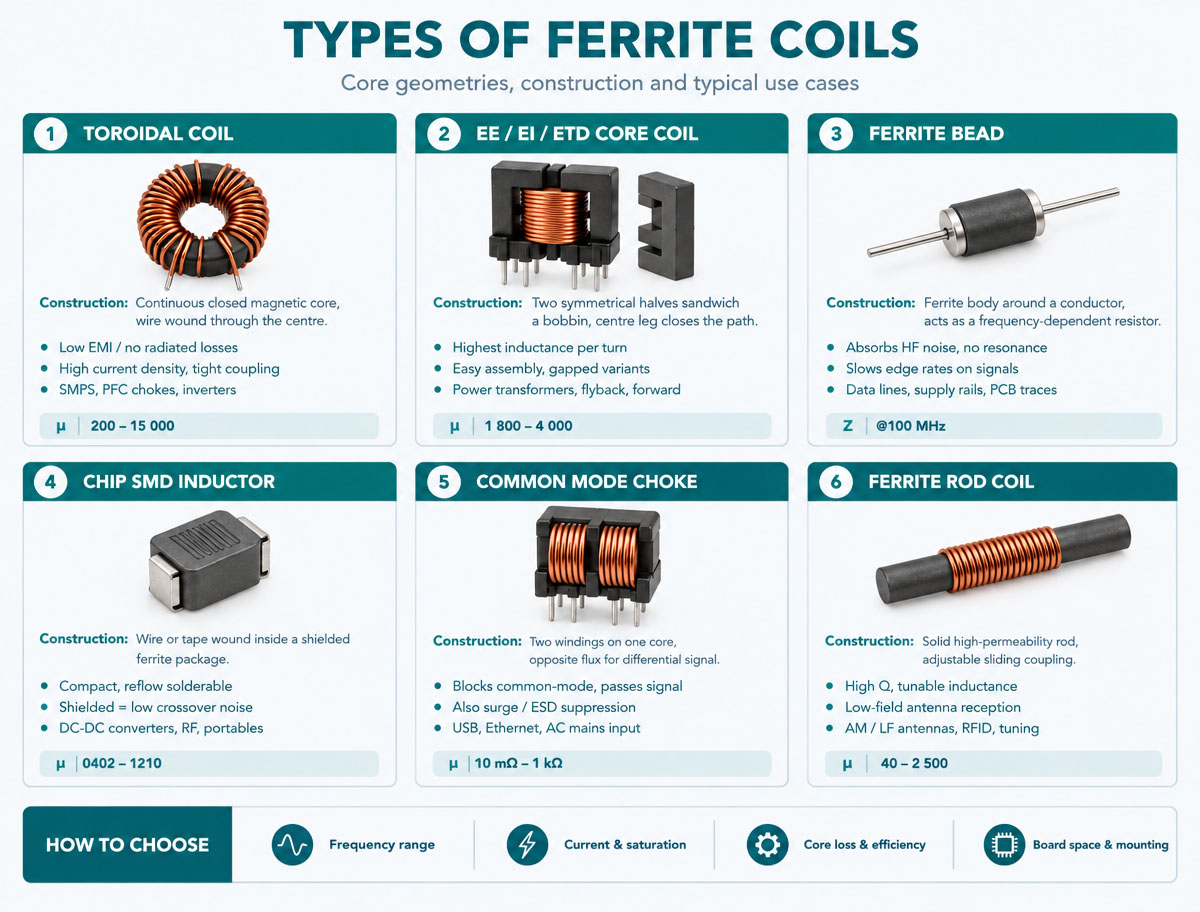
There are numerous types of ferrite coils for various electronics applications.
4.1 Ferrite Rod Inductor
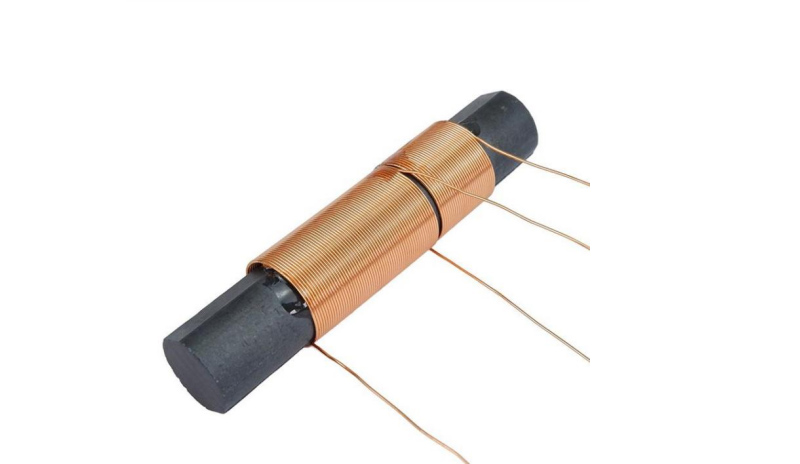
It is a coil with the ferrite rod that is covered with a copper winding.
This type of inductor is widely used in AM radio antennas, in the low-frequency receiving circuitry, and in magnetic field sensing.
Ferrite rod coils are very suitable where a small magnetic antenna is needed.
4.2 Toroidal Ferrite Inductor
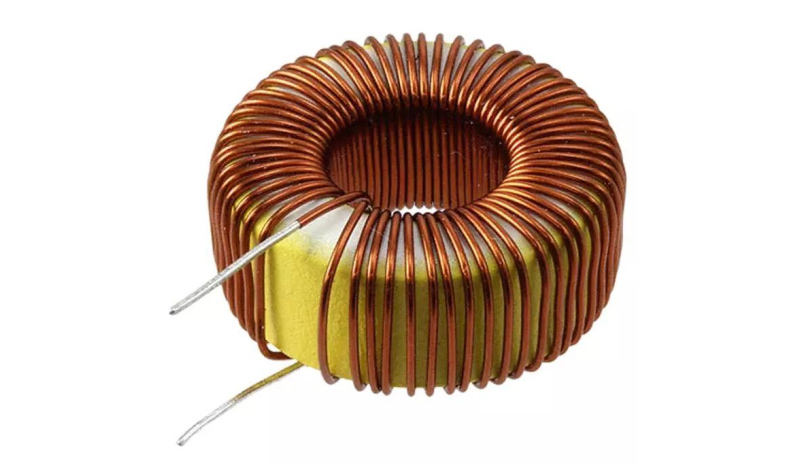
It uses a toroidal-shaped magnetic core that confines the magnetic flux of the coil, reducing external magnetic fields and coupling effects in numerous applications.
They are used in the filters, power converters, and EMI control circuitry.
4.3 Ferrite Drum Core Inductor
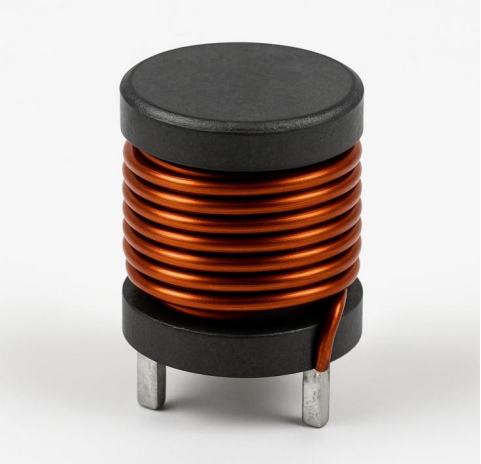
Drum-core inductors employ a specially shaped ferrite core with windings wound around the center part of the core.
They are widely employed in power conversion and filtering electronic assemblies.
4.4 Winding on Ferrite Bobbins.
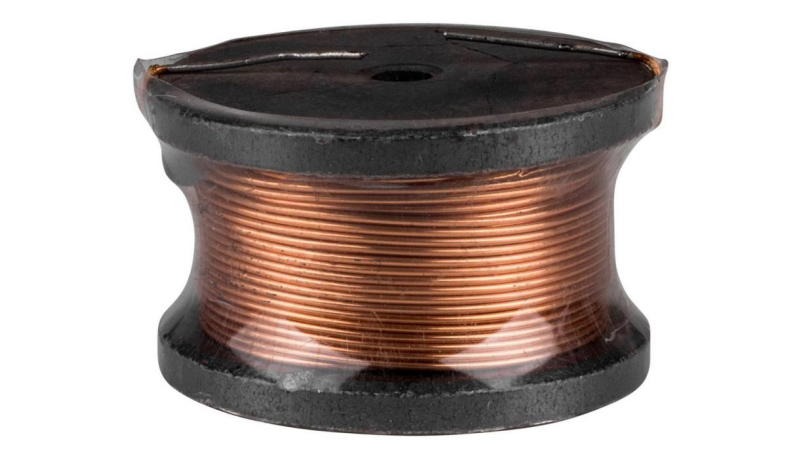
Ferrite bobbin inductors use winding structures for winding support.
These components can be employed for creating customized inductors, sensors, and transformers.
4.5 Multilayer Ferrite Inductors
Small components created by means of layers of conductive and magnetic materials.
These inductors are used in surface-mount electronic assemblies as a part of communications modules and portable electronics.
A detailed description of different types of ferrite inductors helps choose the most suitable construction.
5. Ferrite Coil Production Materials
The performance of ferrite inductors depends greatly on the properties of core material.
The two principal groups of ferrites are manganese-zinc (MnZn) ferrites and nickel-zinc (NiZn) ferrites.
| Material | General characteristics | Typical applications |
| MnZn Ferrite | Often higher permeability; material grades optimized for particular frequency ranges | Power inductors, transformers, common-mode chokes |
| NiZn Ferrite | Higher electrical resistivity; many grades suited to higher-frequency use | RF components, EMI suppression, antenna applications |
Family Material General Characteristics Typical applications of MnZn ferrite Generally higher permeability; material grades are optimized for specific frequency bands Inductors, transformers, and common-mode chokes NiZn Ferrite: Higher electrical resistivity, many grades suitable for higher-frequency use, RF components, EMI suppression, and antenna applications Material suitability depends greatly on its grade, frequency, flux density, and operating temperature. There is no better family in general.
Other production materials are enamelled copper wires, bobbins, and protective and mechanical mounting parts.
6. Ferrite Coil: Electrical Parameters
Knowledge about the electrical parameters of ferrite coils is important for a proper circuit design.
Inductance
Inductance is the electrical characteristic that determines the resistance of the coil to change of the current.
It is measured in henrys (H), millihenrys (mH), or microhenrys (µH).
For an idealized coil with a long uniform magnetic path: Where:

NNN = number of turns of winding
AAA = cross section area
lll = length of magnetic path
μ0\mu_0μ0 = permeability of free space relative permeability
The formula is the simplified one and cannot be used for proper ferrite rod coil design because of open magnetic path and effective permeability.
Quality Factor Q
The parameter shows how the energy stored in the resonance component is compared with the lost energy. The higher Q-factor is required for narrow-band RF tuning purposes.
Frequency response
Permeability and magnetic losses of ferrite materials depend on the frequency.
A coil designed for low-frequency operation can fail at much higher frequencies.
Present rating
The current capacity limitations are defined by temperature rise and saturation of the magnetic core.
D.C. Resistance
The resistance of winding causes power losses and heating of the component.
Ferrite inductors are explained.
These parameters are important for any technical assessment.
7. Applications of Ferrite Coils in Electronics
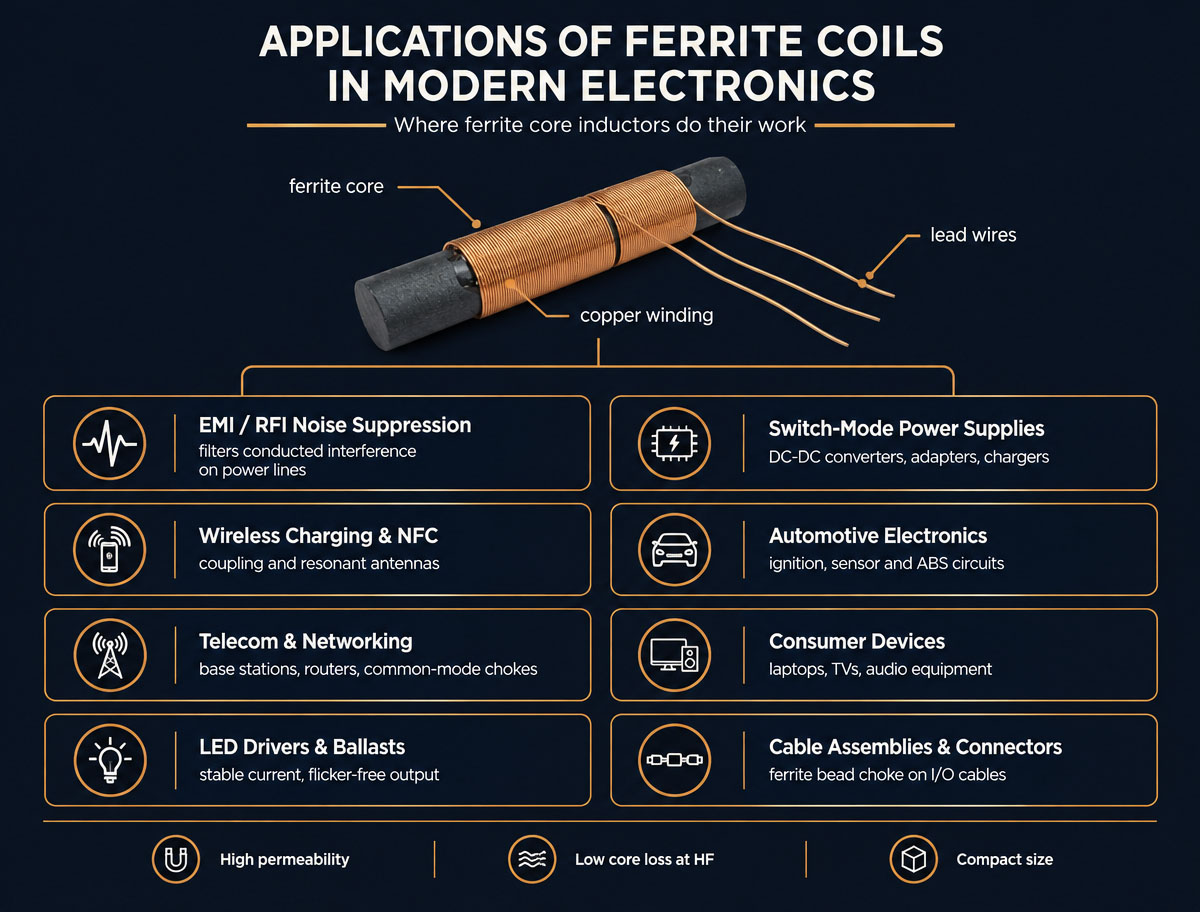
Ferrite coils find numerous applications in electronics.
7.1 AM Receiver Antenna
These coils are used in AM radio antenna systems.
The ferrite rod is providing a concentration of the magnetic flux in the antenna winding.
7.2 Power Supplies Circuits
Ferrite core inductors are used in the circuits of switching power supplies for energy storage, smoothing, and filtration.
Proper core selection is required to control the magnetic saturation and core losses.
7.3 EMI Filtering
Ferrite components can be used in order to decrease unwanted high-frequency noise in electronic systems.
They can provide common mode, differential mode filtering, or high-frequency impedance depending on their construction.
7.4 Low Frequency Communications and RFID
Low-frequency communication and RFID systems sometimes use ferrite rod inductors.
Magnetic properties of these components help the inductive coupling of the small antenna system.
7.5 Auto Electronics
The ferrite inductors are applied in automotive electronic equipment in the power conversion, filtration, sensing, and communications applications.
Additional tests for thermal, vibration, and reliability of the components are required for the applications in the automobile industry.
7.6 Industry sensors
These ferrite-based coils can be used in inductive-sensing and magnetic-field detection systems.
7.7 Consumer Electronics
Ferrite inductors are used in electronic power management and filtration circuits of numerous consumer electronic products.
8. Advantages of ferrite coils
There is a series of advantages that a properly designed ferrite coil has.
Inductive characteristics per volume—with the proper choice of ferrites, it is possible to achieve higher inductance than in similar air-core coils.
Lessened eddy-current losses—ferrite has quite a large electrical resistivity, which makes eddy-current losses in this material lower compared to many other metallic magnetic materials.
Different constructions—depending on the application, it is possible to use a rod, toroidal, drum, or different types of ferrite cores.
Different frequencies—there is a variety of ferrites for RF, power, or EMI applications.
Customization—it is also possible to customize winding turns, wire diameter, core sizes, and inductance.
As one can see, the above-listed factors make ferrite coils very useful for electronics and OEM engineers.
9. Limitations of ferrite coils
It should be kept in mind that besides all the design advantages, ferrite coils also have some limitations.
Ferrite can also saturate because of too high magnetic flux density. As a result, saturation results in lower inductance.
Moreover, frequency and temperature can affect magnetic permeability and core losses.
Besides, ferrite is a ceramic brittle material, and so it should be handled carefully while manufacturing and assembling.
Other limiting factors can be winding resistance, parasitic capacitance, and magnetic coupling.
So it is important to provide a good explanation of the right ferrite coil with regard to both its advantages and limitations.
10. How to select the ferrite coil for your project needs
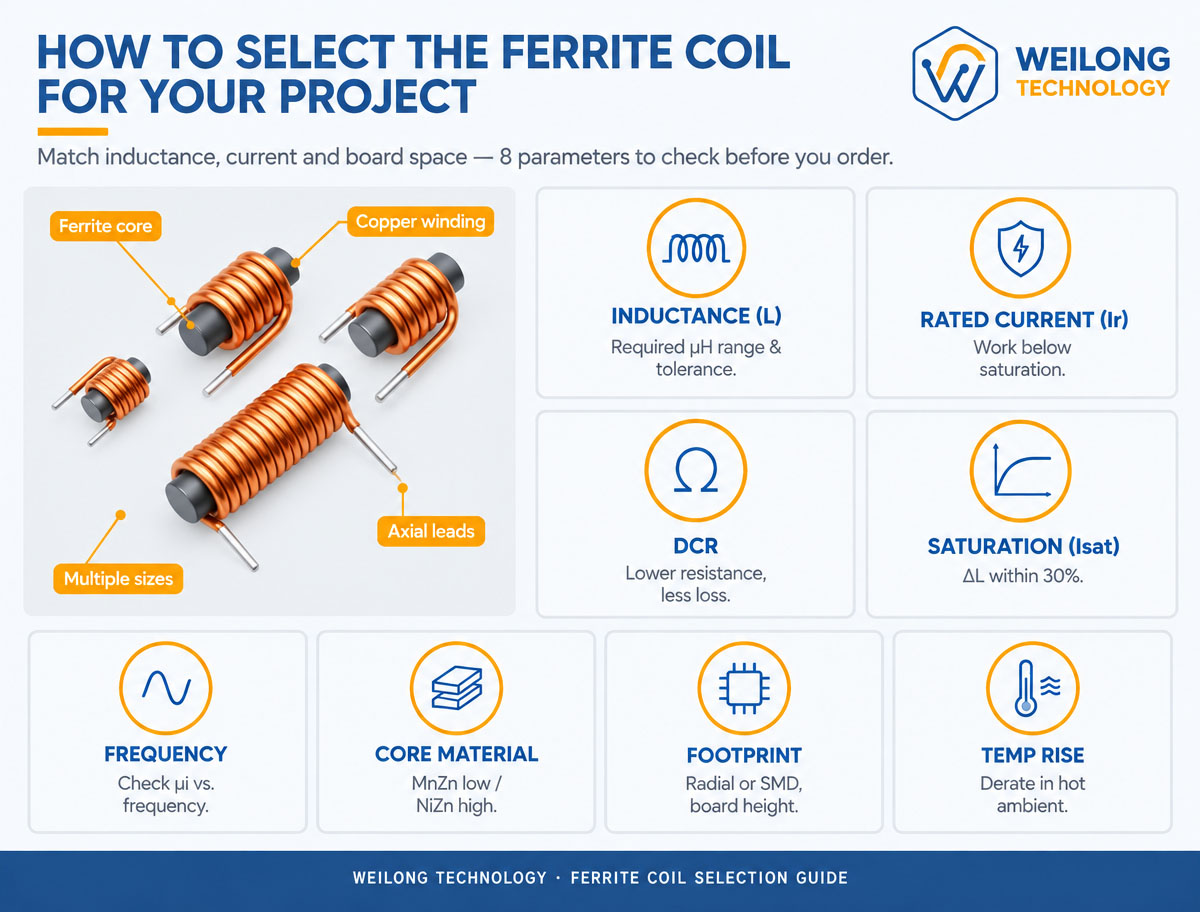
Selection of ferrite coils includes electrical and mechanical requirements.
1. Decide what inductance you want and the frequency of its work.
Then analyze the current, maximum temperature, and magnetic saturation.
The shape of the core is also important. Normally magnetic receiving antennas include ferrite rod coils, and other types of ferrite cores are used for power or filtration purposes.
Moreover, it is important to consider the winding resistance, Q factor, dimension limitations, environmental conditions, and tolerance.
Provision of the manufacturer with full specifications helps to reduce the number of prototype revisions and make the manufacturing process more efficient for custom applications.
11. Manufacturing Process and Quality Control for Ferrite Coils
The usual process of ferrite coil manufacturing involves selection of core, preparation of windings, winding process itself, termination, assembling, and electrical testing.
For precise application the manufacturer should ensure consistency of winding turns, wire position, and material specifications.
The process of quality control may include measurement of inductance, DC resistance testing, visual inspection, insulation testing, and frequency-dependent testing.
Depending on product type, some other tests concerning environment and reliability can also be required.”
It is possible to specify the sizes of the core, the winding layout, electrical parameters, and mountings while making ferrite coils as a custom-made application.
Manufacturing process consistency ensures that the produced part meets the requirements of the design.
12. Ferrite Coil FutureTechnology
Development of compact electronic systems requires magnetic components with controllable losses, reliable work, and low cost of manufacturing.
With the help of new ferrite material formulations and improvement of the manufacturing process, it is possible to optimize components for certain operating frequencies and temperatures.
Advanced simulation tools provide magnetic field analysis, winding optimization, and thermal evaluation.
Despite the developments, ferrite coils are important for power conversion, RF reception, magnetic sensing, and electromagnetic compatibility in industrial electronics.
The future importance of ferrite coils will depend on their ability to satisfy the growing number of requirements regarding electricity, mechanics, and production.
13. FAQs on Ferrite Coil Explained
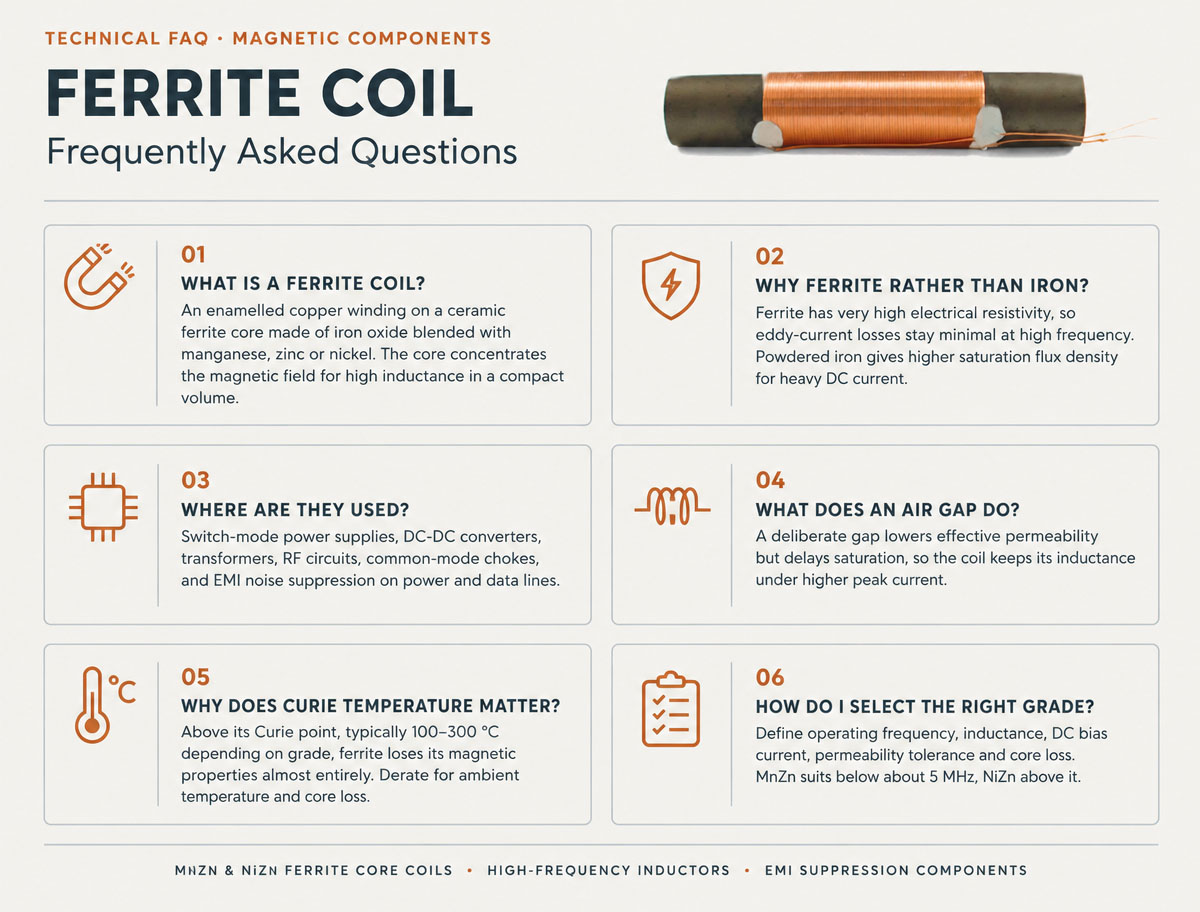
FAQ 1: What is the use of a ferrite coil?
The ferrite coil is used in electronic circuits for inductance, filtering, magnetic field sensing, signal reception, and energy storage. Some typical examples are AM radio antennas, power supplies, EMI filters, and industrial electronic equipment.
FAQ 2: How does the ferrite coil work?
A ferrite coil works on the basis of electromagnetic induction. In a ferrite coil, the magnetic field is generated due to current flow in its windings, and the ferrite core influences magnetic flux and inductance. Ferrite coil stores magnetic energy. It opposes changes in the current.
FAQ 3: What is the difference between a ferrite coil and an air coil?
The major difference is that a ferrite coil includes a magnetic core. But the air coil lacks a core. Ferrite increases the inductance for a given geometry of winding. However, ferrite can have magnetic losses, temperature dependence, and even saturation.
FAQ 4: What is Ferrite Rod Coil?
The ferrite rod coil is a coil wrapped on a long ferrite core. Ferrite rod coil is widely used in AM radio receiving antennas, low-frequency communication systems, and magnetic sensor applications.
FAQ5: Can ferrite coils be used at high frequency?
Yes. It is possible to use high frequency with ferrite coils as far as material grade, winding layout, and core geometry are suitable. However, it is necessary to evaluate the permeability, losses, and parasitic effects at the intended frequency.
FAQ 6: What influences the inductance of a ferrite coil?
The inductance of a ferrite coil is determined by such factors as winding turns, core permeability, core dimensions, winding geometry, magnetic path, and operating conditions.
FAQ 7: How to test the ferrite coil?
Inductance and resistance can be measured with the help of an LCR meter. Also, depending upon the application, additional tests of the coil may include Q factor, impedance, frequency response, and temperature performance.
FAQ8: Can ferrite coils be customized in manufacturing?
Yes. Ferrite coils can be custom-made according to the required inductance, wire size, core shapes, sizes, operating frequencies, and mountings. The examples of custom design are OEM electronics and specialized industrial applications.
FAQ 9: What’s the difference between MnZn and NiZn ferrites?
MnZn ferrites usually provide high permeability and are widely used in power magnetics. On the other hand, NiZn ferrites usually have a high electrical resistivity and are frequently used in RF and EMI applications. Performances depend on material grade.
FAQ 10: How to choose the right ferrite coil manufacturer?
The right manufacturer should have good technical capability, traceable material, precise winding, quality control, prototype provision, production capacity, and the ability to provide the right electrical and mechanical specifications.
14. Conclusion
Ferrite coils are vital magnetic components for electronic filtration, power conversion, RF signal reception, and industrial sensing.
This explanation of the ferrite coil covered its principle of work, major types, materials, electrical characteristics, applications, advantages, and considerations.
Reliable work of this component depends on the right selection of ferrite material, winding arrangement, and core geometry.
The experienced ferrite coil maker is the best friend of any engineer and OEM buyer for the supply of customized parts with the right inductance, frequencies, dimensions, and quality requirements.
If you are designing an AM radio antenna, industrial sensor, or power management circuit, knowledge of ferrite coil technology can be very helpful for


