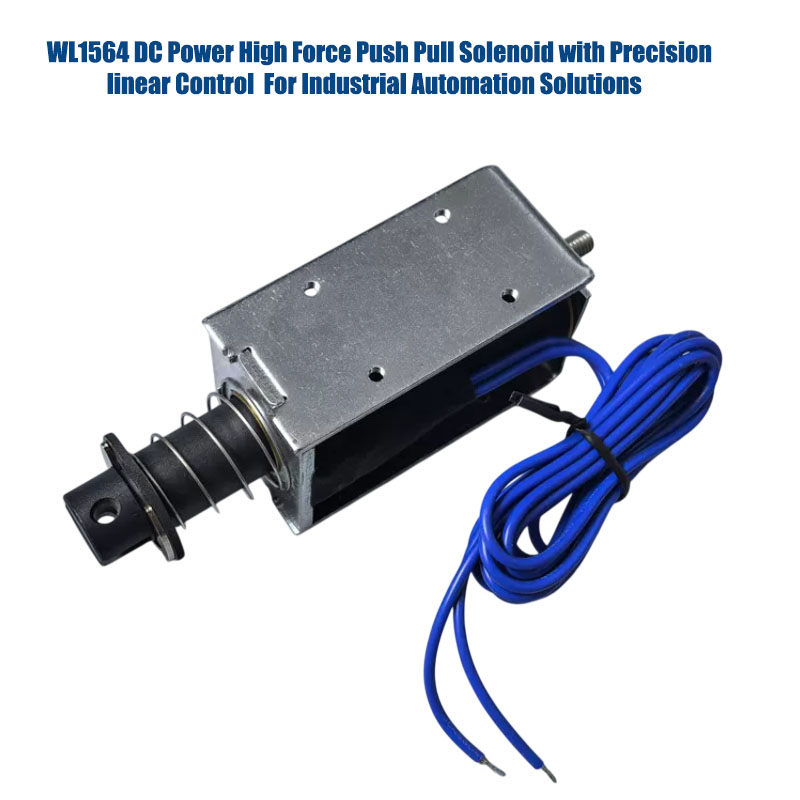
Chapter 1: Introduction to 12V vs. 24V DC Solenoids
DC solenoids are widely used in applications where electrical energy is converted into controlled linear or mechanical motion. DC solenoids are found in industrial automation equipment, automotive systems, vending machines, medical devices, security systems, home appliances, agricultural equipment, locks, valves, and various other electromechanical equipment.
One of the key considerations for engineers when selecting DC solenoids is the operating voltage.
Which 12V DC solenoid or 24V DC solenoid do you choose?
The answer to this question may initially appear obvious since one requires a 12-volt power source and the other requires 24 volts. However, in practice the answer may be much more complicated, as it affects current consumption, wire sizing, compatibility with the control system, electrical efficiency, heating, wire length, and other aspects of engineering.
Neither 12V nor 24V is automatically more suitable in all applications.
For example, a 12V solenoid is usually more suitable for automotive, battery-powered, and mobile equipment, whereas a 24V solenoid is usually more suitable for industrial automation systems.
It all depends on how the solenoid is powered, controlled, installed, and used.
The following article describes the key differences between 12V and 24V DC solenoids and issues to consider when choosing the right voltage.
Chapter 2: What Are Direct Current Solenoids?
A DC solenoid is an electromagnetic actuator that operates using direct current.
Generally speaking, the key components of its construction include
- Electromagnetic coil
- Magnetic housing/frame
- Moving armature/plunger
- Some models include a return spring
- Wires or terminals
- Installation components
When direct current is supplied to the coil, a magnetic field is created, causing movement of the movable plunger towards the magnetic core.
The movement can perform mechanical work like unlatching, operating valves, locks, and other mechanical parts.
Upon removal of the electrical power, the plunger may be restored to its initial state by spring, gravity, external forces, or any other mechanical device.
There are different styles of DC solenoids, including push solenoids, pull solenoids, push-pull solenoids, tubular solenoids, open frame solenoids, latching solenoids, rotary solenoids, and custom-made electromagnetic actuators.
Despite their apparent simplicity, voltage selection is a very important aspect of interaction with the electrical system.
Chapter 3: Understanding 12V vs. 24V DC Solenoids
3.1 The difference between 12V and 24V DC solenoids lies in the construction of their coils.
A solenoid coil is wound with certain wire gauge, number of turns, and resistance, allowing it to produce the required magnetic force at the specified voltage.
The 12V solenoid is designed to operate at around 12 volts DC, and the 24V version is designed to operate at around 24 volts DC.
This does not mean that the 24V solenoid is twice as powerful as the 12V one.
The same mechanical solenoid can be manufactured in 12V and 24V versions to give similar force and stroke. The key differences are the coil resistance and current consumption.
The 24V coil normally uses less current compared to the 12V version, providing a similar power level.
When designing wiring, power supplies, control circuits, and large machines with multiple solenoids, this difference should be considered carefully.
3.2 A Major Difference: Current Consumption
Electrical power is determined approximately as
Power = Voltage x Current
They can be designed to consume the same amount of electrical power, in which case increasing the voltage allows decreasing the current.
Let’s take an imaginary 24-watt solenoid, for example.
12V solenoid consumes approximately:
24 W / 12 V = 2 A
A 24V solenoid would consume around:
24 W / 24 V = 1 A
As you can see, both consume approximately the same amount of electrical power, but in the example above, the 24V version uses half as much current.
Reduced current consumption offers several advantages in system design:
- Smaller wire conductors
- Reduced voltage drop over the long cable runs
- Reduced current consumption of switching devices
- Simplified power distribution in large industrial machines
3.3 That is why 24V DC control systems are so popular in industrial automation.
However, it should be noted that actual current consumption depends on actual coil resistance and construction, so in engineering it is always recommended to use the manufacturer’s specifications instead of estimating currents from voltage alone.
Chapter 4: Why Are 12V DC Solenoids So Popular?
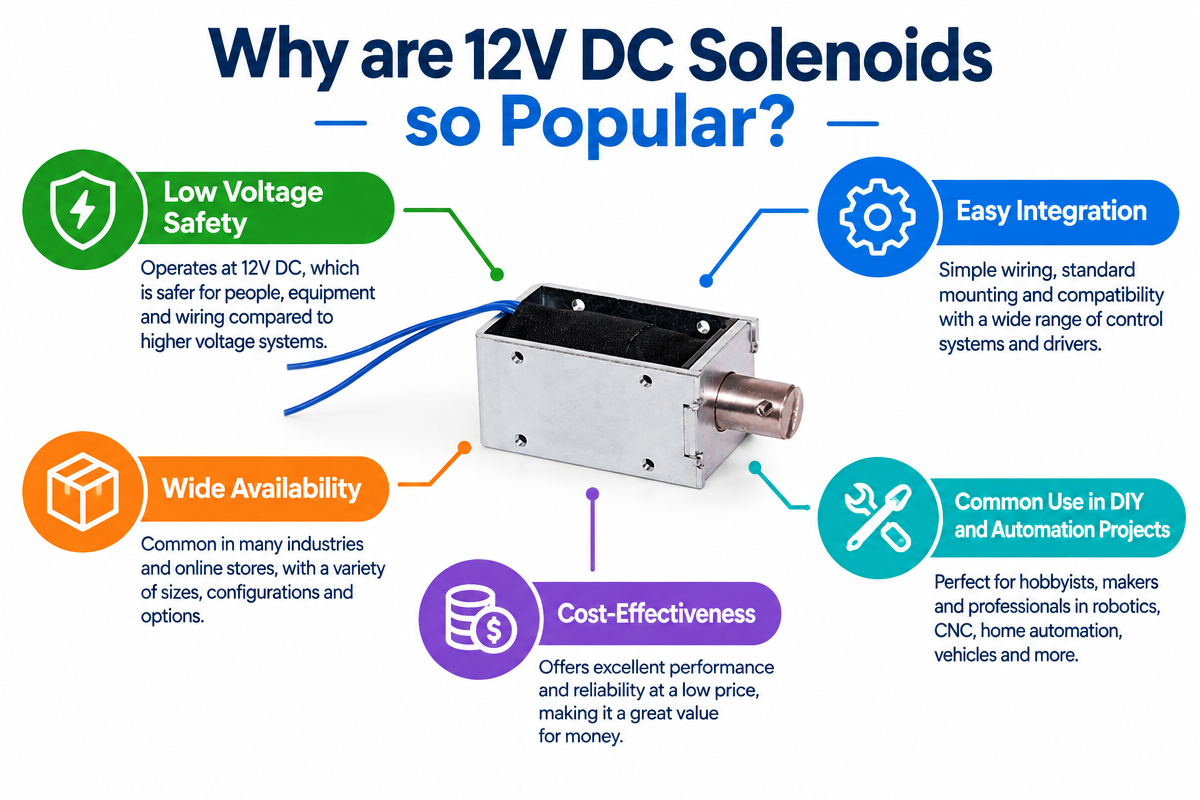
If your system operates at 12V, a 12V DC solenoid becomes particularly useful.
One of the most common examples is automotive applications. 12V electrical architecture is widely used in cars, trucks, recreational vehicles, motorcycles, and various mobile machines.
A 12V solenoid can be powered directly from the existing electrical supply without the need to use an additional voltage converter.
Other common applications can be
- Battery-operated equipment
Automotive Locking Systems
Vehicle accessories
Portable devices
Miniature machines
Access control systems
Vending mechanisms
Agricultural machinery
Electronics products made to order
Wide availability of 12V batteries, power supplies, and adapters makes it a popular option for various compact products and prototypes.
If the whole system operates at 12V, a 12V solenoid can be used to avoid unnecessary electrical complexity.
Chapter 5: Why Are 24V DC Solenoids Popular in Industrial Automation?
You will fencounterplenty of 24V DC solenoids in factories and industrial control systems.
Most programmable logic controllers (PLC), sensors, relays, control modules, industrial power supplies, and automation devices are based on 24V DC control power.
Using a 24V solenoid allows powering the actuator from the same general power architecture as the rest of the control system.
It makes easier integration into the equipment, such as
- Machines for packaging
Conveyor systems
Assembly equipment
Sorting machines
Industrial automation systems
Industrial lock mechanisms
Material handling equipment
Pneumatic and hydraulic control units
Automatic production lines.
Apart from the possibility to integrate easily into equipment, another advantage of 24V DC solenoids is lower current at the same electrical power level.
Large machines can have dozens of solenoids, sensors, relays, and other devices. Lower current consumption can make power distribution and wiring more efficient in cases when the devices are far from the control cabinet.
Chapter 6: Voltage Drop and Extended Cable Runs
Voltage drop is caused by wire resistance.
While the current flows through the conductor, a part of the applied voltage is dissipated in the wiring. It depends on the current, conductor resistance, wire gauge, length, quality of connection, temperature, etc.
Solenoids with 24V voltage are usually equivalent in power to a 12V solenoid of the same design but draw less current and thus tend to have a proportional voltage drop over the same wiring setup.
This factor becomes increasingly important as the length of the cable increases.
Consider an industrial machine where the solenoid is several meters away from the power supply and control cabinet. If the solenoid draws a large amount of current, the voltage drop will reduce the voltage delivered to the coil.
Low voltage will reduce the magnetic force and will cause malfunction.
Engineers can compensate for this by using larger wiring, reducing the length of the cable run, improving connections, or selecting voltage architecture appropriate for the system.
For this reason, 24V is often advantageous in large industrial equipment.
Chapter 7: Does 24V Mean a More Powerful Solenoid?
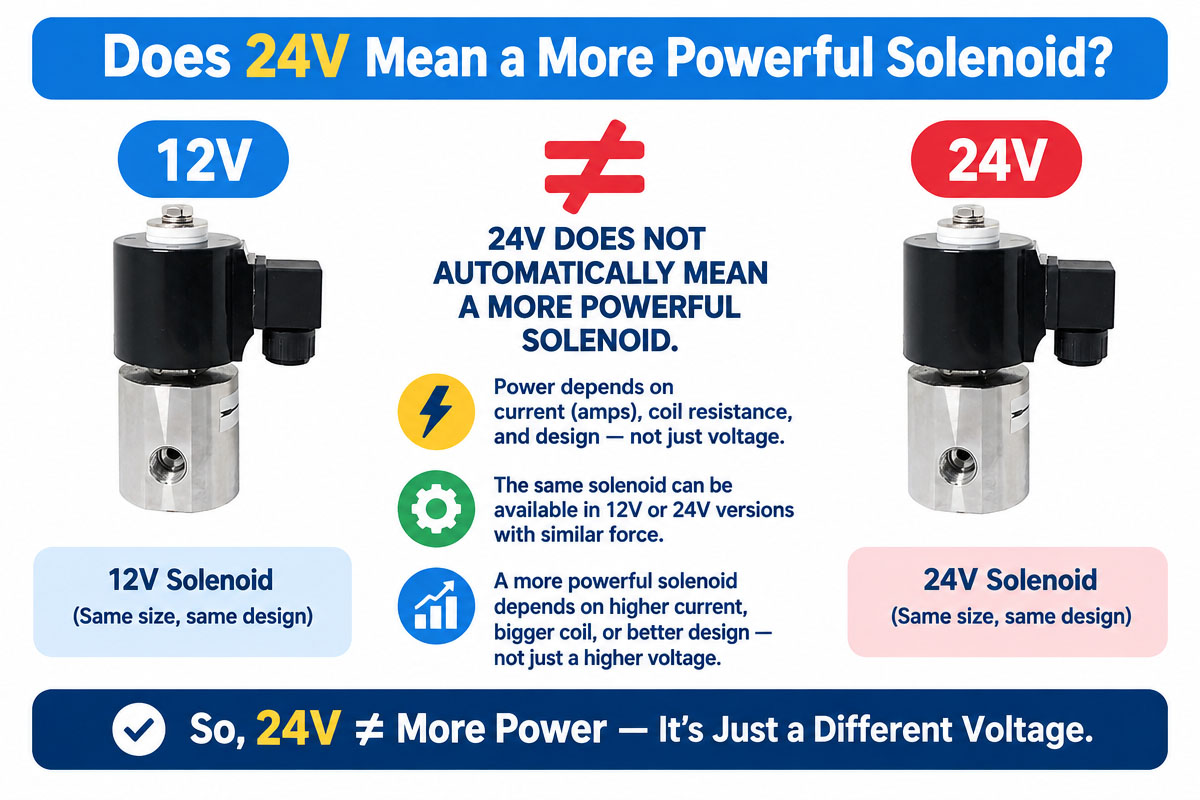
Not necessarily.
This belief is one of the most widespread misconceptions about DC solenoids.
A 24V solenoid is not automatically more powerful than a 12V solenoid.
This force depends on several design aspects, such as
- Coil Construction
Number of turns of wire
- Current
- Magnetic circuit design
Diameter of plunger
Air gap
Stroke
Core material
Power to coil
Mechanical design
The manufacturer can produce 12V and 24V versions of the same solenoid having almost identical mechanical output.
The key difference might be only the fact that one coil has lower resistance and draws higher current while the other has higher resistance and draws lower current.
Thus, instead of selecting the device by voltage alone, engineers should compare force vs. stroke specifications, duty cycle, response time, coil power, mechanical dimensions, etc.
Chapter 8: Heat Generation
When choosing a DC solenoid, heat is arguably the most important factor to keep in mind.
As current flows through the coil, heat will build up. When a solenoid is energized for too long or beyond the stated duty cycle, its temperature will rise sharply.
Excess heat can:
- Increase life expectancy of the insulation
- Damage the coil itself
- Affect adjacent components
Resistance change
- Not be reliable
- Cause premature failure of the solenoid
A 24V solenoid is not inherently cooler than a 12V variant.
Both types of solenoid are designed to absorb the same amount of energy, and both are equally capable of heat generation.
Therefore, duty cycle is more important than voltage when it comes to heating.
Solenoids—Continuous Duty Solenoids
Continuous-duty solenoids are intended to be energized for extended periods of time in specified operating conditions.
Intermittent duty solenoids
Intermittent duty solenoids will develop a great amount of force in a small coil; however, these solenoids can only be energized for limited periods of time before requiring a cooling-off period.
Pulse-duty solenoids
Sometimes a solenoid is energized only briefly. Such solenoids can handle greater temporary electrical power input, since the coil has the chance to cool between activations.
Remember to observe the rated voltage, duty cycle, ambient temperature limitations, and energization time of the solenoid.
Chapter 9: 12V vs. 24V Battery-Powered Devices
Battery voltage is often the most important consideration when choosing your equipment.
In general, if your equipment uses a 12V battery system, a 12V solenoid will be easier to work with. The actuator might be able to be driven by the battery system directly.
Examples of this include mobile equipment, vehicle accessories, portable machines, and some agricultural machinery.
For 12V equipment, if you are going to use a 24V solenoid, you would likely need a DC-DC converter or another method to provide the necessary voltage.
Similarly, equipment that uses 24V batteries could potentially be suited for a 24V solenoid.
In general, it is best to match the voltage of the actuator to the existing electrical architecture.
This helps to minimize the number of components, the wiring complexity, and any unnecessary voltage conversion.
Chapter 10: Switching devices and control circuitry
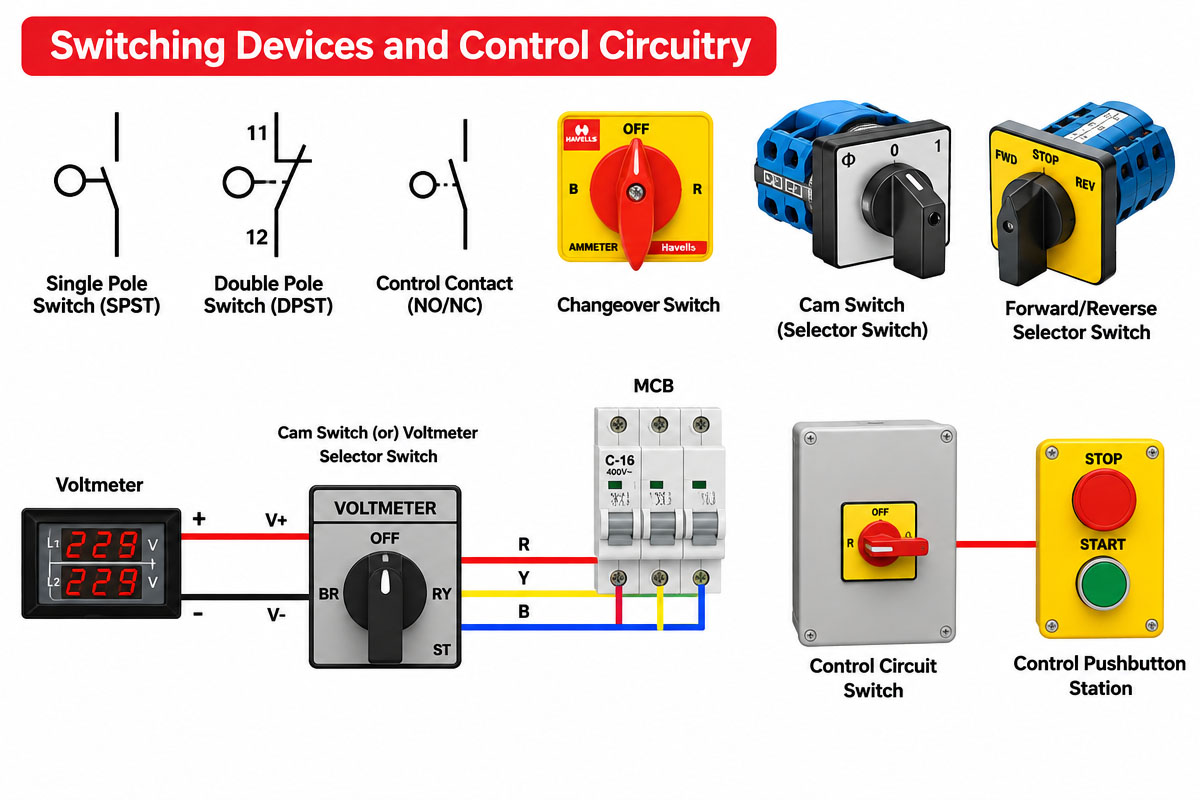
Design engineers also need to pay attention to how the solenoid is going to be turned on and off.
10.1 A DC solenoid can be controlled using:
- Relays · Mechanical switches
- Transistors • MOSFET circuit
- PLC outputs
- Electronic driver
- Microcontroller interface
- Control panels
The switching device must be able to withstand the operating voltage and current requirements of the coil.
Solenoid coils are inductive loads, meaning that during deactivation they will produce a voltage spike known as inductive kickback.
A flyback diode, TVS device, snubber circuit, or some other suppression technique may be required depending on the application.
This step becomes especially important when the solenoid is controlled by some sensitive electronics.
In addition, the particular suppression technique may affect the release time of the solenoid. Applications requiring quick solenoid disengagement should consider both electrical protection and dynamics.
10.2 Response Speed
One of the characteristics of DC solenoids is the response speed.
In certain applications, such as sorting, dispensing, locking, printing, and automatic assembly, machine designers might require the actuator to activate within milliseconds.
However, the speed of response is not determined by the voltage, whether it’s 12V or 24V.
10.3 Quick Comparison: 12V vs. 24V DC Solenoids
| Factor | 12V DC Solenoid | 24V DC Solenoid |
| Typical use | Automotive, portable, and battery-powered equipment | Industrial automation and machinery |
| Current for similar power | Generally higher | Generally lower |
| Long wiring runs | May require larger conductors | Often more practical |
| Battery compatibility | Common with 12V systems | Common with 24V systems |
| PLC integration | Possible with a suitable interface | Common in industrial control systems |
| Force | Depends on design | Depends on design |
| Heat | Depends mainly on coil power and duty cycle | Depends mainly on coil power and duty cycle |
| Best choice | Systems already based on 12V | Systems already based on 24V |
10.4 Among the factors that influence the speed of response are
- Coil inductance
- Voltage applied
- Current increase
- Spring force
− Plunger mass
- Mechanical loading
- Stroke length
- Air gap
- Friction
- Driver design
- Suppression circuit
To achieve fast response, a special control method might sometimes be employed, providing a high initial voltage or current and then lowering the holding power after the engagement.
This peak and hold control can allow faster response while limiting the heat generation but requires special solenoid and driver designs.
Chapter 11: How to Choose Between 12V and 24V DC Solenoids
The better voltage is usually better for the electrical architecture rather than the solenoid.
When the equipment is already 12V DC powered, such as in automotive, battery-powered, portable, or compact applications, use a 12V DC solenoid.
If the machine uses standard industrial 24VDC controls, or when lower current consumption is preferred, use a 24VDC solenoid.
Consider these factors prior to making a decision:
1. Available supply voltage
2. Required operating force
3. Stroke length
4. Working cycle
5. Draw current
6. Coil power
7. Response speed
8. Ambient temperature
9. Wiring length
10. Control device capacity
11. Mounting dimensions
12. Operating environment
13. Expected operational lifetime
14. Available installation space
Voltage is only one of the specification elements.
A properly selected DC solenoid should meet all of the mechanical and electrical requirements of the application.
Chapter 12: Common Mistakes When Choosing DC Solenoids
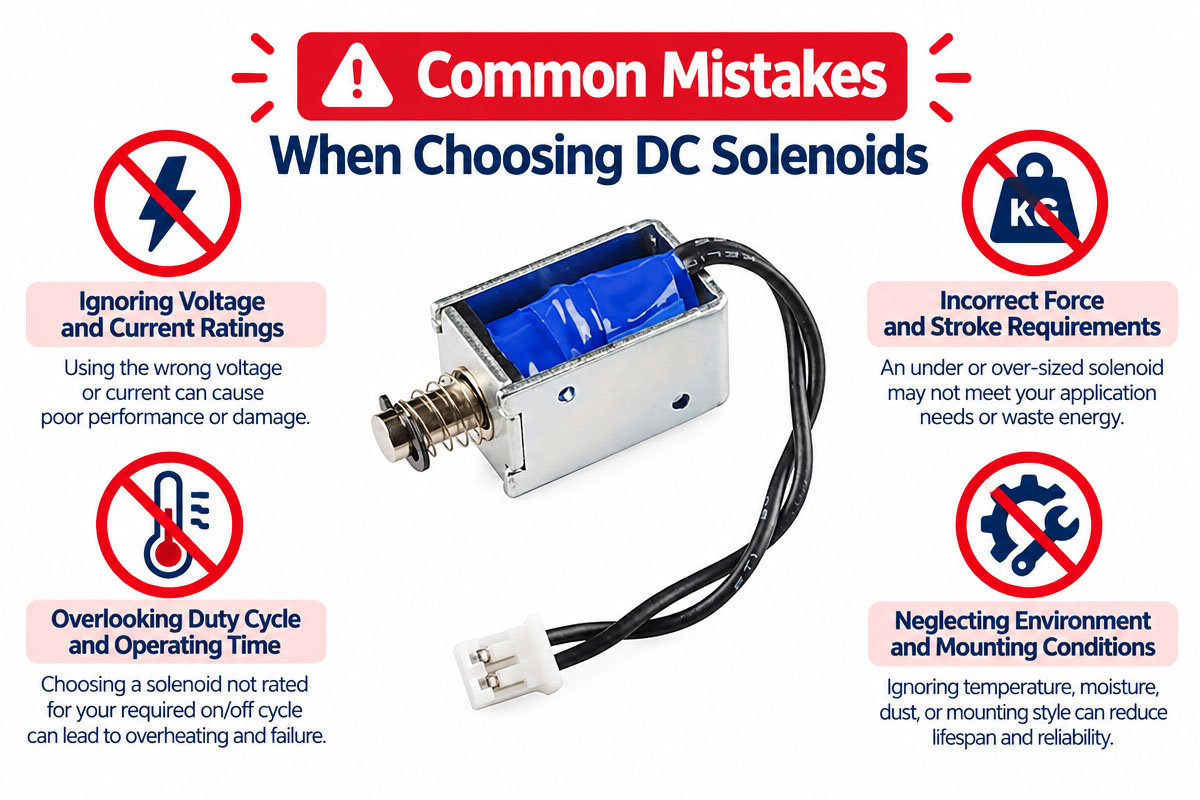
A common mistake is to treat voltage as the decisive factor of the performance of the solenoid.
Another common mistake is to choose the solenoid based solely on the maximum pulling force, without taking the force at a specified stroke into consideration.
The solenoid force usually changes depending on the plunger position. The pulling force at a large air gap will be different from the one at the end of the stroke.
Other common mistakes include using wrong voltage, exceeding the duty cycle, neglecting the coil temperature, underestimating the required power supply, forgetting to take the voltage drop into account, controlling the coil directly with the electronic output unable to handle the current, and lack of protection for the control circuit from inductive voltage spikes.
Proper application engineering can prevent many of these errors.
Chapter 13: SUMMARY
Choosing 12V or 24V DC solenoids depends on the overall electrical and mechanical design of the equipment.
The 12V solenoid is a good and practical choice when the equipment uses 12V supply voltage, such as automotive, battery-powered, portable, or mobile equipment.
A 24V DC solenoid is more often used when the equipment uses PLC control or automated systems, in long wiring applications, and when reduction of current consumption is desirable.
However, voltage is not the only factor that influences the force generated, response speed, service life, or the temperature.
Engineers should take into consideration stroke, force, duty cycle, coil power, current, ambient temperature, installation method, electrical control, wiring length, and mechanical load.
The ideal is to select the DC solenoids according to the complete operating conditions of the application.
Under proper voltage, mechanical design, control circuit, duty cycle, and load, a DC solenoid can provide fast and reliable actuation of the various industrial and commercial equipment.
Chapter 14: FAQs for 12V & 24V DC Solenoids
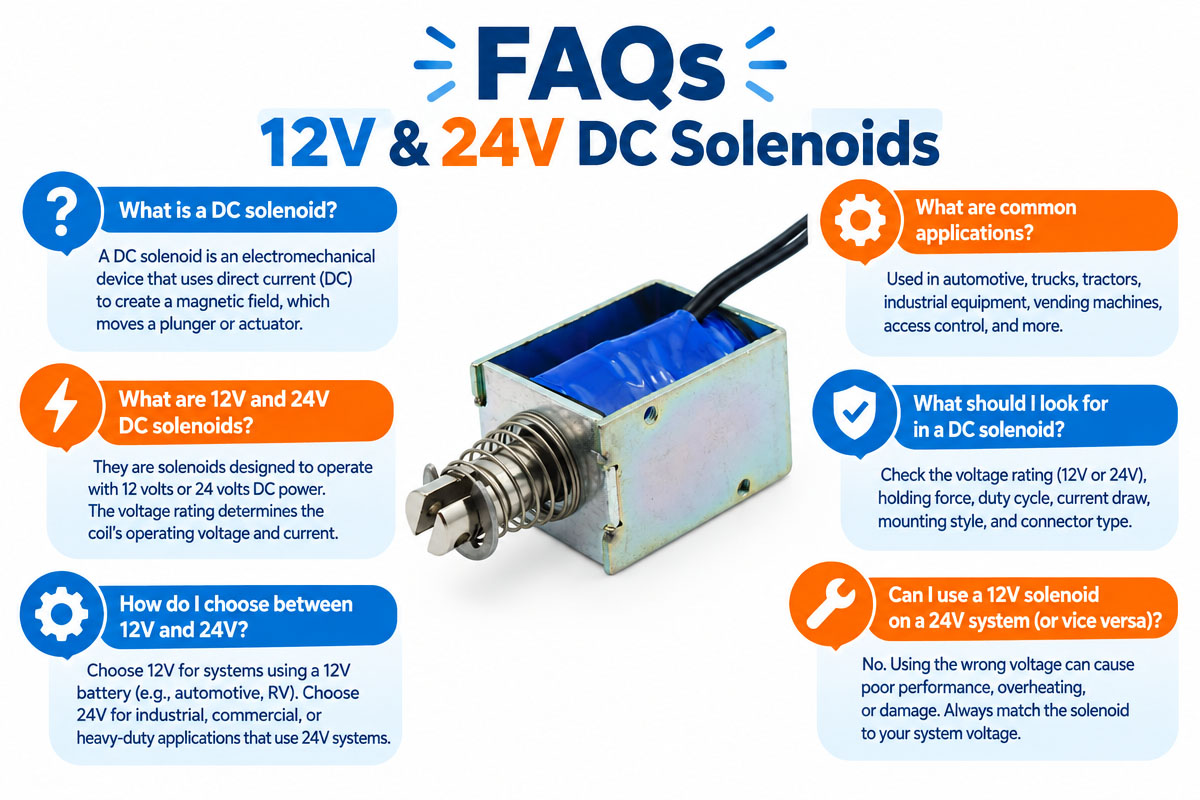
14.1 What are the DC solenoids?
A DC solenoid is an electromagnetic actuator powered by direct current. Application of voltage to the coil results in the creation of a magnetic field that moves the plunger or armature, resulting in mechanical action.
14.2 What is the difference between 12V and 24V DC solenoids?
The primary difference is the rated working voltage and electrical characteristics of the coil. A 24V solenoid usually has a lower current rating compared to the 12V solenoid with a similar power.
14.3 Is a 24V DC solenoid stronger than a 12V DC solenoid?
Not really. The force of the solenoid depends on the coil design, coil current, magnetic geometry, stroke, air gap, plunger dimensions, and other parameters. Properly designed 12V and 24V solenoids can produce equal force.
14.4 Can I run a 24V solenoid at 12 volts?
A 24V DC solenoid running on only 12V will receive much less electrical energy than intended and may not develop sufficient magnetic force to operate reliably. Unless the particular solenoid has been certified for the specific operation mode, the manufacturer’s rated voltage should be used.
14.5 Can run a VDC solenoid at 24 volts?
Normally, the standard 12V solenoid should not be powered directly from the 24V supply voltage. High voltage will result in extremely high coil current and heat generation, which might damage the winding or insulation of the coil. Ensure that you are using the proper supply voltage or an appropriate driver.
14.6 Why do industrial machines use 24V DC solenoids?
24V DC is already widely used in industrial PLCs, sensors, relays, and control systems. Such a system conveniently operates together with a 24V solenoid and usually requires less current than a 12V coil at the same power level.
14.7 I guess you’d prefer a 12V DC solenoid in automotive applications, right?
These are convenient to use since the many vehicles and mobile machinery use a 12V nominal electrical system. YYou can match the solenoid to the system’s available voltage, which makes installation easier and reduces the need for voltage conversion.
14.8 Do 24V DC solenoids create less heat?
No, not necessarily. The heat generation depends mainly on coil resistance, electrical power, duty cycle, cooling conditions, and design. A 12V solenoid and a 24V solenoid with the same power rating will generate the same amount of heat.