


How to avoid common mistakes while choosing a Metering Pump Solenoid
There are a few common mistakes that users make while selecting a metering pump solenoid. One of the most frequent ones is the inability to determine the right amount of force needed. Solenoids need a specific amount of magnetic force to drive metering pump pistons or plungers.
Another common mistake is wrong voltage settings. Excessive or insufficient voltages may affect solenoid performance or reduce their life. To resolve this problem, one should select a proper voltage setting that fits his particular metering pump’s application.
Material compatibility is also crucial when picking appropriate solenoids. They should be resistant to a particular type of chemical; otherwise, their lifetime can significantly decrease. To achieve this goal, special materials like stainless steel are used.
Frequency and temperature are important factors as well. Continuous operation at high frequencies may reduce the performance of a metering pump’s solenoid, while temperature influences the magnetic properties of its core.
Moreover, you should also take a solenoid’s dimensions into account. Sometimes, users should customize solenoids to ensure their perfect operation. Size constraints play an important role when choosing appropriate devices.
Finally, it is also important to take into account energy consumption and lifetime when picking a particular solenoid. The solenoid should have enough force and be resistant to wear to provide years of stable operation.
Choosing a Metering Pump Solenoid
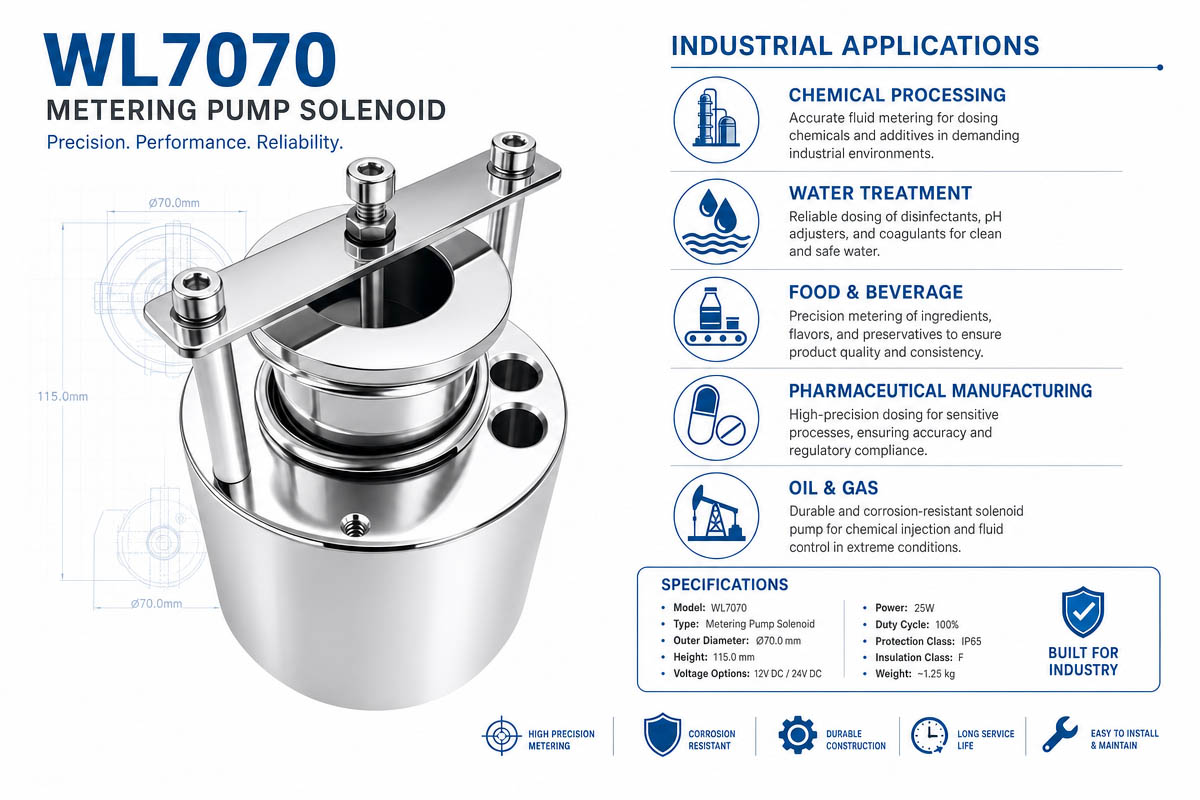
You should consider a number of important technical characteristics of these devices during their selection. First of all, voltage setting is crucial in ensuring stable operation. It is important to know if the solenoid needs AC or DC current. The voltage range should also be taken into account.
Force requirement and stroke length are also essential characteristics of such solenoids. Solenoids should produce a specified amount of force to drive metering pump plungers effectively. Too low forces can result in unstable or non-uniform pumping cycles.
Duty cycle is another factor that needs to be considered while choosing a metering pump’s solenoid. Depending on the application, the result may vary. Duty cycles are especially important for solenoids that have to work continuously without breaks.
Moreover, the speed of actuation and operating frequency should also be considered to ensure proper performance. Solenoids should produce magnetic fields fast enough for quick pumping cycles.
Temperature is an important aspect of the selection process. Various metering pump solenoids work well in different temperature ranges. High temperatures, humidity, dust, or corrosive liquids require particular design considerations.
Chemical properties of the working medium also have to be considered when selecting solenoids for metering pumps. The chemical resistivity of plungers and housing is particularly important for solenoids operating in aggressive environments.
Size is also important because it determines the ability to mount a solenoid in a compact location. Users sometimes require customized metering pump solenoids.
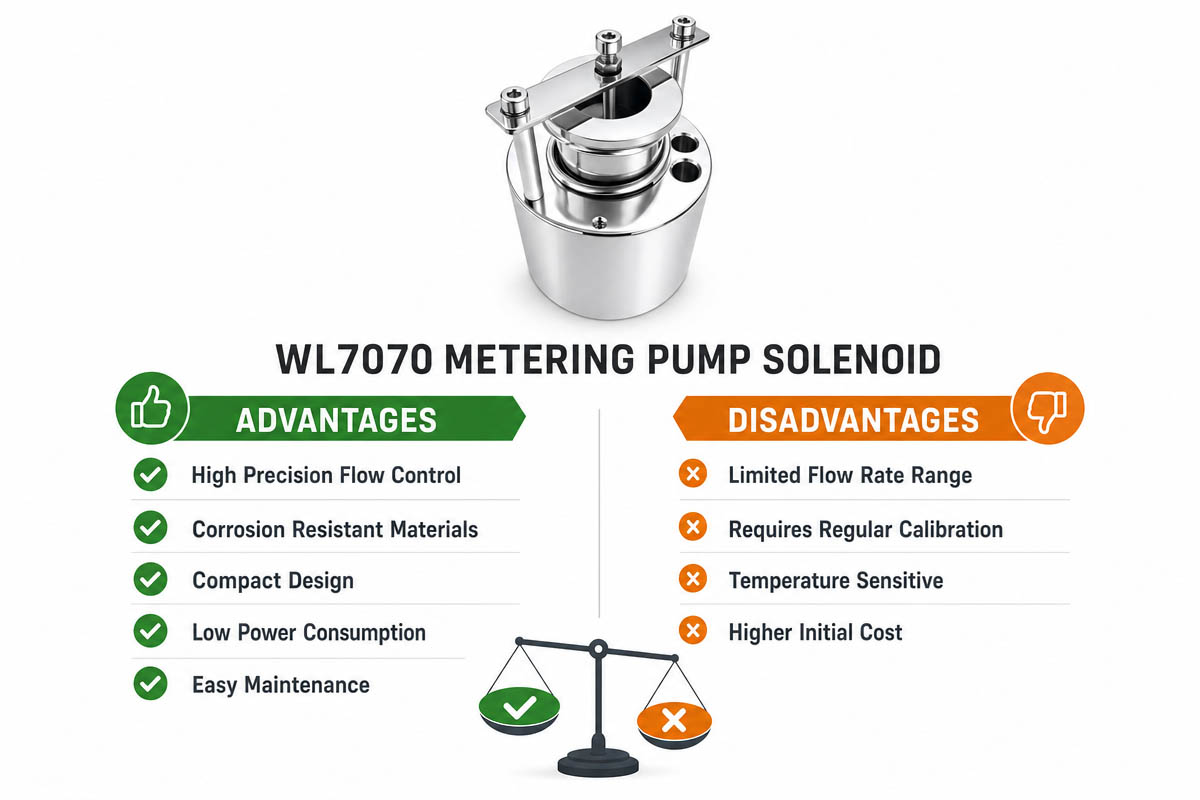
Lifespan and energy efficiency are important factors for determining the performance of the device and ensuring long operating life.


