

Chapter 1: Introduction for Custom Industrial Solenoid Design
Solenoids are extremely reliable electromagnetic actuators that are widely used in modern industry, medicine, automation, security, and smart devices. However, standard solenoids sometimes cannot meet all the requirements of specific applications. Therefore, it is necessary to design a custom industrial solenoid that will meet precisely defined requirements of force, stroke, voltage, installation space, and operating environment.
To design a custom industrial solenoid properly, many parameters should be taken into account. Inappropriate specifications may lead to unsatisfactory performance, overheating, reduced lifetime, and unstable operation of the actuator.
OEM customers and automation engineers understand that specifying the design correctly is crucial for saving time and improving product reliability in custom projects.
Here we discuss 7 of the most important specifications for the design of custom industrial solenoids and their impact on solenoid performance.
Chapter 2: Force Required: The Most Important Solenoid Specification
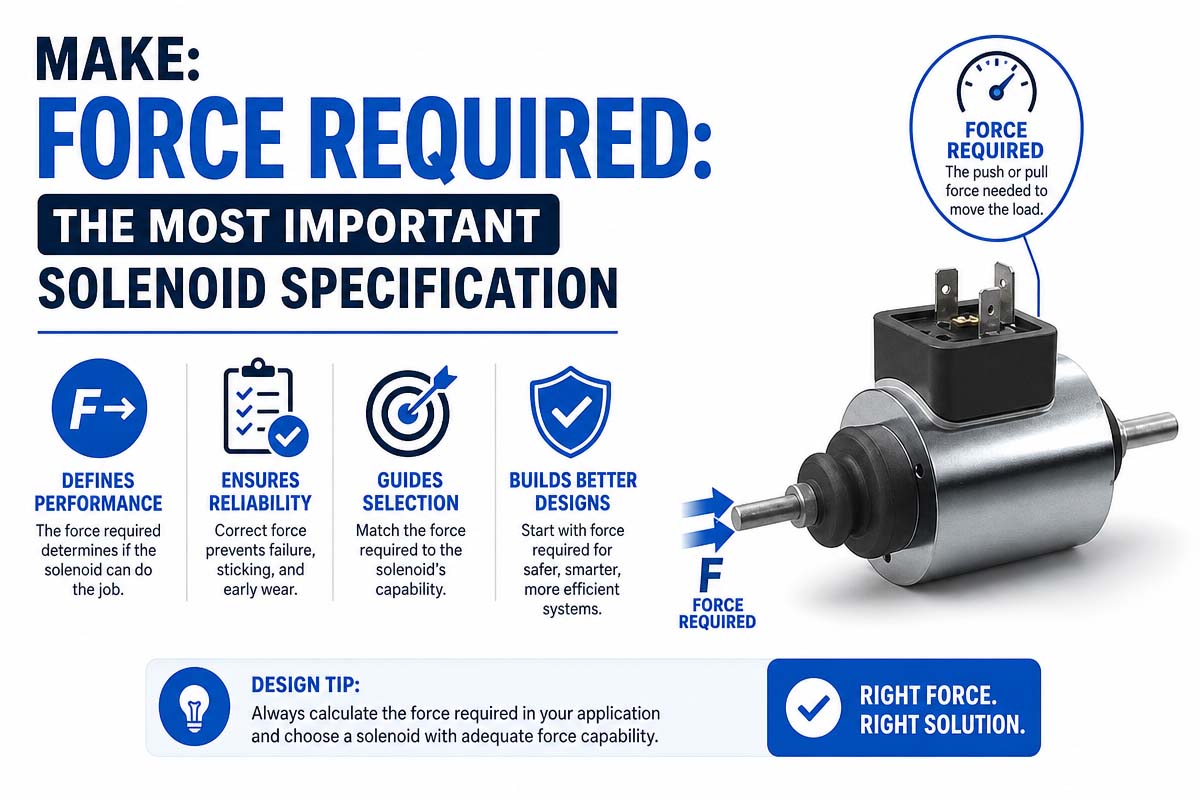
The main and the most important parameter in the design of a custom industrial solenoid is the required electromagnetic force.
The solenoid force determines whether the actuator will perform its mechanical work correctly.
Engineers should require:
traction force, push force, clamping force, initial force, and force of return They simply changed it.
For instance, an automation locking mechanism could require:
traction force: 80 N, stroke: 10 mm, working voltage: DC24V Then the solenoid manufacturer must design the magnetic circuit and coil to meet these requirements.
Factors that Impact Solenoid Force
The force characteristics of a custom industrial solenoid depend on:
design of coil windings, magnet material, air gap isolation plunger diameter, and housing composition 2.
Voltage Supply Power
A bigger coil does not necessarily mean greater force. In the case of optimal magnetic circuit design, a smaller size can increase the force.
Chapter 3: Stroke Distance—Specify the Movement Needed
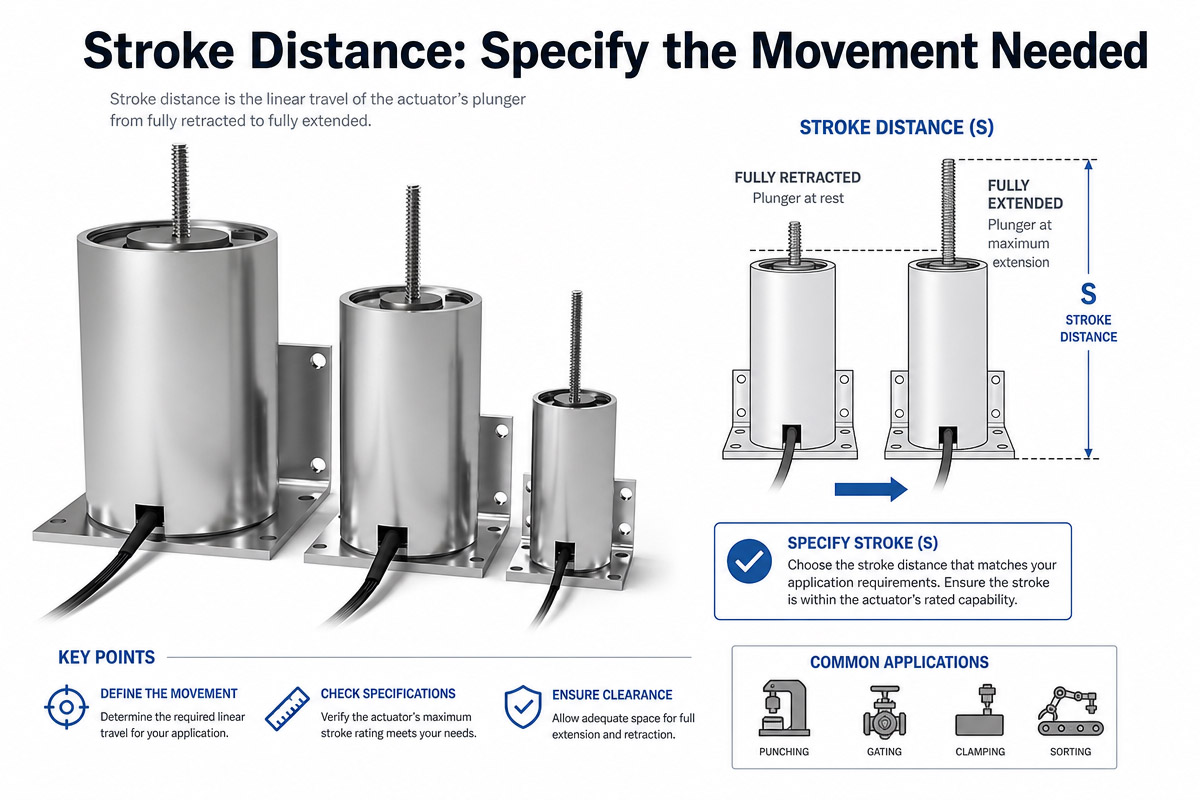
Another important parameter in the case of the design of custom industrial solenoids is stroke.
The stroke is the distance that the plunger will travel after the coil is activated.
Typical strokes of industrial solenoids are
1 mm, 3 mm, 5 mm. 10 millimeters, 20 mm, 30 mm. The engineer should take into account the relationship between stroke and force (which is an inverse relation).
Usually:
Shorter stroke = more force Long stroke = less power For instance:
A solenoid can provide 100 N at a stroke of 3 mm, 50 N at a stroke of 10 mm, and 25 N at a stroke of 20 mm. Therefore, customers who design a custom industrial solenoid should define the real stroke length, not just maximum force.
Chapter 4: Voltage and Power Requirements
The voltage is an important specification that affects the solenoid coil design.
Standard DC voltages are
DC 5V DC 12V DC 24V DC 36V DC 48V DC The correct choice of voltage depends on the equipment power system.
For instance:
Portable devices might require:
low voltage, very low power consumption, and the most widespread industrial automation equipment are:
DC 12V DC 24V The professional design of the custom industrial solenoid takes into account:
coil resistance current consumption heat production power efficiency Low Power Solenoid Design
For battery-operated devices, engineers might need:
latching solenoid design magnetic retention technology activation pulse It helps to save energy rather than constant activation.
Chapter 5: Operating Environment and Duty Cycle
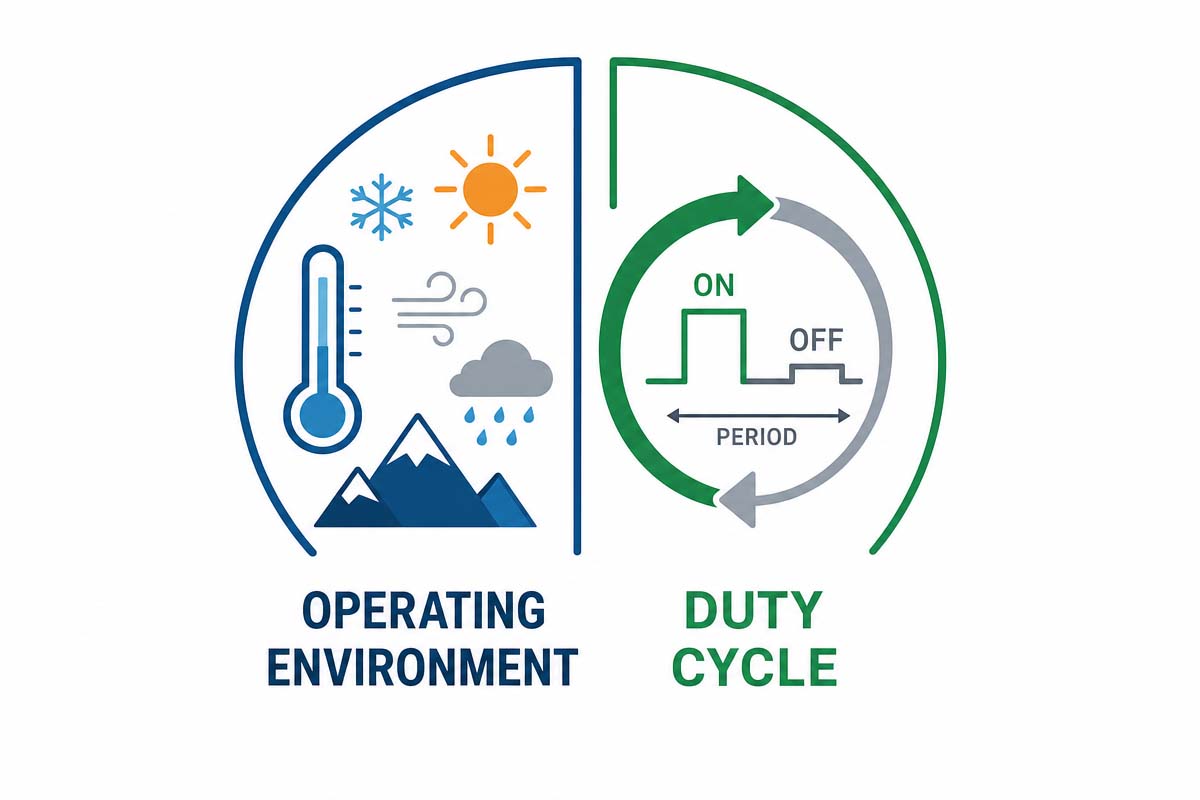
A duty cycle is a time period during which the solenoid is activated within a certain period of time.
This parameter is important for a custom industrial solenoid because the coil temperature directly influences the lifetime.
Typical duty cycles are
Duty, Intermittent For example:
10% duty cycle
It means that the solenoid is activated for a short time and switched off. Used in:
Valves lock physical switches. Duty cycle continuous Example: 100% duty cycle
The solenoid is constantly activated. Used in:
mounting devices for the automation of deindustrialized systems When designing a custom industrial solenoid, engineers should consider the following factors:
room temperature heat release coil insulation class frequency of using Thermal design is inadequate when:
Coil overheating, damaged insulation, shorter lifetime
Chapter 6: Mechanical Design and Mounting Dimension
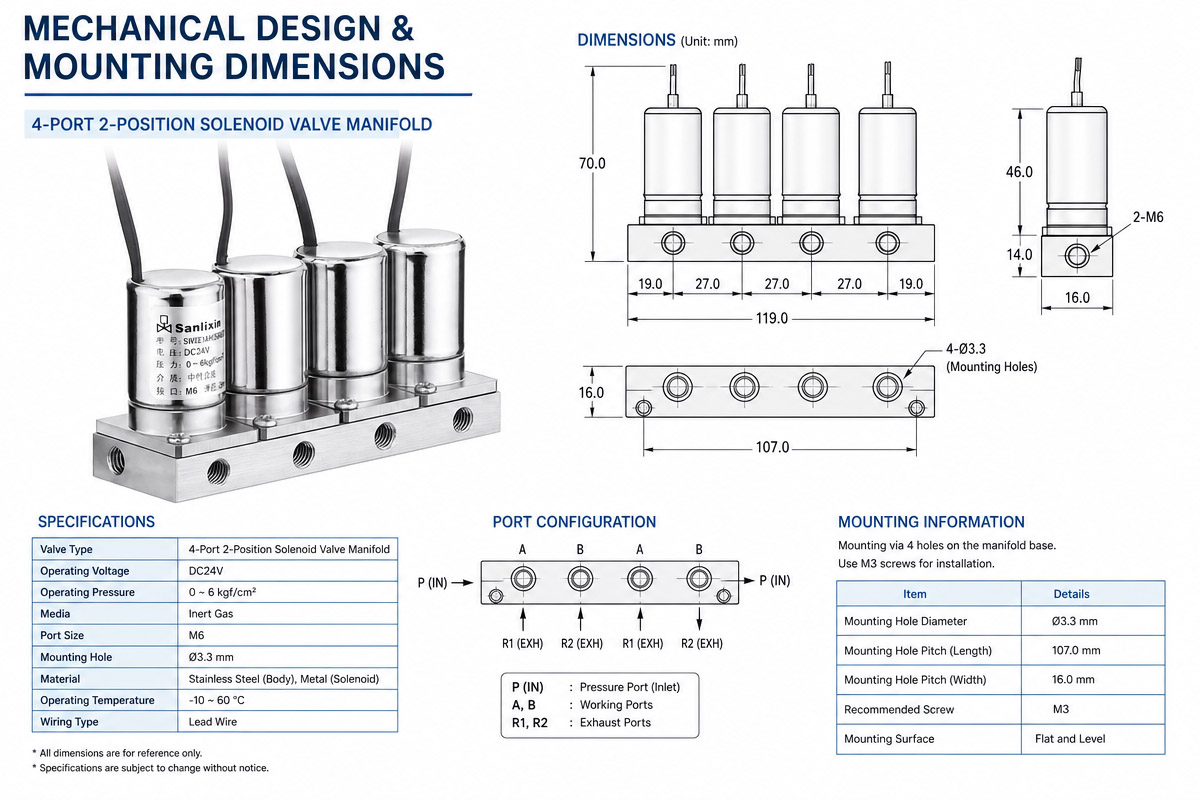
Each application has specific mounting requirements.
Before manufacturing a custom industrial solenoid, customers should provide the following information:
general dimensions, space available, shaft diameter, connector location, and mounting position Common solenoid constructions are
Advantages of Tubular Solenoid:
compact size, high efficiency, suitable match, and uses:
automation machinery, medical devices, 7.4.1.2.
security systems. Advantages of frame solenoids:
high-force-generation simple installation applications:
industrial machinery door lock systems Advantages of Rotary Solenoids:
Rotation quick response uses:
printing press robotics sorting machinery The proper mechanical construction will improve performance and reduce mounting problems.
Chapter 7: Selection of Materials & Surface Treatment
Material choice is important in order to design a reliable custom industrial solenoid.
Key factors are
material of plunger
The plunger requires:
large magnetic permeability good wear resistance stable performance typical materials:
iron, pure. low-carbon steels stainless steel magnets Housing material
The housing provides:
mechanical protection magnetic return path structural integrity of typical materials:
steel (stainless) alumina Surface Treatment
manufacturers can use, depending on the application environment:
zinc plating, nickel plating, zinc-nickel plating, special corrosion protection treatment For industrial applications with a long service life, the surface treatment increases corrosion resistance and durability.
Chapter 8: Testing Requirements and Life Expectancy
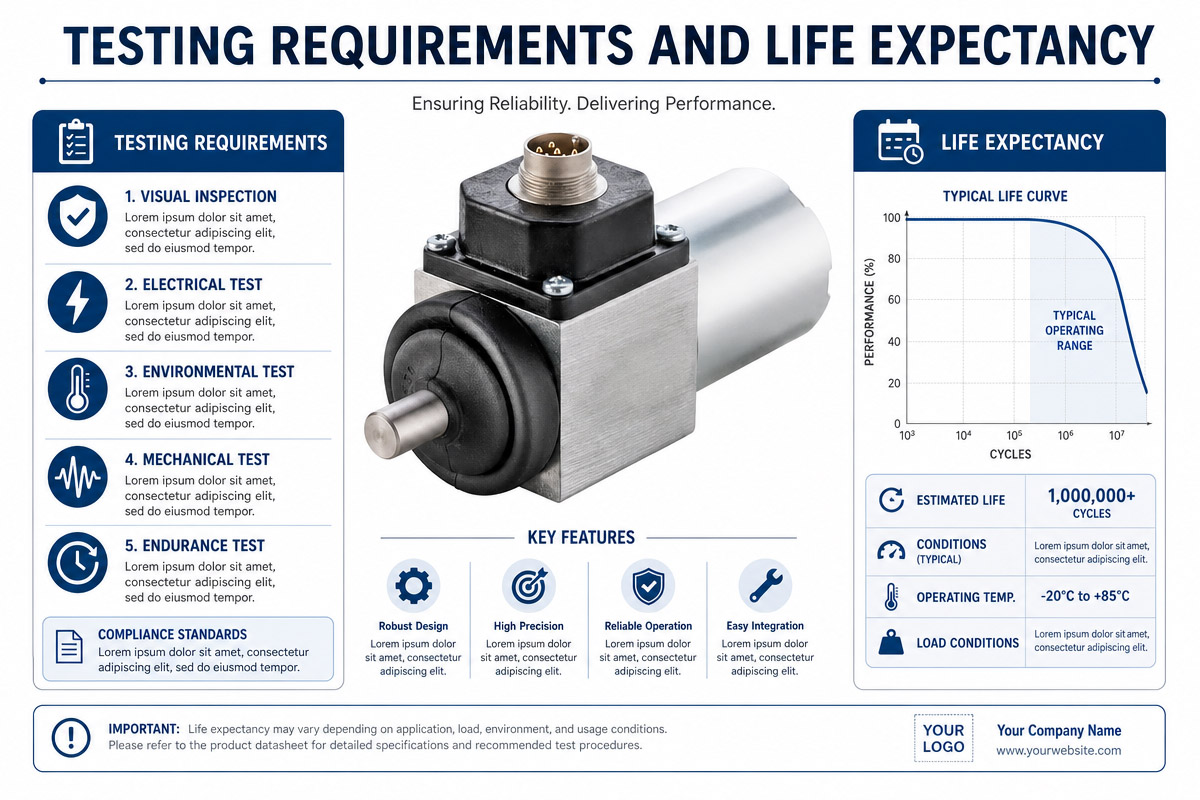
The last specification of a custom industrial solenoid is reliability testing.
Prior to mass production, engineers should verify:
Force testing: verify starting power, holding power, and stroke force curve; electrical testing:
coil resistance current consumption thermal performance lifetime tests Typical industrial solenoid life:
50,000 cycles. 100,000 cycles. 1 million cycles. The required lifetime depends on the conditions of use.
For example:
A solenoid in a vending machine might require:
100,000 cycles You may need a high-speed automation system:
500,000+ cycles. A professional manufacturer of custom industrial solenoids should provide full testing data prior to mass production.
Chapter 9: How to Choose the Right Custom Industrial Solenoid Manufacturer
Choosing the right manufacturer is as important as choosing the specification.
A qualified manufacturer must have:
Capability engineering includes, but is not limited to:
magnetic circuit design, coil arrangement, mechanical structure development, prototype testing Manufacturing Capability
including:
metal stamping services CNC machining injection molding coil winding assembly Quality control includes:
force test. electrical testing, life test inspection of incoming materials Customers will be able to reduce development risks and achieve stable mass production by cooperating with an experienced custom solenoid manufacturer.
Chapter 10: Summary
When designing a reliable custom industrial solenoid, you should pay much attention to several technical specifications.
The 7 most important specifications are the following:
required force. stroke length. power and voltage requirements. duty cycle and temperature control. installation dimensions and mechanical design. material and surface treatment. testing and life requirements. By checking these specifications during the project design stage, engineers can design a solenoid solution that ensures reliable performance, a long lifetime, and better integration with automation equipment.
When choosing a custom industrial solenoid manufacturer for OEM and industrial automation applications, you need an experienced manufacturer to make sure that the final actuator will meet all technical requirements and production expectations.
Chapter 11: 8 FAQs about Custom Industrial Solenoid Design
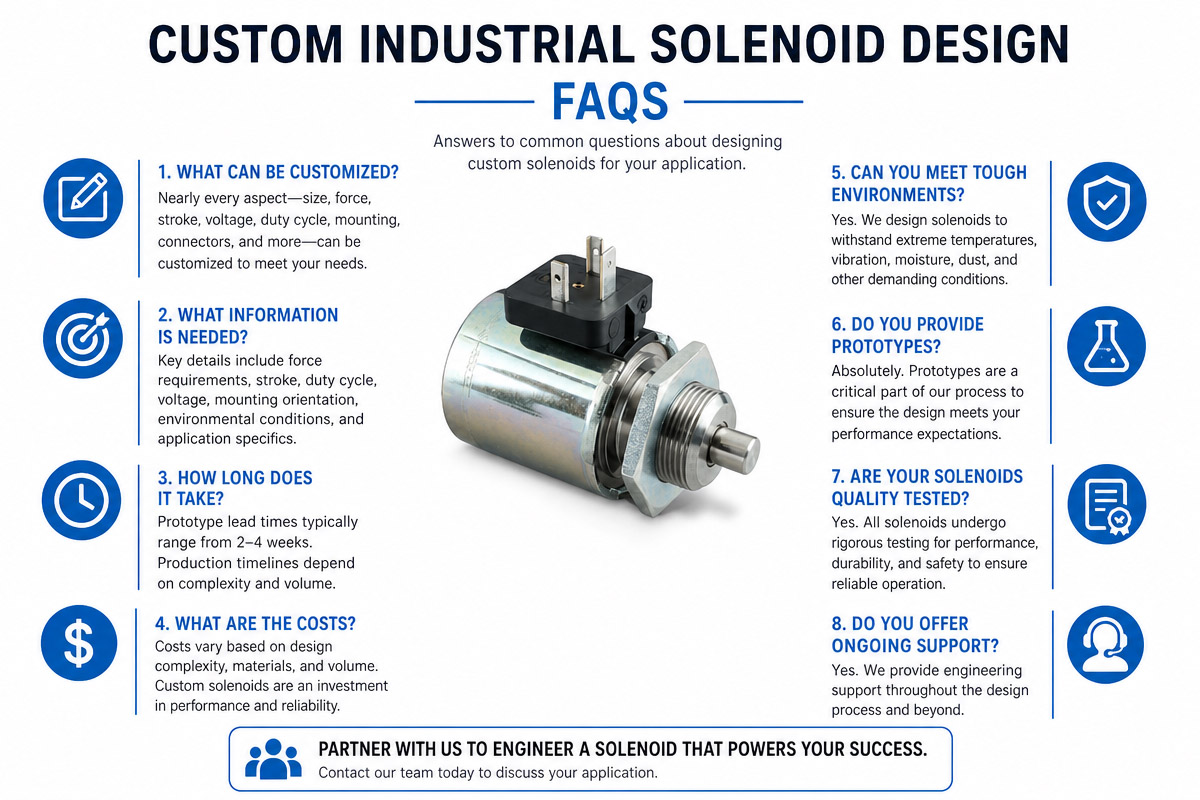
1. What is the necessary information to customize an industrial solenoid?
Usually, when designing a custom industrial solenoid, engineers need to determine some basic parameters, such as
Voltage (DC 5V, 12V, 24V, 48V, etc.)
Force (pull or push)
Stroke distance
Duty cycle
Frequency
Mounting dimensions
Environment
Expected Lifetime
The information will allow us to make the best design considering the magnetic system, coils, and mechanical performance.
2. How to calculate the required force for a custom industrial solenoid?
The required force depends on the mechanical load, friction, motion direction, and safety factor.
The first step in choosing the appropriate solenoid is the following formula:
Required Solenoid Force = Load Force × Safety Factor
In industrial automation equipment, engineers usually choose a safety factor from 1.5 to 3 times the real load.
For example, a mechanical system that requires 50 N of force may need a custom industrial solenoid that provides between 75 and 150 N, depending on the working conditions.
It is also necessary to check the force at the stroke position and not just its maximal value.
3. Would it be possible to customize an industrial solenoid to operate on various voltages?
Yes. The Custom Industrial Solenoid can be customized to work on various voltage levels based on the customer’s power system.
The most common options:
DC 5V for portable devices
DC 12V for electronic equipment
DC 24V for industrial automation equipment
DC 48V for special applications
The design of the coil will be changed according to voltage level, current consumption, temperature requirements, and duty cycle.
4. What is the difference between a standard and customized industrial solenoid?
The standard solenoid is made for standard applications with fixed specifications. The Custom Industrial Solenoid is designed to meet the specific requirements of its customers.
The advantages of customization are the following:
Optimized force performance
Particular stroke requirements
Particular mounting dimensions
Reduced power consumption
Increased lifetime
More comfortable integration with equipment
In projects for original equipment manufacturers (OEM), customized solenoids have much better performance than standard ones.
5. How does the stroke distance affect the performance of the solenoid?
The stroke distance directly affects the solenoid force performance.
Generally speaking, there is a rule:
Shorter stroke = Higher pull force
Longer stroke = Lower pull force
For example, one and the same solenoid provides 100 N force at 3 mm stroke but only 40 N at 15 mm stroke.
During the design of a custom industrial solenoid, engineers need to determine two parameters:
Required stroke distance
Required force at this stroke
It will guarantee that the final solenoid is capable of completing the required mechanical movement.
6. How to increase the lifetime of the customized industrial solenoid?
The lifetime of the custom industrial solenoid is determined by the design quality, operating conditions, and application requirements.
To increase the lifetime:
Choose the correct duty cycle.
Do not use excessive voltage.
Use particular magnetic materials.
Minimize the mechanical friction.
Use particular surface treatment.
Make the lifetime testing
Many industrial solenoids are designed to work for:
100,000 cycles
500,000 cycles
Over 1,000,000 cycles
depending on the application.
7. What testing should be done before mass production of the custom solenoid?
Before mass production, the professional custom industrial solenoid manufacturer should conduct several tests, such as
Mechanical Testing
Pull force testing
Stroke measurement
Movement stability testing
Electrical Testing
Coil resistance testing
Current consumption testing
Insulation testing
Reliability Testing
Life cycle testing
Temperature testing
Continuous operation testing
It will guarantee that the final solenoid satisfies all required performance characteristics.
8. How long does it take to develop a custom industrial solenoid?
The duration of development depends on the complexity of the product and tooling and testing requirements.
The usual process for developing a custom solenoid consists of the following steps:
Requirement confirmation
Engineering design
Prototype production
Testing of samples
Improvement of design
Mass production approval
If you need minor modification of the standard solenoid, the samples can be ready in a few weeks. If you need a new solenoid with a new structure that requires tooling and optimization of the magnetic system, the development will take several months.
Working with a professional custom industrial solenoid manufacturer will help you to minimize development time.


