


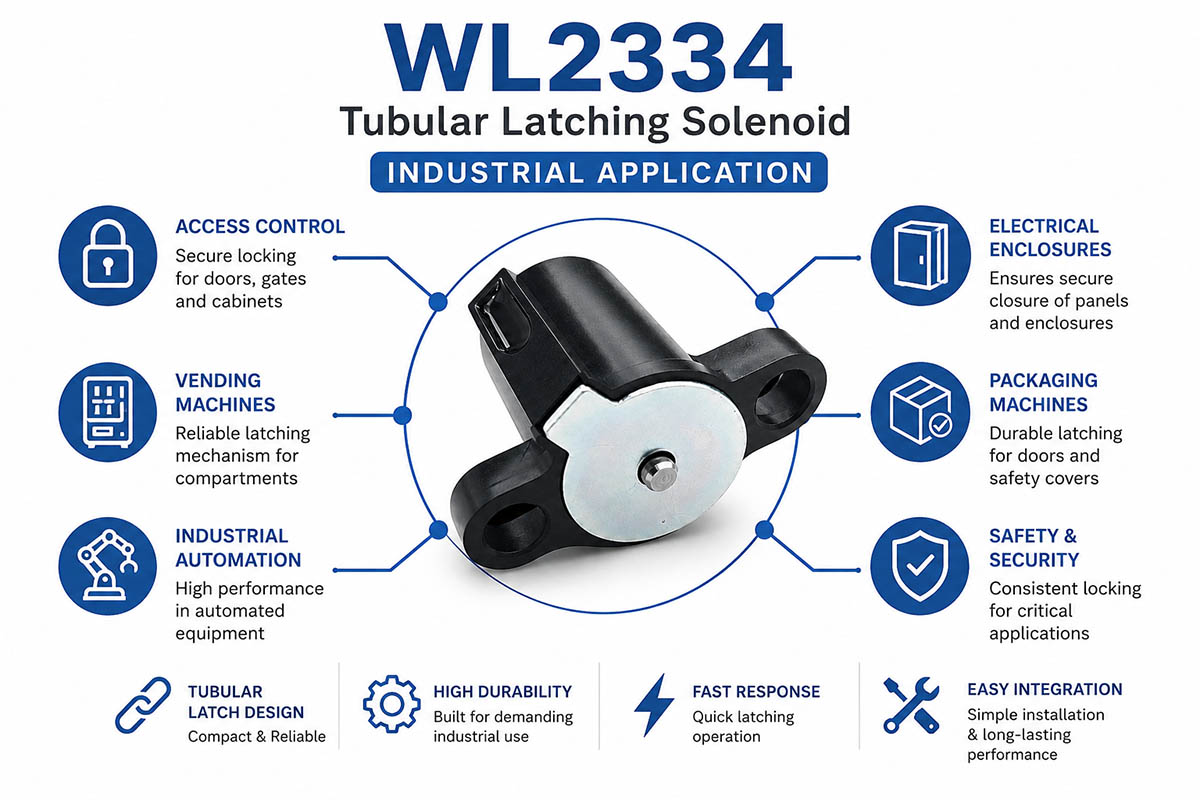
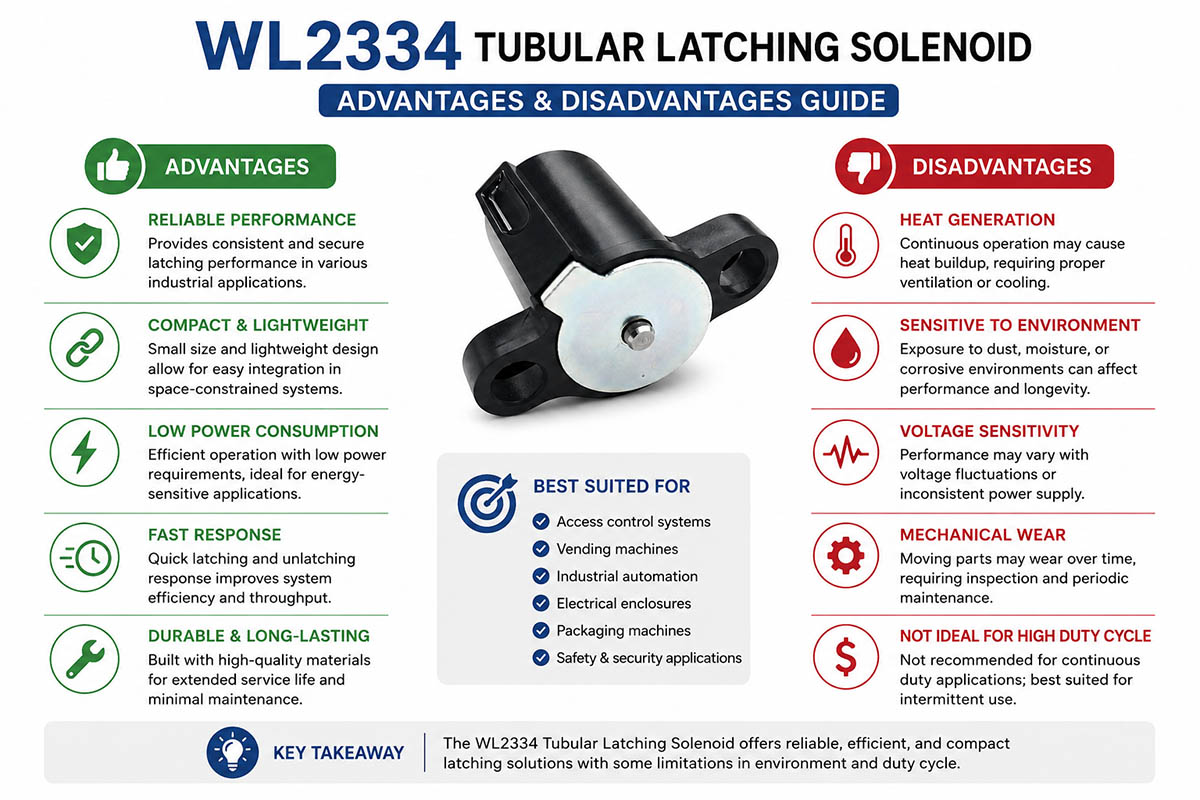
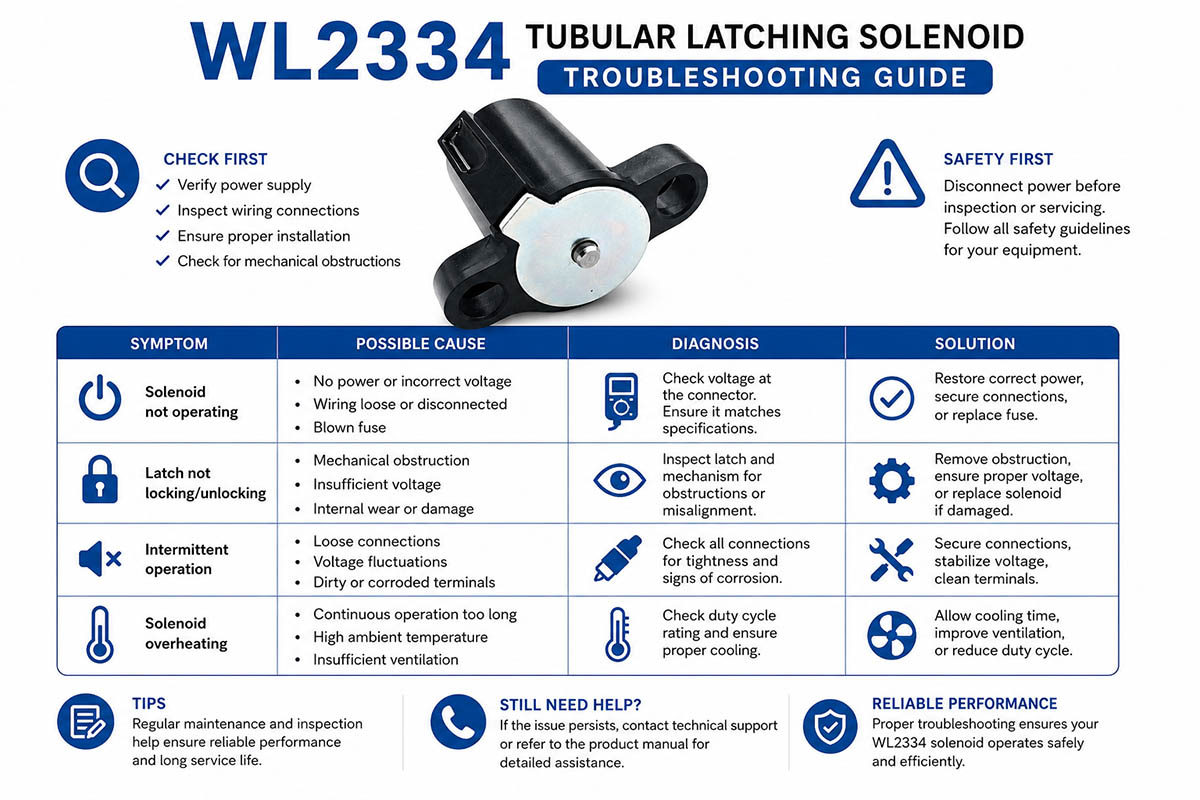
How to select A Tubular Latching Solenoid
Proper selection of a tubular latching solenoid depends on many aspects related to the requirements and operation of applications. The first aspect to take into account is the voltage of the power supply. You should choose the voltage that is compatible with your system. The correct choice of voltage will guarantee stable operation and prevent overheating.
Secondly, the holding force (pull tension) is crucial in selecting a solenoid. The device should generate enough force to move the load and hold it in place. An engineer should estimate the necessary force considering mechanical resistance, friction, and safety margin.
Stroke length is also important to consider. The stroke length must be optimal for the process. An excessive stroke reduces the efficiency of force generation. The stroke length can also be limited.
One should analyze a duty cycle, especially if you need solenoids for automation systems. Latching solenoids can be used in applications of intermittent duties because of their efficiency. A high duty cycle requires higher heat dissipation.
The operating environment is another factor affecting the choice of latching solenoids. For outdoor applications and harsh working conditions, you may need waterproof, dustproof, or corrosion-resistant devices. Temperature ranges, humidity, and vibrations should also be considered.
Fast and frequent operations in automation systems require a fast response speed and a high operating life for the device. High-quality materials and precision manufacturing make them durable and reliable.
Dimensions, mounting style, and connection type should also match the available space in the system. In some cases, you may need special plunger designs or custom mountings.
Finally, choosing a trustworthy latching solenoid supplier is a vital step as well. Manufacturer reputation influences greatly the long-term performance of the product.
How to Choose: Tubular Latching solenoid VS Frame Latching Solenoid
Key differences in design and construction between tubular latching solenoids and frame latching solenoids: Design, Magnetic Efficiency & Physical Durability
In case you would like to use a very robust and high-performing solenoid, go for the tubular type. If saving money is more important for you than anything else, then opt for frame design.
Here’s the difference between tubular vs. frame in detail:
1. Structure / Design & Magnetic Circuitry
As the name implies, the biggest difference between the two is the structure itself.
Tubular Latching Solenoid Closed steel tubular construction with a highly efficient path for magnetic flux flow. Highest efficiency and strongest magnetic flux density can be achieved with such a design.
Frame Latching Solenoid (C-frame or D-frame) An open steel frame design that has an inherent design inefficiency due to the magnetic circuit not being fully enclosed.
2. Mechanical Properties and Operating Environment
The closed tubular design provides for good shock resistance and good vibration resistance, as well as better protection against environmental contaminants, i.e., dust and humidity. High-end products from the tubular latching solenoid family could be as robust as IP65 in terms of dust and water resistance rating. Their service life is also longer in comparison to the Frame family due to their robust construction.
Frame Latching Solenoid: Since the design is open, there is not much protection against dirt, dust, and any other environmental contaminants. However, despite the lower mechanical properties, the standard product line usually achieves 100K cycles.
3. Cost / Size
Tubular Latching Solenoid: Since this design is more complicated to manufacture and assemble, they are expensive. Nevertheless, because of higher efficiency, they can be designed in smaller sizes, which allows achieving high performance while having a compact size.
Cost-Efficient Option Frame Latch Solenoid These solenoids are the most cost-efficient solution in mass production. They are usually employed when the environment is relatively clean and mass production is required.
4. “Latching” Feature / Common feature between the two families
Both types of solenoids have one thing in common: their latching mechanism, meaning that they can stay in either position without consuming any energy. The difference between latching and non-latching solenoids is in a magnetic circuit, specifically in the presence of a strong permanent magnet within the circuit.
Bi-stable Operation: No energy consumption for staying in the on or off state.
Pulse-Driven: One short pulse for moving the solenoid plunger into the latching position and another one to release it.
Summary Comparison Table
| Feature | Tubular Latching Solenoid | Frame Latching Solenoid |
| Structure | Closed, cylindrical steel tube | Open “C” or “”D”-shaped frame |
| Magnetic Efficiency | High (Best force for size) | Moderate (Lower force per size) |
| Environmental Protection | High (Resists shock, vibration, dust) | Low (Susceptible to contamination) |
| Typical Lifespan | Very High (Up to 25 million cycles) | Moderate (Up to 100k-5 million cycles) |
| Relative Cost | Higher | Lower / Economical |
| Common Applications | Harsh environments, medical devices, ATMs, heavy-duty locks | Office automation, vending machines, gaming devices, high-volume products |
5. Why Should You Choose a Frame-Latching Solenoid?
The application environment is very clean. For example, office equipment, consumer electronics, and other kinds of devices. Money-saving is the primary objective.


