


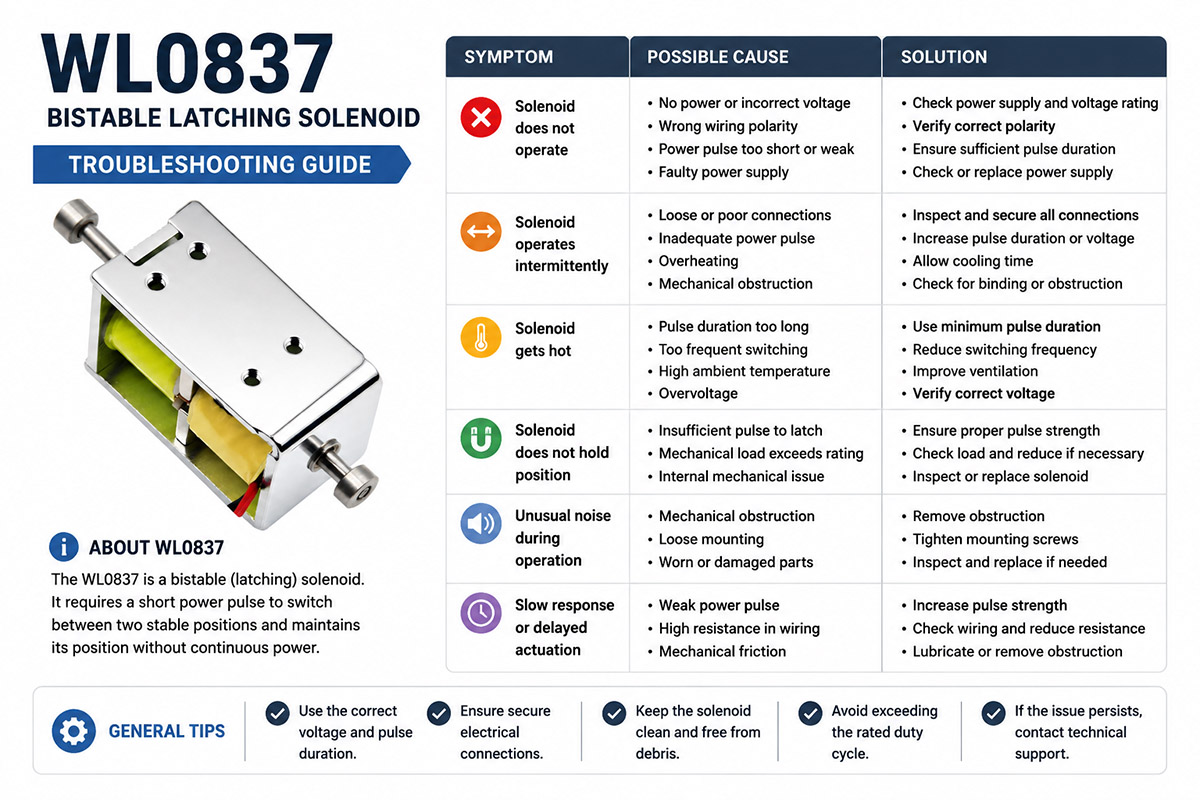
Tips to avoid mistakes while designing
Inadequate Pulse Power: A mistake is a lack of understanding of the required power and length of the pulse needed to change the state of the solenoid. You should be sure that your driver circuit can supply sufficient voltage and current for the required pulse time.
Fail-Safe logic is not considered: Bistable solenoid retains its last position if power fails. If this is a possibility in your application, you should implement the fail-safe logic that would take your solenoid to the safe state (e.g. using a super capacitor to close a valve).
Demagnetization: The permanent magnet may weaken over time because of high temperature or the influence of external magnetic field. You should select a solenoid with appropriate temperature rating for your environment and shield it from the external magnetic field.
Polarity Error: The error in the polarity of the pulse needed to switch the state in the opposite direction. It should be implemented in your control logic.
Overload: The mechanical load greater than the force holding the solenoid after latching can cause motion of the plunger. The load should always be less than the maximum holding force of the solenoid.
Bistable Latching Solenoid Selection Guide
Selecting the right bistable latching solenoid is essential for the optimal performance, reliability and lifespan of your application. At first, the core requirements of your app should be clearly stated. It means defining the required force (thrust or pull) and stroke (distance of movement). It is a typical recommendation for engineers to select a solenoid with a minimum holding force twice as high as the load to ensure reliable performance . Then, the electrical parameters should be considered. You need to define the available supply voltage (most common are 12V or 24V DC in industrial applications). You should check the resistance of the solenoid’s coil and the current it consumes. The latching solenoid needs a pulse in order to switch its state and your control system should provide such pulse of correct polarity.
Also, you should consider the working conditions. Temperature range, humidity, vibration, and corrosive agents are the environmental factors that affect the performance of the permanent magnet in the solenoid causing demagnetization over time. So it is essential to select a solenoid that is suitable for your environment. In case of the fluid control application, the material of construction (stainless steel for corrosion resistance) and pressure rating are crucial. The physical dimensions are also very important. You should estimate the available space and choose the solenoid that can be incorporated into your design, potentially having a compact form-factor in case the space is limited.
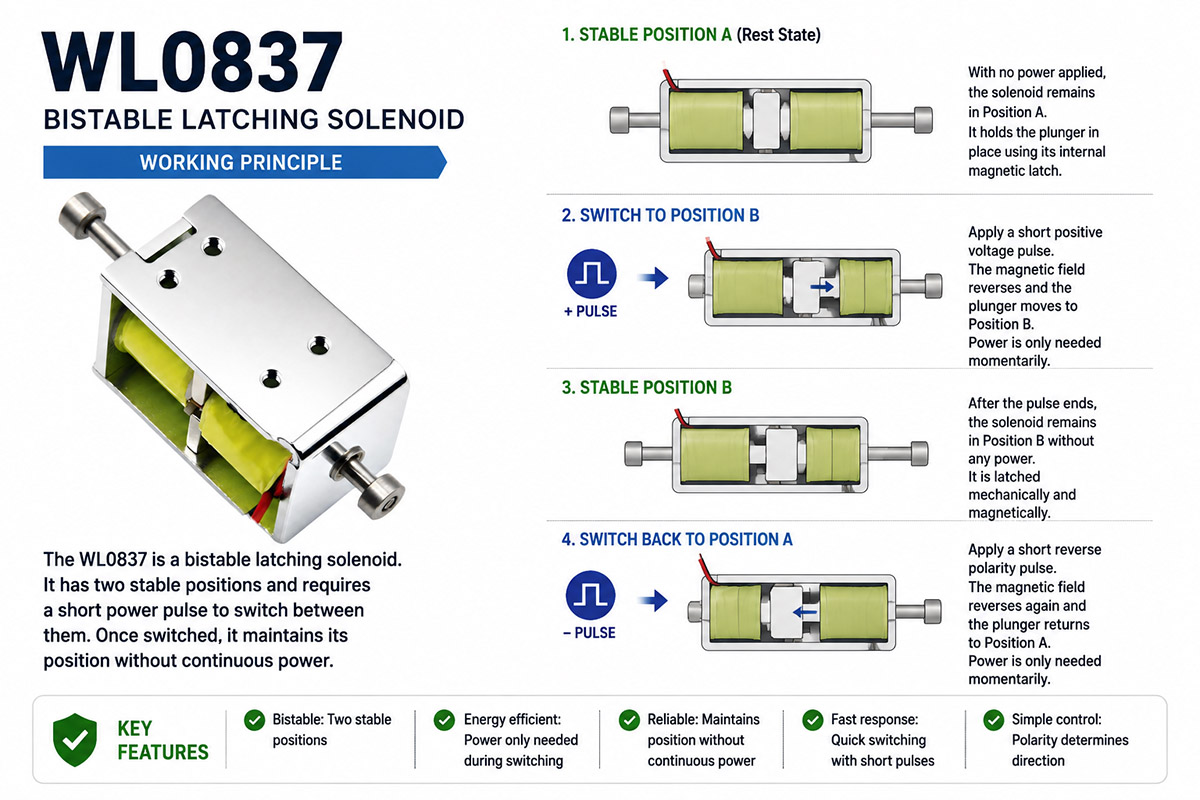
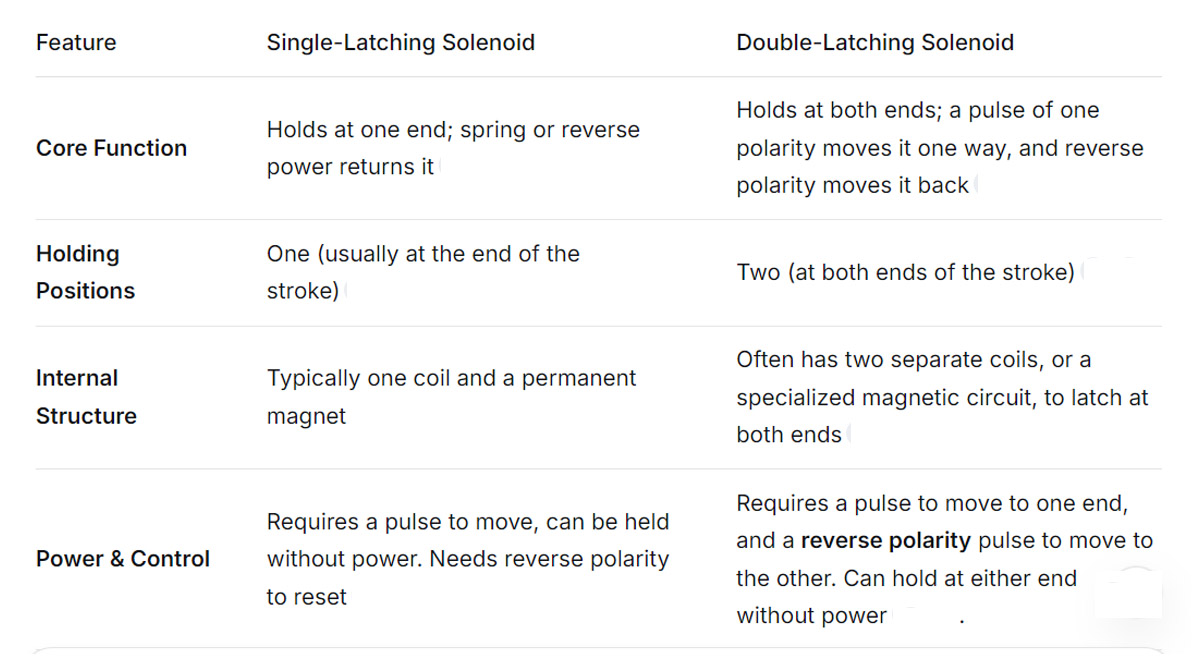
Finally, you need to choose between magnetic and mechanical latching. The most popular latching technology is magnetic latching. It uses the permanent magnets to lock the armature in its position. This technology provides fast response times and compact form-factor. But it can be affected by the external magnetic field. The mechanical latching technology is more robust and is immune to magnetic interference but has moving parts that wear out over time and is larger and slower. By carefully analyzing the force, stroke, electrical supply, environment and latching mechanism requirements of your application, you can make an informed decision. High recommendation to check the reliability history of the manufacturer and their technical support.


