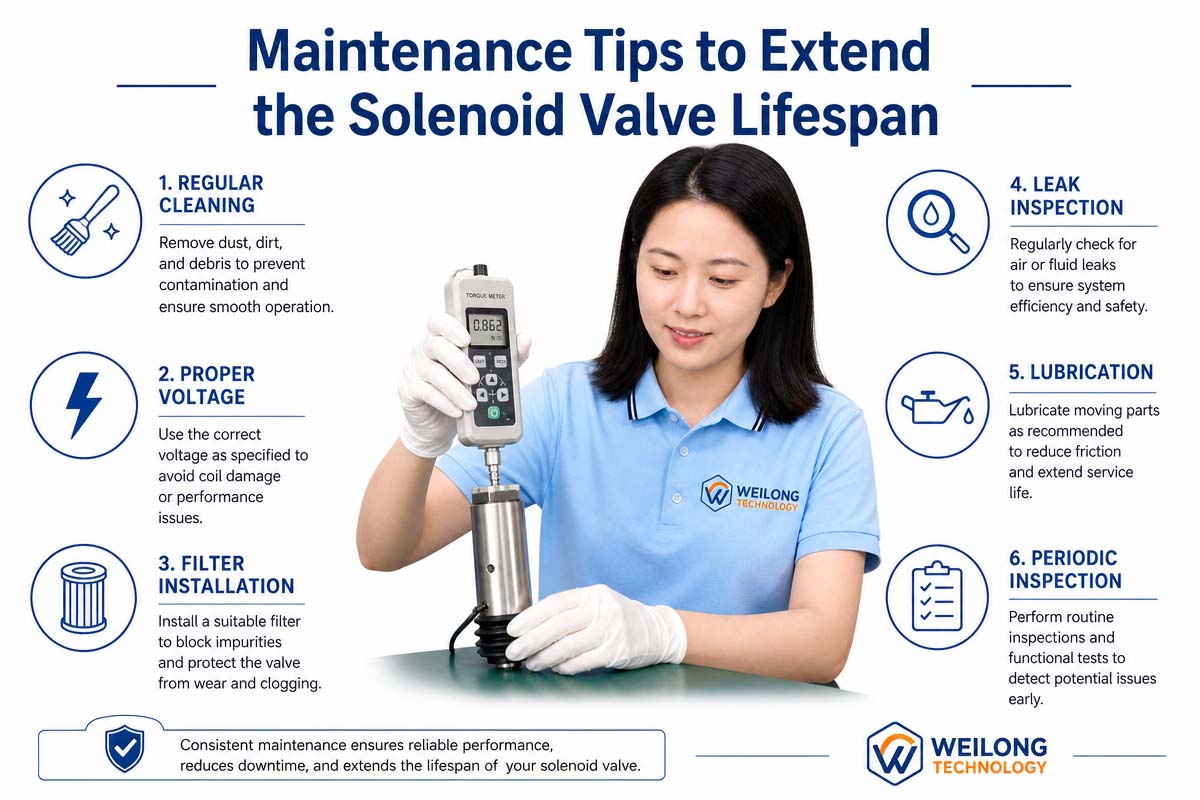
Introduction to Tips to Extend the Solenoid Valve Lifespan
Solenoid valves are widely used to control various liquids: from industrial automation and pneumatics to HVAC equipment and water treatment systems. Solenoid valves tend to be rather small-sized devices; however, their efficiency can significantly impact the performance of the whole system. Solenoid valve lifespan plays the key part in the project operation.
As any electromechanical device, solenoid valves will eventually become unusable. But in most cases, their premature failure can be easily prevented. Inappropriate use, voltage, pressure, high temperatures, worn-out seals, incorrect installation, and lack of maintenance are the common causes of solenoid valve lifespan in malfunction.
With the proper selection, installation, inspection, and preventive maintenance, the operator can avoid unexpected breakdowns and make the solenoid valve lifespan operate as long as possible.
This article contains useful tips on how to extend the solenoid valve lifespan, reasons for their premature failure, signs to watch for, and a preventive maintenance plan.
2. What Determines the Solenoid Valve Lifespan?
Solenoid valves have no one particular lifetime. There are valves, which are activated rarely, and those, which are cycled thousands of times per day. The actual solenoid valve lifespan depends on the valve model and working conditions.
The following parameters play the most significant role:
- Operating frequency and number of cycles;
- Fluid or gas type;
- Fluid purity;
- System pressure;
Ambient and media temperatures;
Voltage stability;
- Coil duty cycle;
- Materials of seal and diaphragm;
- Installation quality;
- Environmental factors;
- Preventive maintenance procedures.
For instance, a solenoid valve supplied with clean, dry compressed air at a constant pressure suffers much less wear and tear than a similar valve supplied with impure water, aggressive chemicals, or high-temperature fluids.
So, the first step to extend the lifetime of solenoid valves is not only to replace faulty parts but also to understand their specific application.
3. Ensure Cleanliness of Air or Fluid Supply
One of the most common reasons for solenoid valve failures is contamination.
Various small particles such as rust, scale, dirt, metal fragments, sand, pipe debris, and other contaminants may enter into the valve body and accumulate around the plunger, diaphragm, pilot orifice, or valve seat.
Such contamination can lead to the following problems:
Slow response of the valve;
- Internal leaking;
- Improper start and finish;
- Sticky plungers;
- Damaged seals;
- Blocked pilot channels;
- Excessive wear.
Such contamination can be avoided by installing the appropriate filter or strainer before the valve.
The filters need to be inspected and cleaned or replaced regularly. The clogged filter will decrease the flow rate and will create an unwanted pressure drop. Develop a certain routine for checking and cleaning or replacing filter elements depending on the system conditions.
Where applicable, flush the lines before installing or operating the solenoid valve if new piping has been installed. Debris left in the pipes during installation can instantly break the new valves.
The cleaner media will result in less internal wear and extended solenoid valves’ lifetime.
4. Inspect the Solenoid Valve Regularly for Leaks
Even small leaks should not be neglected.
Loose connections, damaged O-rings, worn seals, cracks, corrosion, or incorrect assembly may cause the external leaking. The internal leakage may occur due to the presence of dirt or wear, which prevents proper sealing.
Inspect the following during regular checks:
- Pipe connections;
- Valve body joints;
- O-rings and seals;
- Operator assembly or bonnet;
- Diaphragm area;
- Valve outlet when the valve is closed.
When discovering any leakages, do not immediately tighten every connection. The over-tightening can damage the threads, deform sealing surfaces, and cause additional stress for the valve body.
Early leak detection can help you to avoid turning a small maintenance issue into a valve or system failure.
5. Apply the Correct Voltage to Extend Solenoid Valve Lifespan
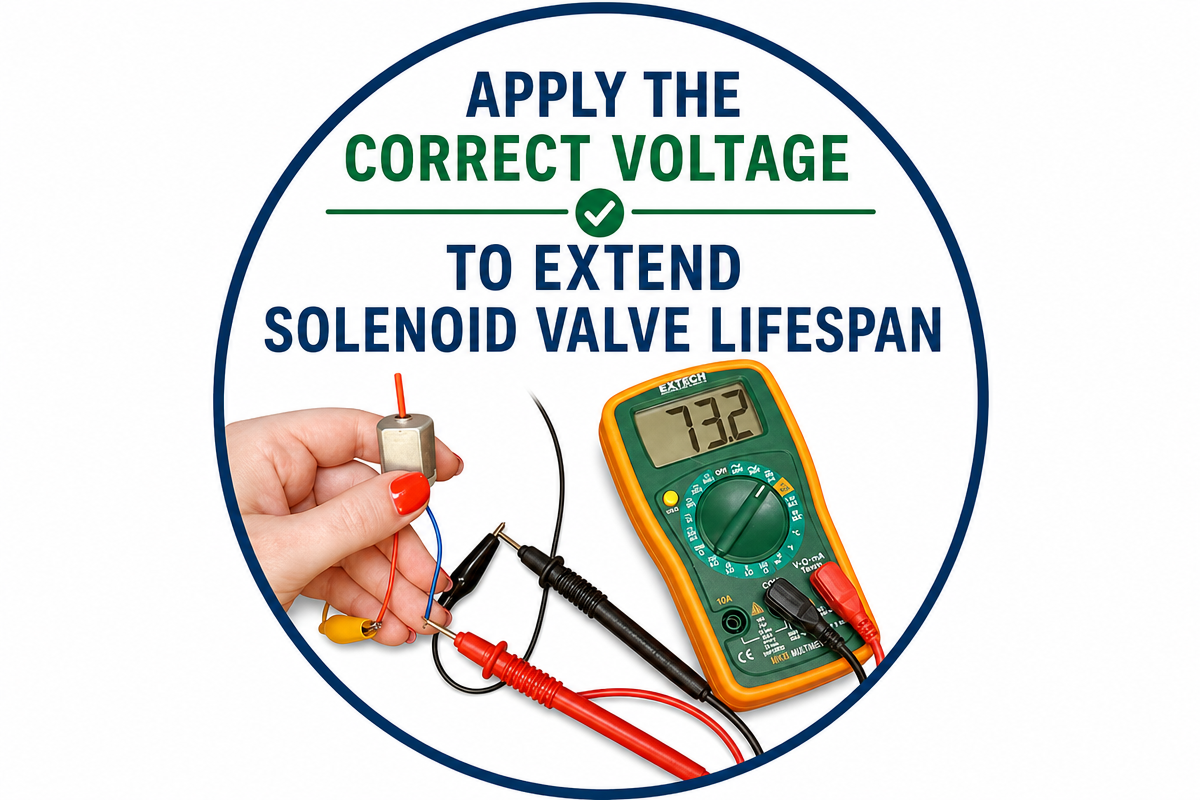
The solenoid coil requires the correct electrical supply in order to perform properly.
If the voltage is too low, the coil may lack magnetic force to actuate or hold the plunger properly. As a result, you may hear buzzing or overheating, and the valve may not be fully actuated.
The excessive voltage can cause the same problems since the coil tends to heat up and damages the insulation.
Make sure that the electrical supply corresponds to the voltage and other electrical characteristics stated on the valve or coil.
Common solenoid valve configurations can be supplied with either AC or DC power. Use the proper coil for the correct power supply.
During troubleshooting, check:
- Electrical power supply;
- Voltage on the coil terminals;
- Electrical connections unplugged;
- Damaged or corroded wiring and terminals;
Exposed to moisture connectors;
- Incorrect AC/DC coil;
The stable electrical conditions will protect the coil and increase the lifetime of the solenoid valve.
6. Avoid Overheating the Solenoid Coil
The solenoid coil generates heat naturally; however, the excessive heat reduces its service life.
The most typical reasons for overheating are
Incorrect voltage;
Improper duty cycle;
Inadequate ventilation;
High ambient temperature;
Mechanical interference;
Working outside the valve specifications.
Also, if the plunger does not move properly, it may cause the wrong electrical and mechanical operating conditions.
To avoid overheating, ensure that the valve is suitable for your duty cycle. If you expect the valve to actuate for long periods of time, use the coil designed for such operation.
Avoid placing the valve close to equipment that generates high temperatures. If the heating is unavoidable, choose the valve, coil, seals, and insulation system rated for your temperature conditions.
Discolored, cracked, deformed, or frequently failing coils should be checked since their replacement alone is not the solution to the problem.
7. Use the Valve within the Recommended Pressure Range
Every solenoid valve has particular pressure limitations.
If the inlet pressure exceeds the valve ratings, the internal parts like seals and diaphragms are overstressed. The valve starts leaking and gets worn out.
Pilot-operated solenoid valves are very pressure-sensitive since almost all of their designs require the minimum pressure differential for opening and closing.
While selecting and maintaining the ensureke sure to inspect:
Minimum operating pressure;
Maximum working pressure;
- Required differential pressure;
- Possible pressure spikes;
- Backpressure;
Flow direction.
If the valve works correctly in one case and poorly in another, check the pressure difference to ensure it is within the required range.
The pressure regulators, accumulators, or other system controls may be required if the severe pressure fluctuations exist.
8. Prevent Water Hammer & Pressure Spikes for Best Solenoid Valve Lifespan
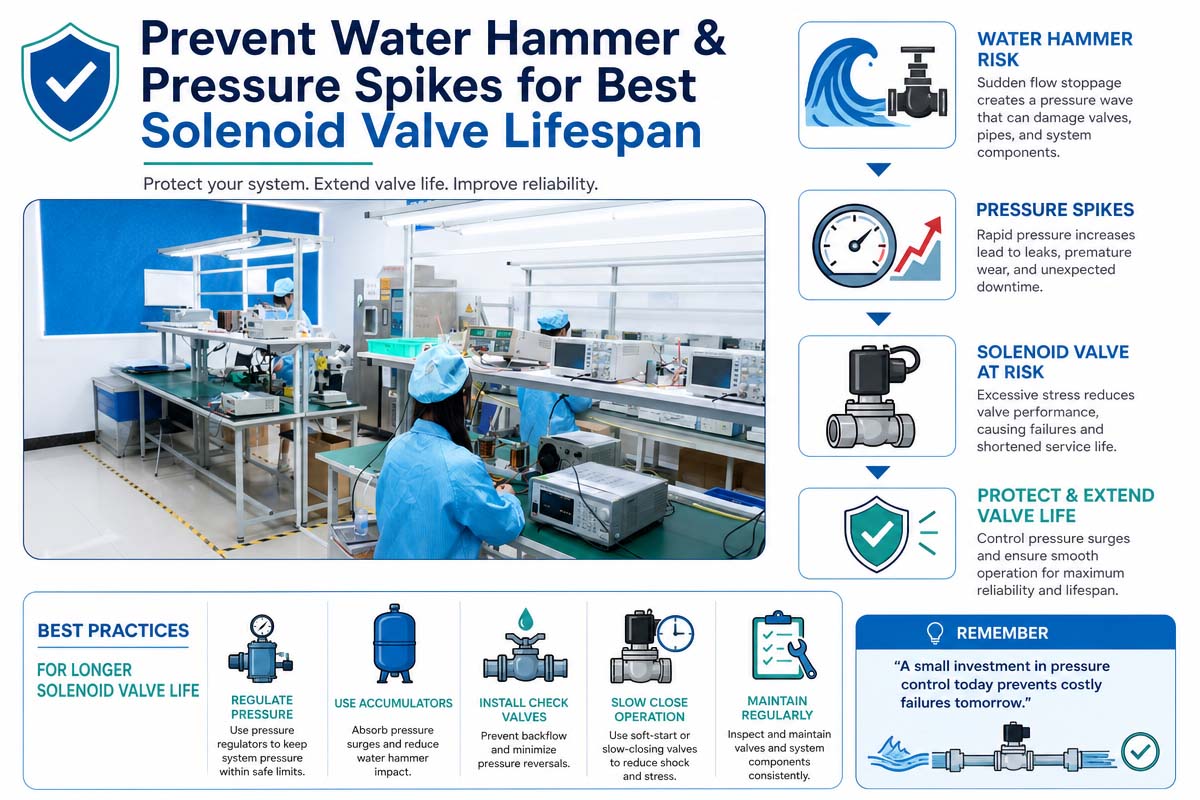
A sudden stop of the moving liquid column results in a pressure surge, also known as water hammer.
This shock damages the piping and places extra stress on the solenoid valve, its fittings, seals, and diaphragm.
While the normal operating pressure may stay within the valve rating, the repeated pressure shocks can gradually decrease the lifetime of the solenoid valve.
Application-dependent solutions to this problem may include:
Changing the valve closing characteristics;
Reducing the velocity of the fluid;
- Using the pressure regulator;
Installation of surge suppressors or accumulators;
Optimization of pipe sizing and system layout;
Choosing the application-specific valve.
If there is any banging or vibration when the valve changes state, do not consider it as a part of normal operation. You should investigate the hydraulic conditions.
9. Choose Compatible Seal and Valve Materials
Material compatibility is one of the key factors in solenoid valves’ lifetime.
Solenoid valves are manufactured from various materials, including brass, stainless steel, engineering plastics, NBR, EPDM, FKM, PTFE, and other elastomers or polymers.
The material that is appropriate for compressed air may not be used for aggressive chemicals, steam, fuel, oil, or high-temperature water.
The incompatible media can affect the seals as follows:
- Swelling;
- Hardening;
- Cracking;
- Melting;
- Molding;
Loss of adaptability;
The corrosive media can affect the valve body and its internal components.
Before installation, check the compatibility of the fluid, valve body, diaphragm, seals, temperature, and concentration of chemicals involved.
It is much cheaper to choose the appropriate material beforehand than continuously to repair or replace valves damaged due to chemical incompatibility.
10. Inspect and Clean Internal Parts
If the valve is designed for serviceability, the internal parts’ inspection can reveal problems before the complete failure of the device.
Before servicing any solenoid valve, make sure to disconnect the electrical power supply and isolate and depressurize the system safely. Allow hot equipment to cool down according to the site’s lockout/tagout and safety procedures.
Depending on the design of the valve, maintenance may involve inspection of the following parts:
- Plunger or armature;
- Spring;
- Valve seat;
- Diaphragm;
- Pilot Orifice;
- O-rings;
- Seals;
- Internal channels.
Clean any dirt and deposits using appropriate cleaning methods for the valve materials and controlled medium. Be careful about the precision sealing surface protection.
Replace the excessively worn seals, diaphragms, springs, and other parts with appropriate ones as recommended by the manufacturer.
11. Check for free motion of the plunger
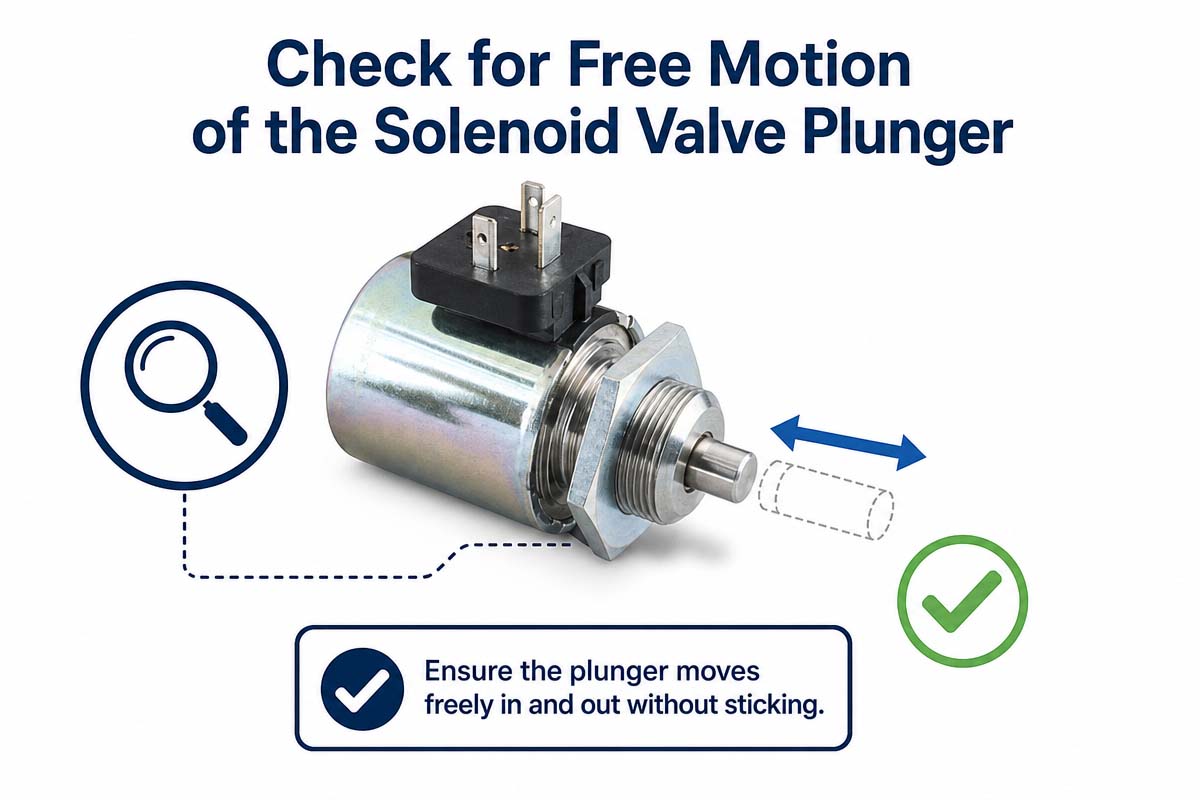
The plunger is one of the principal moving elements in the solenoid valve.
A magnetic field generated by the activated coil pushes the plunger to change the state of the valve flow.
Dirt, corrosion, deposits, mechanical wear, or misalignment may impede the movement of the plunger.
If the plunger is stuck, the following can occur:
- Delayed activation
- Chattering or buzzing
- Incomplete valve opening
- Incomplete closure
- Operation in the intermittent mode
- High coil temperature
If the power supply is proper but the valve is not operating reliably, investigate the plunger assembly during troubleshooting.
Cleaning or replacing worn parts can restore serviceable valves to dependable operation.
12. Proper Installation of the Solenoid Valve
Proper installation significantly affects reliability.
Before the installation make sure you understanBefore the installation, make sure you understand the direction of the flow according to the arrow or other markings.wrong direction may cause unreliable operation or even prevent it.
The orientation of the valve is also important for some designs. There are valves that can be installed with the coil upward in the vertical position, and some may be installed in other orientations.
Observe the installation guidelines provided by the manufacturer.
It is also important to provide proper support for piping. The solenoid valve should never be used to carry additional loads of the pipe or to compensate for its misalignment.
Proper installation would reduce the mechanical stress and will ensure a solid foundation for the long solenoid valve life.
13. Protect the Valve from Harsh Environments
In addition to the environment, the controlled fluid may also be critical.
Solenoid valves installed in outdoor or industrial environments may be subjected to:
- Moisture and rain
- Dust
- Vapors, chemical
- Salt spray
- Hot or cold temperature
- Wash-down procedures
- Vibration
- Mechanical impacts
Mechanical impacts ensure the proper enclosure, connectors, and valve body material are used for the particular environment.
In case of moisture presence, proper sealing of electrical connectors should be made to prevent corrosion of the terminals, which causes increased resistance and intermittent operation.
Valves that are constantly subjected to vibrations should be regularly inspected for electrical connections, mounting, and pipe fitting tightness.
14. Listen for unusual sounds
A high-quality valve will operate consistently. New and strange sounds are the indication of an emerging problem.
Possible causes:
- Buzzing, humming, clicking, or chattering
- Incorrect supply voltage
- Loose electrical components
- Contaminated plunger assembly
Pressure instability
- Coil problems
Mechanical wear
- Improper AC operation
The noise itself doesn’t show what the problem is, but an unusual operating sound is a useful maintenance clue.
Immediate investigation of the cause of noise prevents an unexpected shutdown.
15. Cycle valves that are not in operation for long periods of time
Some solenoid valves are infrequently operated or used only in emergencies, seasonal operation, or process modifications.
Extended periods of non-operation may cause deposit buildup, corrosion, or stickiness.
If safety requirements allow, periodically test the valves for functionality by cycling them. This means making sure that the valve still operates reliably.
This is especially important for standby systems, where a valve may not operate for months but must function reliably when needed.
16. Develop a Preventative Solenoid Valve Lifespan Maintenance Plan
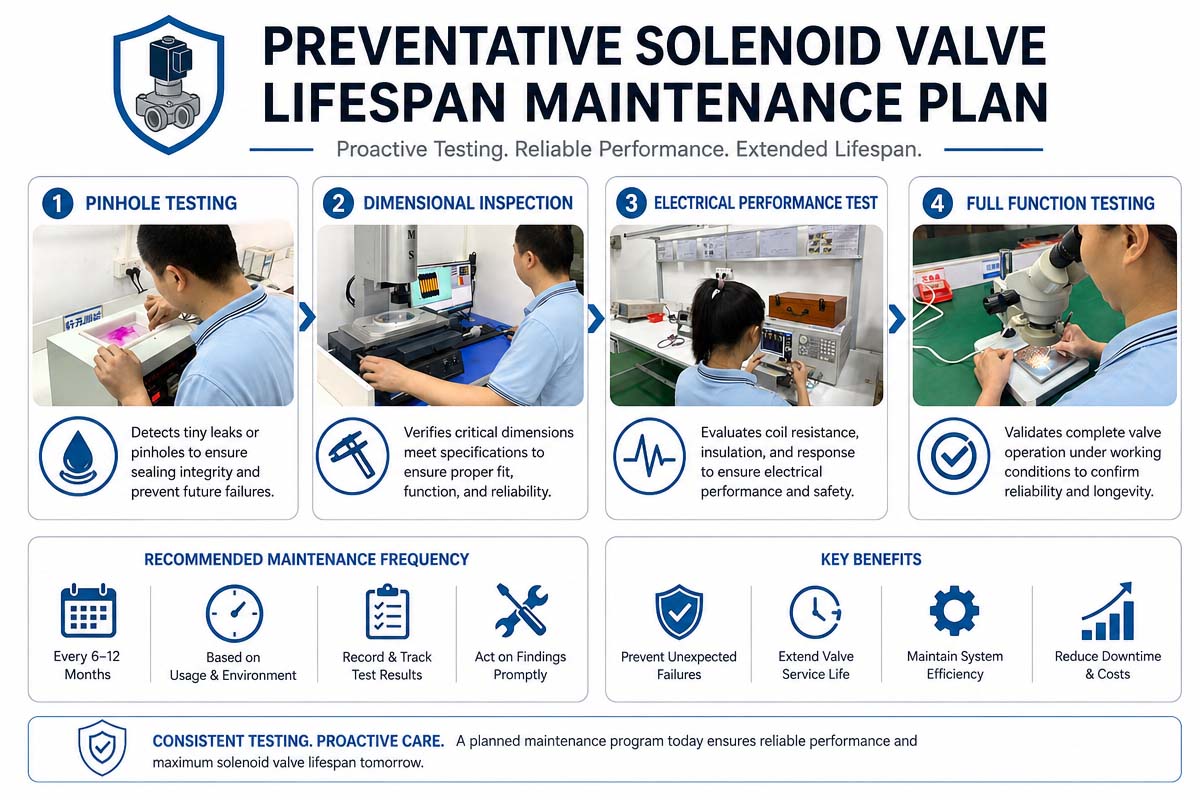
Waiting until the valve fails to perform maintenance is not a recommended practice, as it will lead to a system shutdown.
Preventive maintenance plans should be based on environment, media, cycle frequency, safety requirements, and manufacturer recommendations.
A realistic maintenance schedule could be the following:
Maintenance Task Recommended Action
Visual inspection. Check for leaks, corrosion, damage, and loose connections.
Electrical inspection—Verify voltage, wiring, connectors, and coil condition.
Strainer/Filter: Check and clean or replace as necessary.
Valve operation test for reliable opening and closing
Internal inspection: Inspect plunger, diaphragm, seals, seat, and orifices for serviceability.
Pressure test: Measure operational pressure and differential pressure.
Temperature test: Identify abnormal coil or valve temperature.
Maintenance Record Register failures, repairs, operation hours, and parts replacements
The optimal maintenance interval may vary from the frequent checks in aggressive processes to the longer interval in the clean and lightly used systems. Maintenance, wherever possible, should be based on condition, not schedule.
Faults Indicating Solenoid Valve Failure
The early detection will prevent the valve failure.
Common symptoms are
- Valve is not opening
- Valve does not close
- Slow reaction
- Intermittent operation
- Leak internal or external
- High coil temperature
- Buzzing or clicking
- Low flow
- Pressure change
- Rusty spots
- Bad wiring or connectors
- Regular coil failures
In case you observe these symptoms, you should do the troubleshooting for the whole system prior to the replacement of the valve.
Low voltage, low differential pressure, a plugged orifice, contamination, and damage to the coil may cause the valve failure, for instance.
Identification of the problem will prevent future failures.
When to Replace a Solenoid Valve?
Maintenance prolongs the life of the valve, but it doesn’t stop it.
If the valve body is heavily corroded, the sealing surfaces are permanently damaged, the internal components are heavily worn out, the coil keeps breaking due to mechanical problems related to the valve, or replacement parts are not available, it may be more reasonable to replace the valve.
Frequent repairs may indicate that the wrong type of valve was selected for the particular application.
The review of the original selection criteria is required, including if valves fail prematurely.
- Pressure class
- Temperature grade
- Flow capacity
- Compatibility with media
- Sealing substance
- Valve type
- Electrical requirements
- Duty cycle rate
- Environmental protection
Sometimes it is more effective to change the type of valve rather than increase the maintenance frequency.
How to Increase the Life of Solenoid Valves
The life of the solenoid valve cannot be increased by a single maintenance action. It should be considered as a whole system.
Maintain a clean and controlled medium, maintain proper pressure and voltage, avoid excessive heating, select compatible materials, install the valve properly, and inspect the critical components periodically.
Above all, it would be beneficial to identify the repeating failures instead of fixing each damaged valve separately. The repeated coil failures, seal failures, plugged orifices, and sticking plungers often indicate an underlying system problem.
Properly maintained solenoid valves provide more reliable operation, fewer unexpected downtimes, reduced replacement costs, and increased efficiency of fluid control devices.
16. Solenoid Valve Lifespan FAQs
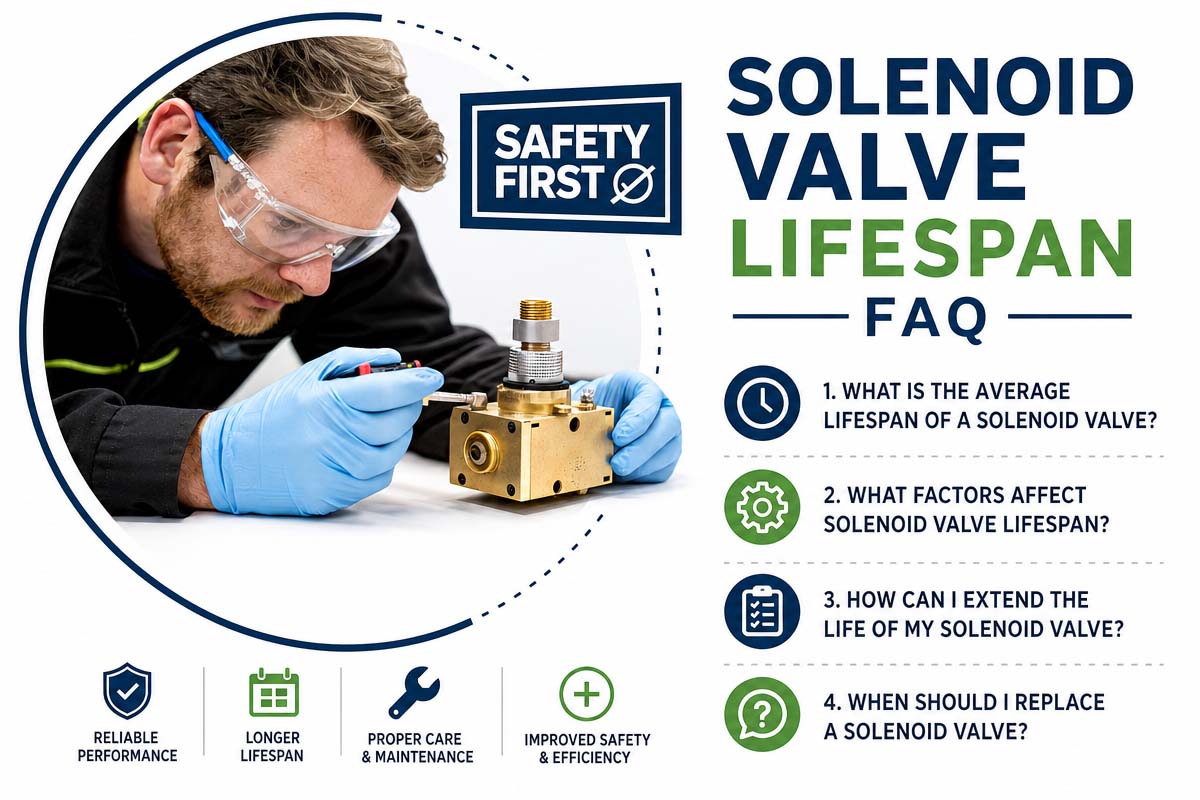
1. What is the lifetime of the solenoid valve?
Not all the solenoid valves have the typical service lifetime. It depends on the valve design, cycle frequency, medium purity, pressure, temperature, electrical parameters, materials, and maintenance. You should consult the cycle-life or service-life specification of the valve manufacturer for the particular valve and operating conditions.
2. How to extend the life of a solenoid valve?
- Keep fluid or compressed air clean
- Use correct voltage
- Maintain pressure and temperature within the specifications
- Avoid coil overheating
- Use compatible seals
- Check for leaks
- Clean serviceable internal components
- Develop the preventative maintenance plan
-
What causes premature failure of the solenoid valve?
The common causes of solenoid valve failure are contamination, incorrect voltage, overpressure, high temperature, incompatible media, damaged seals, blocked pilot passages, corrosion, improper installation, pressure spikes, and excessive cycling.
4. Why does the coil of the solenoid valve get burned?
The common reasons are overvoltage, excessive ambient temperature, inadequate duty cycle, poor heat dissipation, electrical problems, or mechanical conditions preventing normal valve operation. The valve and its electrical supply should be investigated in case the coils fail repeatedly.
5. Can you clean the solenoid valve instead of replacing it?
Many serviceable solenoid valves can be cleaned when the valve is stuck or when the passages are clogged due to contamination. But cleaning won’t bring the badly worn-out seals, damaged seats, burnt-out coils, or heavy corrosion back to life. Follow the manufacturer’s service instructions.
6. How often should the solenoid valve be maintained?
The maintenance interval should be based on the specific application. The valve working in dirty media, high cycle rates, aggressive chemicals, or harsh temperatures should be serviced more often than the valve working in the clean media and stable conditions.
7. Does the operating pressure affect the solenoid valve life?
Yes, it does. Too much pressure or on-and-off pressure can damage seals, diaphragms, and other internal parts. Pilot-operated valves may also require minimum differential pressure for reliable operation.
8. Can dirty compressed air damage the solenoid valve?
Yes. Oil, water, rust, and particles in the compressed air may contaminate the internal passages and interfere with the plunger or seal movement. The proper filtration and air preparation may prevent these problems.
9. What to do when a solenoid valve starts leaking?
Not necessarily. The cause should be identified first. The damaged diaphragm or dirt on the valve seat, loose connection, worn-out seal, and contamination are usually repairable. The badly corroded or permanently damaged seat will require complete replacement of the valve.
10. How can you increase the reliability of solenoid valves?
Start with proper valve selection, maintain medium purity, ensure stable electrical power, proper pressure and temperature, proper installation, and regular inspections. The best approach to increase the solenoid valve life is the combination of proper application engineering and preventive maintenance.