


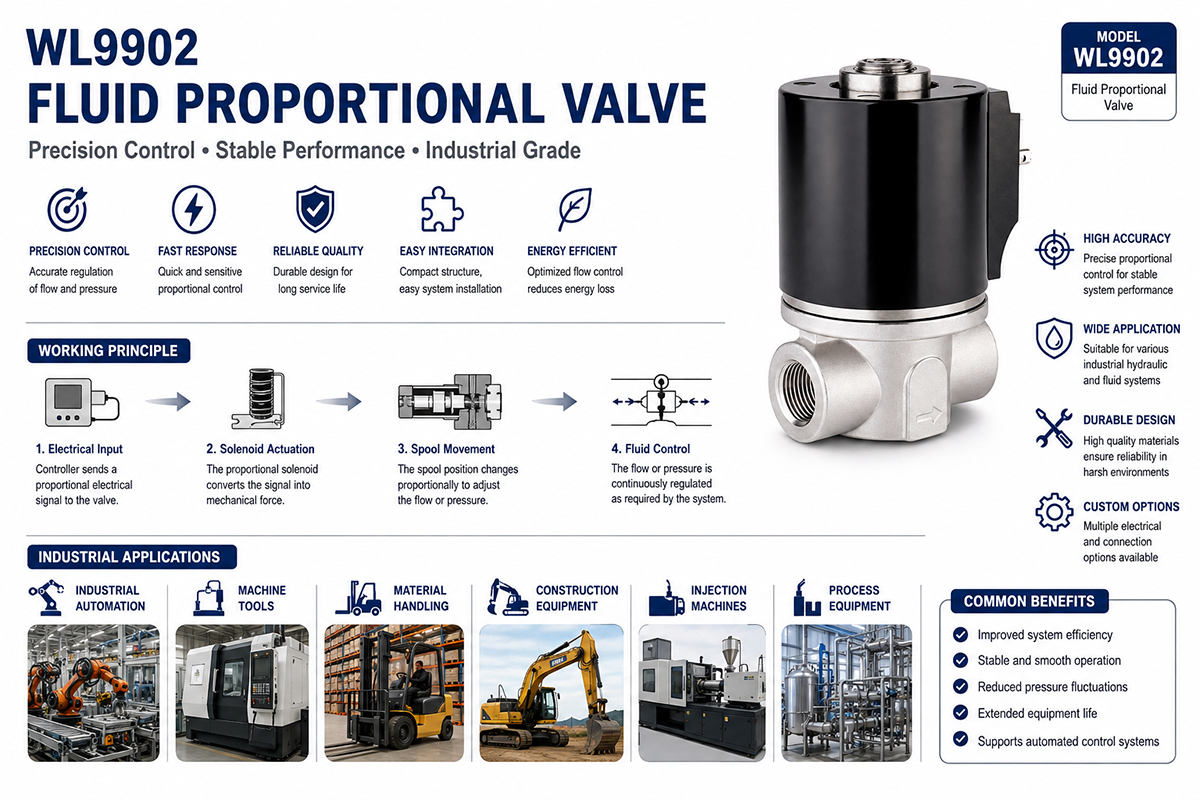
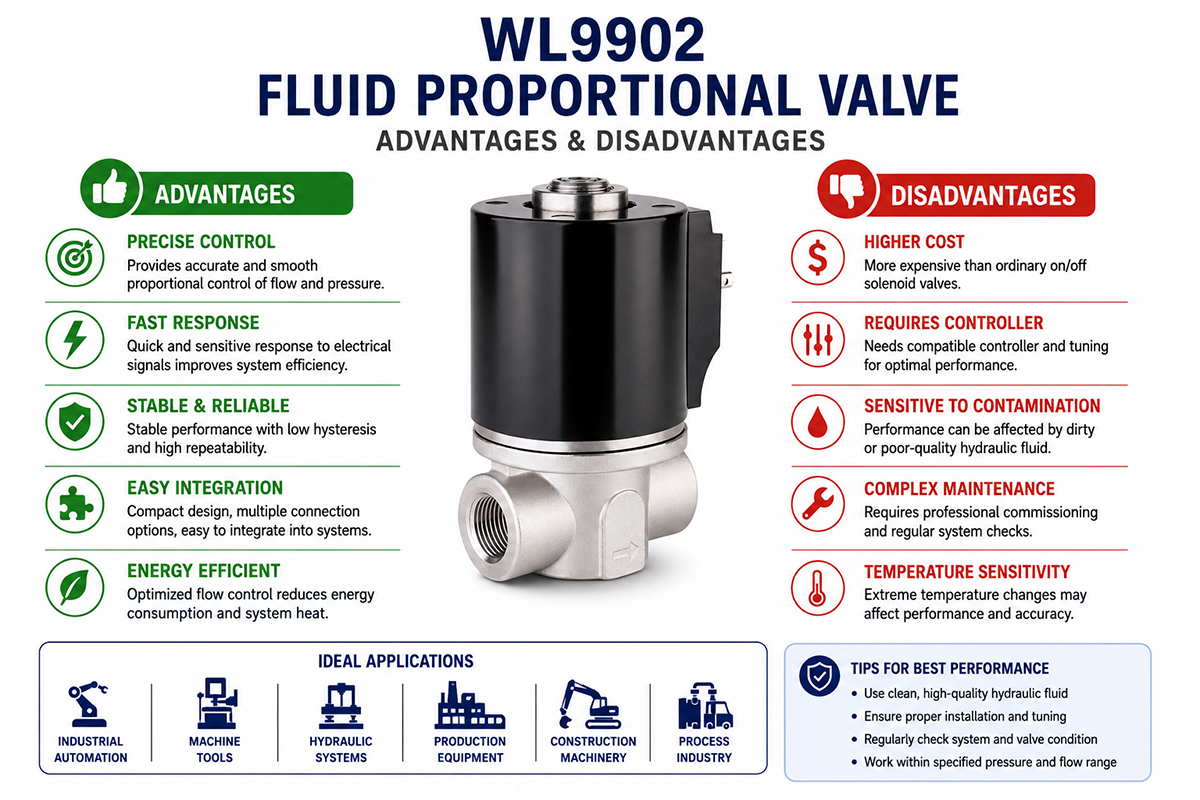
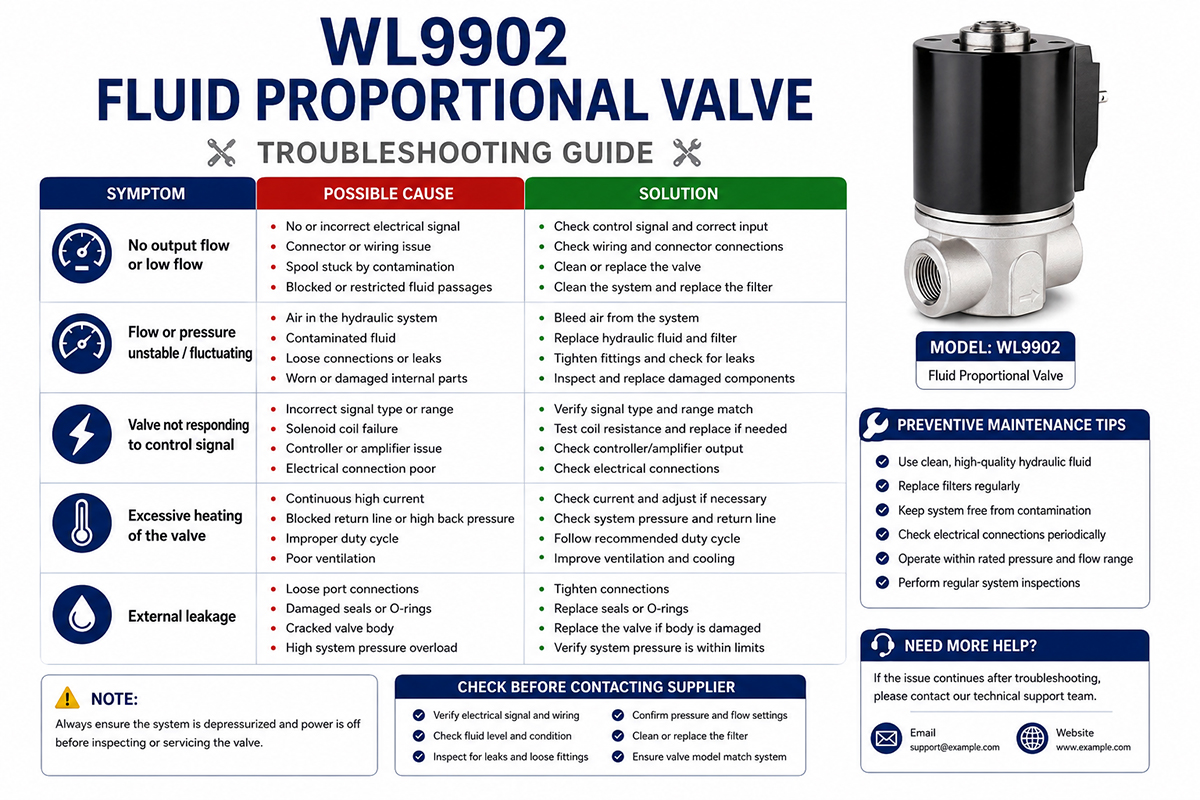
How to Choose a Fluid Proportional Valve—Approx.
When choosing the right fluid proportional valve, one shouldn’t look only at the valve size but at the whole system it operates in.
1. Choose the Fluid
Decide whether the valve will control hydraulic oil, compressed air, water, coolant, gas, or some other medium. Consider the viscosity, temperature, chemical compatibility, fluid cleanliness, and seal materials.
2. Identify Flow Requirements
Determine the minimum, normal, and maximum required flow. Choose a valve that can handle peak flow requirements without too much pressure drop. An oversized valve can reduce control precision, while an undersized valve will limit the system performance.
3. Verify the operating pressure.
Check normal and maximum system pressure. Choose the valve for possible pressure spikes. The valve pressure rating should provide safety margin.
4. Determine the Control Function
Decide if the application requires flow control, pressure control, directional control, or any combination. Match the actuator and process requirements with the valve capabilities.
5. Match the Incoming Signal
Typical control signals are voltage and current inputs. Check that the valve driver, PLC, controller, and proportional electronics work with compatible signal ranges.
6. Consider Response and Accuracy
Response time and hysteresis are the parameters to consider when designing high-speed automation, robotics, and precision motion. Closed-loop feedback may be considered when extremely accurate control is needed.
7. Check Installation and Connection Requirements
Consider port size, thread, mounting pattern, manifold configuration, electrical connection, and installation space.
8. Consider Environmental Conditions
Consider the ambient temperature, vibration, moisture, dust, corrosion, and electromagnetic conditions. Choose the appropriate materials and protection.
9. Check Maintenance Needs
Choose a design with serviceable parts, appropriate seals, filtration requirements, and replacement parts availability.
10. Consider Vendor Assistance
For OEM applications, choose the vendor for customization, technical support, testing, documentation, delivery, and quality control.
Fluid Proportional Valve Design – Tips to Avoid Common Mistakes
Do not oversize the valve. The oversized valves decrease control precision and make proportional control difficult.
Do not undersize the valve. The undersized valves result in excessive pressure drop and performance decrease.
Select the right fluid compatibility. Seal and body materials should be compatible with the operating medium and temperature.
Design for pressure spikes. Not for the normal operating pressure.
Match the electronic signal. Consider voltage/current ranges between valve and controller.
Consider deadband and hysteresis. It may affect accuracy in demanding applications.
Use appropriate filtration. Contaminated hydraulic or pneumatic fluid can cause sticking and unstable control.
Consider heat dissipation. Electrical coils and fluid throttling (when in continuous operation) can generate heat.
Do not install upside down or with unsupported piping. Mechanical stress can decrease valve reliability.
Plan for feedback when you need it. For precise applications, flow, pressure, or position feedback is required.
Test the whole system. The valve performance is determined by the pump, actuator, controller, fluid, piping, and load.
Provide the safety margin. The pressure, temperature, flow, and electrical ratings should match the actual conditions.


