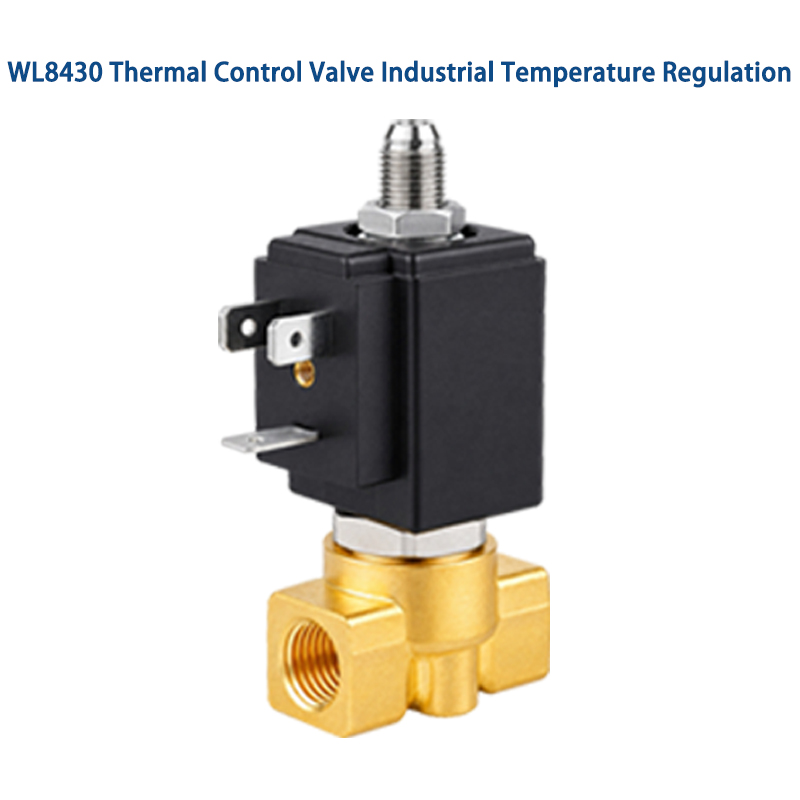
Thermal Control Valve Selection
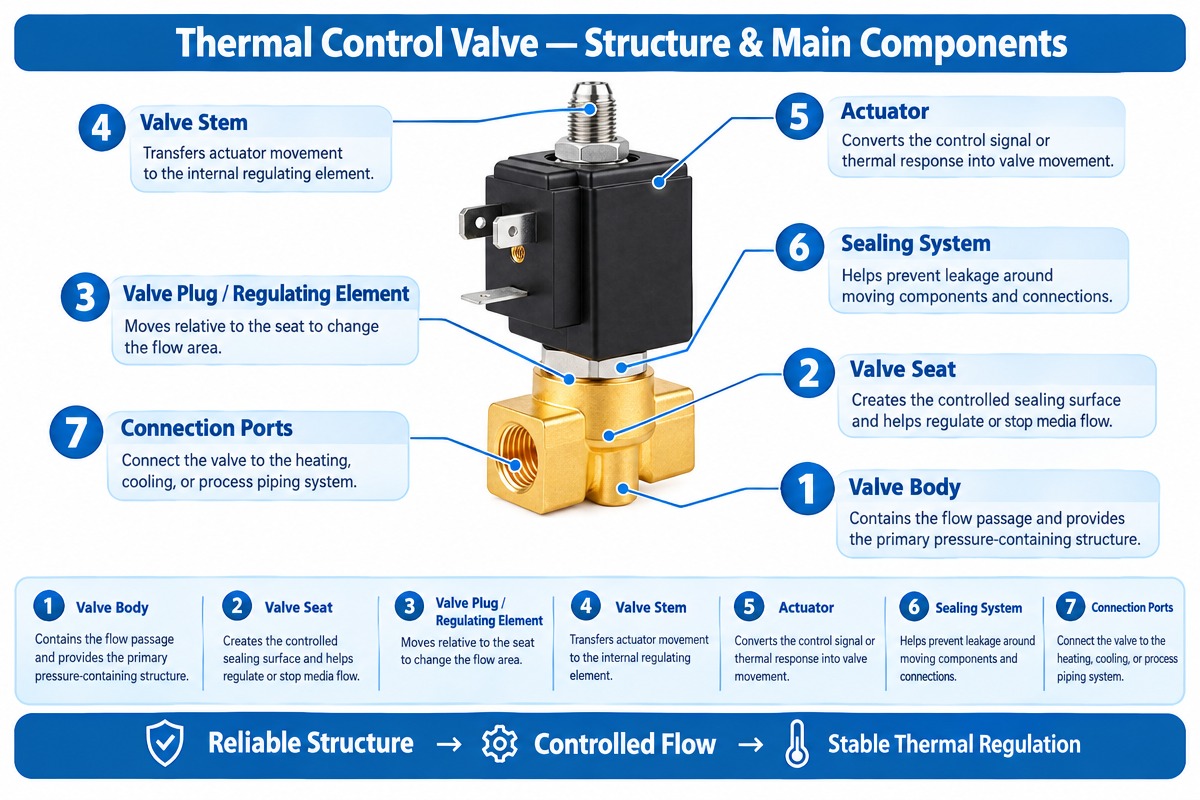
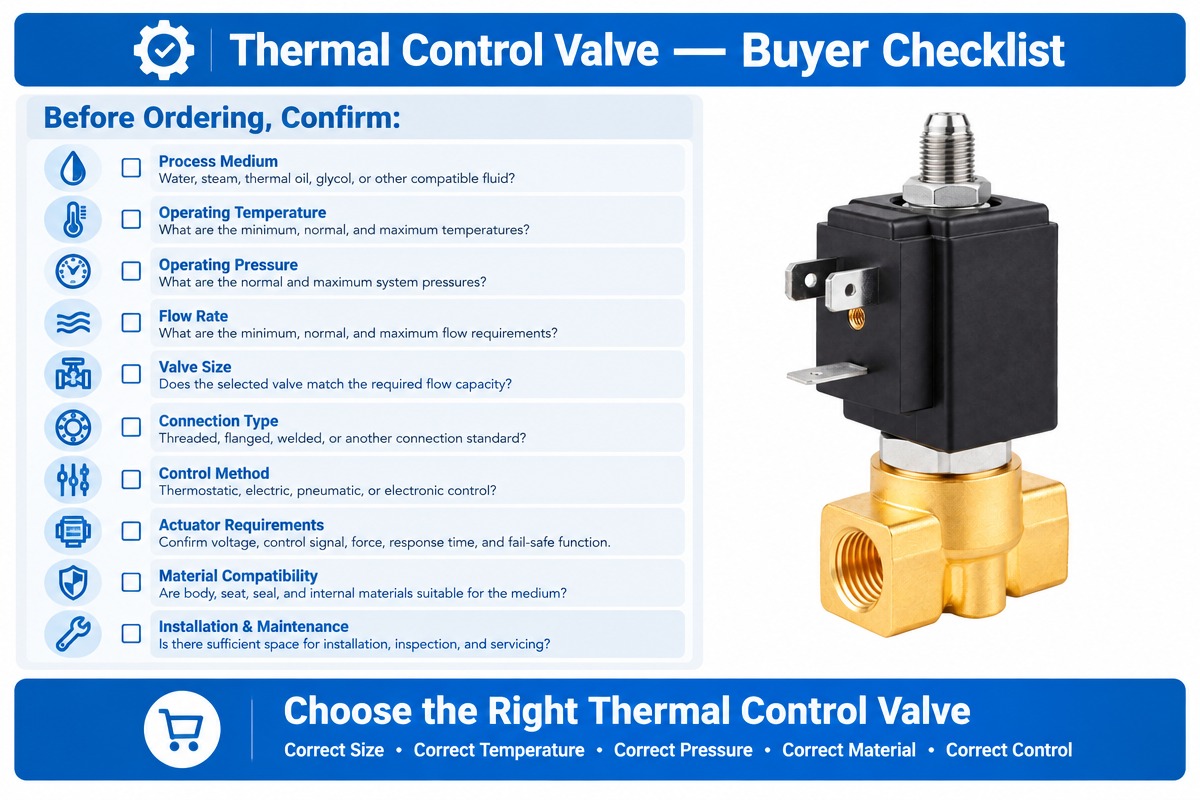
While selecting the thermal control valve, it is not enough to just select the valve according to the pipe size, but the whole analysis of the entire operating system needs to be done. The first point is the operating temperature. Define the normal, minimum and maximum temperature of the process medium and select the valve with the appropriate temperature rating.
Next check the working pressure. The valve body, seals, actuator and internals must be able to withstand the maximum system pressure. Also consider the pressure differential across the valve as it will affect flow performance and valve sizing.
The other important point is the flow rate. Define minimum, average and maximum flow requirements. According to the expected operating range a valve of the appropriate size will give stable control. Oversized valves will cause unstable temperature regulation, undersized valves will restrict flow and reduce system performance.
Think carefully about the process medium. The water, steam, thermal oil, glycol solution and chemical fluids have various properties in terms of temperature, pressure, viscosity and corrosion. Select the appropriate materials for body, seat, seal and internals.
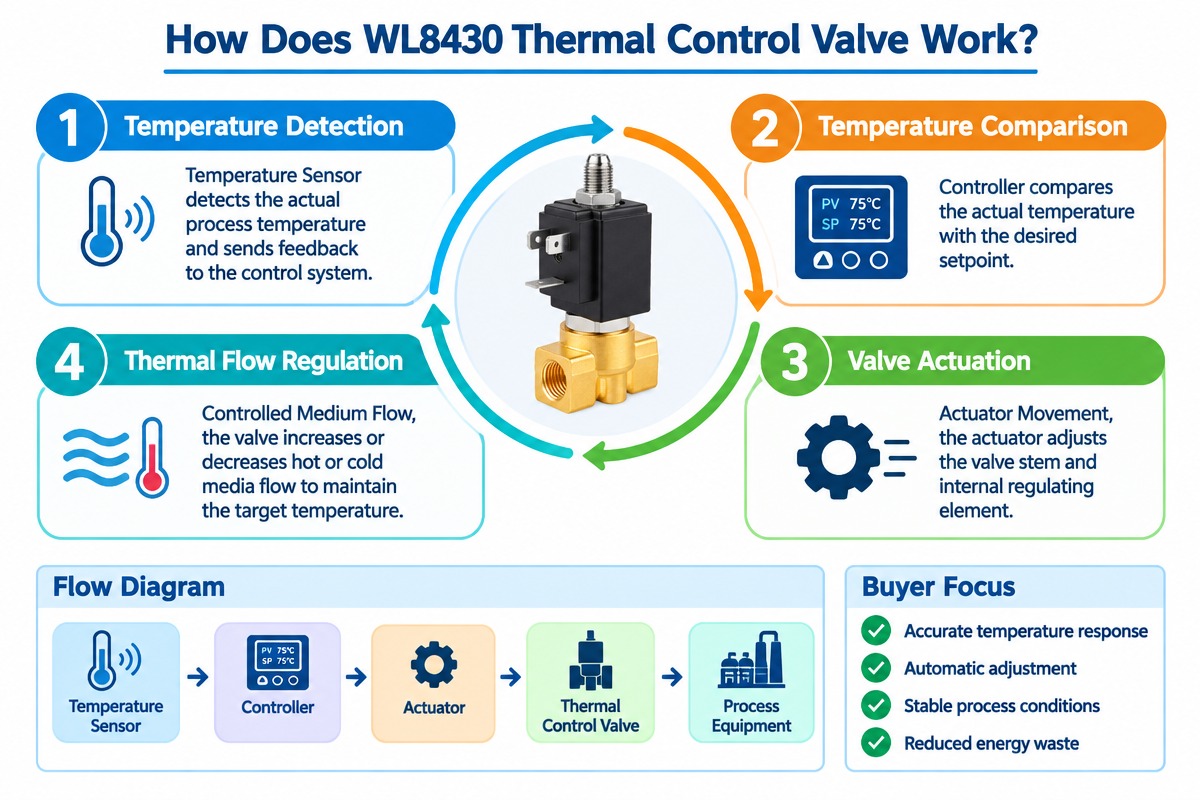
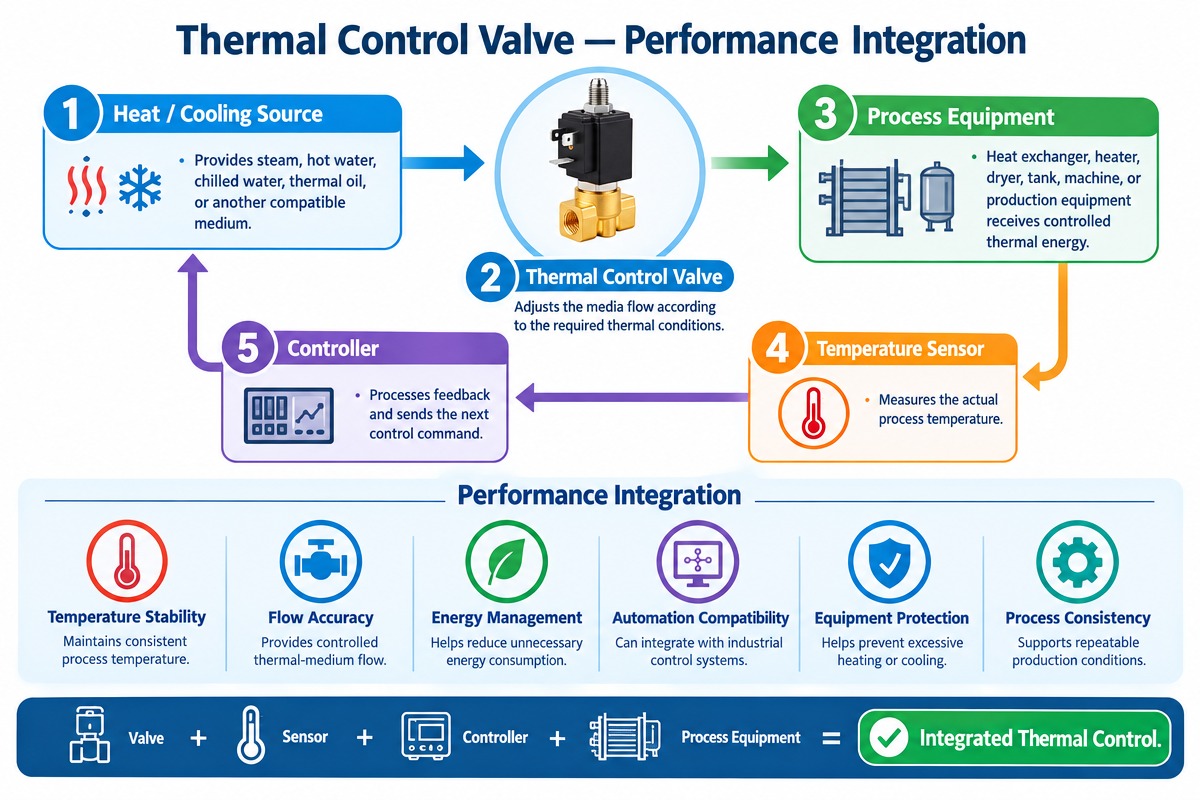
The manner of control should be in accordance with the automation system. For simple temperature control, thermostatic valves are sufficient, while for automated industrial systems with the requirement of external control signals, the electric or pneumatic actuators are better.
Check the connection type and valve size with respect to the existing piping system. The connections should be threaded, flanged, welded or others as required.
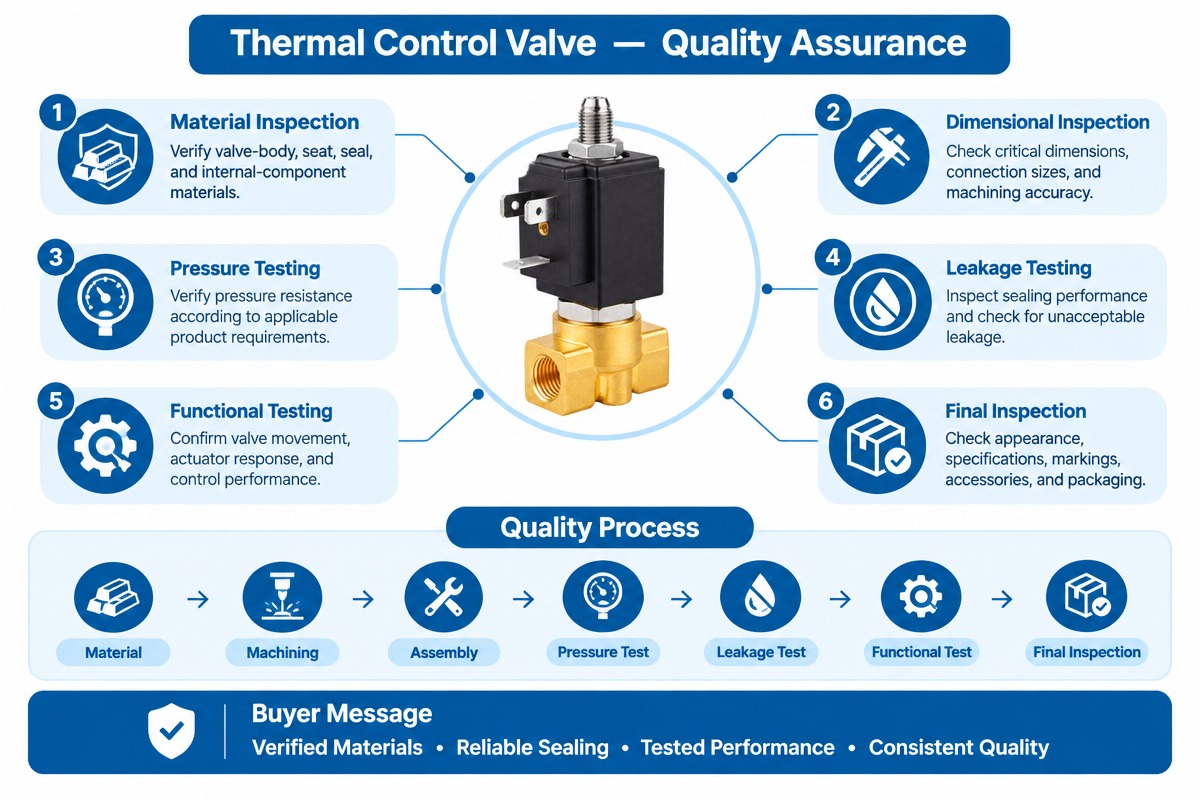
The leakage requirement should also be considered. Applications requiring precise temperature control will require reliable shut-off and appropriate sealing performance.
And finally, the maintenance, size, compatibility with actuators, speed of response, service life and manufacturer support should be thought about. The buyers should also consider the certifications, testing procedures, spare-parts availability and technical documentation before making the purchase order.
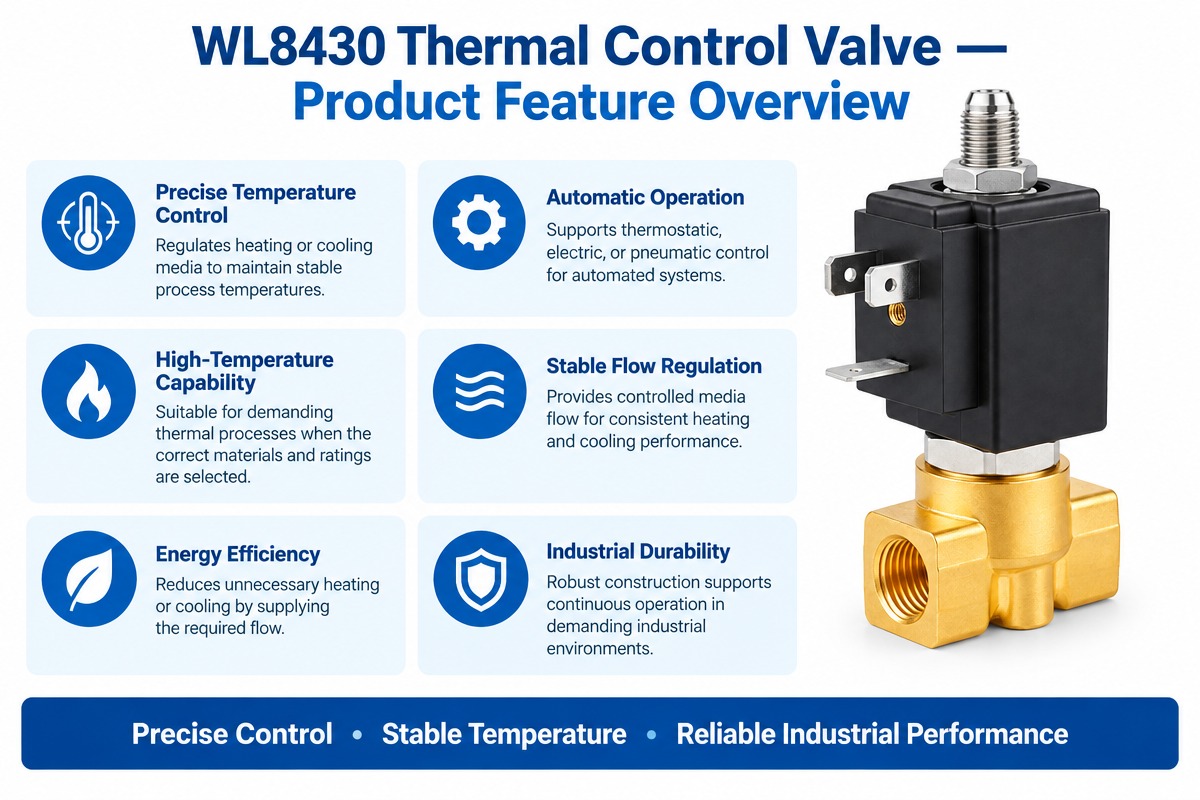
Proper selection of thermal control valve can improve temperature stability, energy efficiency, equipment protection and overall process reliability.
How to Avoid Common Mistakes When Designing Thermal Control Valves
1.Do Not Size the Valves Incorrectly
Do not select the valve according to pipe size. Find out the real flow and pressure requirements.
2.Do not ignore temperature limits.
Normal and maximum temperature of the valve body, seals, actuator and internal components during operation.
3.Ensure the compatibility of materials
Select materials for valves that are suitable for the process medium and operating conditions.
4.Do not Ignore Pressure Differential
The pressure difference across the valve greatly affects the flow capacity, noise, vibration and valve life.
5.Select the Correct Actuator
Make sure of actuator force, operating speed, control signal and fail-safe requirements.
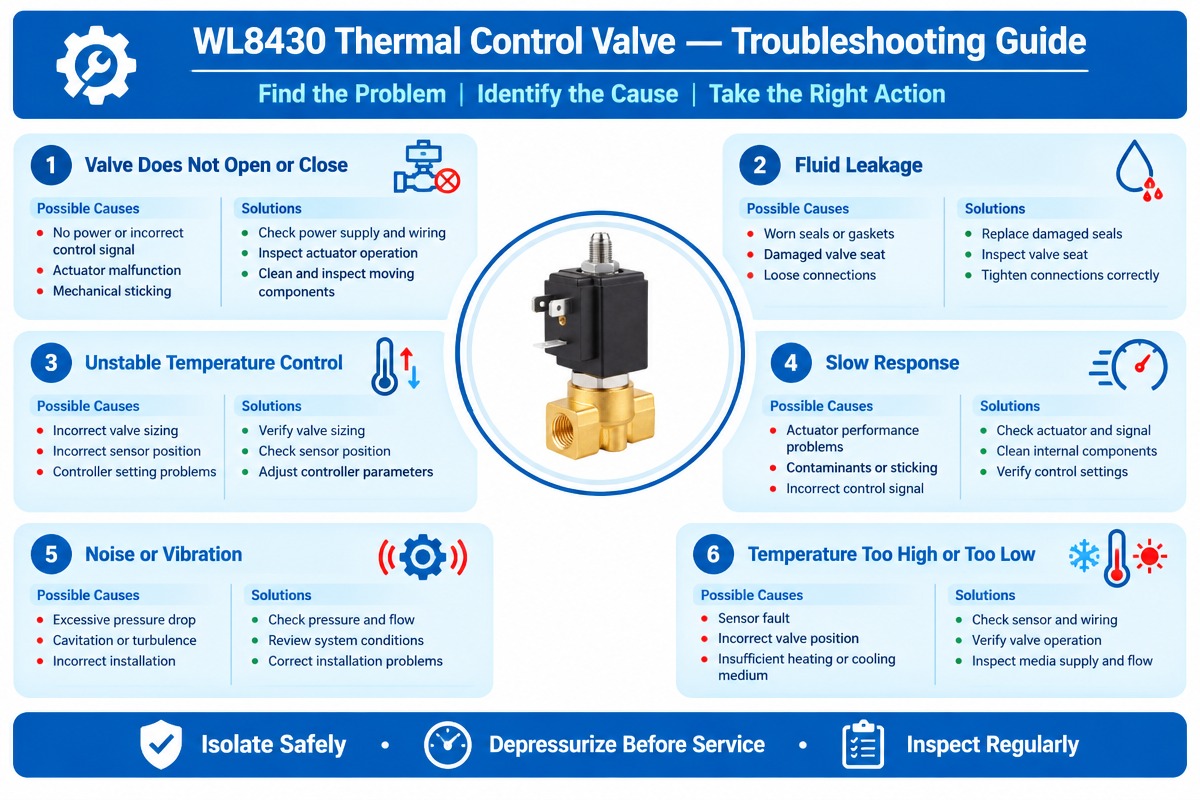
6.Do Not Make Mistakes With Sensor Positioning
Position the temperature sensors in such a way that they provide a correct indication of the actual process temperature.
7.Consider Maintenance Access.
Provide access to inspection, servicing of the actuator and replacing the seals and cleaning.
8.Verify System Compatibility Before Installation
Check connection dimensions, control protocol, voltage, pressure rating, temperature range.