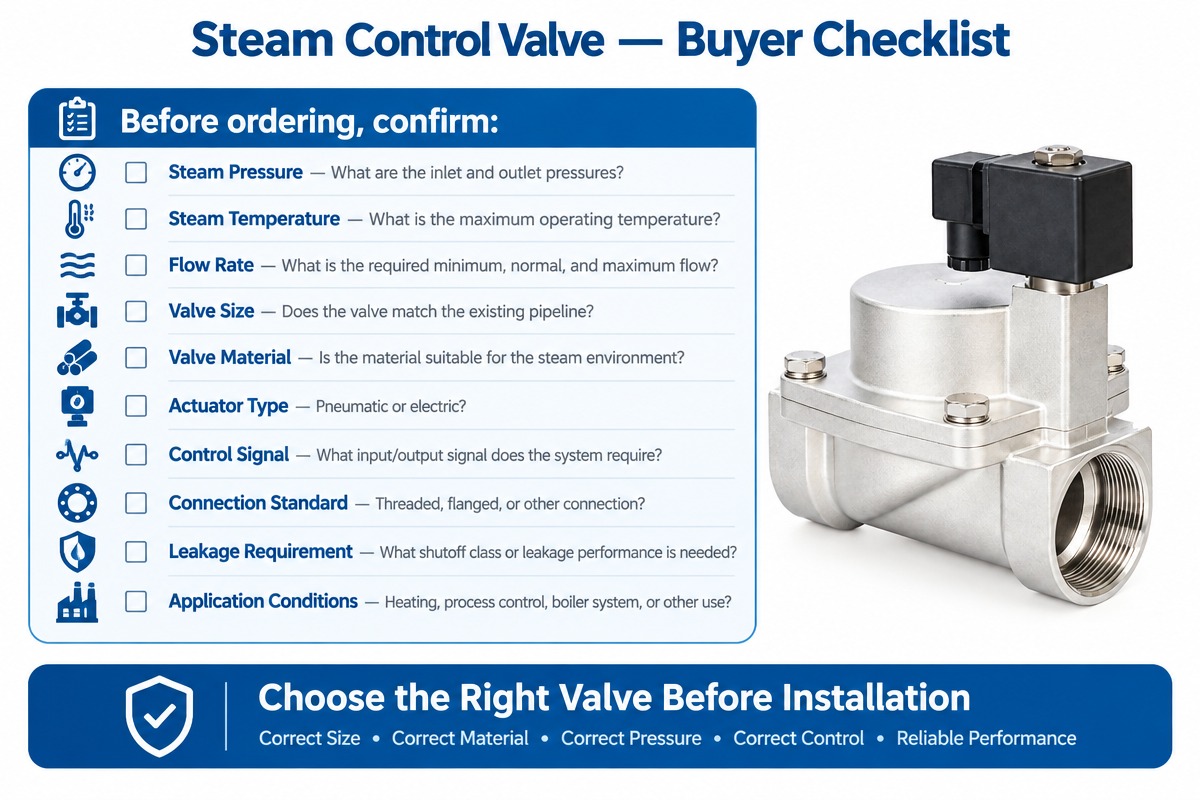
How to Select Steam Control Valve
When selecting the right steam control valve you need to evaluate the process requirements and steam conditions very carefully. Sufficiently sized and configured valve will ensure accurate control, energy efficiency and reliable operation.
1.Determine the Steam Pressure
Determine inlet pressure, outlet pressure and pressure differential. Maximum and normal values shall be considered.
2.Calculate the steam temperature
Consider saturated or superheated steam and maximum operating temperature. Valve body, seals, packing and actuator components shall be suitable for the temperature.
3.Determine Required Flow
Calculate minimum, normal and maximum steam flow. Valve sizing shall be sufficient and allow controllability at lower flow rates.
4.Choose the Type of Valve
Select a suitable control-valve design according to the required flow characteristic, pressure drop, application and control accuracy.
5.Factors to Consider
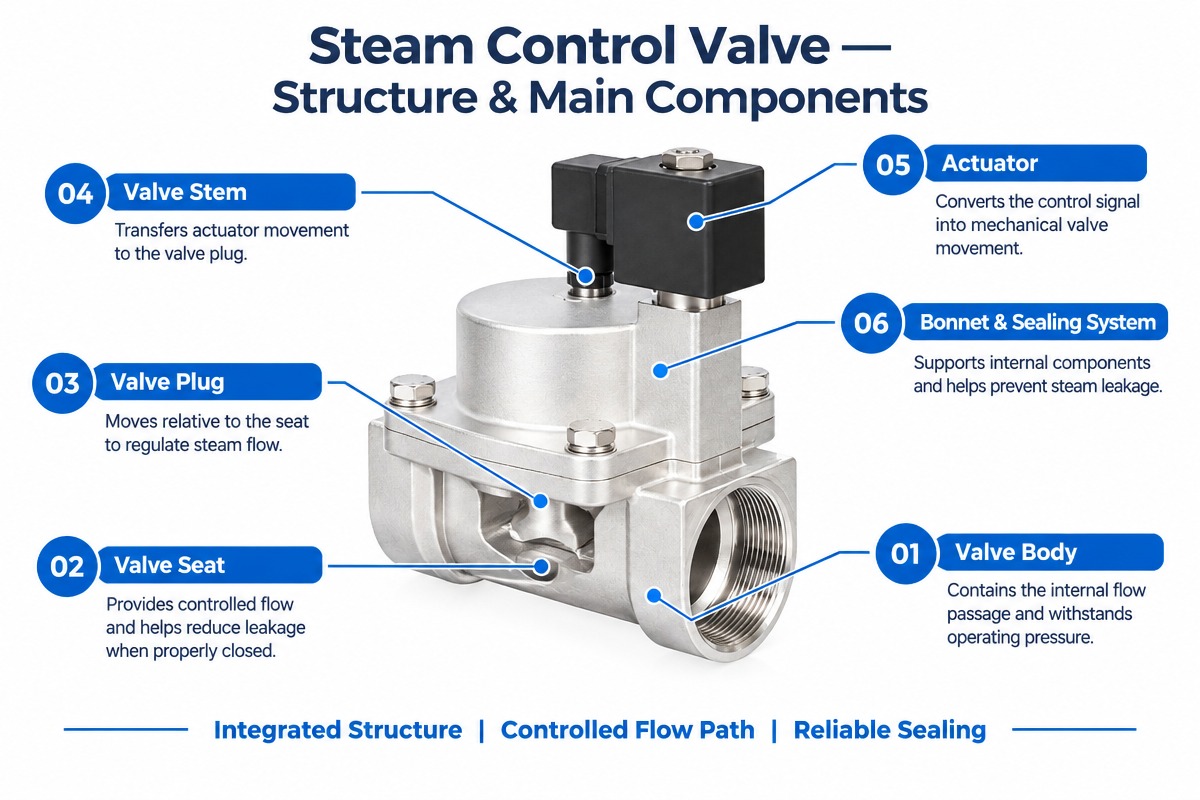
Choose body, trim, seals and packing materials appropriate to steam temperature, pressure, corrosion and thermal cycling.
6.Confirm Connection Size
Match the valve connections to the pipeline and installation standard. Don’t select valve on pipe size alone, actual flow requirements also need to be taken into account.
7.Select the Actuator
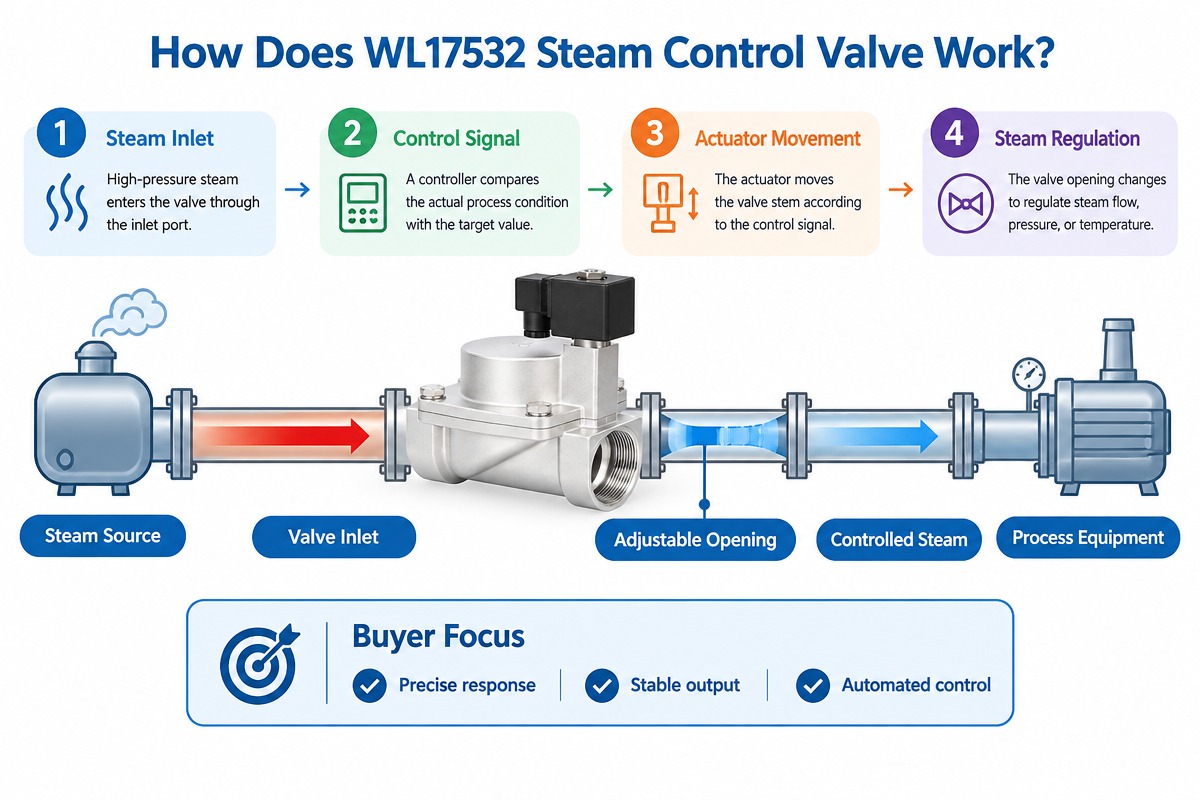
Select whether you require a pneumatic, electric, or other type actuator. Availability of utilities, response time, fail position and actuator compatibility with the control system shall be considered.
8.Control Accuracy
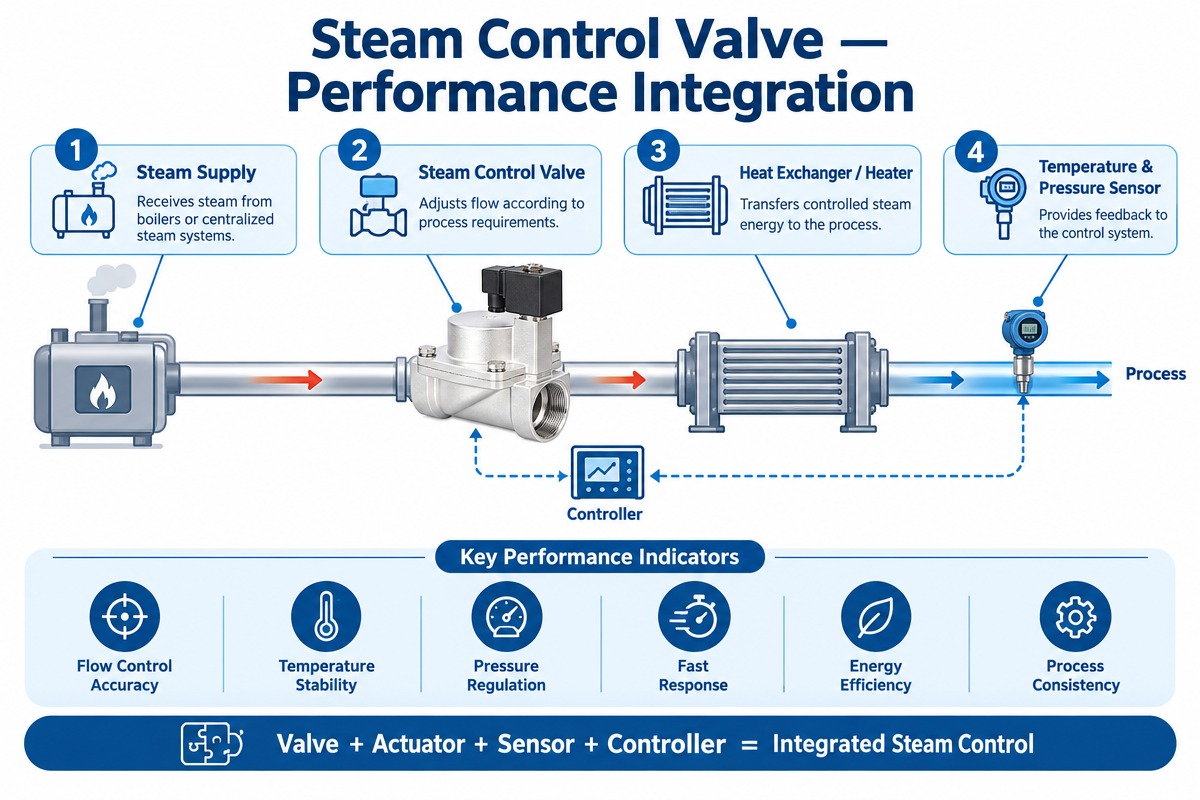
Specific valve characteristics, positioning accuracy and instrumentation shall be selected for the particular valve application for precise temperature or pressure control.
9.Verify Installation Conditions
Evaluate the orientation, available space, vibration, ambient temperature, insulation, drainage and maintenance accessibility.
10.Think about Steam Quality
Internal components of the valve may be damaged by wet steam, condensate or contamination and control performance may be reduced. System design should consider steam quality.
11.Review Safety Requirements
Consider pressure protection, emergency shutdown requirements, actuator fail position and applicable industrial standards.
12.Check documentation
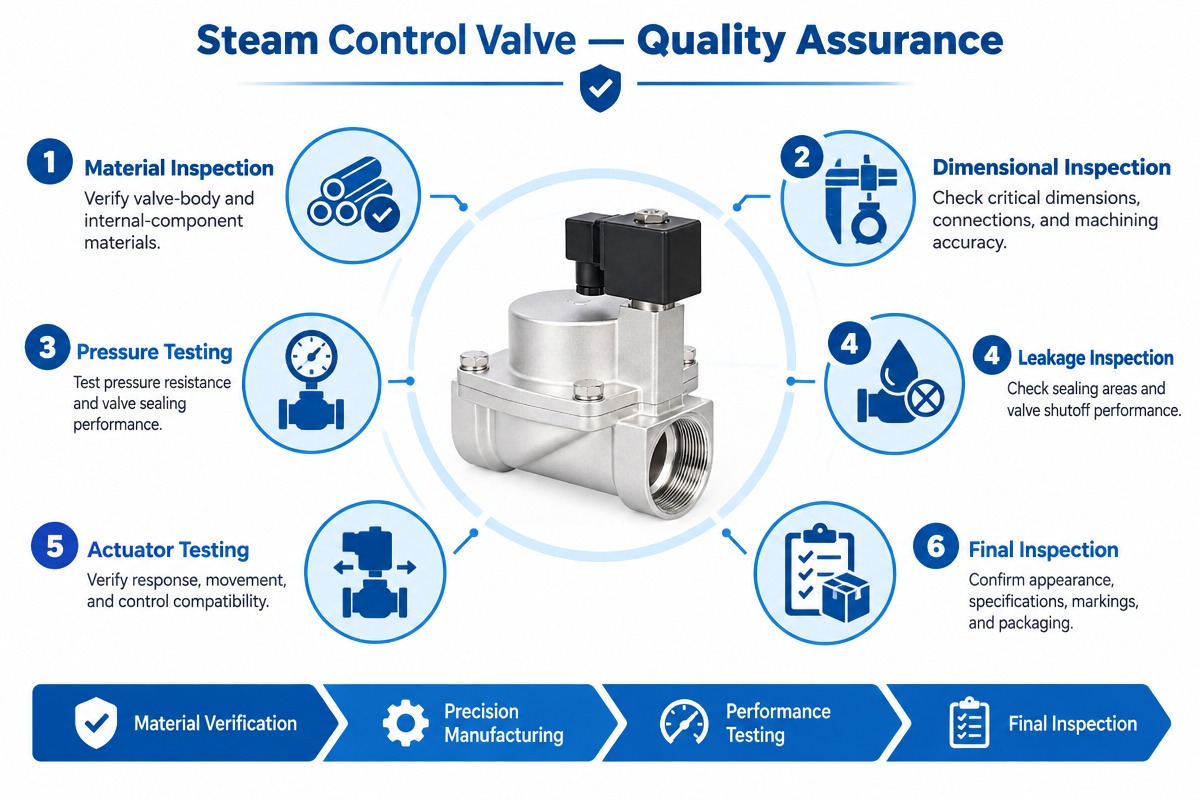
Before buying check flow coefficients, pressure and temperature ratings, materials, dimensions, actuator specifications and testing documentation.
Not necessarily the best steam control valve is the largest or the most expensive one. It needs to be sized and configured correctly taking into account pressure, temperature, flow, media condition, control requirements and installation environment.
Common Mistakes in Design of Steam Control Valve & How to Avoid Them
1.Do Not Oversize Valves
Too large a size may cause unstable control and too small a size may restrict steam flow and create unnecessarily high pressure drop.
2.Do Not Select Based On Pipe Size Alone
Pipe diameter cannot serve as the guideline to the right control valve size.
3.Check Steam Pressure Carefully
Check the inlet pressure, outlet pressure, differential pressure and possible pressure fluctuations.
4.Consider the temperature of steam
Select the appropriate materials and sealing components for the actual temperature of the steam.
5.Do Not Ignore Condensate
Poor drainage and wet steam may cause erosion, vibration, water hammer and premature component damage.
6.Selecting the Right Actuator
Ensure the actuator force, response time, control signal and fail position meet the system requirements.
7.Control Characteristics
Do not assume that all control valves behave in the same way, select appropriate flow characteristic.
8.Access for Maintenance
Ensure sufficient space for inspection, actuator maintenance, packing replacement and valve maintenance.
9.Lockdown of the control system
Keep the sensors, wiring, actuator and other temperature sensitive components within their environmental limits.
10.Think Thermal Expansion
Steam piping and valve assemblies experience great thermal movements due to heat.
11.Observe All Safety Precautions
Provide appropriate pressure protection, isolation, emergency shutdown and fail safe means when necessary.
12.Test under Real Conditions
When possible test the valve performance under representative pressure, temperature, flow and control conditions.