How to Select a PTFE Solenoid Valve
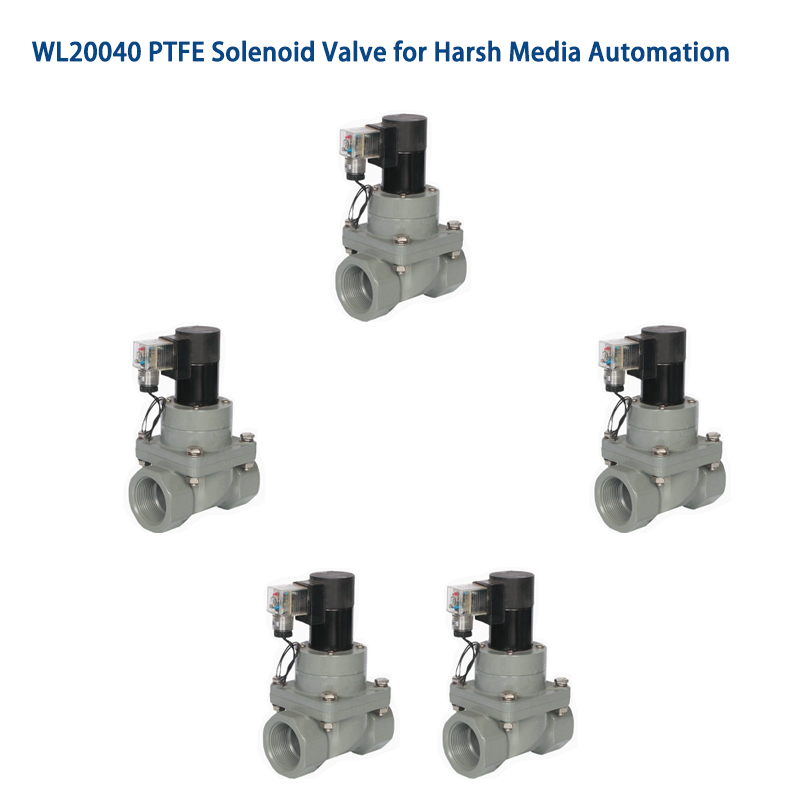
Selection of a PTFE Solenoid Valve involves more than just choosing of corrosion resistant material. Identification of the fluid, including concentration, temperature, viscosity, cleanliness and chemical composition is the first step. Next, verify compatibility of the medium with PTFE and all wetted seal materials. Then calculate the required flow rate and choose the proper orifice and port size. Oversizing can reduce control efficiency while undersizing can create high pressure drop and reduce the system capacity.
Checking of the operating pressure range including minimum and maximum pressures and pressure differential is an important stage. Temperature is also important as the valve, seals, coil and surrounding materials have to operate within their rated limits. Select normally closed or normally open operation as per control logic and safety requirements of the equipment.
Electrical specifications have to match with the control system. Verify coil voltage, AC or DC supply, power consumption, connector type, insulation requirements and available PLC or relay outputs. If the frequent switching is expected, verify the duty cycle and the service life.
Proper installation conditions such as mounting position, space availability, pipe connection standard, environmental exposure, vibration and protection requirements have to be verified. If the valve is going to be installed in the outdoor or washdown environment, select appropriate enclosure and connection protection.
Finally, take into account flow direction, response time, leakage requirements, maintenance access, spare parts and supplier technical support. Request performance data and chemical compatibility prior to buying. Selection is a balance of media compatibility, pressure, temperature, flow, electrical requirements, installation conditions, reliability and operating cost. Also, consider whether the valve will be used continuously, intermittently or in high-cycle application as actuator heating and component wear may affect the service life. For hazardous or process applications verify required fail-safe position and system safety strategy prior installation. Maintain the records on material compatibility, electrical ratings, pressure limits and maintenance intervals so that replacement can be performed to original specifications.
Common Mistakes in Designing PTFE Solenoid Valves and How to Avoid Them
With corrosion resistant valves, common design mistakes with PTFE Solenoid Valve systems can reduce reliability.
Don’t select just by PTFE material. Verify chemical compatibility of all wetted parts, including: seals, springs, diaphragms and fittings.
No, don’t size by pipe diameter. Determine the flow rate, pressure drop and operating conditions before selecting the orifice.
Verify pressure requirements Some solenoid valve designs require a specific pressure differential across the valve for reliable operation.
Verify electrical requirements. Verify coil voltage. AC/DC supply. Power consumption and duty cycle.
Real fluid temperature Don’t select the valve solely on ambient temperature.
Control contamination. Small openings can be clogged by deposits or chemicals or crystallization.
Correct installation. Follow flow direction if applicable. Use filtration as needed.
Provide Access for Maintenance Provide sufficient space for inspection, coil replacement, seal maintenance and electrical connections.
Application data should be carefully evaluated before final design approval.