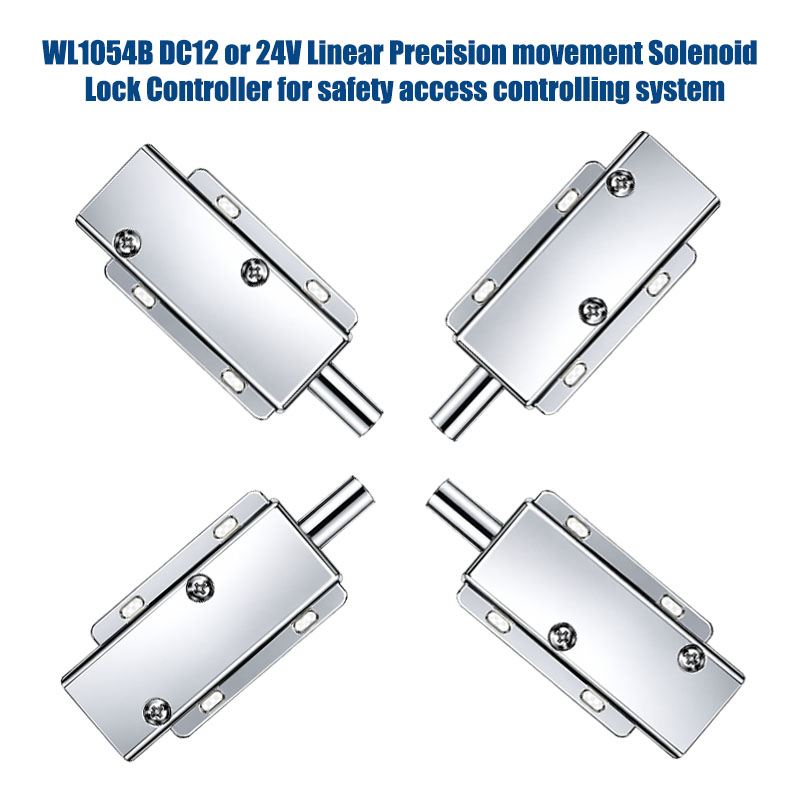
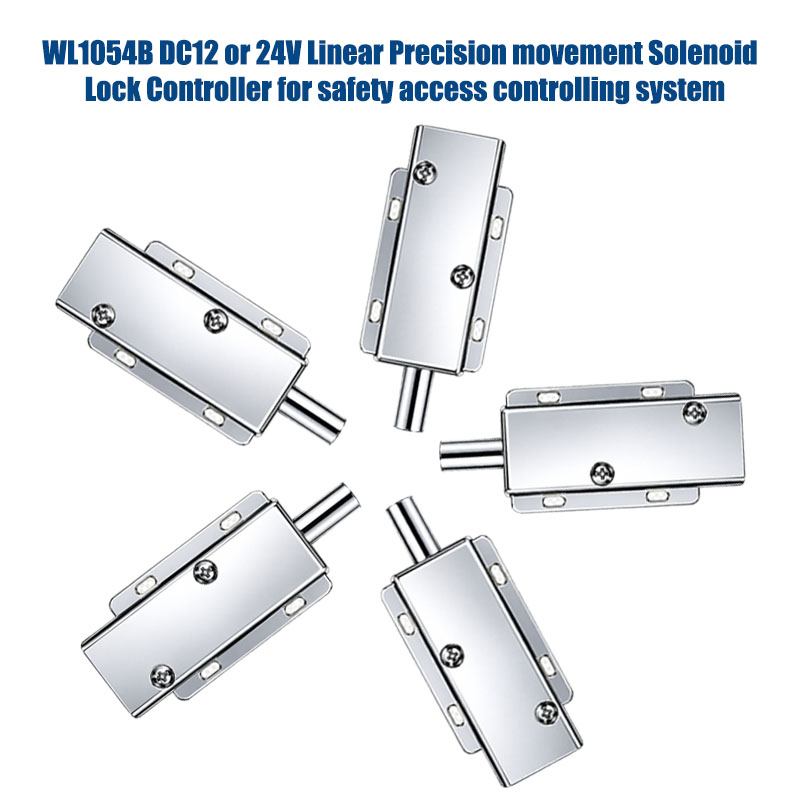
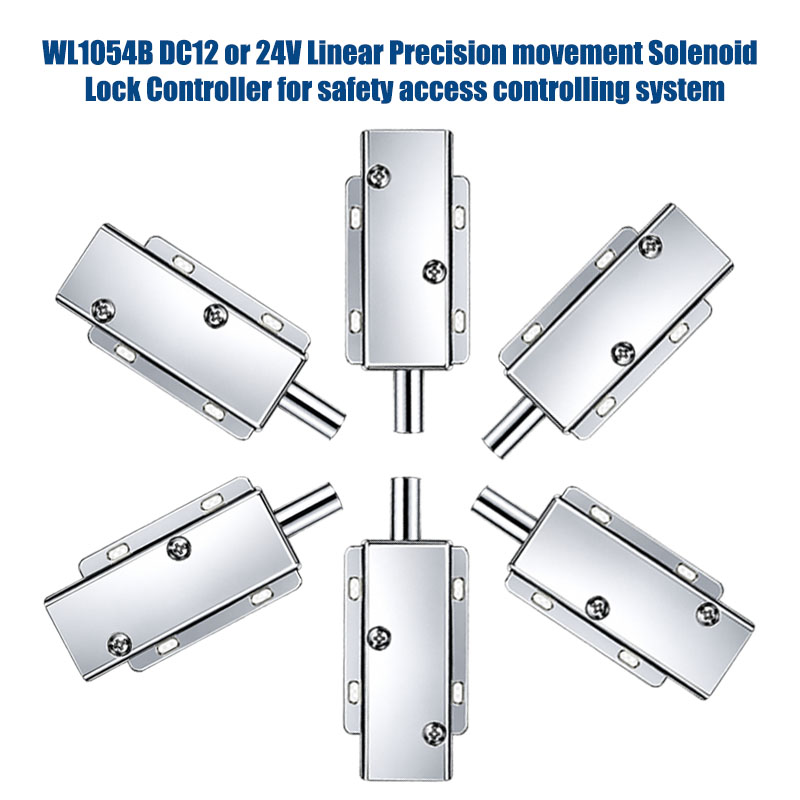
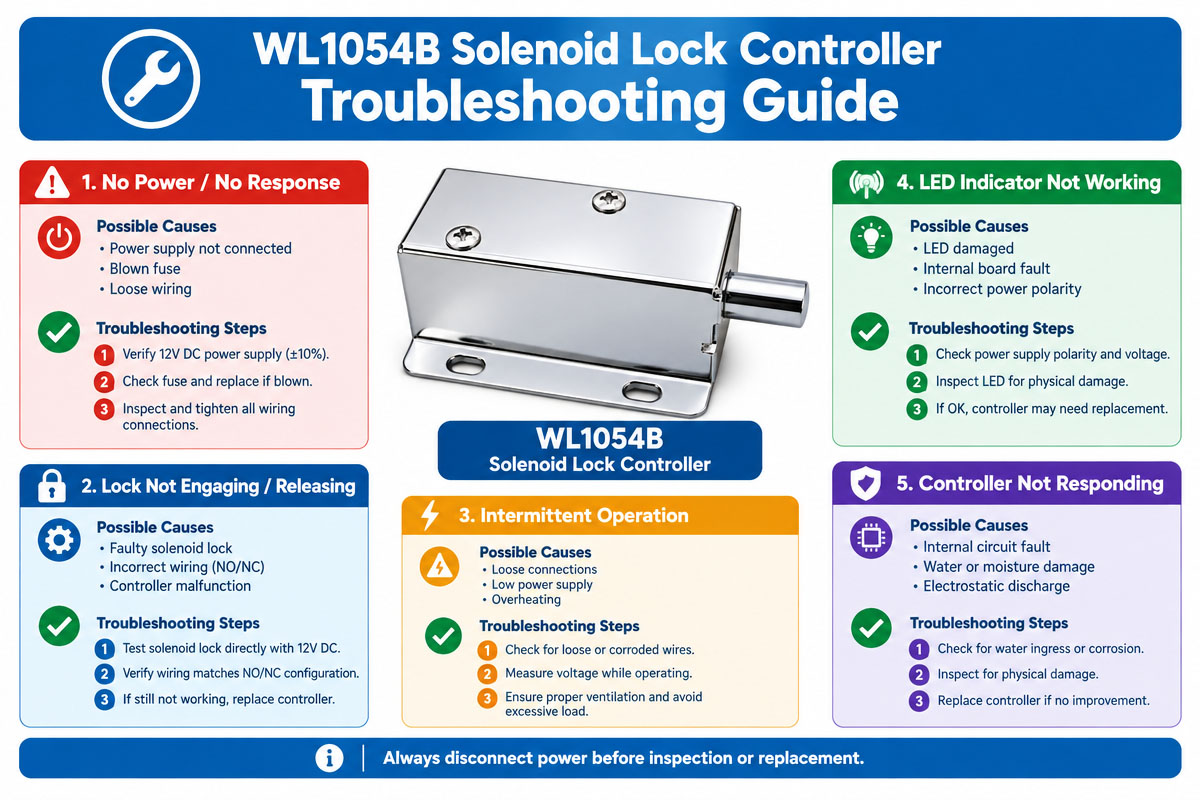
How to Choose a Solenoid Lock Controller?
Choosing the appropriate solenoid lock controller requires consideration of electrical requirements, the environment in which it will be used, safety standards, and its compatibility with the system. An inappropriate controller can lead to poor performance, installation problems, or shortened product life.
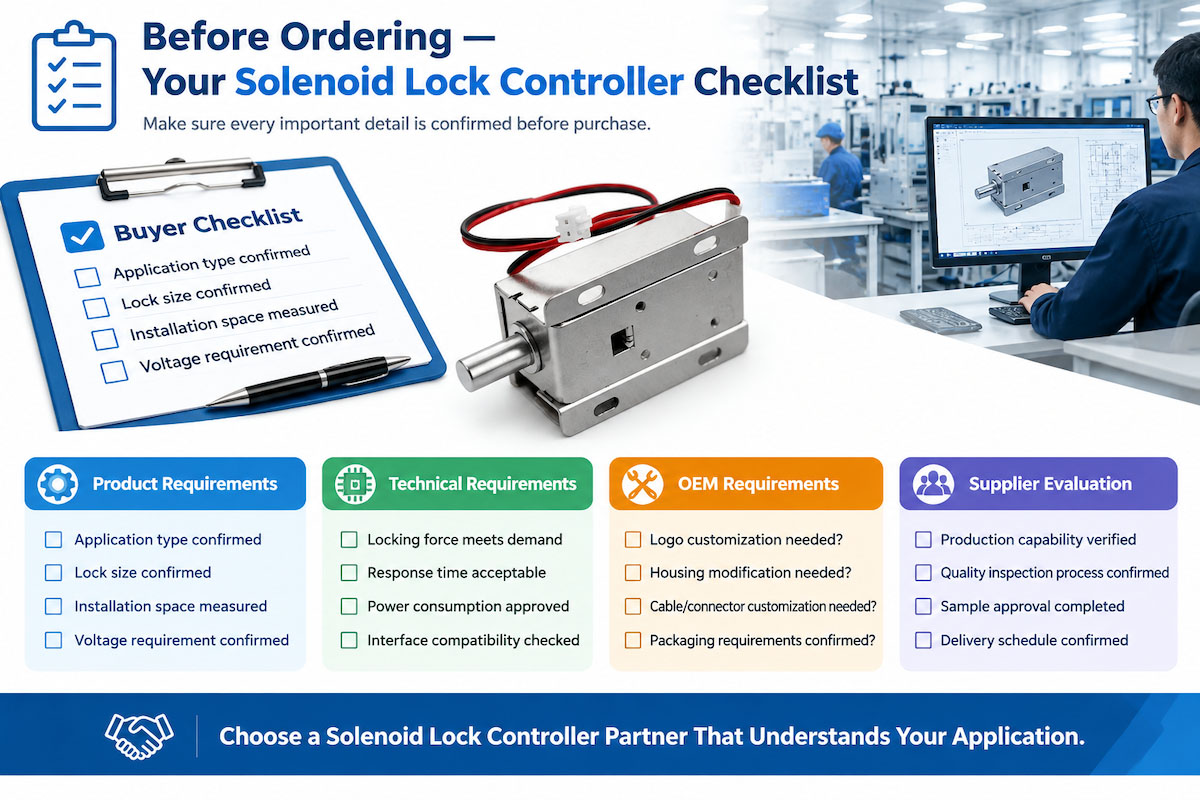
1. Review Application Requirements
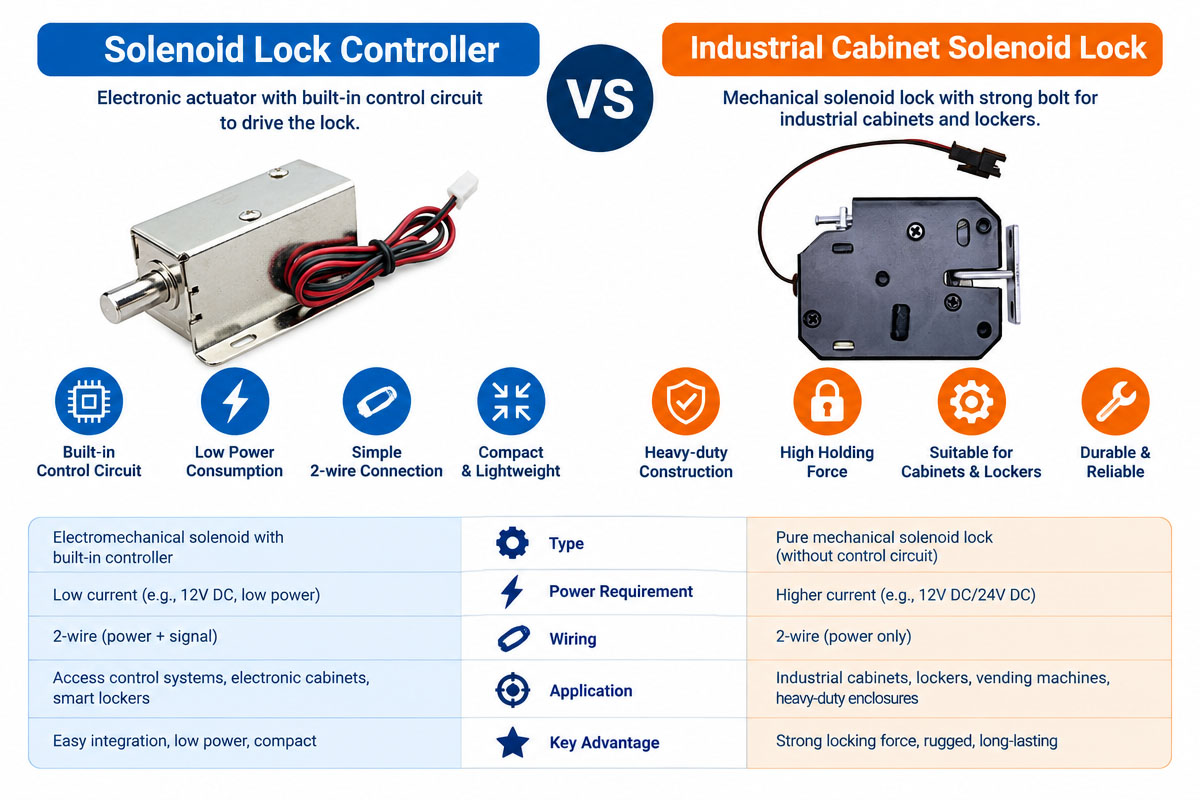
“First, determine where you will use the controller. Industrial cabinets, intelligent lockers, automation equipment, and security doors may have different requirements on locking force, installation structure, and operating environment.
Think about:
Outdoor or Indoor Installation
How many locking operations occur?
Security Level Required
Space constraints
2. Electrical & voltage compatibility check
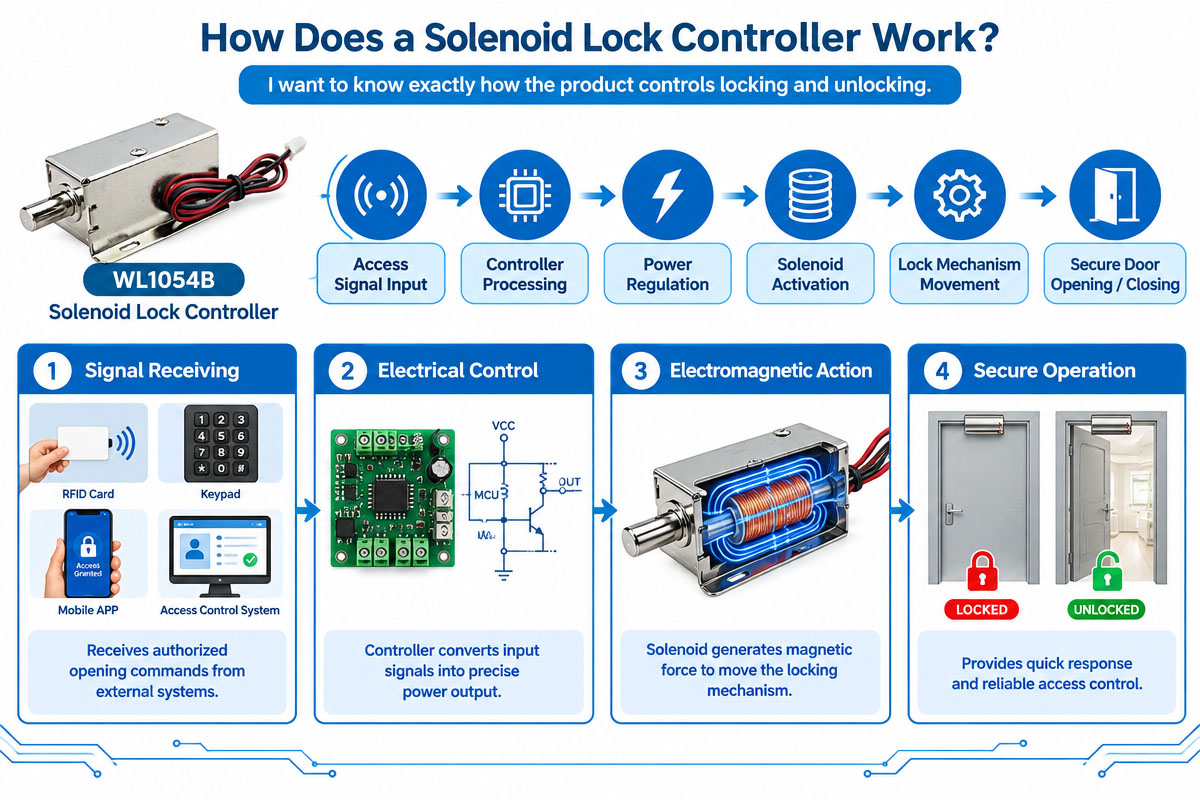
The solenoid lock specifications should correspond to the controller.
The principal parameters are
Operating voltage (12V, 24V, etc.)
Present use
Power rating . . .
Protection needs
Mismatch of the controller and solenoid lock can lead to overheating, unstable operation, or failure.
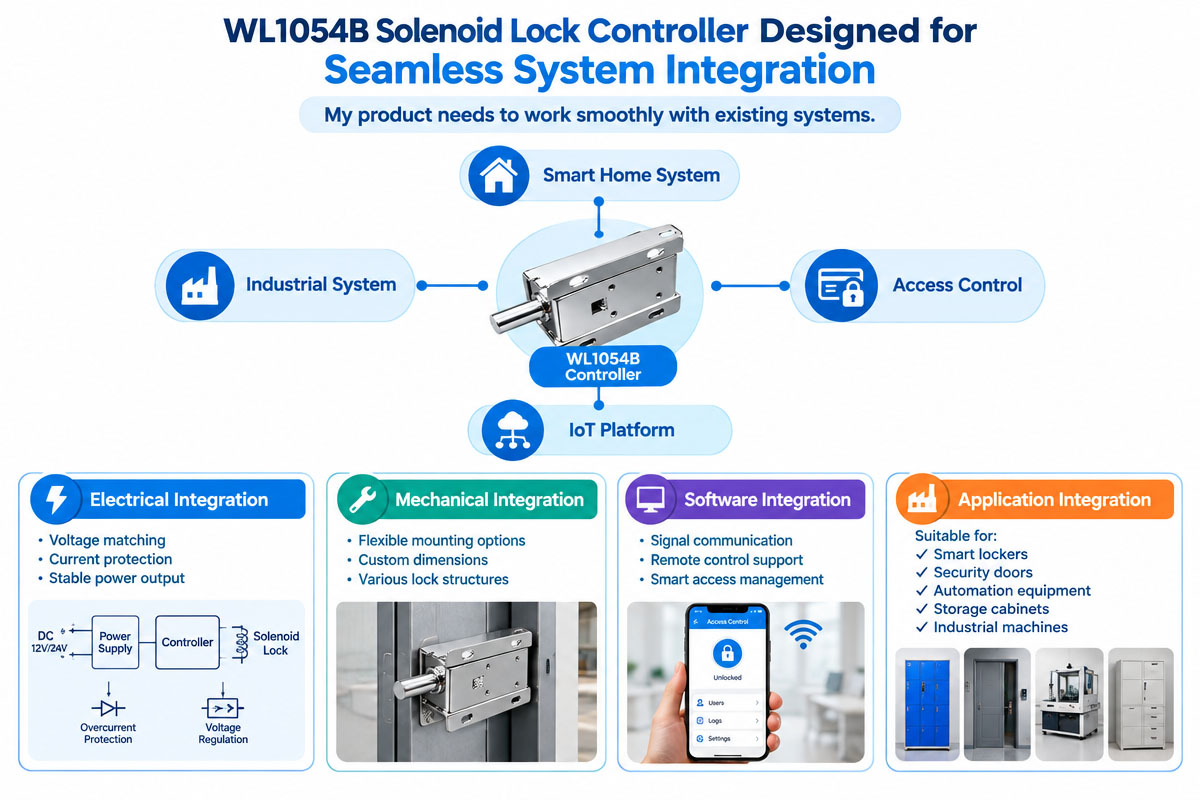
3. Check Control Interface Compatibility
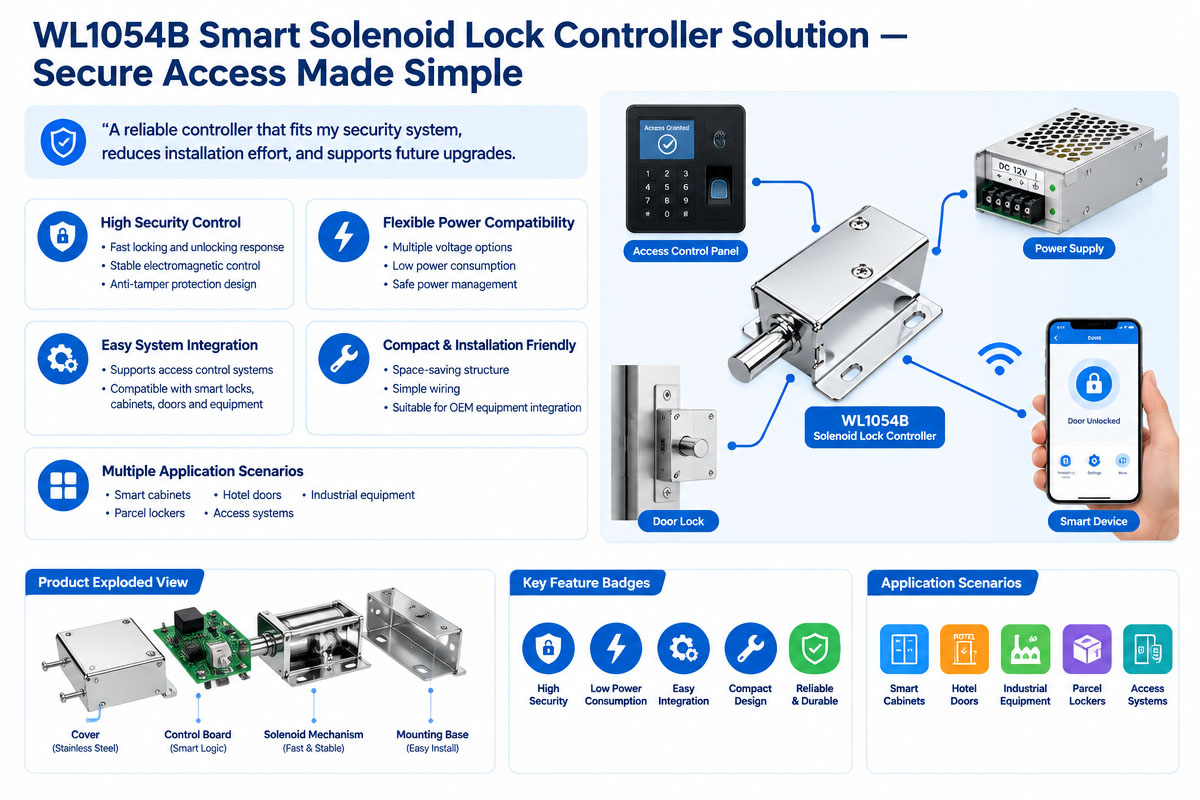
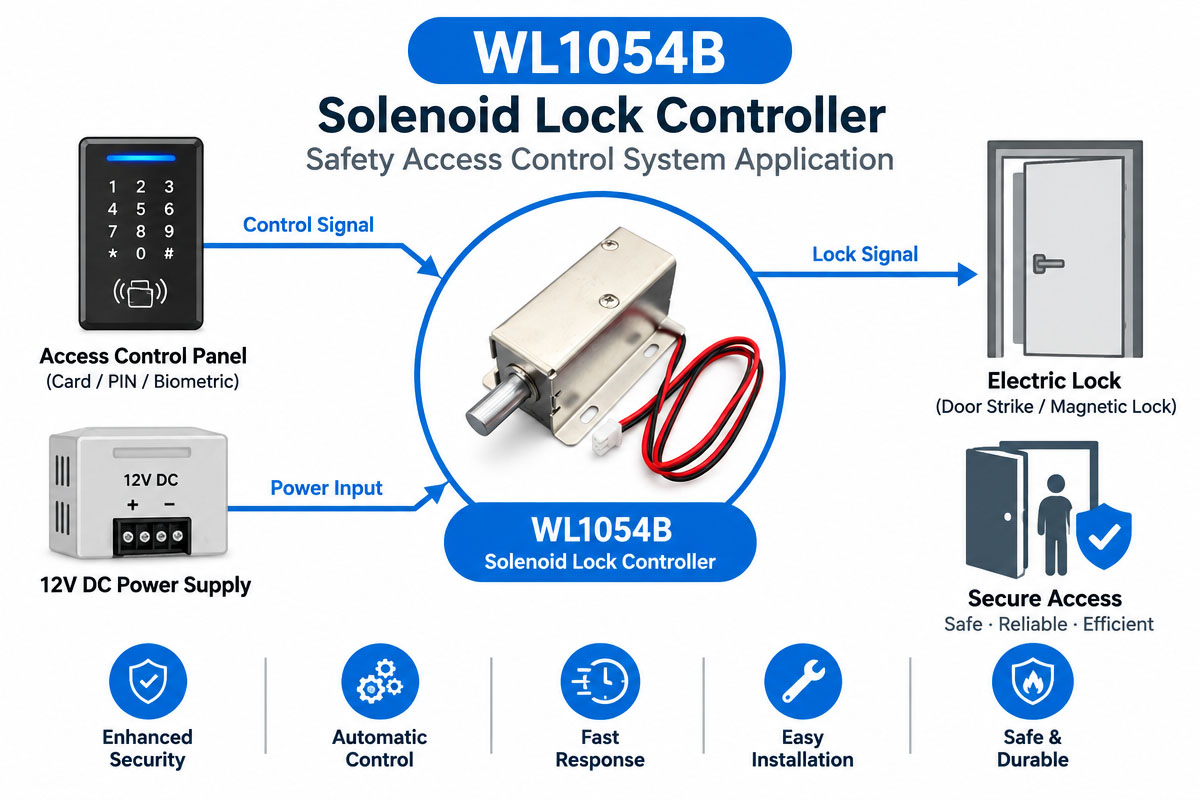
The good solenoid lock controller should be easy to integrate in existing systems.
Verify compatibility with:
RFID Reader
Pads, Keyboard
PLC system
Access control panels
IoT platforms
Home automation systems
The communication method should be relevant to your project needs.
4. Think about safety features
Safety functions are particularly important for industrial applications.
Search for:
Overload protection device
Short-circuit protection
Temperature protection
Emergency release function
Lock status monitoring
These features improve operational reliability and user safety.
5. Review of Mechanical Design
The physical design should suit the installation environment.
Double Check:
Controller size
Installation method
Connector location
Length of cable
Housing protection standard
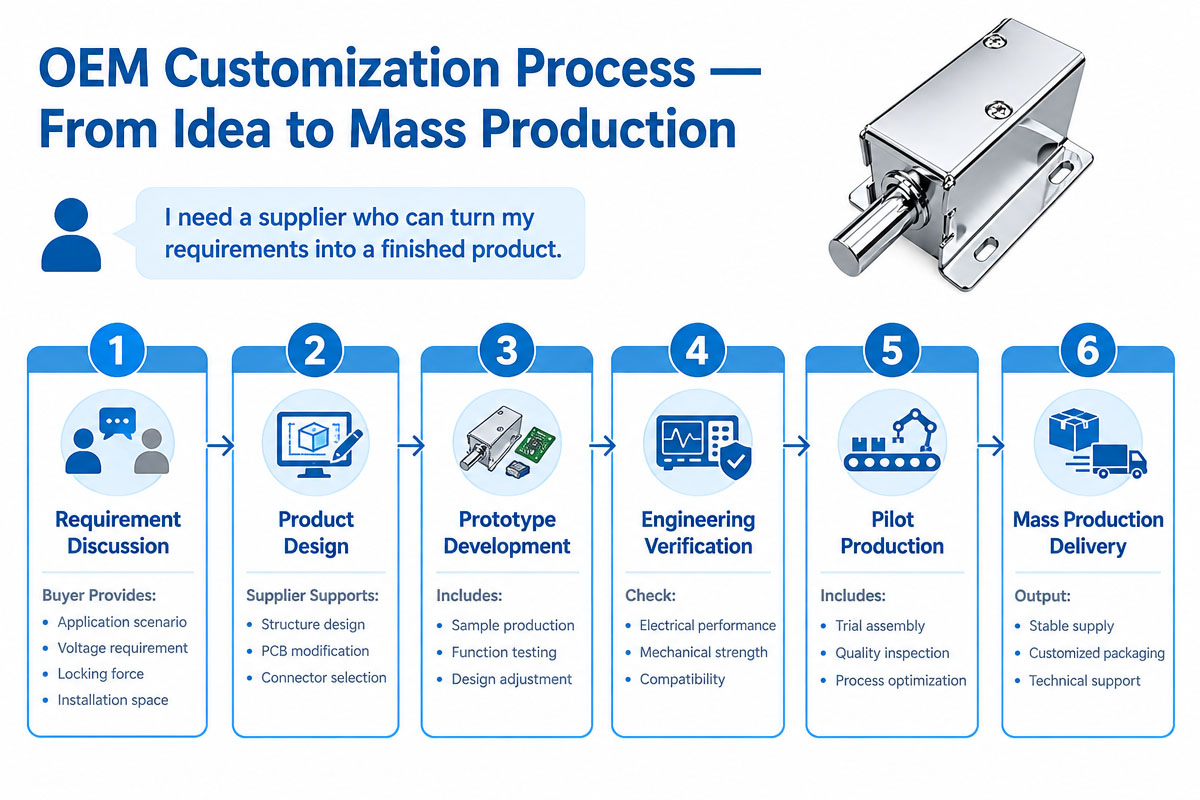
6. Assess OEM capability
For custom projects, choose a supplier who can provide:
Prototype development
Engineering assistance
PCB design, made to measure
Product testing
Steady mass production
A good solenoid lock controller supplier minimizes the risks of development and improves long-term product performance.
Tips to Avoid Common Mistakes During the Design of a Solenoid Lock Controller
When designing a solenoid lock controller, engineers need to consider electrical, mechanical, and application factors in order to avoid performance problems.
1. Don’t Pick the Wrong Power
The most common mistake is to choose a controller without considering the voltage and current requirements of the solenoid lock.
Answer:
Always calculate:
Voltage Required
Operating current
Power demand peak
Continuous running time
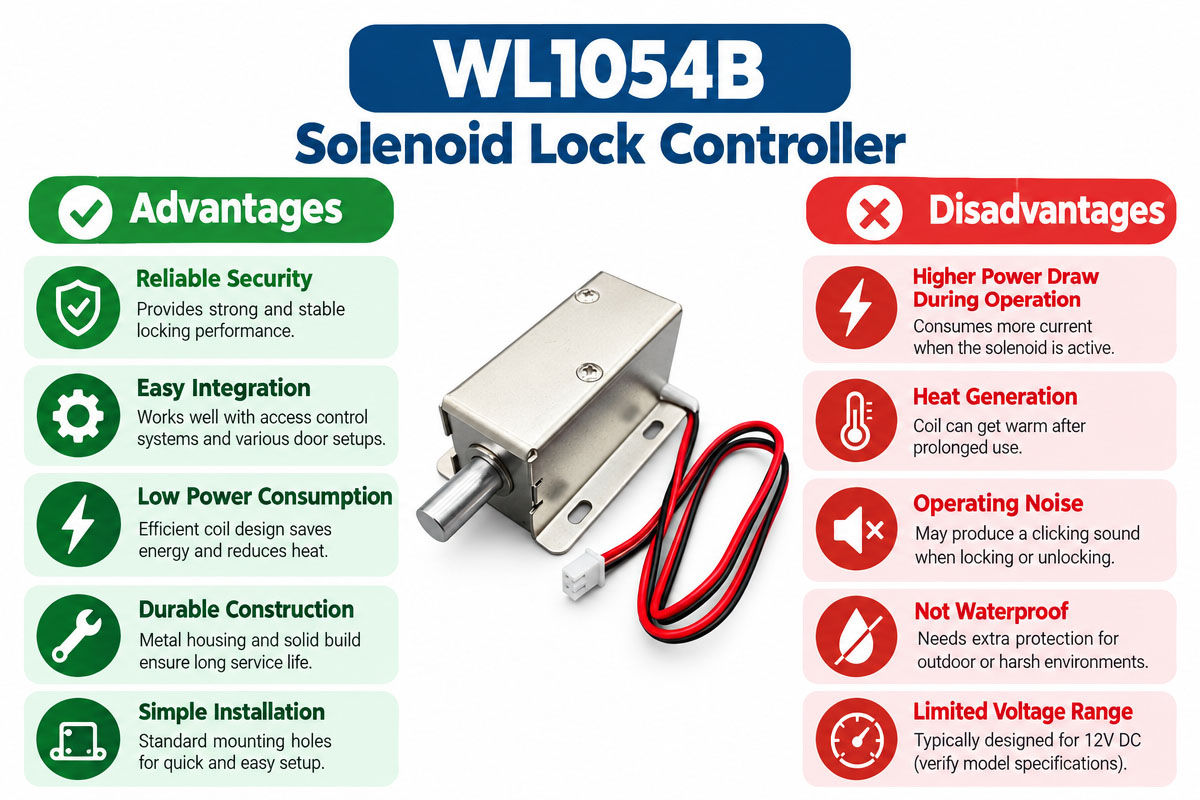
2. Don’t skimp on heat management
Long-term operation can run solenoid systems hot.
Improvements in design:
Add in thermal protection.
Choose appropriate components.
Improve the ventilation.
Control of activation time
3. Compatibility with Bad Signal
Controllers have to communicate with external systems correctly.
Common problems:
Communication protocol is wrong.
Poor wiring
Interfering signals
Answer:
Verify interface requirements before production.
4. Don’t Forget About Mechanical Installation
Electrical performance is not enough.
Check.
Alignment of locks
Position on mount
Mechanical tolerances
Door and cabinet construction
Poor installation can decrease the lock reliability.
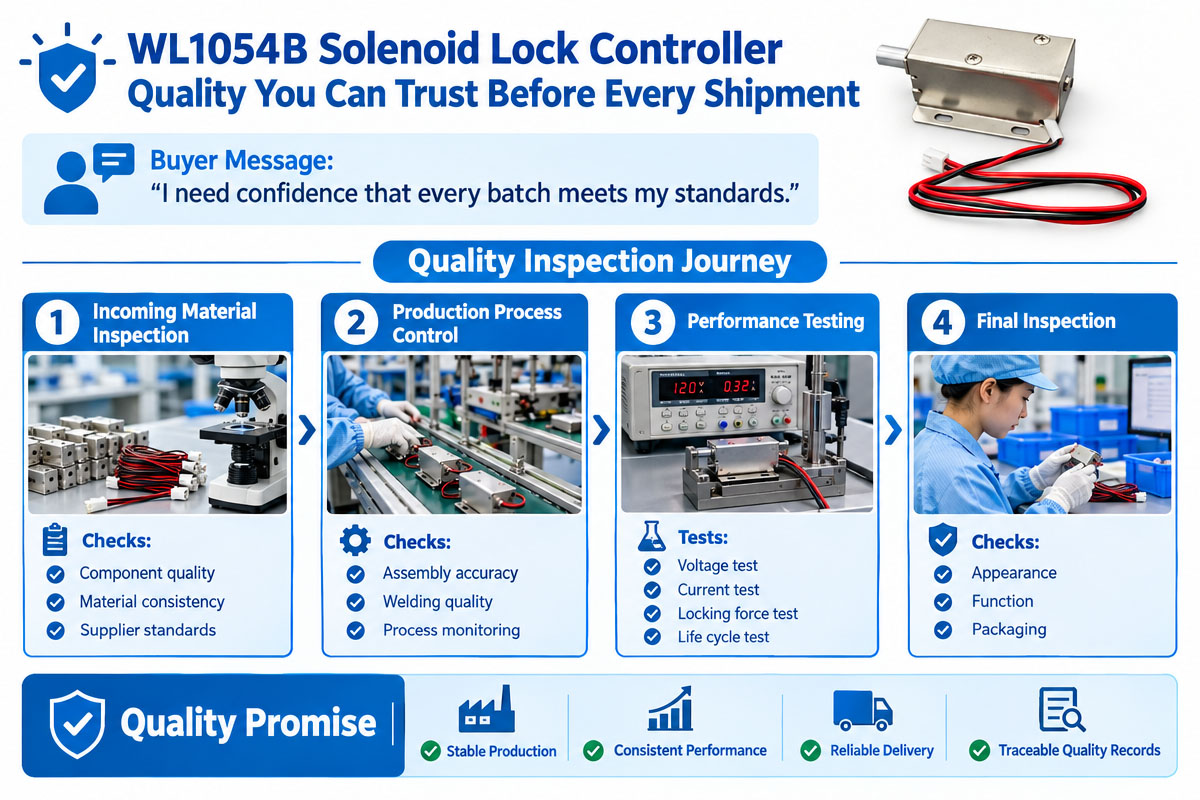
5. Safety Testing Not Standard Supply
Before starting mass production:
Life cycle testing:
Voltage testing
Load testing
Environmental testing
Proper testing reduces warranty costs and field failures.