How to Choose a Solenoid Lock Actuator
The secret to selecting the proper solenoid lock actuator is to match the electrical and mechanical performance of the actuator to your locking application. OEM engineers will take into account the following criteria while designing.
1. Define the locking function
Define what the actuator lock is—a latch, pull back a bolt, release a pin, or actuate any other locking mechanism. You should clearly understand whether you need a push, pull, or latching actuator.
2. Calculate the required force
You should define the load that should be overcome (spring, friction, linkage resistance, and external mechanical load).
In locks it is important to distinguish the force to actuate the locking mechanism and the force to resist the forceful opening of the lock.
You should get the data on the force versus stroke from the manufacturer.
3. Define the stroke
You should measure the stroke of the plunger to define what distance it should cover to perform the required job. You should make sure that the stroke is sufficient but not too big to make the mechanical interference and produce an impact.
4. Define the voltage
Specify the nominal voltage, the acceptable variations of it, the available current, and the control algorithm. Ensure that the actuator will provide sufficient force to perform the required job at the actual conditions of the voltage supply.
5. Verify the duty cycle
Define how often your actuator will work and how much time will pass from turning ON to turning OFF. Continuous operation is quite different than switching ON and OFF frequently. The actuator should be able to produce the required performance without overheating.
6. Evaluate the power-loss behavior
Define whether your mechanism should lock or unlock if power fails. The spring return actuator, bistable latching actuator, and continuously energized actuator work differently. You should choose the actuator according to the operational and safety requirements of the locking system.
7. Consider the environment
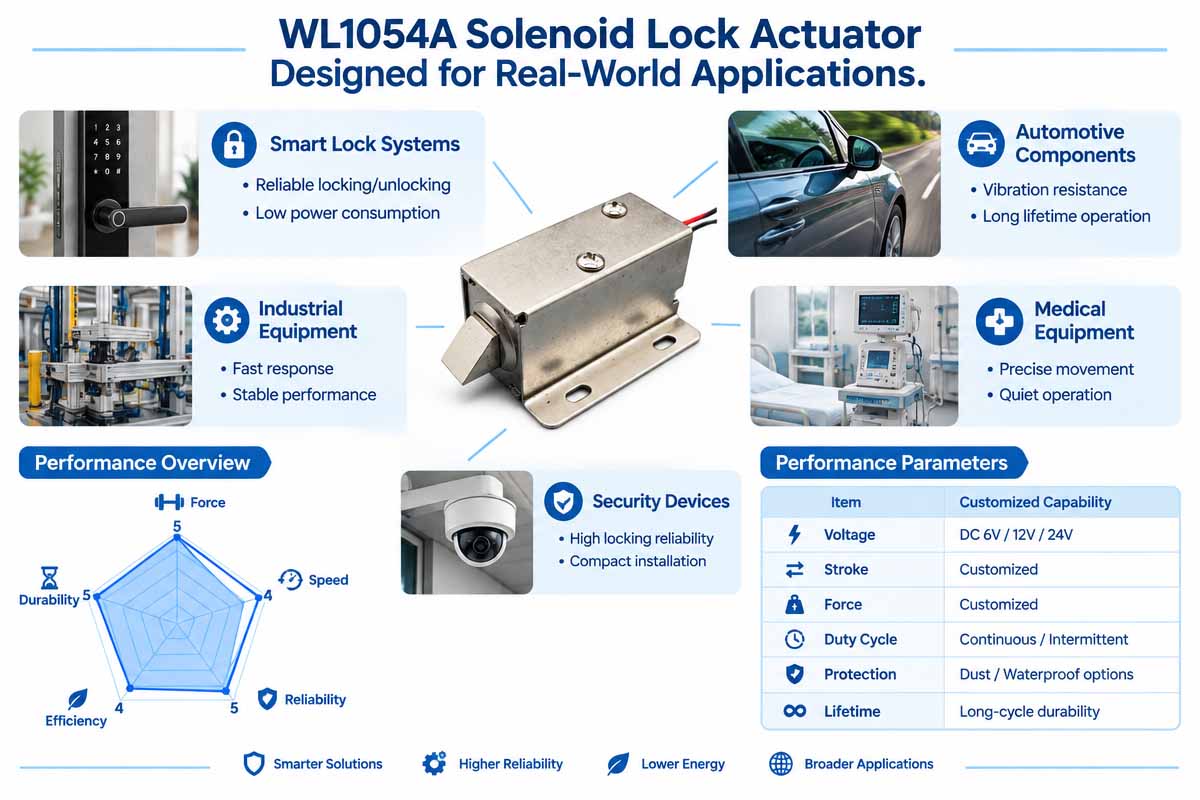
Temperature, humidity, dust, water, vibration, corrosion, and orientation. Define the requirement for protection considering the environment.
8. Check the installation and lifetime
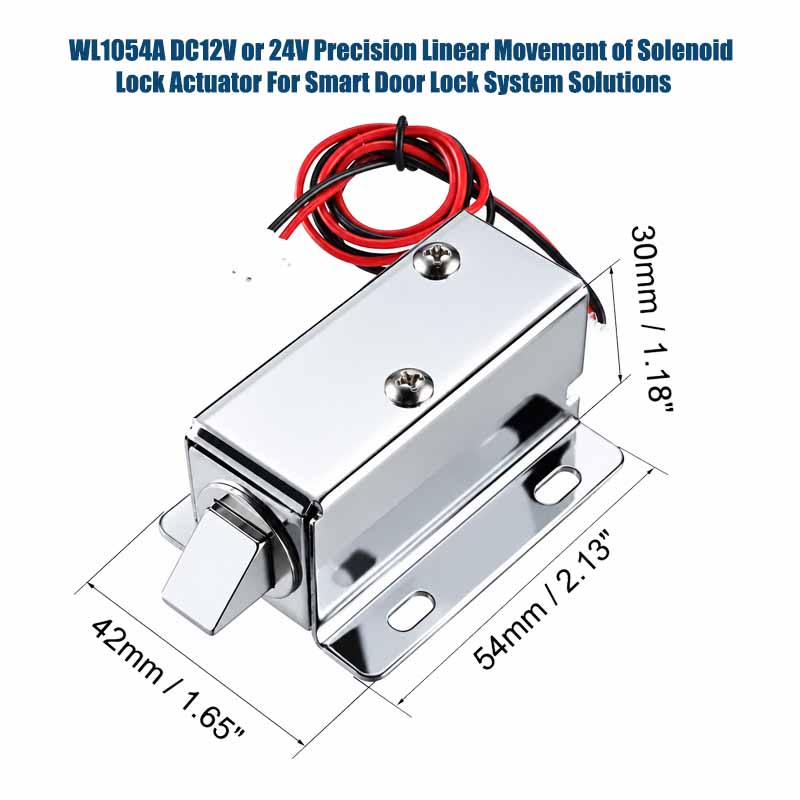
Check dimensions, mounting holes, connectors, cable run, and the available space. Estimate the realistic lifetime, taking into account the frequency of operation.
9. Ask to test the prototype
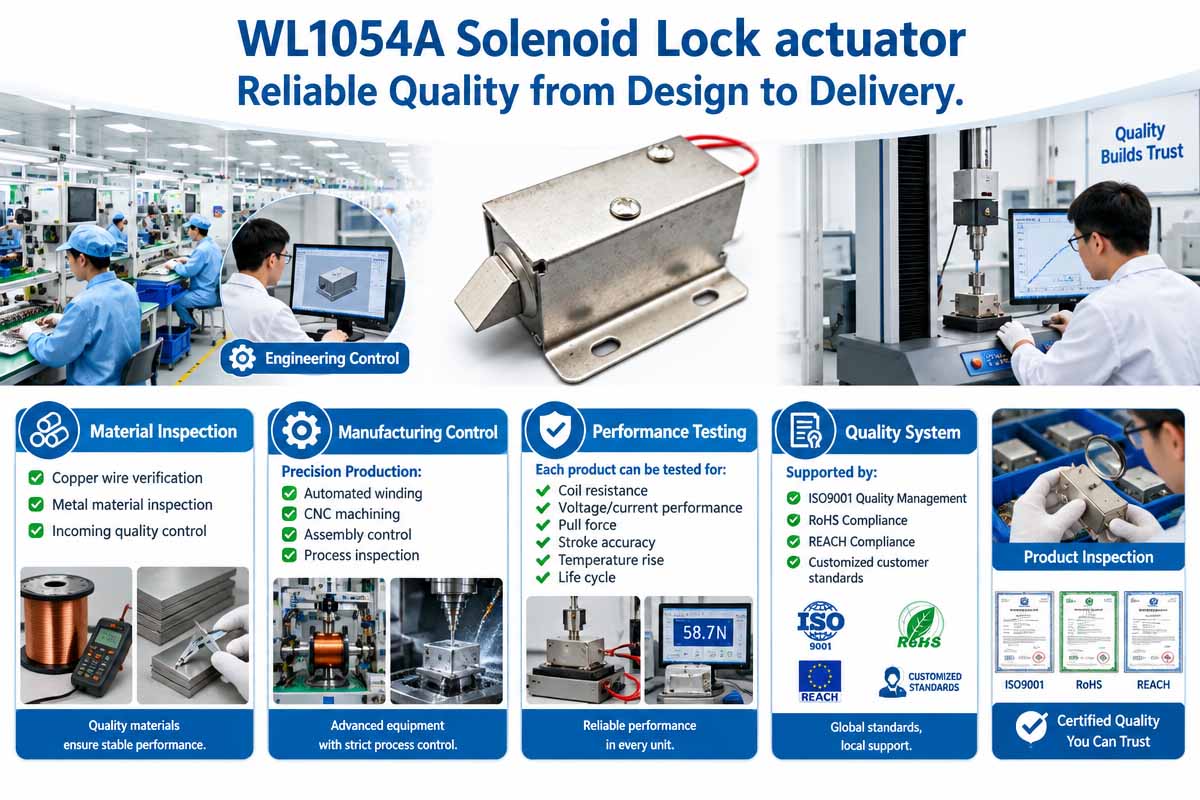
Test force, stroke, current, temperature rise, response time, noise, and lifetime in the intended assembly before series production.
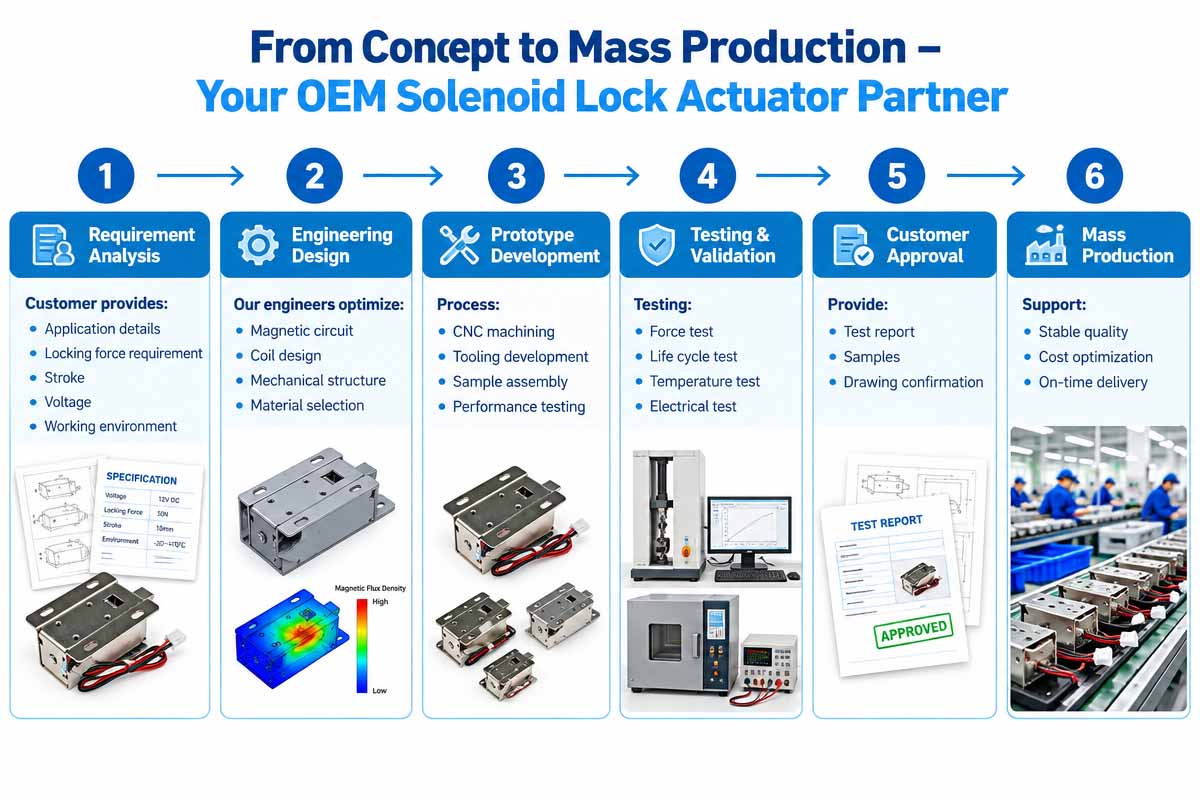
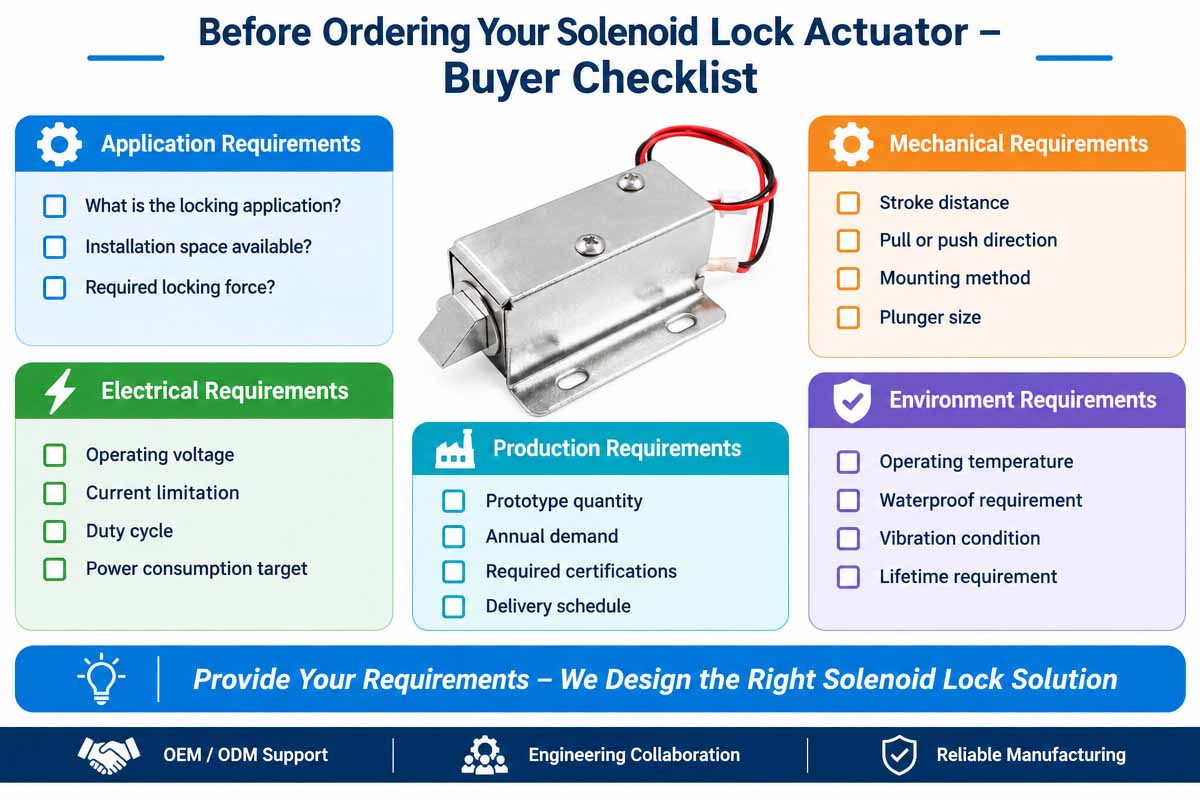
Engineering practice. Provide the manufacturer with the drawing, operating voltage, force versus stroke, duty cycle, environment, and the estimated demand for the year. It will accelerate design and quotation.
Advice on Avoiding the Common Design Mistakes with Solenoid Lock Actuators
Incorrectly specified actuators may result in low force, overheating, poor locking behavior, excessive noise, and premature failure. The following mistakes are typically made early in the design process.
Mistake 1: Saying force without stroke
The solenoid can produce high force at one position of the stroke and lower force further along the stroke.
How to avoid it. Specify the minimum required force at the stroke position where it will be applied. Request the force vs. stroke diagram.
Error 2: Failure to recognize the limitations of the power supply
Voltage drops, cable resistance, driver limitations, and battery drain can all limit the current and thus magnetic force.
How to avoid it: test the actuator at minimum operating voltage and actual electrical load.
Mistake 3: Ignoring the duty cycle
The coils designed for an intermittent duty cycle can overheat if energized continuously.
How to prevent it: Set the activation time, repetition frequency, ambient temperature, and the temperature rise allowed.
Mistake 4: Failure to define the default state
The actuator may either return to its initial state when the power is off, keep the previous state, or require another electrical pulse.
How to avoid it: Specify what kind of a lock is desired—fail-safe, fail-secure, spring return, or bistable. Analyze the whole system and safety requirements.
Mistake 5: Trying to Use the Actuator to Prevent Forced Entry
The force of the actuator’s pulling may differ from the force required to break open the lock.
How to avoid it: Ensure that the mechanical locking elements are capable of withstanding the external load without the action of the actuator force.
Mistake 6: Failure to recognize the importance of mechanical tolerances
Misalignment, friction, contamination, and manufacturing tolerances can inhibit proper operation.
How to avoid it Definition of the alignment tolerances, guidance clearances, mounting tolerances, and appropriate wear-resistant materials.
Mistake 7: Not Validating Your Prototype
The device that works on the test bench may not work when installed in the whole assembly.
How to avoid it: Test prototypes in the actual equipment in the actual conditions of voltage, load, temperature, vibration, and frequency of operations.