Skip image slider
Corrosive Fluid Solenoid Valve for Dosing Control
Corrosive Fluid Solenoid Valve for Chemical Supply
Corrosive Fluid Solenoid Valve for Injection Lines
Corrosive Fluid Solenoid Valve for Process Safety
Corrosive Fluid Solenoid Valve for Industrial Flow
Corrosive Fluid Solenoid Valve for Water Treatment

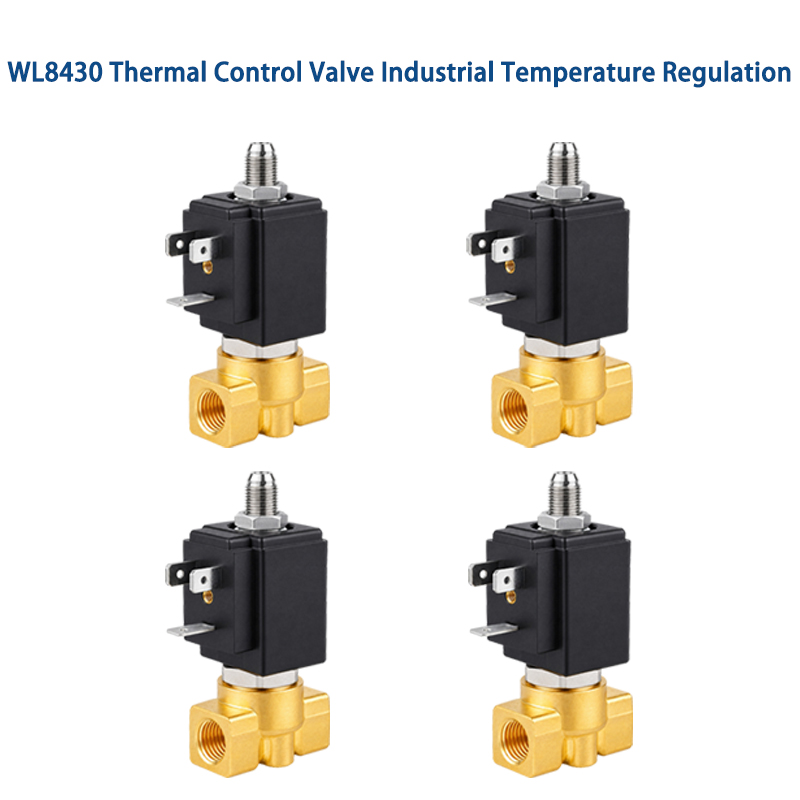
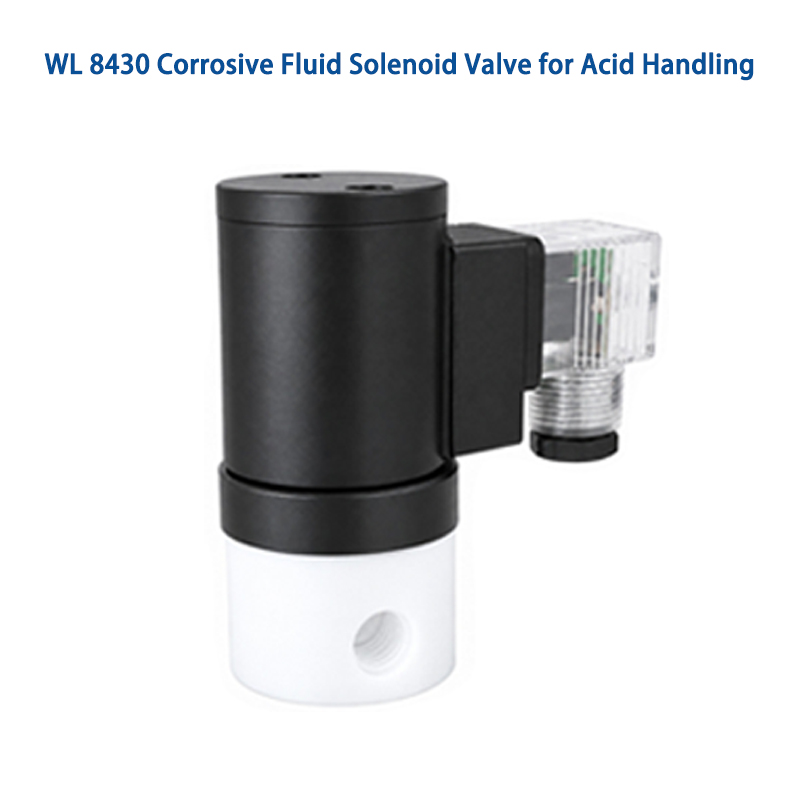
WL 8430 Corrosive Fluid Solenoid Valve for Alkali Handling

Corrosive fluid solenoid valve is an electrically powered valve for controlling the specified liquids or gases which can corrode standard valve materials. The valve is commonly applied in chemical processing, water treatment, industrial dosing, laboratory and waste water treatment equipment. Depending on the application the body, seals and other internal components of the valve can be produced of corrosion resistant metals, engineering plastics or special sealing materials for the application. Electrical power supply to the coil makes the internal components move in order to switch the flow passage and start or stop the fluid motion. Proper selection requires knowledge of chemical composition, concentration, temperature, pressure, flow rate and electrical specifications of the system. Proper combination of materials can significantly decrease corrosion, leakage, maintenance and premature failures. Buyer must check the chemical compatibility of the valve materials.

Corrosive Fluid Solenoid Valve Description

What Is Corrosive Fluid Solenoid Valve?

Corrosive fluid solenoid valve is a specially designed electrical valve that is used for controlling the specified corrosive liquids or gasses in the industrial systems. An electromagnetic coil drives the internal mechanism that opens or closes the flow passage in the valve. All wetted components such as valve body, seals and internal components shall be compatible with the process medium. Such valves are utilized in chemical processing, water treatment, dosing systems and industrial automation systems. The choice of the suitable valve requires checking of the chemical composition, concentration, temperature, pressure, flow rate and electrical specifications of the process. The appropriate materials selection will help to prevent corrosion and leakage in service.

How a Corrosive Liquid Solenoid Valve Operates

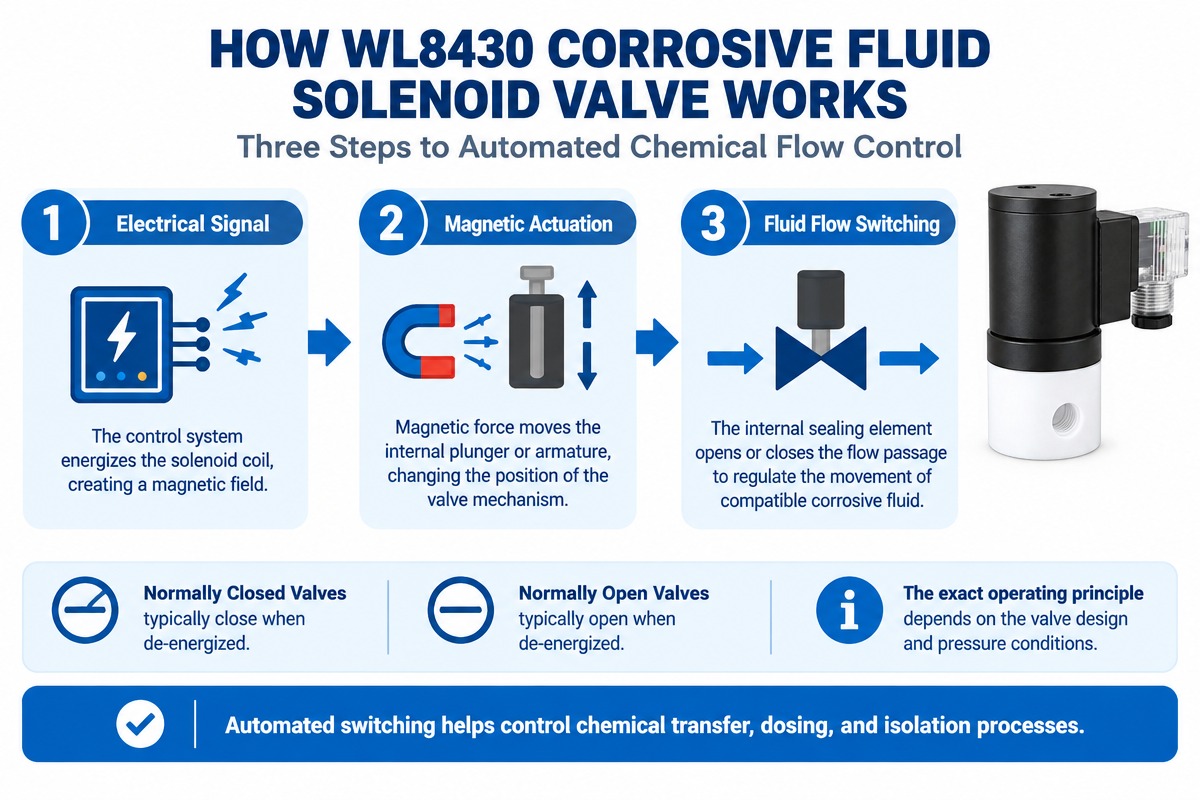
A corrosive fluid solenoid valve is a valve that operates by means of electromagnetic force to control the flow of a corrosive fluid or gas.

An electromagnetic field is formed due to the energizing of the coil by the specified electrical voltage. The field moves the internal plunger or armature that controls the flow passage in the valve. Depending on the design, the valve opens or closes to start or stop the flow.

After the electric power is disconnected, the valve returns to its default state due to the force of a spring or other mechanical devices. A normally closed valve is always closed in case of disconnection of electric power and vice versa in a normally opened valve.

The body, seals and other wetted components of the valve must be compatible with the actual process medium. Its performance depends on the chemical concentration, temperature, pressure and pressure differential.

For the reliable operation: check material compatibility, supply the proper voltage, install the valve according to the manufacturer’s instructions and operate it within its operational limits.

Corrosive Fluid Solenoid Valve Video

Corrosive Fluid Solenoid Valve Detail Display

Corrosive Fluid Solenoid Valve Technical

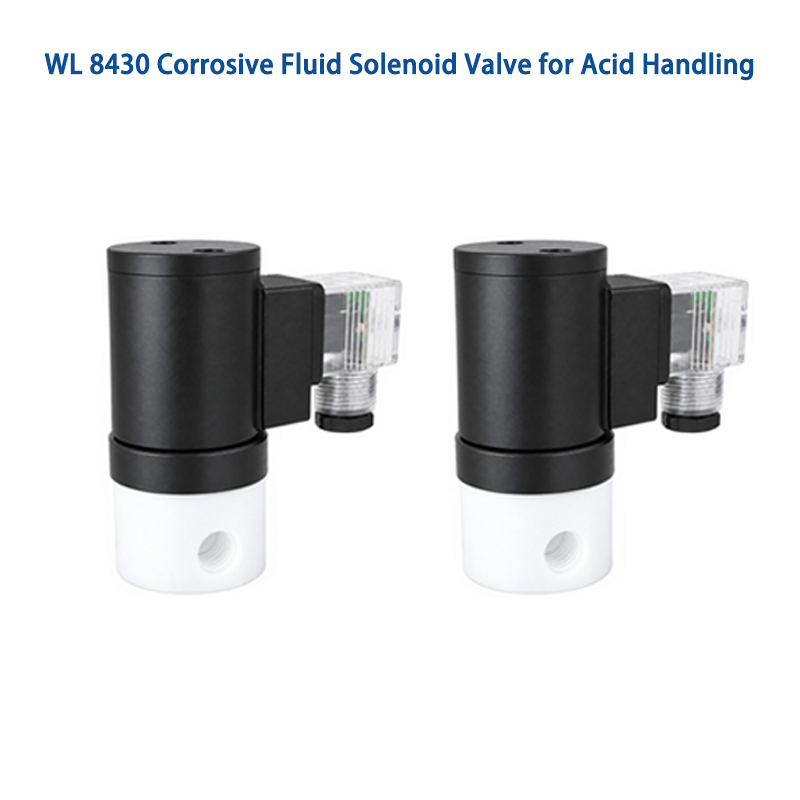
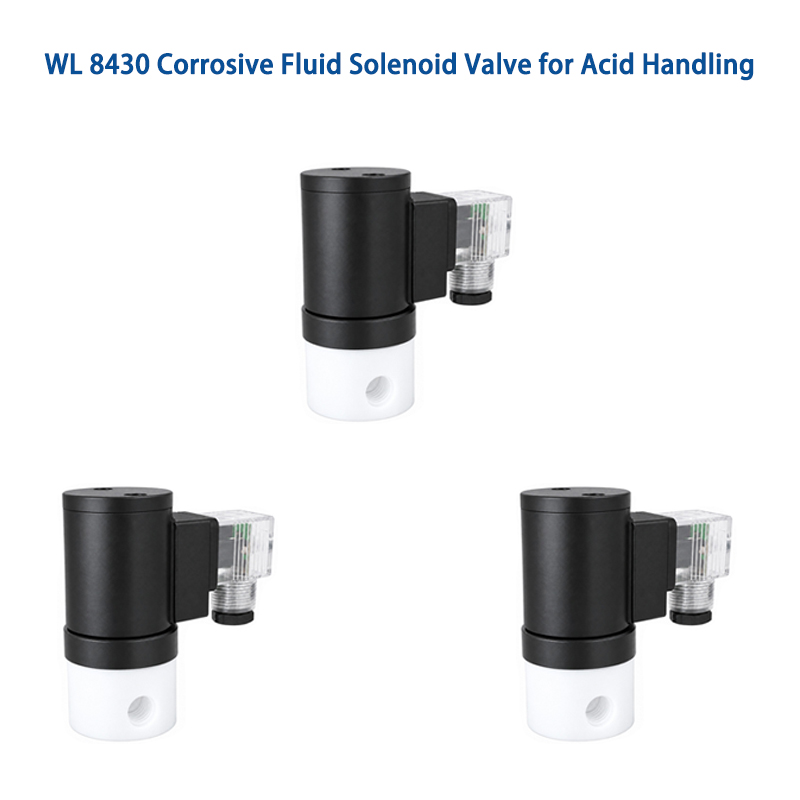
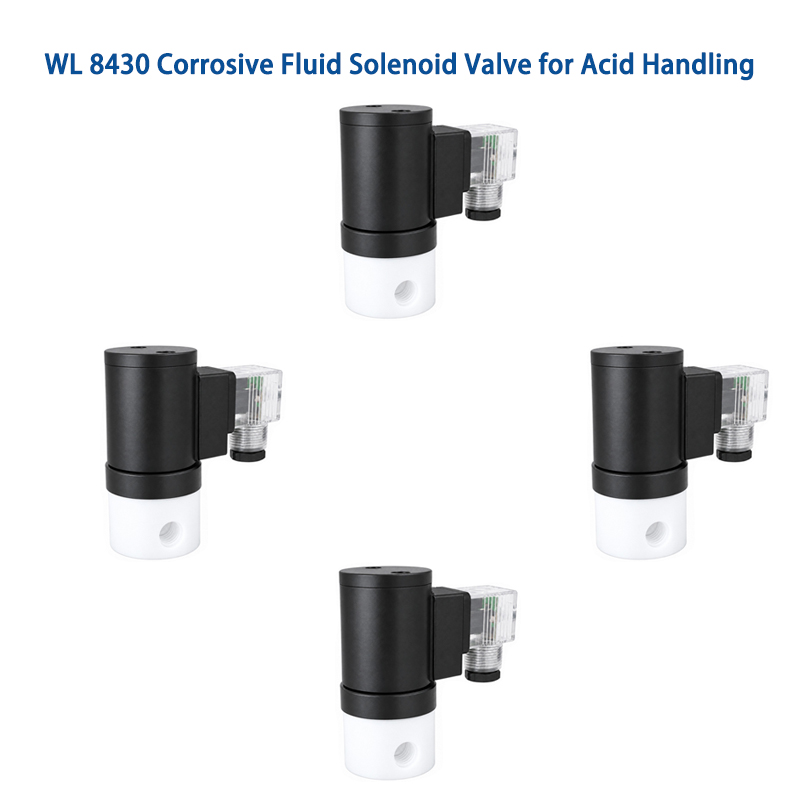
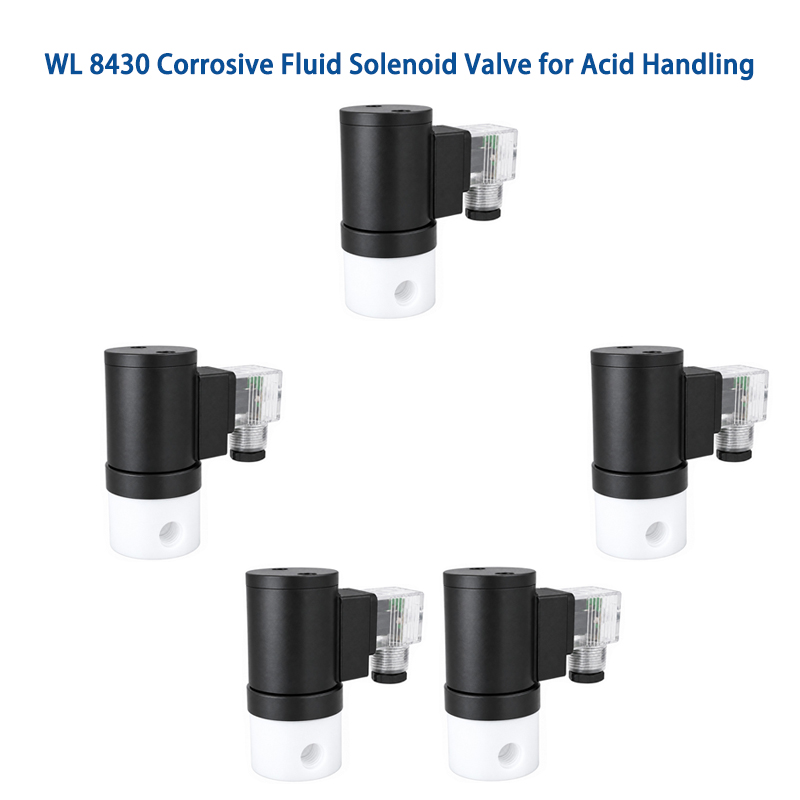
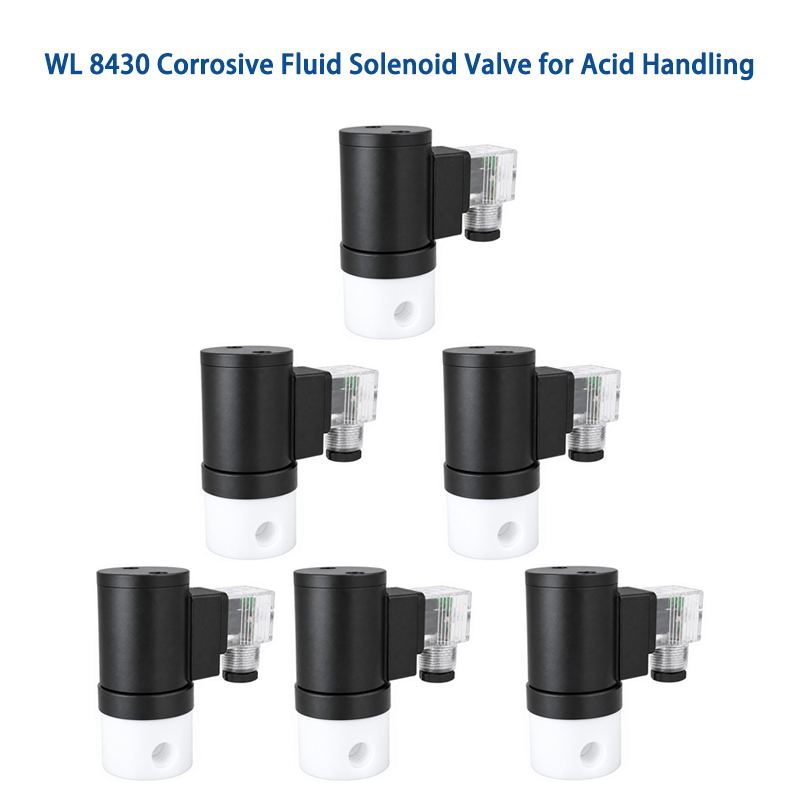
Brand Weilong Model Number WL 8430
Rated Voltage (V) DC12V or 24V Rated Power (W) 7.2W
Work Mode Air or Liquid Control Valve Working Pressure (MPa) 600 kPa
Air-Flow Rate 0 L/minute Reset Time(s) 0.25 S On, 0.25 S Off
Service Life 200 Thousand Times Certification CE, ROHS, ISO9001,
Pipe Gate ย inside: 30 mm Lead Wire Length (mm) 84 MM
Install Style Screw Tolerance of Dimension ยฑ 0.1 MM
Water-proof None Insulation Class B
Hi-Pot Test AC 600V 50/60 Hz 2s Non-excitation Holding Force 0
Working Temperature -15ยฐC-180ยฐC Duty Cycle 1-100%
Thread Depth (mm) / Payment Term TT, or LC At Sight
Sample Order Yes. Warranty 1 Year
MOQ 1000 pcs Supply Ability 5000 pcs per week
Delivery Time 30 Days Port of Loading Shenzhen

Why is Solenoid Valve for Corrosive Fluid So Popular?

Corrosive fluid solenoid valves are a part of modern industrial systems, since many processes require to automate the control of aggressive chemicals. The incompatibility of the fluid can degrade standard valve materials causing the risks of leakage, production downtime and maintenance expenses.

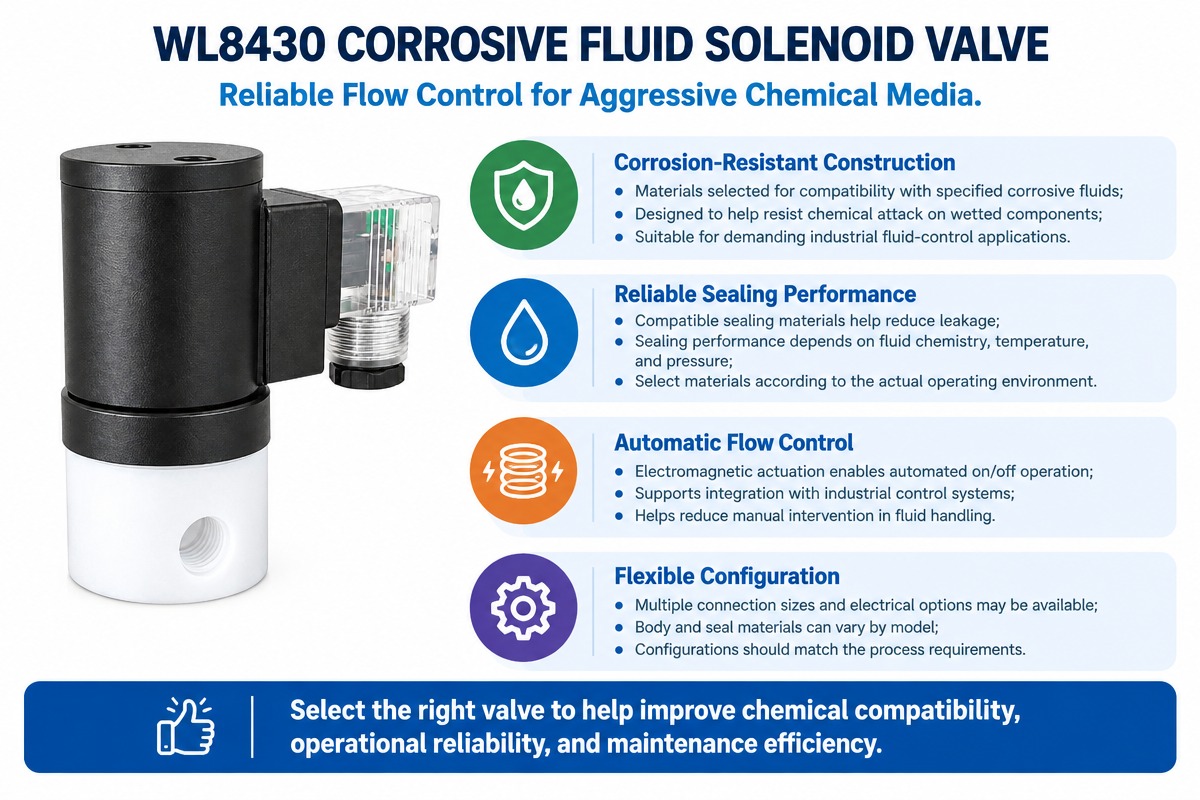
The advantage of the material-specific protection is big. Specialized valve bodies, seals and internal components are designed for the specified chemical environment and can reduce the corrosion-related failures.

Another motivation is the automation. Solenoid valves can control fluid flow due to electrical signals and can be integrated with controllers, dosing equipment and industrial monitoring systems. That makes the operations repeatable and minimize the manual interventions.

The compact installation of the valves makes them suitable for chemical dosing skids, laboratory equipment, water treatment units and production lines with limited space. The automatic operation simplifies process sequences and ensures the repeatable chemical dosing.

Correct sizing and material selection can help with the maintenance planning. Proper match of the valve to its application can increase the service life and reduce the risks of failures.

However, the term “corrosive fluid solenoid valve” does not mean it will be compatible with any aggressive chemical. Suitability is dependent on the chemical medium, concentration, temperature, pressure, seal materials and valve construction. One should confirm the manufacturer specifications prior to the installation.

The proper specification of corrosive fluid solenoid valves remains a viable option for many applications.

Corrosive Fluid Solenoid Valve Applications

Corrosive Fluid Solenoid Valve for Liquid Transfer

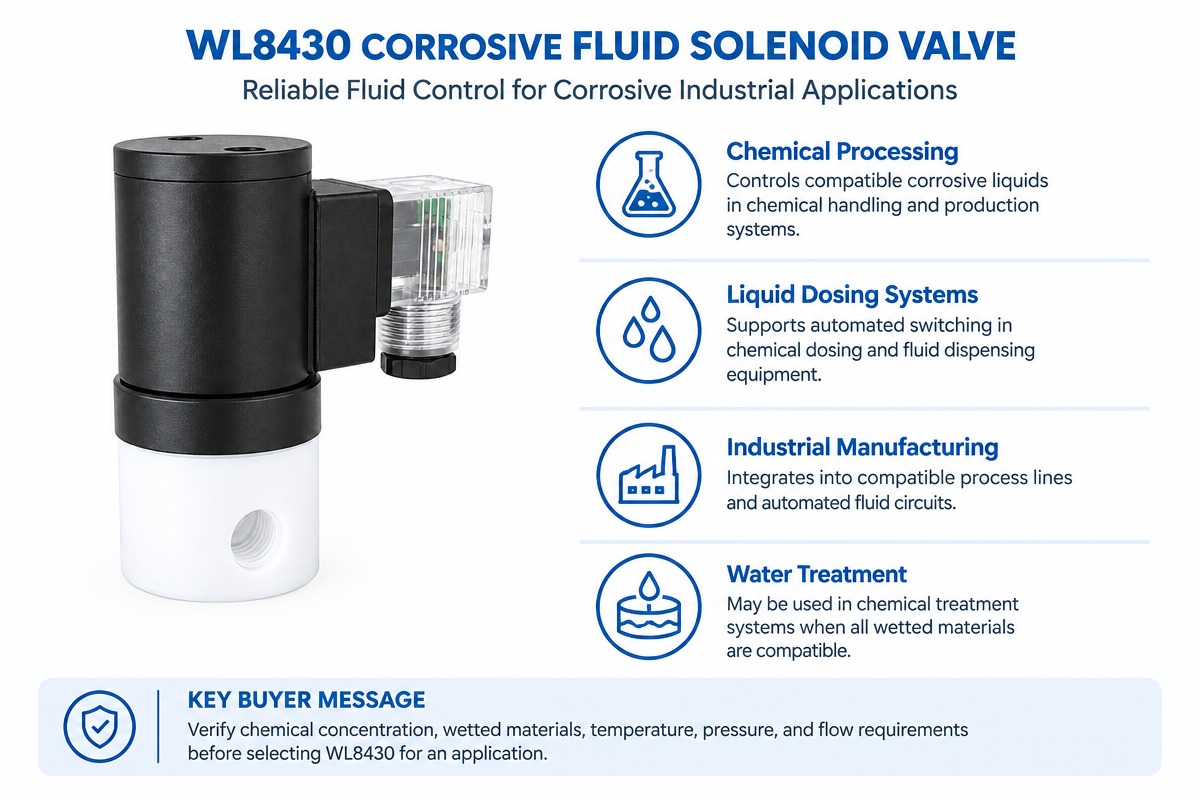
Solenoid valves for corrosive fluids are used in the industrial systems where chemically aggressive liquids or gasses have to be automatically switched. Depending on the material compatibility and operating specifications of the valve, they are suitable.

1.Chemical manufacturing: Controls compatible acids, alkalis, solvents and process fluids in production and transfer systems.

2.Water treatment: Dosing of the treatment chemicals for pH correction, disinfection and purification.

3.Wastewater treatment Controls compatible reagents used in neutralization, chemical precipitation and other treatment processes.

4.Industrial cleaning: Automatic switching of cleaning agents and rinsing solutions in the industrial cleaning systems.

5.Laboratory equipment. Controls designated chemical reagents in analytical instruments, testing systems and laboratory process equipment.

6.Pharmaceutical manufacturing: Controls chemical dosing and cleaning activities. The selected materials meet the relevant hygiene and regulatory requirements.

7.Electronics manufacturing: May control compatible etching, cleaning and specialized process fluids in the manufacture of semiconductors and electronics.

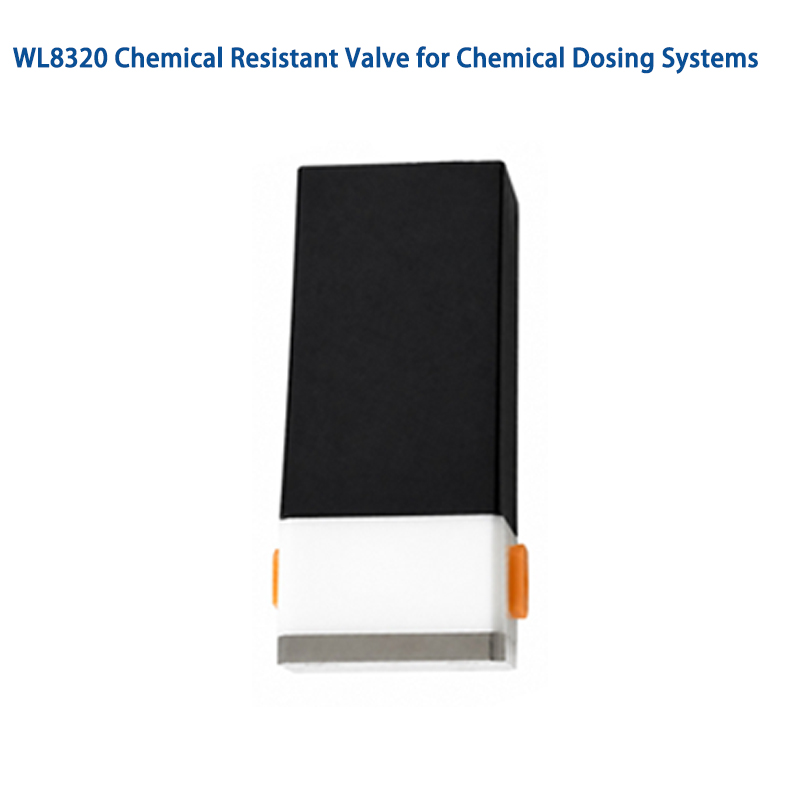
8.Chemical dosing systems: Control the flow of compatible liquids in metering and injection systems.

9.Industrial automation: Supports the controllers and sensors for the repeatable flow control and automated process sequences.

10.Industrial Fluid Transfer: Automatic control of the flow of chemicals between compatible storage tanks, pipelines and process equipment.

You should confirm the chemical composition, concentration, temperature, pressure, flow rate and seal compatibility for all the applications listed above. Proper selection and maintenance of the valves are crucial for minimizing the risks of leakage and ensuring reliable operation.

Corrosive Fluid Solenoid Valve Adv. & Disadv

Corrosive Fluid Solenoid Valve for Solvent Control

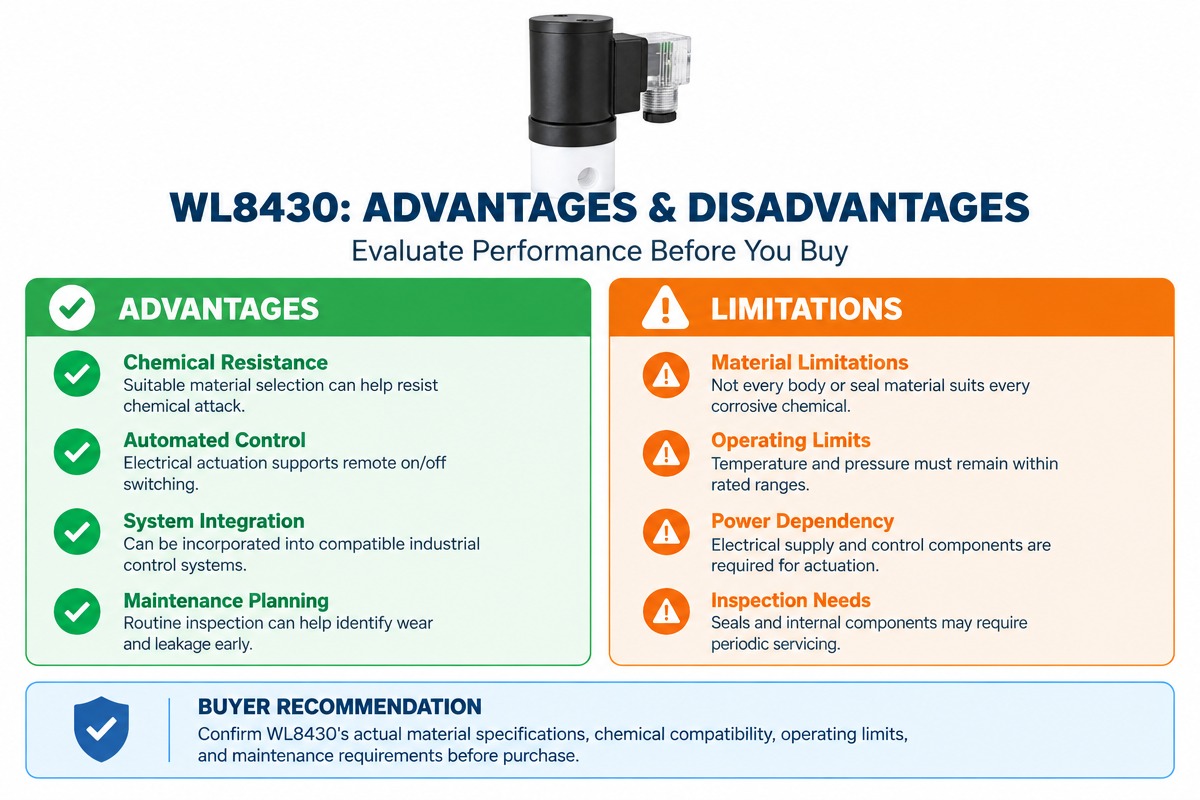
Corrosive Fluid Solenoid Valves Advantages and Disadvantages

Corrosive fluid solenoid valves provide the practical benefits for automated chemical control; however, their performance depends on proper selection and installation.

Benefits

Corrosion resistance โ€“ Body and internal components resist specified chemical environment and minimize the material degradation compatible with body and internal components.

Automatic Operation: Electrical actuation allows remote control and interfacing with the industrial controllers.

Compact design: Many designs are suitable for space-limited process systems, dosing skids and laboratory equipment.

Repeatable switching. The correctly selected valves, under the proper conditions, can provide repeatable on/off operation.

Potential savings on maintenance. The proper material selection can help you to avoid frequent replacements and down times.

Disadvantages

Higher purchase cost. Specialized materials and chemically compatible seals may be more expensive than standard valve components.

Compatibility limitations. There is no universal material combination for all acids, alkalis, solvents or their concentrations.

Operating limitations: the pressure, temperature, voltage and pressure differential should be maintained within the specified limits.

Contamination sensitivity: Small internal passages can be blocked by particles, deposits or crystallized chemicals.

Maintenance requirements: Periodic inspection and replacement of seals, moving components and coils may be required.

Selection complexity. Buyers should consider the chemical resistance, flow capacity, actuation type and electrical specifications at once.

Conclusion: When properly specified, such valves can provide reliable chemical control. The buyers should not choose the valves based on initial price, but compare compatibility, operating performance and maintenance requirements.

Corrosive Fluid Solenoid Valve for Chemical Lines

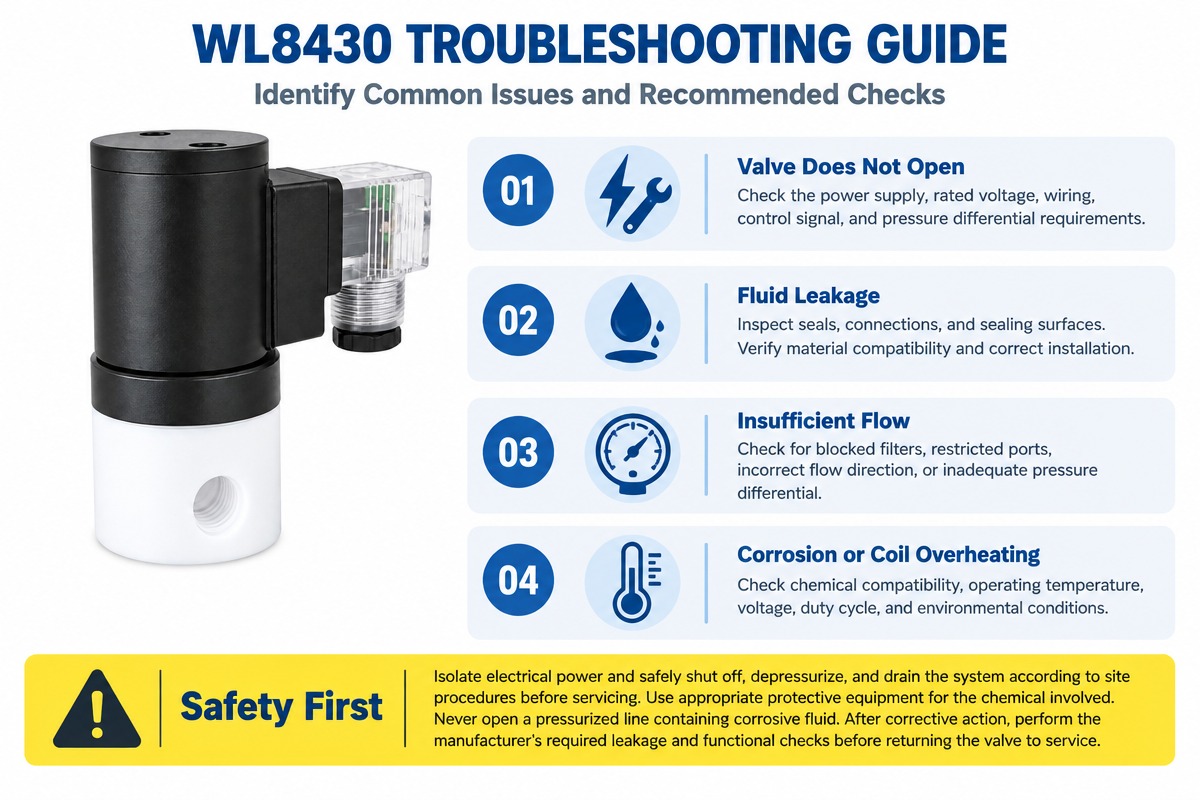
Troubleshooting Corrosive Fluid Solenoid Valves

Chemical incompatibility, contamination, incorrect operating conditions or electrical faults can cause problems with the solenoid valve for corrosive fluids.

1.Valve does not open: Check power supply, control signal, coil, pressure differential. Isolate the system safely and check for mechanical obstruction.

2.Low or no flow: Check for a blocked passage, a closed upstream valve, crystallized chemicals, or insufficient inlet pressure. Clean components according to the manufacturer’s recommendations.

3.Chemical leaks: Check the connections, seals and seating surfaces for the damage. For the replacement of deteriorated components, use the materials tested for the actual chemical and temperature.

4.Valve won’t close: Check for the trapped debris, worn seals, damaged seats or defective actuator mechanism.

5.Coil overheating: Check rated voltage, electrical connections, duty cycle and ambient temperature. Replace the defective coil with the correctly specified part.

6.Corrosion or swelling: Check the chemical composition, concentration, temperature and wetted materials. Replace incompatible components and check proper valve specification.

7.Unstable operation: Check pressure fluctuation, incorrect sizing, contamination or operation outside the specified pressure differential.

Preventive Maintenance

Periodically inspect the valves and piping; keep track of the operating conditions and maintenance records. Use only recommended replacement components and follow the manufacturer’s recommendations for the cleaning and servicing.

Safety Reminder: Before performing maintenance, disconnect the electrical power supply (if applicable), isolate the chemical supply, safely depressurize the system and follow site-specific hazardous chemical handling procedures.

FAQ

1. What is a corrosive liquid solenoid valve?

The corrosive fluid solenoid valve is an electronically operated valve which controls the flow of corrosive liquids and gases like acids, alkalis and chemicals. The solenoid coil operates the valve to enable automatic controlling of the fluids in chemical processing, water treatment and equipment.

2. What is the working principle of solenoid valve for corrosive fluid?

When electrical current energizes the solenoid coil, a magnetic field forms which makes the plunger or armature move. The movement of the armature either opens or closes the valve to regulate the flow of corrosive media. When the power is switched off, the valve goes back to its original position as normally closed or normally open.

3. What materials are available to make corrosive fluid solenoid valve?

Materials available The commonly used valve materials for solenoid valves are PVC, PP, PTFE, PVDF or corrosion resistant stainless steel, based on the design of the valve. The materials used for seals could be PTFE, EPDM, FKM or other compatible materials.

4. How to select the proper corrosive fluid solenoid valve?

Consider the following factors; the type of corrosive fluid, its chemical concentration, temperature, pressure, the flow rate needed, the connection size, voltage and control methods. Consider all wetted parts like the valve body, seals, diaphragm and internal parts for compatibility. Check the chemical compatibility information from the manufacturer prior to purchase.

5. Are corrosive fluid solenoid valves able to handle strong acids and alkalis?

Only few solenoid valves can withstand strong acids and alkalis. Not all solenoid valves can handle all chemicals. The compatibility depends on concentration, temperature, pressure and material grades. Always check the compatibility chart from the manufacturer for a specific chemical prior to installation.

6. In what industries do corrosive fluid solenoid valves find application?

The valves are widely used in the chemical processing, pharmaceutical production, wastewater treatment plants, laboratories equipment, electroplating, semiconductors production and industrial cleaning processes. Used to automate the chemical dosing, fluid switching and process control where there is need to reliably handle corrosive media.

7. What are the issues associated with corrosive fluid solenoid valves?

Some of the common issues associated with this valve are; leaking, clogging, non-operation of valve, coil overheating, seal degradation and internal parts corrosion. Some of the causes could be material incompatibility, contaminated fluid, wrong pressure, electrical and installation problems. Check the valve safety and maintenance manual.

8. How can you extend the life of corrosive fluid solenoid valve?

It should be ensured that the right chemically compatible materials are used, the valve is operated within the specified pressure and temperature and installed according to the manufacturer’s guidelines. Ensure the fluid is clean and particle free, regularly check the seals and connections, check the coil and electrical supply. Replace the worn parts and follow preventive maintenance schedule.

Corrosive Fluid Solenoid Valve Selection

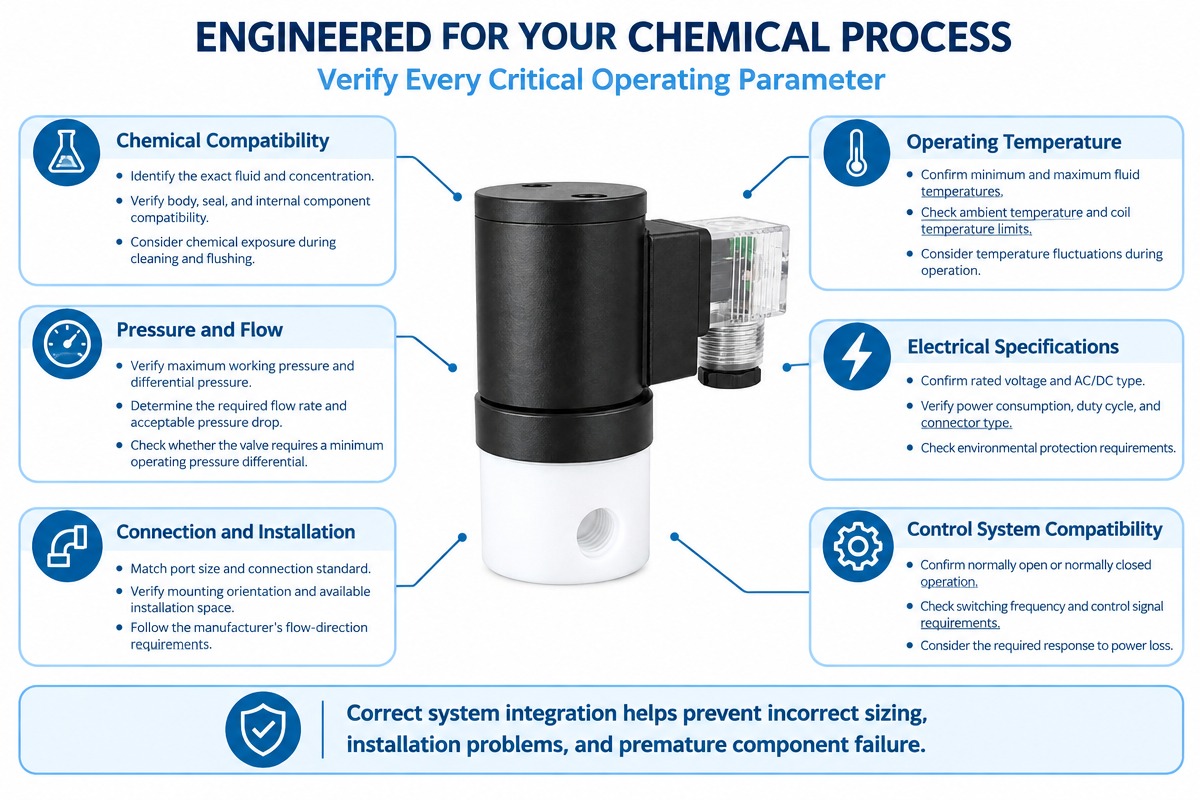
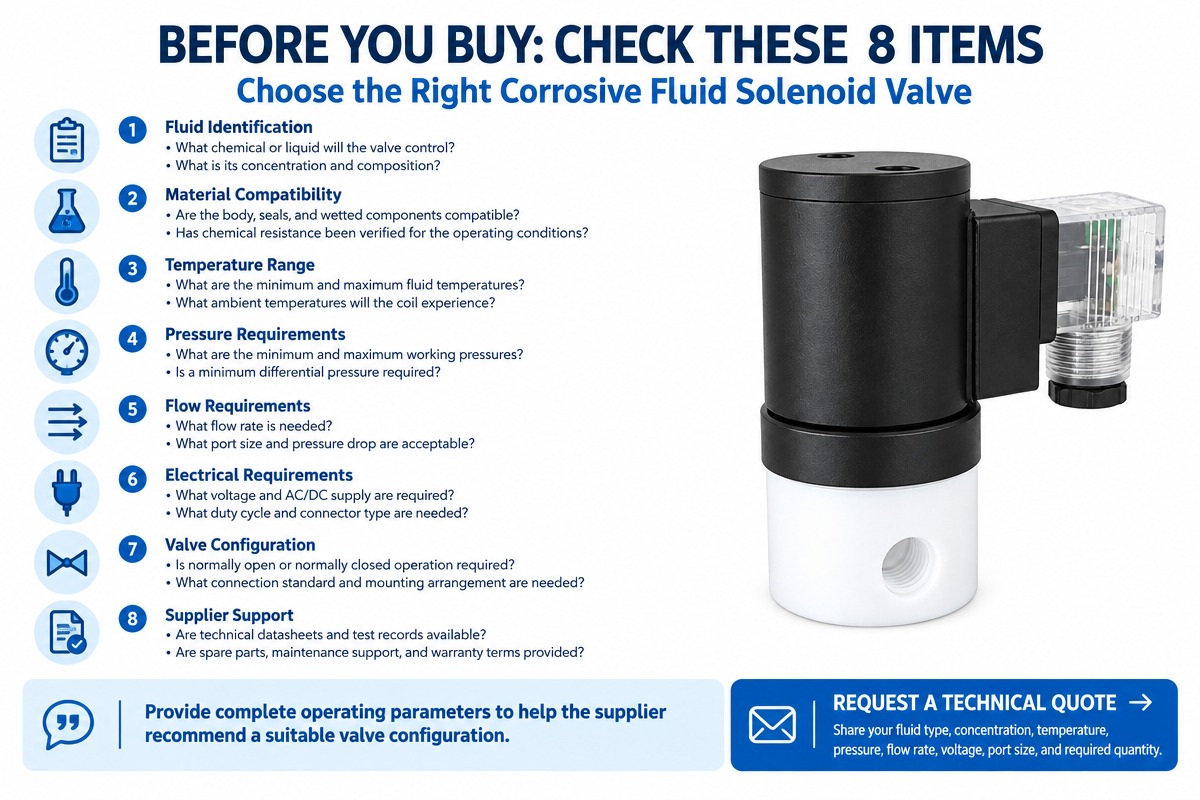
Selection of the solenoid valve for corrosive fluid requires a careful evaluation of the chemical medium, operating conditions and control requirements.

1.What is the chemical medium? Specify the exact chemical name, concentration, purity and any additional substances. Different materials have different resistance to acids, alkalis, oxidizers and solvents. Compatibility depends on the concentration and temperature.

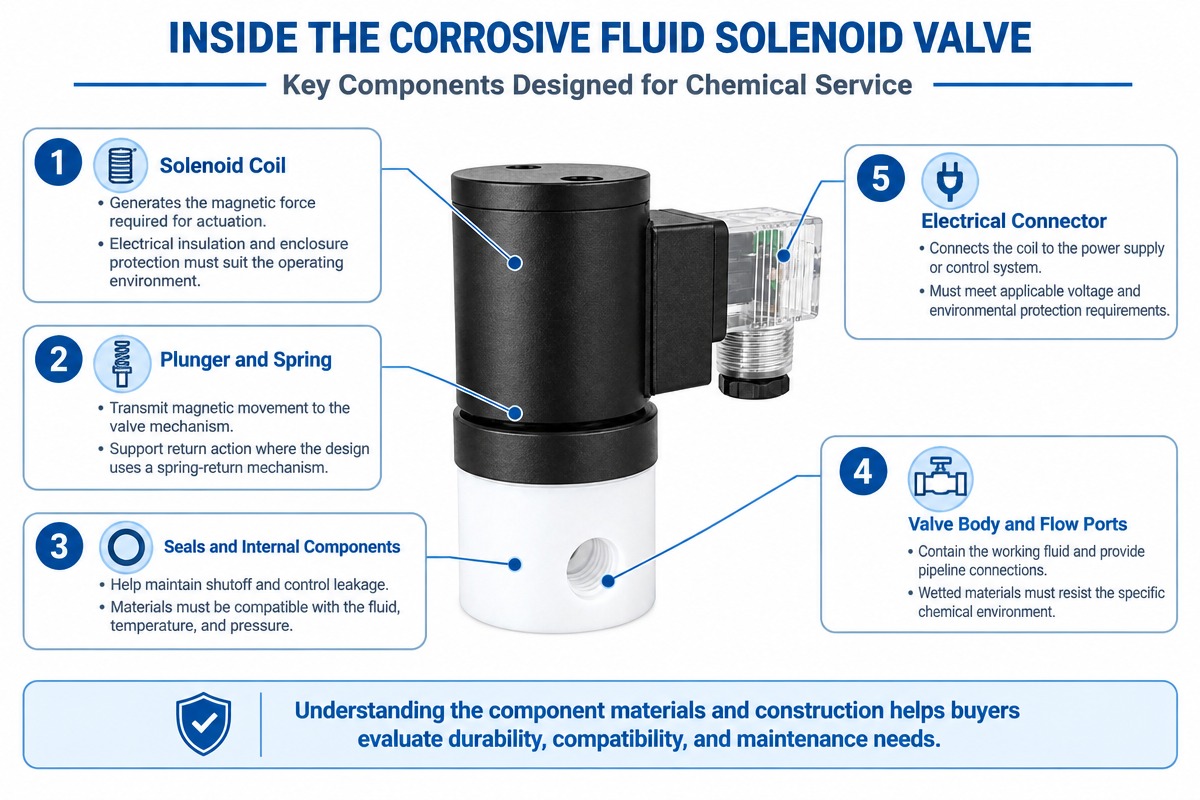
2.Check all wetted materials. Check the valve body, seals, gaskets, seat, plunger and other components that are contacting with the fluid. Different materials (stainless steel, PVC, PP, PVDF, PTFE, EPDM, FKM) have different resistance profiles. Do not assume any material is universally resistant; check the manufacturer’s data.

3.Check temperature and pressure. Define the minimum, normal and maximum temperature and pressure. Check the required pressure differential including any minimum differential pressure for valve operation. Include pressure spikes and temperature changes.

4.Determine the flow requirements. Calculate the required flow and maximum pressure drop. Select the proper size ports and flow capacity to avoid too low a delivery or unnecessary restriction of the flow.

5.Select the type of valve operation. Define if normally opened or normally closed valve is needed. Available as direct acting or pilot operated. Select according to the available pressure differential and requirements.

6.Match electrical specifications. Check the AC or DC voltage, coil power, connector type, duty rating, and environmental protection. It should be appropriate for the controller or programmable logic controller (PLC).

7.Check the installation requirements. Check connection standards, mounting position, flow direction, space available and access for maintenance. Also, piping materials and fittings should be compatible with the chemical.

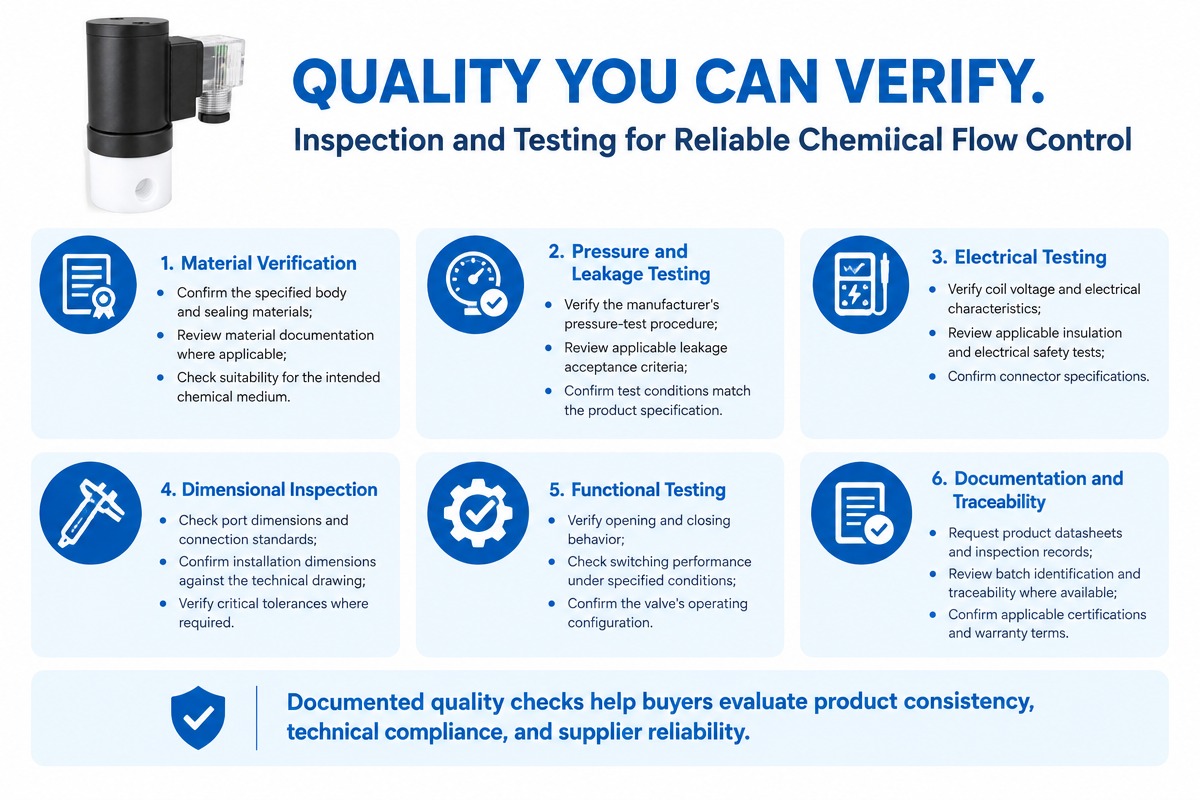
8.Determine the safety and quality. Consider the leak consequences, containment requirements and industry certifications. Ask for technical drawings, material specifications, pressure ratings and test reports.

9.Assess lifecycle cost. Compare purchase price, spare parts, service intervals and risks of down time. The properly selected valve can reduce the risks of failures.

Provide the information about the chemical identity, concentration, operating range, flow requirement and electrical specifications to the manufacturer before ordering.

Tips to Avoid Common Mistakes in Design

-Chemical concentration neglect. Resistance depends on the concentration, temperature and time of exposure. Check the real process conditions.

-Check the valve body only. Seals, seats, springs and internal components may have different compatibility requirements.

-Incorrect seal materials. Make sure each of the sealing components is rated for the chemicals and temperature it will be exposed to.

-Not accounting for differential pressure. Pilot operated valves may require a minimum differential pressure for the proper opening and closing.

-Wrong flow capacity selection. Check flow rate, pressure drop and valve flow coefficient.

-Electrical specifications. Voltage, frequency where appropriate, coil power, connector and duty rating.

-Neglecting the crystallization or particles. Deposits and contaminants may clog small passages or prevent proper sealing.

-To take corrosion resistance means safety. Pressure containment, leak performance, consequences of chemical leak.

-Ignoring the installation conditions. Check flow direction, mounting requirements, compatible pipework and maintenance access.

-Skipped documentation checks. Request technical data, material compatibility data and test reports prior to the approval.

Design Principle: Select the whole valve assembly for the actual chemical and operating environment, not only the material that looks most corrosion-resistant.
Get A Free Quote Now

Contact Form

Related Products

Related News

Scroll to Top

Get A Free Quote Now !

Contact Form
If you have any questions, please do not hesitate to contact us.
Weilong Solenoid Company Culture