Skip image slider
Solenoid Valve for Chemicals Chemical Dosing Systems
Solenoid Valve for Chemicals Alkali Flow Management
Solenoid Valve for Chemicals Liquid Transfer Systems
Solenoid Valve for Chemicals Industrial Safety Systems
Solenoid Valve for Chemicals Industrial Fluid Handling
Solenoid Valve for Chemicals Chemical Plant Equipment

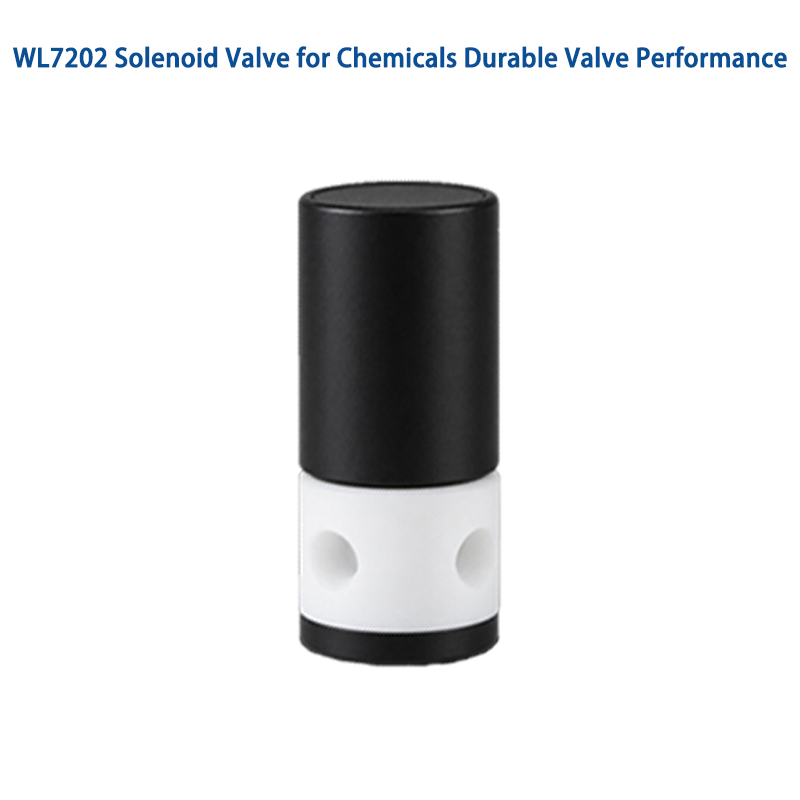
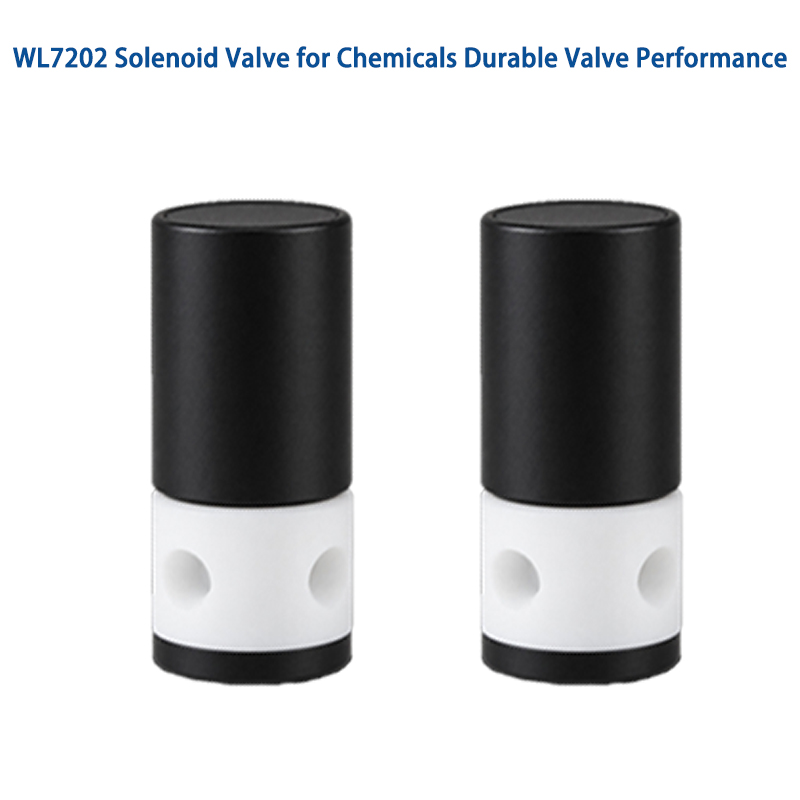
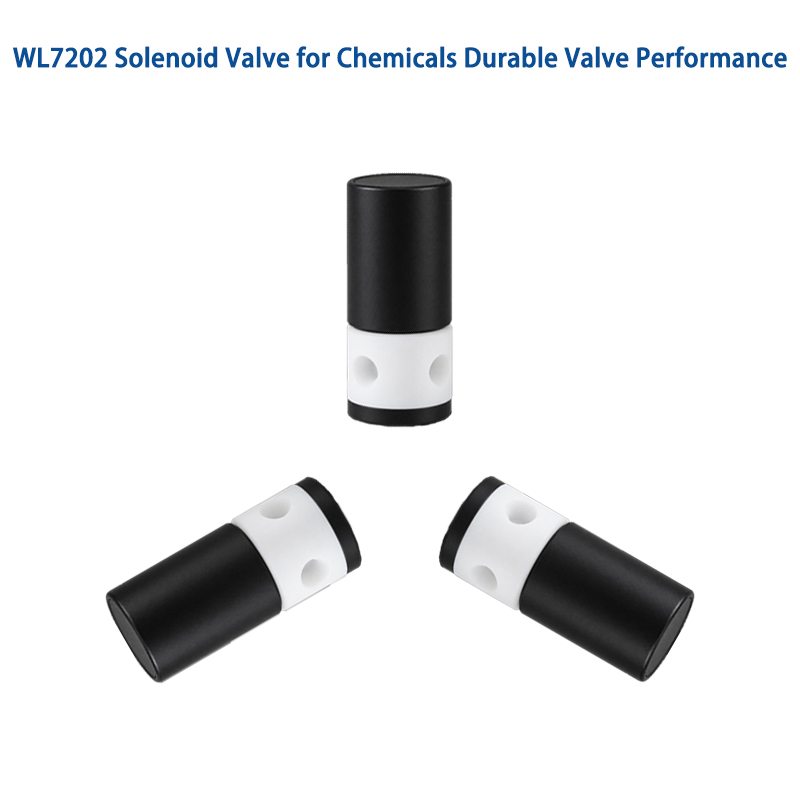
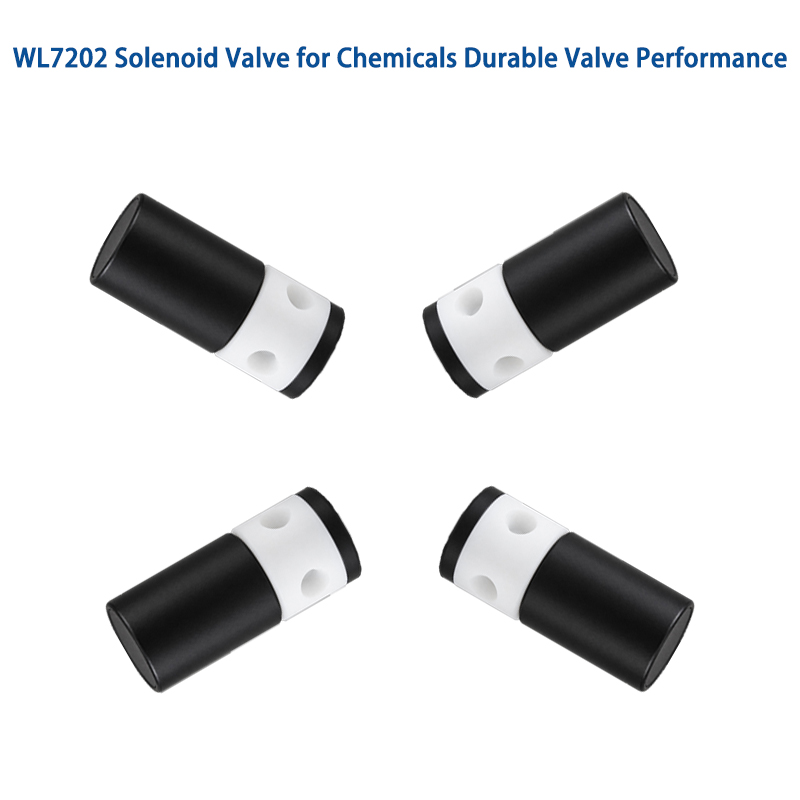
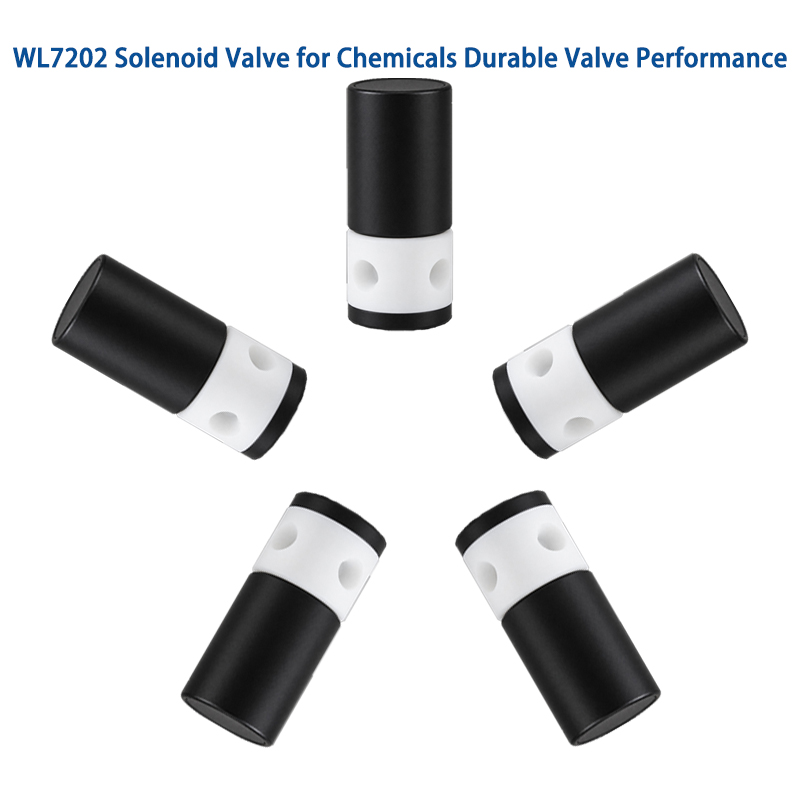
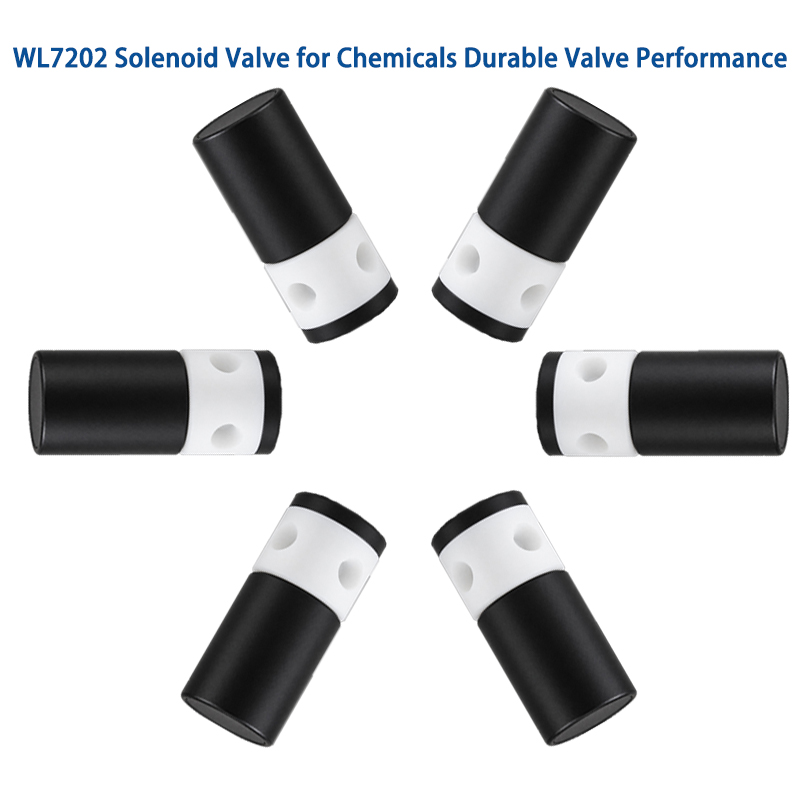
WL7202 Solenoid Valve for Chemicals Durable Valve Performance

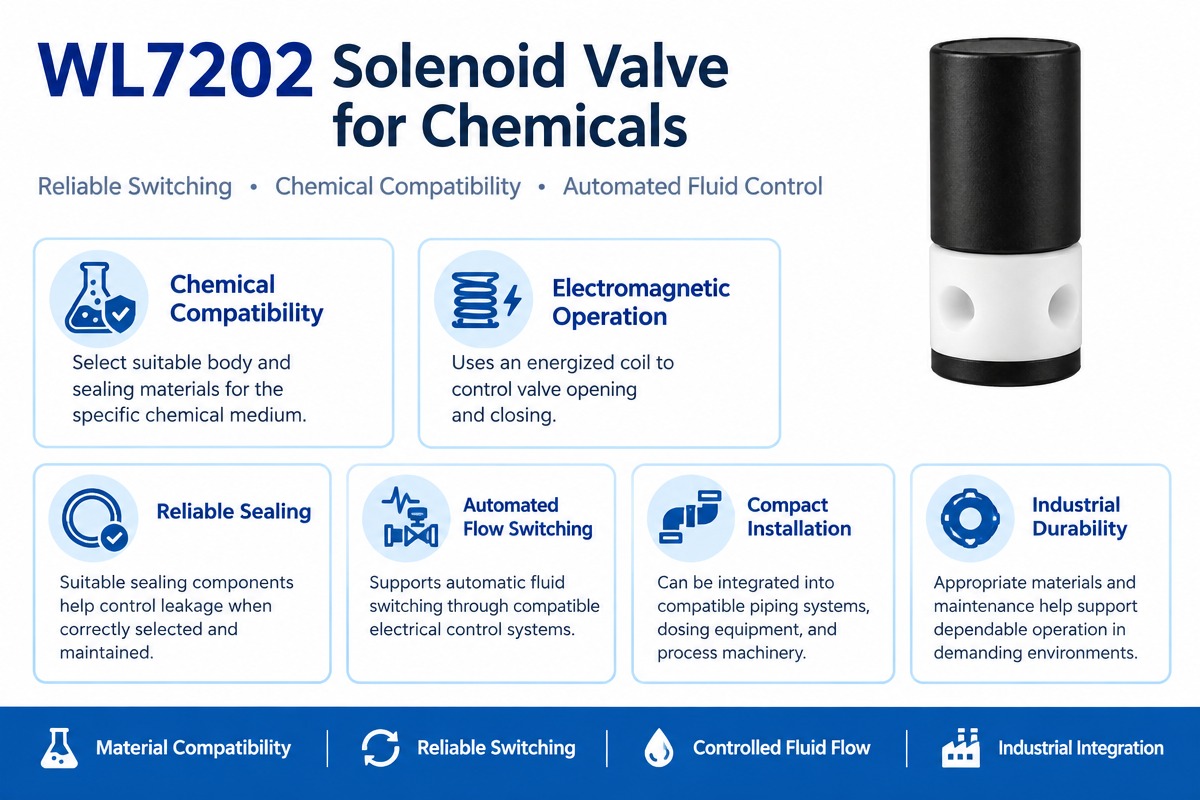
A solenoid valve for chemicals is a control valve for handling compatible chemicals in industrial systems. It operates using an electromagnet for automatic switching of liquid or gas flow in chemical processes like dosing, transfer, injection, treatment. According to the application and properties of media, the valve can be produced using special materials such as corrosion resistant body and seal solutions as well as chemically compatible internal components. Acids, bases, solvents, oxidizers and other chemicals may differ in interaction with the valve materials, therefore the correct selection is required. Buyers have to evaluate chemical concentration, operating temperature and pressure, flow characteristics and seal and electrical performance before purchasing a chemical solenoid valve. If properly selected, a chemical solenoid valve can help to maintain a consistent dosage of chemicals, eliminate manual valve operation, control process, and prevent leakage due to incompatibility with media.

Chemical fluid control valve Description

What is chemical solenoid valve?

Chemical Solenoid Valves are electric solenoid valves that switch the flow of compatible chemical liquids and gases in the process. A solenoid valve for chemical liquids operates with the help of an electromagnetic coil that opens or closes the valve mechanism. These valves are widely applied in chemical dosing, liquid transfer, water treatment, laboratory equipment and process systems. The valve body, seals and internal parts may be made of chemically compatible and corrosion resistant materials according to the application. The correct selection criteria include chemical composition, concentration, temperature, pressure and flow requirements. Valves are designed in order to guarantee the reliable switching of chemicals.

How Does a Chemical Solenoid Valve Work

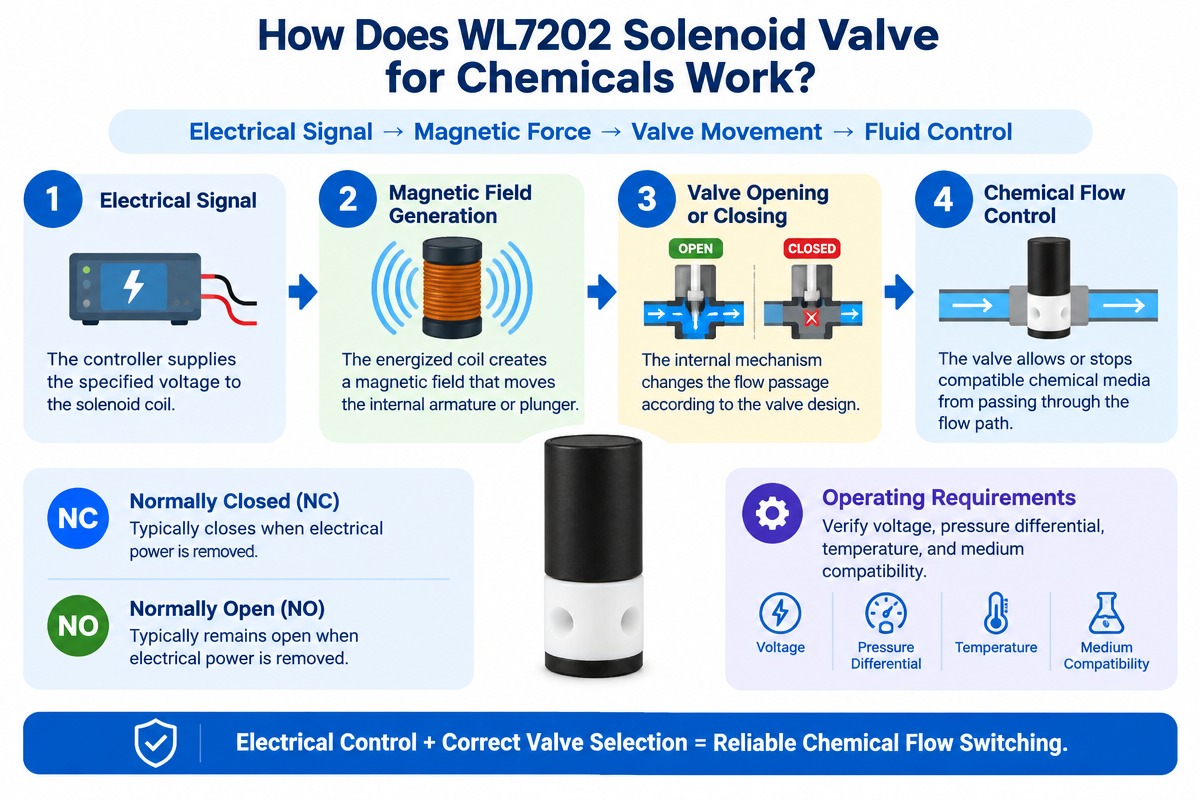
How does a chemical solenoid valve work? The principle of operation of a chemical solenoid valve is the transformation of electrical energy into mechanical energy and thus control of flow.

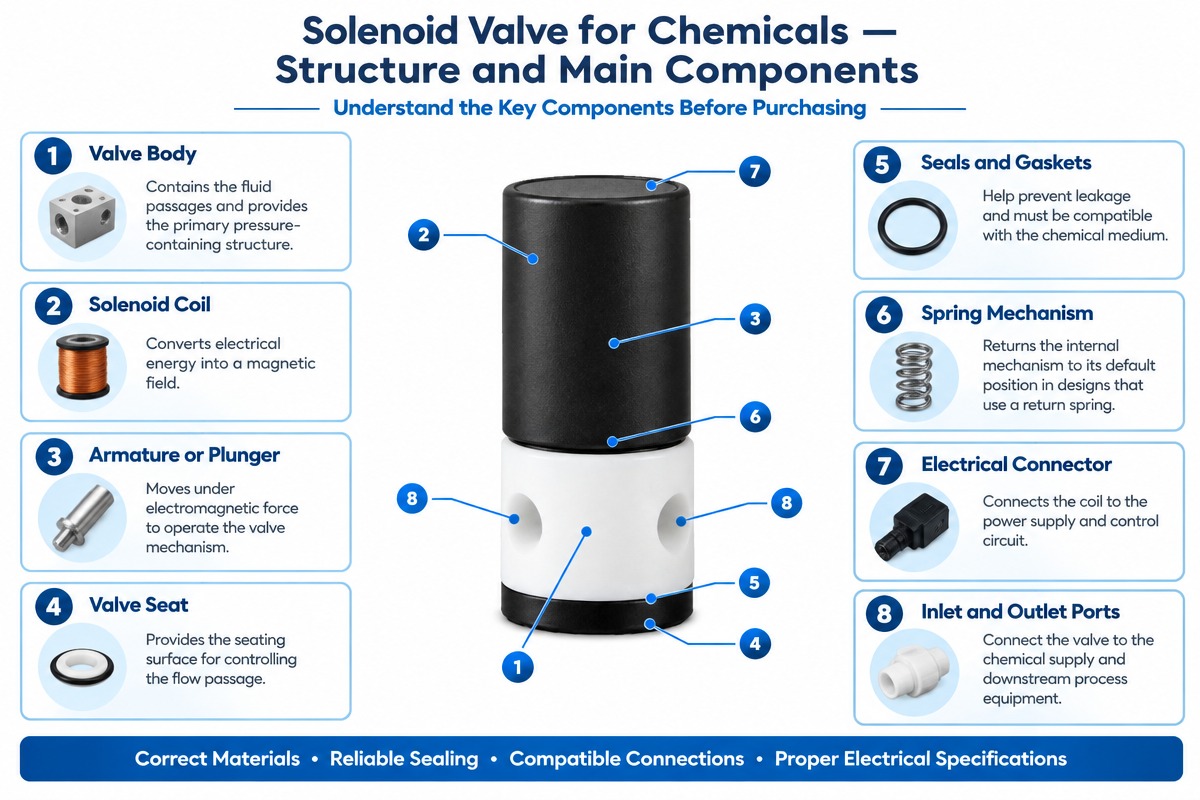
The control system provides an electric current to the solenoid coil and thus creates a magnetic field that moves the internal armature or plunger and thus changes the position of the valve mechanism. According to the design of the valve, the movement opens or closes the flow passage.

When electrical power is removed, the valve returns to its normal position due to a spring or some other means. Closed-valve valves are closed when they are de-energized. Open-valve valves are open when de-energized.

During operation, chemical fluid enters the inlet of the valve and flows through the flow passage and comes out of the outlet. Performance of sealing, pressure differential, chemical concentration and compatibility affect the reliability. Chemical flow control is only safe in proper installation and operating conditions.

Chemical fluid control valve Video

Chemical fluid control valve Detail Display

Chemical fluid control valve Technical

Brand Weilong Model Number WL 7202
Rated Voltage (V) DC12V or 24V Rated Power (W) 7.2W
Work Mode Air or Liquid Control Valve Working Pressure (MPa) 300 kPa
Air-Flow Rate 0 L/minute Reset Time(s) 0.25 S On, 0.25 S Off
Service Life 200 Thousand Times Certification CE, ROHS, ISO9001,
Pipe Gate ย inside: 2 mm Lead Wire Length (mm) 72.5 MM
Install Style Screw Tolerance of Dimension ยฑ 0.1 MM
Water-proof None Insulation Class B
Hi-Pot Test AC 600V 50/60 Hz 2s Non-excitation Holding Force 0
Working Temperature -25ยฐC-60ยฐC Duty Cycle 1-100%
Thread Depth (mm) / Payment Term TT, or LC At Sight
Sample Order Yes. Warranty 1 Year
MOQ 1000 pcs Supply Ability 5000 pcs per week
Delivery Time 30 Days Port of Loading Shenzhen

Why Is The Solenoid Valve For Chemicals So Popular?

There are more and more chemical solenoid valves used in industry nowadays because of the need for reliable and repeatable fluid control. In case of chemical manufacturing, water treatment, dosing equipment, and laboratory equipment, it is necessary to control precisely when fluid enters a process.

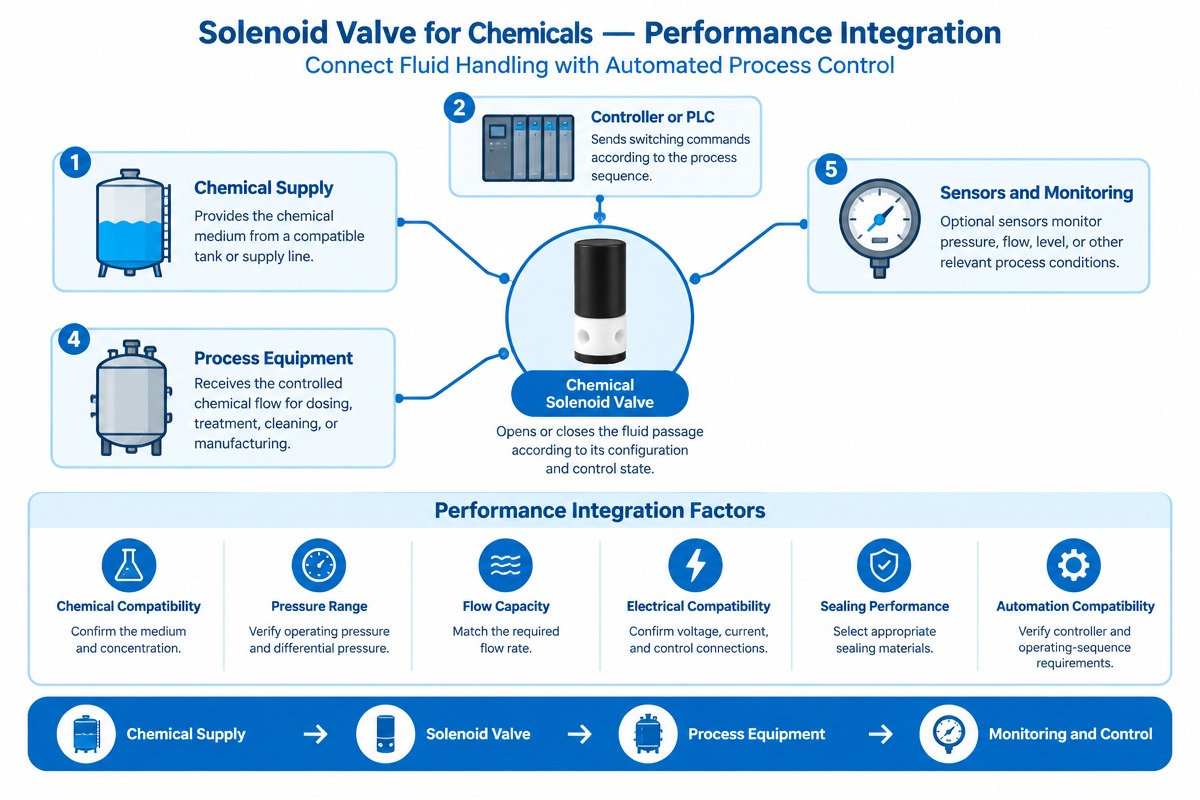
One of the major reasons is automation. These valves can be controlled using PLCs, timers, sensors and other controllers, which eliminates the need for manual valve operation. This can help with improving process repeatability and assistance with management of multiple fluid circuits.

The second important reason is chemical compatibility. With the right material selection and seals, solenoid valves for chemicals can be used with certain corrosive or reactive media. Moreover, the right construction can be used to decrease the risk of premature deterioration and leakage.

Also these valves are good for compact system design. Automated dosing skids, analytical equipment and machinery can be created using their relatively compact design.

Repeatable electrical switching can also facilitate process sequencing and control of chemical injection. This is helpful when a system requires repeated cycles of operation or coordinated fluid delivery.

However, popularity does not mean that all the solenoid valves work with any chemical. Ensure that you choose valve with chemical compatibility, pressure, temperature, flow and electrical specifications. Chemical solenoid valves with proper selection and implementation are an efficient solution for automated industrial fluid handling of the modern era.

Chemical fluid control valve Applications

Solenoid Valve for Chemicals Acid Transfer Applications

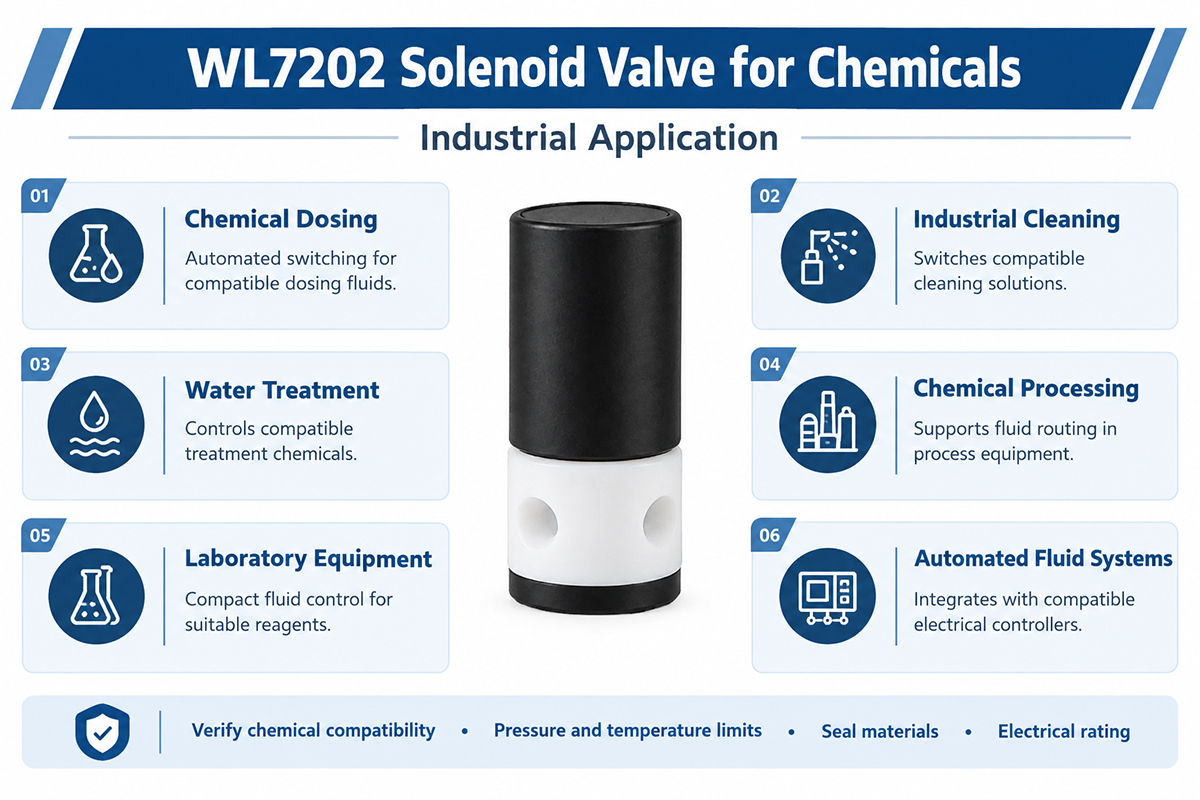
Solenoid valves for chemicals are widely used in industries that require controlled handling of liquids and gases.

Chemical manufacturing. These valves control process fluids in reactors, transfer lines and production equipment. In case of working with reactive or corrosive chemicals it is especially important to select the right materials.

Water and wastewater treatment: These valves control chemical injection for pH adjustment, disinfection, coagulation and other treatment processes. Suitable models can help to automate dosing sequences.

Chemical Dosing Systems Solenoid valves are used to control the start and stop of fluid delivery in dosing skids, cleaning systems and industrial dosing equipment.

Lab equipment Miniature valves for controlling compatible reagents, cleaning fluids and analytical liquids in automated instruments.

Pharmaceutical production Solenoid valves, which are properly specified can be used in chemical supply, cleaning and process fluid systems depending on hygienic and regulatory requirements.

Food and beverage processing: Suitable models can control cleaning agents and approved process chemicals in cleaning in place equipment and production systems.

Electronics manufacturing Compatible valves can be used in chemical distribution equipment for control of cleaning solutions, etchants and other process liquids.

Industrial cleaning: These valves control detergents, rinse fluids and chemical cleaning solutions in automated equipment.

Agriculture and water management: These valves are used in chemical injection systems for controlled delivery of compatible treatment solutions.

For all these applications, it is important to verify chemical compatibility, pressure, temperature, flow and electrical specifications and any industry specific certifications before installation.

Chemical fluid control valve Adv. & Disadv

Solenoid Valve for Chemicals Water Treatment Systems

Chemical Solenoid Valves: Advantages for Industrial Fluid Control

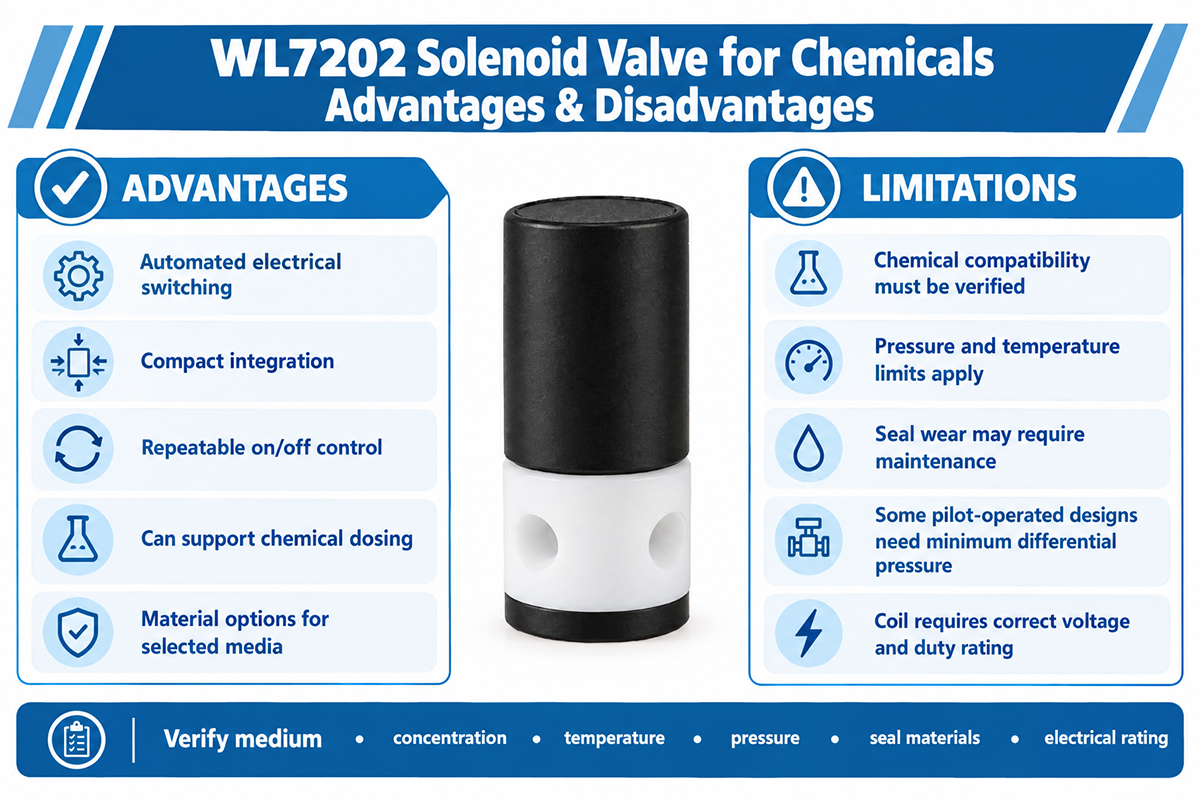
Benefits

The primary benefit is that they operate automatically using electricity…can be integrated with PLCs, sensors, and timers for repeatable switching with minimal manual intervention. This helps to maintain a consistent chemical dosage and sequence of the process.

The correct model has chemically compatible body and seals that can survive in particular environment. Proper material selection helps to extend service life and reduce leakage from corrosion or seal damage.

Many solenoid valves are compact and easy to install. Their fast switching ability is also beneficial for systems that require repeated opening and closing.

Disadvantages

Chemical compatibility is not always easy. Valve for one acid, concentration or temperature may not be suitable for another. The wrong selection can lead to swelling, corrosion, leakage or early failure.

Some pilot operated models have minimum pressure differential and can be used only in specific applications with low pressure. The solenoid coils have proper voltage requirements and produce heat.

The process media may clog small passages, and seals and moving parts need to be inspected or replaced regularly. Chemical resistant materials can increase initial purchase cost.

Finally, solenoid valves are typically not able to perform proportional flow regulation, unless they are designed to do so.

If the valve is properly selected, installed and maintained for its intended chemical application, the benefits can outweigh the disadvantages.

Solenoid Valve for Chemicals Fluid Compatibility Guide

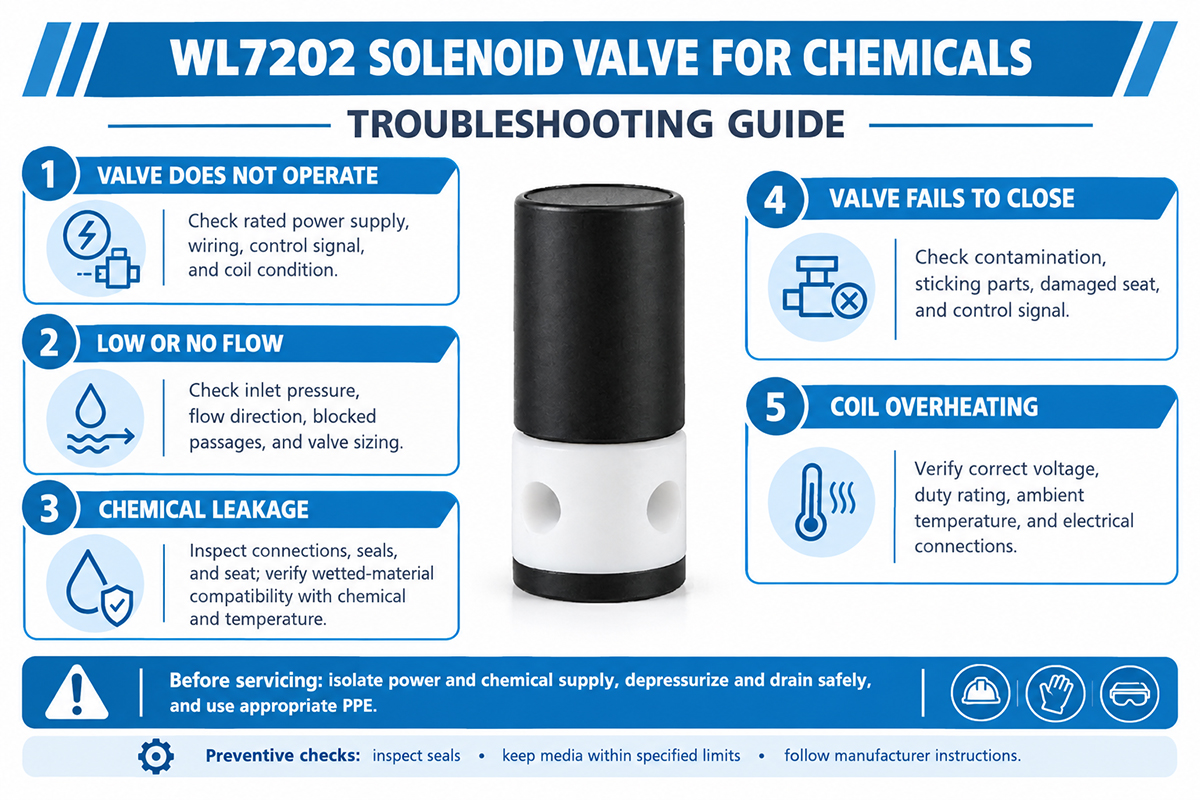
Troubleshooting Solenoid Valves for Chemicals

The problems with chemical solenoid valves can be caused by electrical failures, contamination, incorrect sizing or chemical incompatibility.

Valve does not function: Check the status of the power supply, wiring, control signal and coil.

1. Verify that supply voltage is equal to the rated voltage and that valve has sufficient pressure.

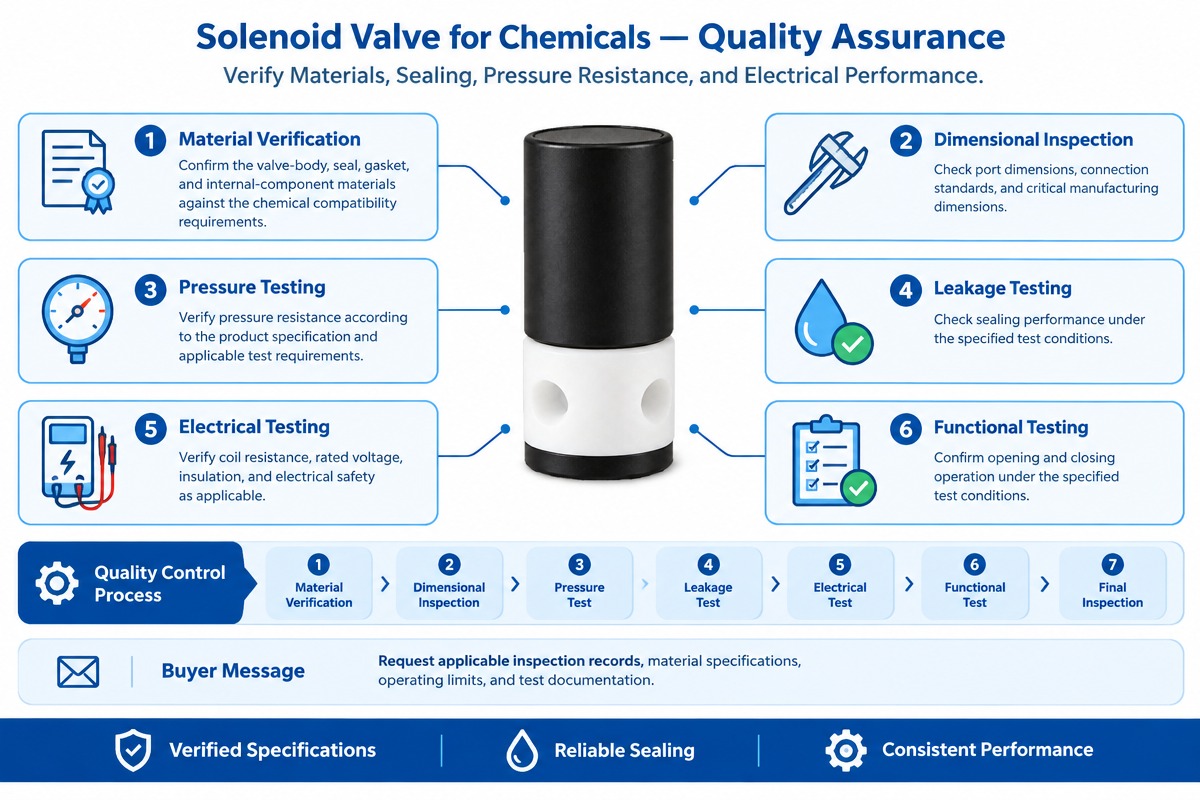
Leakage of chemicals. Check the connections, seals, gaskets and valve seat. Chemical attack may cause swelling, cracking or rotting. Replace faulty parts with tested and verified chemically compatible parts.

Low flow: Check for blockage of passages, incorrect flow direction, insufficient pressure differential and wrong valve sizing. Clean the valve according to manufacturer instructions.

Valve does not close: Contamination, damaged seat, mechanical jamming or incorrect control signal may prevent closing. Isolate the valve and check the internal components.

Coil overheat: Check the supply voltage, duty rating, ambient temperature and electrical connections. Replace faulty coil with the coil of proper compatibility.

Corrosion or material degradation: Check chemical concentration, operating temperature and materials compatibility. Adjust improper components and re-assess selection of original materials.

Disconnect the power and chemical supply to the valves. Follow the procedures for depressurization, draining and handling hazardous substances. Use proper personal protective equipment and containment.

Regular inspections, clean process media, proper operating conditions and maintenance can help to reduce failures and prolong the valve service life.

FAQ

1. What is a chemical solenoid valve?

It is a type of valve controlled by electromagnetic force that allows regulating the flow of compatible gasses or liquids such as acids or alkaline solutions. A solenoid valve works in any application where it is needed to automate the liquid or gas control.

2. How does a chemical solenoid valve work?

Upon receiving the electrical impulse through a coil of the valve, a magnetic field opens or closes a flow path. After turning off the electric circuit, the valve is closed by the spring or other mechanisms.

3. What kinds of chemicals can be used in the chemical solenoid valve?

Chemicals that can be regulated in this valve include acids, alkali, solvents, cleaning agents, water treatment chemicals and process fluids depending on the materials and design features.

4. Which materials are best suited for chemical solenoid valves?

Materials for construction are selected depending on the chemical environment. Sometimes the use of stainless steel may be required. PTFE, EPDM, FKM and other sealing materials may be compatible with different chemicals. Before purchasing, buyers should check the chemical resistance data provided by the manufacturer.

5. Which is the correct solenoid valve for chemicals?

In order to purchase the correct valve, the chemical composition, the concentration of chemicals, working temperature, pressure range, flow rate, pressure difference, valve size, connection type, and electrical parameters should be taken into account. At the same time, it is also important to define whether the normally open or normally closed valve is needed.

6. Which are the advantages of the chemical solenoid valves?

Advantages include automatic electrical switching, repeatability of the flow control, compact design and possibility of integration with the PLCs and other types of control systems. Materials compatible with chemicals can increase the durability of the valve and minimize maintenance.

7. Which are the most common problems related to solenoid valves for chemicals?

Among these problems there are leakage, blocking of flow paths, sticking, coil overheating, electrical problems and corrosion. These problems may be caused by the contamination of the valve, incorrect voltage, inappropriate materials, improper installation or operation at temperatures and pressures above the rated values. Regular checks can help detect the problem in time.โ€

8. How to maintain a chemical solenoid valve?

Valve body, seals, connections, coil, and electric wiring should be checked regularly for leaks, corrosion, overheating, and restricted flow.

The process medium should comply with cleanliness requirements.

Components must be replaced with chemically compatible parts.

Before starting maintenance, electric current and chemical medium supply should be turned off and the system should be depressurized.โ€

How to Select a Solenoid Valve for Chemicals

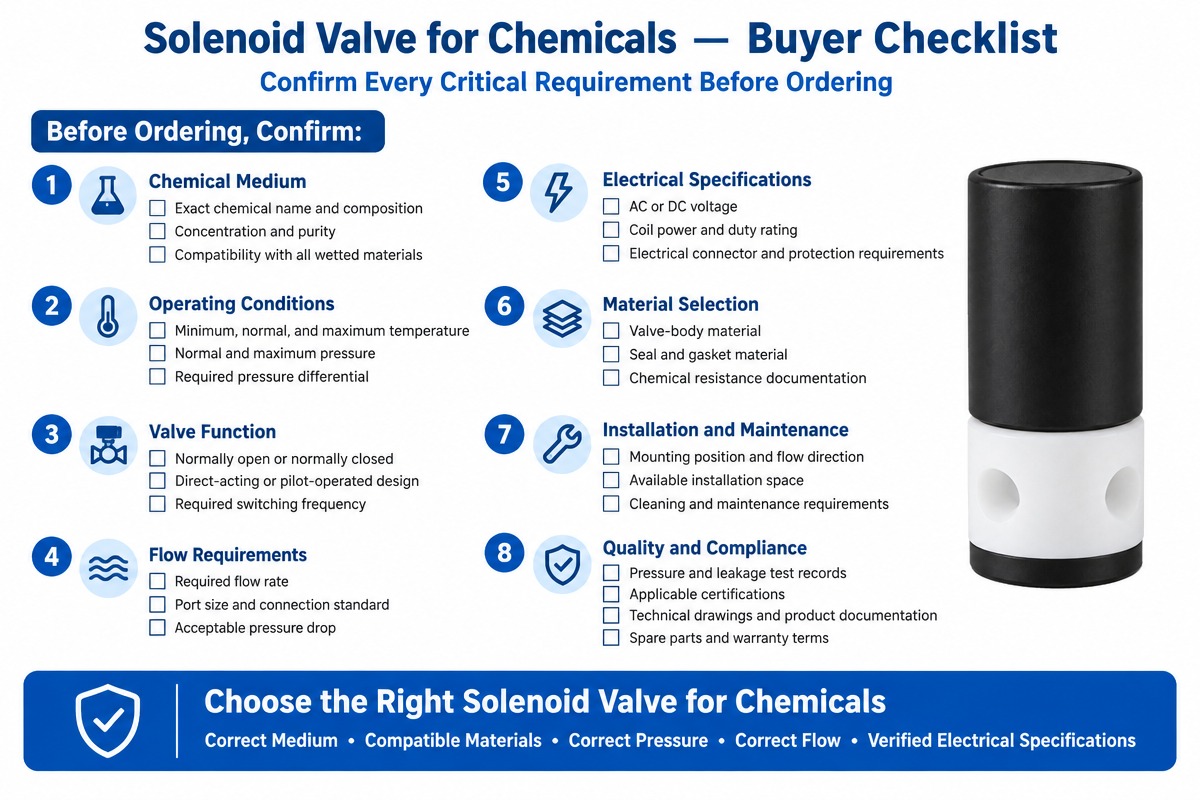
Selection of the right solenoid valve for chemicals implies a thorough evaluation of process medium, operating conditions and system requirements.

1.What is the chemical medium? What is the exact chemical name? What is the concentration? What is the purity? What else is in there? Compatibility properties can differ according to the concentration of the same chemical. Refer to the chemical resistance chart, which is provided by the manufacturer.

2.Use the right materials. Check valve body, internal parts, seals and gaskets. Such materials as stainless steel, PTFE, EPDM, FKM have different limits of chemical resistance. There is no material suitable for all chemicals. Verify chemical resistance at actual operating temperature and concentration.

3.Verify pressure and temperature. Calculate the minimum, normal and maximum operating pressure and temperature. Keep the valve and the seals within their limits. For pilot operated designs, verify the minimum differential for operation.

4.Determine flow requirements. Calculate required flow rate and allowed pressure drop. Check flow coefficient, port size and working range of the valve. Inappropriate valve sizing leads to improper dosing or unsatisfactory flow performance.

5.Select the proper operating configuration. Select normally closed or normally open according to the default state desired. Verify that system pressure and flow requirements match direct acting or pilot operated design.

6.Check electrical specifications. Check AC/DC voltage, power consumption, coil duty rating, electrical connector and environmental protection.

7.Check connections and installation. Standard of thread or flange, direction of flow, installation orientation, and available space.

8.Evaluate safety and maintenance needs. Consider requirements for leakage, risks of chemical exposure, cleaning procedures, replacement parts and accessibility of maintenance. Specialized equipment or certifications may be required for hazardous chemicals applications.

Finally, ask for technical drawings, pressure and temperature ratings, chemical compatibility and relevant test results. Choosing the right valve can help to increase dosing accuracy, equipment reliability, chemical handling safety and reduce premature failure and maintenance costs.

Advice for Avoiding Common Mistakes in Chemical Solenoid Valve Design

1.Do not assume universal chemical resistance. Identify precise medium, concentration, temperature and exposure conditions.

2.And do not forget about seal compatibility. Even though the body is compatible with the metal does not mean that the seals are not going to suffer.

3.Do not over-size or under-size the valve. Do the calculation for flow rate and pressure differential, not for the pipe size.

4.Verify the operating pressure. Check that the valve will operate within minimum and maximum pressures of the system.

5.Choose the right valve gear. Pilot operated and direct acting valves have different operating requirements.

6.Define the default valve position. Determine if the process requires a normally closed or normally open valve upon loss of power.

7.Verify the coil specifications. Match power supply, voltage, duty cycle and ambient temperature conditions.

8.Consider chemical leakage risks. Ensure the appropriate sealing performance. Provide proper containment where needed.

9.Check installation requirements. Pay attention to flow direction, mounting position and connection requirements.

  1. ย Maintenance schedule. Ensure inspection and cleaning and component replacement can be done safely.
Get A Free Quote Now

Contact Form

Related Products

Related News

Scroll to Top

Get A Free Quote Now !

Contact Form
If you have any questions, please do not hesitate to contact us.
Weilong Solenoid Company Culture