How to Select an Anti Corrosion Valve
Selection of the right anti corrosion valve is not limited to the search of a valve which is called “corrosion resistant”. The valve must be right for the particular process medium and conditions.
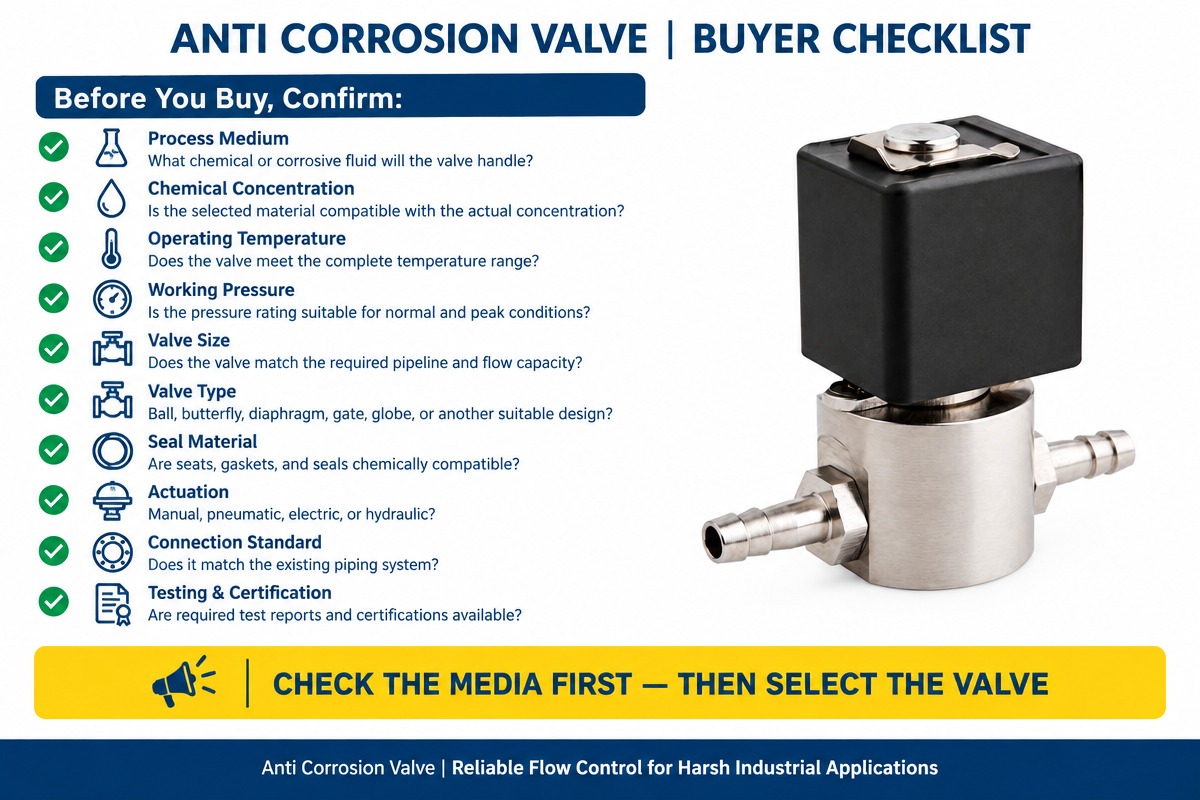
1. Guess the liquid:
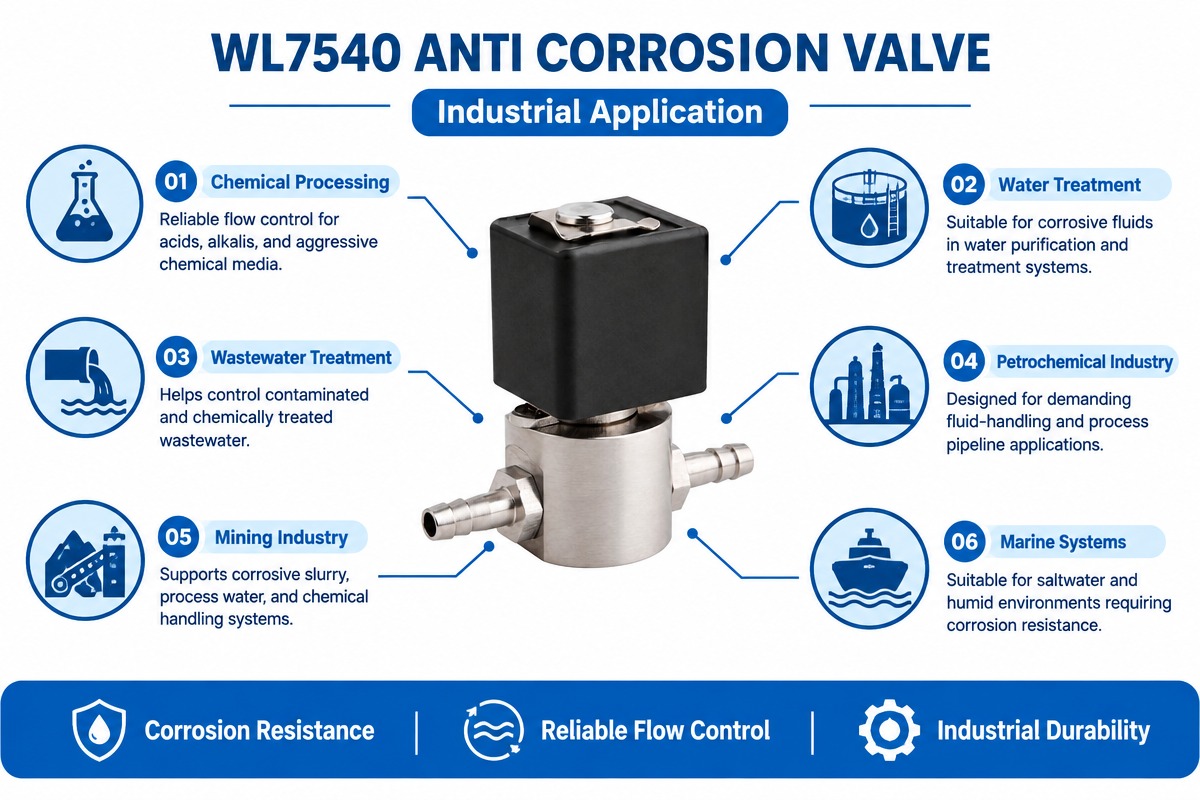
Is it acids, alkalis, solvents, salt water, waste waters, chemicals or mixed fluids? Note chemical composition and concentration. Resistance to corrosion varies significantly among materials.
2. Find out the operating temperature.
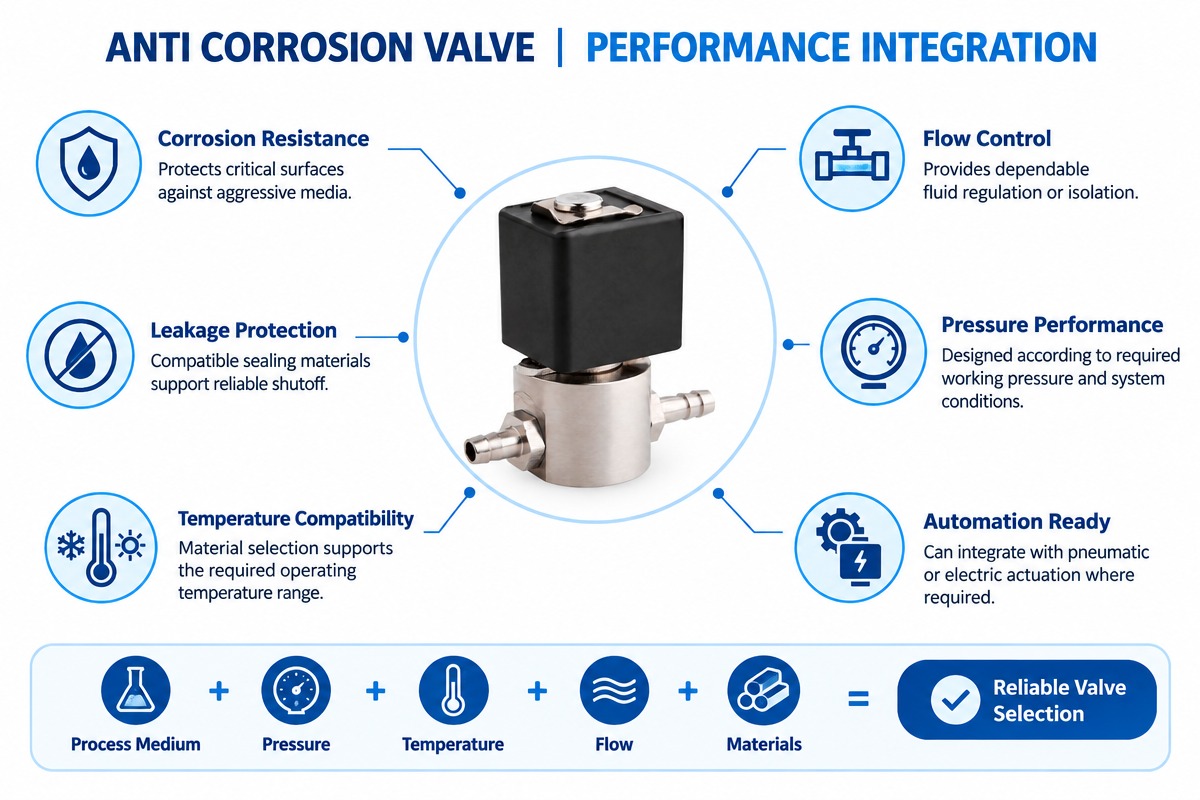
Temperature affects corrosion resistance of the material and seal performance. Select the valve that has body, liner, gasket and actuator ratings for all range of operating temperature.
3. Consider pressure requirements.
Find out normal working pressure, maximum pressure, pressure fluctuations and possible pressure surges. Choose the correct pressure class or rating with appropriate safety margin.
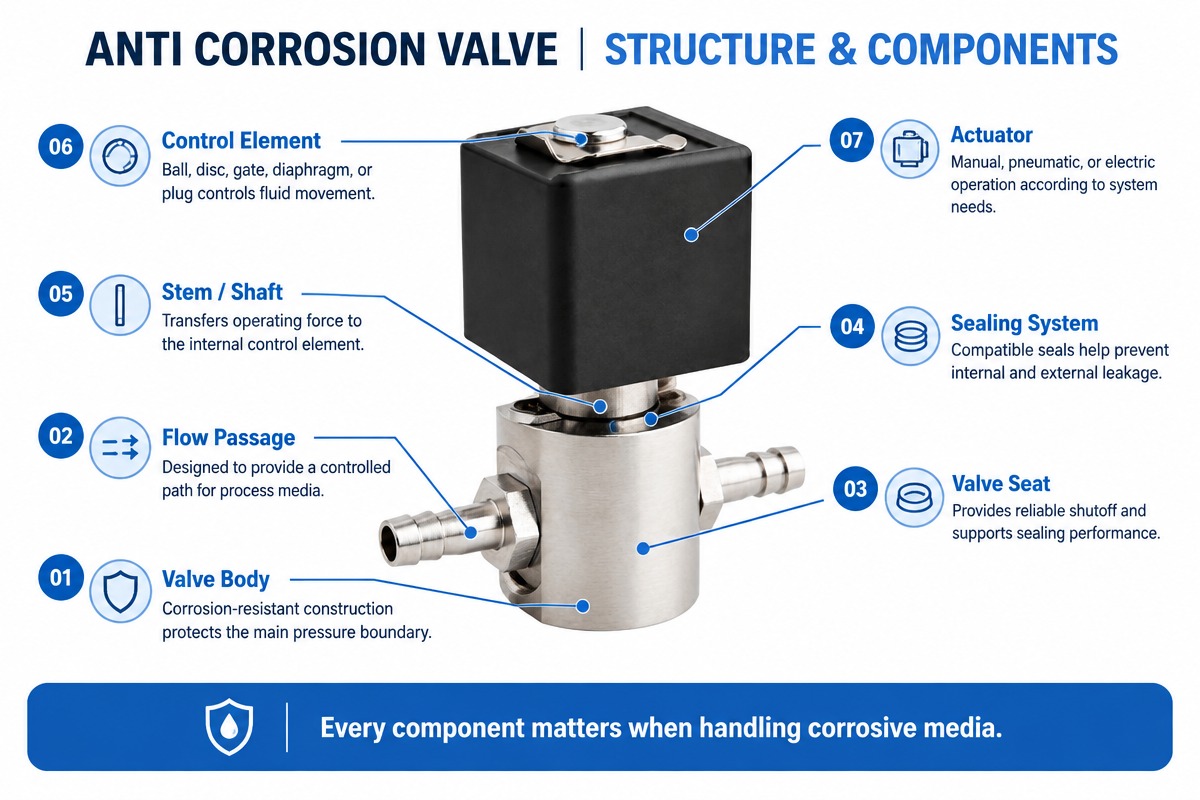
4. Check materials for valves.
Common materials include stainless steel, engineering plastics, special alloys, rubber and fluoropolymer linings. It is better to select materials for chemical compatibility rather than low price.
5. Select the type of the valve.
Ball valves are suitable for flow shut off, Butterfly valves are good for larger pipelines, Diaphragm valves can be used for corrosive liquids and Globe valves may be used where throttling is required.
6. Flow characteristics to consider.
Determine required flow rate, pressure drop and whether the valve will be used for isolation or constant regulation. Do not select valve based on pipeline diameter alone.
7. Choose the proper seals.
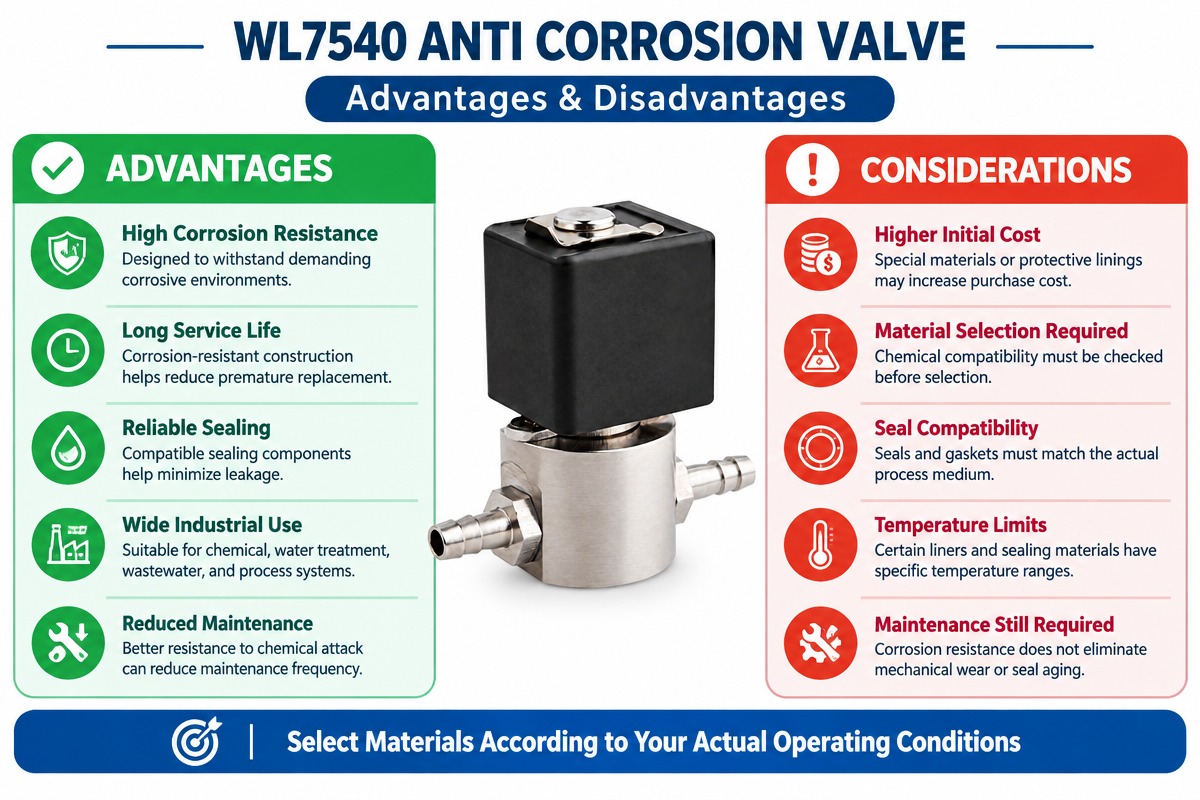
Gaskets, O-rings, seats and packing must be resistant to the process medium and temperature. Even corrosion resistant valve body may leak if the elastomers are not compatible.
8. Consider actuation.
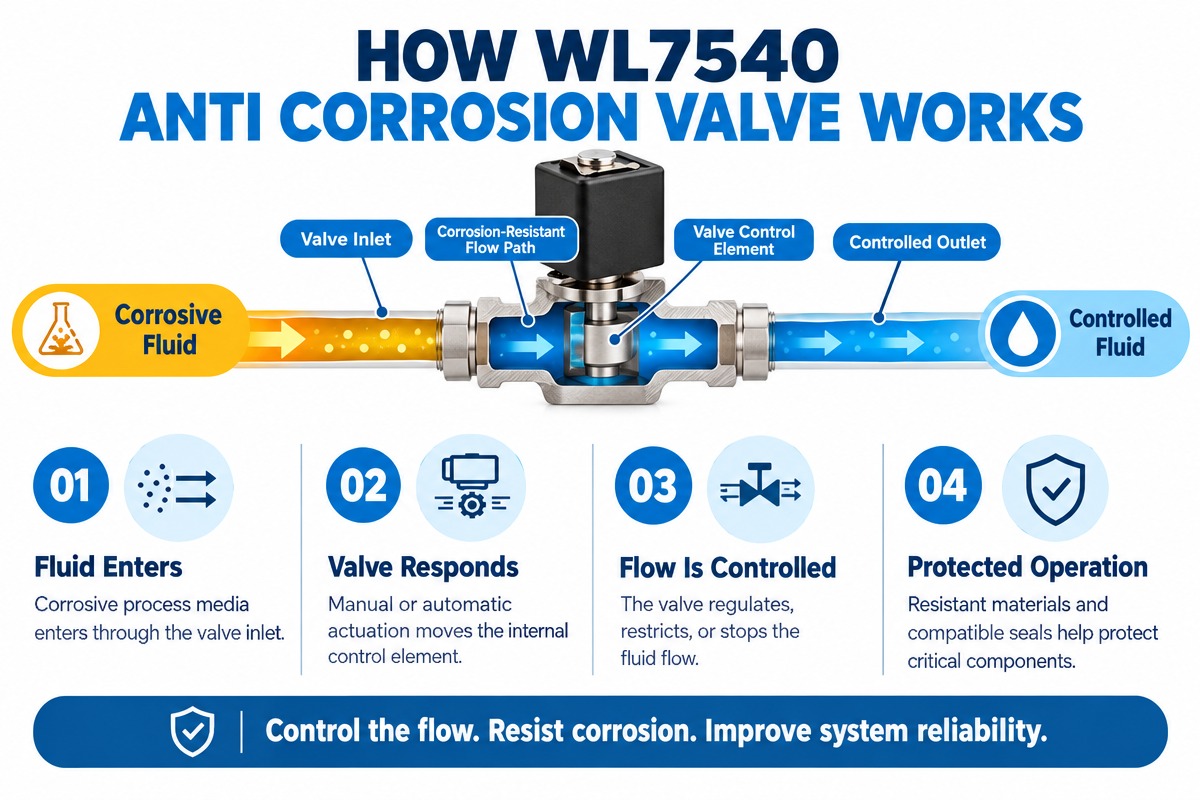
Manual operation may be appropriate for simple systems. Electric or pneumatic actuators are useful for automated processes and remote control.
9. Maintenance requirements.
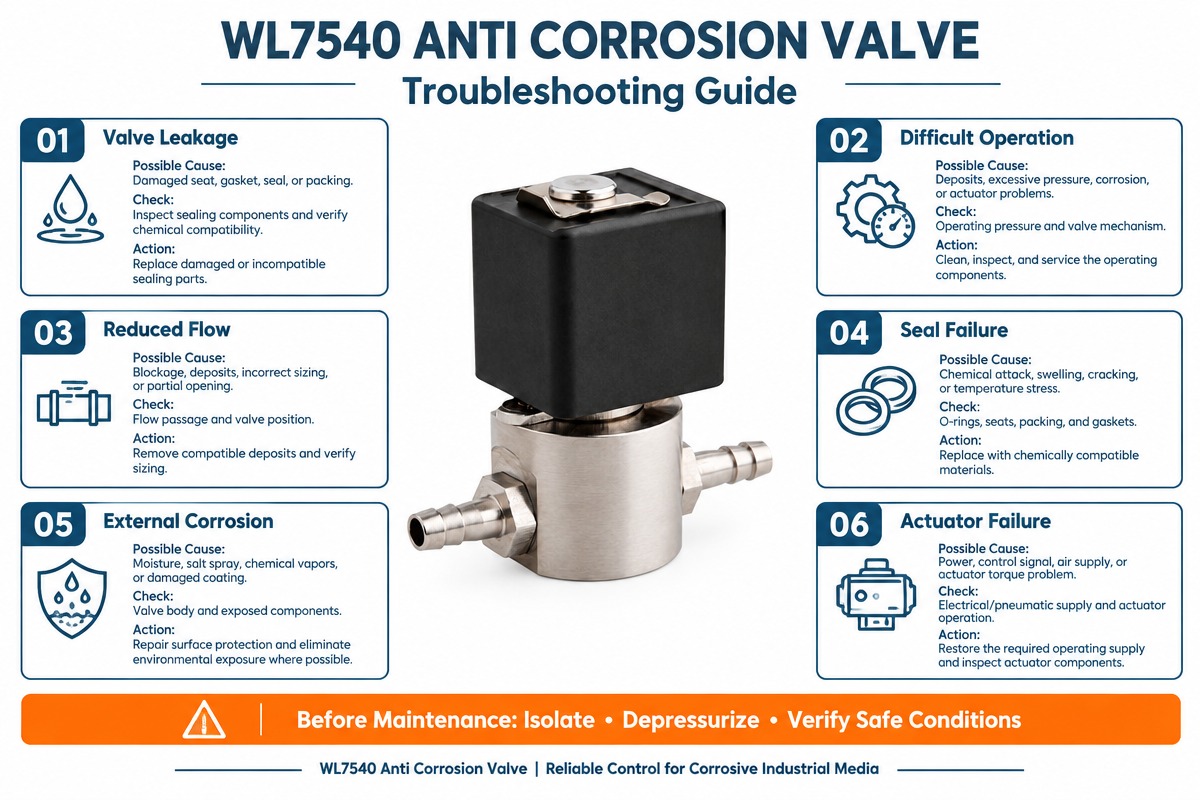
Select design which allows inspection, seal replacement and servicing without significant downtime.
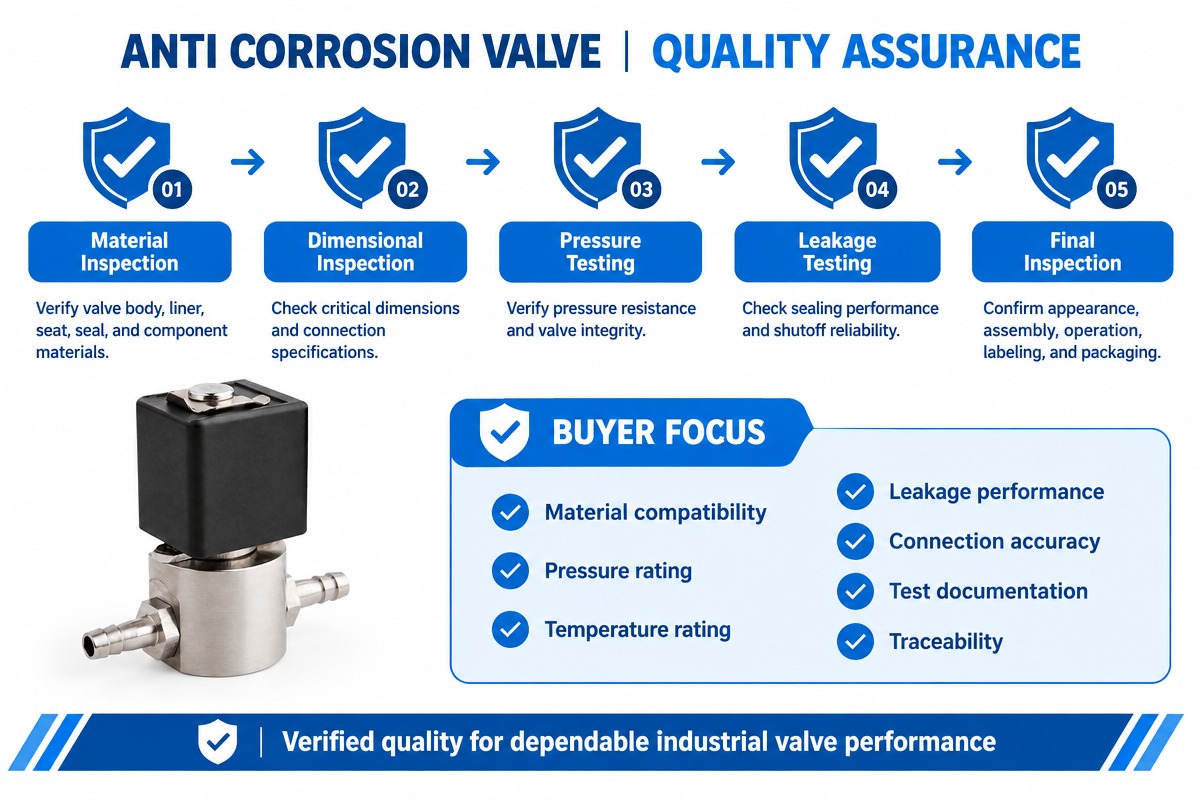
Before purchasing, check industry standards, connection sizes, pressure ratings, certificates and test data from the manufacturer. It will help to make the right choice and improve reliability and safety of operation.
Tips to Prevent Common Mistakes in Anti Corrosion Valve Design
Do not choose materials based on their general corrosion resistance. Chemical compatibility depends on concentration, temperature, exposure time and fluid composition.
Do not forget seals and gaskets. Even corrosion-resistant valve body may fail if its elastomers are not compatible with the fluid.
Do not undersize the valve. High velocity and pressure drop can lead to erosion and reduce service life.
Do not oversize unnecessarily. Over sized control valve can operate poorly at low flow rates and decrease control accuracy.
Think about temperature effects. Material and sealing properties may be different at high and low temperatures.
Consider pressure surges. Water hammer, pump startup and rapid valve closure may result in loads higher than normal operating pressure.
Prevent external corrosion. External corrosion may be caused by exposure to outdoor conditions, chemicals, salt spray and atmospheric moisture.
Consider access for maintenance. Design shall allow inspection, cleaning, seal replacement and valve maintenance.
Choose appropriate actuator. Actuator torque, response time and environmental protection must be selected according to application
Validation before production. Confirm material compatibility. Confirm pressure rating. Confirm flow requirements. Confirm connection dimensions and standards.