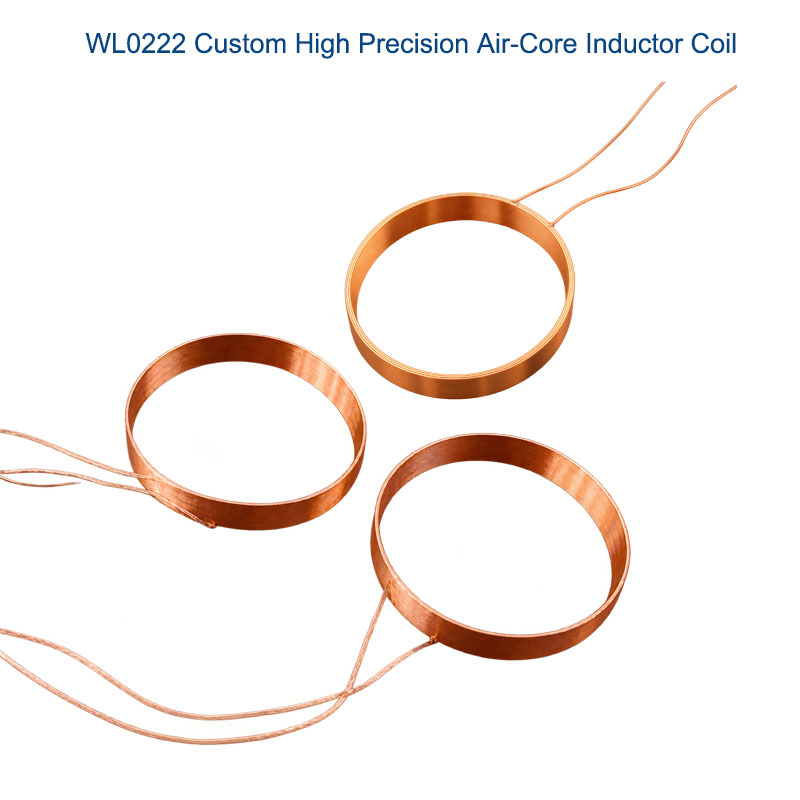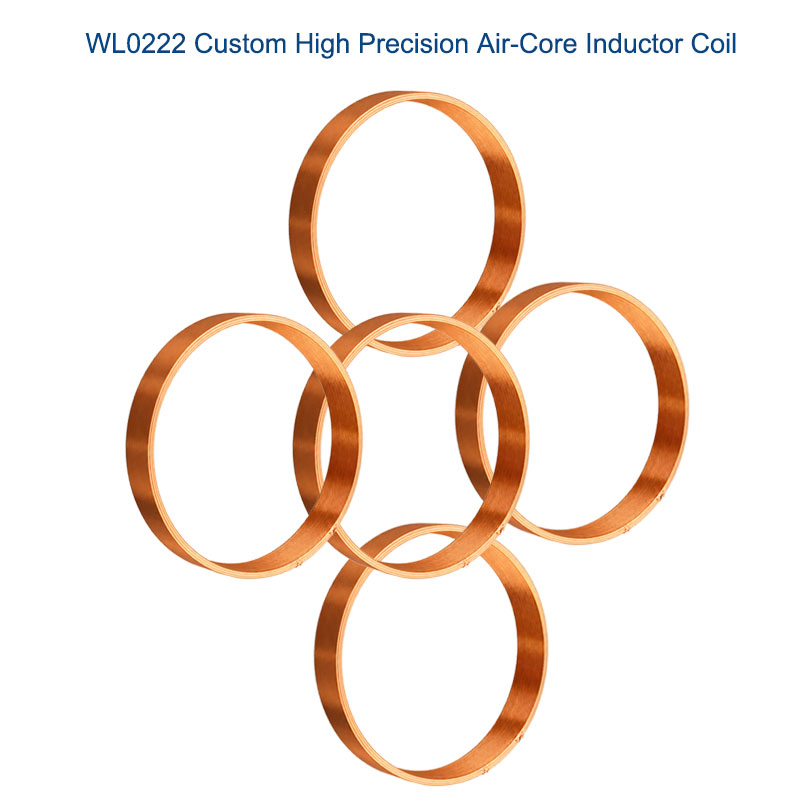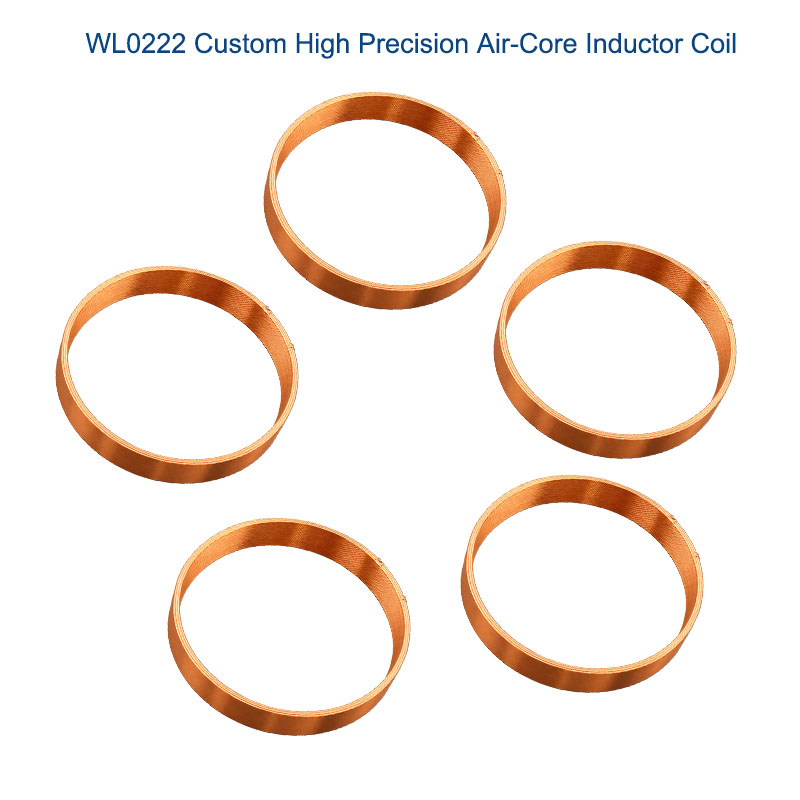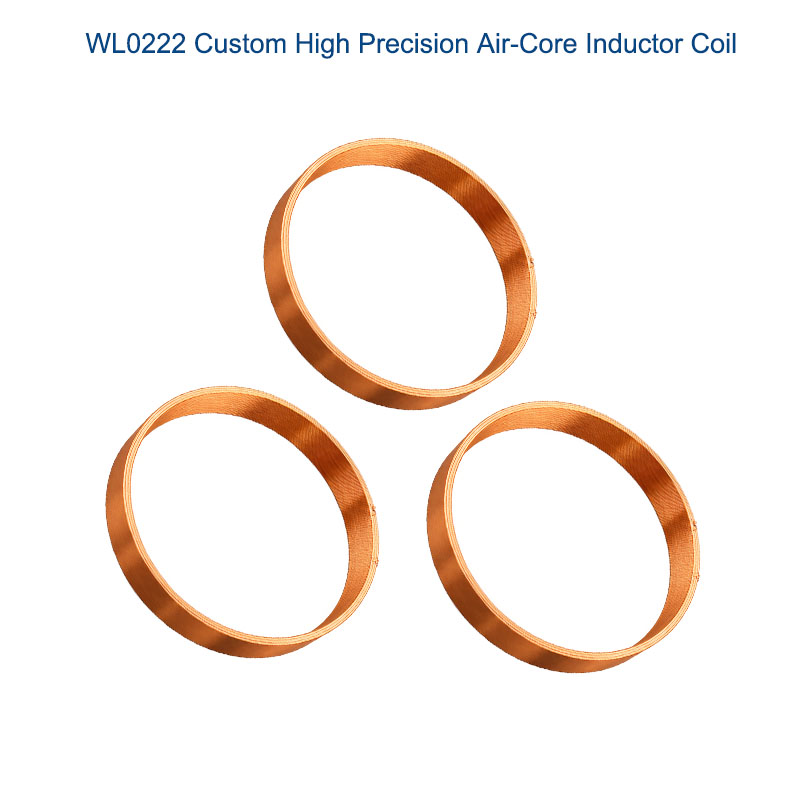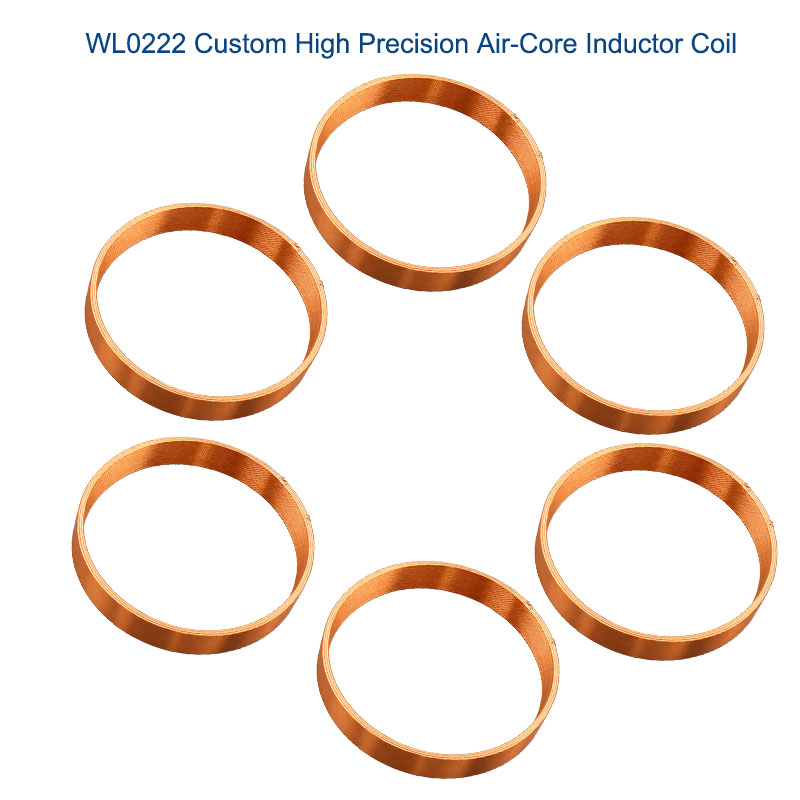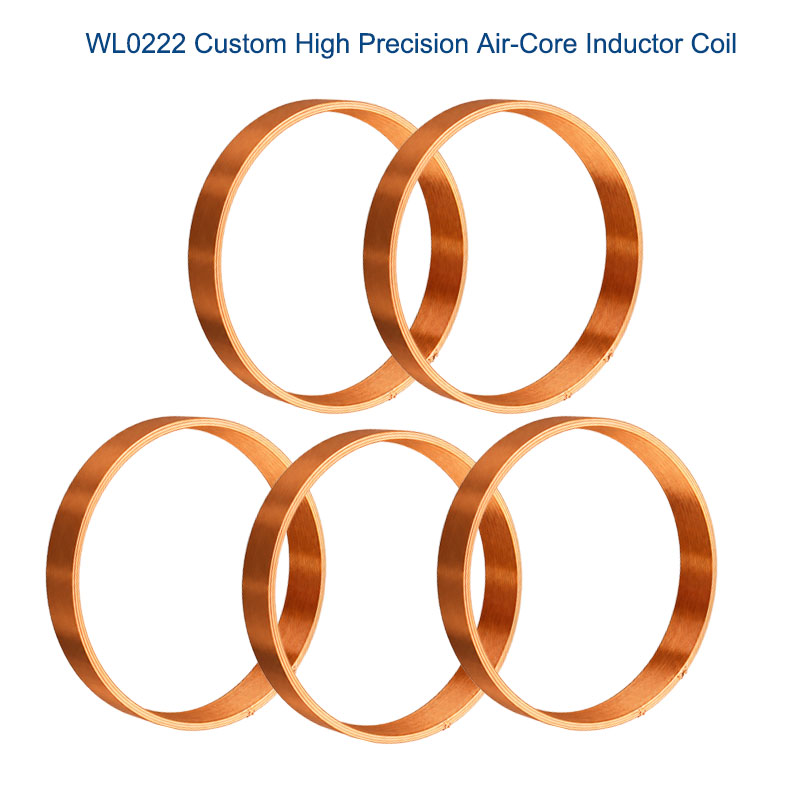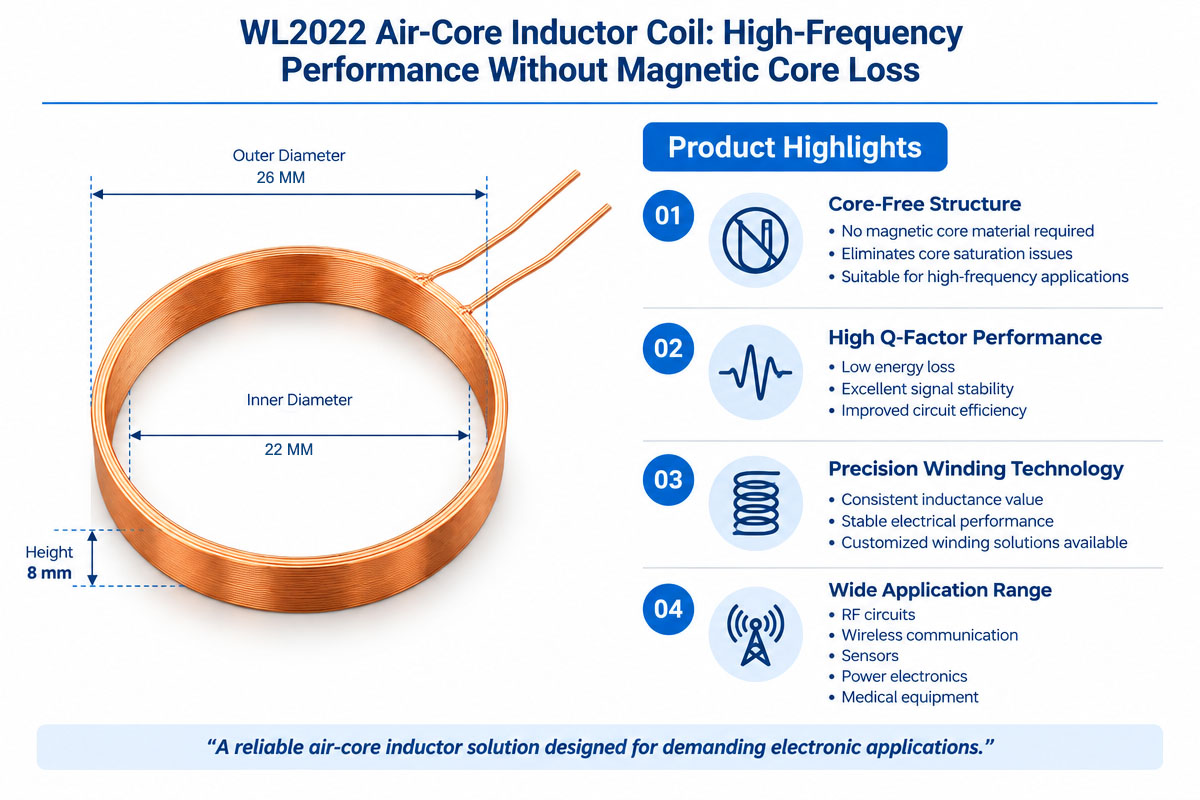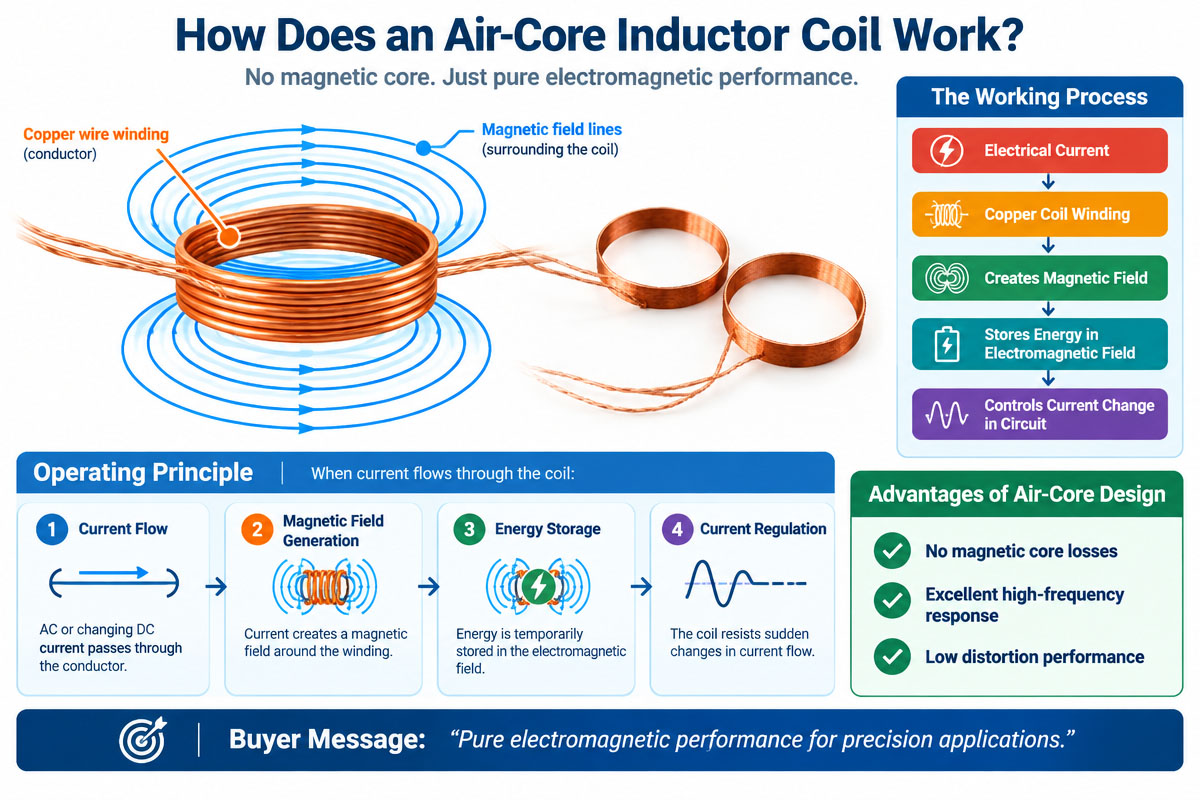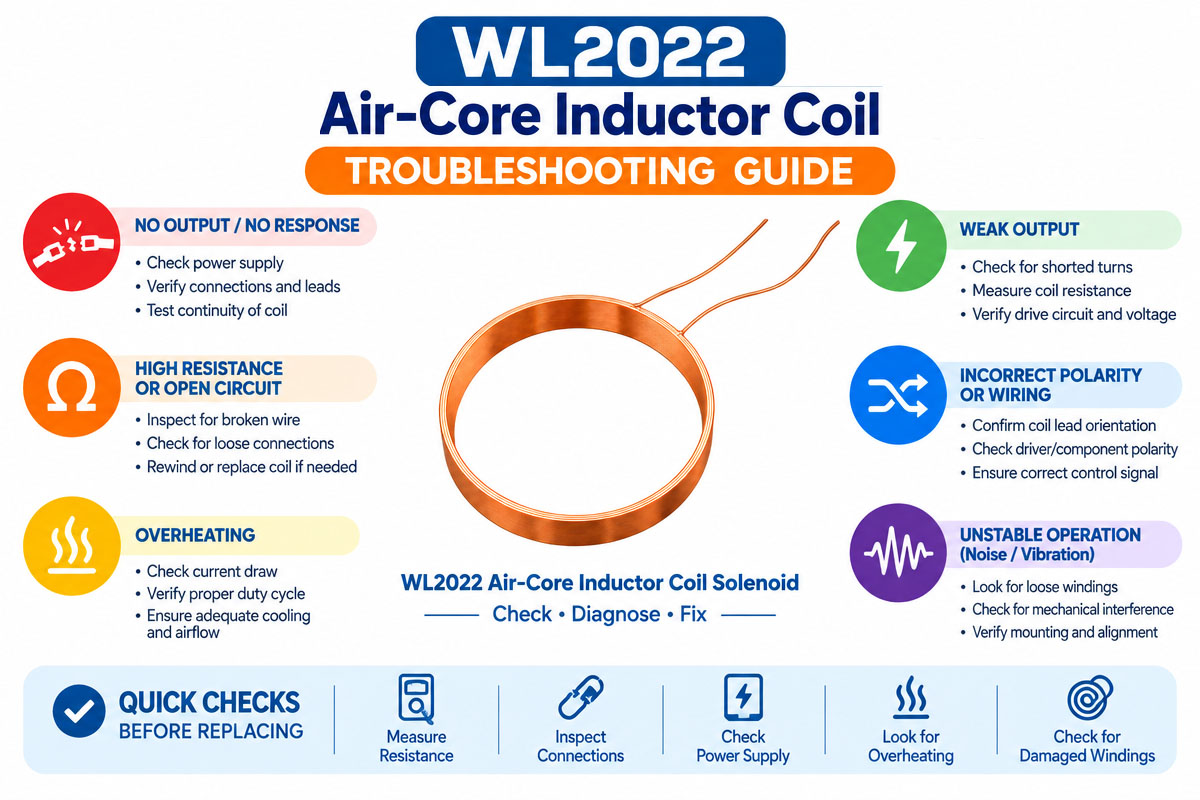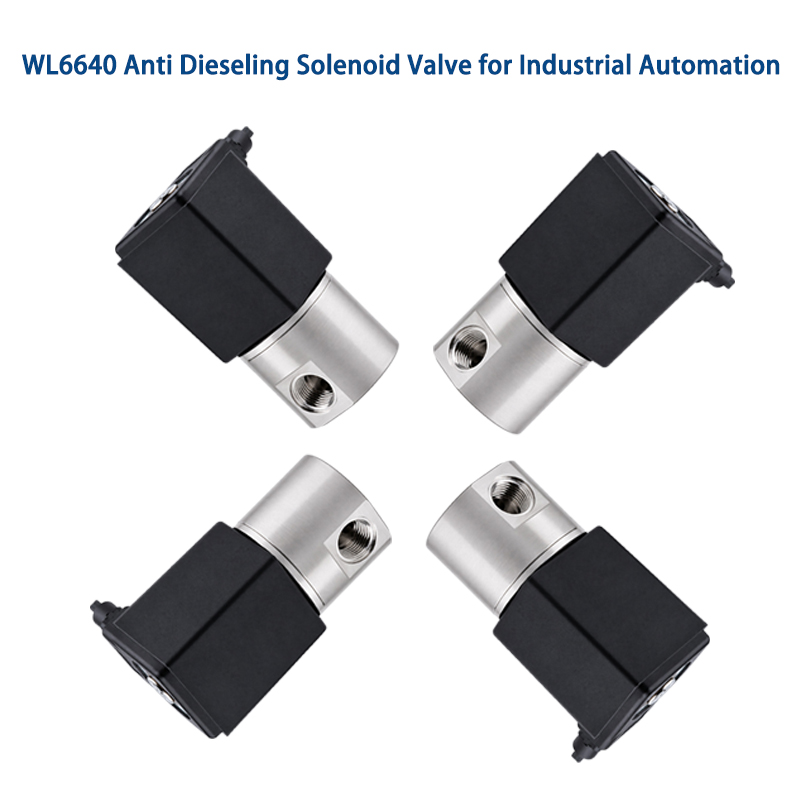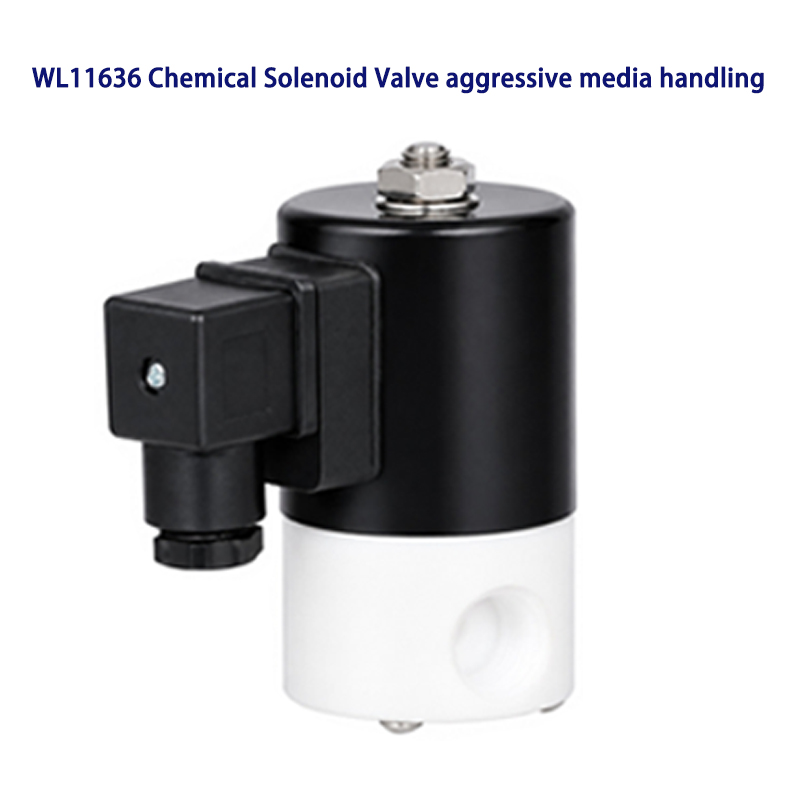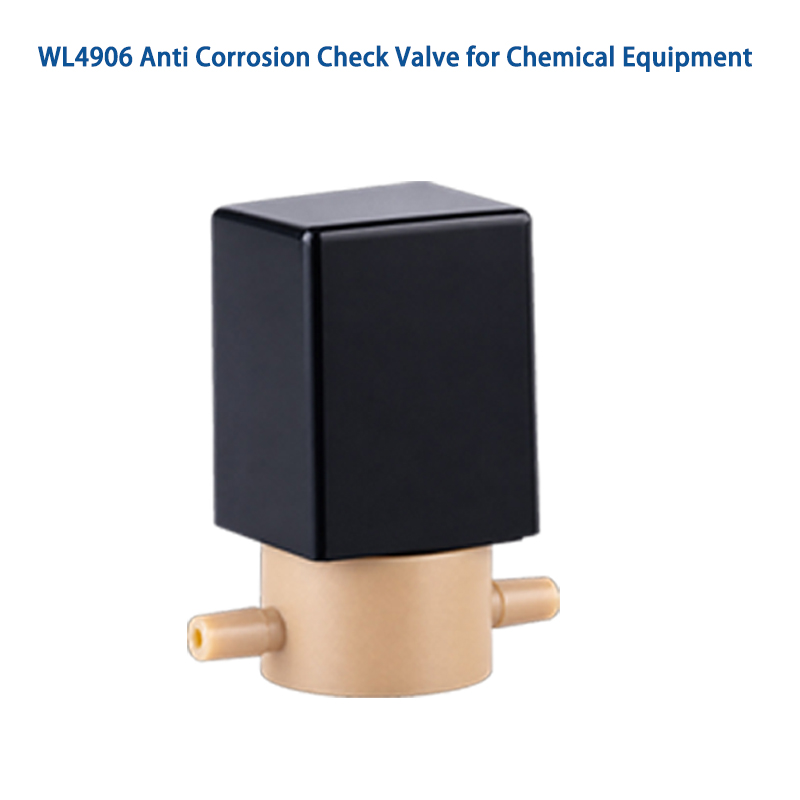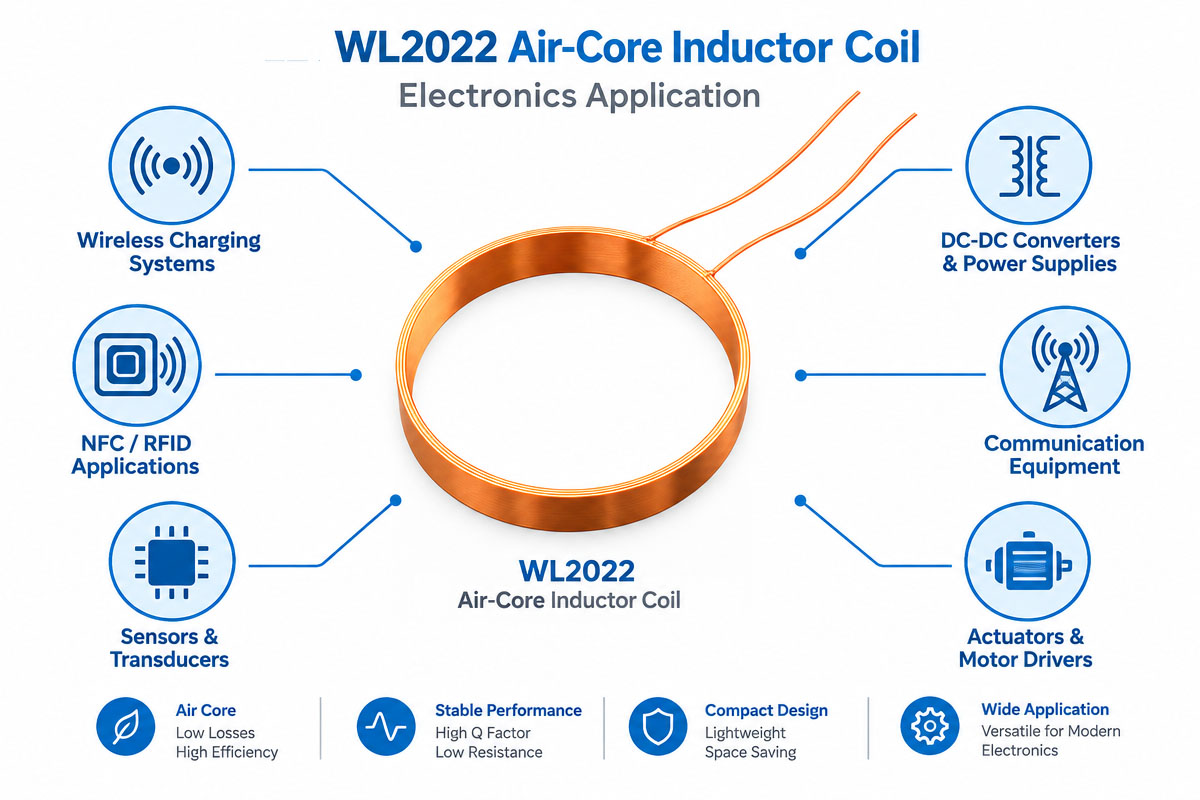
Air-core inductor coil is widely used in electronic circuits, especially in those where the coil is exposed to strong magnetic fields. The advantage of air-core inductor coil is that it does not saturate, which means that it can operate in a wide range of current levels without losing inductance. This makes it perfect for circuits where the current level is variable, for example, in radio frequency (RF) circuits and power supplies. Air-core inductor coil is used in transformers, where it is used for transferring energy from one circuit to another without the use of magnetic core. Air-core inductor coil is used in various other applications such as filters, oscillators and resonant circuits.
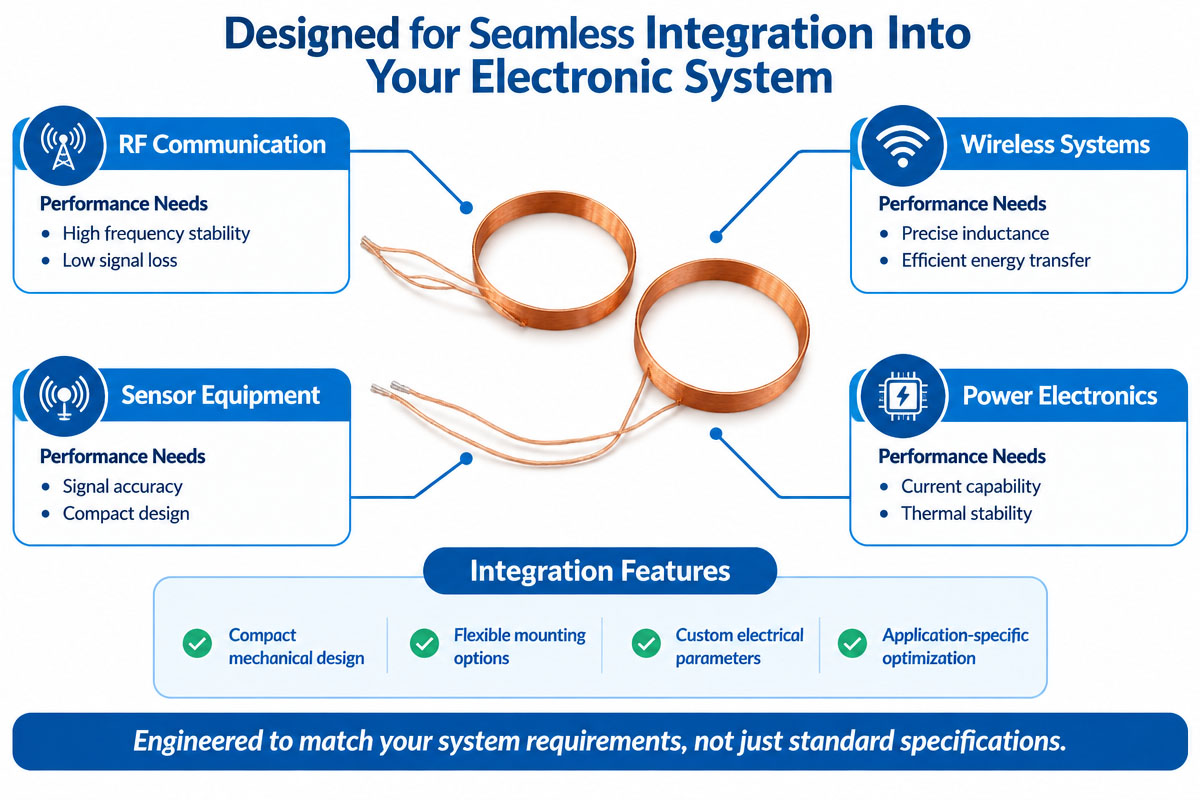
Air-core inductor coils are used in electronic systems that require high-frequency performance, accuracy and low signal interference.
RF Communications System
Air-core inductors are widely used in radio frequency circuits, antennas, transmitters and receivers because of their high-frequency performance.
Wireless Technology
Air-core coils are commonly used in wireless communication devices and charging systems due to their efficient electromagnetic coupling and low energy loss.
Applications for sensors
Stable inductance and accurate signal processing are essential in precision sensors. Air-core coils are used in measurement and detection systems.
Medical Electronics Division
High quality inductors are required in medical equipment in signal control and electromagnetic applications.
Consumer Electronics
Air-core coils are used in smart devices, communication products and advanced electronic equipment for efficient circuit designs.
Industrial Electronics Air-core inductors are used in automation systems, control equipment and high-frequency industrial apparatus because of their robustness and stable electrical properties.
With increasing demand for high-speed electronics and wireless technologies, air-core inductor coils become increasingly important as a solution for modern electronic systems.
Reasons Why Air-Core Inductor Coil Becomes Popular for RF Communication System
High-frequency stability, low signal losses, exact impedance control and reliability of electronic components become necessary when designing RF (radio frequency) communication systems. Thanks to the progress in wireless technology, air-core inductor coils are gaining popularity in RF communication systems due to the unique electrical characteristics and absence of limitations of traditional magnetic core components.
Your Trust Partner For Air Core Coil Solutions
1. Great High Frequency Performance
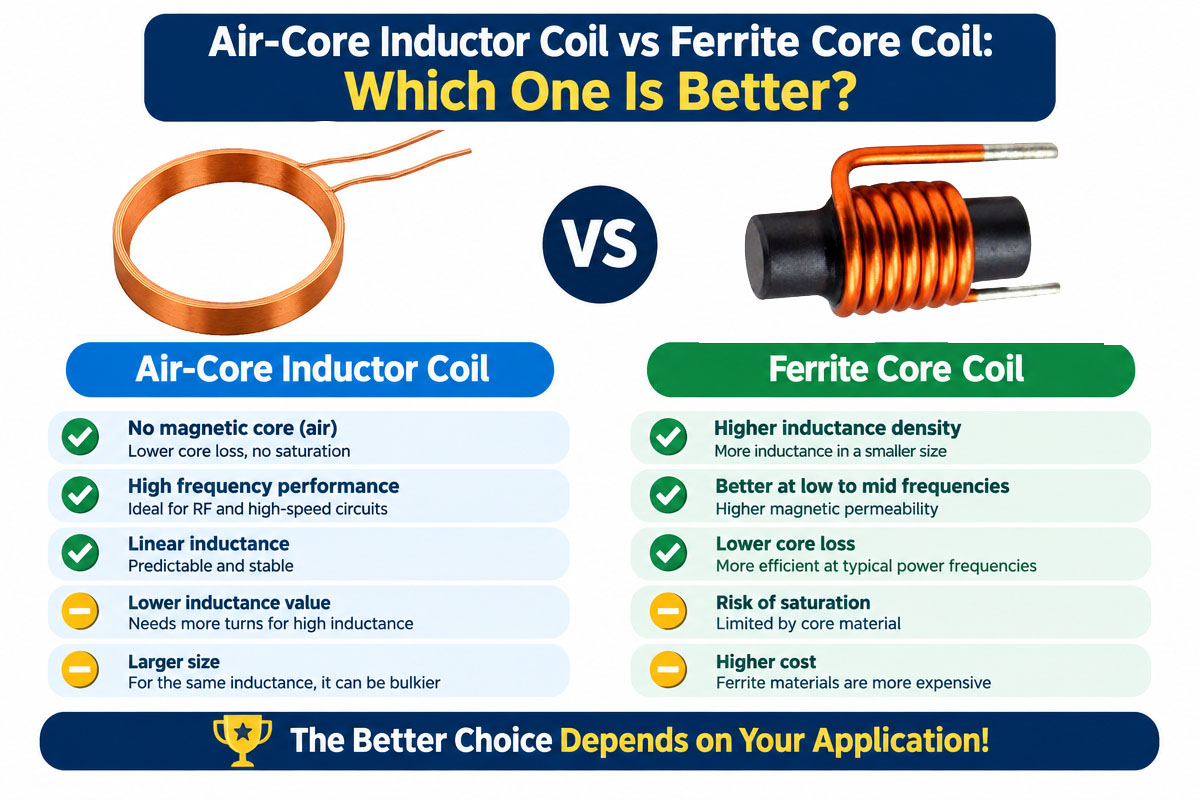
One of the main advantages of air-core inductors is great performance at high frequency.
The air-core design does not include magnetic material, like ferrite or iron-core inductors. This results in the following reduction of:
Core losses
The effect of magnetic saturation
Dependence on frequency of performance
The reduction of energy loss becomes particularly relevant as RF systems operate at high frequencies. Air-core coils have stable inductance characteristics and can be used in communication circuits which require precise signal processing.
2. Reduced Signal Losses with High Q-Factor
Quality factor (Q-factor) plays an important role in RF circuit design. High Q-factor means low energy loss and increased efficiency.
Air-Core Inductor Coils typically offer:
Reduction of resistance losses
Improved signal quality
Higher circuit efficiency
Increased frequency selectivity
These features make them very useful in RF filters, matching networks, oscillators and tuning circuits where accurate signal is essential.
3. Better Linearity and Signal Stability
In order to process properly the weak and sensitive signals the RF communication systems must not experience the effect of magnetic saturation of magnetic core inductors which causes non-linearity.
Air-core inductors can provide:
Constant inductance values
Linear performance
Decrease of distortion of the signal
Predictable electrical performance
And this is why they are so suitable in applications like wireless communication modules, receivers, transmitters and antenna circuits.
4. Suitable for antenna matching circuits
In order to transmit and receive signal the antenna system has to be properly impedance matched.
Air-Core Inductor Coils are widely used in:
antenna tuning circuits
impedance matching networks
RF filters
signal coupling circuits
and design flexibility allows optimizing such parameters as:
Value of the inductance
coil size
number of rounds
wire specifications.
This increases antenna efficiency and reliability of the communication.
5. Low Electromagnetic Interference (EMI)
RF systems are extremely sensitive to unwanted electromagnetic interference. Incorrect component selection can lead to signal degradation.
Air-core coils help to reduce unwanted effects by providing:
stable magnetic field behavior
reduction of parasitic effects
control of RF circuit.
This helps to transmit signal in complex electronic environment.
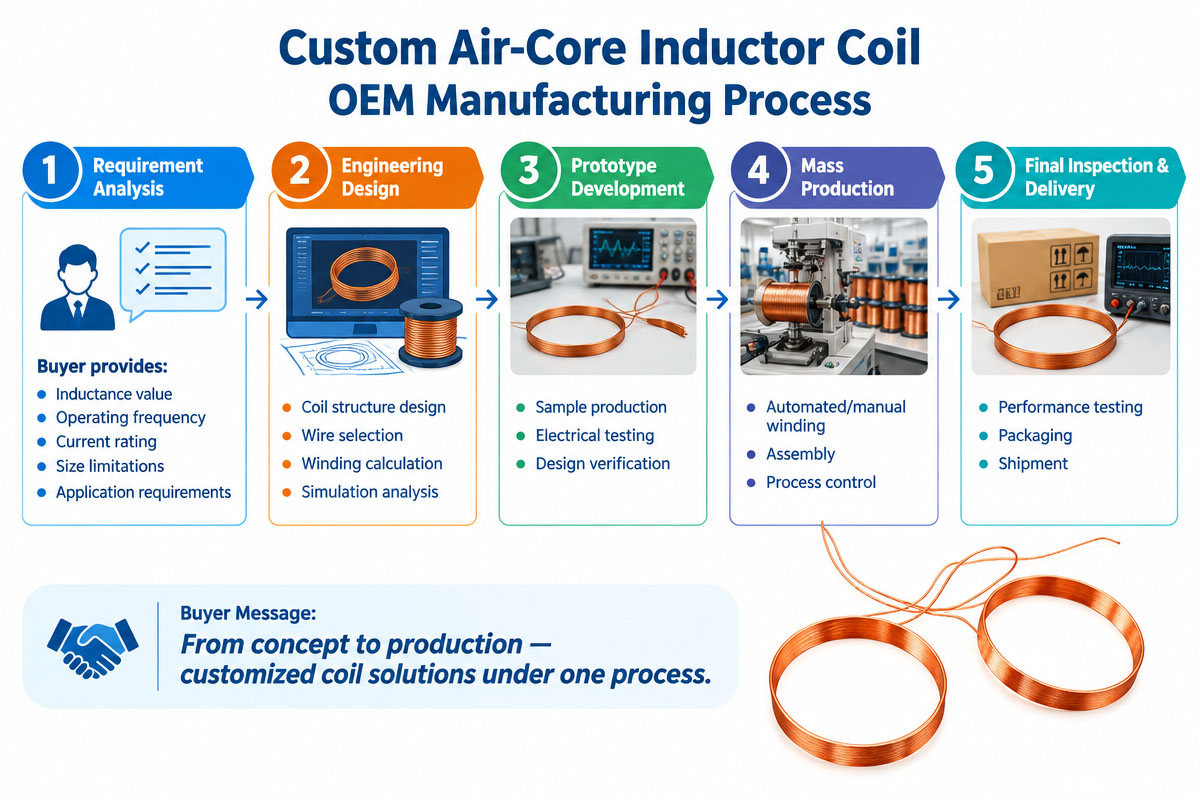
6. Custom Design Capability
RF products of today often require customized components due to the limitation in space and unique electrical requirements.
Air-Core Inductor Coils can be customized according to:
frequency of operation
inductance range
coil size
mounting structure
thickness of the wire
environment of application.
This is why they are so suitable for OEM and ODM electronic product development.
7. Compatibility with Advanced Wireless Technologies
The growing demand in faster and reliable wireless communication is one of the reasons why air-core inductors are used in many RF-related technologies including:
5G communication equipment
RF front-end circuits
signal filtering
frequency matching networks
IoT devices
wireless sensor modules
low-power communication systems
Bluetooth and Wi-Fi Products
RF tuning circuits
signal processing modules
satellite and aerospace communication
high-frequency communication systems
precision radio frequency equipment.
8. Electronic Design: Small and Lightweight
Although air-core coils may require different designs than magnetic core inductors, the simplicity of their construction offers advantages for specialized RF applications.
Advantages are . . .
lightweight construction
flexibility of mechanical design
smooth integration into custom systems
reduction of material complexity.
This allows implementing small and power efficient RF devices.