Skip image slider
Anti Dieseling Solenoid Valve for Diesel Engine Control
Anti Dieseling Solenoid Valve for Reliable Engine Shutoff
Custom Anti Dieseling Solenoid Valve for OEM Systems
Compact Anti Dieseling Solenoid Valve for Fuel Control
Efficient Anti Dieseling Solenoid Valve for Diesel Engines
Anti Dieseling Solenoid Valve for Automated Fuel Systems

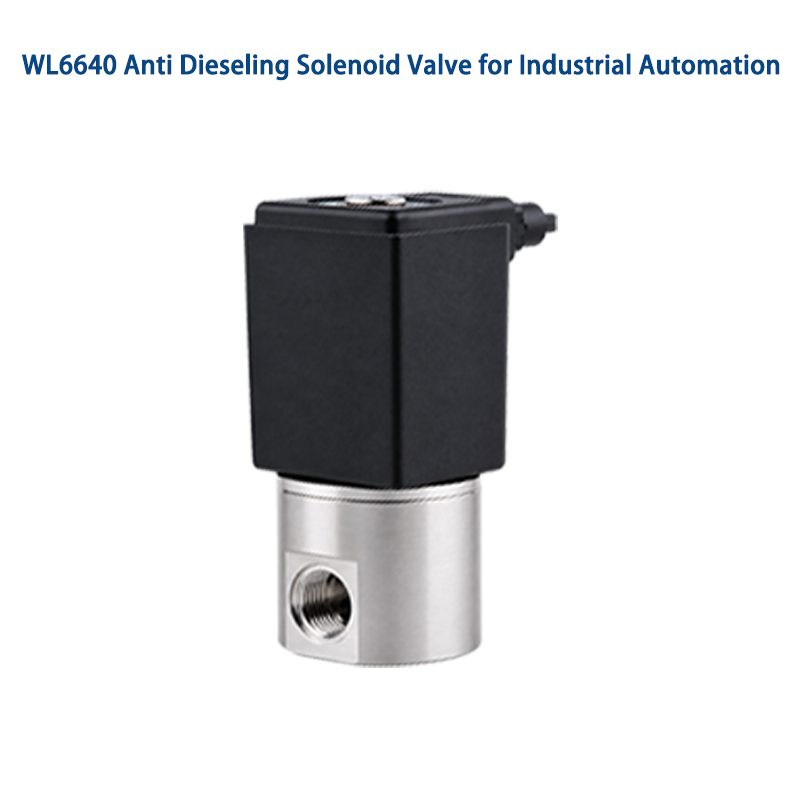
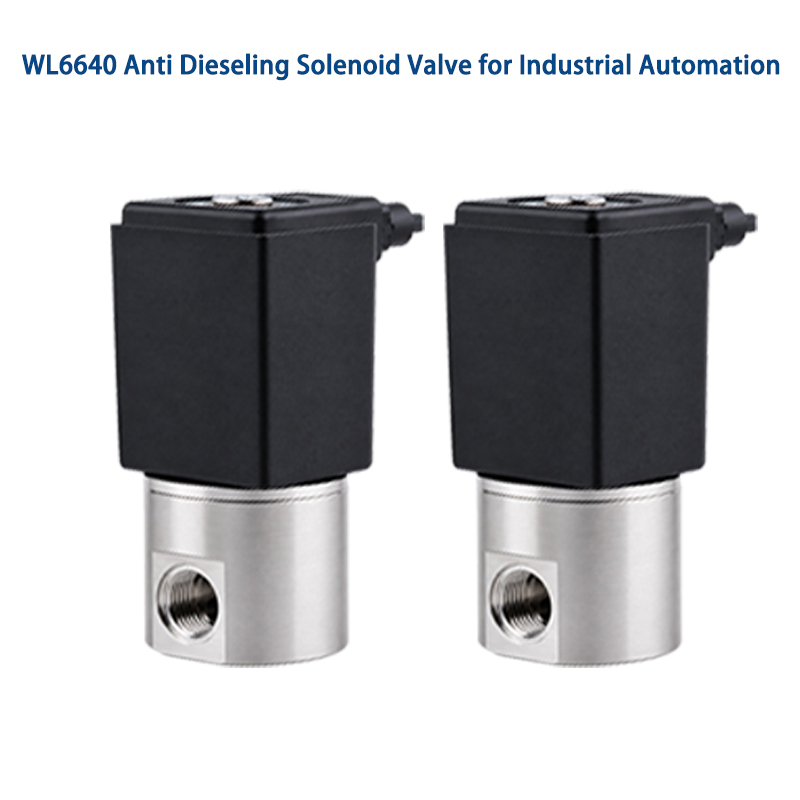
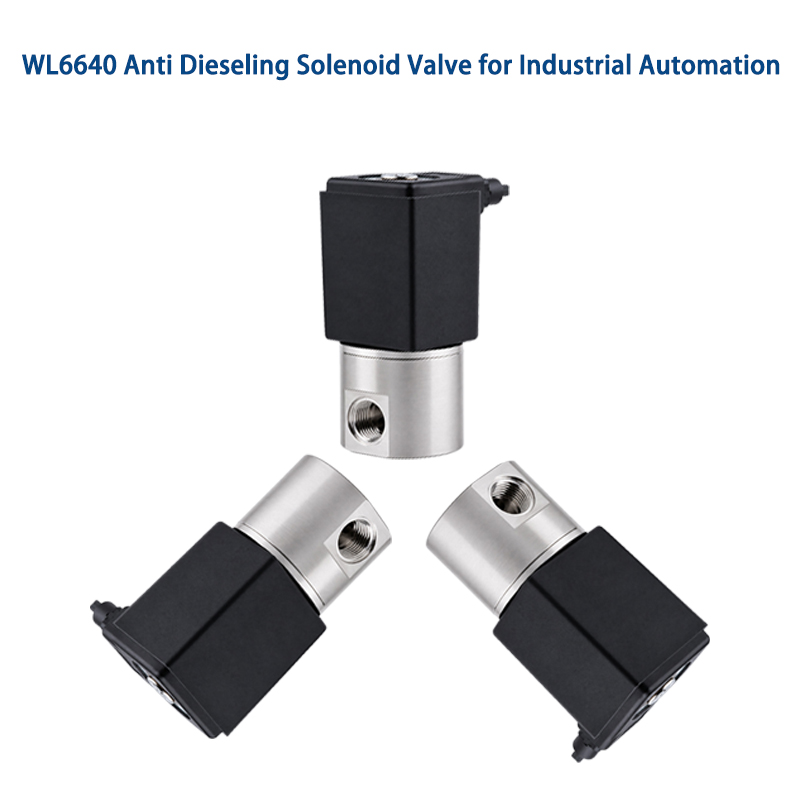
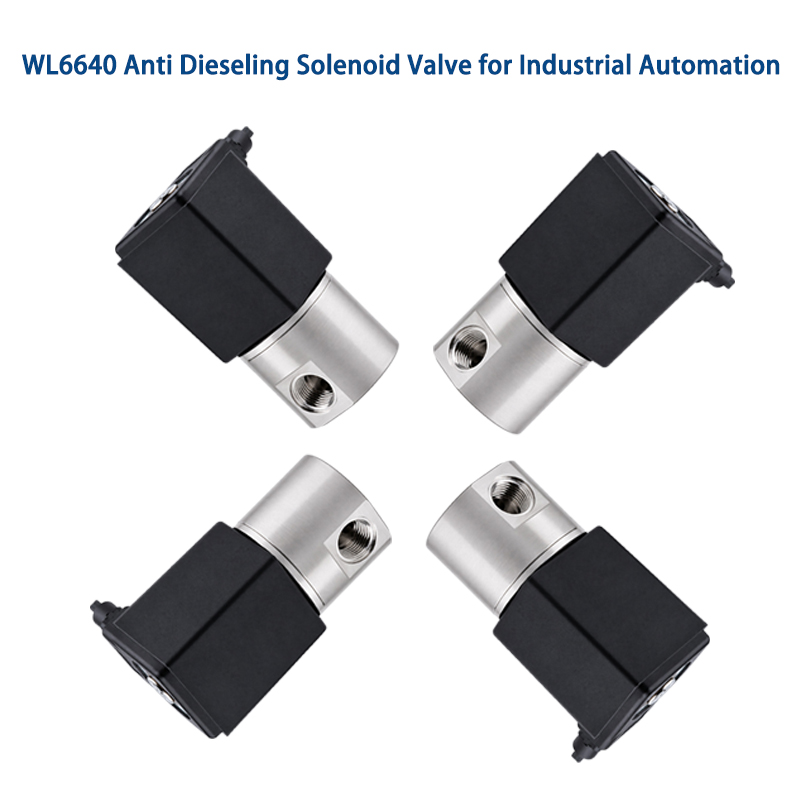
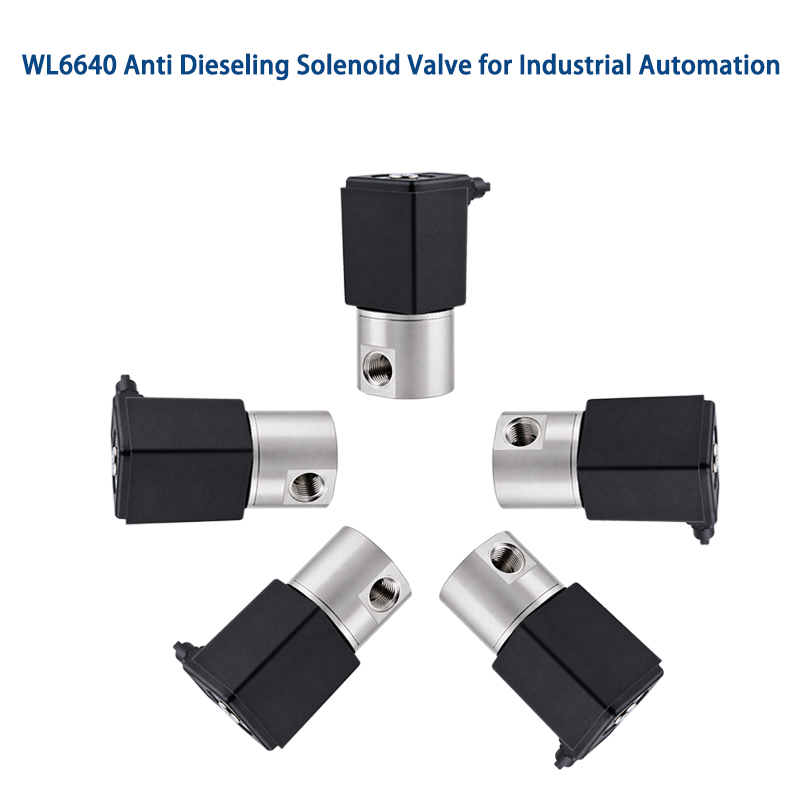
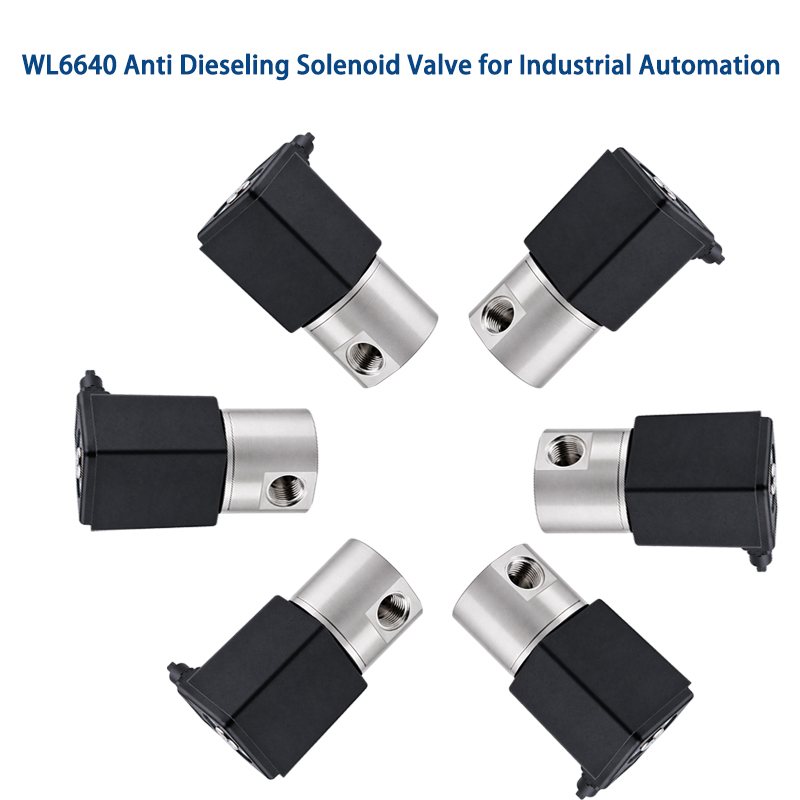
WL6640 Anti Dieseling Solenoid Valve for Industrial Automation

The anti dieseling solenoid valve is an electromechanical valve that is used for isolation of the fuel flow or fluid during the shutdown process. The anti-diesel engine solenoid valve isolates the fuel flow to stop the engine and prevent its unintended operation due to remaining fuel or other reasons. When the valve receives the electric control signal, it either blocks or allows the fuel flow.

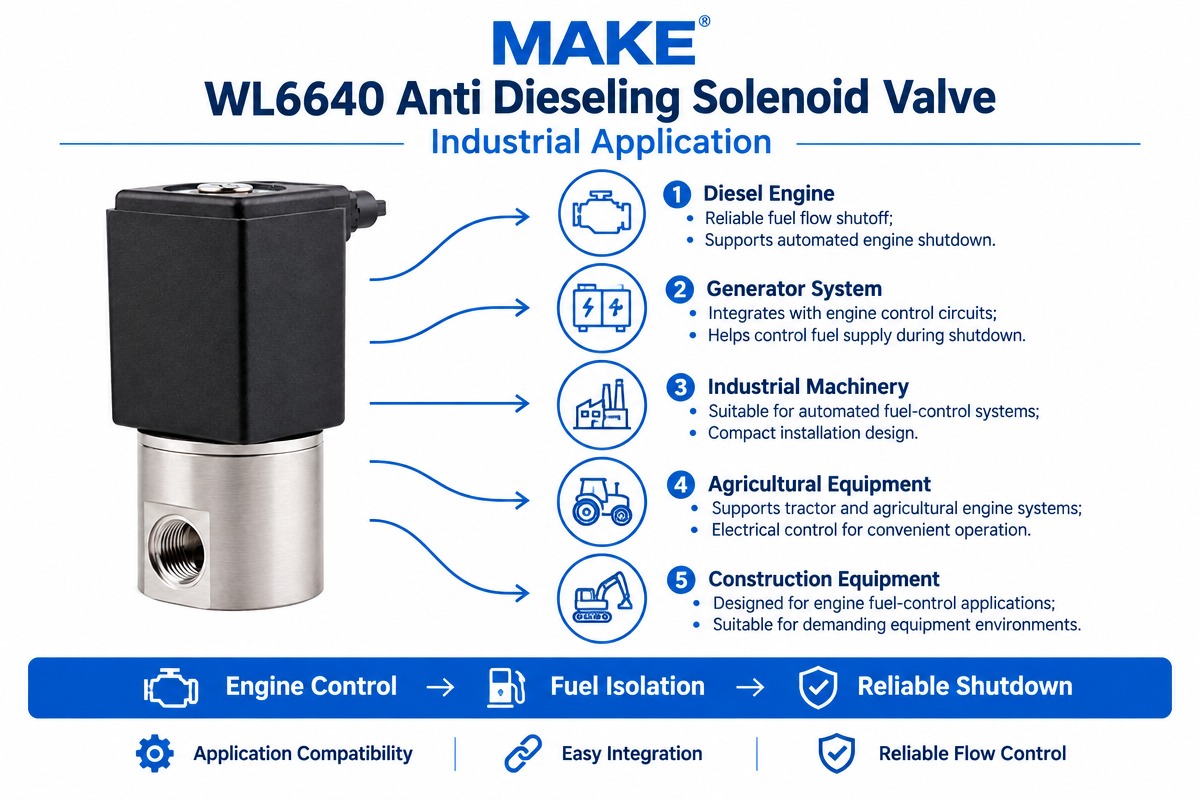
The anti dieselating solenoid valve is extensively used in diesel engines, generator sets, industrial equipment, agricultural equipment, construction machinery, and fuel control systems. The valves are offered with different valve functions (normally closed or normally opened), voltages, sealing materials, connections, and pressure specifications depending on the application. It is necessary to choose the right material if the valve will work with diesel fuel, lubricants, chemicals, or other media. A suitable anti-dieseling solenoid valve may ensure reliable engine operation and shutdown control. In order to achieve it, the valves should be correctly dimensioned, wired, selected pressure and protected from environmental factors.

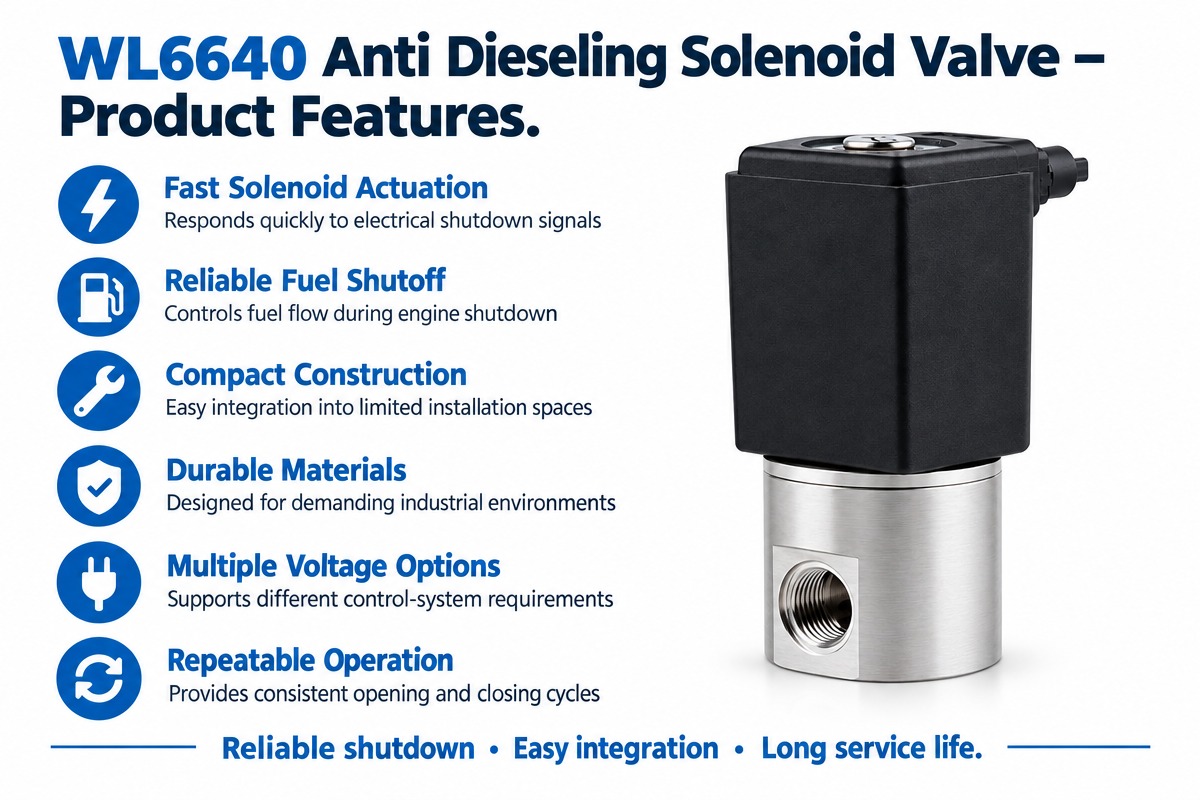
Anti Dieseling Solenoid Valve Product Feature Overview

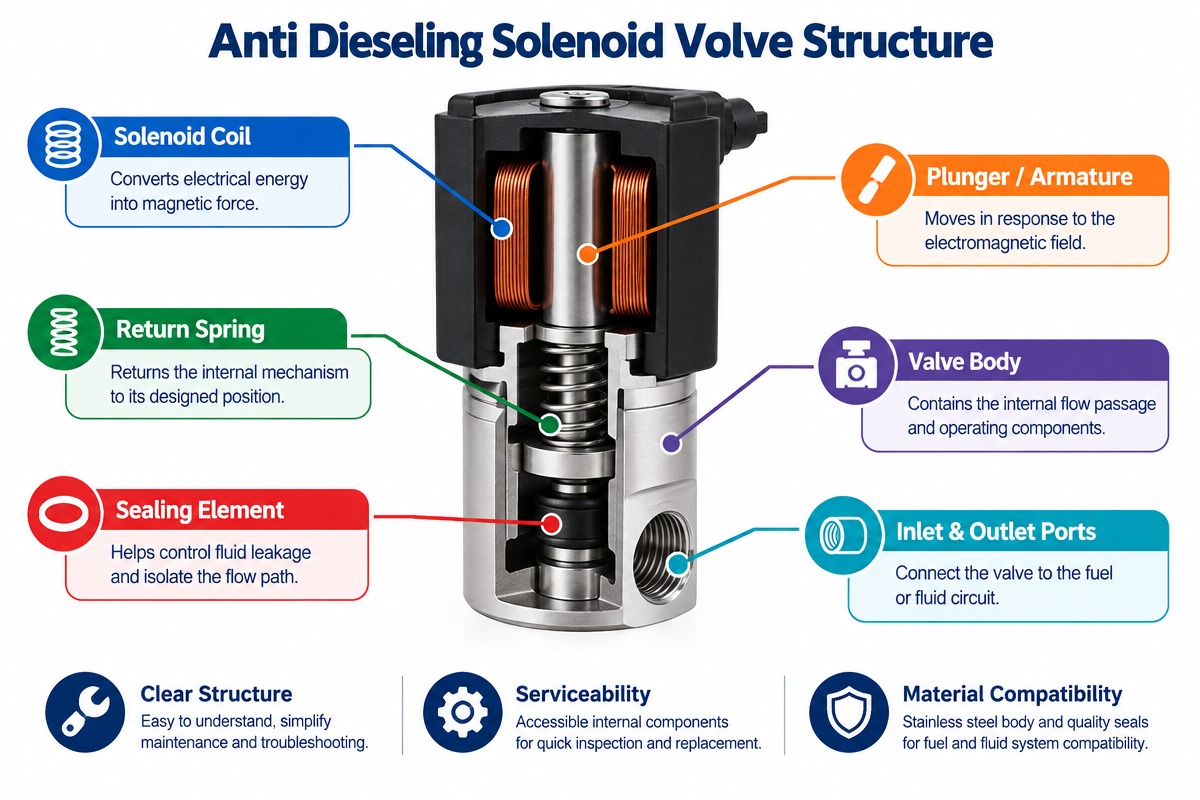
The anti dieseling solenoid valve is an electrically driven valve used for stopping and controlling the flow of fuel or fluid during shutdown of the engine. The main task of the valve is providing reliable fluid isolation during the engine shutdown process in order to prevent its accidental continued operation due to remaining fuel. The valve has a solenoid actuator, which drives the plunger or internal seal in reaction to the electric control signal. An anti dieseling solenoid valve is used in diesel engines, generators, industrial machinery, agricultural equipment and fuel control systems.

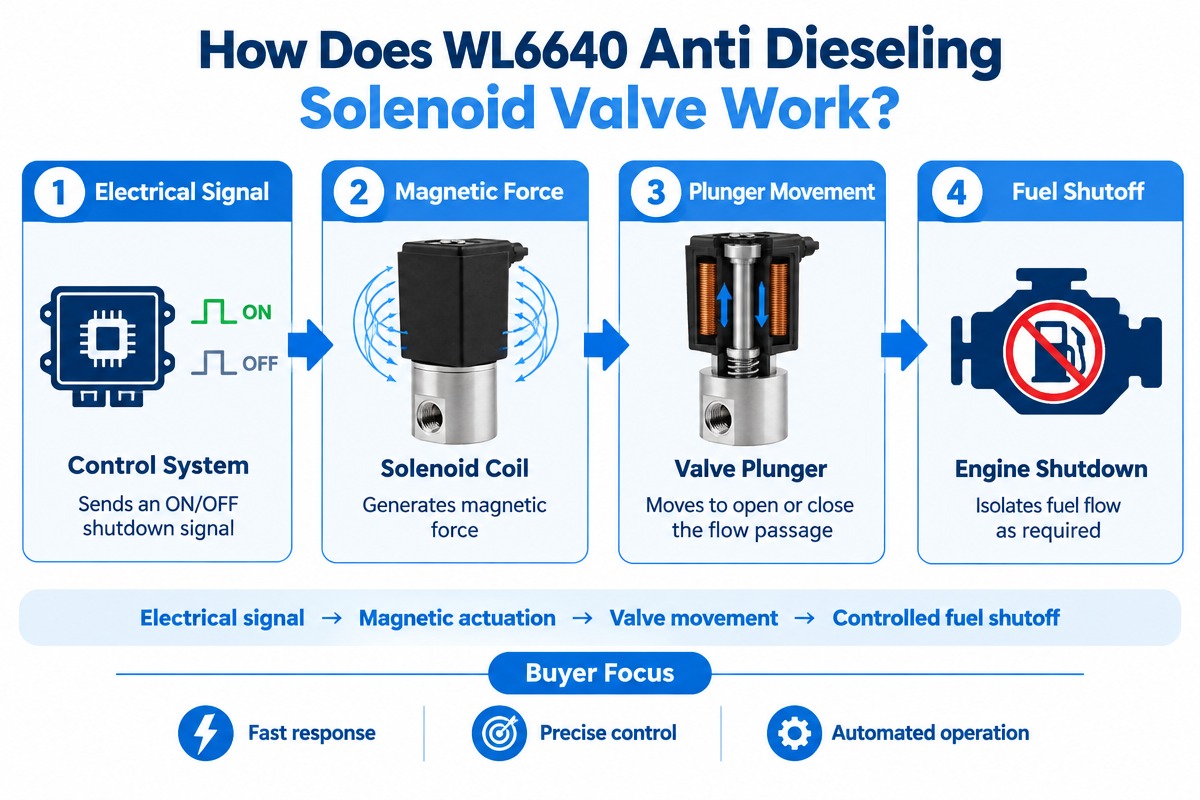
How Does Anti Dieseling Solenoid Valve Work?

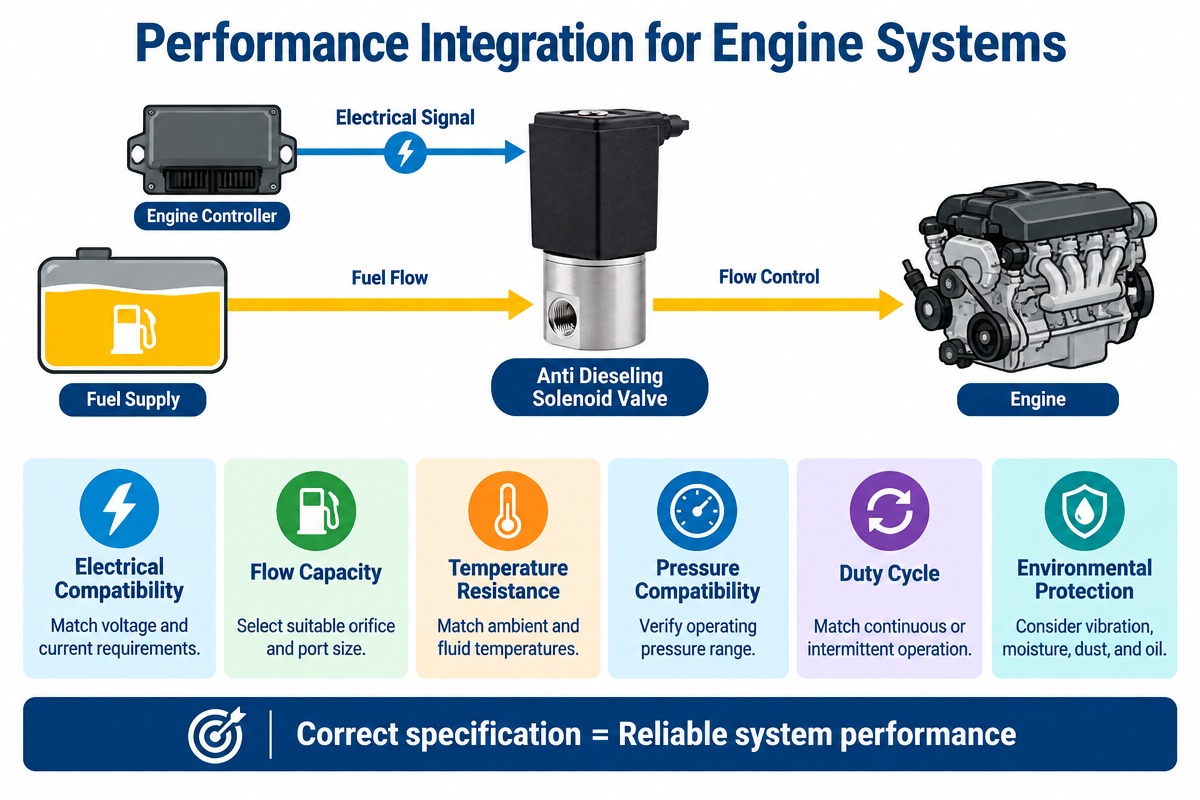
The anti dieseling solenoid valve is the device that converts electric signal to valve motion.

Control signal: The electric signal is sent from the engine controller, ignition circuit or other control circuitry to the valve solenoid coil.

Magnet activation: The electrical current produces the magnetic field.

Plunger movement: The force of the magnet moves the internal plunger against the return spring.

Valve operation: The valve opens or closes the fluid path depending on the valve configuration.

Engine shutdown: When the shutdown signal is applied, the valve moves to the desired fail position and stops the fuel flow.

Valve reset The valve moves back to the original position when the signal returns.

The actual sequence of the operation depends on whether the valve is normally closed or normally opened and engine control system.

Anti Dieseling Solenoid Valve Video

Anti Dieseling Solenoid Valve Detail Display

Anti Dieseling Solenoid Valve Technical

Brand Weilong Model Number WL 6640
Rated Voltage (V) DC12Vย  or 24V Rated Power (W) 12W
Work Mode Air or Liquid Control Valve Working Pressure (MPa) 30KPa
Air-Flow Rate 0 L/minute Reset Time(s) 1 S On, 1 S Off
Service Life 200 Thousand Times Certification CE, ROHS, ISO9001,
Pipe Gate ย inside: 4 mm Lead Wire Length(mm) 66 MM
Install Style Screw Tolerance of Dimension ยฑ 0.1 MM
Water-proof None Insulation Class B
Hi-Pot Test AC 600V 50/60 Hz 2s Non-excitation Holding Force 0
Working Temperature -10ยฐC-100ยฐC Duty Cycle 1-100%
Thread Depth (mm) / Payment Term TT, or LC At Sight
Sample Order Yes Warranty 1 Year
MOQ 1000 pcs Supply Ability 5000 pcs per week
Delivery Time 30 Days Port of Loading Shenzhen

Why is the anti dieseling solenoid valve becoming so popular?

Anti-dieseling solenoid valves are used more often as modern engines and machinery systems require precise and automatic fuel flow control. Mechanical shutdown systems are often difficult to integrate with electronic controlled equipment, whereas electrically driven valves can respond directly to the ignition switch, controller, safety circuits and engine shutdown system.

Also, the integration is very important and fuel-control assemblies can include the compact solenoid valve without the complicated mechanical linkages. This allows implementing the automatic shut-off function in the generators, agricultural machinery, construction machines and industrial engines.

There is also a trend towards automation and increased demand for electronically controlled fuel isolation. Manufacturers can select from various voltages, port sizes, sealing materials, pressure ranges and other valve parameters depending on the actual application.

Besides, the development of the better coil technology, sealing materials, corrosion resistant valve constructions and compact valve designs provide reliable operation in harsh environments. However, valve performance is heavily depended on the actual fluid, pressure, temperature, electrical and duty cycle and correct specification and installation is required.

Anti Dieseling Solenoid Valve Applications

Anti Dieseling Solenoid Valve for Engine Safety Control

Anti-dieseling solenoid valves are used in the applications that require automatic shutoff of fuel or fluid during engine operation and shutdown.

Diesel engines: The valve can be incorporated in the fuel control circuit to stop the fuel supply in case of shutdown command.

Generator sets. Solenoid valves can be used in backup and standby generators as a part of an automated fuel-control and engine shutdown system.

Agricultural machinery: Electrically controlled fuel valves are suitable for automatic engine control in tractors, harvesters, pumps and other agricultural machinery.

Construction equipment: Excavators, loaders, compressors and other diesel-powered machines may require compact fuel shutoff components able to work in harsh conditions.

Industrial engines: The valve can be used in the automated shutdown circuits in pumps, compressors, hydraulic power units and industrial drive systems.

Automotive systems: The electrically actuated valves can be used in some engine and fuel control systems where controlled fuel isolation is required.

Fuel delivery systems: When the valve materials and pressure ratings are compatible, the valve can regulate fuel flow between the storage, filtration, pumping and engine components.

Automation and safety systems: Anti-dieseling solenoid valves can be used in emergency-stop circuits, programmable controllers, timers and engine shutdown systems.

Anti Dieseling Solenoid Valve Adv. & Disadv

Anti Dieseling Solenoid Valve Manufacturer Solutions

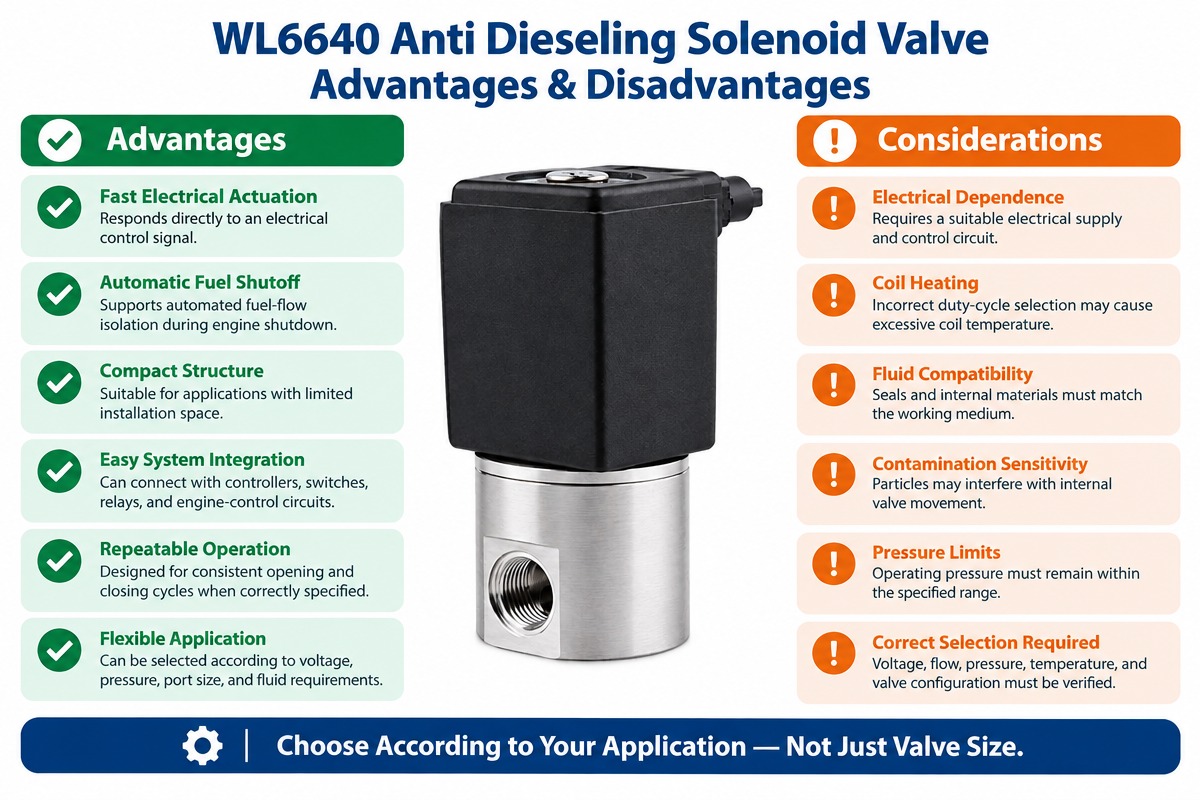
Advantages and Disadvantages of the Anti Dieseling Solenoid Valve

Benefits

Fast electrical control: Electromechanical operation provides fast response to the electrical signal.

Automatic operation The valve can be directly connected to the switches, controllers, sensors and engine shutdown system.

Compactness: Several solenoid valves provide effective flow control in a small package.

Simple integration: Electrical actuation decreases the need for mechanical linkages and simplifies the automated equipment design.

Repeatable operation: Appropriate selection of the valve will provide repeatable opening and closing cycles.

Various configurations: The valve can be ordered with various voltages, ports, body materials, seals and valve functions.

Reduction of undesired fuel flow: The valve can isolate the fuel flow during shutdown process.

Disadvantages

Electrical dependency: The valve requires an appropriate electrical supply and control circuit.

Heating of the coil โ€“ Continuous energization can cause heating so correct selection of the duty cycle is important.

Susceptibility to contamination: The plunger movement and sealing can be affected by contamination.

Pressure limitations: The specified pressure and flow limits of each valve should not be exceeded.

Degradation of the seals: Sealing materials can be affected by fuel, temperature and environment exposure.

Maintenance: Periodical inspection and cleaning or replacement may be needed in harsh industrial environments.

Incorrect valve selection: Poor performance or early failure due to incorrect voltage, pressure, seal material or valve function.

Anti Dieseling Solenoid Valve for Precise Fuel Control

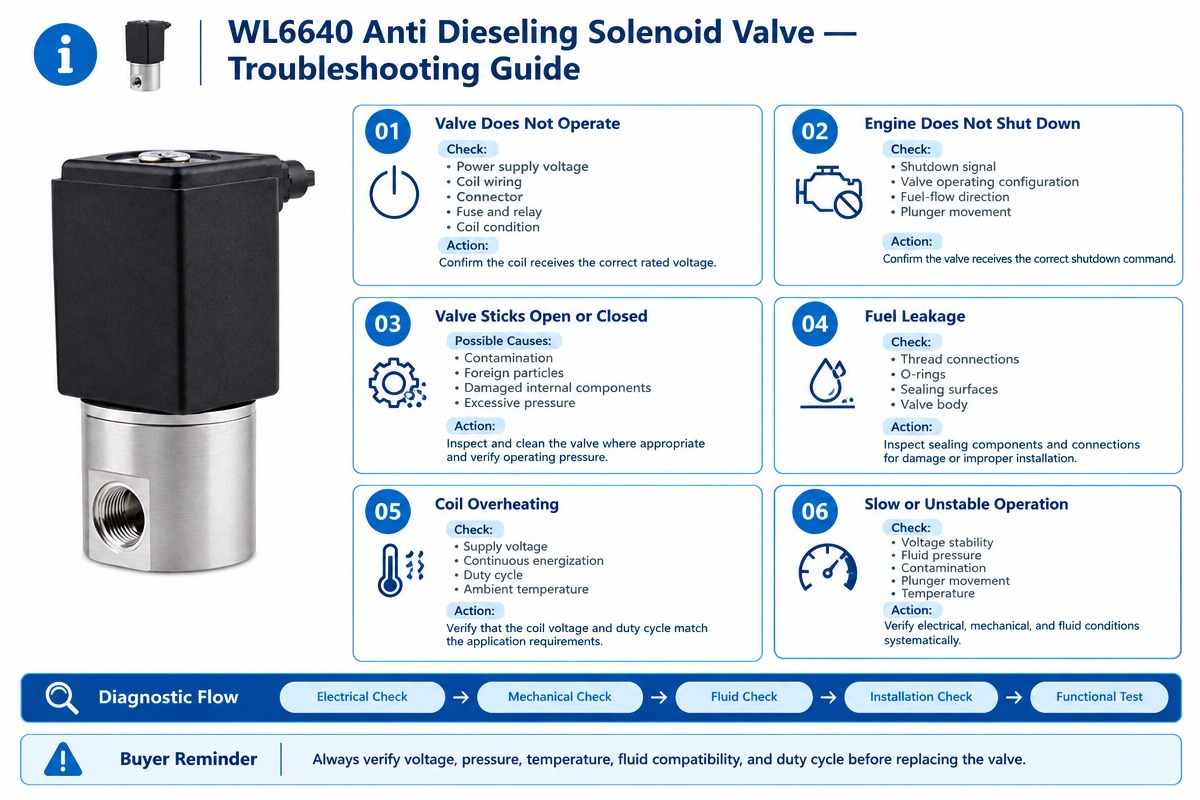
Troubleshooting of the Anti Dieseling Solenoid Valve

In case the anti-dieseling solenoid valve does not operate as expected, it is necessary to check the electrical system and then mechanical and fluid conditions.

1. Valve Does Not Work

Check the coil terminals for supply voltage. Check the control switch, relay, fuse, wiring and connector for functionality. If the proper voltage is there and the coil does not work, check the coil for damage.

2. Engine Does Not Shut Down

Verify that the valve receives the shutdown command. Check if the valve configuration corresponds to the required normally opened or normally closed function. Check if the plunger is contaminated or mechanically stuck.

3. Valve Position

Look into the valve for contamination and check if the plunger moves freely. Check the system pressure to ensure it does not exceed the operating pressure range of the valve.

4. Fuel Leakage

Check the valve body and threaded connections and seals and O-rings for leaks. Check the connections are torqued as per manufacturerโ€™s recommendations and replace the damaged sealing components.

5. Overheating coil

Check that the supply voltage equals to the coil rating. If the valve is intended for intermittent duty, make sure that it is energized continuously.

6.Slow Response

Check for contamination, overpressure, wrong voltage or mechanical wear. Ensure that the selected valve will have acceptable flow and response characteristics.

7. Repeated Failures

Verify temperature, vibration, moisture, fuel compatibility, electrical transients, installation orientation and duty cycle. If the problem continues, check the entire engine control circuit.

FAQ

1. What is an anti dieseling solenoid valve?

An anti dieseling solenoid valve is an electrovalve that regulates or shuts down the fuel or any other compatible fluid when engine shutting down is required. It prevents the engine from operating due to the leftover fuel flow.

2. What is the working of an anti-dieseling valve?

The solenoid valve uses an electromagnetic coil that causes the plunger to move with the turning on and off of the electrical power. Such movement allows opening and closing of the fluid passage, thus making automatic fuel shutoff possible.

3. What are anti-dieseling solenoid valves used for?

These types of valves are widely used in diesel engines, generators, agricultural machines, construction machinery, industrial engines, compressors, pumps, and automation systems.

4. What voltage is the anti dieseling solenoid valve?

12VDC and 24VDC are the most frequently used electrical configurations. There are other possibilities such as AC and DC voltages. The voltage of the coil must be compatible with the control system.

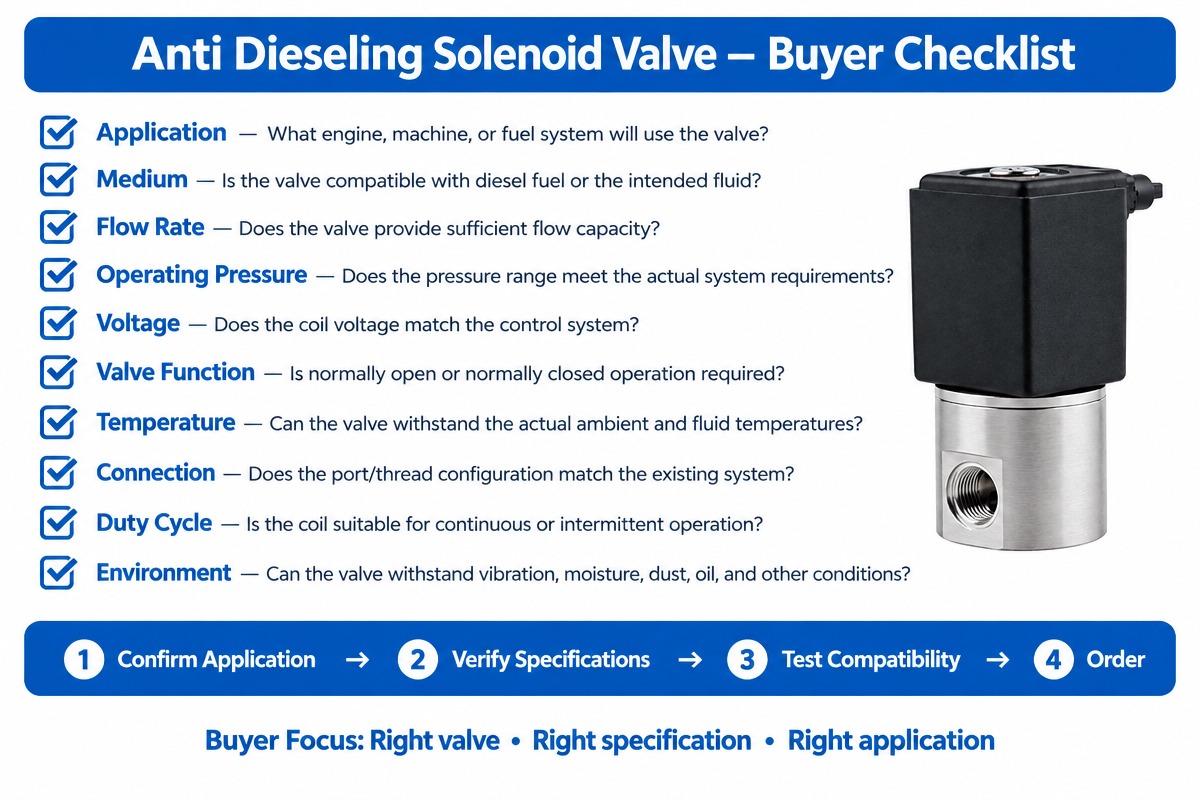
5. How to choose the proper anti dieseling solenoid valve?

Consider the controlled media, flow rate, operating pressure, valve size, electric voltage, normally open or normally closed position, temperature range, duty cycle, sealing material, connection type and environment conditions.

6. Can the anti dieseling solenoid valve be used for diesel fuel?

Many of the valves can operate with diesel fuel, but its compatibility depends on the body of the valve, sealing material, interior of the valve, pressure rating and temperature range. Always check manufacturers’ specifications.

7. Why does the anti dieseling solenoid valve fail to shut off?

Wrong voltage, damage wiring, broken coil, contamination, stuck plunger, too much pressure, wrong valve configuration or damaged sealing material are the possible reasons for it.

8. How to prolong the life of the anti dieseling solenoid valve?

Use compatible fluids; keep pressure and temperature within limits; protect electrical connections; avoid contamination; use filtration if necessary; do not exceed the duty cycle of the coil; periodic inspection of the valve for leakage or wear.

Selection of the Anti Dieseling Solenoid Valve

It is necessary to perform the correct selection of the anti-dieseling solenoid valve, taking into account mechanical, electrical, and environmental parameters.

1. Select a Medium

First, it is necessary to identify which medium the valve will work with. Diesel fuel, gasoline, lubricating oil, air, water, and chemicals are subjected to different compatibility requirements. The compatibility of the body and seals with the actual medium should be verified.

2. Define Flow Rate Requirements

The required flow rate should be determined, the appropriate valve port size selected, and the valve orifice selected. An undersized valve can restrict the fuel flow, while an oversized valve increases the cost and provides unnecessary capacity.

3. Identify Working Pressure

It is necessary to identify the minimum and maximum system pressure. The valve pressure range should cover all operating conditions, including start-up and shutdown pressure.

4. Specify Electrical Specifications

Available control voltages, such as 12 VDC, 24 VDC, etc., should be identified. Other electrical specifications include current draw, coil power consumption, wiring configuration, and connector type.

5. Select Valve Function

It is necessary to determine the valve function, such as normally closed, normally opened, or some other function. The valve position without power should be defined.

6. Consider Temperature

The ambient temperature and the temperature of the fluid around the valve should be measured. The appropriate coil insulation, body material, and seals that can work in the actual temperature range should be selected.

7. Evaluate Environmental Conditions

Vibration, dust, moisture, oil exposure, and outdoor conditions influence the life of valves in engines and machinery. Suitable valve enclosure and protection levels should be selected.

8. Confirm Installation Requirements

Thread type, flange configuration, valve orientation, installation space, and flow direction should be confirmed before ordering.

9. Consider Duty Cycle

The valve duty cycle should be verified: whether the valve is momentarily operated at shut-down or energized continuously. The coil capable of operating under the actual duty cycle should be chosen.

10. Safety Requirements Validation

Finally, it is necessary to consider the required fail position, manual override, response time, and compatibility with the engine shutdown circuit. Testing of the entire valve-engine system prior to production will help to guarantee the reliable operation.

Tips to Avoid Common Design Mistakes

Do not rely only on port size. Also, flow rate and pressure drop should be considered.

Media compatibility check. Seal materials that work with water may not be compatible with the diesel fuel or chemical.

Voltage match. Incorrect voltage can lead to overheating, weak actuation, or coil failure.

Fail position selection. Whether the valve opens or closes without the power should be determined.

Operating temperature verification. The engine compartment can expose the valve and coil to the higher temperature.

Vibration consideration. Automotive and industrial engines require proper mechanical construction and mounting.

Correct flow direction. Follow the indicated flow direction if it is provided by the manufacturer.

Consider the duty cycle. A coil that is meant for intermittent operation can be overheated under continuous energization.

Wiring protection. Wiring should be protected against vibration, heat, oil, and mechanical damage.

Shutdown test. The valve operation during shut-down should be verified.

Pressure transients. Start-up and shut-down conditions can be much different than normal operation.

Suitable filtration. Contamination can cause the plunger sticking and incomplete closure.
Get A Free Quote Now

Contact Form

Related Products

Related News

Scroll to Top

Get A Free Quote Now !

Contact Form
If you have any questions, please do not hesitate to contact us.
Weilong Solenoid Company Culture