Skip image slider
Chemical Solenoid Valve for chemical flow control Guide
Chemical Solenoid Valve corrosive fluid control Systems
Chemical Solenoid Valve for chemical flow control
Chemical Solenoid Valve for industrial dosing Solutions
Chemical Solenoid Valve for chemical feed systems Guide
Chemical Solenoid Valve for chemical feed equipment

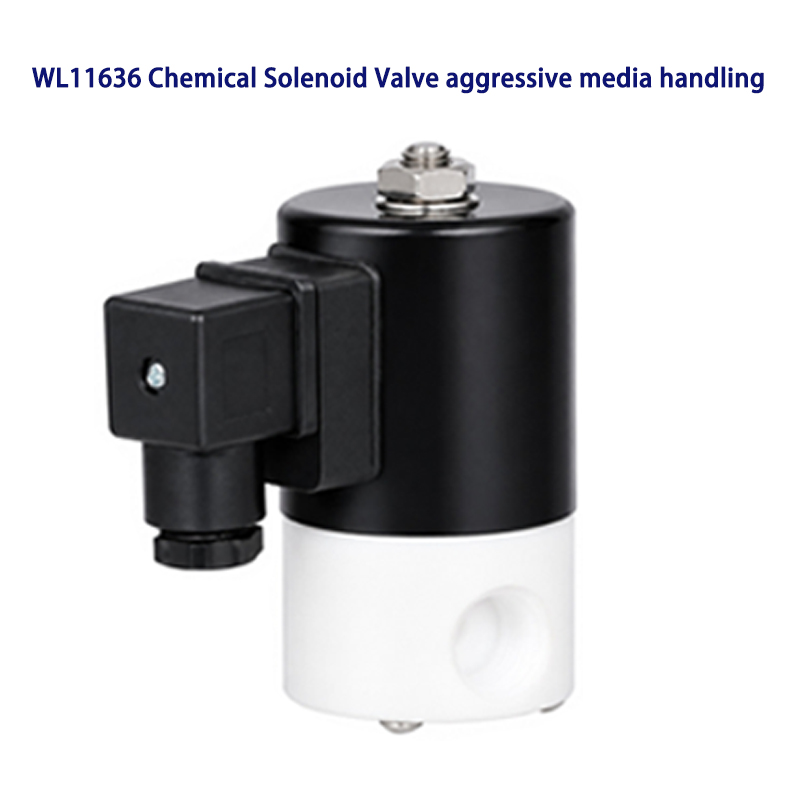
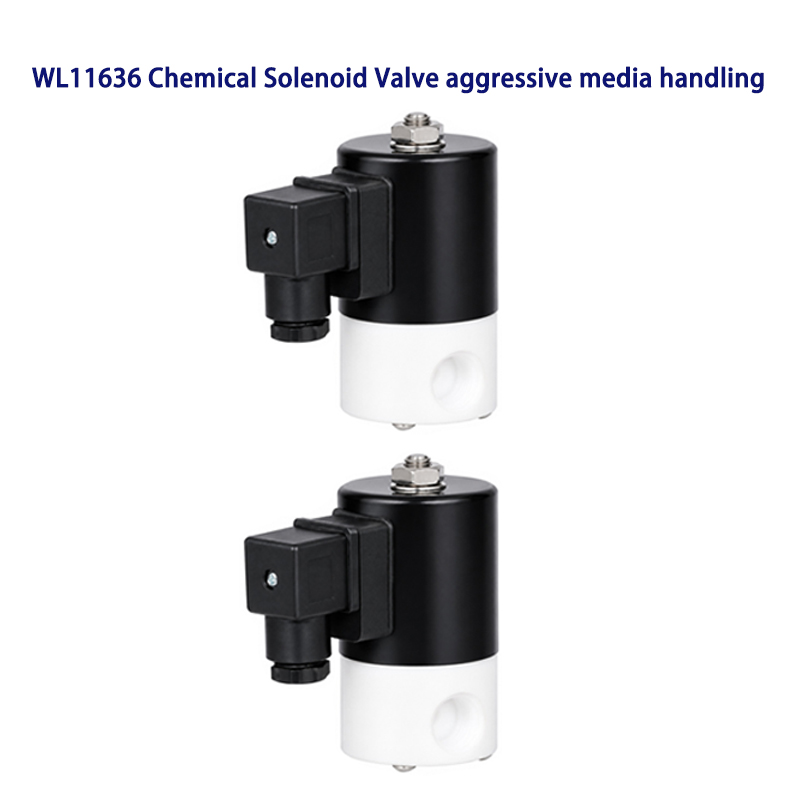
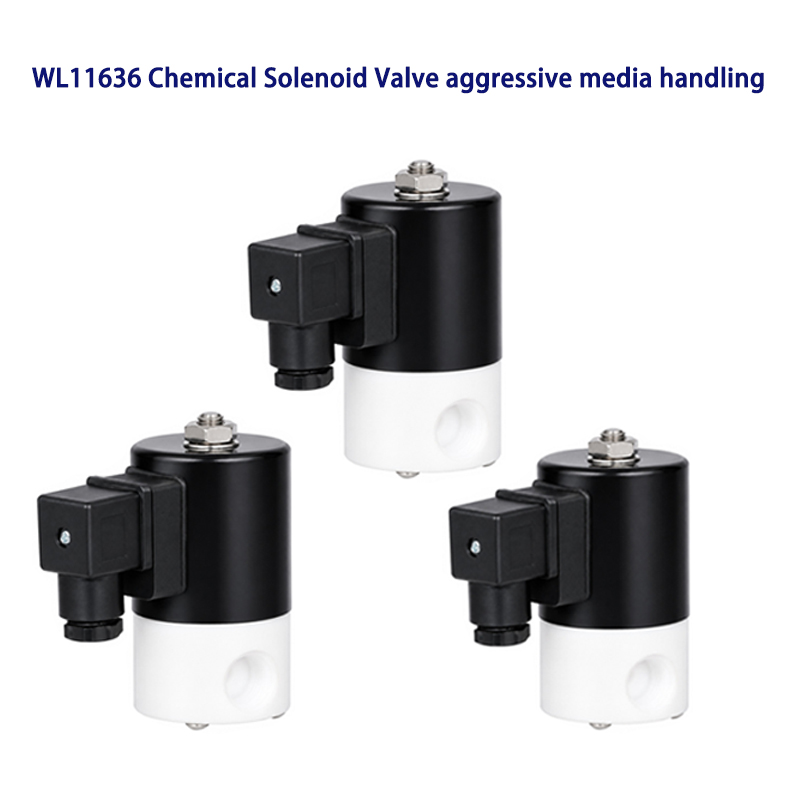
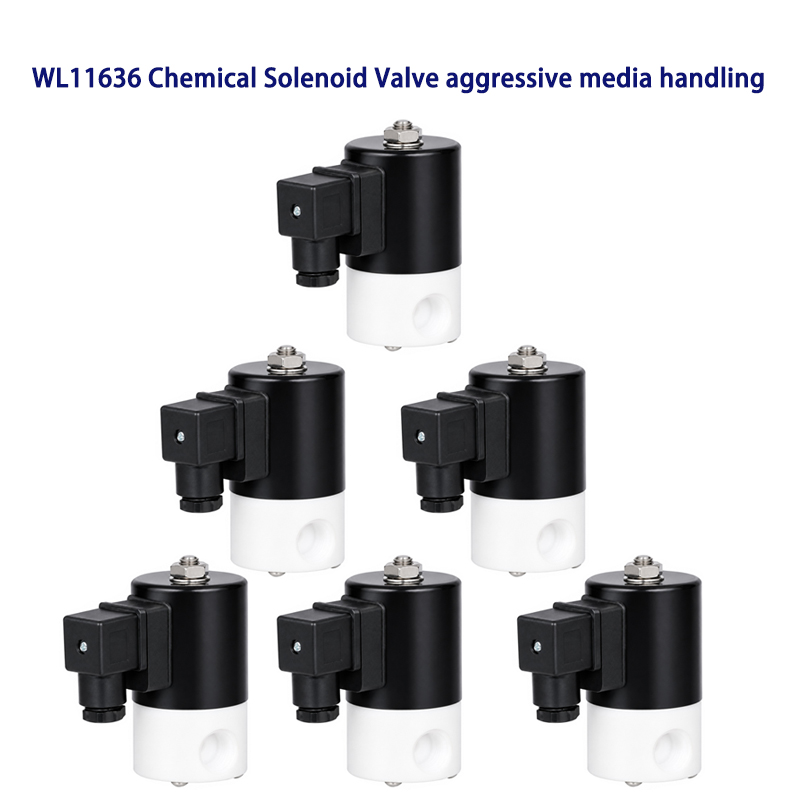
WL11636 Chemical Solenoid Valve for corrosion resistant systems

Chemical Solenoid Valve is an electrically operated valve, which is used to control the flow of chemical liquids, gasses and other aggressive media. It combines electromagnetic actuation with chemically resistant wetted materials to provide reliable on/off flow control for demanding industrial environments. Depending on the chemical, temperature, pressure and concentration, wetted components and seals may be PTFE, PVDF, PP, stainless steel or specialized elastomers. Chemical solenoid valves are widely used in dosing equipment, water treatment systems, chemical processing lines, laboratory equipment, cleaning systems, and automated production machinery. Their small design, rapid response and easy electrical control make them suitable for automated fluid management. Reliable operation and long service life when working with corrosive or reactive media depends on material compatibility, pressure rating, flow capacity, seal selection and electrical configuration.

Chemical Solenoid Valve Description

What is Chemical Solenoid Valve?

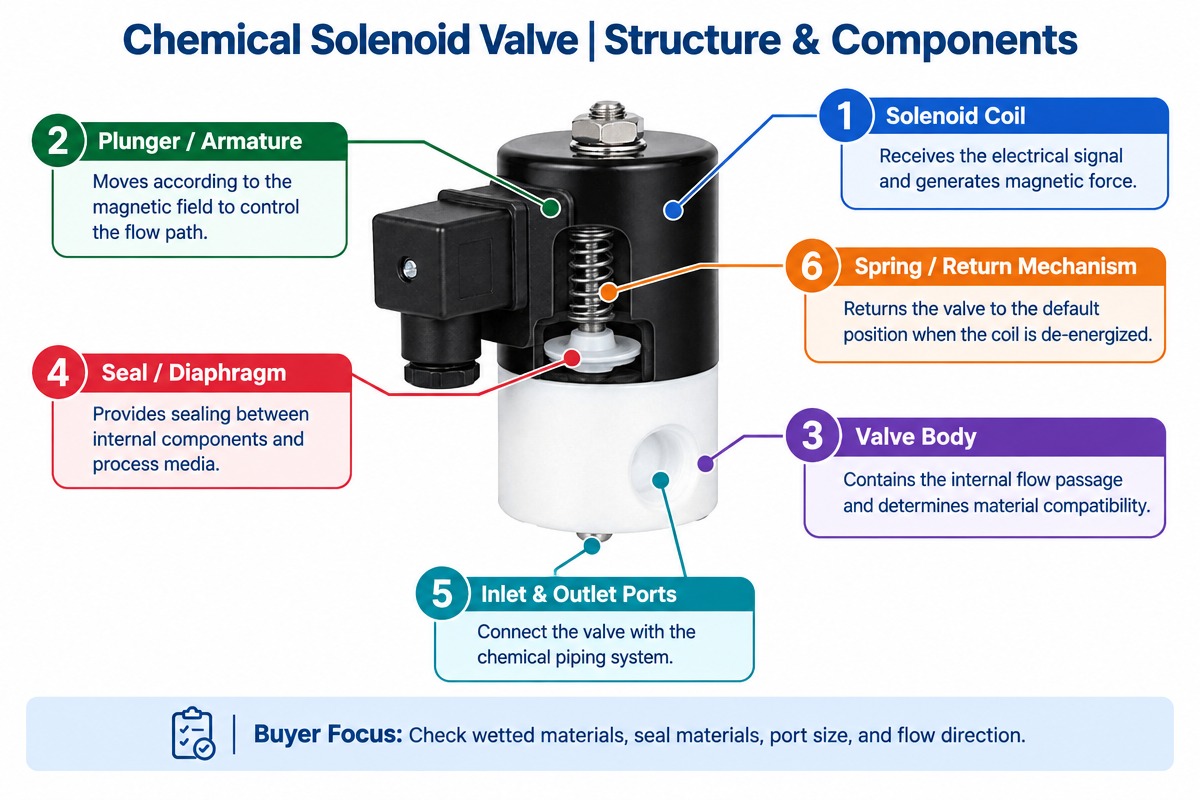
A Chemical Solenoid Valve is an electrically operated valve for starting, stopping or controlling the flow path of chemical fluids. It uses an electromagnetic coil. When electrical power is applied, the coil moves a plunger or diaphragm. Valve body, seals and internal components are selected based on the chemical properties of the handled media. Specific chemicals are resisted by materials such as PTFE, PVDF, polypropylene, stainless steel and compatible elastomers. Chemical solenoid valves find application in a wide range of areas, including dosing, water treatment, chemical processing, laboratory equipment, cleaning systems and automated production equipment. Chemical compatibility must be correct for safe and reliable operation.

How Does a Chemical Solenoid Valve Work

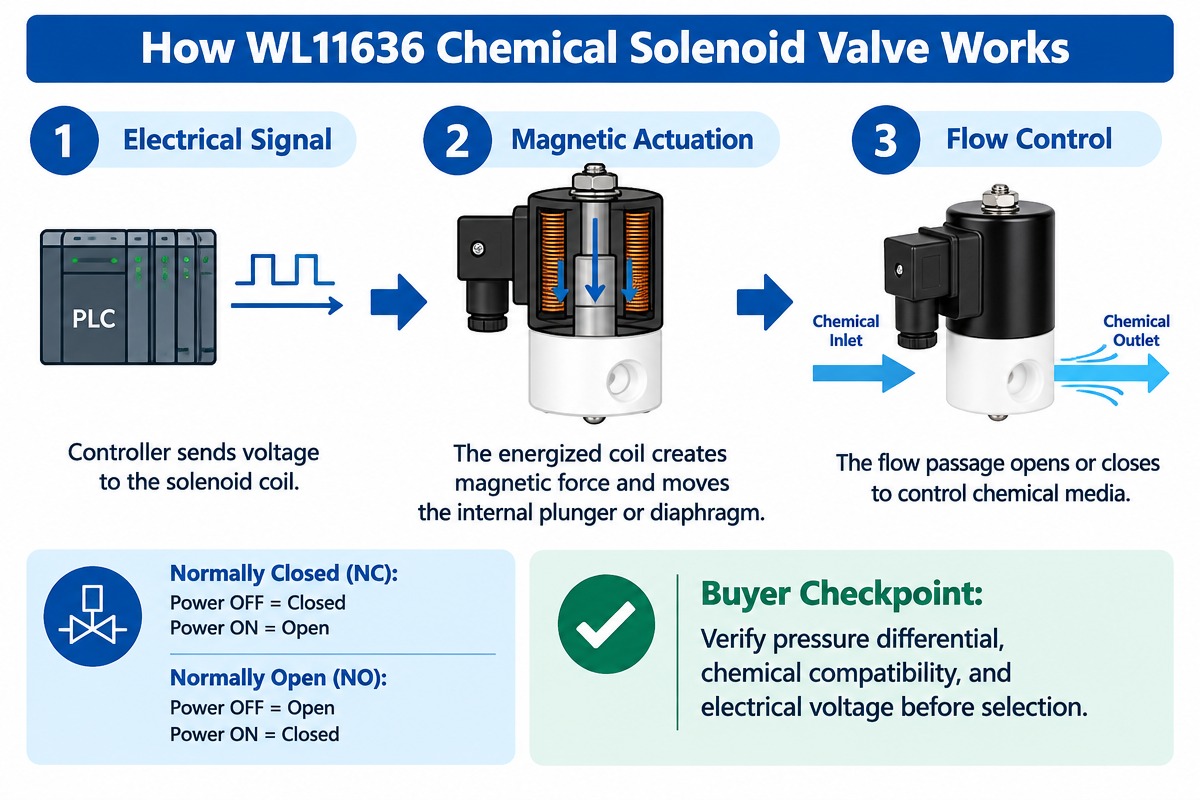
A Chemical Solenoid Valve works by converting electrical energy into mechanical action. The control system sends voltage to the solenoid coil. The coil creates a magnetic field. This magnetic force moves the internal plunger, armature or diaphragm, and changes the flow path of the valve.

When de-energized, the valve remains closed in a normally closed configuration. When electric power is supplied, the internal mechanism is moved away from the sealing surface. This allows the chemical fluid to flow through. If power is lost, the valve returns to its original closed position by means of a spring or differential pressure.

The normally open ones work the other way round. The selected valve configuration, pressure range, orifice size, seal material, and body material will be suitable for the application. In the case of corrosive chemicals, it is especially important that every wetted component be compatible with the process medium.

Chemical Solenoid Valve Video

Chemical Solenoid Valve Detail Display

Chemical Solenoid Valve Data Sheet

Brand Weilong Model Number WL 11636
Rated Voltage (V) DC12Vย  or 24V Rated Power (W) 12W
Work Mode Air or Liquid Control Valve Working Pressure (MPa) 30KPa
Air-Flow Rate 0 L/minute Reset Time(s) 1 S On, 1 S Off
Service Life 200 Thousand Times Certification CE, ROHS, ISO9001,
Pipe Gate ย inside: 3.6 mm Lead Wire Length(mm) 116 MM
Install Style Screw Tolerance of Dimension ยฑ 0.1 MM
Water-proof None Insulation Class B
Hi-Pot Test AC 600V 50/60 Hz 2s Non-excitation Holding Force 0
Working Temperature -10ยฐC-100ยฐC Duty Cycle 1-100%
Thread Depth (mm) / Payment Term TT, or LC At Sight
Sample Order Yes Warranty 1 Year
MOQ 1000 pcs Supply Ability 5000 pcs per week
Delivery Time 30 Days Port of Loading Shenzhen

Why is Chemical Solenoid Valve So Popular?

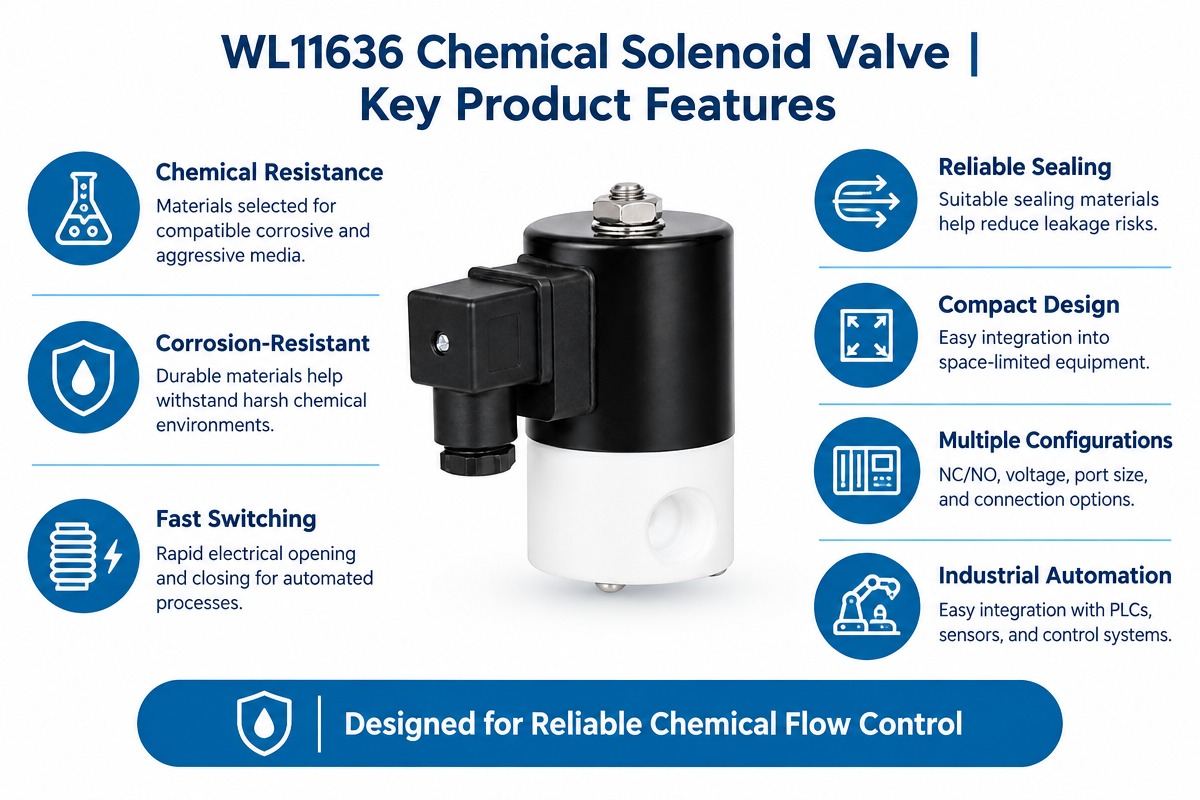
Chemical solenoid valves are increasingly being used in industrial processes for precise and repeatable automated fluid handling. They are electromagnetically actuated, permitting a controller, PLC, sensor, timer or automation system to control chemical flow without constant manual intervention.

Their small size is another important factor. A solenoid valve can provide fast on/off control and require little installation space. It is useful in chemical dosing skids, water treatment equipment, analytical instruments, cleaning machines and automated production systems.

Modern valve designs also provide a greater choice of chemically resistant body and sealing materials. Therefore, engineers can choose configurations according to different chemical concentrations, temperatures, pressures, and process requirements.

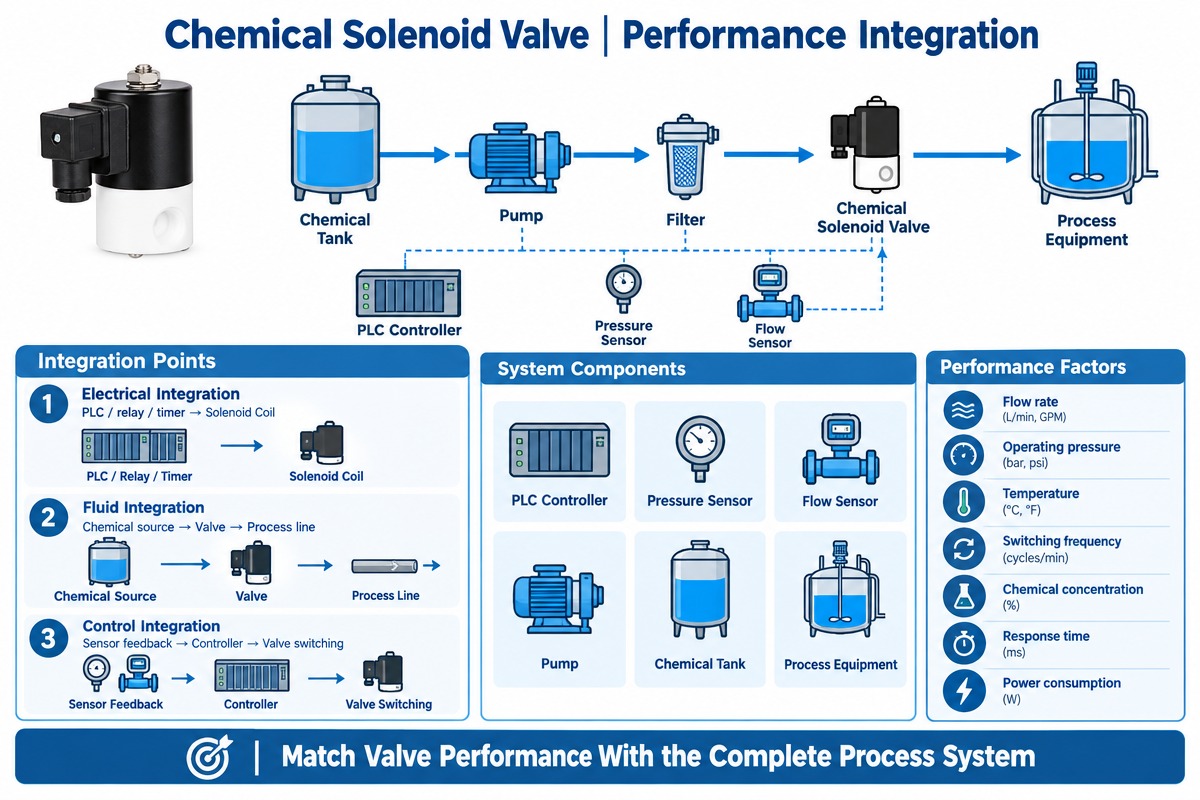
Another advantage is its integration with automatic equipment. Electrical control allows chemical flow to be coordinated with pumps, sensors, alarms and process controllers. A correctly specified valve for the medium and operating conditions can provide repeatable switching and simplified process control.

Chemical Solenoid Valve Applications

Chemical Solenoid Valve for reliable process automation

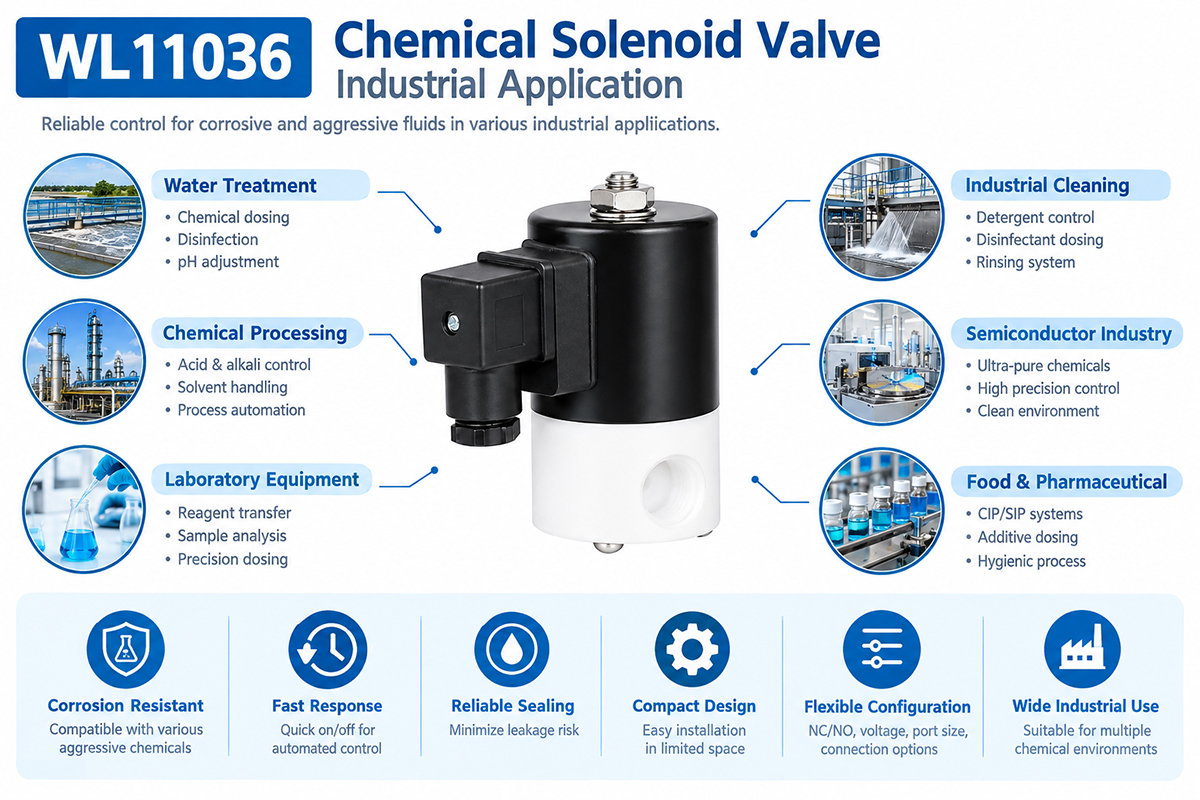
Many industrial systems that require automatic control of chemical fluids use chemical solenoid valves. They can control the dosing of chemicals, cleaning liquids, neutralizing agents and treatment solutions in water and wastewater treatment. When compatible valve materials are chosen, they can automate transfer and sequencing of acids, alkalis, solvents and other process fluids in chemical processing plants.

Solenoid valves in chemical dosing systems provide fast on/off control of metering pumps and injectors. They can also be linked to sensors and controllers for automatic dosing sequences.

Chemical Solenoid Valves are able to control detergents, disinfectants, rinsing solutions and other cleaning chemicals in industrial cleaning equipment. Automated electrical control of compact valves is able to treat small volumes of chemical fluids in laboratory and analytical equipment.

Other applications include semiconductor manufacturing, pharmaceutical equipment, plating systems, battery manufacturing, printing equipment, cooling and process water systems, and industrial automation machinery.

Engineers should verify chemical compatibility, concentration, temperature, pressure, flow rate, electrical requirements and applicable safety requirements for each application. The valve must be selected as part of the complete fluid-control system and not as an individual item.

Chemical Solenoid Valve Adv. & Disadv

Chemical Solenoid Valve chemical metering systems

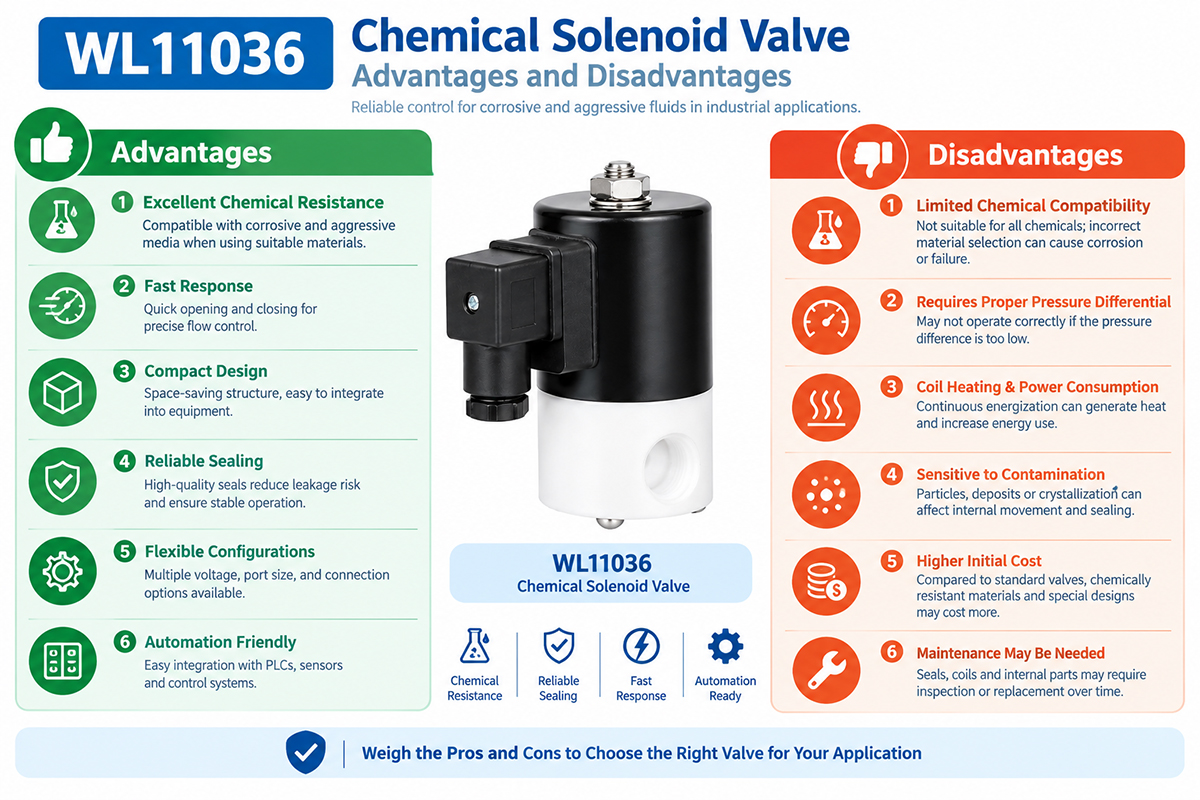
Advantages and Disadvantages of Chemical Solenoid Valve

Chemical Solenoid Valves have a lot of advantages for automated fluid handling. Thanks to their quick response, they can be opened and closed quickly, which is useful for dosing and sequencing operations. Their compact size allows them to be installed in space constrained locations. Their simple electrical actuation allows easy connection to PLCs, sensors, timers and other automation devices. Compared to the manually operated valves, they reduce the necessity for frequent operator intervention.

Another plus is the availability of a wide array of corrosion-resistant materials and sealing options. These materials, when selected properly, will provide dependable service with specific chemical media. Designers can also choose a suitable default flow condition with normally closed and normally open configurations.

But there are limits. Not all chemicals are compatible with a Chemical Solenoid Valve. Choosing the wrong material could result in corrosion, swelling, leaks or early failure. Some designs also require proper pressure differential to work well.

Depending on the valve design, continuous energization may lead to coil heating and electrical power consumption. Also, very high viscosity fluids, contaminated media, particles or crystallizing chemicals may interfere with the internal movement or sealing.

Therefore, the chemical compatibility, pressure, temperature, flow, electrical and maintenance requirements should be checked prior to installation.

Chemical Solenoid Valve automated process systems Guide

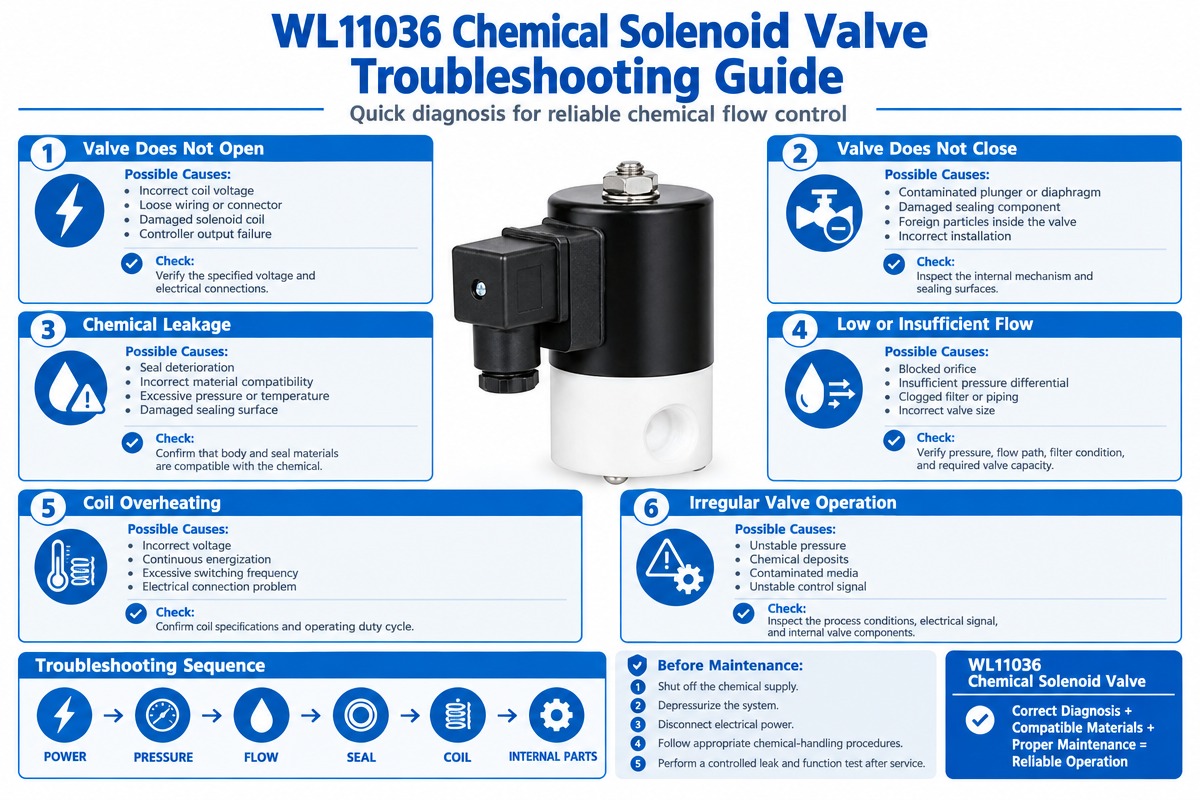
Troubleshooting of Chemical Solenoid Valve

If a Chemical Solenoid Valve stops working, check the power supply first. Verify that the coil receives the proper voltage and that the wiring, connector, fuse, relay, and controller output are all working properly. Wrong voltage may prevent actuation or damage the coil.

If the power is on, but the valve does not open or close, check the coil and actuator. Sometimes a damaged or overheated coil may need replacing. See if the plunger or diaphragm is clogged with particles, crystallized chemicals, deposits or corrosion.

If the valve leaks, check the seal and wetted parts. Leakage can happen because of chemical incompatibility, too high temperature, wrong pressure or mechanical damage. Replace damaged parts with materials that are compatible with the actual chemical.

If flow is too low check orifice, pressure differential, upstream filter and piping. A blocked inlet or wrong pressure condition may limit flow. Check that the flow capacity of the valve satisfies the requirement of the system.

Check electrical control signal and operating pressure if the valve is cycling irregularly. Also, depending upon the valve design, an excessive switching frequency can cause heating or premature wear.

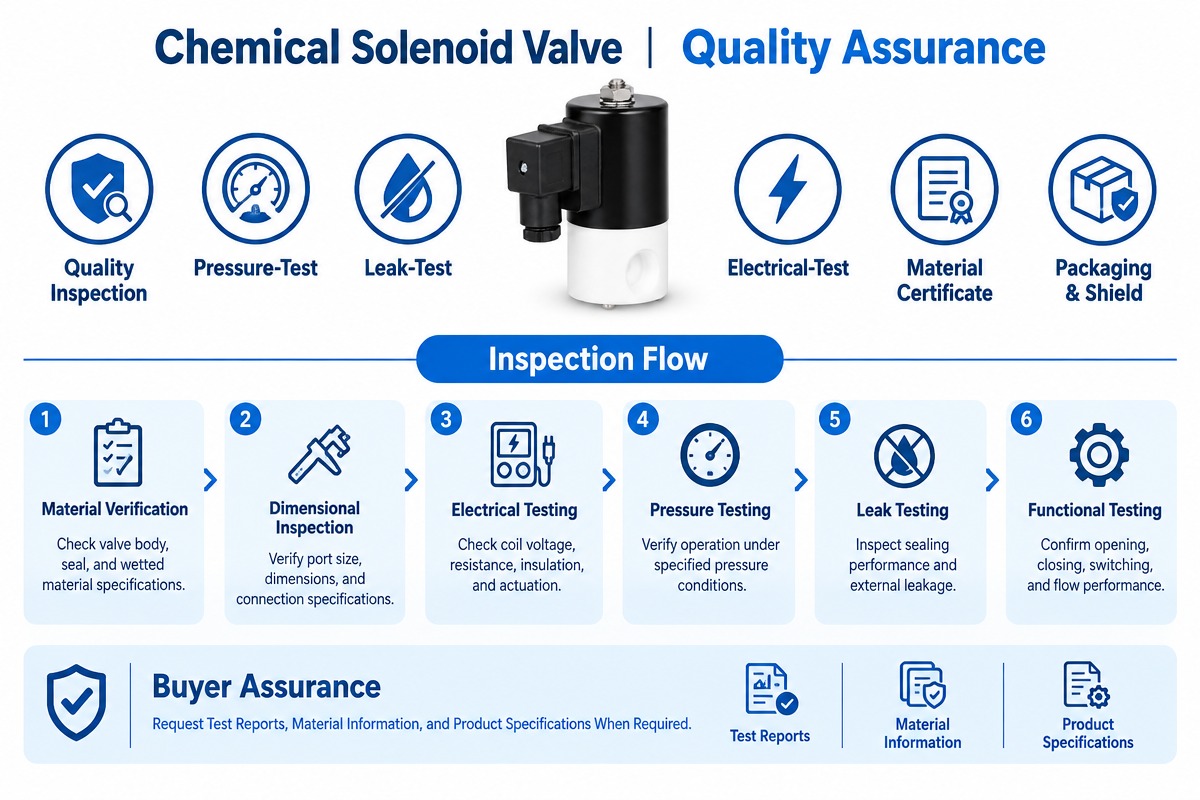
Prior to maintenance, isolate the chemical source, depressurize the system and follow the appropriate chemical handling and safety procedures. After repair, perform a controlled leak check and functional test before returning the system to normal operation.

8 FAQ for Chemical Solenoid Valve

1.What is a chemical solenoid valve?

The Chemical Solenoid Valve is an electrically controlled valve for controlling the flow of chemical liquids or gasses. It opens or closes the passage way using an electromagnet.

2. For what kind of chemicals can the Chemical Solenoid Valve be used for?

According to the valve’s body, seals and wetted materials, it can be used with a variety of acids, alkalis, solvents, detergents and treatment chemicals. Check compatibility with the specific chemical and its concentration.

3. What materials are used for chemical solenoid valves?
  1. What materials are used for chemical solenoid valves?
4. How does Chemical Solenoid Valve work?

When the current starts flowing through the coil of the solenoid, it produces a magnetic field, which shifts the plunger or diaphragm inside, opening or closing the passage for the chemical flow.

5. How to choose the right Chemical Solenoid Valve?

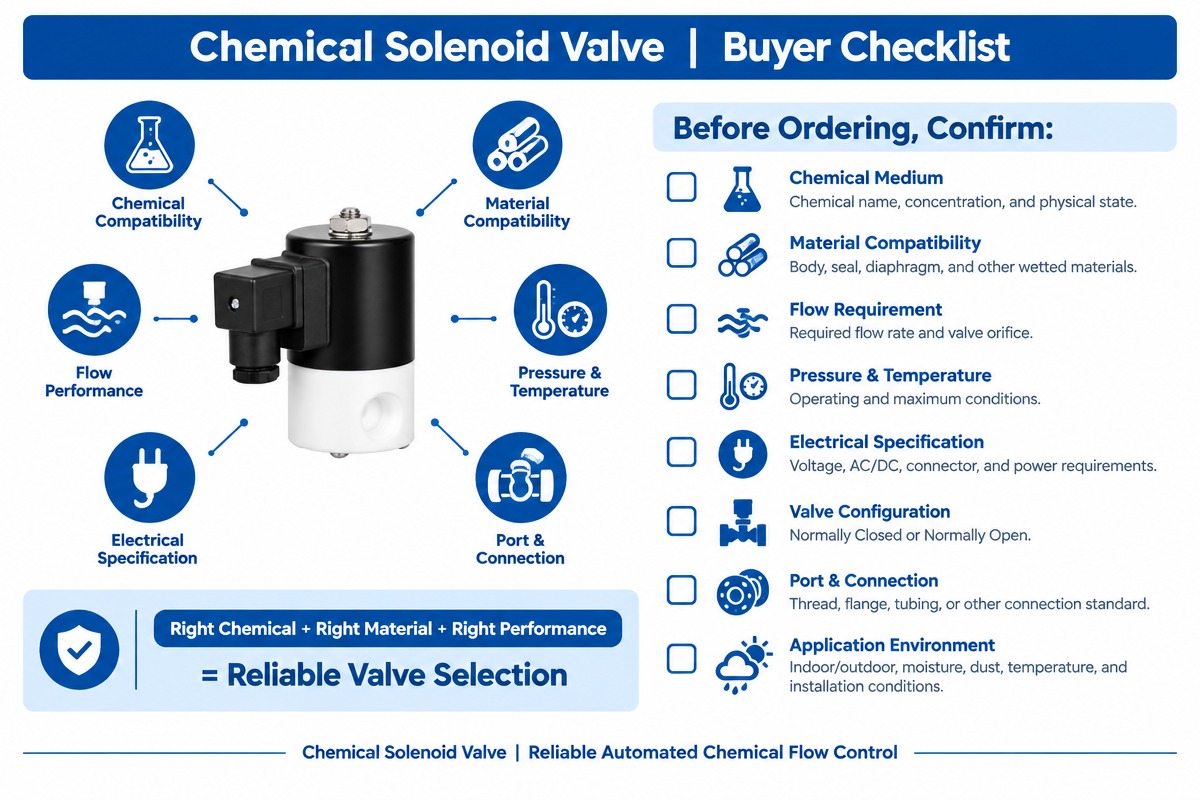
When choosing a valve, pay attention to such parameters as chemical type, its concentration, temperature, pressure, flow rate, port size, valve configuration, seals material, body material, coil voltage and connection.

6. Is it possible to use a Chemical Solenoid Valve for corrosive fluid?

Yes, but only when the right valve is selected, as it should have the appropriate wetted materials that are compatible with the particular chemical medium.

7. Why is my Chemical Solenoid Valve leaking?

Possible reasons are damaged seals, chemical incompatibility, excessive pressure or temperature, contamination, wrong installation and wear out of internal components. Examine the valve and ensure material compatibility.

8. Can a Chemical Solenoid Valve be controlled by PLC?

Yes, as many valves of that type can be controlled via PLCs, relays, timers, sensors and other automation systems. Electrical ratings and coil voltage: Must match control system.

How to Choose a Chemical Solenoid Valve

Choosing a Chemical Solenoid Valve requires an analysis of the process medium, operating conditions, flow requirements and control system.

Identify the chemical medium, first. Identify the exact chemical name, the concentration, the temperature, the viscosity and whether it is a liquid or gas. Chemical compatibility is important because an unsuitable body or seal material can swell, crack, become brittle or deteriorate.

Second, choose appropriate wetted materials. Depending on the application, PTFE, PVDF, PP, stainless steel, EPDM, FKM or other materials may be suitable. Don’t pick a material from a general compatibility chart; you need to check compatibility against the actual chemical and the temperature it will be operating at.

Third, calculate the flow rate and port size needed. If the valve orifice is too small, it can cause undesired pressure loss. If the valve is too large, it can have poor control characteristics or be unnecessarily costly. Check the required flow rate, pressure drop and, where applicable, valve flow coefficient.

Fourth, check the pressure and temperature scope. Check both maximum working pressure and minimum differential pressure requirements. The valve should also be rated for the maximum and minimum process temperature.

Fifth, choose the right operating configuration. Normally closed valves are generally used when the flow is desired to stop when power is lost. Normally open designs may be used when flow is desired to continue without electrical power.

Sixth,ย Match the electrical specifications. Check coil voltage, AC/DC operation, power consumption, connector type, duty cycle and environmental protection requirements.

Finally, think about installation and maintenance. Verify connection standards, available space, flow direction, mounting orientation, serviceability, and availability of replacement parts. For hazardous or special environments, the entire valve assembly must meet the applicable system and safety requirements.

Tips for Avoiding Common Chemical Solenoid Valve Design Mistakes

Don’t just buy materials by chemical name. Concentration and temperature can change compatibility considerably.

Don’t forget about seal compatibility. The valve body may fail before the seal.

Don’t make the hole too big. A valve that is too large may not give the desired flow characteristics.

Check pressure differential. Solenoid valves require a differential pressure to operate correctly.

Consider chemistry’s temperature. Temperature can affect material compatibility and maximum pressure.

Select the proper normally open or normally closed version.

Match coil voltage exactly to available control power.

Check electrical protection for moisture, dust and environment of installation.

Check flow direction prior to installation.

Remember maintenance access for easy replacement of seals, coils and other service parts.

Do not mix incompatible materials in wetted parts, fittings and tubing.

Prior to full production, test the entire assembly in the appropriate pressure, temperature, chemical concentration and switching conditions.
Get A Free Quote Now

Contact Form

Related Products

Related News

Scroll to Top

Get A Free Quote Now !

Contact Form
If you have any questions, please do not hesitate to contact us.
Weilong Solenoid Company Culture