


How to Choose a Magnetic Clamp
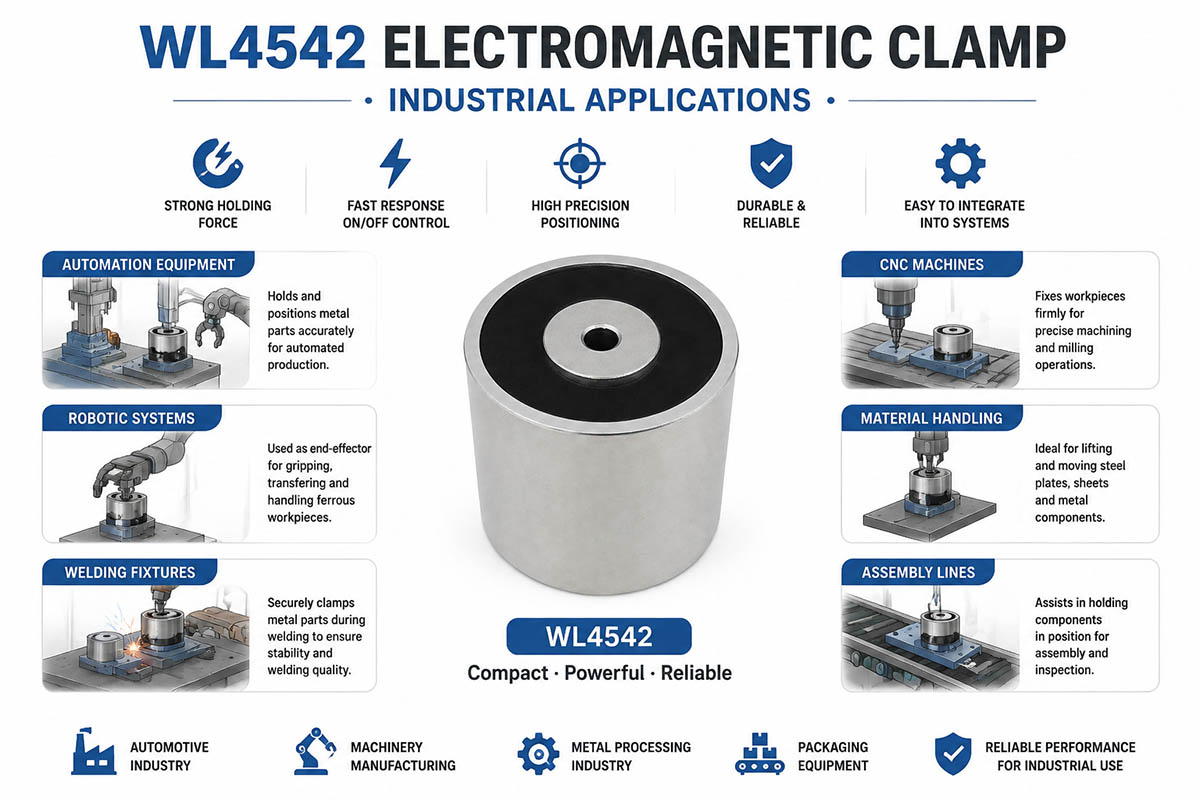
The selection of the right electromagnetic holding clamp requires a comprehensive analysis of the application requirements, operating conditions, and performance expectations.
First, calculate the required holding force. The magnetic force of the electromagnetic holding clamp has to be strong enough to grip the target material tightly. Consider the weight of the workpiece, surface condition, and force of movement.
Secondly, determine the voltage and power requirement. Electromagnetic holding clamps are commercially available in various DC voltage options. Ensure the compatibility of the electromagnetic clamp with the control system and power supply.
Third, what about the work environment? In case of high temperature, dust, humidity, or vibration environments, electromagnetic clamps with proper protection degrees and high resistance materials must be selected.
Fourth, consider the size and the mounting method. Electromagnetic gripper dimensions should be compatible with the available mounting space. The smaller clamps are suitable for tight mounting spaces, while the larger clamps offer higher holding forces.
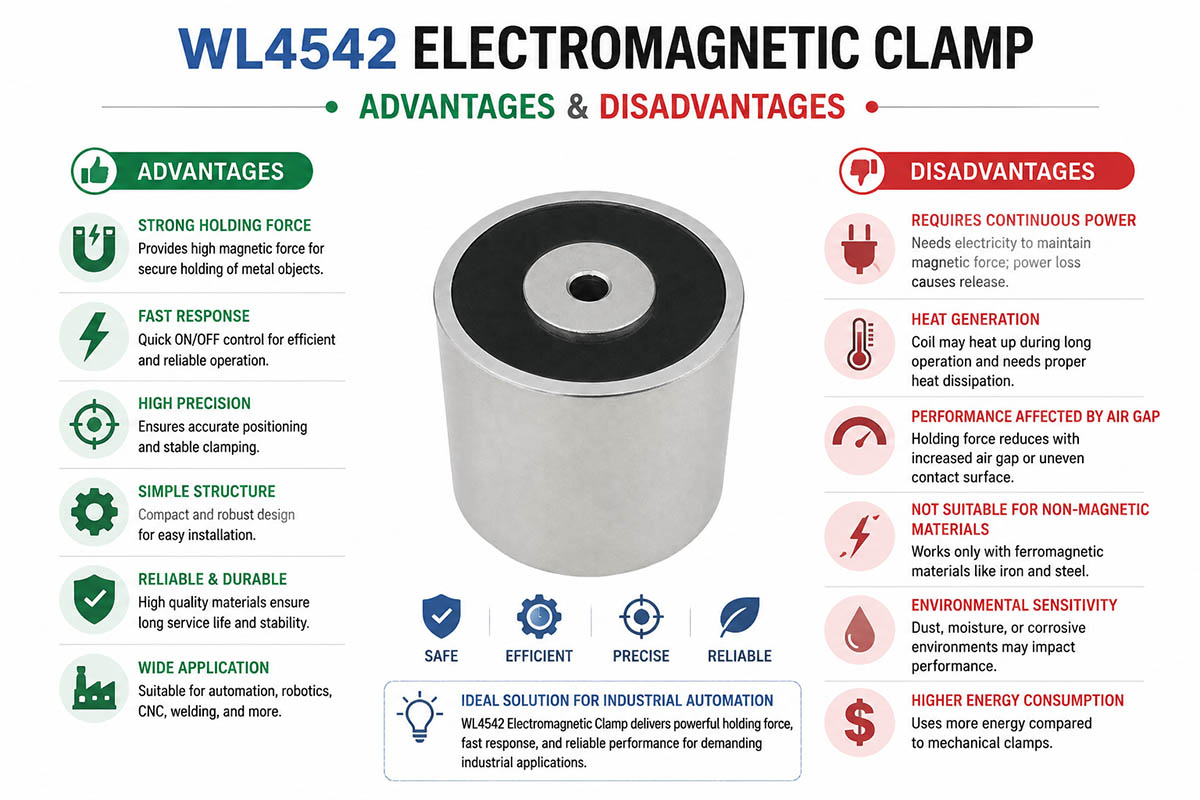
Fifth, consider the frequency of operation and the duty cycle. In applications that require continuous operation, the electromagnetic clamps should be selected based on the heat management and service life.
Additionally, consider the material type. Electromagnetic holding clamps can only work on ferromagnetic materials, like iron and steel. The other materials may require alternative gripping devices. Non-magnetic materials.
Lastly, consider a reputable manufacturer that provides technical support, customization options, and quality assurance. A well-selected electromagnetic clamp increases automation efficiency, reduces downtime, and provides safe operation.
Avoiding Common Pitfalls in Electromagnetic Holding Clamp Design
Do not choose a magnetic force that is too low for the load of the application.
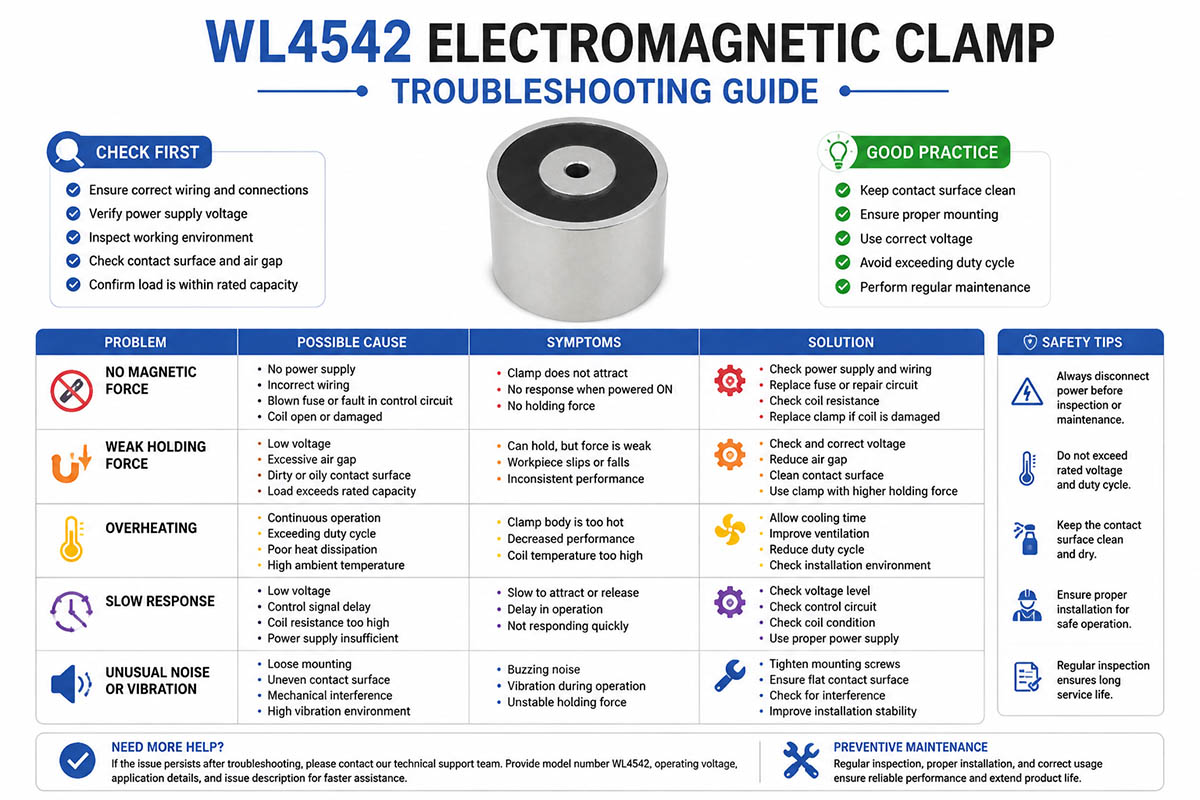
Do not ignore air gaps between the clamp and the workpiece.
Use the proper coil voltage to prevent overheating.
Consider heat dissipation during prolonged operation.
Ensure the proper mounting structure for stable performance.
Do not use the electromagnetic holding clamps on unsuitable materials.
Design the system with proper electrical protection.
Test holding performance in realistic operating conditions.
Think about the maintenance required in product development.
Do not design without considering duty cycle limits.


