High Torque Electromagnetic Clutch Solutions
High Torque Electromagnetic Clutch for Machines
High Torque Electromagnetic Clutch Innovation
High Torque Electromagnetic Clutch Explained
High Torque Electromagnetic Clutch Systems Pro
High Torque Electromagnetic Clutch Solutions
High Torque Electromagnetic Clutch for Machines
High Torque Electromagnetic Clutch Innovation
High Torque Electromagnetic Clutch Explained
High Torque Electromagnetic Clutch Systems Pro

WL8027 High Torque Electromagnetic Clutch Guide

A high torque electromagnetic clutch is an electrically operated mechanical device used to transmit rotational power between two shafts. A high torque electromagnetic clutch uses electromagnetic force to engage and disengage the clutch, allowing precise control over torque transfer. Designed for heavy-duty applications, this clutch provides strong torque output while maintaining fast response and reliability. When energized, the coil generates a magnetic field that pulls the armature into contact with the rotor, enabling motion transfer. These clutches are widely used in industrial automation, packaging machinery, and heavy equipment where high torque capacity and accurate control are essential for efficient operation.

Main Features of High Torque Electromagnetic Clutch

A high torque electromagnetic clutch offers excellent performance in demanding industrial environments. Key features include high torque capacity, enabling them to handle heavy loads efficiently. They provide fast engagement and disengagement for precise motion control. Their compact design allows easy integration into various systems. These clutches operate with low noise and minimal vibration, ensuring smooth performance. Durable materials and optimized coil design enhance heat resistance and extend service life. Additionally, they require low maintenance and support continuous operation. Their ability to deliver stable and reliable torque makes them ideal for automation, machinery, and high-performance industrial applications.

High Torque Electromagnetic Clutch Product Overview

A high torque electromagnetic clutch is a powerful and efficient device designed for controlled torque transmission in industrial systems. It combines electromagnetic technology with mechanical friction to provide smooth and reliable engagement. These clutches are known for their fast response, high durability, and precision control.

They are widely used in automation, heavy machinery, and manufacturing processes where accurate motion control is required. With customizable designs and various torque ratings, they can meet diverse application needs. Their ability to enhance efficiency and reduce wear makes them a preferred choice in modern engineering solutions.

How High Torque Electromagnetic Clutch Works

A high torque electromagnetic clutch works by converting electrical energy into mechanical motion. When electric current passes through the coil, it creates a magnetic field. This magnetic force attracts the armature plate toward the rotor.

Once the armature and rotor are in contact, friction between them transmits torque from the driving shaft to the driven shaft. When the power is turned off, the magnetic field disappears, and springs push the armature away, disengaging the clutch.

This process allows precise control of motion, making it suitable for applications requiring frequent start-stop cycles and high torque transmission.

High Torque Electromagnetic Clutch Video

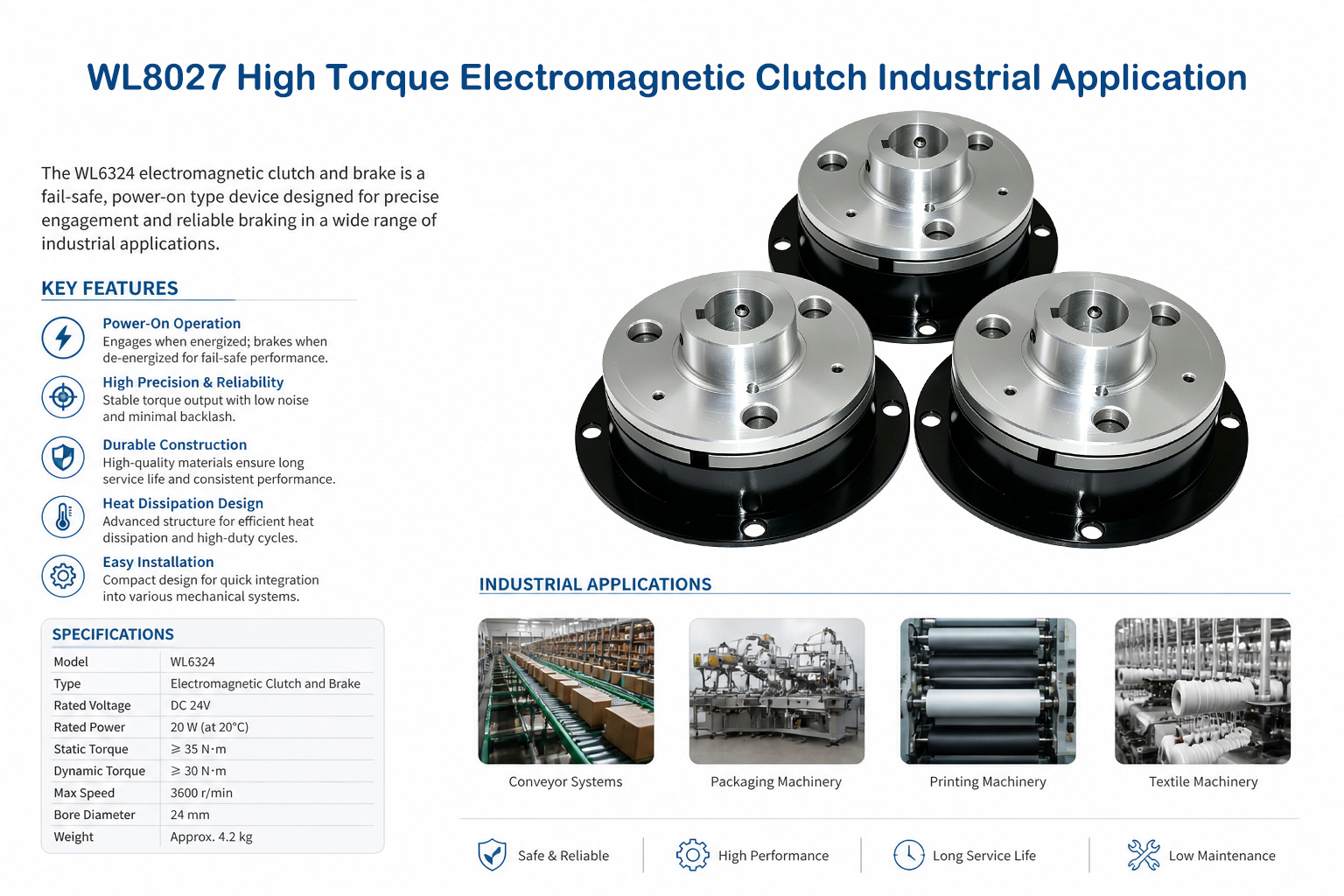
High Torque Electromagnetic Clutch Detail Display

WL0827 High Torque Electromagnetic Clutch Datasheet

Brand Weilong  Technology Model Number WL8027
Rated Voltage (V) DC 24V Rated Power (W) 15W
Static Torque 10 N.M Holding Force (N) 10N
RPM 6000 RPM Reset Time(s) 30 ms
Service Life 200 Thousand Times Certification CE, RoHS, ISO9001,
Material Superior Magnet Iron Lead Wire Length (mm) 200 MM
Install Style Flange guide seat Tolerance of Dimension  +/-  0.1 MM
Water-proof  None Insulation Class B
Hi-Pot Test AC 600V 50/60Hz 2s Non-excitation Holding Force 0
Working Temperature -10°C-100°C Duty Cycle 1-100%
Thread Depth(mm) / Payment Term TT, or LC At Sight
Sample Order Yes Warranty 1 Year
MOQ 1000 pcs Supply Ability 5000 pcs per Week
Delivery Time 30 Days Port of Loading shenzhen

High Torque Electromagnetic Clutch Application

High Torque Electromagnetic Clutch Application

A high torque electromagnetic clutch is widely used across various industries due to its reliability and performance. In industrial automation, they enable precise control of motion in conveyor systems and robotic equipment. Packaging machinery relies on these clutches for accurate indexing and high-speed operation.

In textile machinery, they ensure smooth engagement and consistent torque transmission, improving production efficiency. Agricultural equipment uses high torque electromagnetic clutch for heavy-duty tasks such as harvesting and processing. In construction and heavy machinery, they provide reliable power transfer under high load conditions.

They are also commonly used in printing machines, machine tools, and material handling systems where precise control and durability are required. Additionally, automotive systems utilize electromagnetic clutches in components like compressors and auxiliary drives.

Their versatility and ability to operate in harsh environments make them essential for modern industrial applications, improving productivity and reducing operational downtime.

Advantages and Disadvantages of High Torque Electromagnetic Clutch

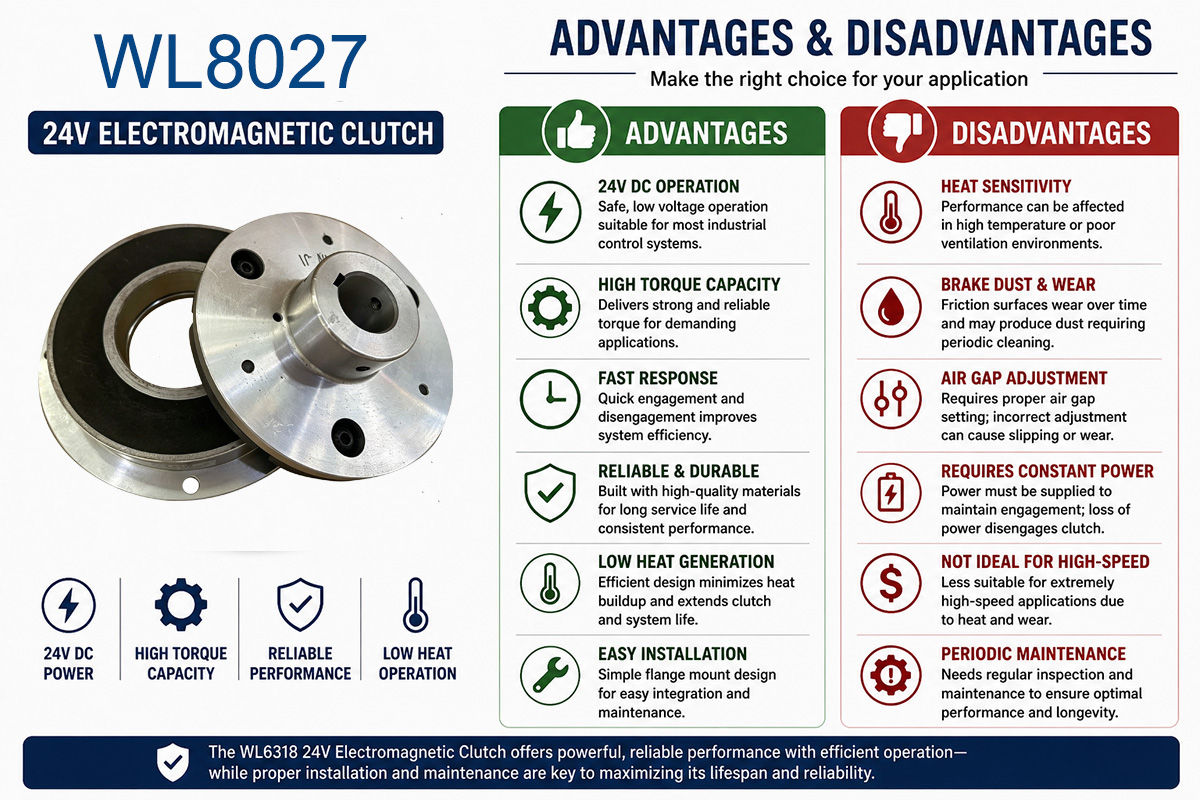
WL8027 Electromagnetic Clutch: Advantages and Disadvantages

High Torque Electromagnetic Clutch Advantages

High torque electromagnetic clutches offer several advantages. They provide precise control over torque transmission, enabling efficient operation in automation systems. Their fast response time allows quick engagement and disengagement, improving productivity. They also reduce mechanical wear due to smooth operation and require minimal maintenance. Additionally, their compact design makes them easy to integrate into various systems.

High Torque Electromagnetic Clutch Disadvantages

However, there are some disadvantages. These clutches depend on electrical power, so failure in the power supply can affect operation. Heat generation during continuous use may require proper thermal management. They can also be more expensive compared to traditional mechanical clutches.

Despite these limitations, their benefits in performance, reliability, and efficiency make them a preferred choice for modern industrial applications.

High Torque Electromagnetic Clutch Troubleshooting Guide

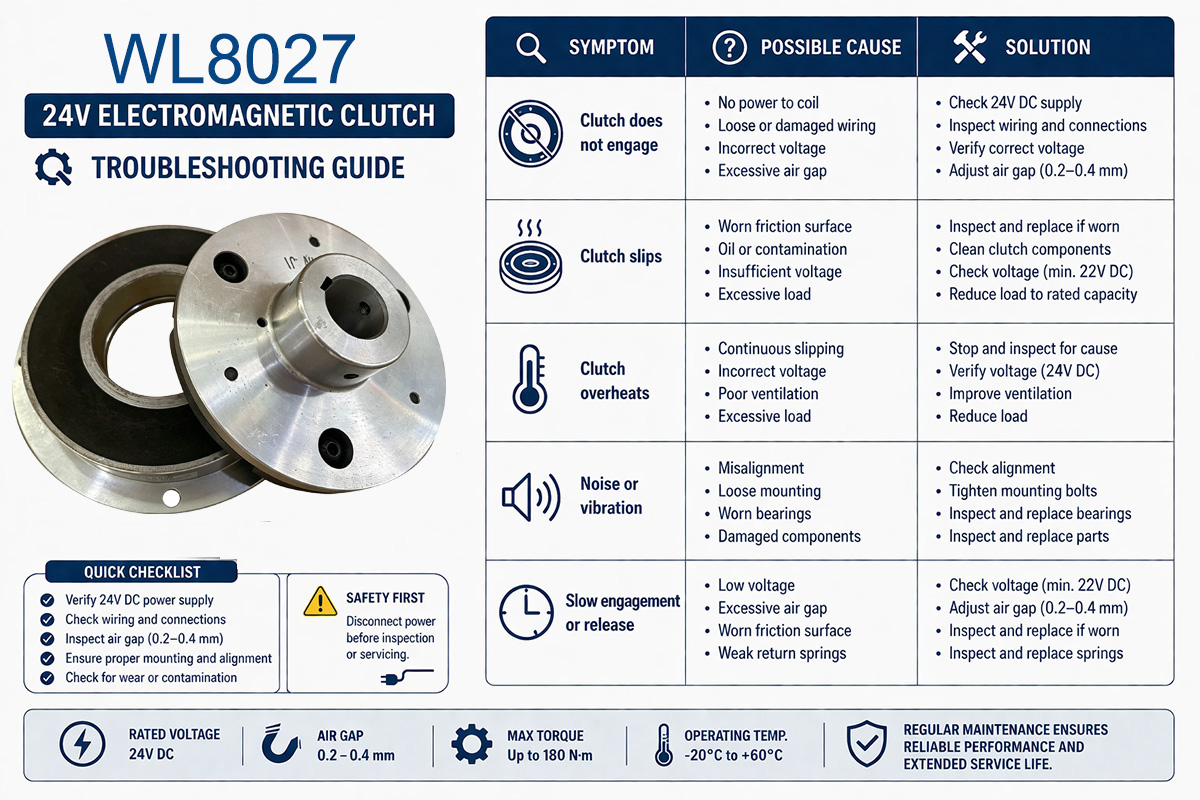
WL8027 High Torque Electromagnetic Clutch Troubleshooting Guide

Troubleshooting a high torque electromagnetic clutch involves identifying common issues and applying appropriate solutions. One common problem is failure to engage. This may be caused by insufficient voltage, coil damage, or poor electrical connections. Checking the power supply and wiring is the first step.

Another issue is slipping or reduced torque. This can result from worn friction surfaces or contamination such as oil or dust. Cleaning or replacing the friction components can restore performance.

Overheating is also a frequent concern, especially in high-duty applications. It may occur due to excessive load, continuous operation, or poor ventilation. Ensuring proper duty cycle and improving cooling conditions can help resolve this issue.

Noise and vibration during operation may indicate misalignment or worn components. Inspecting and aligning the shaft and replacing damaged parts can reduce noise.

Delayed engagement or disengagement can be caused by weak magnetic force or spring failure. In such cases, checking the coil and spring mechanism is necessary.

Regular maintenance plays a key role in preventing these problems. Periodic inspection, cleaning, and testing ensure the clutch operates efficiently. Using high-quality components and proper installation also reduces the risk of failure.

By addressing these issues early, you can maintain reliable performance and extend the service life of the clutch.


FAQs of High Torque Electromagnetic Clutch

1. Do I need to perform 'running in' of my new clutch?

Yes, obviously. The clutch would not transmit the full torque right after installation, about 50%. In order to achieve the nominal performance, the burnish procedure should be performed, which means engaging and disengaging the clutch many times without loading and at slow speeds to wear off the mating surfaces properly.

2. Why does the clutch slip if it gets too hot?

It is often caused by the poor condition of the coil. Heat coming from the coil may damage the coating of the magnet wire, thus creating an electrical short and reducing magnetic field force. The coil may seem to be working fine at normal temperature but stop functioning at operating one.

3. What happens if the load is higher than the clutch rating?

Clutch will start slipping when the load exceeds its maximum torque rating. As slipping goes on for a certain period of time (say, 5 seconds) due to the friction, the clutch gets overheated, and consequently, the coil may be burnt out.

4. Can the clutch function under higher torque with dynamic engagement?

No, definitely not! ” A “static torque” rating applies to clutch operation at zero rpm (the holding torque). In case of dynamic engagement, when the clutch is engaged with a spinning shaft, torque capacity gets reduced, often to 60 percent of static value depending on speed. Check dynamic torque charts to determine the correct sizing.

5. Which is the crucial mechanical adjustment?

Remember to adjust the air gap!

If the gap is too large: A weak magnetic field fails to pull the armature, leading to slippage.

If the gap is too small: At no-load conditions, the rotor may contact the armature, causing overheating and wear.


6. What contaminants can cause instant clutch failure?

The high-torque electromechanical clutch is designed to operate dry. Any contaminant such as oil, grease, or water may damage the friction surfaces and lead to permanent loss of torque capacity and malfunction. Remember to clean all the components from the manufacturing grease before assembling.

7. Clutch is failing even though the load is within specifications, why?

Pay attention to the voltage! If you use the insufficient voltage (say, 6 volts instead of 12 to a coil), it will produce a weaker magnetic field, resulting in continuous slipping and heating. Otherwise, using higher voltage to the coil (like 24 volts to a 12-volt coil) burns it instantly.

8. The high torque electromagnetic clutch isn't fully disengaging What should I check?

If the high-torque electromagnetic clutch still engages when turned off (has idle torque), it means there is something wrong with the mechanics of the clutch, like

Dust/dirt accumulation on the armature plate.

Shaft run-out causing jamming.

Residual magnetism of the rotor or breakage of return spring.

How to Select a High Torque Electromagnetic Clutch

Selecting the right high torque electromagnetic clutch is critical to guaranteeing optimal system performance and longevity. The first factor to consider is torque requirement. You must calculate the load demand and choose a clutch with a torque rating higher than the actual requirement to ensure safety and durability.

Next, consider the voltage specification. Most clutches operate on 12V or 24V DC, but it is important to match the clutch with your system’s power supply. Incorrect voltage can lead to poor performance or damage.

Mounting and size are also critical. Ensure the clutch fits within your available installation space and is compatible with your shaft dimensions. Compact designs are beneficial for systems with limited space.

Response time is another important factor. Applications requiring frequent start-stop cycles need clutches with fast engagement and disengagement capabilities.

Environmental conditions should not be overlooked. If the clutch operates in high temperatures, dusty, or humid environments, choose a model with proper sealing and heat resistance.

Duty cycle is equally important. For continuous operation, select a clutch designed for high-duty cycles to prevent overheating and premature wear.

Finally, consider quality and manufacturer reliability. Look for products with certifications such as ISO or CE, and ensure proper testing and quality control processes are in place.

By evaluating these factors, you can select a high torque electromagnetic clutch that delivers reliable performance and long service life.

Get A Free Quote Now

Contact Form

Related Products

Related News

This guide will help the reader understand the functioning, types, selection criteria, specifications and maintenance practices of electromagnetic clutches and […]

Scroll to Top

Get A Free Quote Now !

Contact Form
If you have any questions, please do not hesitate to contact us.
Weilong Solenoid Company Culture
