How to Choose a Permanent Holding Electromagnet?
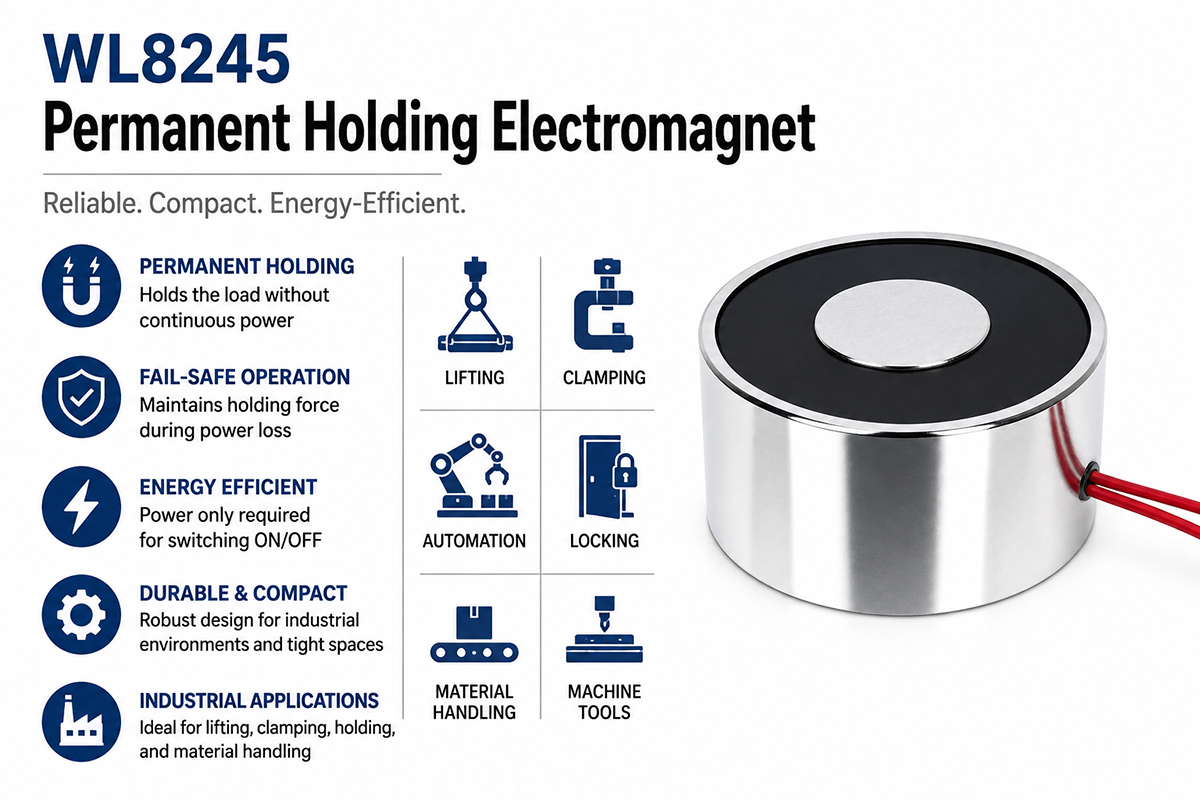
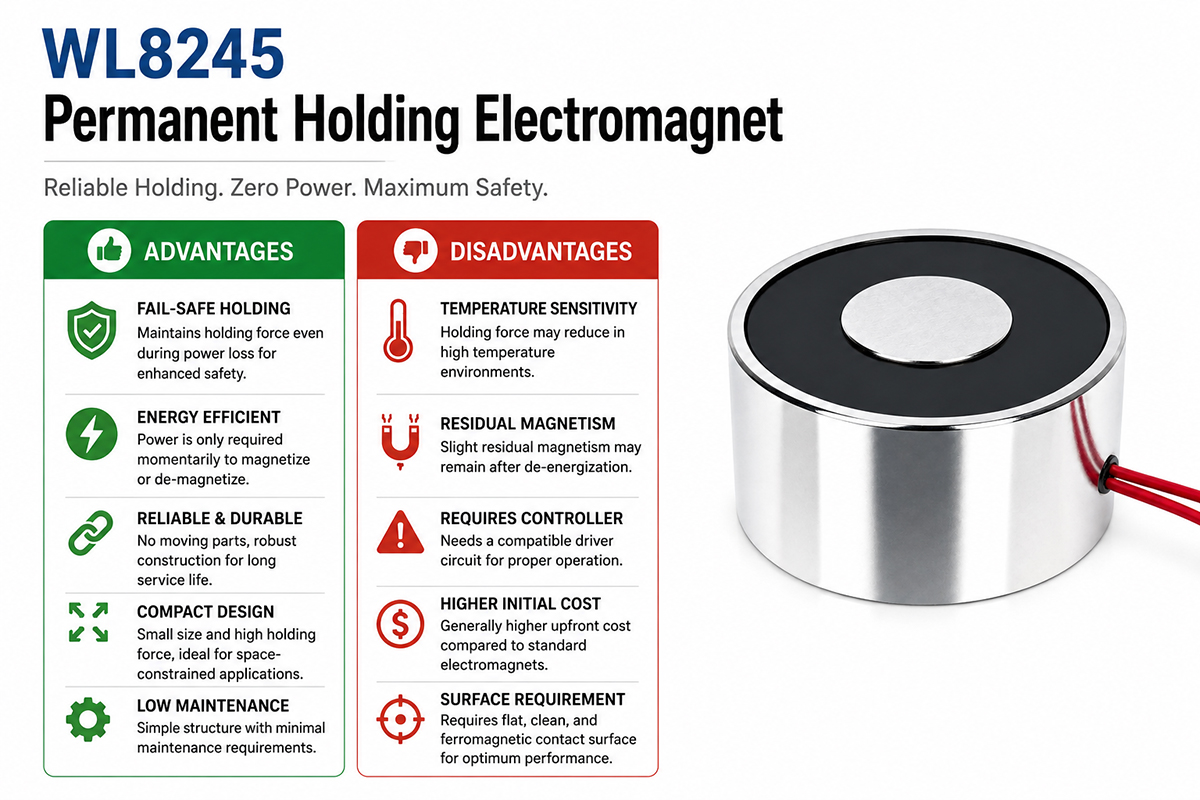
There are several considerations to make when choosing a permanent holding electromagnet. The first one is the holding force. It depends on the total load, safety margin, and vibration in the environment.
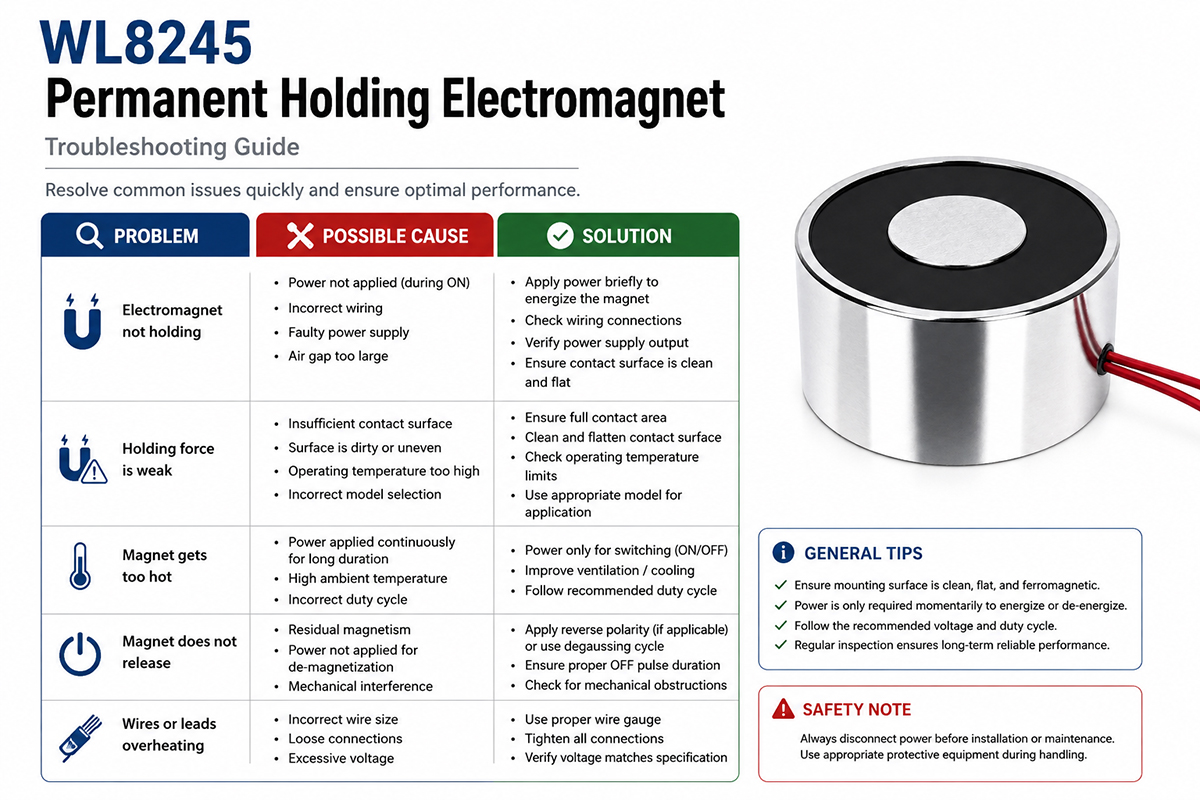
The next factor is the length of the stroke or air gap. The longer the gap, the smaller the magnetic field. The magnet should fit into the design with enough space for holding. Flat contact surfaces are better.
Electrical factors are also critical. The control voltage, pulse time and switching method should be chosen carefully so as not to disrupt the system. A proper specification of the coils guarantees switching reliability.
Environmental factors cannot be overlooked. If the magnet will be exposed to extremely high humidity and temperatures or high amounts of dust particles, protection should be provided.
When using magnets in high speed systems, it is necessary to consider the duty cycle. Holding requires low power usage but if frequent switching is needed, cooling measures might be needed.
Mechanical issues should also be considered. It is crucial that the size, shape and the attachment methods are appropriate for the existing machinery.
Safety should also be considered when picking out magnets. Lifting or locking applications require fail-safe designs with holding redundancy.
Packing Mistakes & How to Avoid Them
Permanent holding electromagnets need to be packaged in such a way to minimize damage or demagnetization. Not providing sufficient magnetic isolation in packing is a mistake. Packing many magnets together causes mechanical damage to them.
Another mistake is not adding shock absorbing material during transportation. Failure to add materials like rubber or foam leads to scratching of the surface during shipment, leading to reduction in performance.
Another common mistake is improper orientation. Without adequate magnetic shielding, the magnetic field will attract metallic objects.
Without appropriate moisture protection, the magnet will eventually corrode. Humidity needs to be absorbed in case of humid or dusty environments.
Also, inadequate labeling leads to improper handling and storage. Polarity, voltage, and instructions should be clear.
To prevent these problems, it is necessary to individually pack these magnets using magnetic shielding materials. Shock-absorbing materials also need to be used to prevent any surface damage. Moisture absorption should be provided. Proper packaging will guarantee performance and reliability during use.