


How to Select a Magnetic Holding Fixture
Proper magnetic holding fixture should be chosen taking into account workpiece, manufacturing process, holding force, operating environment and goals of production.
1. Workpiece Material Verification
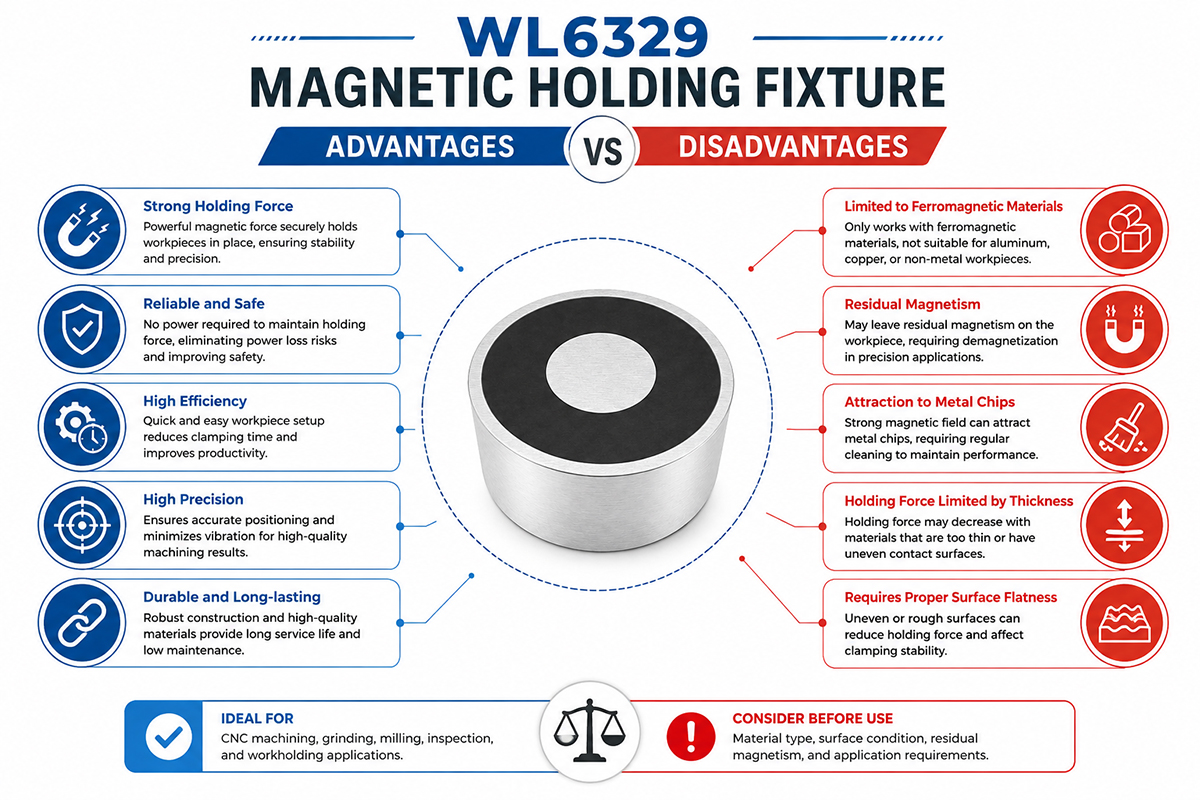
It should be verified that the workpiece is ferromagnetic. Steel and many iron alloys are good candidates for magnetic workholding, but aluminum, copper, brass, plastic and certain stainless steel grades will require other types of workholding or hybrid fixtures.
2. Required Holding Force
Calculate forces that appear during machining, drilling, grinding, welding or cutting. Think about cutting forces, vibration, acceleration, impact, weight of work piece. Choose a fixture that provides enough safety margin, instead of choosing it only by the weight of the workpiece.
3. Assessment of Contact Surface Area
Magnetic performance is highly dependent on the contact surface area. A larger and flat contact surface will provide better magnetic attraction. Gaps may be formed by curvature of the surface, coating, chips, paint or uneven surface which decreases effective holding force.
4. Choice of Permanent or Electromagnetic Technology
Permanent magnetic fixtures are useful in cases where continuous electrical power is not needed and simple operation is desired. Electromagnetic fixtures can provide controlled engagement and disengagement and are suitable for automated manufacturing processes requiring electrical control.
5. Process Matching
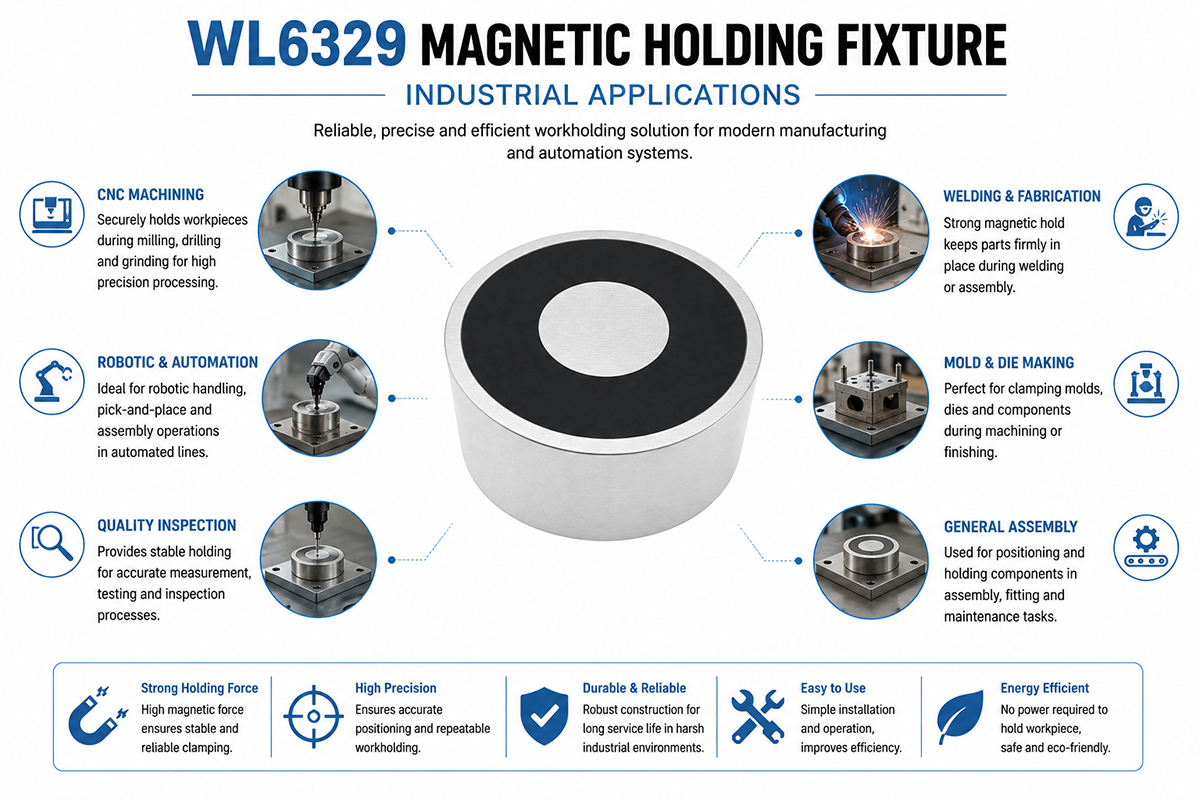
It should be identified what kind of process will require the fixture: CNC machining, milling, grinding, welding, drilling, assembly, inspection or automation. The fixture should have enough room for cutting tools, electrodes, sensors and personnel.
6. Consider accuracy and repeatability
Verify the accuracy of positioning, repeatability, flatness and rigidity of the fixture for precision manufacturing. Additional locating pins, stops or adjustable supports can be needed.
7. Assessment of the Operating Environment
Consider temperature, coolant, cutting fluid, dust, metal chips, vibration, humidity and duty cycle. Choose appropriate materials and sealing methods for the environment and durability.
8. Consider personalization
If standard fixtures do not fit the geometry of the workpiece, custom magnetic holding fixture can be considered. Custom fixture design can include positioning of fixtures, mounting holes, sensors, automation interfaces and special magnetic circuitry.
Common Mistakes When Designing Magnetic Holding Fixtures and How to Avoid Them
Do not use only weight of the workpiece to calculate the holding force. Cutting forces can be several times bigger than static weight.
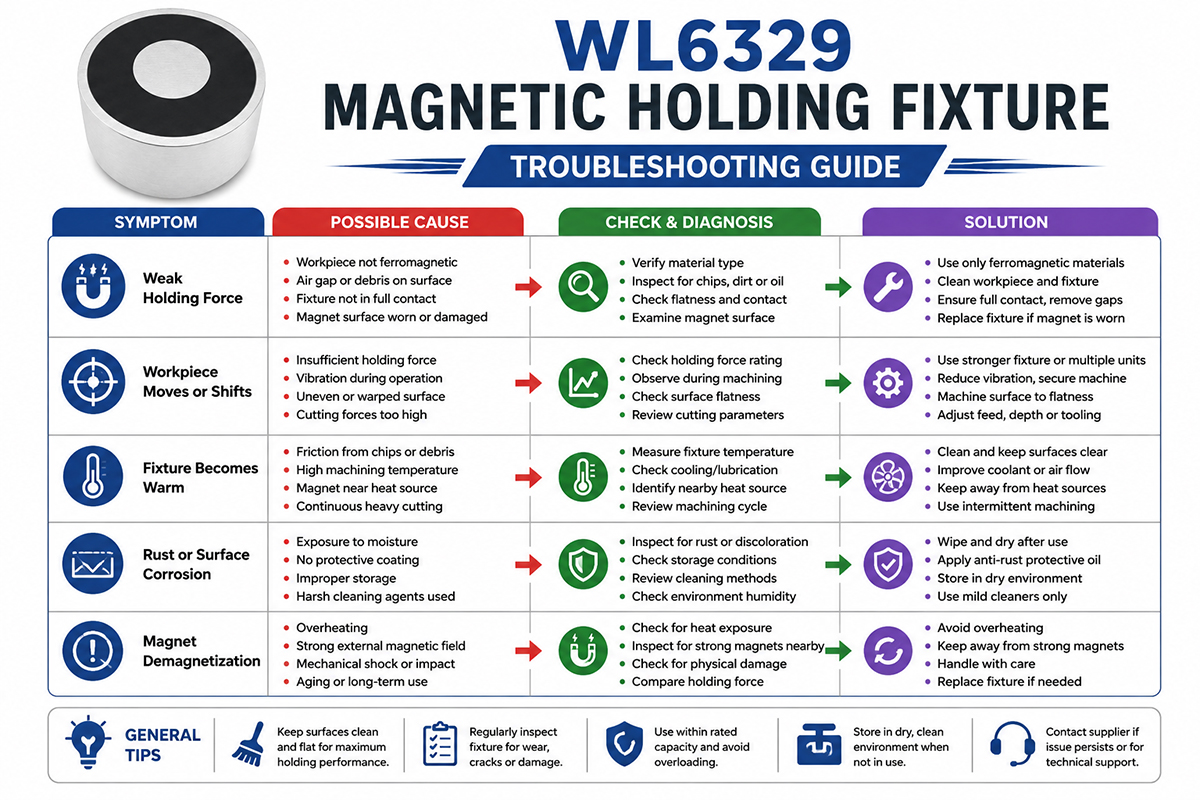
Do not forget about air gaps. Paint, rust, chips, dirt and uneven surface can adversely affect magnetic performance.
Do not use inadequate safety margins. Consider vibration, acceleration, cutting forces and varying operating conditions.
Do not forget about workpiece material. Verify magnetic properties of the material and its grade.
Do not limit access to the work. The fixture design should provide enough clearance for cutters, drills, welding equipment and inspection devices.
Do not use weak fixture rigidity. Deflection of the fixture can lead to loss of machining accuracy.
Do not underestimate heat effects. Magnets and nearby components can be affected by welding and other high temperature processes.
Do not forget about coolants. The fixture should be easily serviceable and cleanable.
Do not rely on magnetic force alone for positioning. Use stops, locating pins or reference surfaces when accurate positioning is needed.
Do not ignore emergency situations. Electromagnetic systems: Consider power failure, accidental impact, workpiece releasing.
Do not choose the fixture only because it is cheap. Reliability, serviceability, production efficiency and life are also important.”
Do not skip prototype testing. Verify holding force, repeatability, clearance and safety in realistic conditions.


