



DC Tubular Electromagnetic Solenoid for Medical Devices
DC Tubular Electromagnetic Solenoid for Locking Systems
DC Tubular Electromagnetic Solenoid for Medical control Systems
DC Tubular Electromagnetic Solenoid Linear Motion Guide
DC Tubular Electromagnetic Solenoid for Kiosk Equipment
DC Tubular Electromagnetic Solenoid Custom Design Guide
DC Tubular Electromagnetic Solenoid for Medical Devices
DC Tubular Electromagnetic Solenoid for Locking Systems
DC Tubular Electromagnetic Solenoid for Medical control Systems
DC Tubular Electromagnetic Solenoid Linear Motion Guide
DC Tubular Electromagnetic Solenoid for Kiosk Equipment
DC Tubular Electromagnetic Solenoid Custom Design Guide

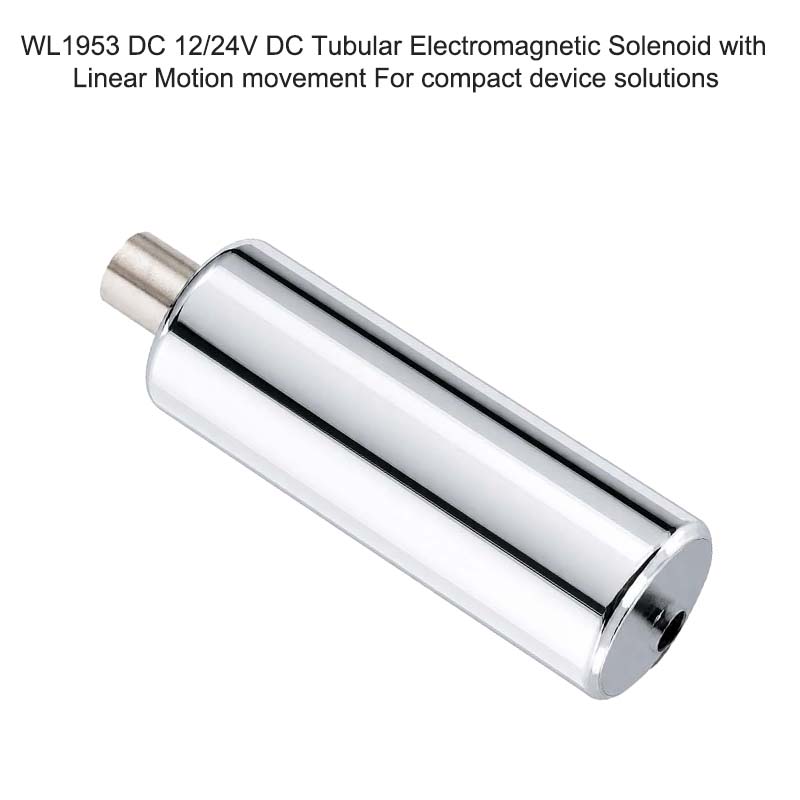
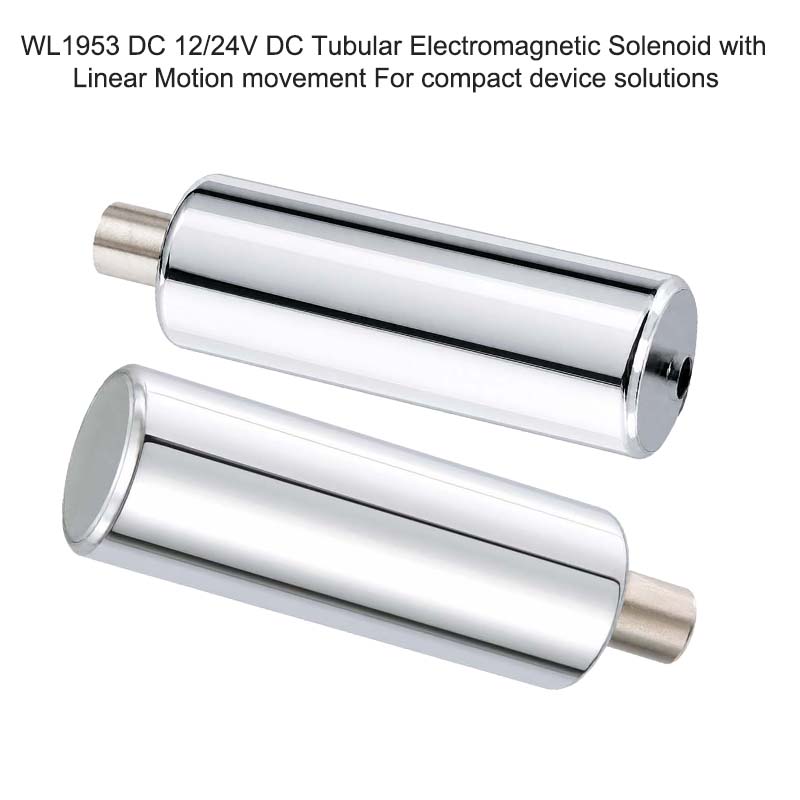
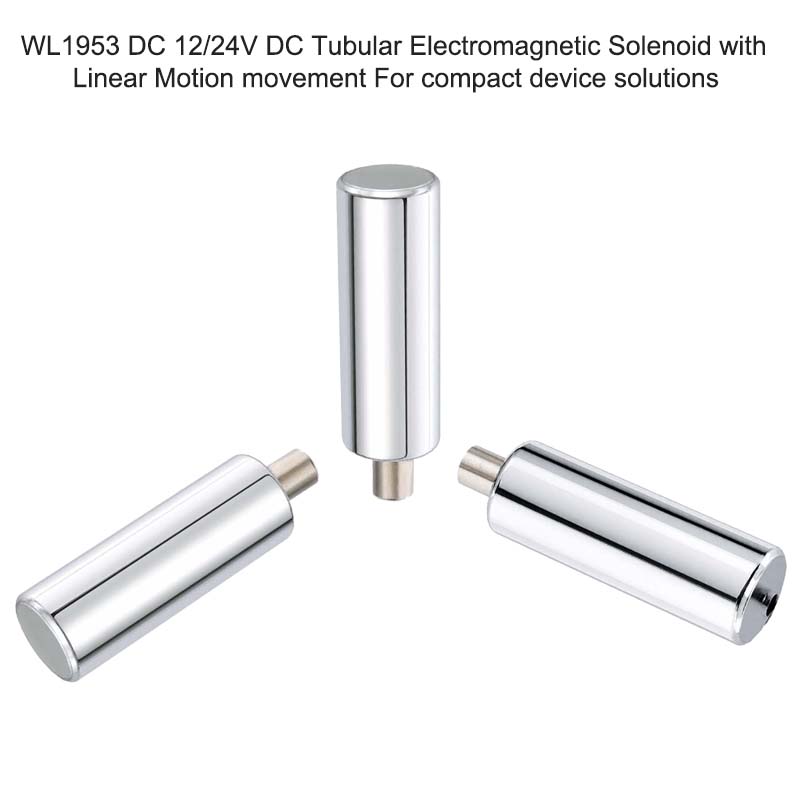
WL1953 DC Tubular Electromagnetic Solenoid Industrial Solution

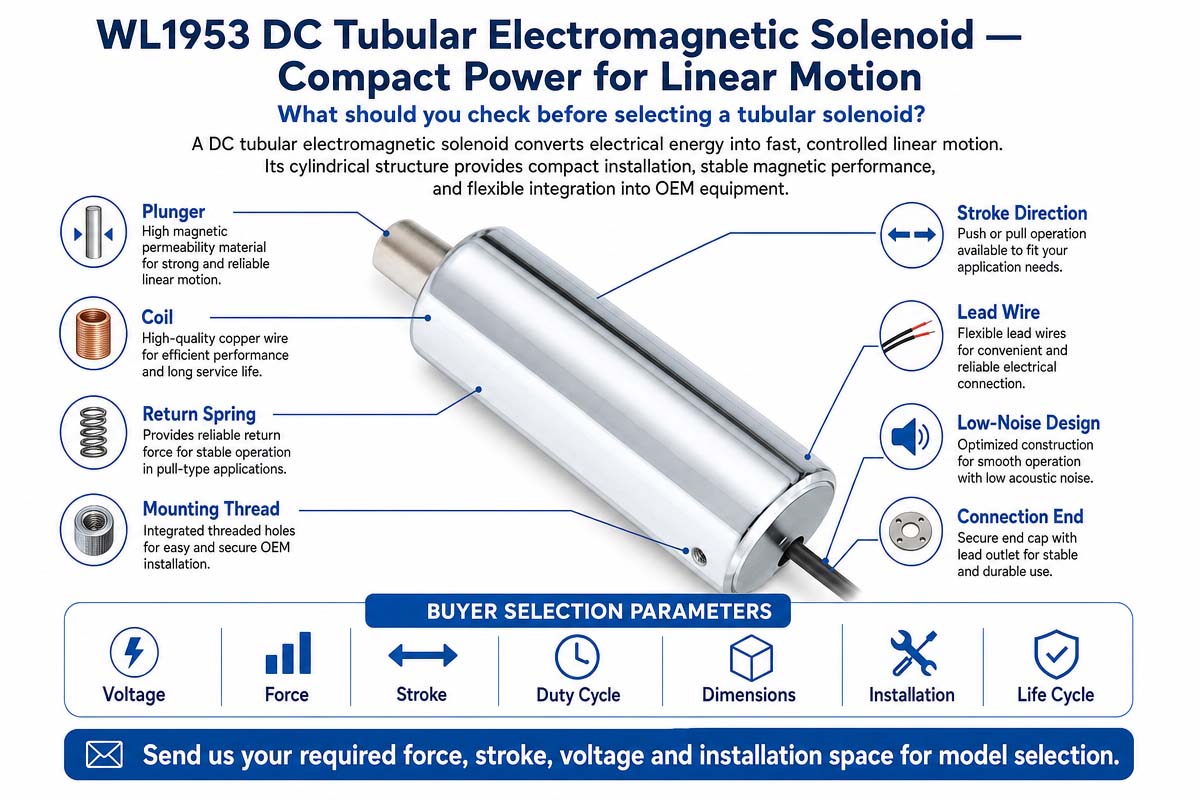
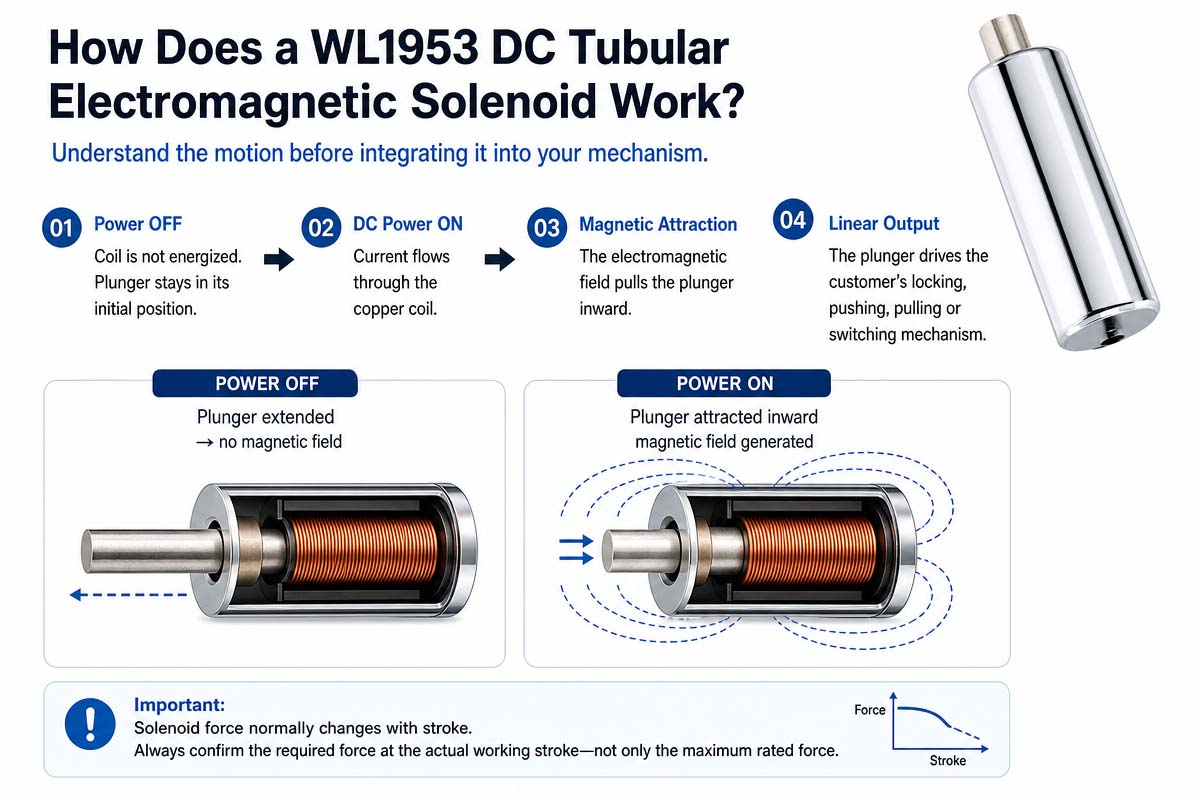
A DC tubular electromagnetic solenoid is an actuator, which aims at producing rapid and controlled linear motion from a DC electrical source. Usually a DC tubular electromagnetic solenoid comprises a cylindrical housing made of metal, an electromagnetic coil, a movable plunger, a return spring, and a mechanical connection point. The magnetic field produced by the coil makes the plunger move when current passes through the coil and produces a push or pull action.

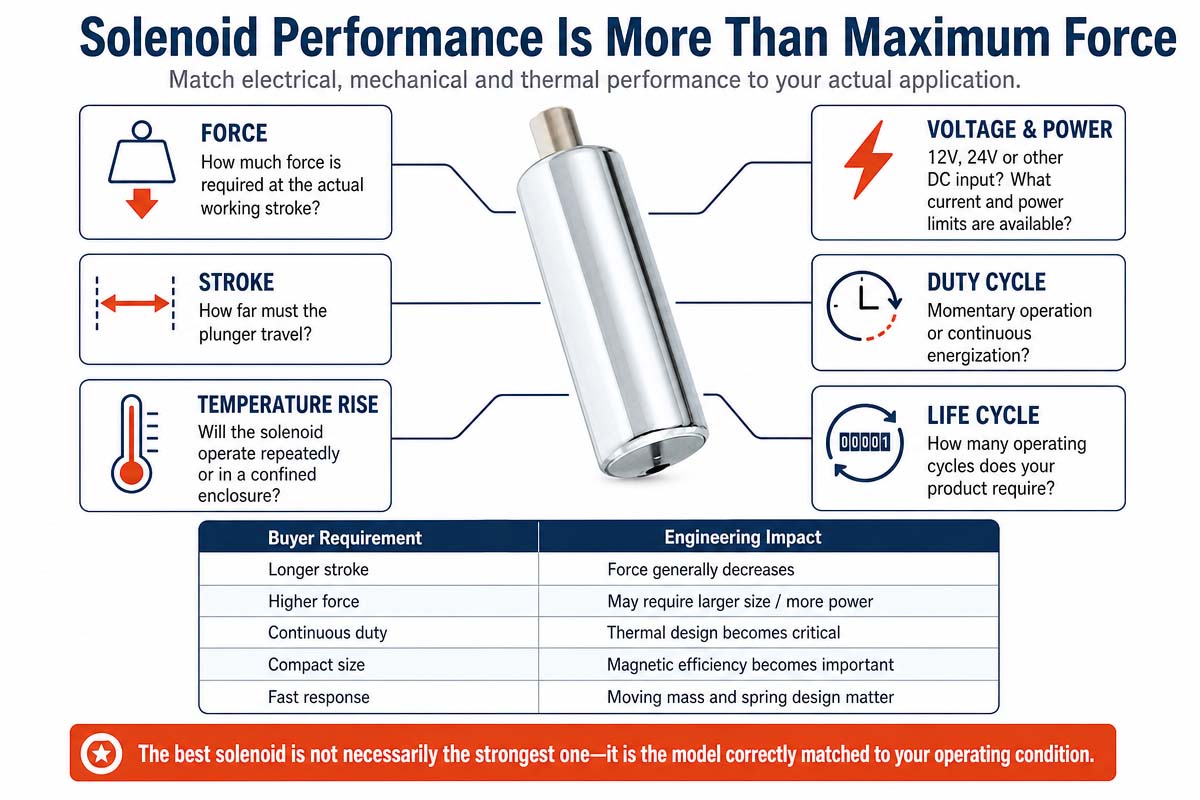
When the power is off, the plunger is returned to its initial position due to spring pressure or external load. DC tubular electromagnetic solenoids can be found in different kinds of voltages, forces, strokes, sizes, duty cycles, mounting, and plunger shapes. Due to their small form factor, tubular solenoids can be used in various applications such as electronic locks, medical devices, automation machines, kiosks, vending equipment, valves, safety mechanisms, and access control systems. One should choose a tubular solenoid depending on the required force at certain stroke, voltage, duty cycle, temperature, response time, service life, and installation space.

DC Tubular Electromagnetic Solenoid Product Overview

Compact linear actuation for OEM and industrial equipment is ensured by the means of a DC tubular electromagnetic solenoid. A cylindrical casing of the solenoid usually consists of a coil of copper, a magnetic steel housing, a movable plunger, a guide tube, and an optional return spring. We are ready to provide both standard and custom versions of a DC tubular electromagnetic solenoid in different DC voltages, stroke lengths, force requirements, duty cycles, mounting, lead wires, connectors, and plunger configurations. Typical applications include medical equipment, electronic locks, access control products, vending machines, automation systems, valves, and security devices. When choosing a product, one should not only take into account the maximum force of a solenoid but also the force at the required working stroke. Moreover, one should take into consideration temperature rise, lifetime, response, and installation space.

How Does a DC Tubular Electromagnetic Solenoid Operate?

Operation of a DC tubular electromagnetic solenoid relies on the principle of electromagnetic attraction. In particular, a coil is wound on a guide tube made of nonmagnetic material with a movable ferromagnetic plunger. When current passes through the coil, the magnetic flux appears and goes through the magnetic circuit created by the housing, pole piece, and plunger.

This way, a magnetic field produces a force, which attracts the plunger to the point of the magnetic circuit with lower reluctance. This results in producing useful linear motion. The motion of the plunger can be used directly as a pull action depending on the design of the mechanism or can be transmitted to create a push action.

When power is off, the magnetic force quickly drops. Usually, a plunger is returned to its initial position by the means of a return spring, gravity, or external load. When the coil is energized, it stores magnetic energy. One should take into consideration such factors as switching protection for a coil in the form of a flyback diode or any other kind of suppression circuit. The choice of suppression technique may affect the speed of release and the electrical protection.

Features of the DC Tubular Electromagnetic Solenoid

The main features of DC tubular electromagnetic solenoids include a compact cylindrical design, direct linear movement, fast response, simple electrical control, and flexible choices of force and stroke. Voltage ratings can include 6V, 12V, 24V, or any custom DC voltages. Tubular design ensures effective magnetic performance but takes up small installation space. A variety of mechanisms can be accommodated by push, pull, spring return, and customized plungers. Other features include duty cycle selection, mountability, repeatability, small component count, and compatibility with electronic control circuits. For some OEM applications, force, temperature rise, operating noise, lifetime, and power consumption can be optimized.

DC Tubular Electromagnetic Solenoid Product Video

DC Tubular Electromagnetic Solenoid Product Detailed Display

Custom DC Tubular Electromagnetic Solenoid Data Sheet

Brand Weilong Technology Model Number WL 1953
Rated Voltage (V) DC 12 or 24 V Rated Power (W) 10–15 W
Work Model 100,000 Lifespan Cycles Push Pull Force (N) 1000 Gf
Stroke (mm) 3-12 MM Reset Time(s) 0.3 seconds
Service Life 300 Thousand Times Certification CE, ROHS, ISO9001,
Material Carbon Steel Housing with Zinc-Plated Coating Lead Wire Length (mm) 200
Install Style both sides with three mounted screw holes for easy setup Tolerance of Dimension ± 0.1 MM
Water-proof None Insulation Class F. Cel. 150 Degree
Hi-Pot Test AC 600V 50/60Hz 1 s Non-excitation Holding Force 0
Working Temperature -10°C-100°C Duty Cycle 1-100%
Thread Depth (mm) / Payment Term TT, or LC at Sight
Sample Order Yes. Warranty 1 Year
MOQ 500 pcs Supply Ability 5000 pcs per week
Delivery Time 30 Days Port of Loading Shenzhen

DC Tubular Electromagnetic Solenoid Comparison in Force, Stroke, and Dimensions

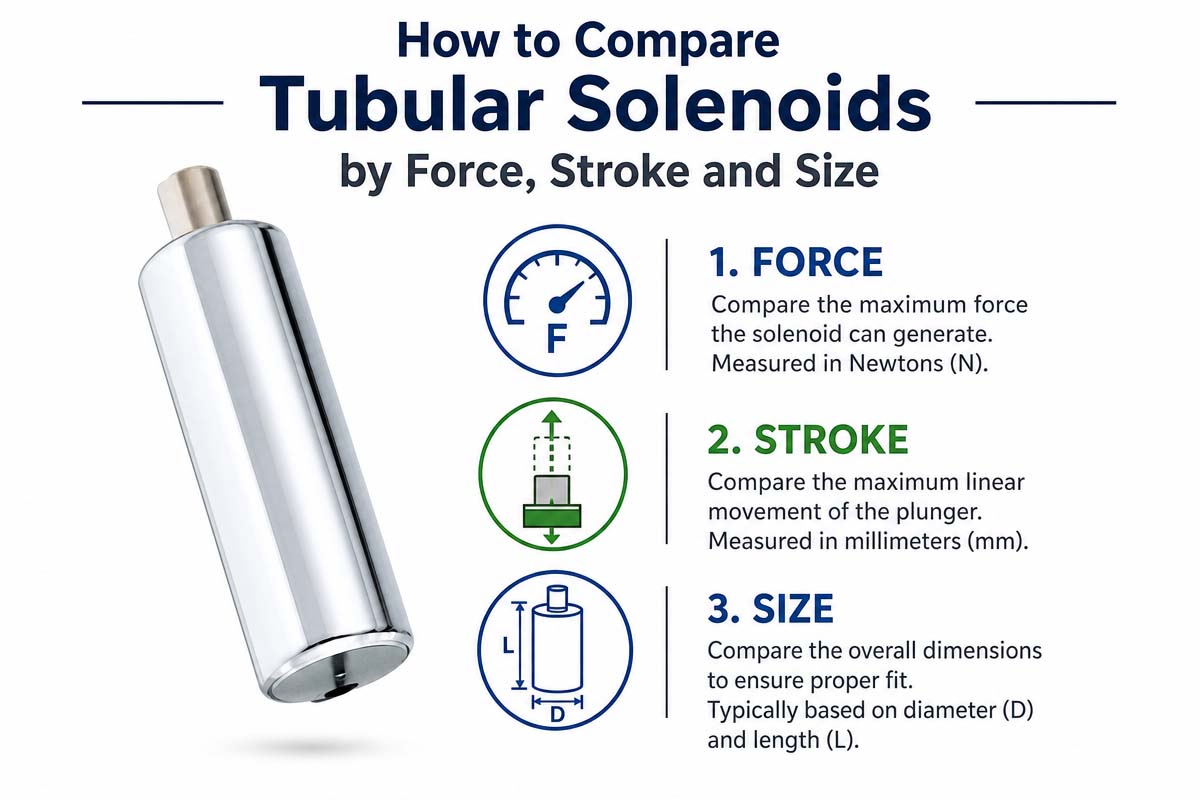
How to compare tubular solenoids by force stroke and size

When you compare tubular solenoids, it is not enough to pay attention to the largest force number in the datasheet. The force, stroke, and dimensions of the solenoids interact, and understanding this interaction is crucial when selecting a solenoid for medical equipment, locking systems, or industrial products.

1. Comparison of Force at Actual Working Stroke

First, it is necessary to determine the required mechanical force. Despite the fact that manufacturers can advertise the maximum force, this number is often measured with the plunger near the end of the travel with minimal air gap.

With a larger air gap, the available force can become much less. Therefore, you can compare the models by their force-stroke curves. Maximum force near zero air gap is not the important specification. If you need 10 mm of movement in your mechanism, you need to know the available force around the starting and operating positions.

If the solenoid fails to operate, it is necessary to calculate the solenoid force required, taking into account return spring force, friction, gravity, mechanism losses, acceleration requirements, and design margin.

2. Usable Stroke Comparison

A longer stroke does not mean that the solenoid is better than the other solenoid of the same size. A longer stroke can mean a larger initial magnetic air gap, reducing the starting force.

It is necessary to find the actual minimum movement required by the mechanism. For example, a locking mechanism can only require the sufficient plunger travel to clear a latch, allowing you to select a smaller solenoid or get more available force.

Moreover, it is necessary to distinguish the mechanical stroke and the stroke over which the solenoid provides sufficient force.

3. Comparison of Body Diameter and Length

The body dimensions of tubular solenoids may differ, but the electrical power remains the same. One solenoid may be shorter and wider, and another one can be narrower and longer.

Verification of the body diameter, body length, plunger travel, mounting hardware, wire exit, connector clearance, spring space, and clearance for the full plunger travel is required. The solenoid with the smallest body spec does not necessarily become the smallest complete installed solution.

4. Electrical Power Comparison and Duty Cycle

Two solenoids with the same body dimensions can differ in coil design, winding resistance, voltage, current, magnetic material, and temperature rise.

Comparing the voltage, current, resistance, power, duty cycle, max. energization time, and ambient temperature limits is important. An intermittent duty solenoid can provide high short-term force but will not be able to hold the load safely during prolonged operation.

Continuous holding. If continuous holding is required, it is necessary to select continuous duty models or an electronic driver providing high initial pull-in current and low holding current if the actuator design permits.

5. Force and Temperature

As the copper winding heats up, the resistance of the coil increases. With the fixed DC voltage, it leads to decreased current and thus to reduced magnetic performance. As a result, a solenoid working correctly at low temperatures may provide degraded force after several or prolonged activations.

Verification of performance at the maximum coil and ambient temperatures, not just room temperature, is required for demanding applications.

6. Comparison of Mechanical Life and Service Conditions

A high-force small tubular solenoid does not necessarily provide good lifecycle performance. Cycle rate, end travel impact, return spring preload, plunger guidance, contamination, vibration, corrosion, and mechanical alignment are factors affecting the lifecycle.

Applications of medical equipment, automated locks, and industrial machinery can require hundreds of thousands or even millions of operating cycles. It is necessary to request lifecycle data for similar conditions to the application.

7. Practical Selection Matrix

Create a comparison matrix of the force at required stroke, total stroke, voltage, current, power, duty cycle, body diameter, body length, temperature rating, response time, cycle life, and cost.

It is necessary to discard models unable to provide minimum force at the actual working stroke. After that, models exceeding thermal, electrical, and dimensional limits are to be discarded. Finally, it is possible to compare lifecycle, noise, installation, customization, and system cost.

Thus, the best tubular solenoid is not necessarily the one with the highest force or the smallest diameter. It is the one providing the needed force at the required stroke, fitting the available space and meeting the electrical, thermal, duty-cycle, reliability, and lifetime requirements. Testing of prototypes under worst-case voltage, temperature, tolerance, and load conditions should be conducted as the final step before production approval.

DC Tubular Electromagnetic Solenoid Industrial Application

DC Tubular Electromagnetic Solenoid Troubleshooting Guide

Wide use of DC tubular electromagnetic solenoids is observed in applications where equipment needs to have compact and electrically controlled linear movement. Such solenoids can enable or disable locking mechanisms such as door locks, cabinet locks, smart locks, access control mechanisms, lockers, safes, and electronic latches. Such a simple design is helpful when quick mechanical actuation is needed.

Well-designed and well-validated tubular solenoids can be used for actuation of locking mechanisms, dispensing mechanisms, positioning mechanisms, clamps, release mechanisms, and other internal electromechanical mechanisms found in medical and laboratory equipment. Designers of medical devices have to take into account safety, temperature, noise, electromagnetic compatibility, and reliability factors.

Tubular solenoids are also helpful in industrial automation to actuate gates, stops, selectors, triggers, interlocks, sorting mechanisms, and machine control assemblies. They are also used in vending machines, kiosks, ticketing equipment, packaging equipment, office equipment, household appliances, and security devices.

Valve actuation, robotic mechanisms, drawer release mechanisms, cash handling equipment, automotive auxiliary mechanisms, and battery-powered products are other examples of applications of DC tubular electromagnetic solenoids. The best application would be the one that requires short stroke linear motion, a reasonably fast response, simple on/off control, and small packaging. Suitability of a solenoid depends on force, stroke, duty cycle, operating temperature, expected lifetime, power availability, environmental protection, and mechanical load.

Why Are DC Tubular Electromagnetic Solenoids Popular for Medical Devices & Locking Systems?

DC tubular electromagnetic solenoids are widely used in medical devices and locking systems due to their compactness, direct linear movements, fast response, and simplicity of electronic control. The coil can be powered using transistors or MOSFETs, making integration with the sensors and controllers easier.

Tubular linear movement can directly engage or disengage the latch in the locking systems. In this way it becomes possible to use fewer gears or transmission elements. The tubular form factor fits well into doors, cabinets, drawers, lockers, access-control equipment, and security products.

When creating medical and laboratory equipment, there can be limited space and a need for controlled linear movement for locks, clamps, release mechanisms, dispensing assemblies, or positioning functions. DC tubular solenoids are customizable and can be ordered with custom voltage, force, stroke, spring, noise, connector, and mounting specifications.

However, DC tubular solenoids are not automatically medical grade or safety rated. The medical-device manufacturer must validate all systems of the actuator for electrical safety, EMC, temperature, reliability, lifecycle, contamination, noise, fault condition, and regulatory requirements. Similarly, the security product should consider fail-safe or fail-secure operations, power loss, tampering and emergency release and cycle life.


DC Tubular Electromagnetic Solenoid Advantage and Disadvantage

DC Electromagnetic Solenoid advantage and disadvantage

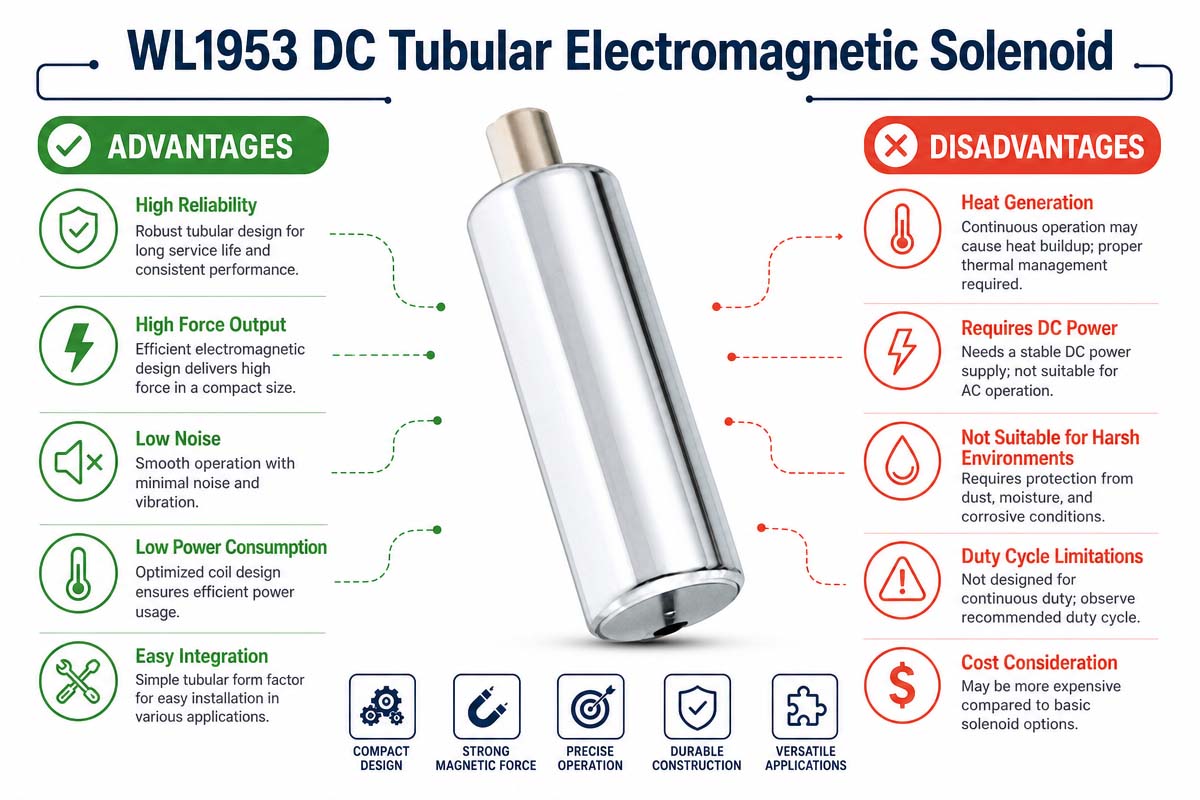
There are a number of advantages to the DC tubular electromagnetic solenoids. First, due to their tubular shape, DC tubular electromagnets occupy relatively little space and thus are very convenient for usage in compact spaces. In addition, tubular solenoids are fast acting, are easy to control, require relatively simple design, and can be operated using conventional DC power sources and electronic drivers. There is a choice of different voltages, strokes, plungers, springs, mountings, and forces to choose from. Reliability of such solenoids is provided by their small number of moving parts.

However, DC tubular solenoids have some limitations as well. The force can be very different depending on the stroke length and generally decreases with the growth of the air gap. Moreover, constant activation of the electromagnet can create excessive heating, especially for small high-powered solenoids. In addition, DC tubular solenoids can make noises as a result of the impact created when the plunger touches the stop. In the case when a load must be held all the time, such solenoids can consume a large amount of power when compared to latching or motorized solutions. Sticking can be caused by plunger-side loads, dirt, corrosion, incorrect alignment, or worn-out guide surfaces. Standard DC tubular solenoids provide only simple linear movements, while precise multi-position control is impossible. Therefore, it is necessary to take into account the force, stroke, heat, duty cycle, noise, lifetime, and power consumption before selecting a DC tubular solenoid.

Troubleshooting a DC Tubular Solenoid Electromagnet

DC Tubular Electromagnetic Solenoid Troubleshooting Guide

If a DC tubular electromagnetic solenoid does not work, it is necessary to check the supply voltage at the coil terminals using live power. A power supply may show correct readings without any load but start to sag badly when the solenoid is activated. It is necessary to check connections, wires, switches, MOSFETs, relays, and grounding.

If the voltage is correct but the plunger does not move, it is necessary to check the coil resistance and compare it with the nominal value. If the reading shows an open circuit, it means that the coil or its connections are broken, and if the coil resistance is different from the nominal value, it may be damaged.

For insufficient force, it is necessary to check the stroke and the air gap. Excessive initial stroke, low supply voltage, high coil temperature, over-strong return spring, friction, or side loads can prevent the plunger from completing its movement.

If the solenoid is overheated, the voltage, ON time, frequency of switching, and ambient temperature must be checked. Do not think that all tubular solenoids are designed for continuous duty.

Sticking or sluggish movement can be a result of dirt, corrosion, deformation, wear, or misalignment of the plunger and guide surfaces. It is not recommended to use inappropriate lubricants unless approved by the manufacturer.

Delayed release can be caused by residual magnetism, mechanical friction, wrong spring selection, or a flyback suppression circuit. Instead of changing the solenoid on a higher-power model, it is necessary to conduct electrical, thermal, mechanical, and lifecycle testing.

FAQs on DC tubular electromagnetic solenoid

1. How do I determine the correct force and stroke for my application?

You should calculate the exact force required and put some margin for safety. 1.5 is applied as a safety factor in order to take into account the friction and wear. Regarding stroke, remember that the solenoid produces less force the longer the stroke is. It is critical to verify that the solenoid is able to produce sufficient force at maximum stroke and not only in its initial position. The tubular solenoids are specially designed to deliver high force in short-stroke applications.


2. What is duty cycle? Why is it important not to over heat?

The duty cycle is a percentage of the time the device works compared to the whole cycle time. It is the key factor to prevent coil overheating. Duty cycle depends on allowable power (and therefore force). For example, a solenoid, rated for 7W continuous (100% duty), could often be able to work at 14W with 50% duty or 28W at 25% duty. In this case, the maximum “on” time becomes strictly limited. It is critical to set the duty cycle according to your application.

3. What are the trade-offs between tubular and other solenoid designs (e.g. C-frame or D-frame)?

A tubular solenoid is the most magnetically efficient design among all. They produce more force in a compact form than C- or D-frame solenoids. The cylindrical shape reduces the loss of the magnetic flux, providing excellent results. They are more complicated and therefore more expensive per unit than frame solenoids; however, their performance and size features make them more preferable in space-restricted applications requiring high force, for instance, medical or lock applications.

4. How to reduce power consumption and heat generation during holding?

The most effective way is to use a Pulse Width Modulation (PWM) driver. One of the popular methods is to supply full voltage to switch the solenoid and then reduce the voltage (usually, 35-50% of nominal voltage) to hold the position. This method allows significantly decreasing the power dissipation up to 12-25% of nominal voltage, thus reducing the heat generation. PWM is more efficient than adding a series resistor and wasting the extra energy as heat.

5. What factors influence the service life of a tubular solenoid?

The life depends on the mechanical wear of the plunger and bearings and electrical stresses caused by heat. Look for the low-friction bearing systems for applications where long life is critical. Premium products could have a life of 25 million actuations or even more. In order to ensure high reliability, tell the manufacturer the expected number of cycles and particular conditions like dust or moisture.

6. What electrical considerations are there for integration (voltage, current and control)?

Choose the solenoid coil compatible with your DC voltage source (12V, 24V, or 48V). Don’t forget about the inductance of the solenoid, influencing its response time. If you use the solenoid for high-speed purposes, it is better to select the low-inductance coil, because it has a faster current rise. While ordering, you usually should specify the coil AWG and termination.

7. Are tubular solenoids customizable to meet specific OEM requirements?

Yes, customization is a standard feature. Usually, the following customizations are included: custom plungers, custom mounting options, terminations and particular springs forces . For applications having restrictive size, force or environmental requirements, a custom or modified design would be a more efficient and durable solution than a standard product from the catalog.

8. What are the typical environmental and mounting considerations?

The tubular solenoids are available for work at the temperature range from -55°C to +80°C or even more depending on the insulation class. Take care about the installation environment; if it is subject to dust, moisture, or corrosive elements, you could need the sealed housing or special coating. The tubular solenoids are shock and vibration resistant, but they should be correctly mounted.

We hope these FAQs will help you to select your product. If you want to provide more detailed information about your application (force required, available space, or environment), our team can give you more specific information.


How to Choose a DC Tubular Electromagnetic Solenoid

The first step in choosing the right DC tubular electromagnetic solenoid is defining the mechanical requirement. In particular, one should figure out whether the mechanism needs push or pull action and measure the necessary working stroke. The force of a solenoid can vary drastically with different positions of the plunger. Always compare the force vs. stroke data provided by the manufacturer at the actual operating point. Do not choose a solenoid based on the maximum force, which is advertised.

The next step is figuring out the load force. It can include the external load, the return spring force, friction, gravity, mechanical losses, and a design margin. The dynamic applications can require additional force to provide acceleration. If the solenoid is not powerful enough to produce the required force at the beginning of the stroke, it might not complete the stroke.

Then, choose the proper DC voltage, for example, 6V, 12V, or 24V, depending on the available power supply. Also, check coil resistance, current, and power requirements. In addition, one has to check supply voltage at the solenoid terminals under load. There might be voltage drop in wiring and driver circuits.

The duty cycle plays an important role in the functioning of a solenoid. A solenoid designed to work in intermittent duty can get overheated if it is energized continuously. MAXIMUM ON-TIME, OFF-TIME, OPERATING FREQUENCY, AMBIENT TEMPERATURE, AND PERMISSIBLE COIL TEMPERATURE ASSESSMENT

It is also necessary to confirm the installation envelope, which includes the body diameter, overall length, plunger extension, stroke clearance, mounting threads/brackets, wire exit direction, and connector space.

Moreover, one has to consider such factors as service life, noise, response time, environmental protection, vibration, contamination, and operating orientation. For medical devices, security systems, or safety-related equipment, validation has to include fault condition tests throughout the lifetime.

Finally, one has to test prototypes under realistic worst-case conditions. NOTE: Test the force at minimum supply voltage and maximum temperature, as the coil resistance can increase in case of heating of windings. A properly chosen tubular solenoid has to meet mechanical, electrical, thermal, environmental, and lifetime requirements simultaneously.

Last Selection Tips

While working with the supplier, provide him with the detailed description of your application: the force required for the particular stroke, the duty cycle, voltage, environment, and expected life cycle. He needs this information in order to offer or design the appropriate solenoid for your system.

Tips to Avoid Errors When Designing a DC Tubular Electromagnetic Solenoid

First, one can make the mistake of choosing the DC tubular electromagnetic solenoid for maximum force without checking force at the desired stroke. The force of a solenoid is variable in the course of its stroke.

Second, it is possible to overlook coil temperature and duty cycle. Continuous energization of an intermittent duty coil may cause overheating, insulation breakdown, derating, and premature failure.

Do not forget about voltage drop in the wires, connectors, transistors, MOSFETs, and other devices, which are used to drive LEDs. The DC tubular electromagnetic solenoid should receive sufficient voltage and current at the real operating conditions.

Do not side-load the plunger. The DC tubular electromagnetic solenoid is mostly used to produce axial motion. Misalignment will increase friction and wear.

It is important to provide appropriate flyback or transient suppression when switching the coil. Nevertheless, the design of the suppression circuit affects the release time.

It is important to leave sufficient mechanical clearance but avoid unnecessary air gaps weakening magnetic force. Spring force, friction, contamination, vibration, operating temperature, and dimensional tolerances have to be also taken into account.

One should not rely only on theoretical calculation in critical applications. Prototype testing has to include minimum and maximum voltage, temperature extremes, cycling, mechanical tolerances, and worst-case loads. The designs for medical, security, and safety applications require additional risk analysis, compliance testing, and redundancy or fail-safe behavior.

Get A Free Quote Now

Contact Form

Related Products

Related News

Scroll to Top

Get A Free Quote Now !

Contact Form
If you have any questions, please do not hesitate to contact us.
Weilong Solenoid Company Culture