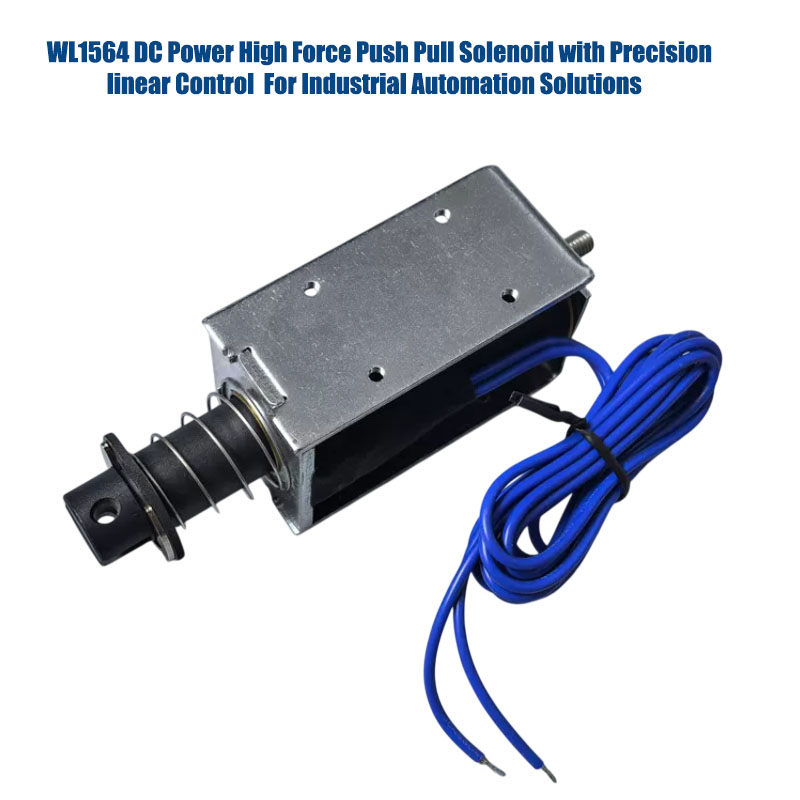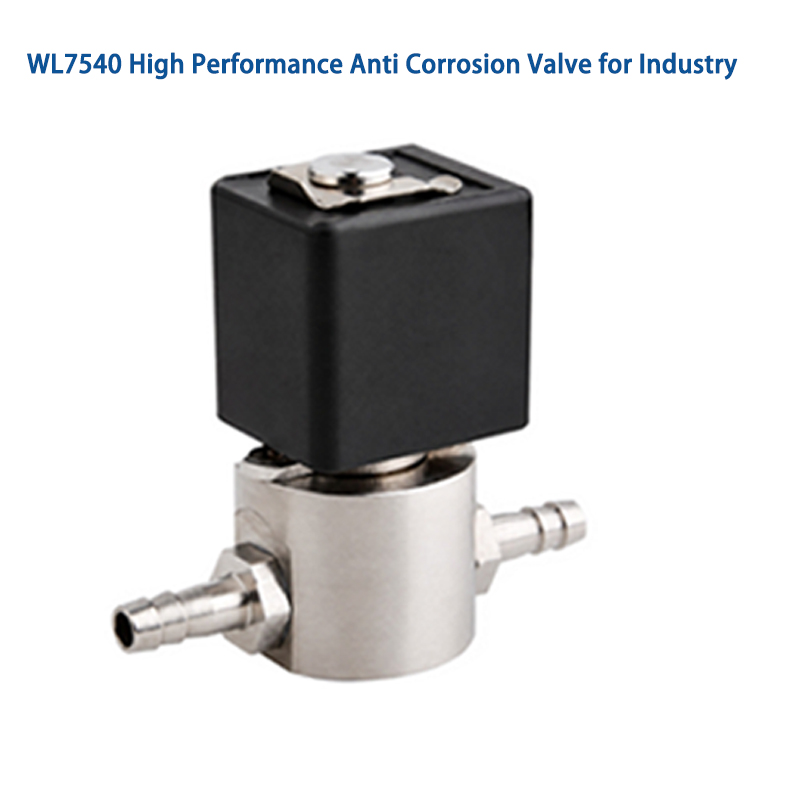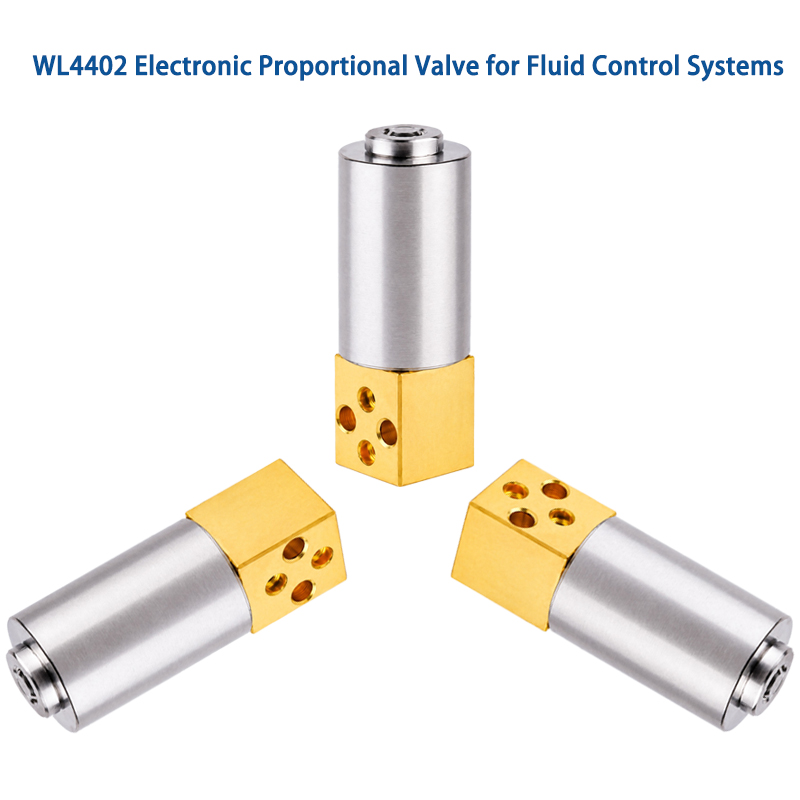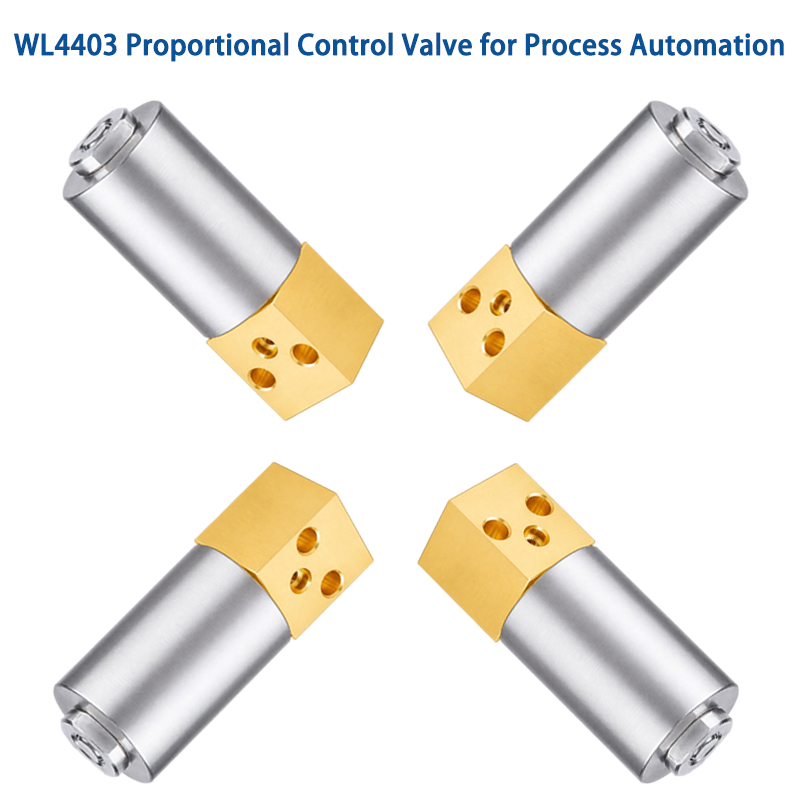
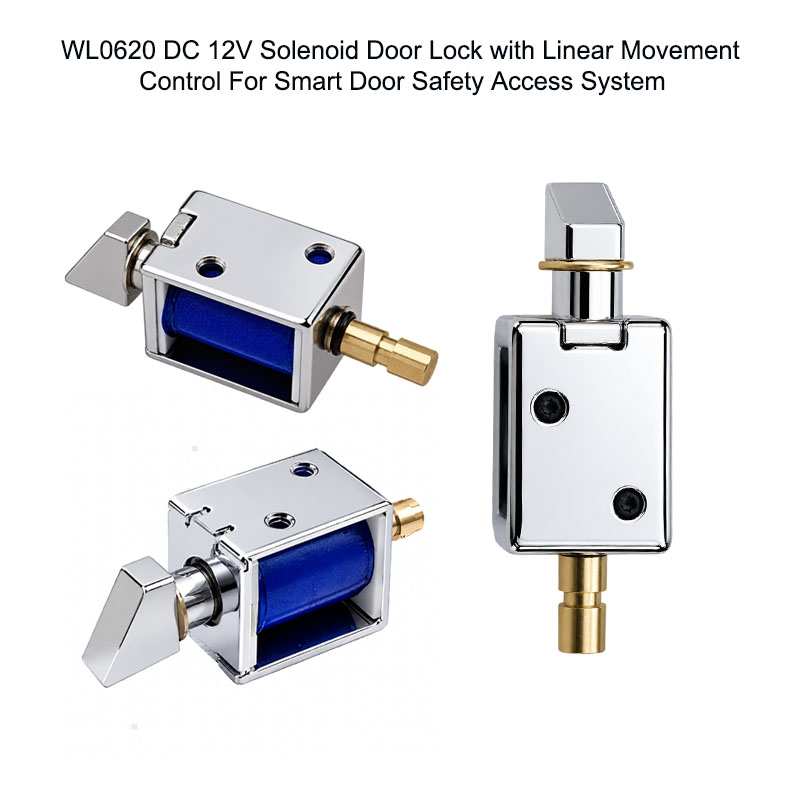
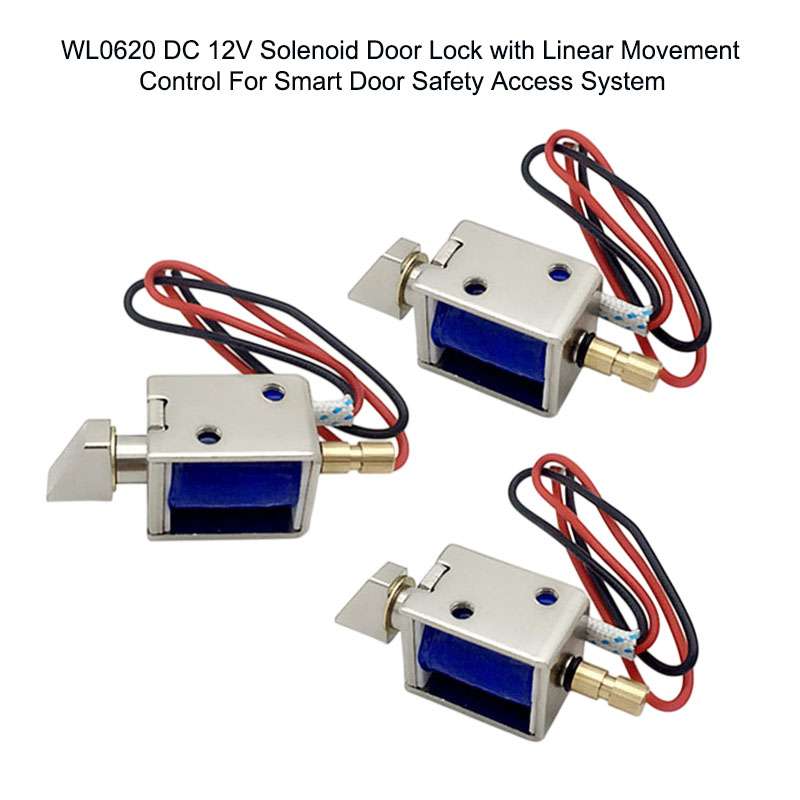
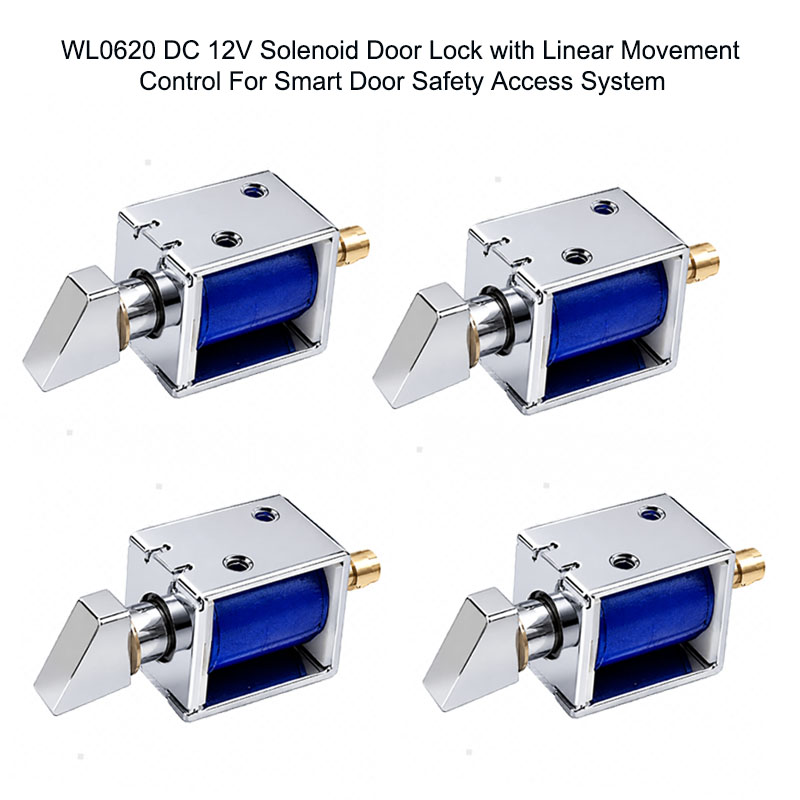
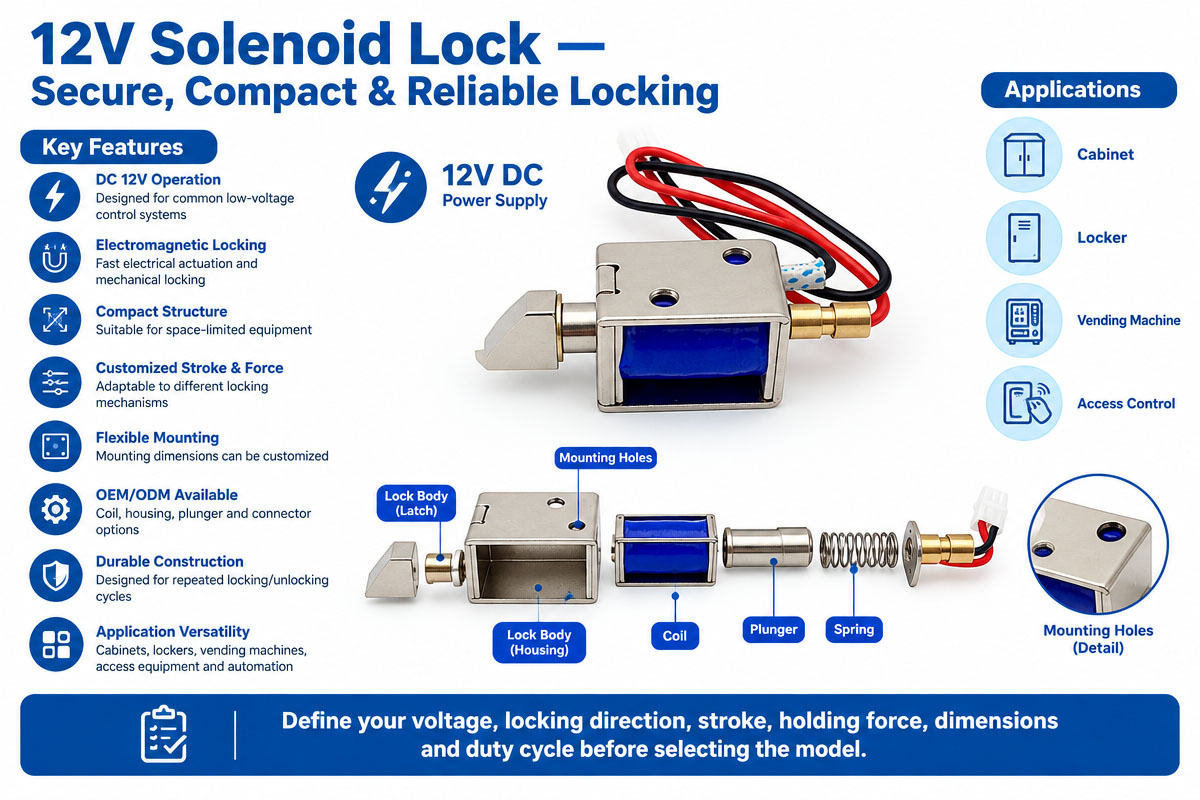
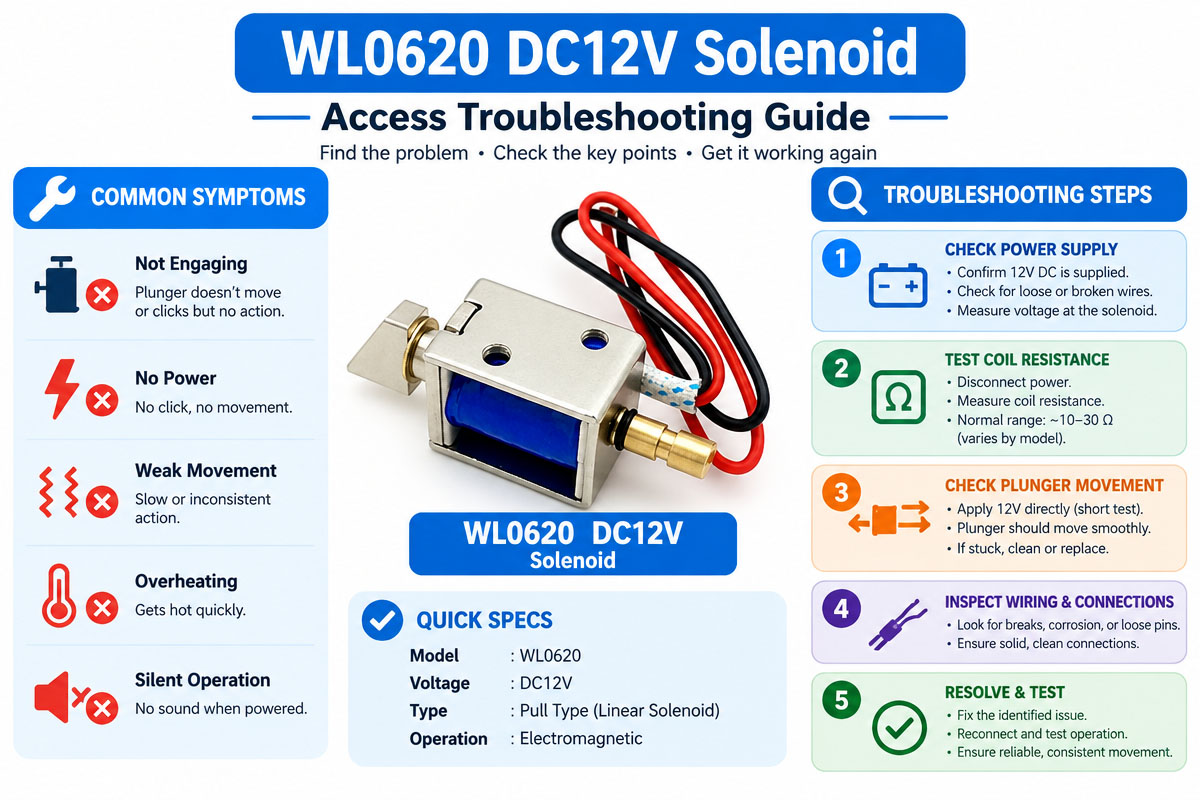
How to select a 12V solenoid lock
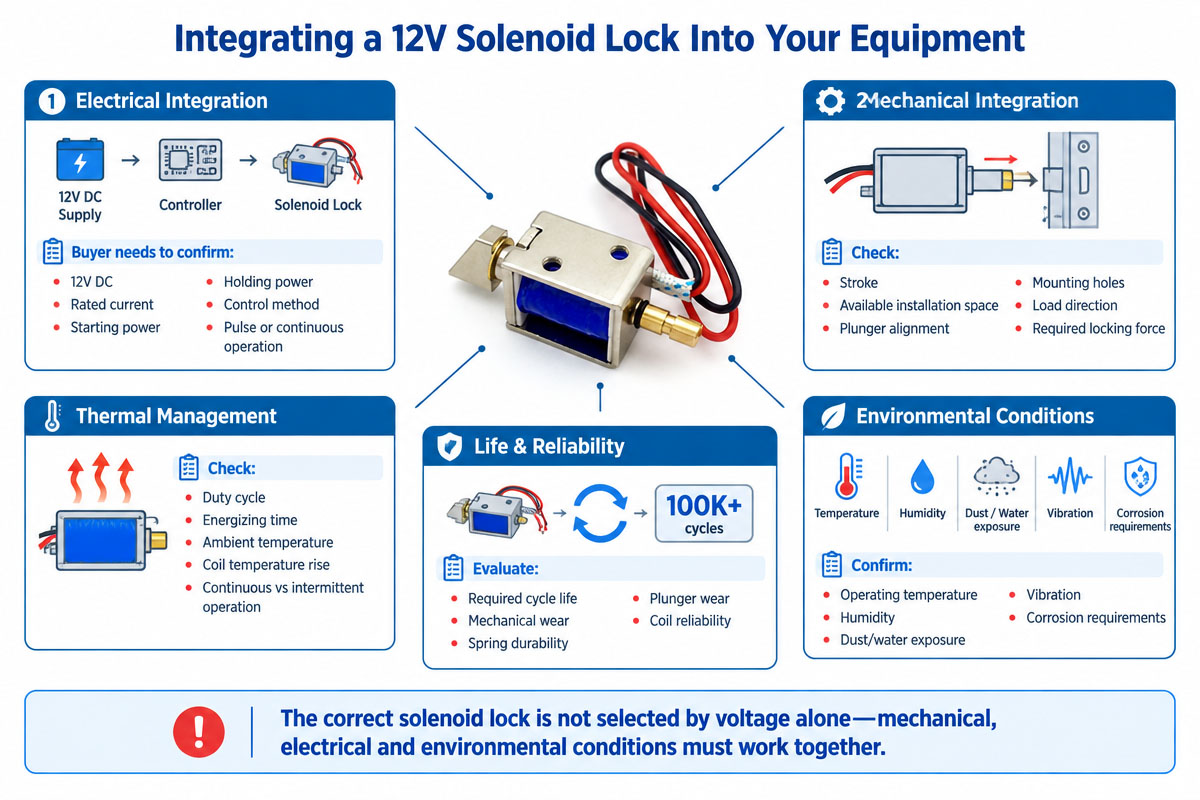
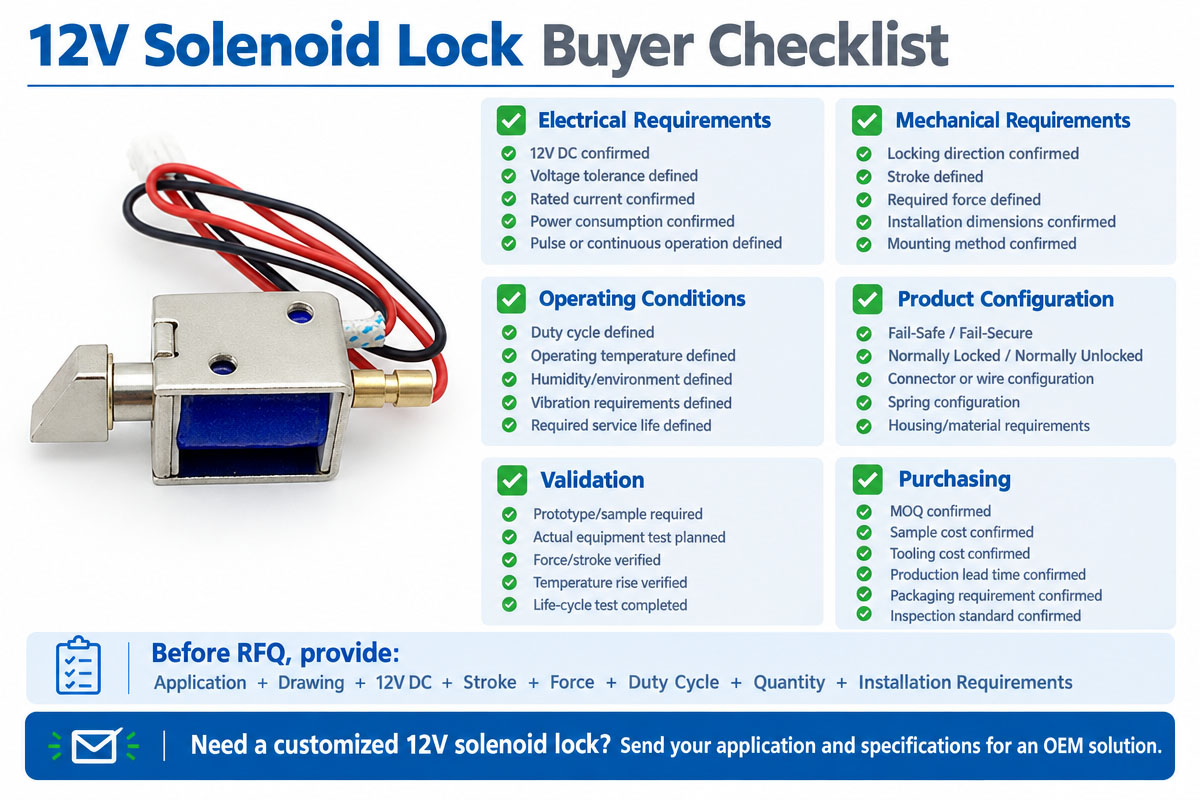
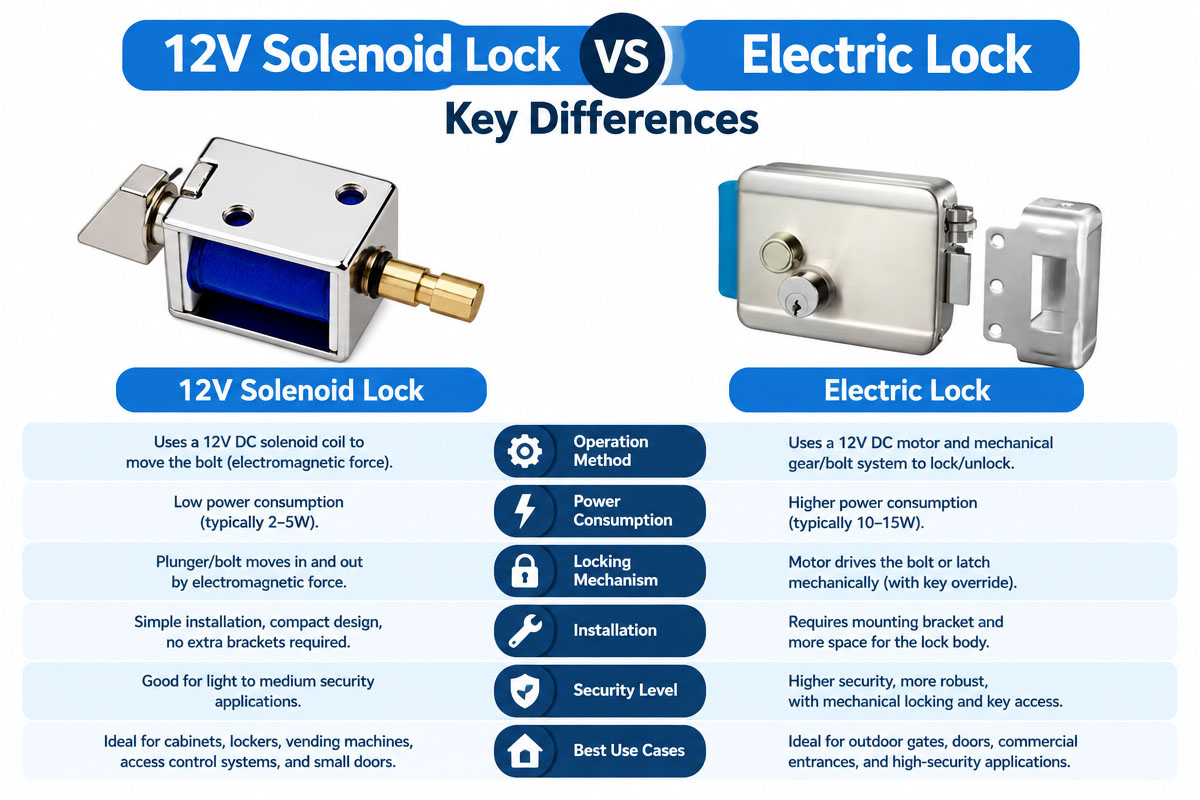
When selecting a 12V solenoid lock, you need to consider not only the fact that the equipment is supplied by 12V DC. • Mechanical and electrical requirements should be defined together.
1. Check the Voltage
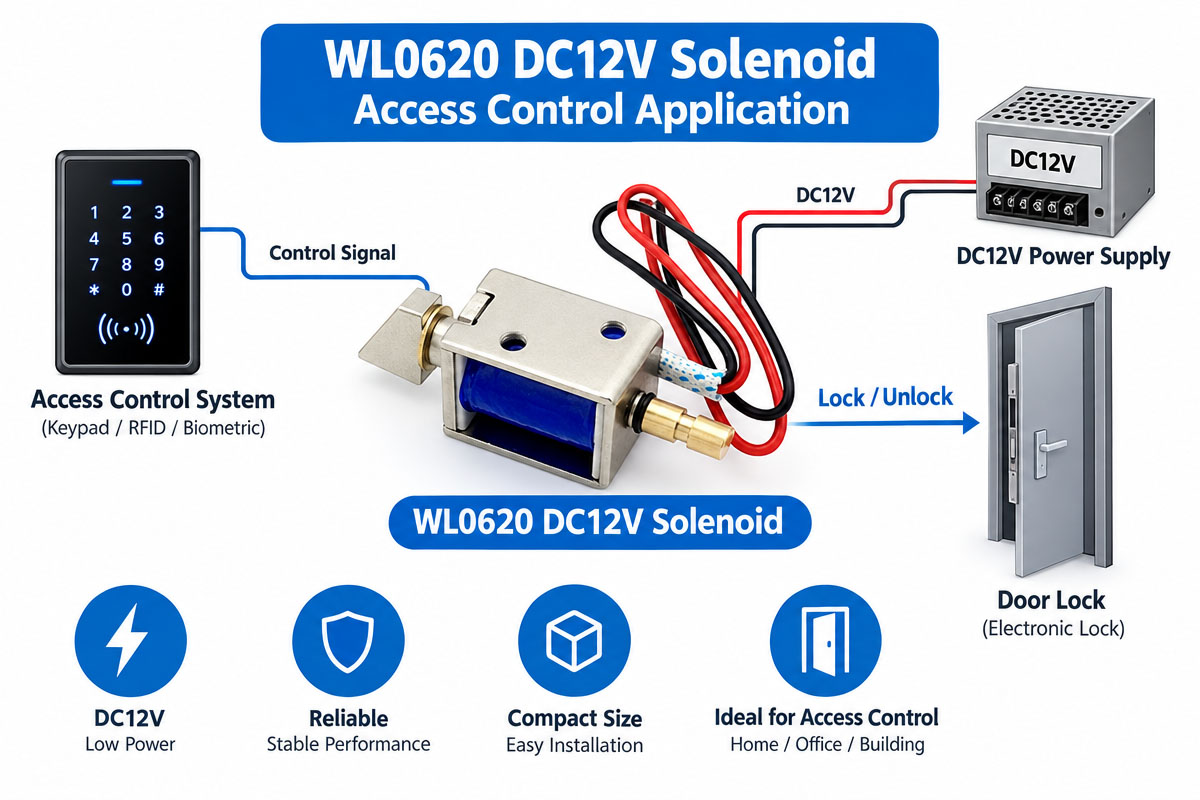
Start with the real control voltage. If the system requires 12V DC, check the allowable voltage range and voltage constancy during operation.
2. Definition of Locking Direction
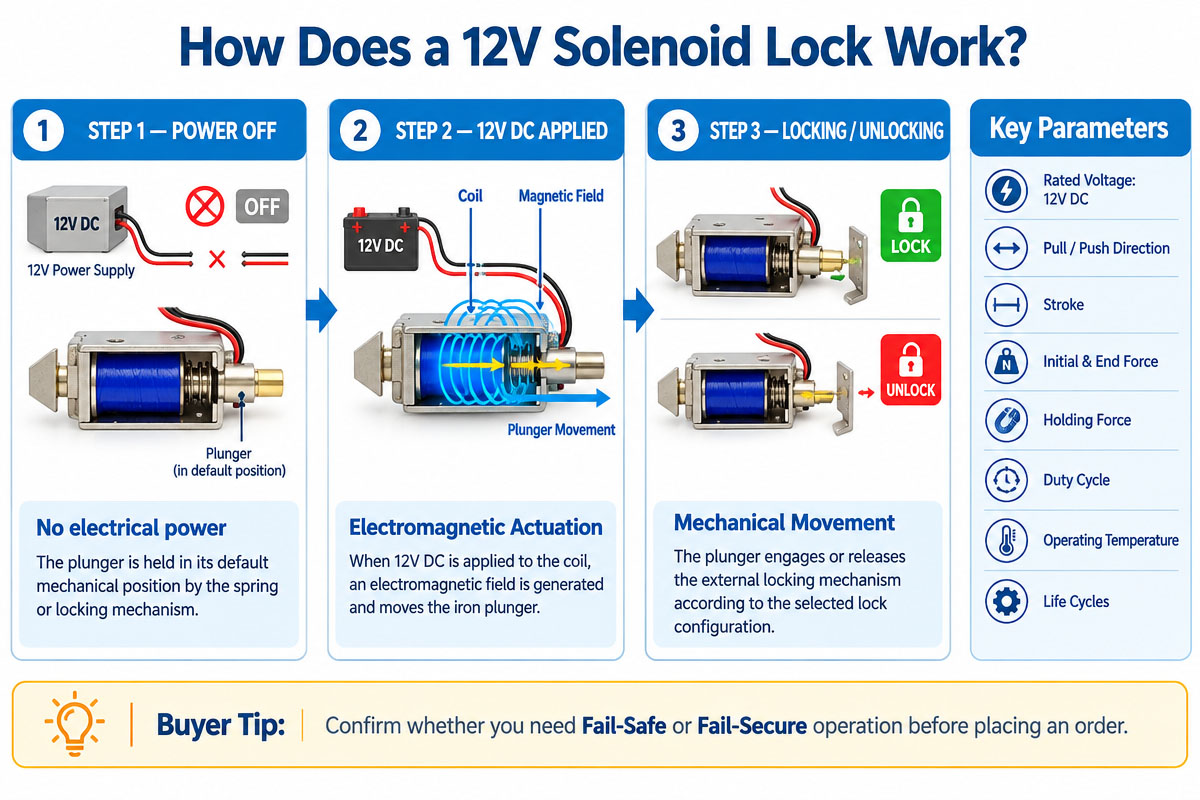
Define whether the locking mechanism needs to be pushed or pulled. The direction of the plunger must correspond with the mechanical design.
3. Determine the Force
Define the force needed for movement and holding the locking mechanism. Consider friction, door pressure, spring resistance, misalignment, and any other loads that may occur.
4. Pick the stroke you need
The stroke must be sufficient for engaging or disengaging the locking mechanism. If the stroke is too small, the lock won’t be engaged completely. If the stroke is too large, the installation space will be larger.
5. Check the duty cycle.
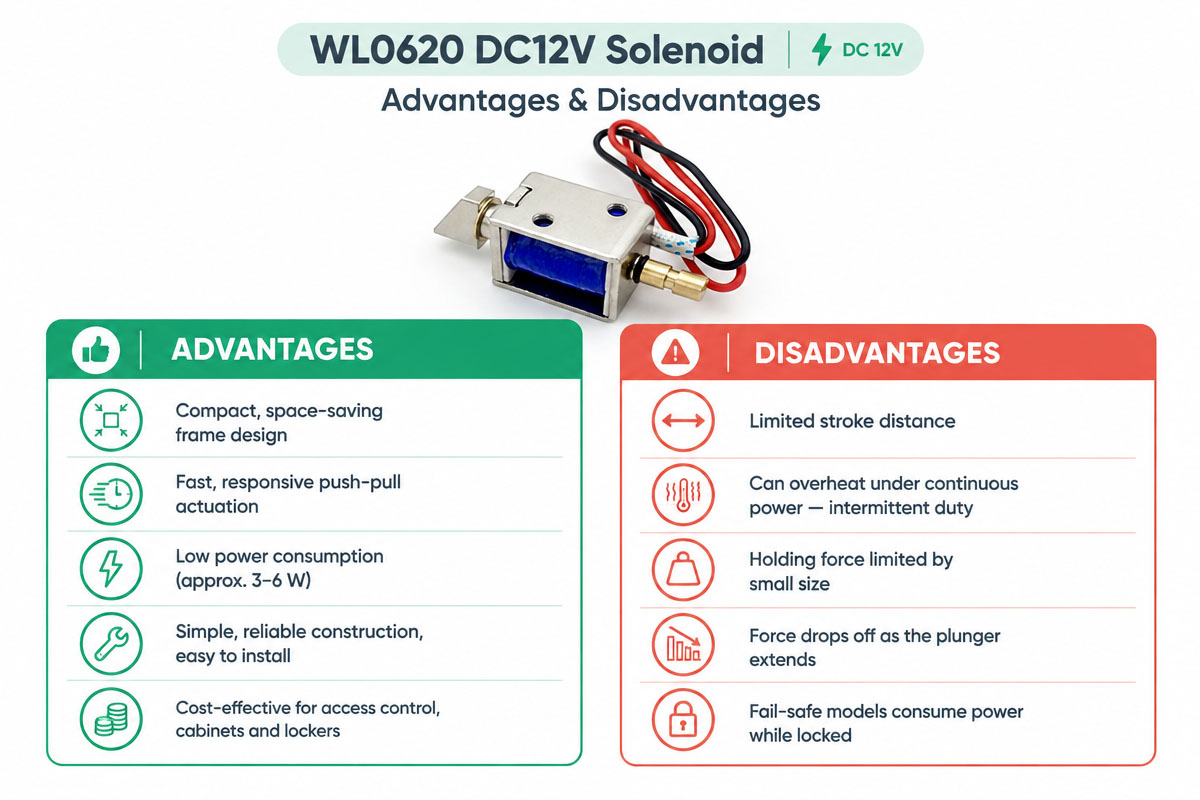
Find out the number of locking cycles and duration of coil energization. The coil that is designed for intermittent service cannot be assumed to be suitable for continuous energization.
6. Current and Power Evaluation
Rated current, coil resistance, and power consumption must be checked. All controllers, wiring, connectors, and power supplies should be rated for the electrical load required.
7. Verify installation dimensions.
Check overall length, width, height, mounting holes, plunger position, and available installation space.
8. Set the environmental conditions.
Consider temperature, humidity, dust, vibration, corrosion, and potential water exposure. These conditions may influence material and sealing requirements.
9. Specify Life Requirements
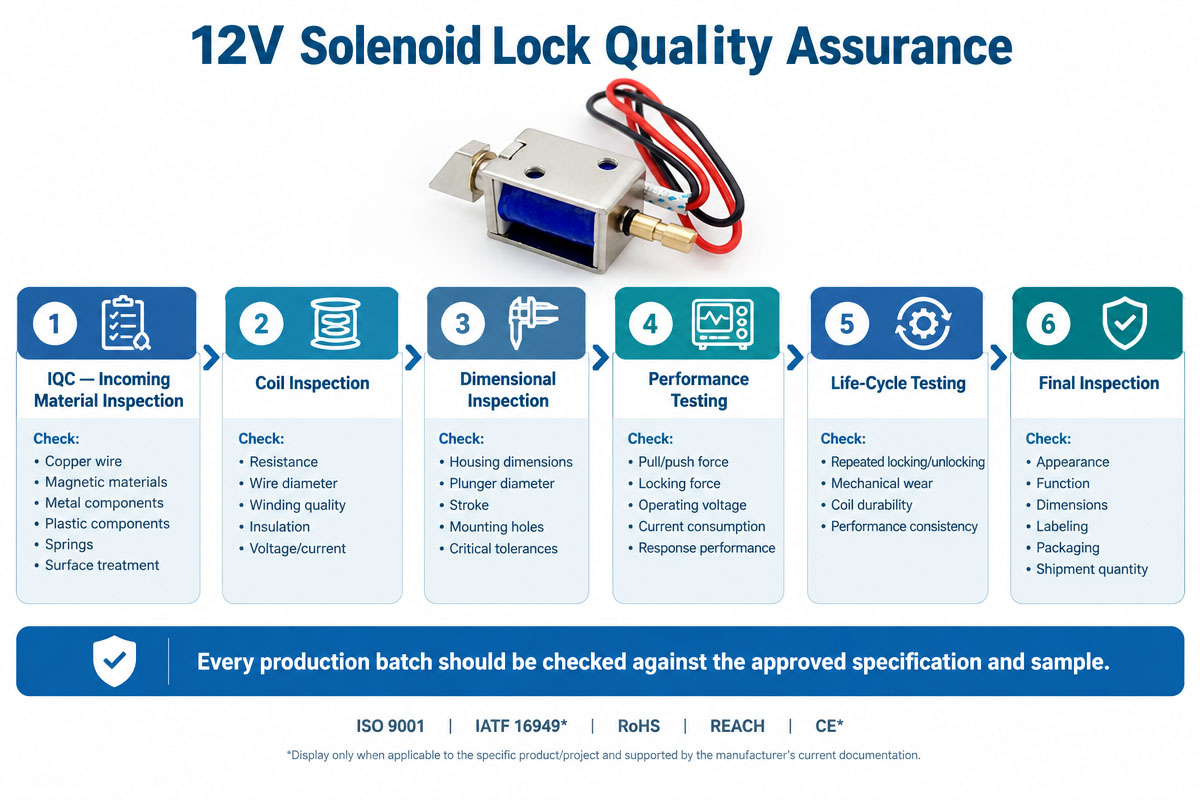
Estimate the required number of locking cycles for the entire lifetime of the product. Request life testing if required.
10. Sample check
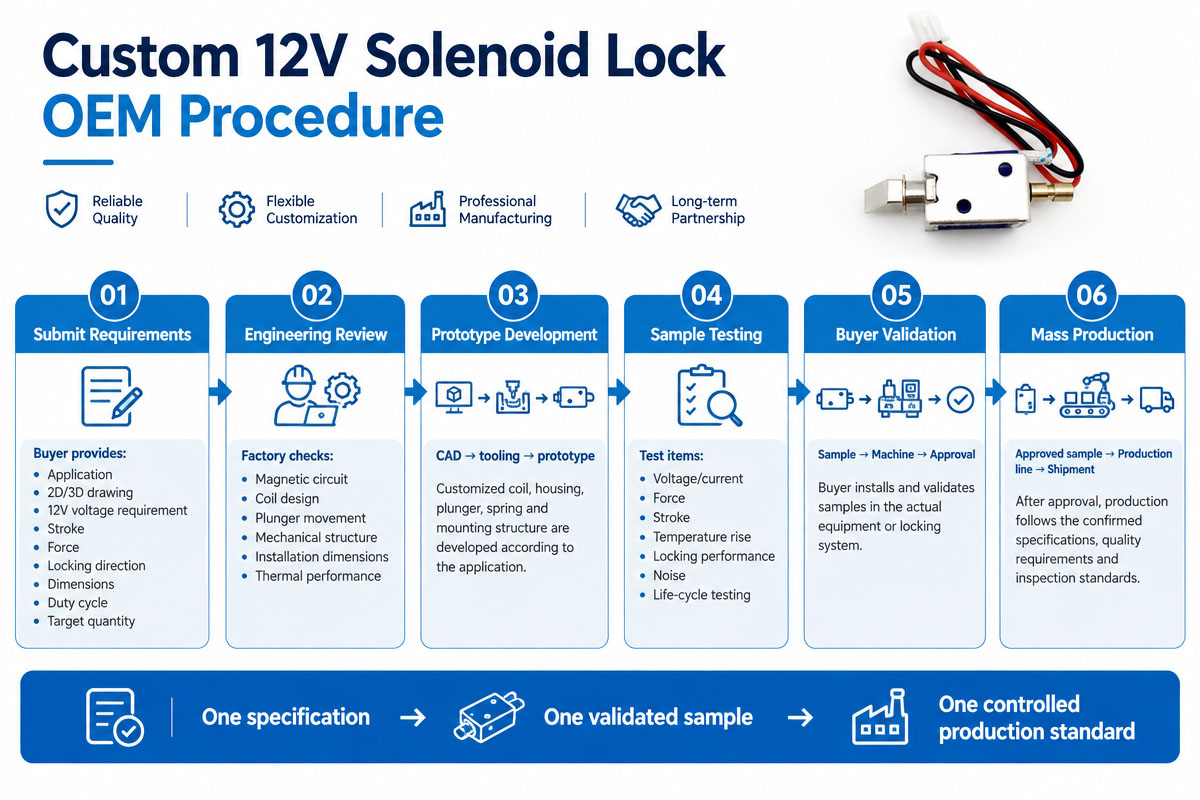
Test the samples in the real equipment before mass production. Test locking force, stroke, electrical performance, temperature rise, mechanical interference, and repeat operation.
Principle of the purchaser:
Select the 12V solenoid lock based on the application requirement and not just the “12V” label.
How to Avoid Common Mistakes When Designing 12V Solenoid Locks
Error 1 — Choosing Based on Voltage Alone
12V rating does not specify force, stroke, current, or duty cycle.
Avoid: List all major electrical and mechanical parameters.
Mistake 2 – Ignoring the real mechanical load
Door pressure may increase the required force. Friction and spring resistance may increase the required force.
Test the locking mechanism under real load conditions.
Mistake 3: Choosing the wrong stroke
The plunger may seem to operate properly but may not engage the latch completely.
Do not measure the real mechanical travel and add an appropriate engineering margin.
Mistake 4: Ignoring Duty Cycle
The product that is designed for intermittent operation can create excessive coil temperature while being continuously energized.
Avoid it: Define energizing time, frequency, and duty cycle at the RFQ stage.
Mistake 5 – Plunger Orientation Incorrect
Side loading increases friction and causes quicker mechanical wear.
Stay away from it: Create the mounting structure so that the plunger remains in proper orientation.
Mistake 6 — Not Releasing Manually
Some systems require emergency or maintenance access.
Don’t: Define if mechanical release or another access method is needed.
Mistake 7 – No Prototype Testing
The CAD integration will not find all of the real-world issues.
Do not do this: Test the samples in the final equipment before production approval.