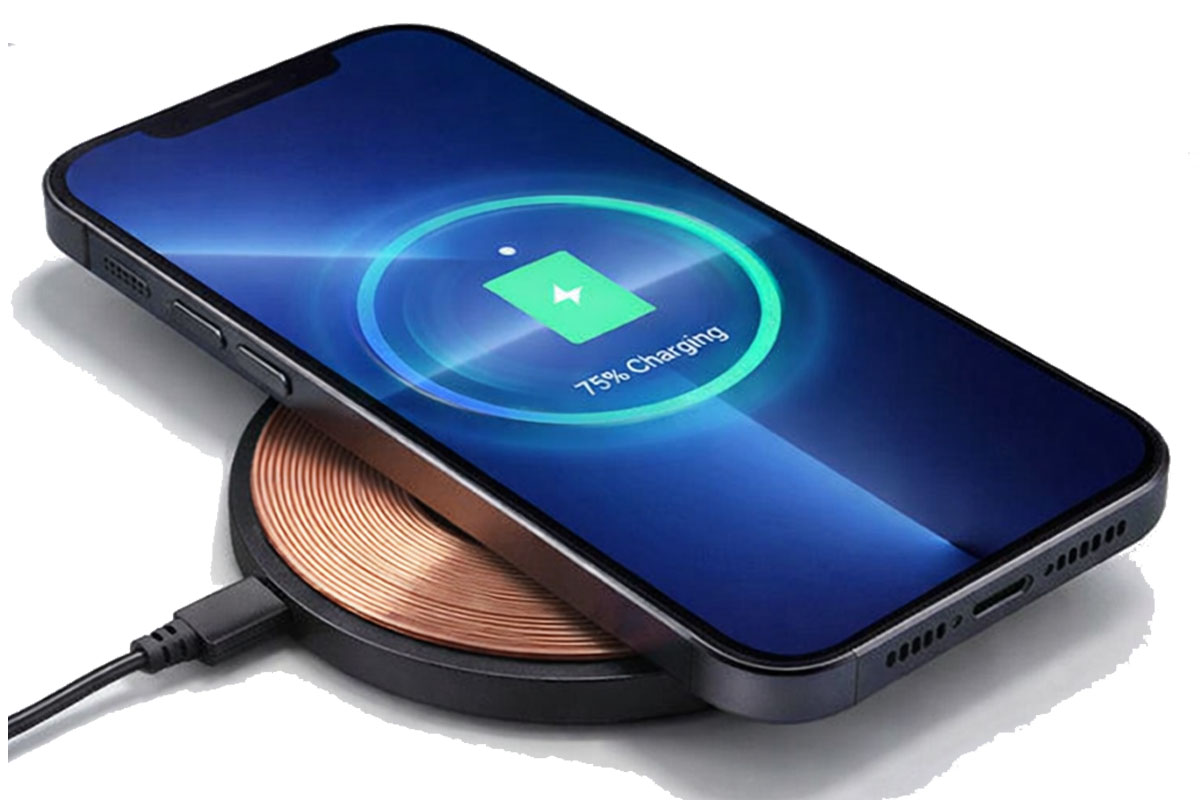
Efficiency Wireless Charging Coil Solutions
Custom Wireless Charging Coil Manufacturer
Wireless Charging Coil with Ferrite Shielding
Precision Wireless Charging Coil for Electronics
High Performance Wireless Charging Receiver Coil
Industrial Wireless Charging Coil Manufacturer
Efficiency Wireless Charging Coil Solutions
Custom Wireless Charging Coil Manufacturer
Wireless Charging Coil with Ferrite Shielding
Precision Wireless Charging Coil for Electronics
High Performance Wireless Charging Receiver Coil
Industrial Wireless Charging Coil Manufacturer

WL0243 Wireless Charging Coil Manufacturer

Wireless charging coils are considered a crucial component of inductive power transfer systems that use electromagnetic induction to transfer energy wirelessly between a transmitter and receiver coil. They are commonly used in various devices, including consumer electronics like smartphones, smartwatches, tablets, earbuds, industrial control devices, medical devices, etc.

Wireless charging coils are designed to provide reliable operation, minimal heat generation, and long lifespan of devices. They are made from high-quality copper wire that ensures minimal energy loss due to their magnetic efficiency.

The coils are made to provide reliable operation, minimal resistance, maximum energy transfer efficiency, and stable inductance. They are made to specific dimensions that can be customized based on requirements.

Wireless charging coils for inductive charging have proven to be highly efficient in the field of wireless charging technology. They have a copper wire that is precisely wound for low electrical resistance and high inductance. Ferrite shielding also reduces electromagnetic interference, thus improving the efficiency of the coils. with a compact design that enables them to be used in small electronic gadgets due to the flat spiral design of the coils. They can be used in a number of applications due to the electrical properties of the coils and the fact that the sizes of the coils can be adjusted.

How to Choose a Wireless Charging Coil?

A explanation of a wireless charging coil

A wireless charging coil is defined as an electromagnetic device that transfers energy from one point to another without any direct electrical link between them. When AC passes through the transmitter coil, it generates a magnetic field that can be sensed by the receiver coil, which in turn uses that magnetic field to generate electricity that can be used to charge devices. Copper wire that has been coiled into a flat spiral shape and covered in a ferrite sheet to provide magnetic shielding is commonly used to make wireless charging coils, which are commonly used in industrial electronics, wearables, medical devices, and smartphones. Wireless charging coils provide reliable, secure, and hassle-free operation of devices without the need to connect them.

WL0243 Wireless Charging Coil Video

OEM Wireless Charging Coil Manufacturer China

The datasheet of Wireless Charging Coil

Electrical Specifications

| Parameter | Symbol | Value | Unit |
| ——————— | —— | ——– | —- |
| Inductance | L | 300 –500 | µH |
| Inductance Tolerance | — | ±5% | |
| Test Frequency | f | 125/ 0.25| kHz |
| DC Resistance | DCR | 80 – 250 | mΩ |
| Rated Current | Irms | 1 – 3 | A |
| Operating Frequency | — | 85 – 205 | kHz |
| Quality Factor | Q | ≥ 30 | |
| Insulation Resistance | — | ≥100 | MΩ |

Mechanical Specifications

| Parameter | Value |
| ————- | ———————- |
| Coil Shape | Round / Square |
| Wire Type | Enameled Copper Wire |
| Shielding | Ferrite Sheet |
| Insulation | PET / PI Film |
| Terminal Type | Solder Pad / Lead Wire |
| Mounting | Adhesive Fixing |

| Model | Outer Diameter | Inner Diameter | Thickness |
| —– | ————– | ————– | ——— |
| WL 35 | 35 mm | 15 mm | 2.0 mm |
| WL 43 | 43 mm | 20 mm | 2.0 mm |
| WL 50 | 50 mm | 25 mm | 3.0 mm |

How Wireless Charging Coil application work ?
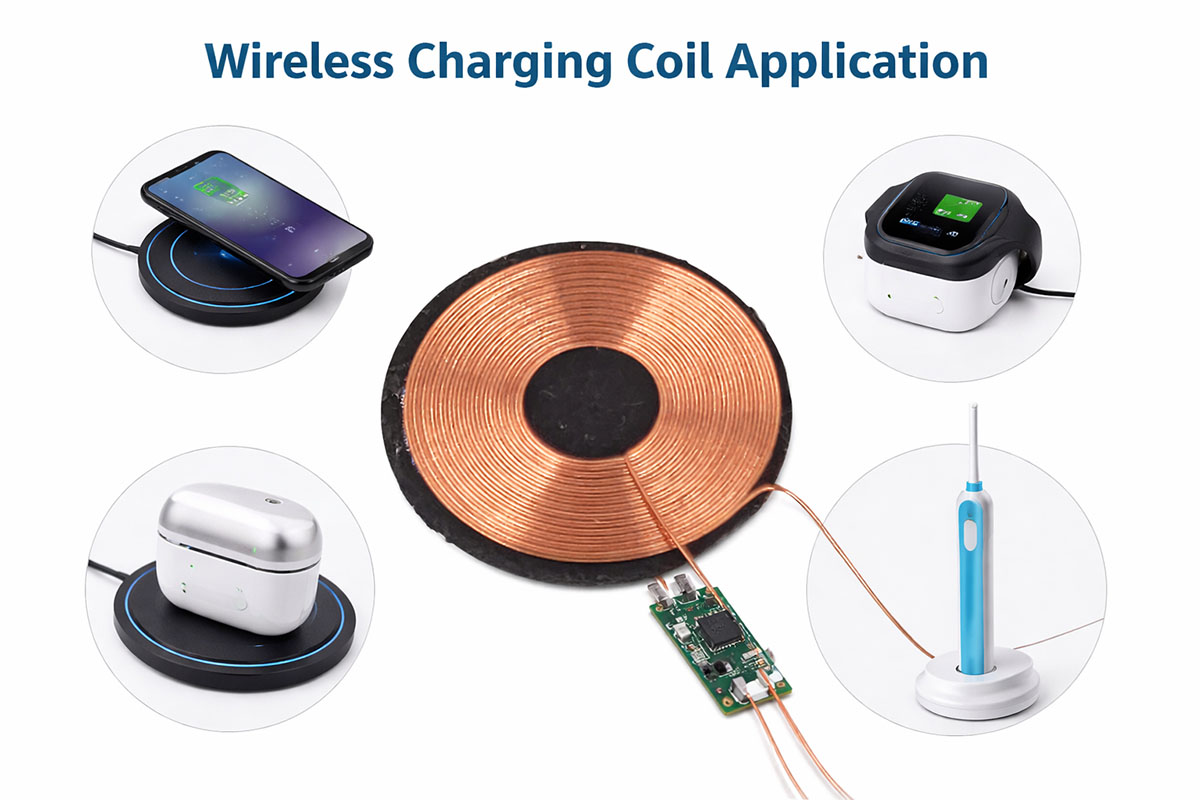
Wireless Charging Coil Application

Wireless charging coils can be used in a number of applications, especially where wireless charging is required for electronic gadgets and industrial equipment. In the current world, electronic gadgets require wireless charging for efficient operation. Therefore, wireless charging coils have been used in a number of electronic gadgets, including tablets, smartphones, smartwatches, wireless earbuds, and other portable gadgets used by consumers.

Wireless charging coils have been used in medical equipment for the purpose of powering medical gadgets that require dustproof and waterproof features. They have also been used in industrial equipment for the purpose of improving efficiency in industrial equipment.

Wireless charging technology has also been used in smart home gadgets, smart locks, and electric toothbrushes. They have also been used in automotive electronic gadgets for the purpose of in-car phone chargers.

Wireless charging coils enhance convenience, reduce mechanical wear, and increase product longevity. They are suitable for a range of modern electronic gadgets owing to their compact size and design versatility.

Benefits and Drawbacks of Wireless Charging Coil
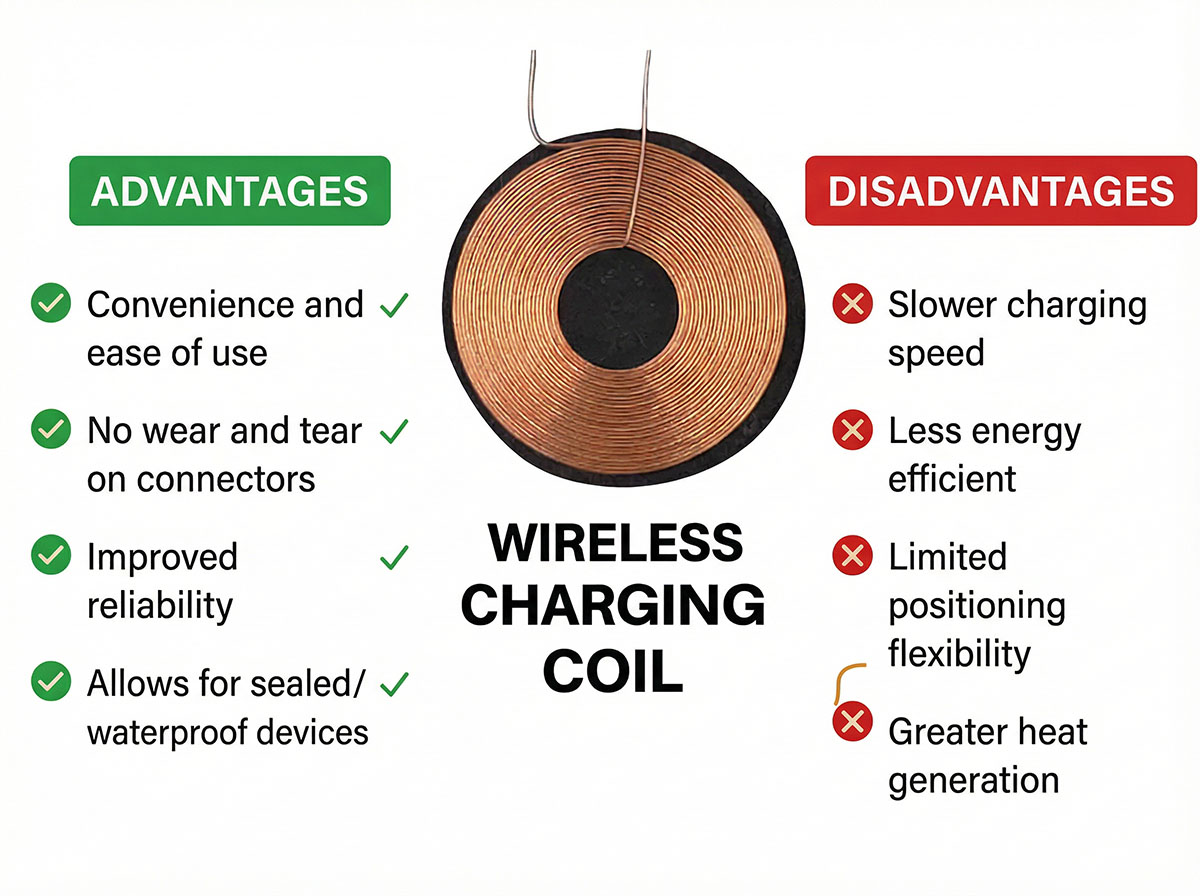
Wireless Charging Coil Advantage and Disadvantage

Benefits and Drawbacks

In modern electronic gadgets, wireless charging coils have a number of benefits. First, the elimination of mechanical parts, which reduces product maintenance, is a major advantage of wireless charging coils. In addition, the lack of exposed electrical parts in wireless charging coils enhances convenience and security in the operation of electronic gadgets. In outdoor and medical gadgets, wireless charging coils are ideal owing to the waterproof and dustproof features of the coils.

Finally, wireless charging coils have consistent electrical properties and high reliability in the transfer of electrical current. They also enhance flexible installation and compact product design. In addition, the coils can be designed to suit a range of electronic gadgets owing to the custom design of the coils.

Despite the benefits of wireless charging coils, the technology also has a few drawbacks. First, wireless charging coils take a long time to complete the charging process owing to the low efficiency of the technology in the transfer of current. In addition, wireless charging coils may generate heat owing to poor coil alignment. In wireless charging coils, the transmitter and receiver coils must be closely positioned owing to the limited distance of the coils in the charging process.

Finally, wireless charging coils require a few electronic circuits, which enhance the complexity of the technology. In spite of the drawbacks of wireless charging coils, the technology is still an essential aspect of modern electronic gadgets.

FAQ Of Wireless Charging Coil

Q2: What frequency does a wireless charging coil use?

It uses a frequency of 100-205 kHz for Qi charging devices.

Q3: Is it possible to customize wireless charging coils?

Yes, it is possible to customize the wire diameter, size, and inductance.

Q4: What kind of material do wireless charging coils consist of?

shielding materials made of ferrite and copper wire.

Q5: What influences the efficiency of charging?

Resistance, ferrite thickness, and coil alignment.

Q6: Are coils for wireless charging safe?

Indeed, they run on regulated frequencies and low voltage. it is safe and Weilong has conducted safety testing once the product are finished.

Q7: Is it possible to create extremely thin coils?

It is possible to design thin coils for small devices.

Wirless Charging Coil Mobile Phone Application

How to Choose a Wireless Charging Coil?

To ensure efficient and reliable charging, the selection of the wireless charging coil is critical, and the selection process can be initiated by determining the required thickness and diameter of the wireless charging coil, which can be determined based on the space constraints of the device.

Perhaps the most important aspect to be considered while selecting a wireless charging coil is the value of the inductance. To ensure the stability of the operation, the inductance value of the wireless charging coil must be compatible with the wireless charging controller. The typical values of the inductance for the majority of the charging applications are between 5 to 20 µH.

Another important factor that must be taken into consideration is the operating frequency. It has been observed that most wireless charging systems have an operating frequency between 100 and 205 kHz. For this reason, the coil must be designed for the appropriate frequency range.

The resistance and heat generation also vary with the copper wire diameter. It increases the diameter of the coil but decreases the resistance and increases the efficiency. The buyers must keep this factor in mind while purchasing wireless charging coils.

The performance of wireless charging also depends on ferrite shielding. A good ferrite sheet reduces electromagnetic interference and increases magnetic flux concentration. It decreases heat generation and increases efficiency.

Another factor that must be taken into consideration by buyers is the power rating. For low-power devices such as wearables, a smaller coil must be used. For smartphones and tablets, a larger coil with a high current rating must be used.

For a long life, high efficiency, and constant performance of wireless charging, wireless charging coils must be chosen properly.

Get A Free Quote Now

Contact Form

Related Products

Related News

Chapter 1: Introduction of Air Core Inductor Calculation Precise air core inductor calculation is crucial in designing radio-frequency circuits, NFC […]

You wake up in the morning and grab a drink from your refrigerator. Next, you take a shower and drive […]

Scroll to Top

Get A Free Quote Now !

Contact Form
If you have any questions, please do not hesitate to contact us.
Weilong Solenoid Company Culture