


How to Select a Wireless Power Transfer Coil
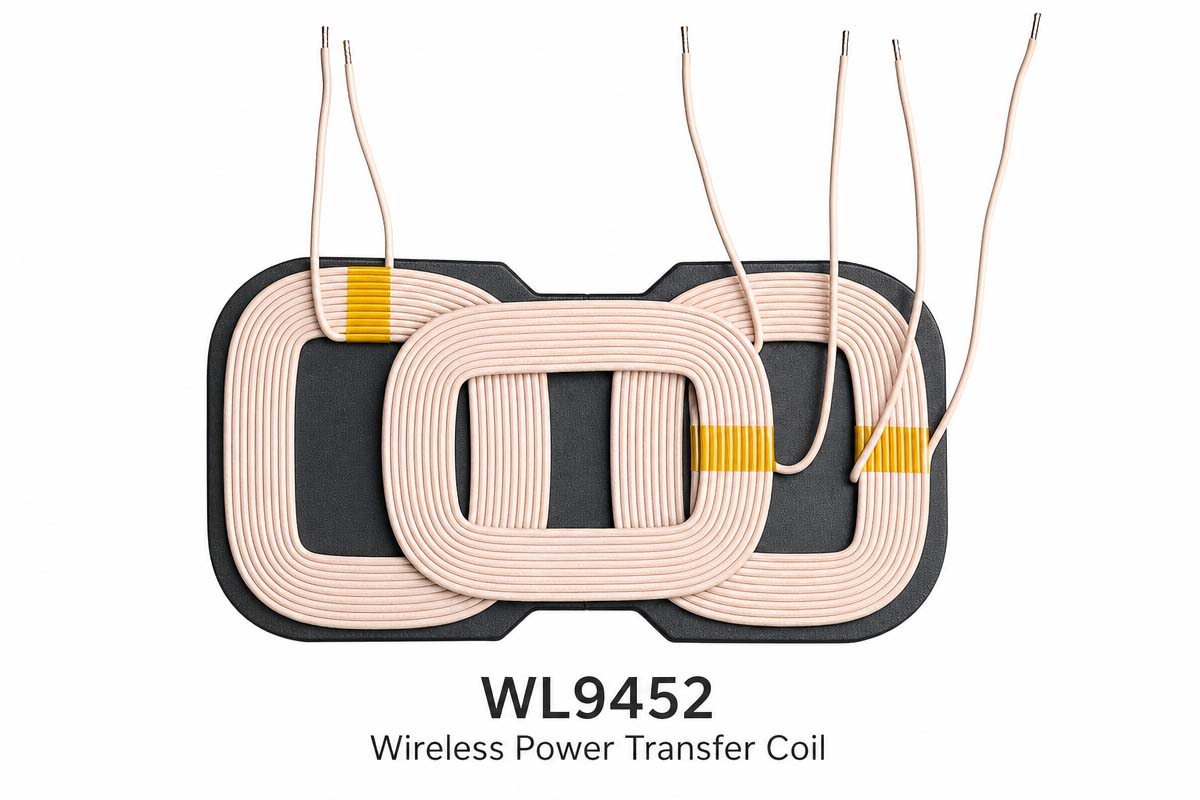
Selecting the right wireless power transfer coil is not just choosing coil diameter. The electrical, mechanical, thermal, and application requirements should be considered jointly.
1. Determine required power
At first determine the required power output. Low-power IoT sensors and high-power industrial devices will require totally different coil designs.
2. Specify operating frequency
Operating frequency affects impedance, losses, resonance, and performance of the system. The coil should be designed for the selected driver and receiver circuits.
3. Choose proper inductance
One of the most important parameters is inductance. Required inductance depends on circuit design, operating frequency, and resonant capacitor.
4. Evaluate coil size
Determine the installation space of the coil, such as diameter, thickness, and height. A coil that performs well electrically might not fit into the final product.
5. Evaluate transfer distance
Calculate the required air gap between transmitter and receiver coils. Normally, the larger is the distance, the less efficient is the energy transfer.
6. Evaluate alignment tolerance
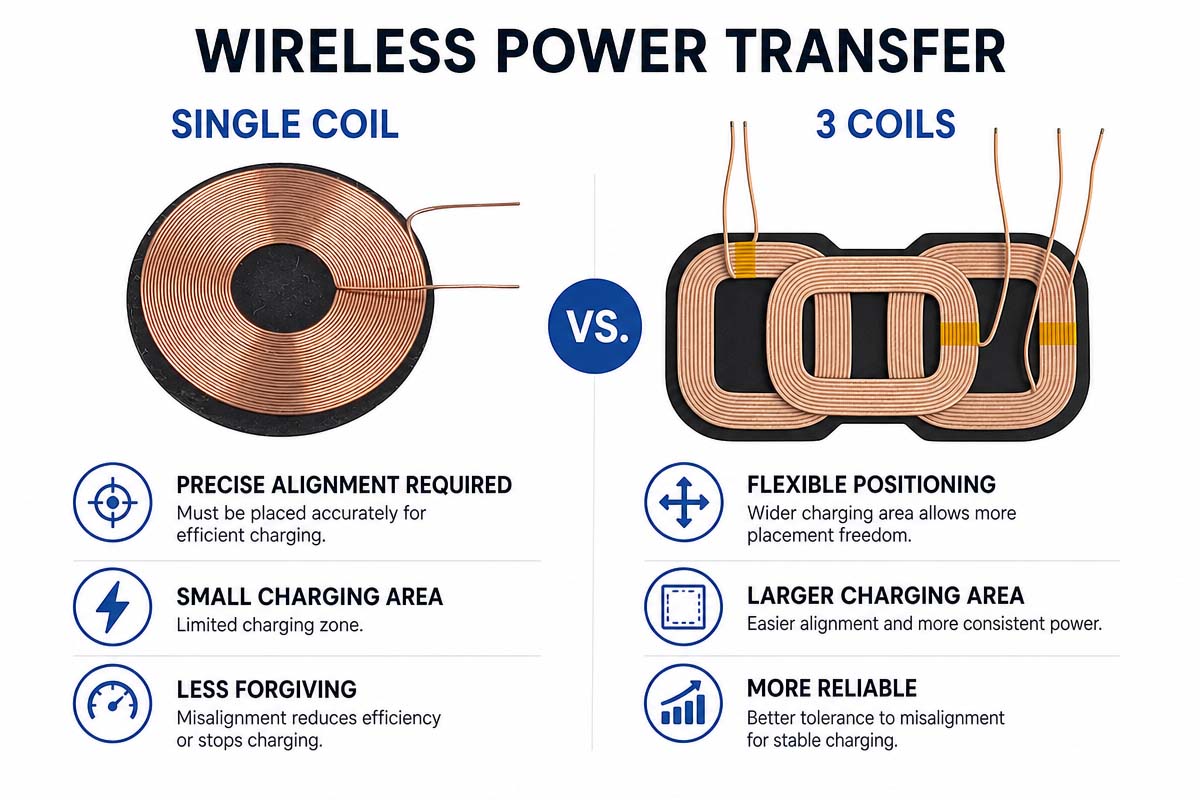
If you can’t guarantee precise alignment between transmitter and receiver, then consider the design with greater tolerance to lateral or angular misalignment.
7. Temperature Evaluation
Determine operating temperature and temperature rise at max load. Overheating reduces the efficiency and lifetime of the components.
8. Evaluate surrounding materials
Nearby conductive materials, including metal parts, batteries, and PCBs, could affect the magnetic coupling and performance of the system.
9. Shielding Evaluation
Magnetic shielding might be needed for management of magnetic field distribution and protection of nearby electronic components.
10. Validate the whole system
Finally, validate the coil together with the transmitter, receiver, driver, rectifier, and final product housing. Coil performance can not always be evaluated separately from the whole wireless power system.
It is the best practice to provide the manufacturer with your power, frequency, dimensions, air gap, operating temperature, and application data before requesting a custom design.
Design Mistakes to Avoid for Wireless Power Transfer Coils
Low efficiency, overheating, or unstable wireless power transfer might happen because of some common design mistakes.
Don’t Select the Coil by Its Size
Even though the size of the coil can be correct, inductance, resistance, or Q factor could be wrong.
Don’t Forget About Operating Frequency
The driver and the coil should be tuned to a proper operation frequency.
Consider the Total Magnetic Environment.
The magnetic coupling could be impacted by the metal housing, batteries, PCB tracks, etc.
Don’t Test Only in Ideal Conditions
The actual product could shift or get misaligned. Therefore, testing the coil in practical mounting conditions is crucial.
Early Thermal Considerations
The coil might demonstrate good power transfer but excessive heating during operation.
Do not change coil characteristics without validation. Changing the diameter, turns, or geometry of the coil could significantly change its electrical properties.
Validate the Final Product
Testing of the wireless power system has to be performed within the actual housing, not only during laboratory measurement of the coil. _____________________________


