


Magnetic Push Pull Solenoid Selection Guide
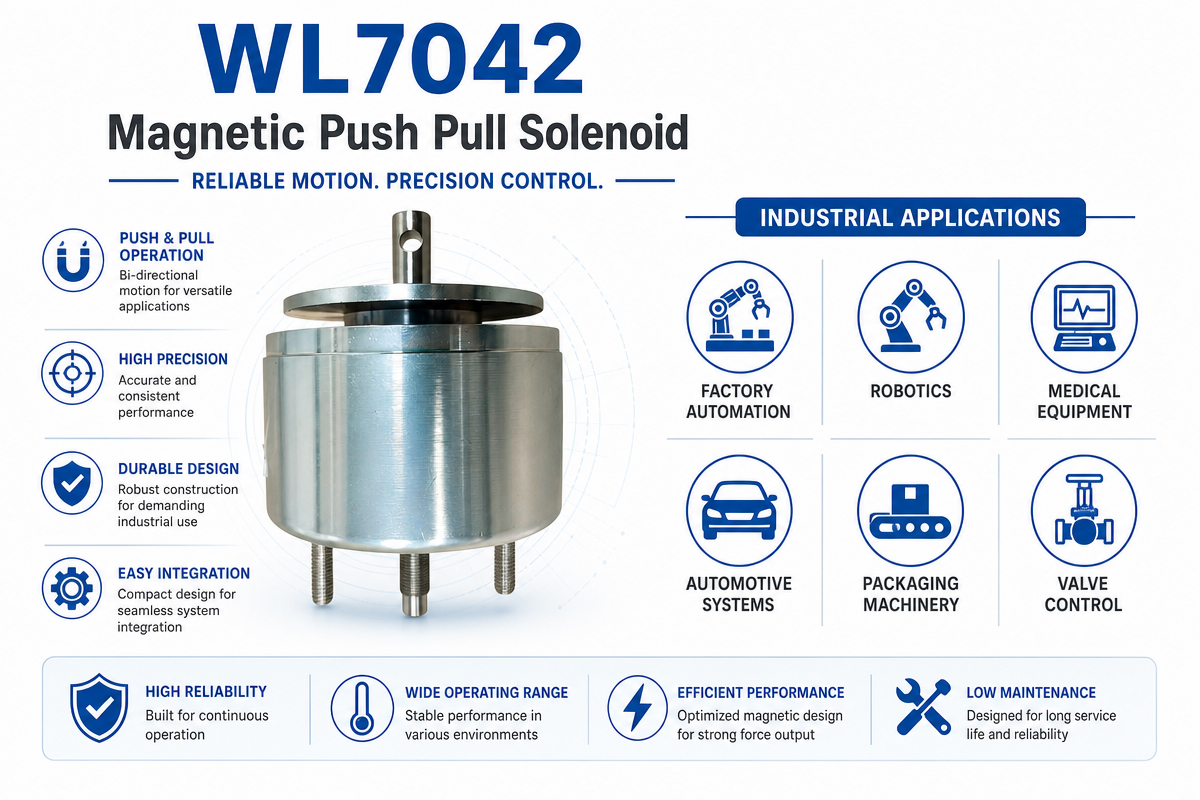
Selection of a magnetic push pull solenoid is important for efficient performance, longevity, and effective system operation. First of all, one should calculate the amount of force needed. The chosen solenoid has to be able to produce enough push or pull force.
The length of stroke is another important factor. Generally speaking, the longer the stroke, the weaker the force will be. Thus, finding the right compromise between these two parameters is essential.
One more important consideration is voltage and operating current. They have to match the voltage of the power supply, such as 12V DC, 24V DC and others.
An important parameter is the duty cycle. Continuous duty and intermittent duty differ greatly in terms of performance duration.
Environmental factors have to be taken into account in order to choose the right product. For example, when an application will be exposed to dust, moisture, vibration or heat, then a waterproof or high-temperature solenoid is preferred.
Finally, installation dimensions and mounting options have to be considered for easy integration with the equipment.
Response speed and noise level have influence on certain applications. In case of medical devices and office automation systems, fast-response and low-noise solenoids are preferred.
Other aspects that need to be discussed include plunger type, return spring, insulation quality and service life. Special applications that have particular dimensions or require higher forces or special connectors need custom-designed magnetic push pull solenoids.
Working with experienced manufacturers ensures optimal product performance and reduced cost in industrial automation systems.
How to avoid the comment mistake while doing the magnetic push pull solenoid design
Avoid designing a load with insufficient force capacity.
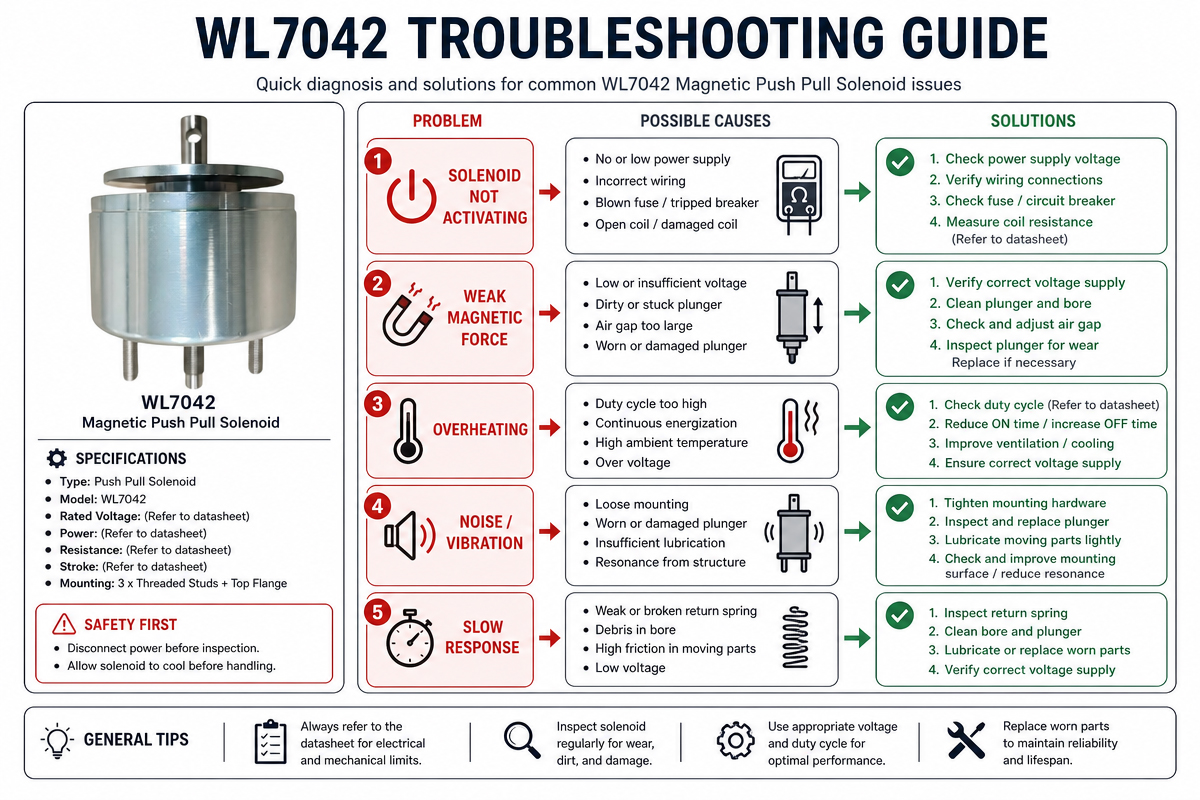
Remember that continuous energization limits the duty cycle.
Ensure that the selected voltage matches the voltage of power source.
Do not choose overly long stroke lengths that weaken the magnetic force.
Select magnetic materials according to stable performance.
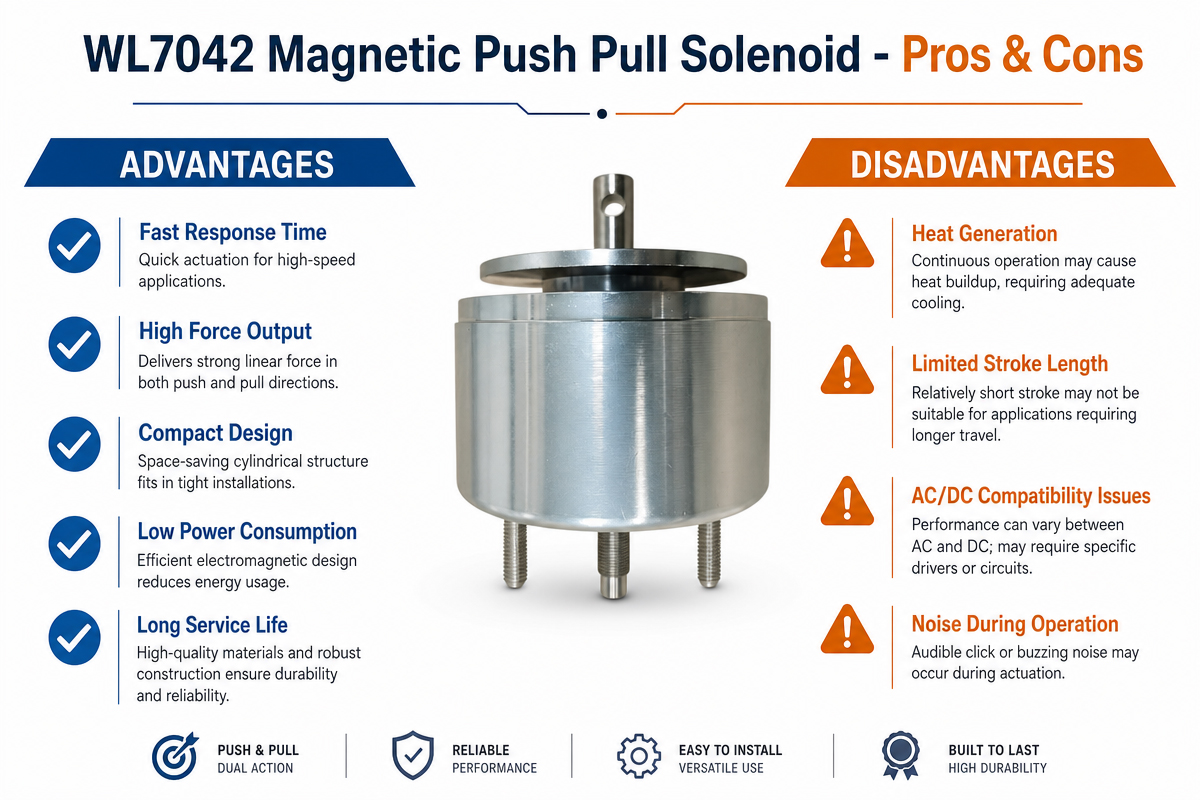
Make sure that a solenoid has proper ventilation for heat dissipation.
Wrong plunger alignment. Jamming and friction.
Choose the correct return spring force for smooth movement.
Dust and moisture protection (environmental protection).
Check mounting dimensions before final installation.
Continuous energization of intermittenduty solenoids leads to overheating.
Make sure that wire insulation is rated properly for temperature requirements.
Make sure that response speed is tested under operational conditions.
Corrosion resistance is needed for outdoor devices.
Work with specialized manufacturers for custom-designed solutions.


