


How to Prevent Mistakes in Choosing a Tubular Linear Solenoid
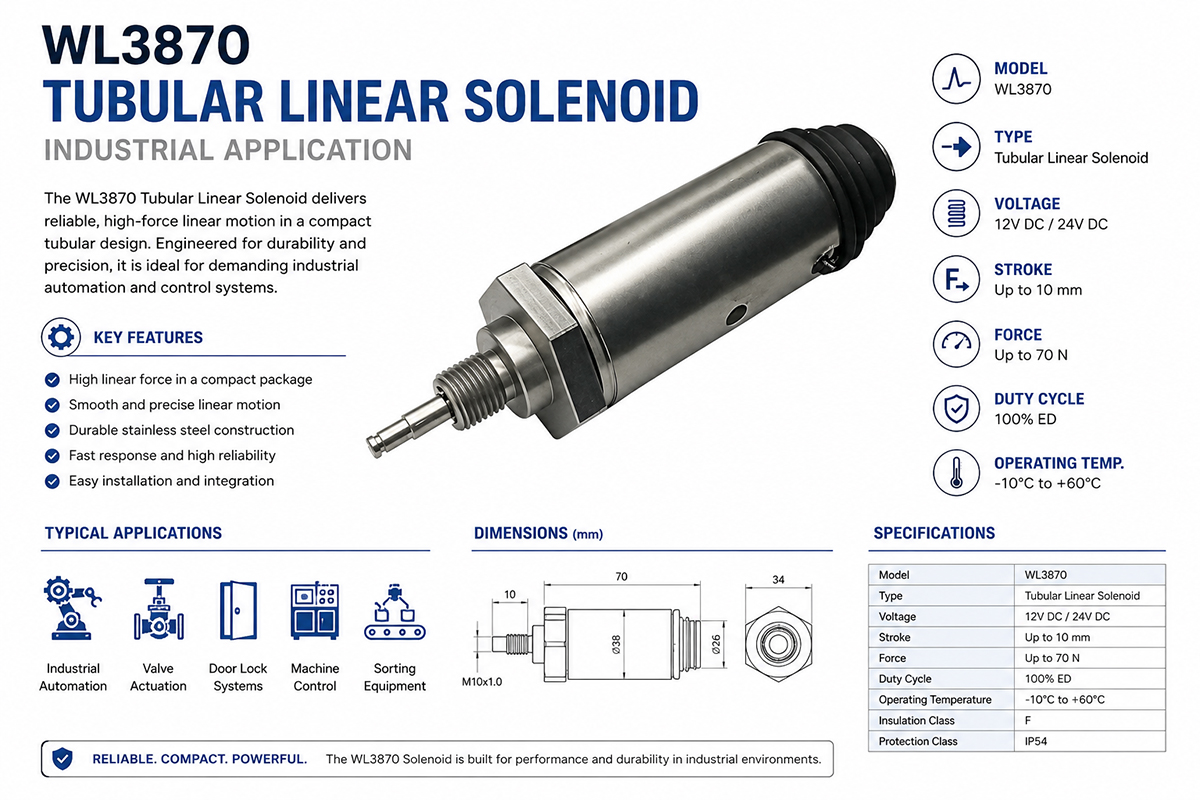
Improper Tubular Linear Solenoid choice may result in poor performance, overheating and premature failure. One of the common mistakes is to choose a solenoid based on maximum force ignoring the force needed at the working stroke. Always look at the force vs. stroke chart since magnetic force changes along the stroke.
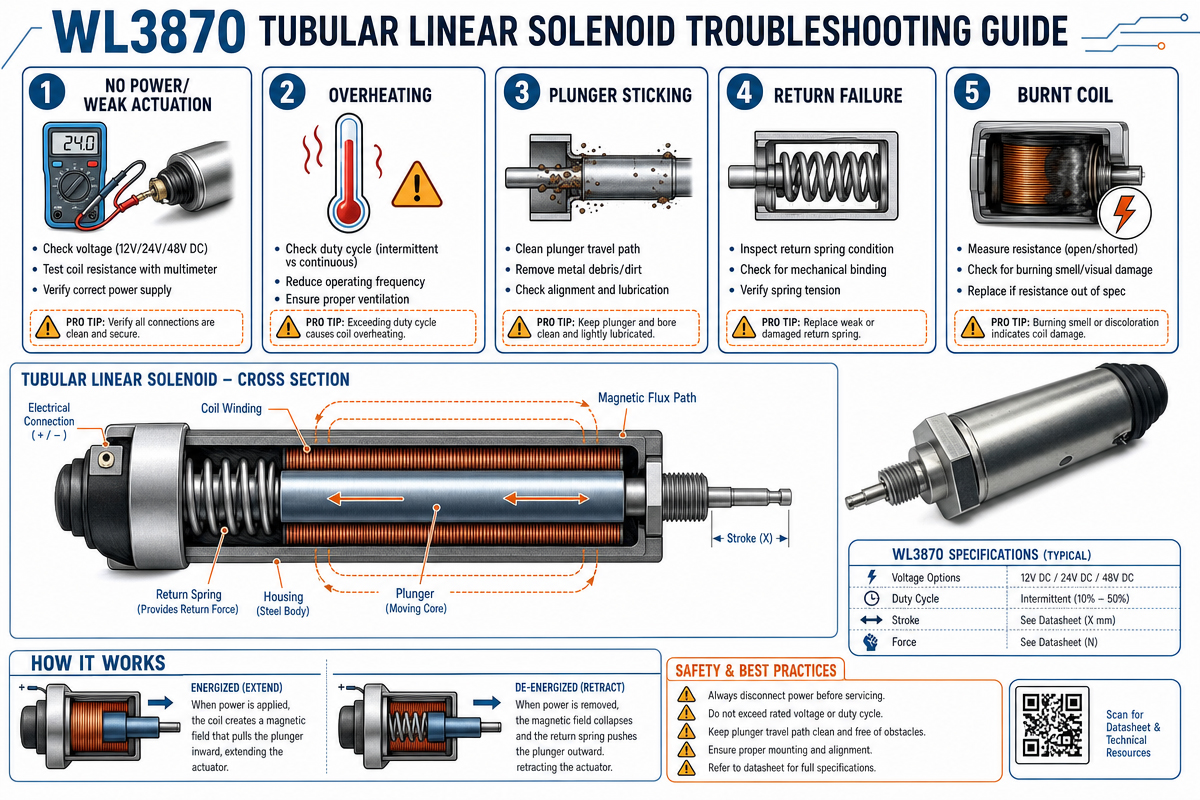
Another mistake is to ignore the duty cycle. A solenoid intended for intermittent duty may overheat if used continuously. Always adjust the duty cycle to the operating conditions of the application.
Engineers also have to consider the environment , ambient temperature, available installation space and supply voltage. Dust, moisture, vibration and high temperatures may require special sealing or high temperature coil design.
Do not underestimate mounting methods, length of lead wire, type of connector and response time. These parameters may considerably affect installation and long-term reliability.
Lastly, cooperate with an experienced manufacturer that provides custom engineering assistance, prototypes testing and technical recommendations. The proper choice of the product will reduce maintenance costs, improve the performance of the equipment and increase its service life.
How to Select a Tubular Linear Solenoid
When selecting a Tubular Linear Solenoid, the following technical parameters shall be considered to ensure reliable operation and long service life.
First, determine the operating function required. Decide on the push or pull type solenoid and the stroke length needed. The magnetic force is not constant throughout the stroke. Find the minimum force required at the actual working position, not maximum holding force.
Then choose the proper working voltage, such as DC 12V, DC 24V or any other customized voltage. The power supply shall be matched to the coil specifications to prevent overheating or lack of force.
Another important parameter is duty cycle. For applications requiring continuous duty, special coils with efficient heat dissipation shall be used; for higher force intermittently, more powerful coils shall be used. Consider operating frequency, ambient temperature and ventilation conditions.
The mechanical parameters are also worth being considered. Pay attention to the mounting holes, installation space, shaft diameter, connector type and lead wire length.
Environmental parameters have to be considered as well. If the application requires operation in dust, moisture, oil, vibration or corrosive environment, special sealing, stainless steel parts or surface treatment may be required.
Engineers shall consider the required service life in terms of operating cycles. Industrial automation systems require over 1,000,000 operating cycles and hence the quality of materials and manufacturing precision is crucial.
The solenoid may be customized according to unique project needs with such options as voltage, stroke, force, connector type, spring force, mounting and surface treatment.
Lastly, select a manufacturer with solid engineering experience, full testing facilities, ISO certified quality management and extensive OEM experience. Reviewing technical drawings, prototype samples, performance data and life-cycle test results before mass production ensures that the Tubular Linear Solenoid chosen will provide reliable, efficient and cost-effective operation during its entire service life.


