


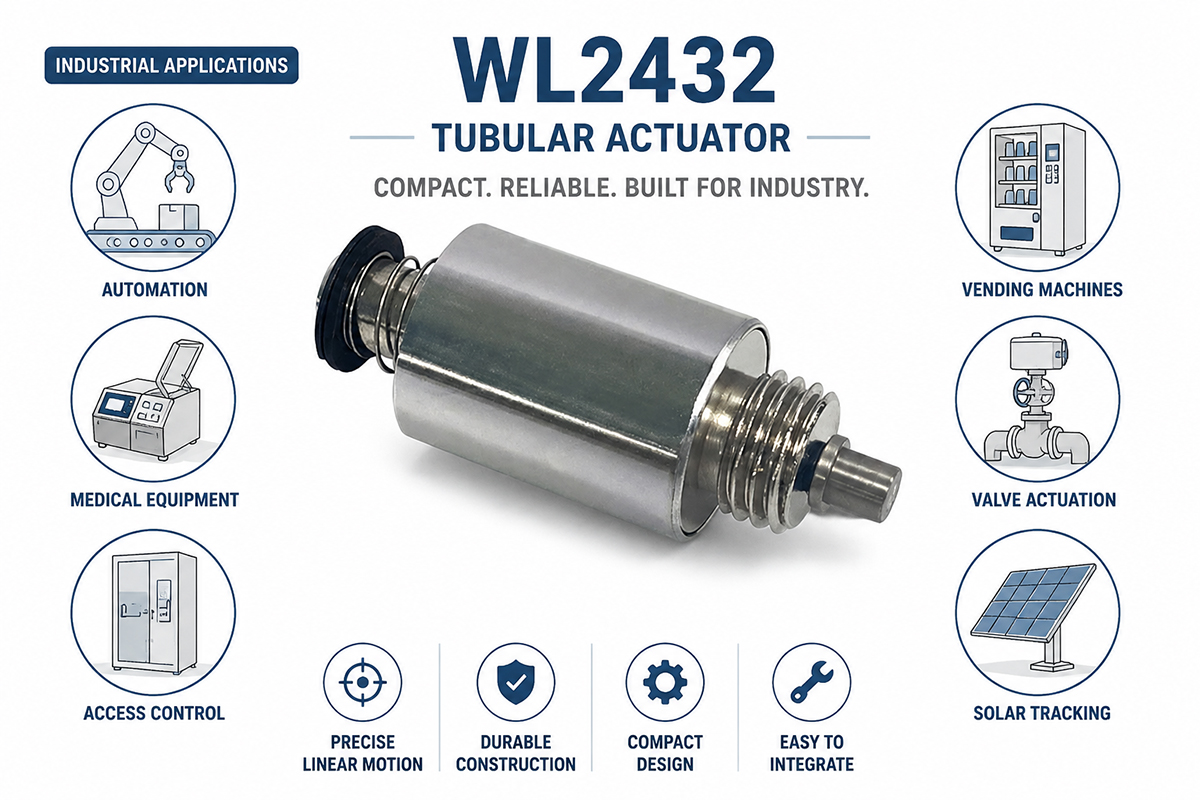
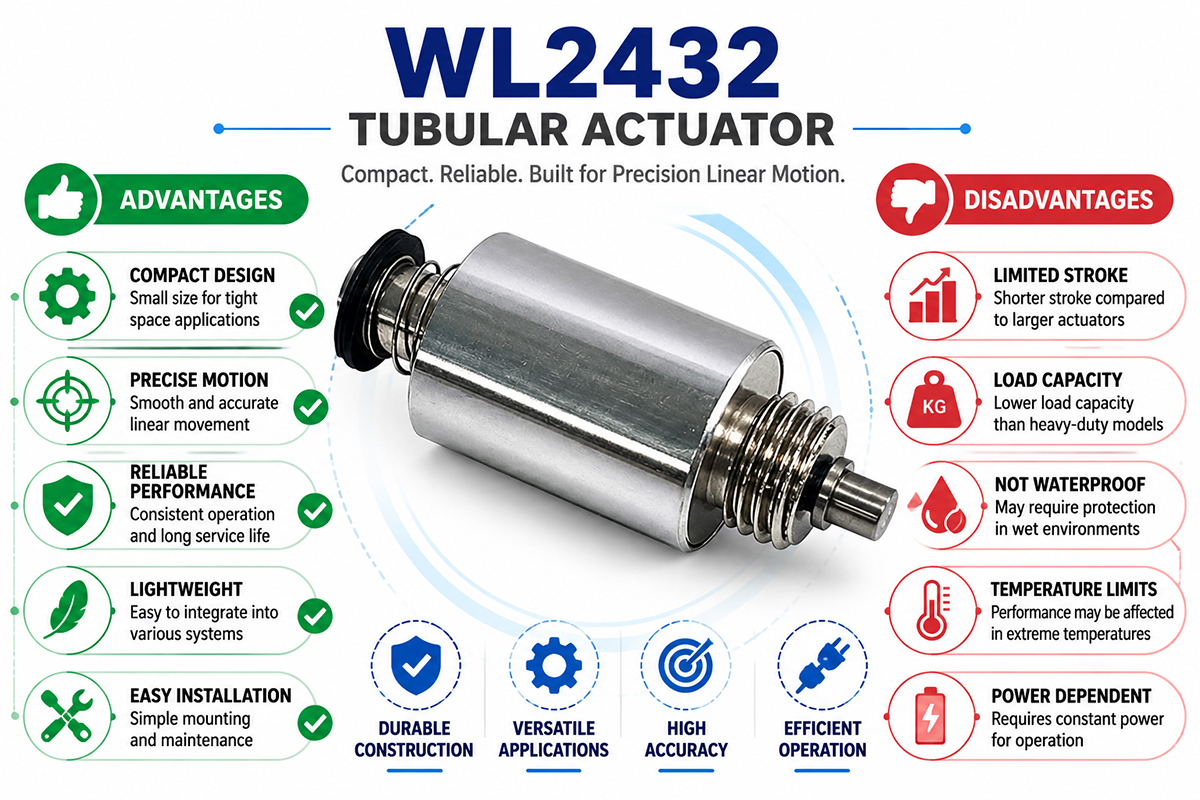
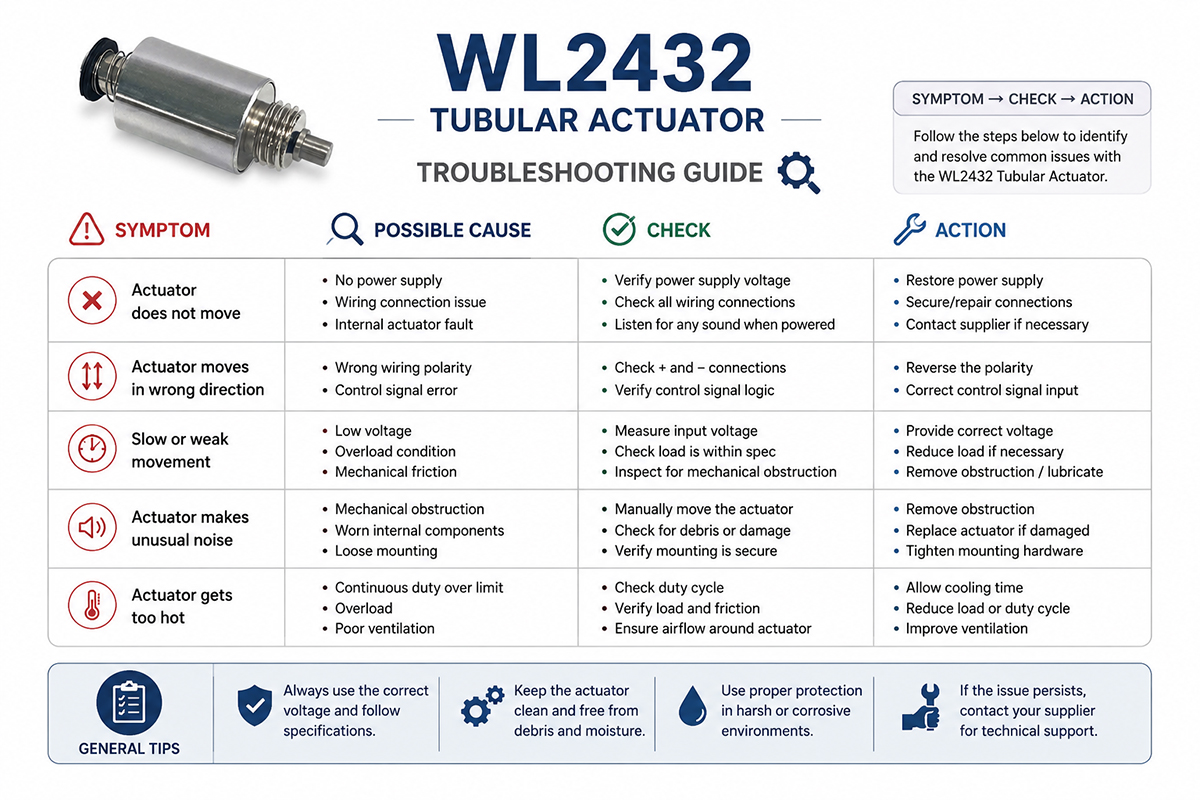
How to choose the right tubular actuator solenoid ?
The selection of a tubular actuator solenoid should be done taking into account the requirements and operating conditions of the application. The first consideration is the requirement for force. The higher the required force is, the stronger the coil and the magnetic design will be required for proper operation. The next parameter is the stroke length. It is the distance which the plunger has to travel to perform its function. The proper voltage selection is also crucial as the solenoids are usually supplied in DC or AC versions and in common voltages like 12V, 24V, and 48V.
Another important aspect is the duty cycle. The tubular actuator solenoid with better thermal management and high heat resistance will be required for the continuous or frequent operation. When selecting the sealed or protected design, the environmental factors like temperature, humidity and dust/moisture exposure should be also considered.
The mechanical integration of the solenoid is equally important. It is the task of the engineer to make sure that the mounting style, alignment and available space are appropriate. The compact design is preferred in cramped installations. Besides, the response time requirements, especially in case of high-speed automation systems should be also taken into account.
The material will influence the longevity and resistance to corrosion, especially in demanding environment. The industrial applications usually use the stainless steel housing. The electrical efficiency should also be considered to decrease the power consumption and heat generation.
The lifecycle expectations are also important to consider as some applications require million-cycles operation without failure. Manufacturer reliability, certification and testing standards cannot be overlooked as well.
In the end, the cost/performance ratio should be the driving force for the selection process. Proper selection of the tubular actuator solenoid will allow obtaining stable performance, long service life and efficient integration into the system for the range of industrial automation applications.
How to Avoid Design Mistakes While Working With Tubular Actuator Solenoids
Design of a tubular actuator solenoid involves a number of factors which include electromagnetic performance, mechanical structure, heat dissipation, and many more. It is possible to save resources and increase reliability of your solenoids by avoiding design mistakes at early stages of their development. The following list of the most critical tips will help you make the right design decisions.
1. Proper Estimation of Force Requirement
Before designing your coil and plunger you should estimate the necessary pull/push force. Too small force could not move the load whereas too large force will lead to higher energy costs.
Tip: Do not forget about initial pull force as well as holding force that is required along the whole stroke.
2. Appropriate Selection of Stroke Length
Stroke length is one of the critical design parameters as it defines the force of your actuator. The longer the stroke the smaller the available force. Unnecessarily long stroke leads to low-performance actuator.
Tip: Make the stroke length as short as possible.
3. Choice of Correct Voltage and Current
Voltage depends on the power supply which can be 12VDC, 24VDC, or 48VDC.
Tip: Estimate voltage tolerance and current capacity before designing the actuator.
4. Estimating Duty Cycle of Your Tubular Actuator Solenoid
One of the most common mistakes of designers consists in forgetting about the duty cycle of the actuator.
Tip: Take care of proper heat dissipation as continuous-duty actuators need better thermal management than intermittent ones.
5. How to Avoid Excess Heating
Overheating is one of the primary reasons of early failure of solenoids. It destroys insulation and decreases service life.
Tip: Improve ventilation, select high-temperature insulation material, and properly wind the coil.
6. Optimizing the Magnetic Circuit
Poor magnetic circuit leads to the decrease in efficiency and force of the actuator.
Tip: Reduce the gap, select high-permeability magnetic materials, and minimize magnetic leakage.
7. Ensuring Mechanical Alignment
Misalignment between plunger and guide tube leads to increased friction, decreased force, and wear.
Tip: Follow tight machining tolerances and provide smooth linear motion.
8. Choosing Proper Spring Force
The spring should reliably reset the plunger without significant decrease of the force of the actuator.
Tip: Achieve the balance between spring and electromagnetic forces.
9. Protection Against Environment
Industrially used actuators may face various environmental conditions such as dust, moisture, vibration, oil, or even chemical corrosives.
Tip: If necessary, select stainless steel housing, apply the special coating, or design the solenoid in sealed manner.
10. Avoiding Side Loads
Side loads create additional friction, bending, and wear whereas solenoids are designed for axial linear motion.
Tip: Use the additional guide mechanism in case side loading cannot be avoided.
11. Estimating Requirements of Response Time
Response time is a parameter which differs from system to system. While some automation systems require rapid actuation, others need higher holding force.
Tip: Optimize your coil design, plunger mass, and spring properties according to the response speed required.
12. Taking into Account the Ease of Manufacture and Maintenance
Too complex design raises manufacturing costs and makes maintenance difficult.
Tip: Try to use standardized parts and components.


