Solenoid Valve Coil for Industrial Control Systems Guide
High Quality Solenoid Valve Coil for Valve Automation
Solenoid Valve Coil Supplier for Global Industries
Reliable Solenoid Valve Coil for Hydraulic Applications
Energy Efficient Solenoid Valve Coil for Automation
High Performance Solenoid Valve Coil Manufacturer
Solenoid Valve Coil for Industrial Control Systems Guide
High Quality Solenoid Valve Coil for Valve Automation
Solenoid Valve Coil Supplier for Global Industries
Reliable Solenoid Valve Coil for Hydraulic Applications
Energy Efficient Solenoid Valve Coil for Automation
High Performance Solenoid Valve Coil Manufacturer

WL4751 Custom Solenoid Valve Coil Manufacturer for Industry Solutions

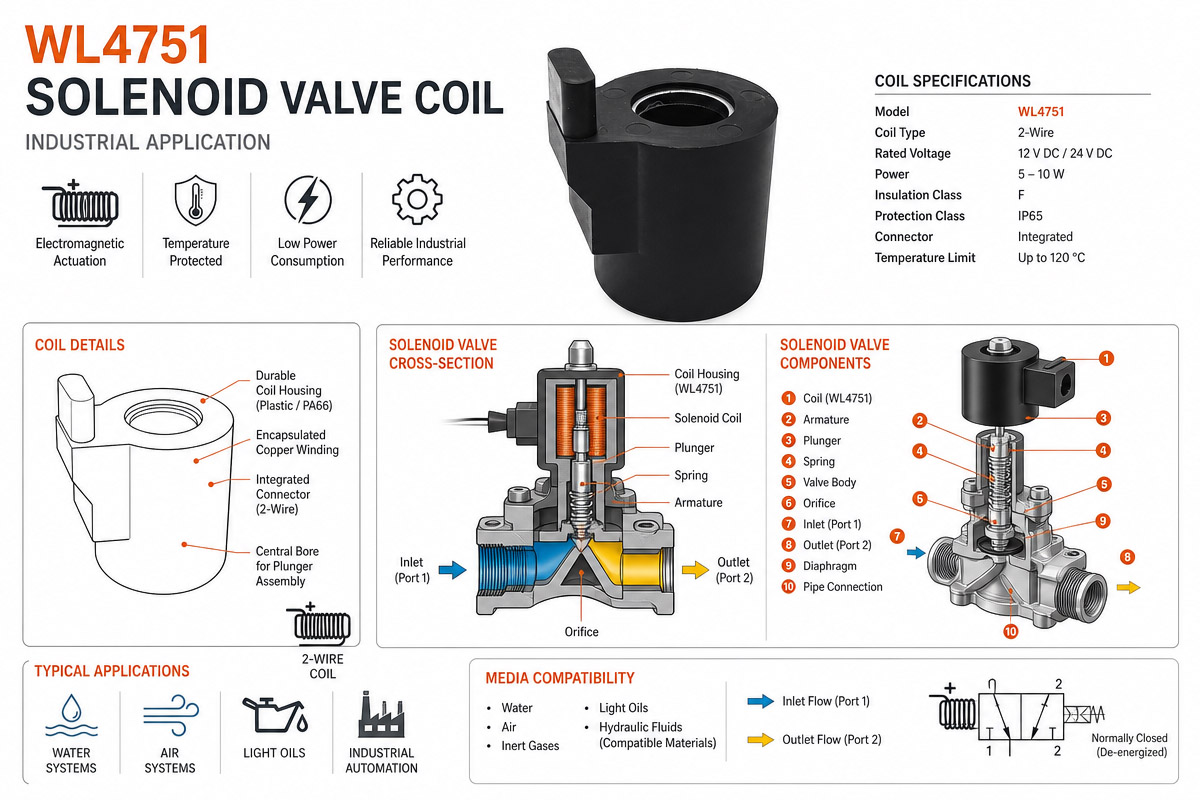
A solenoid valve coil uses electromagnets to convert electricity into magnetic force to activate the solenoid valve. Upon electrification of the winding of the coil, a magnetic field is generated. The magnetic field drives the valve plunger and allows regulation of liquids and gases. Systems containing solenoid valve coils include pneumatics, hydraulics, water, gas, medicine, automobile and automation equipment systems. They can come with AC or DC, various voltage types, power ratings, insulation class and protection levels. With the right solenoid valve coil, one can guarantee good efficiency, fast reaction and durability of the coil.

Custom Solenoid Valve Coil Product Overview

Industrial solenoid valve coils are electromagnetic actuators that are used for control of the valve operation through the electric signals. They are produced in AC and DC versions with various voltages, power, insulation and protection features. Our solenoid valve coils are produced with high quality copper wire, advanced winding technology and strict quality control. Custom design available according to the size of the valve tube, operating environment and performance requirements. Our coils have stable magnetic force, quick response, low power consumption and high durability. They are perfect for pneumatic valves, hydraulic valves, water valves, gas valves and industrial automation equipment.

How does a solenoid valve coil work?

The solenoid valve coil is based on the principle of electromagnetic induction. The coil is made of insulated copper wire wound around a magnetic core. Upon electrification, current passes through the winding and creates a magnetic field.

The magnetic field attracts the metal plunger or armature and shifts its position inside the valve body. As a result of the shift of the valve sealing element, opening or closing of the fluid passage occurs.

If power is turned off, the magnetic field disappears, and a spring force restores the initial position of the plunger.

There are a number of factors which affect the performance of the solenoid valve coil.

Number of turns in coil

Diameter of copper wire

Voltage input

Level of current

Quality of magnetic material

Design of air gap

Operating temperature

The results of proper design are strong magnetic force, quick response time, low power consumption and high reliability.

Basic characteristics of solenoid valve coils

The basic characteristics of the solenoid valve coil are high electromagnetic efficiency, compact size, reliability and durability. The design of industrial solenoid valve coils uses high quality copper wire, insulation materials and high precision winding technology. They are produced in several voltage types including 12V DC, 24V DC, 110V AC, 220V AC. A lot of coils have water protection properties, are resistant to high temperatures and have good electrical insulation. Custom design of the coils allows manufacturers to optimize coil size, power consumption, magnetic force and operating cycles according to the customer’s requirements.

Custom Solenoid Valve Coil Video

Custom Solenoid Valve Coil Detailed Display

Solenoid Valve Coil Technical Datawheet

Brand Weilong Technology Model Number WL4751
Rated Voltage DC or AC available Rated Power (W) Custom
Service Life 100 Thousand Times Certification CE, RoHS, ISO9001,
Material Copper Coil Lead Wire Length (mm) 200
Install Style  TBD Tolerance of Dimension  +/-  0.1 MM
Water-proof  None Insulation Class F  155 Degree
Hi-Pot Test AC 600V 50/60Hz 1 s  DC Resistance 134  Ω
Working Temperature -10°C-100°C Duty Cycle 1-100%
Materials  RoHS Compliance Payment Term TT, or LC At Sight
Sample Order Yes Warranty 1 Year
MOQ MOQ: 1000 pcs Supply Ability 500000 pcs per Week
Delivery Time 30 Days Port of Loading shenzhen

Short description of Solenoid Valve Coil

The solenoid valve coil is the working electromagnetic component of a solenoid valve system. Typically, it is installed around the valve tube. When supplied with electricity, it generates magnetic force. This force drives the internal plunger, and as a result, the opening, closing or regulation of the fluid passage is achieved.

Industrial solenoid valve coils are made for continuous-duty operation in challenging environments, such as high temperatures, vibrations, moisture and frequently repeated switching. Coils can be produced for AC or DC voltage, different power ratings and custom sizes.

High quality of the solenoid valve coil is achieved due to the use of high quality copper wire, high temperature resistant insulation materials and high quality manufacturing processes to create stable magnetic force. They are used in automation equipment, hydraulic systems, pneumatics, water treatment systems, medicine machines and industrial machinery.

Why is the solenoid valve coil geting so popular ?

Solenoid valve coils are gaining popularity nowadays due to increasing demand for faster and smarter automation solutions in the modern industries.

Increased demand for industrial automation, smart manufacturing, robotics and fluid control systems creates the need for reliable electromagnetic components. Solenoid valve coils offer simple electrical control, quick response, compact size and economical operation.

Advanced materials and manufacturing technologies have been developed to increase coil efficiency, durability, waterproof and temperature resistance. Customized solenoid valve coils allow to design the product according to customers’ needs.

Used in factory automation, medical equipment and energy systems, solenoid valve coils have become an essential component of controlling fluids and gas movements. Flexibility and reliability make them popular among industrial equipment producers all around the world.

Solenoid Valve Coil Industrial Application

Solenoid Valve Coil Industrial Application

The solenoid valve coil is extensively used in many industrial applications, where precise control of fluids and gases is necessary.

Solenoid valve coils are used in industrial automation systems to control pneumatic cylinders, robots, production machines and automatic lines. They ensure quick response and reliable switching to increase productivity.

Solenoid valve coils are used in hydraulic equipment to drive hydraulic valves, which control the pressure, direction and flow of the oil. They are used in construction machinery, injection molding machines and industrial power systems.

Water treatment and fluid control systems use solenoid valve coils to regulate the water flow in filter equipment, pumps, irrigation systems and commercial machines.

The precision solenoid valve coils are used in medicine machines (oxygen machine, diagnosis equipment, laboratory equipment), where reliable operation is required.

In automotive industry, solenoid valve coils are used to control fuel, transmission, braking systems and emission control equipment.

Nowadays industries require solenoid valve coils to be more efficient, smaller in size, better in temperature resistance and longer in lifespan. Therefore, Custom Industrial Solenoid Valve Coils has become an important solution for the OEM Equipment manufacturers all over the world.

Custom Solenoid Valve Coil Advantage and Disadvantage

solenoid valve coil advantage and disadvatage

Pros of Custom Solenoid Valve Coil

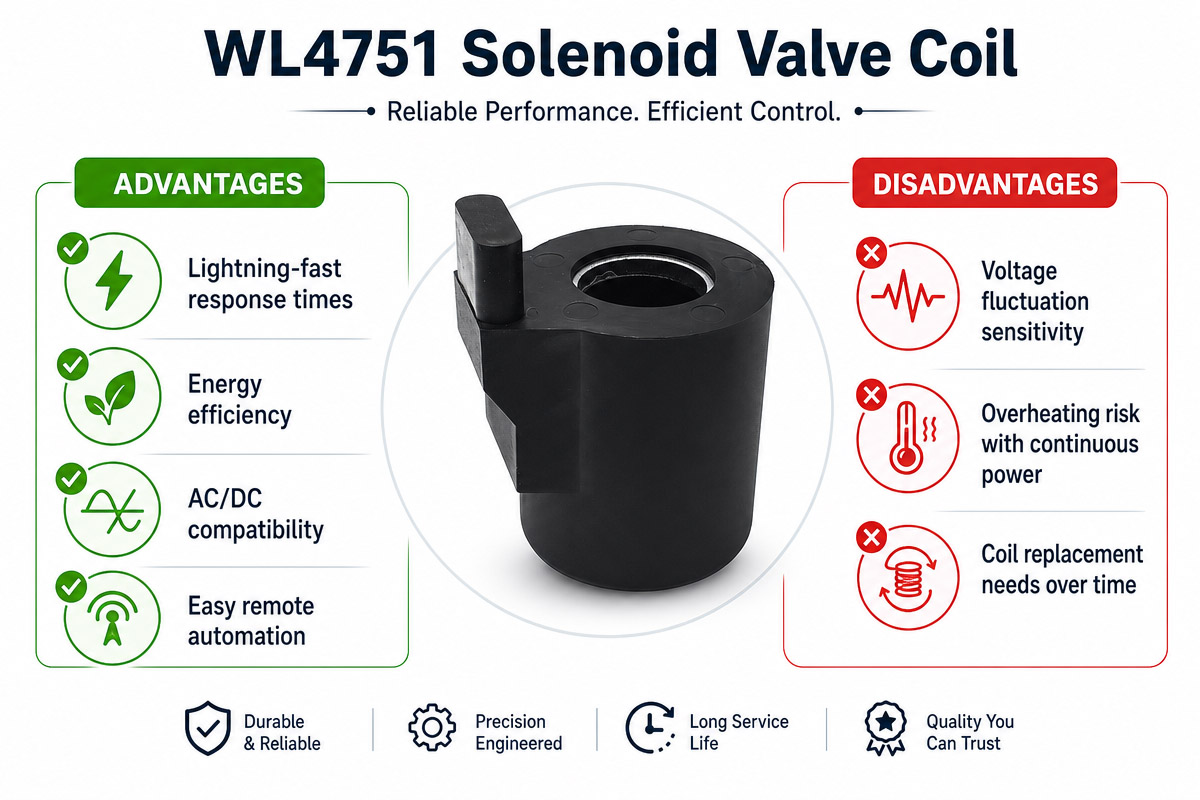
Solenoid valve coils offer many advantages to industrial control systems. Quick response, easy electrical control, small size and ease of installation. Solenoid coils provide reliable switching performance with less moving parts than mechanical actuators. They can be automatically operated by PLC systems and are perfect for high volume industrial applications.

Another advantage is flexible customization Manufacturers can design coils to meet various voltage, size, power and environmental requirements.

Cons Disadvantages of Custom Solenoid Valve Coil

Despite all of the advantages, solenoid valve coils have some disadvantages too. In case of improper thermal design, continuous operation causes heat generation and reduces lifespan. Extreme temperature conditions may affect coil performance negatively.

They also require proper matching of voltage. Overvoltage will cause overheating and under-voltage will cause weak magnetic force.

Besides, the solenoid valve coils usually provide switching control rather than precise proportional control without additional electronics.

All in all, the advantages of the coils for the solenoid valves have contributed to the wide use of them in industrial automation.

Solenoid Valve Coils Troubleshooting

Solenoid valve coil Troubleshooting Guide

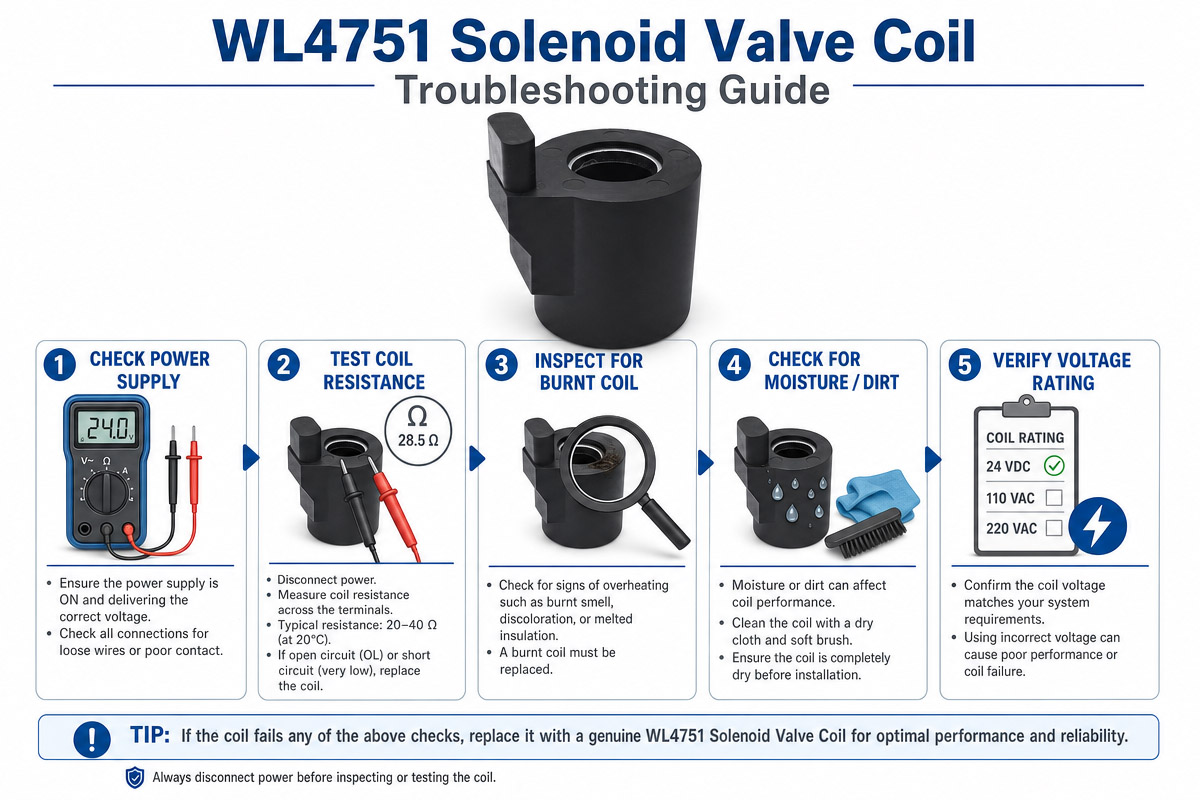
When the solenoid valve coil fails, there are several common problems that can be considered.

1. Coil Not Operating

It can be caused by wrong voltage supply, broken wires, damaged coil winding or poor electrical connection. You should check the voltage and resistance with a multimeter.


2. Weak Magnetism Force

The weak magnetic force can be caused by low voltage, wrong coil specification, damaged magnetic elements or large air gaps.

3. Overheating Coil

It can be caused by overvoltage, long operating time, lack of heat dissipation or improper selection of the duty cycle.

4. Valve Works at a Slow Pace

The slow pace of operation can be caused by mechanical friction, contamination of the inside of the valve or weak electromagnetic force

5. Short-circuit Fault

The short circuit is usually caused by the damage to insulation, ingress of moisture or high temperature.
Regular inspections, proper installation and the right choice of industrial grade solenoid valve coil are very helpful to avoid failures.

8 Common Questions About Solenoid Valve Coil

1. What is the function of solenoid coil?

The solenoid  coil is an electromagnetic actuator, which converts electric energy into magnetic force to control the operation of a solenoid valve. When the power is supplied, the coil generates the magnetic field which drives the internal plunger or armature, which allows the valve to open, close or regulate the flow of liquids and gases.  Solenoid valve coils are widely used in industrial automation, pneumatics, hydraulics, water control systems and medicine devices due to their fast response, reliable switching and easy electrical control.

2. What is the difference between AC and DC solenoid valve coils?

The main difference between AC and DC solenoid coils is the type of electrical power they use and their operating characteristics.

AC solenoid coils are designed for the use in applications with alternating current, such as 110VAC or 220VAC.  They generally provide strong initial magnetic force and are perfect for industrial equipment connected to AC power supplies.

DC solenoid valve coils operate with direct current, commonly 12VDC or 24VDC.  They provide stable operation, lower noise and are widely used in battery-powered equipment, automation systems and mobile machinery.

The right choice depends on the power supply, working environment, duty cycle and system requirements.


3. How long does a solenoid valve coil normally last?

The service life of the solenoid valve coil depends on operating conditions, material quality, voltage stability, temperature and switching frequency.

High quality industrial solenoid valve coils can normally reach 100,000 to millions of operating cycles if they are properly designed and operate within the rated specifications.

The factors that affect the life of the solenoid valve coils are:

Correct voltage selection

Proper insulation materials

Effective heat dissipation

Suitable duty cycle

Protection from moisture and contamination

For demanding applications, manufacturers can provide customized coils with increased temperature resistance, enhanced insulation grades and durability.


4. Why does my solenoid valve coil become hot during operation?

Some heating is normal since electrical energy is converted into magnetic energy and part of it is released as heat.

However, excessive heating may indicate some problems, such as:

Incorrect voltage supply

Continuous operation beyond rated duty cycle

Excessive current consumption

Ineffective heat dissipation

Incorrect coil selection

In order to prevent overheating, engineers should choose the right coil voltage, power rating, insulation class and operating cycle according to the application requirements.

5. How do I choose the correct solenoid coil for my application?

Choosing the correct solenoid valve coil involves evaluation of several important factors:

Voltage: Check whether the system requires 12VDC, 24VDC, 110VAC or 220VAC.

Power consumption: Choose suitable wattage according to the required magnetic force.

Valve compatibility: Make sure that the coil is compatible with the size and mounting structure of the valve body.

Operating environment: Consider temperature, humidity, dust and vibration.

Duty cycle: Find out whether the coil works intermittently or continuously.

Connector type: Choose the proper electrical connection.

For OEM projects, customized solenoid valve coils can be designed according to performance requirements.


6. Can a solenoid coil be customized?

Yes, solenoid  coils can be customized according to industrial requirements.

Customization options include:

Voltage, resistance adjustment

Size and shape of coil

Power Ratings

Wire specs

Connector Types

Waterproof protection”

High temperature resistance

Specific insulation requirements

In many applications, such as automation equipment, medical machines, hydraulics, automotive applications and special industrial machinery, customized solenoid valve coils are used where standard coils are unable to satisfy performance requirements.

7. What makes a solenoid valve coil go bad?

Some common causes of solenoid valve coil failure are:

Overvoltage: Excessive voltage leads to increased current flow and overheating.

Low voltage: Insufficient voltage causes decreased magnetic force preventing the valve from operating.

Water damage Water can penetrate the insulation causing a short circuit.

Overheating : Excessively high temperature can damage the insulation of enamel wire.

Improper duty cycle: Continuous operation beyond the coil specifications may reduce life span.

Proper installation, regular electrical testing and choosing an appropriate industrial-grade coil can help to prevent premature failure.

8. Why Are Quality Solenoid Valve Coils Important for Industrial Applications?

Quality solenoid valve coils improve the reliability of the equipment, decrease downtime and optimize efficiency. Industrial applications require continuous operation in harsh environments with vibrations, temperature variations, moisture and switching.

The advantages of the good solenoid valve coil:

stable electric field

Quick response time

Less energy consumption

Higher heat resistant

Longer life span

Stable performance

Choosing a professional manufacturer of solenoid valve coils helps OEM manufacturers and builders of industrial equipment to improve the reliability of the product, minimize maintenance costs and increase customer satisfaction.

How to Choose a Solenoid Valve Coil?

Choosing the right solenoid valve coil is very important to have reliable valve operation and avoid premature failure. There are a number of important factors which need to be considered while choosing a coil.

1. Check Voltage Requirements

First of all, you need to determine the voltage supply. The coils of the solenoid valves are usually produced in versions of 12V DC, 24V DC, 110V AC and 220V AC. Wrong voltage can cause overheating, loss of magnetic force or damage to the coil.

2. Check power consumption

Coil power rating is related to the efficiency and operating temperature of the coil. Low power coils may be used in energy saving applications and high power coils may be used for the applications where high magnetic force is needed.

3. Consider the duty cycle.

Different applications have different duty cycle. In case of continuous operation, coils with proper insulation class and thermal design are required. Standard coils are used in applications with intermittent duty cycle.

4. Assess Environmental Conditions

Choice of the coil depends on the working environment. If water protection or outdoor operation or humid conditions are needed, choose the coils with the proper level of protection. High temperature resistance materials are required for high temperature applications.

5. Valve Sizes Match

The coil has to match the size of the valve tube, mounting structure and mechanical interfaces. Otherwise, it will be impossible to install it properly.

6. Choose Reliable Manufacturing Quality

High quality solenoid valve coil should be made of pure copper wire, stable insulation materials, accurate winding technology and strict electrical testing.

7. Custom Requirements Consider

We can customize the coil design according to the performance requirements of your OEM project. This may include the size, voltage, resistance, connector type and magnetic force.

The choice of the proper solenoid valve coil will improve system reliability, reduce maintenance cost and increase life of the equipment.

Tips to Avoid Common Errors in Solenoid Valve Coil Design

Ignore Operating Temperature

Many designers pay attention only to the magnetic force and forget about heat generation. The excess temperature may damage the insulation and reduce life of the coil.

Wrong Wire Gauge

Resistance, current and power consumption depend on wire gauge. The wrong choice will lead to the lack of force or overheating.

Underestimate Duty Cycle

The coil, which is designed for short time operation, may not work correctly in case of continuous operation.

Bad Magnetic Circuit Design

If there is not enough magnetic material or if air gaps are not correct, then electromagnetic efficiency will be low.

Disregard Environmental Protection

Industrial environments have moisture, dust, chemical influences and vibrations. It requires proper protection.

Omit Reliability Testing

Voltage testing, temperature rise, insulation resistance and life testing help to prevent failure in the field.

Get A Free Quote Now

Contact Form

Related Products

Related News

Chapter 1 : Introduction on Solenoid Vs. Electromagnetic Coil Electromagnetic technology plays a significant role in modern automation industry, electronics, […]

Scroll to Top

Get A Free Quote Now !

Contact Form
If you have any questions, please do not hesitate to contact us.
Weilong Solenoid Company Culture
