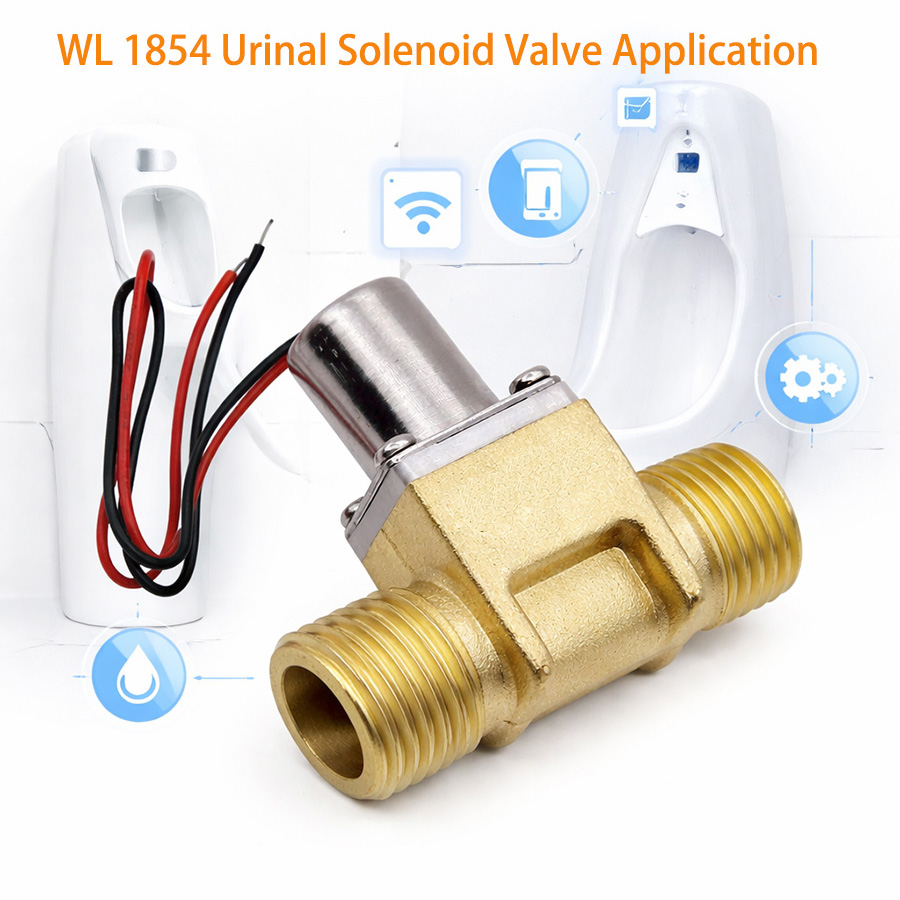
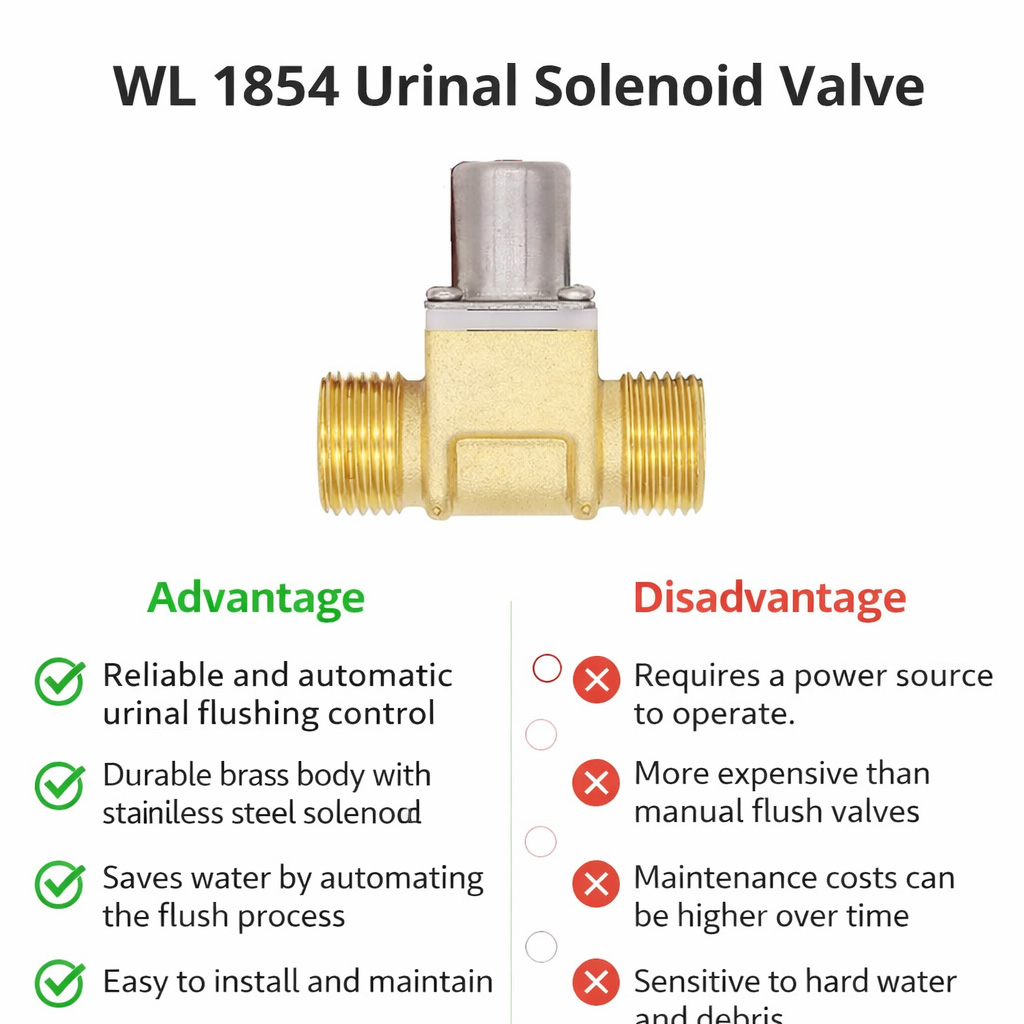
How to Select the Urinal Solenoid Valve?
When selecting the urinal solenoid valve, several technical and environmental factors need to be considered. The first step is to consider the voltage rating of the urinal solenoid valve, which can be DC 6V, DC 12V, or DC 24V. For battery-powered devices, DC 6V is the most appropriate voltage rating, as it consumes minimal power.
The working pressure of the urinal solenoid valve is another critical factor that should be considered during selection. The selected urinal solenoid valve should be able to operate within the working pressure of the building’s water supply system to prevent leakage.
Another critical factor that should be taken into consideration is the flow rate of the urinal solenoid valve, which should comply with the water-saving regulations of the country.
The material of the urinal solenoid valve is also an essential factor that should be taken into consideration during the selection process. The urinal solenoid valve is mostly made of brass, stainless steel, or reinforced engineering plastic materials, which are ideal for washroom applications due to their durability.
Water quality is another critical factor that should be taken into consideration during the selection of the urinal solenoid valve, especially in areas with hard water. The urinal solenoid valve should be equipped with anti-scale diaphragms and filter screens to prevent blockage.
Response times are critical in washroom applications, especially in areas with high traffic volumes. The urinal solenoid valve should be able to operate for at least 200,000 cycles.
A waterproof rating of at least IP65 is essential to ensure long-term reliable operation of the urinal solenoid valve in washroom applications.
Finally, the dimensions of the urinal solenoid valve, thread size, connector types, and compatibility with sensor control devices need to be taken into consideration during the selection process, especially when customizing the product for unique washroom designs.