


How to Select a Cabinet Holding Magnet
There are several factors to consider when selecting the appropriate cabinet holding magnet to ensure reliable performance and long service life.
1.Calculate the Necessary Holding Force
The first thing you have to do is to choose the right magnetic strength. Light cabinet doors require less holding force, while heavy industrial panels require stronger magnets. Consider the weight of the door, vibrations, and operating conditions.
2.Consider magnet size and installation space
Make sure you measure the installation space available. Small magnets work well in tight spaces, while larger magnets give you higher magnetic performance.
3.Consider the Operating Environment
Environmental conditions affect the choice of magnets. If you use them outdoors or in industrial applications, make sure you choose magnets made from corrosion-resistant materials with protective coatings. Extreme temperatures may require special magnetic materials.
4.Choosing the Right Magnet Material
Common materials: neodymium magnets, ferrite magnets, and other permanent magnetic materials. Neodymium magnets provide greater holding power in smaller sizes. Ferrite magnets provide economic performance.
5.Assess Mounting Technique
There are various types of mounting such as screw mounting, adhesive mounting and embedded installation. Choose mounting type that fits with your cabinet design.
6.Consider Durability Requirements
For cabinet doors that are open frequently, select magnet for repeated cycles. High-quality products have reliable magnetic performance over a long period of time.
7.Choose a Reliable Supplier
Professional magnet manufacturers are able to provide customized solutions, technical support and quality assurance. Product specification, testing standards and manufacturing capabilities.
The magnet’s holding force, size, material, environment, mounting and durability are all important in choosing the right magnet for the application.
Cabinet Holding Magnet Design: How to Avoid Common Mistakes
Do not choose magnets that do not have enough holding power.
Do not forget about the door weight and vibration conditions.
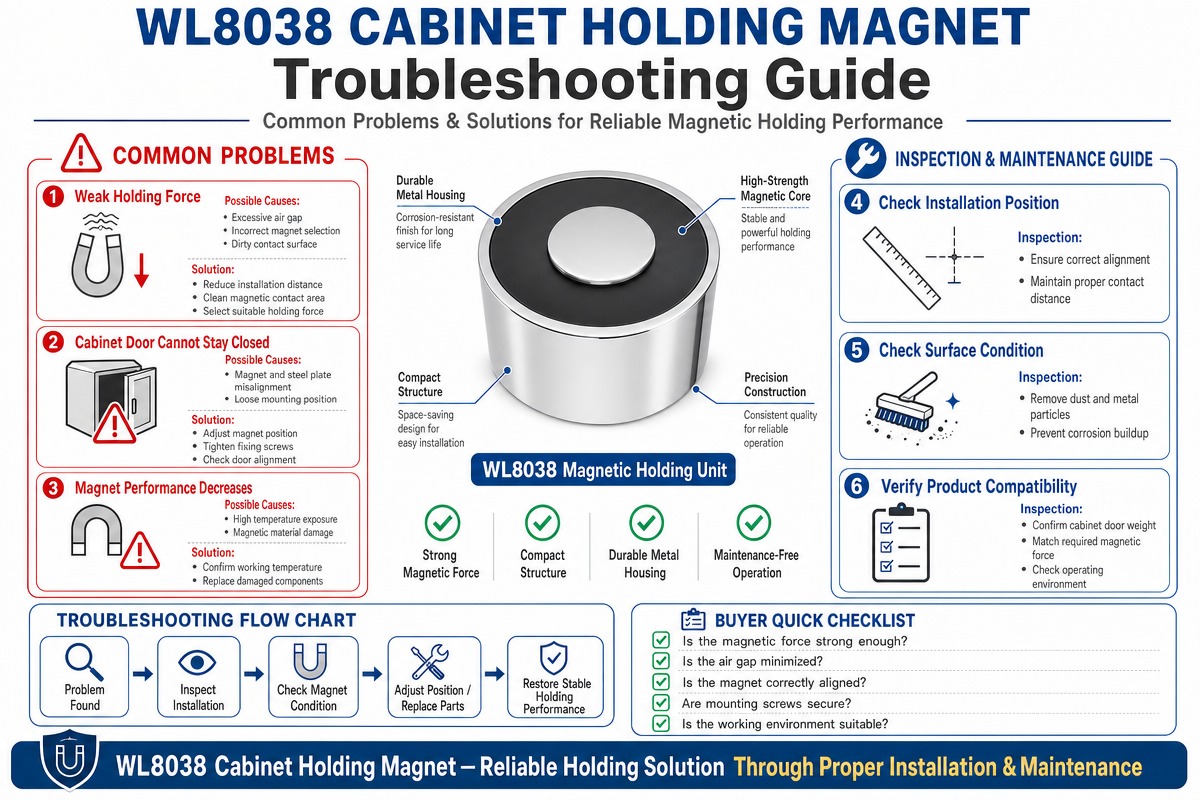
Align magnet and metal plate properly.
Do not create big air gap because it will reduce magnet strength.
Choose corrosion-resistant material for severe environments.
Consider installation space prior to final design.
Proper Mounting Techniques.
Check the temperature limit of magnetic materials.
Evaluate prototype performance before mass production.
Work with experienced magnet manufacturers for custom designs.


