


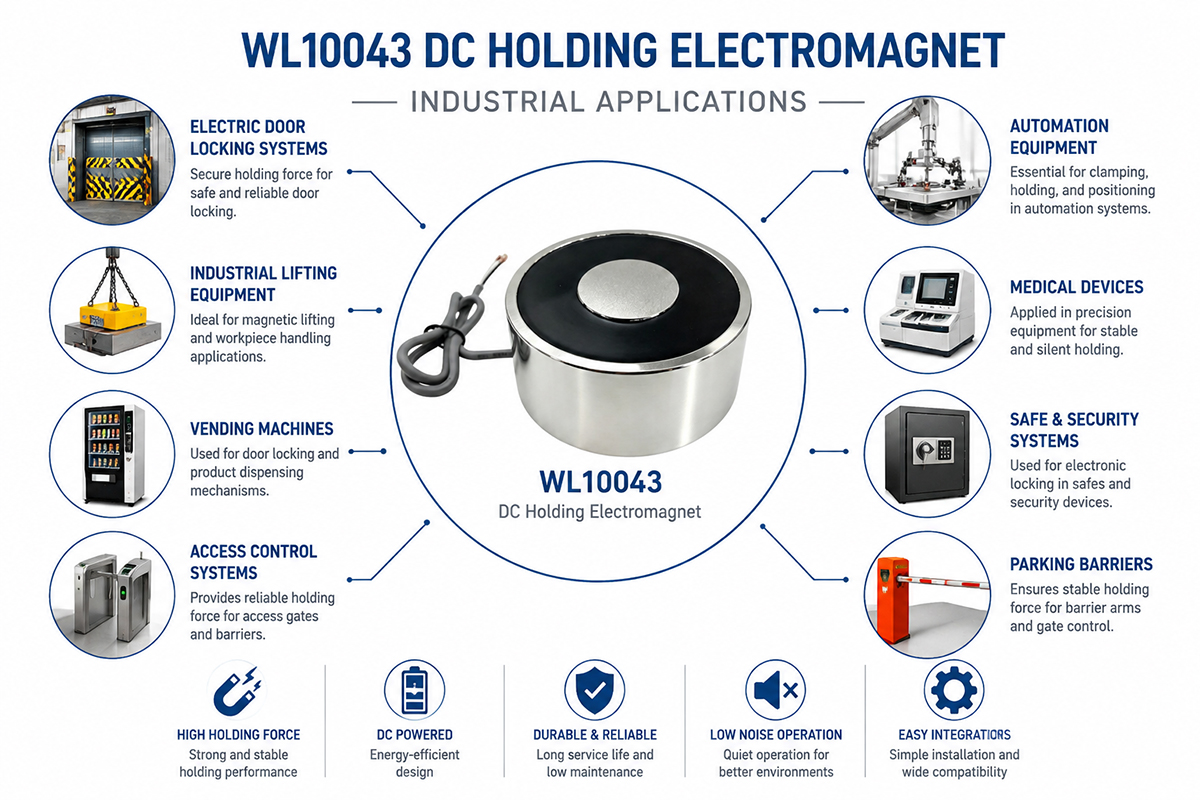
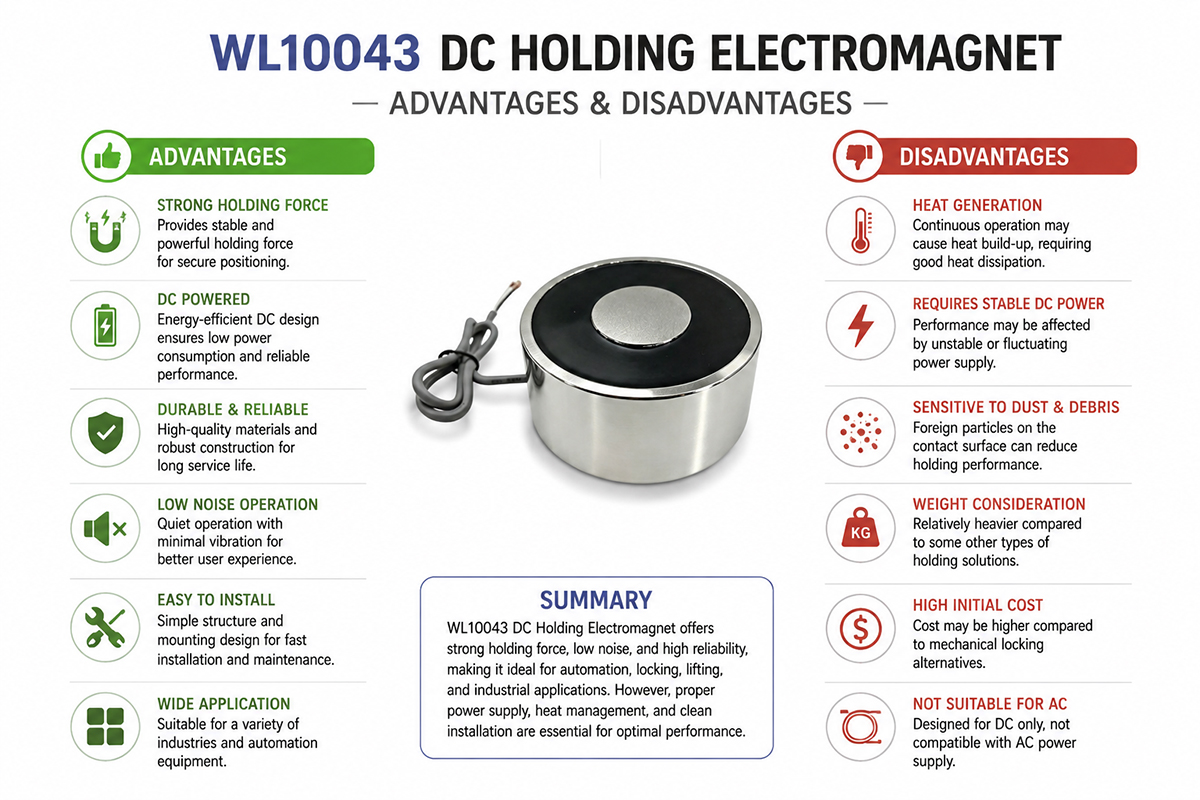
How to Choose a DC Holding Magnet?
The process of selecting the appropriate DC holding electromagnet requires a detailed evaluation of the application requirements and the operating environment.
1. Determination of the necessary holding force
The first thing to do is to determine the required magnetic holding force. Weight, vibration, safety factor, and working environment should be taken into account.
2. Checking the Operating Voltage
Typical voltages are
5 V DC
12V DC
24 V DC
48V DC
Select the voltage corresponding to your control system.
3. Checking of Duty Cycle
Is the electromagnet operated all the time or from time to time? Coils should be designed and cooled for continuous duty applications.
4. Checking Installation Space
Consider the following:
Size
Height:
Mounting holes
Cable orientation
Environmental restrictions
Compact design is essential in restricted installation space.
5. Assessment of the Surface Contact
A flat, clean contact surface is necessary for maximum holding force. Dust, paint, or uneven surfaces creating air gaps decrease magnetic performance.
6. Checking the Operating Temperature
When activated, electromagnetic coils produce heat. Consider the temperature requirements of the selected model.
7. Choosing the Reliable Manufacturer
The professional supplier will provide:
Technical drawings
Force Test Report
Material specifications
Life cycle testing
“Custom engineering service
Proper selection ensures reliable operation, long life, and low maintenance.
Common Mistakes in DC Holding Electromagnet Design and How to Avoid Them
Do not select electromagnet force without safety factors.
Do not use big air gaps, as they considerably reduce the magnetic force.
Check the voltage of the power supply to meet the rated specifications.
Take into account the heat generation in continuous operation.
Avoid low-quality magnetic materials, decreasing performance.
Make sure that the contact surface is clean and flat.
Consider the environment—dust, moisture, vibrations, etc.
Design the appropriate mounting structure to avoid misalignment.
Test prototype samples before production.
Work with the experienced electromagnet manufacturers to obtain the best design.


