High Efficiency Toroidal Electromagnetic Coil Solutions
Industrial Uses of Toroidal Electromagnetic Coils Today
Toroidal Electromagnetic Coil Manufacturing Process
Toroidal Electromagnetic Coil Custom Design Service
Toroidal Electromagnetic Coil in Electrical Equipment
Toroidal Electromagnetic Coil Power Management Uses
High Efficiency Toroidal Electromagnetic Coil Solutions
Industrial Uses of Toroidal Electromagnetic Coils Today
Toroidal Electromagnetic Coil Manufacturing Process
Toroidal Electromagnetic Coil Custom Design Service
Toroidal Electromagnetic Coil in Electrical Equipment
Toroidal Electromagnetic Coil Power Management Uses

WL44125 Toroidal Electromagnetic Coil for Industrial Devices

Toroidal electromagnetic coil is a high-performing magnetic component with the winding of wire on the ring-shaped core. Its distinctive design with the closed magnetic circuit provides high electromagnetic efficiency, low energy loss, low noise and reduced interference. The applications of toroidal electromagnetic coils include transformers, power electronics, renewable energy, audio equipment, medical equipment, industrial control systems and telecommunication equipment. The benefits of the toroidal design compared to the traditional coils are compactness, high inductance stability and high thermal performance. They can be custom designed for any industry application with different core material, winding, voltage and frequency specifications. Toroidal electromagnetic coils are among the most important components in modern electrical systems due to growing demands for efficient energy conversion and compact electrical solutions.

Toroidal Electromagnetic Coil Description

The toroidal electromagnetic coil is the electrical coil wound around the ring-shaped magnetic core. When the current flows through the coil, it creates the magnetic field. Most of the magnetic flux is captured in the core, and therefore the toroidal electromagnetic coils feature high magnetic efficiency, minimal leakage and interference. Typically, they are made of ferrite, iron powder, silicon steel or other magnetic materials depending on the application. The coils are widely used in power electronics, renewable energy systems, transformers, audio equipment, medical equipment and telecommunication equipment. They are designed for energy conversion and filtration, current control, interference elimination and voltage regulation.

How Does a Toroidal Electromagnetic Coil Work?

The design of the toroidal electromagnetic coils is based on the principle of electromagnetic induction. The current flowing through the copper wire wound around the core creates the magnetic field. The circular shape of the core enables continuous magnetic path which provides effective circulation of the magnetic flux with minimal leakage.

The strength of the magnetic field depends on the number of turns, the current level, the core material and the coil size. In power applications, the coils store the magnetic energy which is released at certain times to control the flow of current and minimize noise.

The closed magnetic circuit features improved efficiency, decreased electromagnetic radiation and stability of inductance. That is why the toroidal electromagnetic coils are suitable for transformers, filters, power converters and energy management systems.

Toroidal Coil Video

Toroidal Electromagnetic Coil Detail Display

Electromagnetic coil Data Sheet

Sendust Toroidal Coil Model Catalog 1

| Parameter | Typical Value |
| ——————— | ——————– |
| Core Material | Sendust (Fe-Si-Al) |
| Inductance Range | 2.2µH – 300mH |
| Rated Current | 4A – 50A |
| Saturation Current | Up to 70A |
| Operating Frequency | 10 kHz – 100kHz |
| Operating Temperature | -40°C to +125°C |
| Insulation Type | Enameled Copper Wire |
| Core Shape | Toroidal |

Why are the Toroidal Electromagnetic Coils so Popular?

Toroidal electromagnetic coils are becoming more and more popular owing to the growing demands for the higher efficiency, smaller size and improved electromagnetic control in modern electronic systems.

The distinctive design of the toroidal coils provides outstanding magnetic performance with low energy loss and minimal interference. That is why the coils are suitable for advanced applications such as renewable energy systems, electric vehicles, smart devices, industrial automation and high performance power supplies.

The increased demand for energy efficient technologies resulted in increased demands for reliable magnetic components. That is why the manufacturers use the toroidal coils which feature compact design, high efficiency and long lifespan.

With the development of the industries towards smart and green electrical systems, the toroidal electromagnetic coils are likely to retain their significance in the future.

Toroidal Electromagnetic Coil

Toroidal Electromagnetic Coil Design and Applications

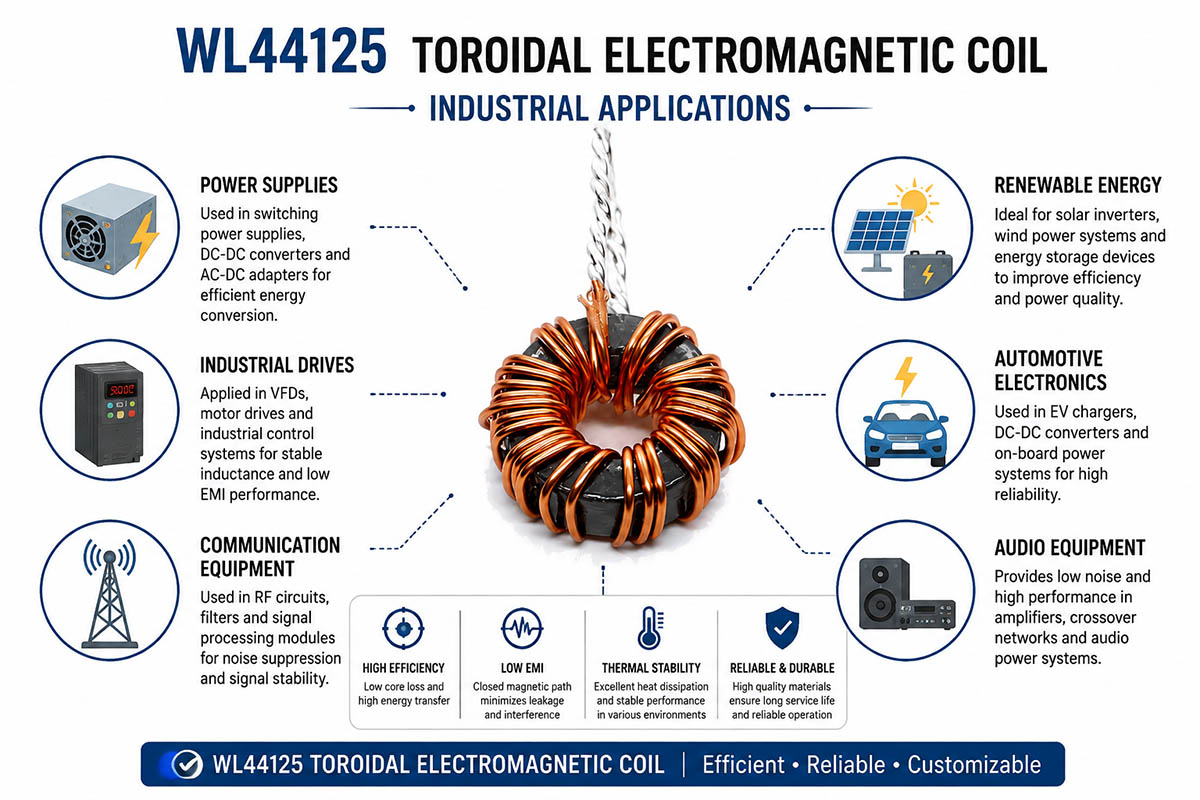
Applications of Toroidal Electromagnetic Coil

Toroidal electromagnetic coils find extensive application in different industries thanks to their high efficiency and good electromagnetic performance.

The toroidal coils are extensively used in the power electronics industry including switching power supplies, DC-DC converters, inverters and energy storage systems. Their low power loss increases the system efficiency.

In renewable energy systems, the coils support solar inverters, wind power converters and battery management systems.

The toroidal electromagnetic coils are widely applied in the audio equipment in the high-quality amplifiers. They are low noise and have minimal electromagnetic interference.

As a part of the industrial automation systems, the toroidal coils are used in the motor controllers, control panels, sensors and electromagnetic devices.

The medical equipment, telecommunications, automotive electronics and consumer electronics also utilize the compact and reliable operation of the toroidal coil technology.

The toroidal electromagnetic coils remain very important in modern electrical systems facing rising demand for energy-efficient electronic devices.

Toroidal Electromagnetic Coil

Advanced Toroidal Electromagnetic Coil Technology

Advantages and Disadvantages of Toroidal Electromagnetic Coil

Advantages

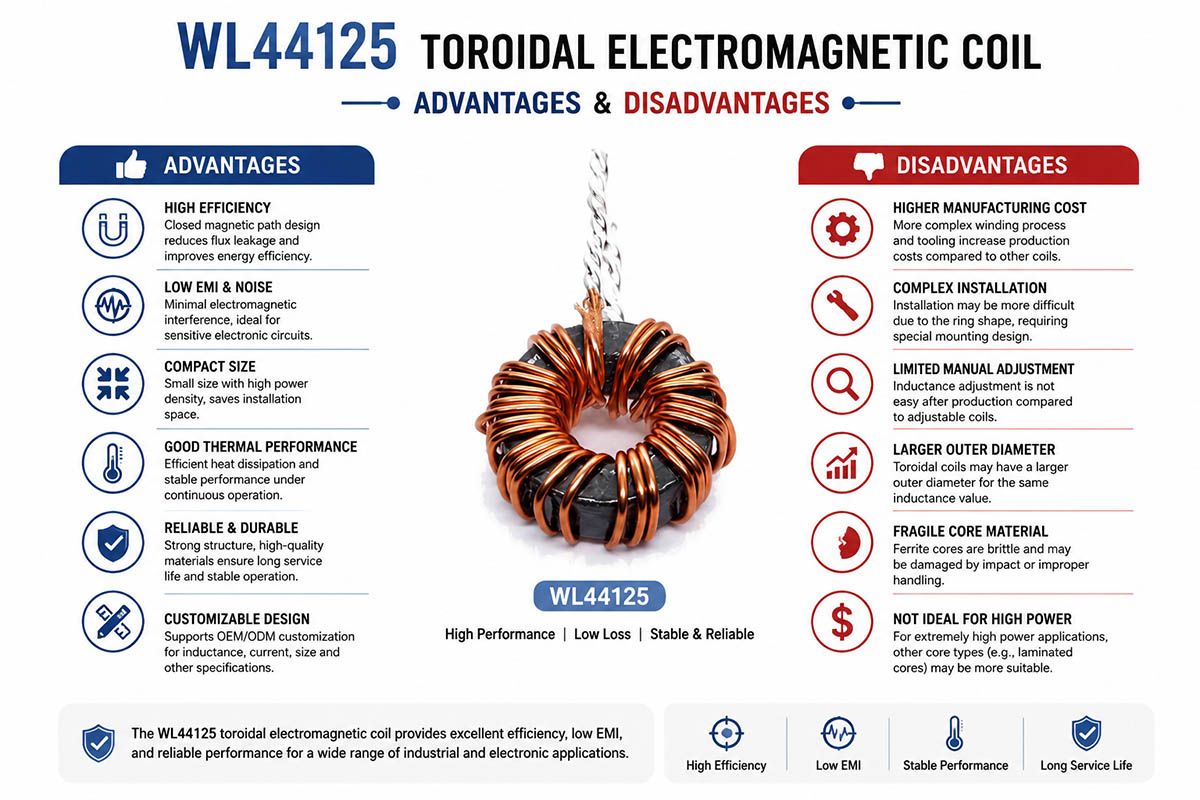
There are many advantages of the toroidal electromagnetic coils compared to the traditional coils designs. The closed magnetic circuit enables high magnetic efficiency and low leakage flux. It improves power delivery and reduces electromagnetic interference. The compact design provides high power density and saves installation space.

The second advantage is low operating noise of the toroidal coils. Due to the fact that the magnetic field is contained in the core, the toroidal coils produce less vibration and acoustic noise. They have good thermal performance and stable inductance.

They are very configurable and you can design the toroidal coils for different frequencies, currents and industrial applications.

Cons

However, there are also some disadvantages of the toroidal electromagnetic coils. The production of the coils is more complex since the wire has to be wound around the circular core, which requires special equipment. That is why production costs of the toroidal coils are higher than those of the standard coils.

Also, the installation may be more complicated due to circular shape of the coils. Additional cooling systems may be required for high power applications.

Nevertheless, the advantages of the toroidal electromagnetic coils make them suitable for a wide variety of high performance electrical systems.

Custom Toroidal Electromagnetic Coil Manufacturer Guide

Troubleshooting of Toroidal Electromagnetic Coil

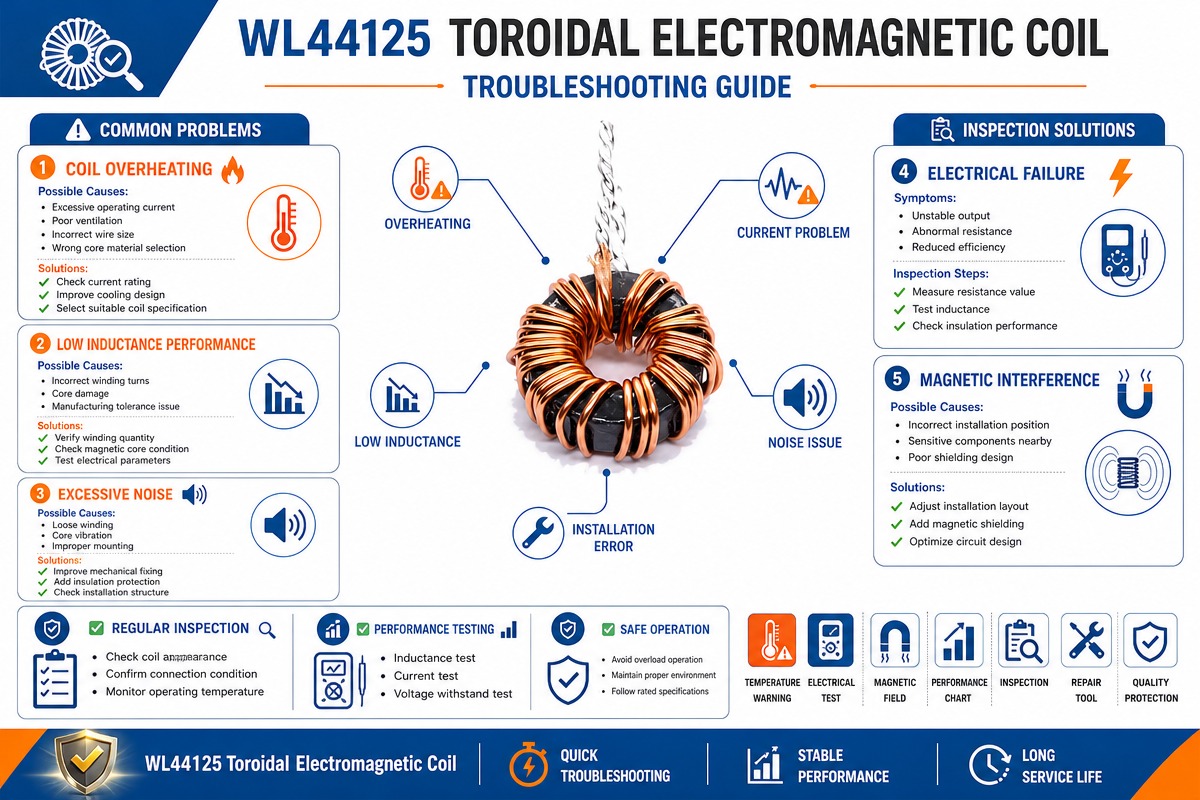
The problems associated with toroidal electromagnetic coils are: overheating, noise, instability of inductance and reduced performance.

1.Overheating of the Coil

The possible causes are excessive current, wrong wire size, insufficient ventilation or wrong core material. Verify the operating conditions and improve the cooling.

2.Low Inductance Value

The reason can be wrong number of winding turns, core damage or production errors. Check the specifications of the coil and examine winding.

3.Loud Noise

The noise is caused by loose winding, core vibration or incorrect mounting. The vibration can be reduced by improving mechanical fixation.

4.Magnetic Interference

Although the leakage flux of toroidal coils is low, if the coils are placed improperly near sensitive components, they can interfere. Reinstall or provide shielding.

5.Failure of the Short-Circuit

The coil can fail because of damaged insulation or high voltage. Check the quality of insulation and voltage ratings.

Proper testing, installation and components selection is important to ensure reliable performance of the toroidal electromagnetic coil.

FAQ

1. What is toroid electromagnetic coil?

Toroidal electromagnet coil is a coil of electrically conducting wire wound around ring-shaped core. Electrical current passing through the coil creates a magnetic field inside circular core. Closed magnetic path leads to reduced magnetic leakage, increased efficiency and decreased electromagnetic interference. Toroidal electromagnetics are widely used in transformers, inductors, filters, power supplies and industrial electronics.

2. How does an electromagnetic coil of a toroid work?

Toroidal electromagnetic coil works according to the principle of electromagnetic induction. Flowing electrical current through the winding creates magnetic field around the core . Toroidal shape allows magnetic flux to flow inside the core without interruptions, providing improved efficiency of energy conversion. In electronic circuits, coils can be used to store energy in magnetic form, filtering electrical signals, reducing noise and controlling the current flow.

3. What are the advantages of toroidal electromagnetic coils?

High efficiency, low electromagnetic interference, compact size, silent operation and good magnetic properties are the main advantages of toroidal electromagnet coils. Less flux leakage is achieved by toroidal electromagnetics because magnetic field stays mostly inside the core. Stable inductance, improved thermal characteristics and reliable operation in industrial applications are other features of toroidal coils.

4. For what general purpose are toroidal electromagnetic coils used?

Toroidal EM coils are used in various industries such as power electronics, renewable energy, automotive electronics, medical devices, audio, communications, industrial automation etc. The most common applications are power transformers, EMI filters, inverters, switching power supplies, motor control systems and energy storage circuits.

5. How to select the right toroidal electromagnetic coil?

The right toroidal electromagnetic coil selection should be based on such parameters as inductance value, operating frequency, current and voltage ratings, core material, temperature range and mounting space. Ferrite cores should be selected for high-frequency applications. Iron powder and silicon steel cores are used in power applications because they require higher currents and reliability.

6. What material is used for toroidal electromagnetic coil cores?

The most popular core materials are ferrites, iron powder, silicon steel, nanocrystalline and amorphous materials. Ferrite cores are widely used in high frequency applications due to low power losses. Iron powder and silicon steel cores are applied in power applications. They have to carry higher currents and be more rugged.

7. Why does a toroidal electromagnet heat up?

The reasons of overheating are excessive current, wire gauge too small, too high operating frequency, poor ventilation, incorrect core material. In order to prevent overheating, designers should select correct electrical specifications, provide cooling and operate coil within its operating limits.

8. Do you build toroidal electromagnetic coils to order?

Yes, toroidal electromagnetic coils can be designed according to the particular application needs. The core size, number of turns, wire diameter, insulation type, inductance value, frequency range and mounting can be varied. Custom toroidal coils are usually required for industrial applications.

How to Choose a Toroidal Electromagnetic Coil?

The correct selection of the toroidal electromagnetic coil requires a careful consideration of the electrical, mechanical and environmental requirements.

1.Electrical Parameters

First of all, you need to establish the value of the required inductance, the voltage the coil will operate at, the current rating, the frequency range and the power level. All these parameters directly affect the performance and reliability of the coils.

2.Select the Proper Core Material

Depending on the application, different magnetic materials are required. Ferrite cores are suitable for high frequency applications while iron powder and silicon steel cores are typically used for power applications.

3.Coil Size & Installation Space to Be Considered

The outside diameter, inside diameter and the height of the toroidal coil have to match the available installation space. The compact design saves space without decreasing performance.

4.Temperature Performance Testing

The coils may operate in hot environments or work continuously in industrial conditions. Choose the coils with appropriate insulation materials and temperature ratings for long service life.

5.Consider the Efficiency Requirements

Low-loss designs are necessary for energy-saving applications. When selecting the coil, consider the magnetic losses, copper losses and operating frequency.

6.Custom design specifications

For the specific applications the manufacturers can customize the winding technique, wire size, core material and electrical parameters.

7.Check the Quality Standards

Find suppliers with robust manufacturing processes, testing procedures and consistent product quality.

The efficiency will be improved, failures will be minimized and stable operation will be provided with the right toroidal electromagnetic coil in harsh industrial conditions.

How to Avoid Common Mistakes in Toroidal Electromagnetic Coil Design

Wrong Core Selection

Choose the proper core material taking into account the frequency, power level and temperature requirements.

Disregarding the Current Density

The wrong wire size will cause the coil to get hot and decrease its lifespan.

Bad winding design

Uneven winding causes unstable inductance and increased magnetic losses.

Disregarding Heat Management

The heat generation during continuous operation must be taken into account.

Improper Frequency Selection

Different materials behave differently at different frequencies.

Lack of Insulation Protection

Insulation prevents short circuits and increases safety.

Ignoring the Mechanical Factors

The mechanical factors should be considered.

Omission of Performance Testing

The prototype testing will reveal problems before mass production.

Get A Free Quote Now

Contact Form

Related Products

Related News

Scroll to Top

Get A Free Quote Now !

Contact Form
If you have any questions, please do not hesitate to contact us.
Weilong Solenoid Company Culture
