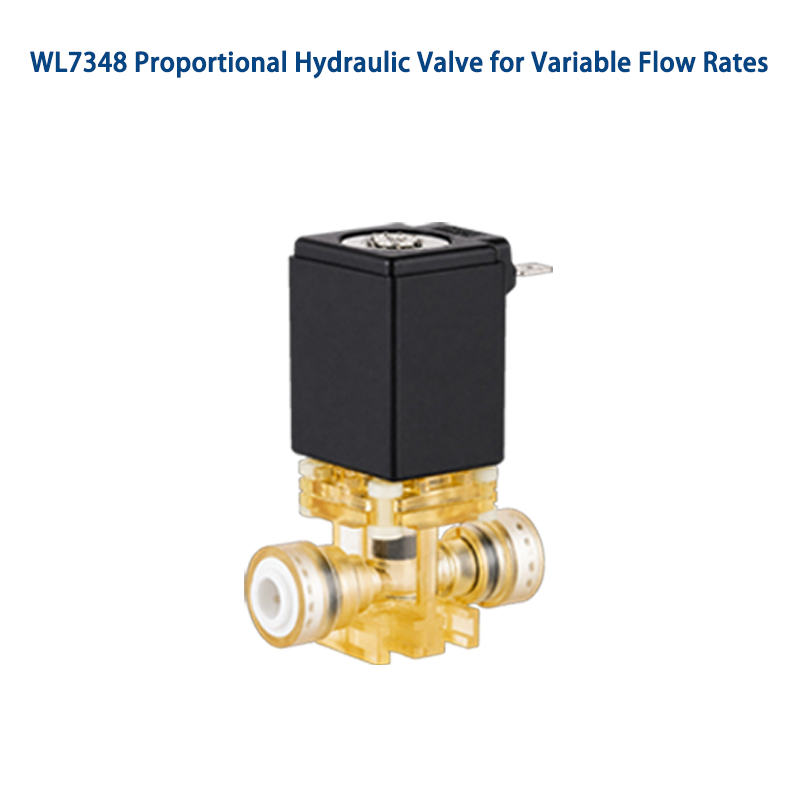
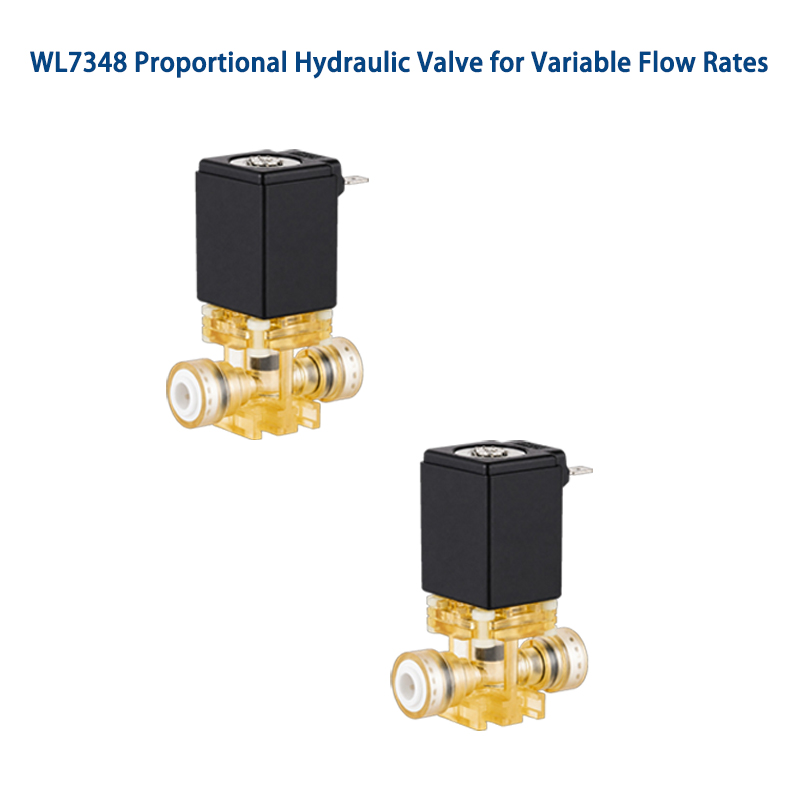
Choosing a Proportional Hydraulic Valve
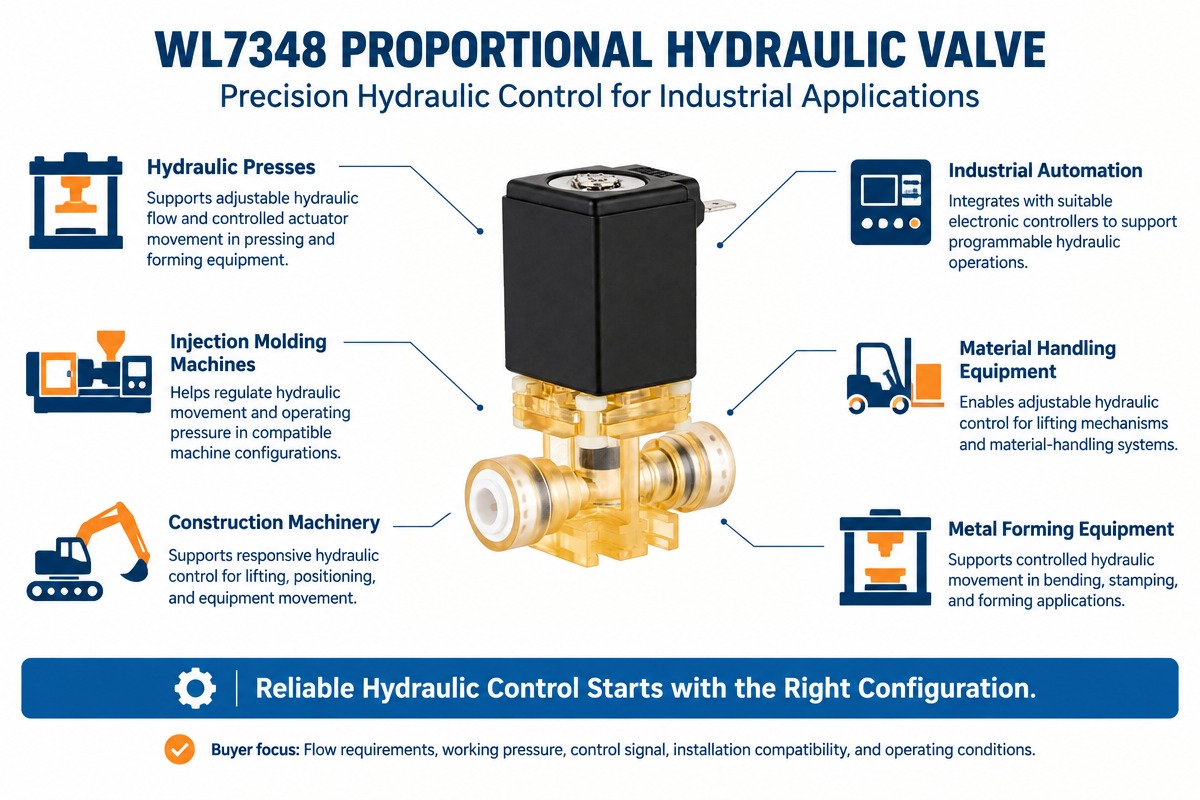
Selection of a proportional hydraulic valve requires knowledge of the machine operating conditions, control objectives and hydraulic circuit design. Right valve will improve controllability, reliability and performance of the equipment.
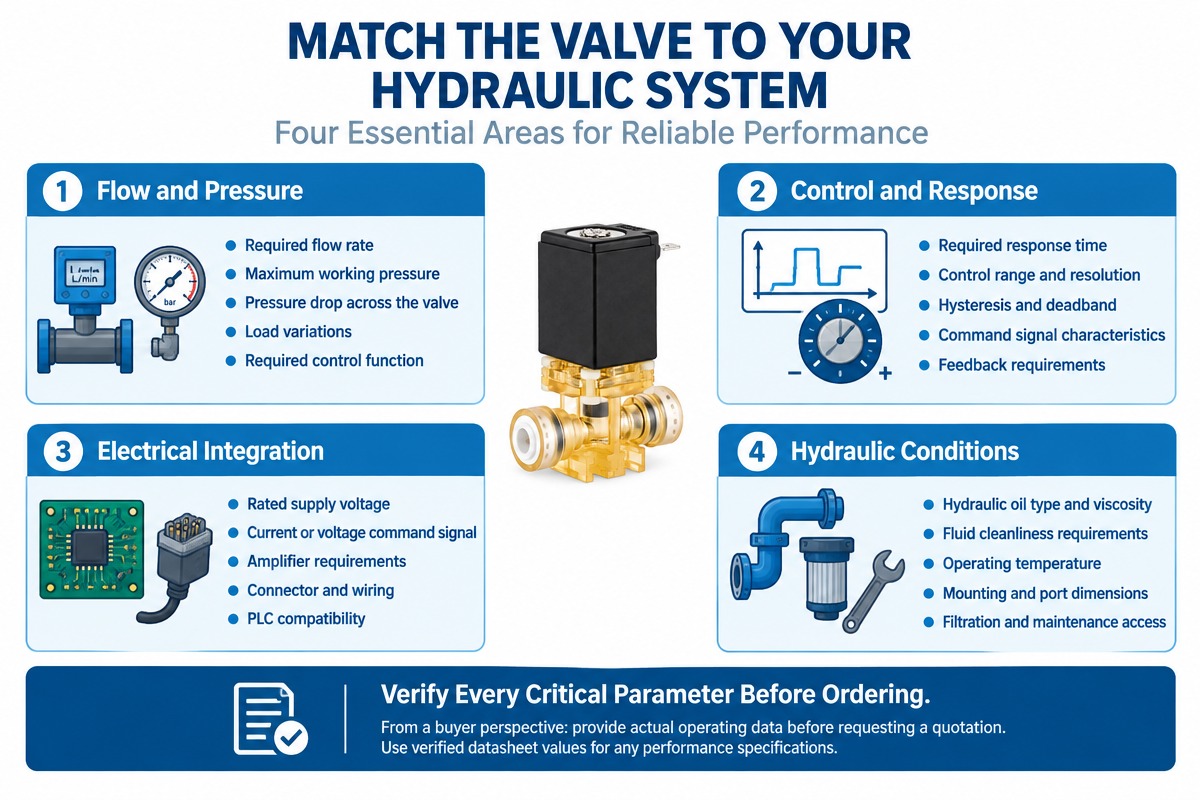
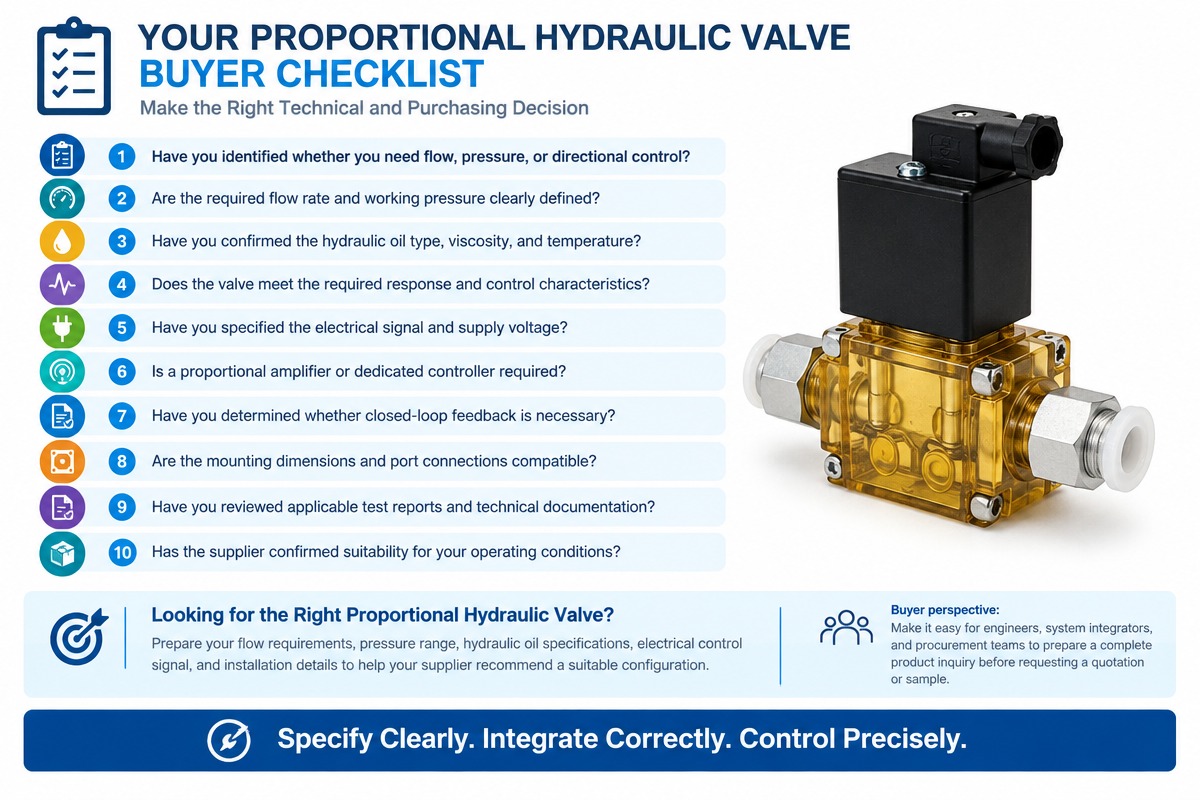
1.Control function specification. Determine if the system requires directional control, flow control, pressure control or any combination of these controls. “Each type of valve is for a different purpose.”
2.Determination of flow requirements. Determine the required flow rate, the operating range, the actuator speed and the pressure drop. Select a valve with the correct flow capacity rating. Oversized valves limit the control of low flow rates and undersized valves limit performance.
3.Pressure ratings check. Check the maximum working pressure, pressure differentials acting on the valve, changes in load and possible pressure surges. Operate within manufacturer’s specified operating conditions.
4.Check the hydraulic oil. Check oil type, viscosity, temperature range and oil cleanliness requirements. Make sure that the internal materials and seals of the valve are suitable for the specified fluid.
5.Electrical control system match. Check supply voltage, command signal, connector, wiring and amplifier requirements. Make sure the valve is compatible with the PLC or electronic controller.
6.Assessment of response and accuracy. Check response time, hysteresis, deadband, repeatability and control range. More advanced control characteristics might be required for applications requiring accurate positioning or quick movement.
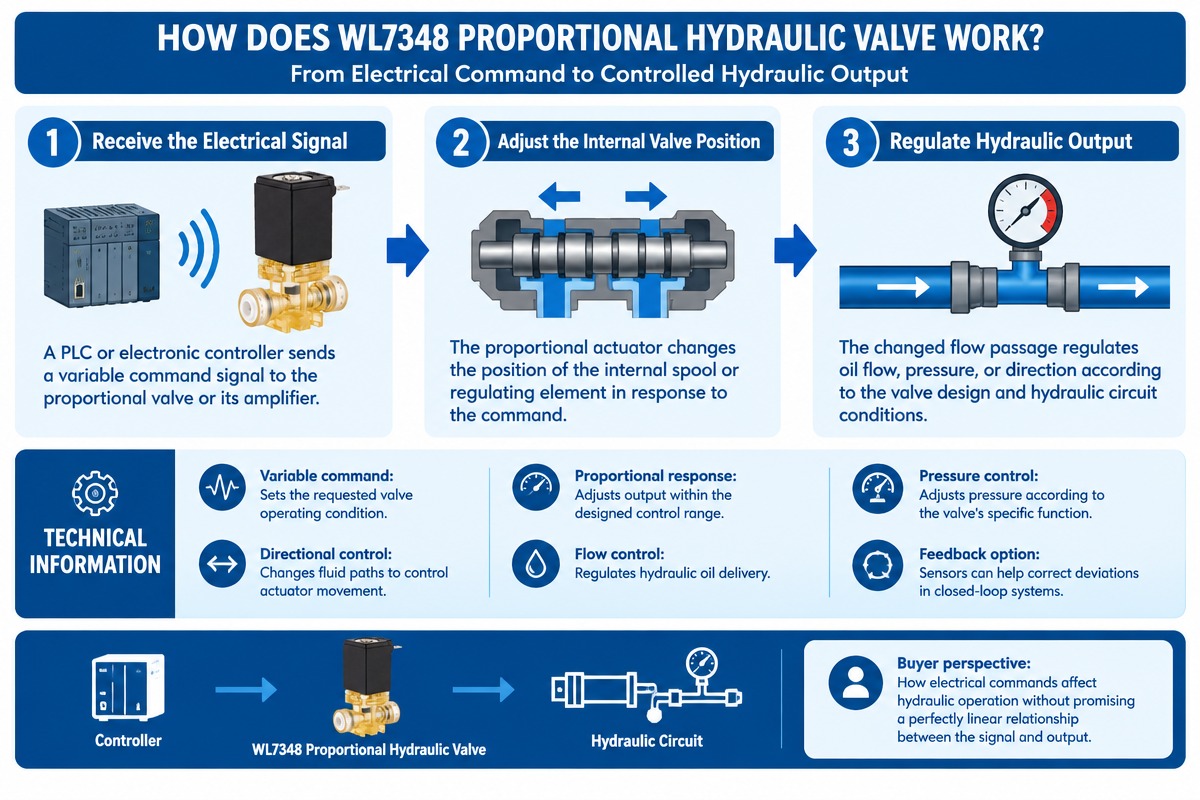
7.Description of feedback requirements. Open-loop control is sufficient for simpler applications. Closed loop systems use proper sensors to measure position, pressure or flow and to compensate deviations, if any.
8.Check valve compatibility with your installation. Check mounting dimensions, port configuration, connection standards, space availability and accessibility. Make sure the valve is compatible with the hydraulic manifold or circuit.
9.Considerations regarding filtration and maintenance. Consider the service and replacement part requirements and the technical support level. Follow manufacturer’s recommendations concerning oil cleanliness.
10.Check the entire system. Review the data sheet and test the valve together with its controller and hydraulic circuit under representative operating conditions.
Before requesting a quote, let the supplier know what function, flow rate, pressure range, fluid, electrical interface and installation details you require. This information will help to recommend a more accurate product.
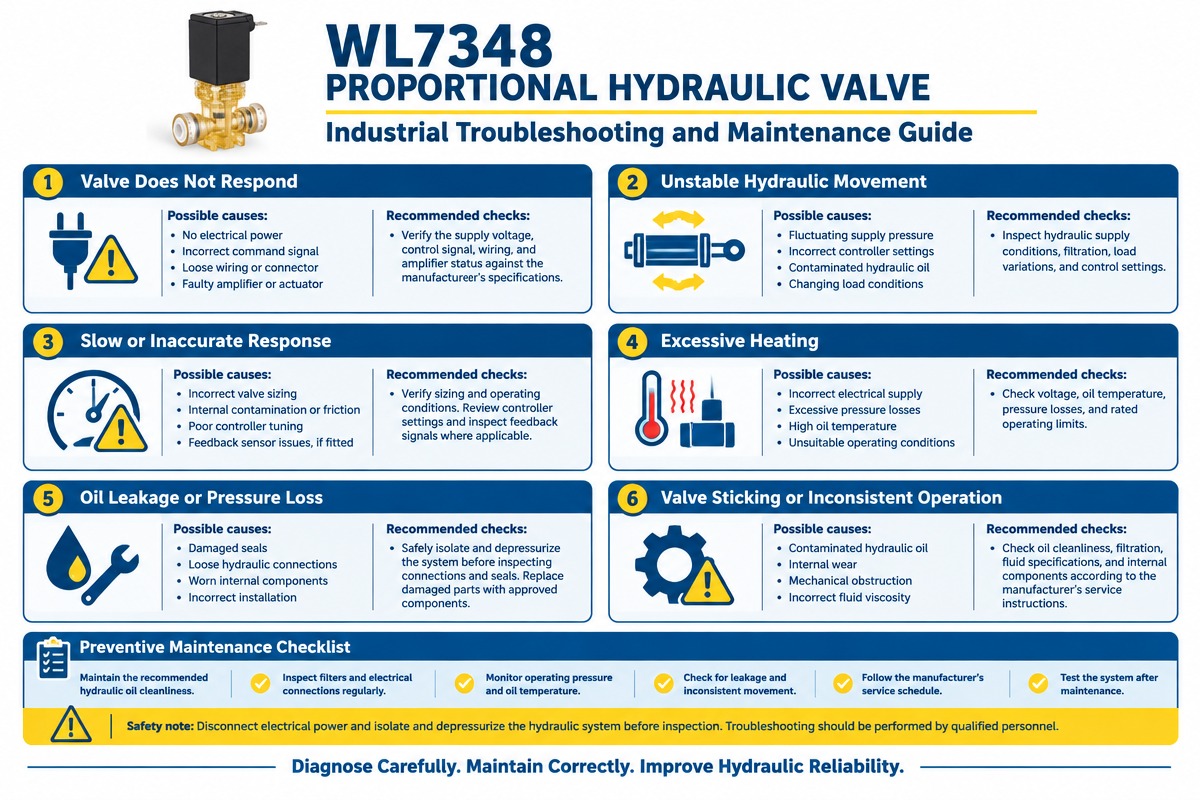
Common Design Mistakes in Proportional Hydraulic Valve Systems: Tips to Avoid
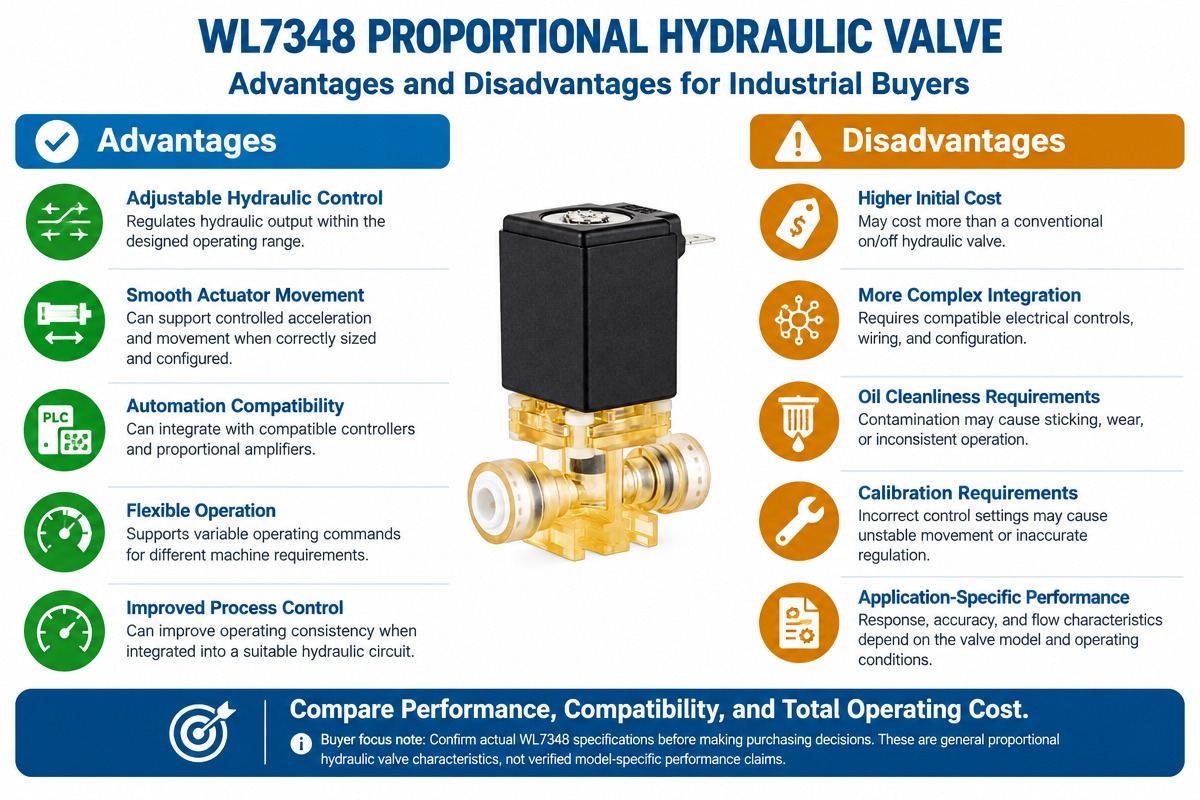
Proportional hydraulic valve system design requires a precise coordination of hydraulic components, electrical controls and machine requirements. By avoiding the common mistakes, system stability can be enhanced, maintenance minimized and service life prolonged.
-Wrong valve size: Determine the required flow rate and pressure drop before selecting the valve. Oversizing may decrease the controllability while undersizing limits actuator speed.
-Malfunctioning of the valve: Distinguish between proportional directional, flow control and pressure control valves. Select the design providing the required hydraulic function.
-Ignoring pressure conditions: Check the working pressure, load variations, pressure spikes and return line backpressure against the component ratings.
-Poor hydraulic cleanliness: Contamination may cause sticking, wear and unstable performance. Proper filtration and maintaining the specified oil cleanliness level is required.
-Incompatible electrical controls: Check the voltage, current or voltage command signals, amplifier requirements, connectors and controller compatibility.
-Poorly tuned controllers: If not properly tuned, this may result in oscillation, overshoot, slow response and erratic actuator motion. Tune the system in representative conditions.
-Ignoring fluid temperature: Oil viscosity, leakage and valve response can all vary with temperature. Check the operating range.
-Lack of feedback: In case the precise positioning or pressure regulation is required, proper sensors and closed loop control is required.
-Ignoring installation requirements: Check mounting dimensions, port connections, orientation and accessibility for maintenance.
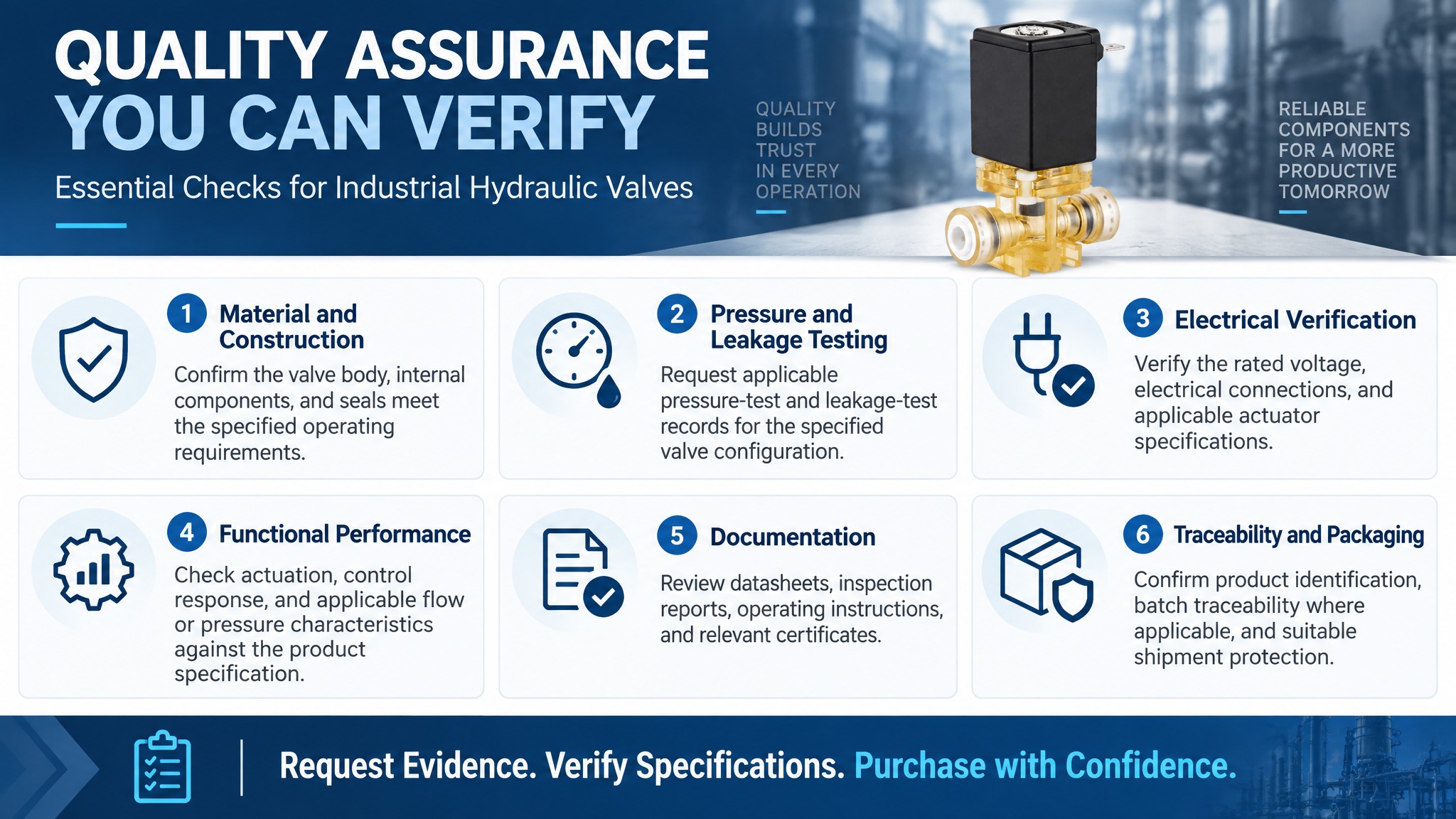
-Skipping the system test: Before normal production, verify the valve operation, leakage, response and pressure stability.
Accurate hydraulic calculations, compatible electrical controls and clear operating requirements are the foundation for successful design. Consult with the valve manufacturer at the design stage to avoid costly modifications and increase reliability of the system.