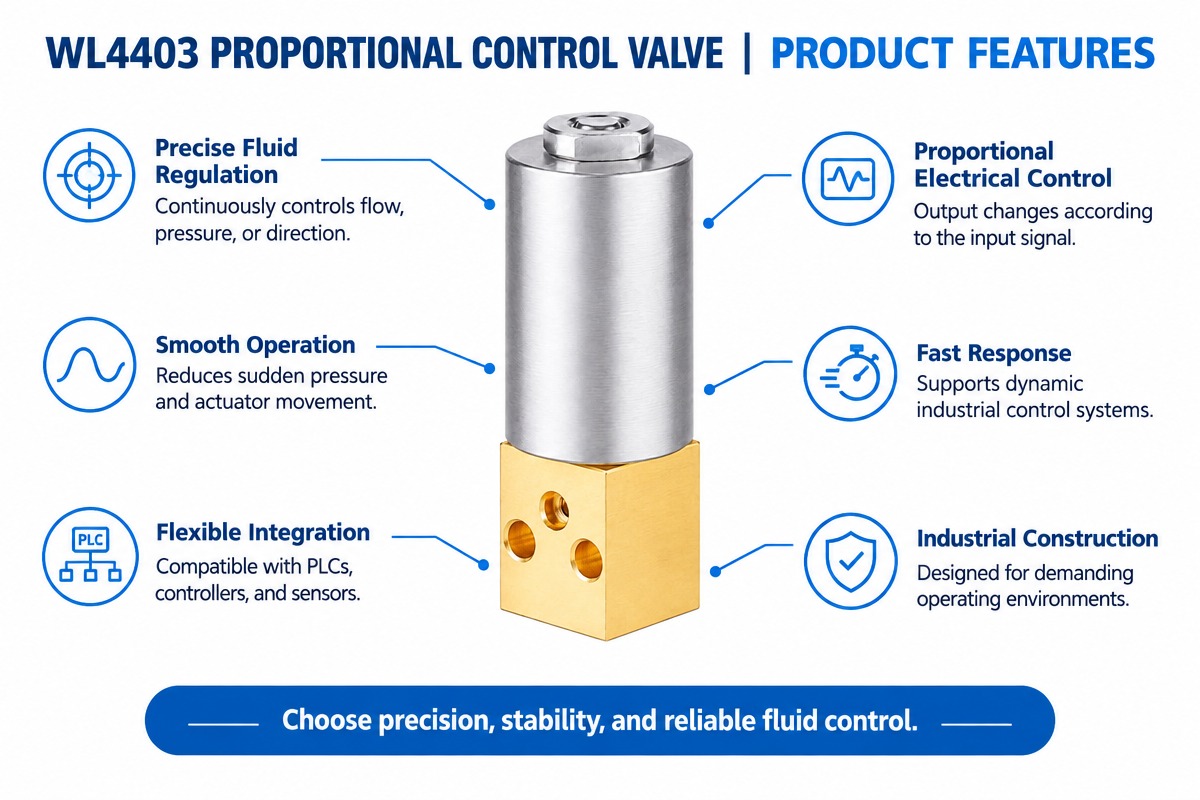
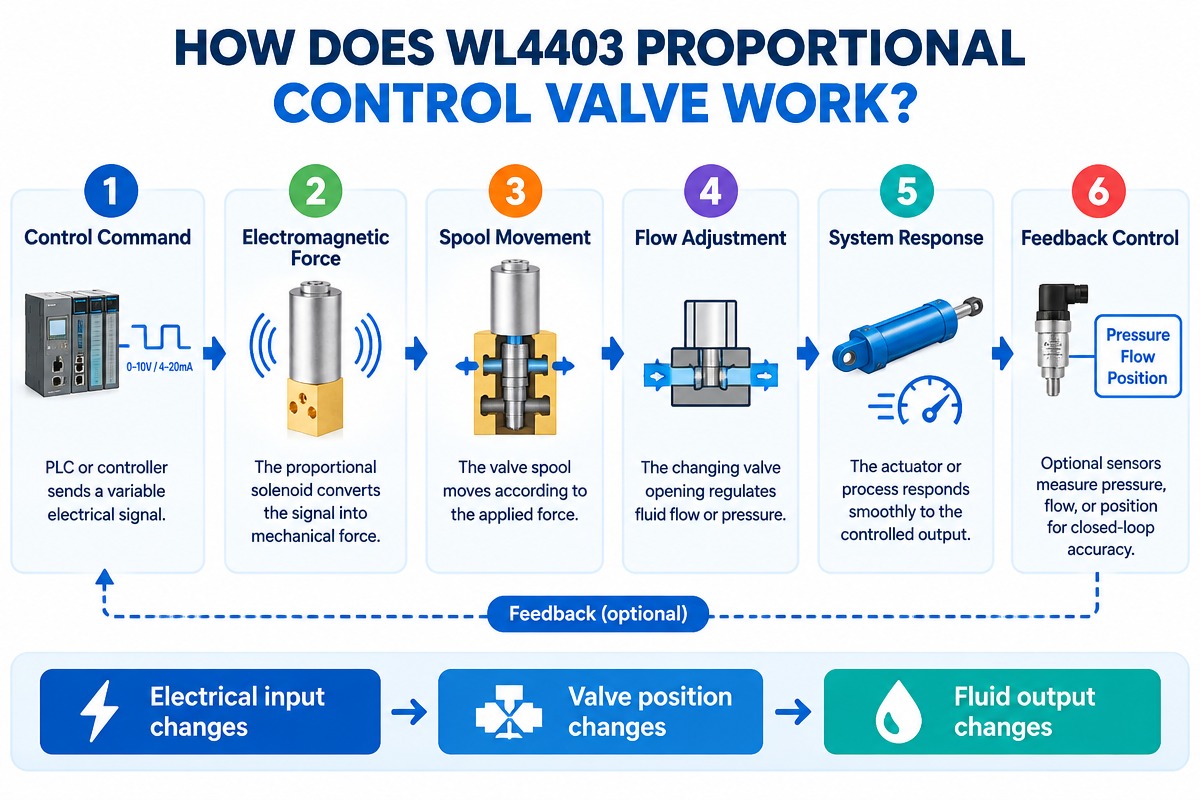
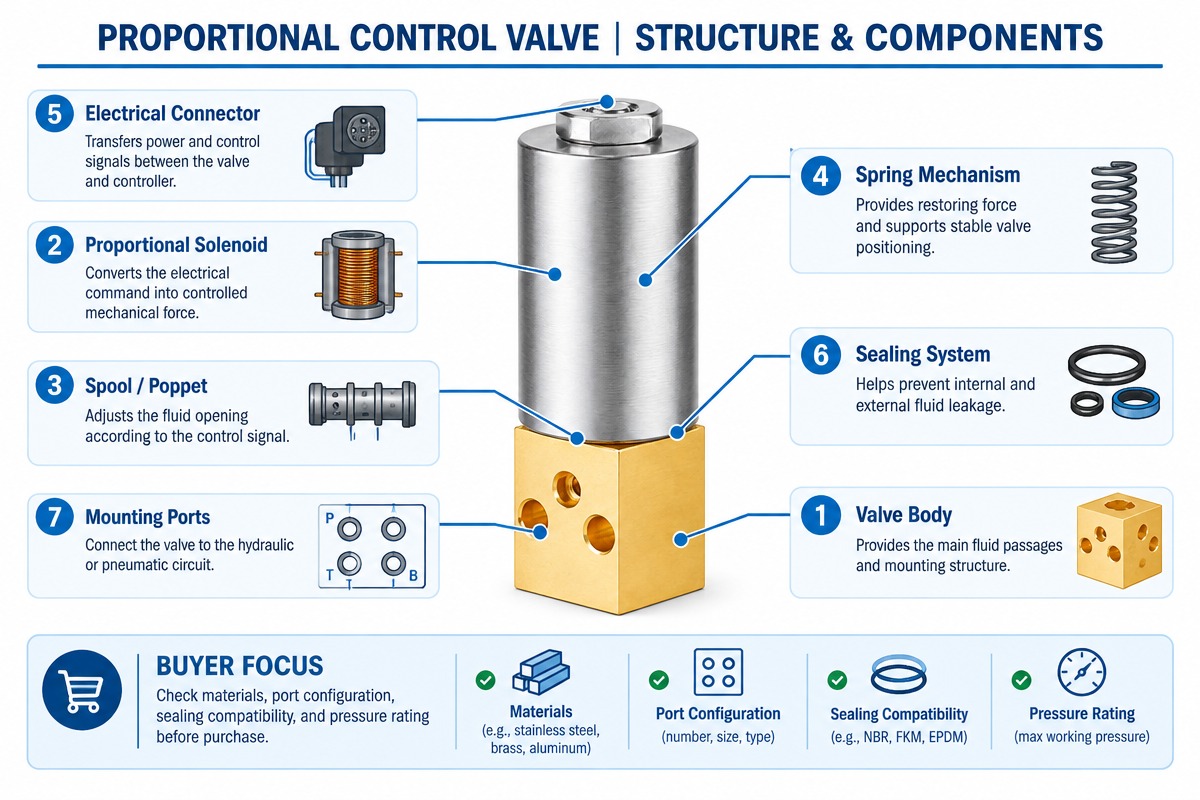
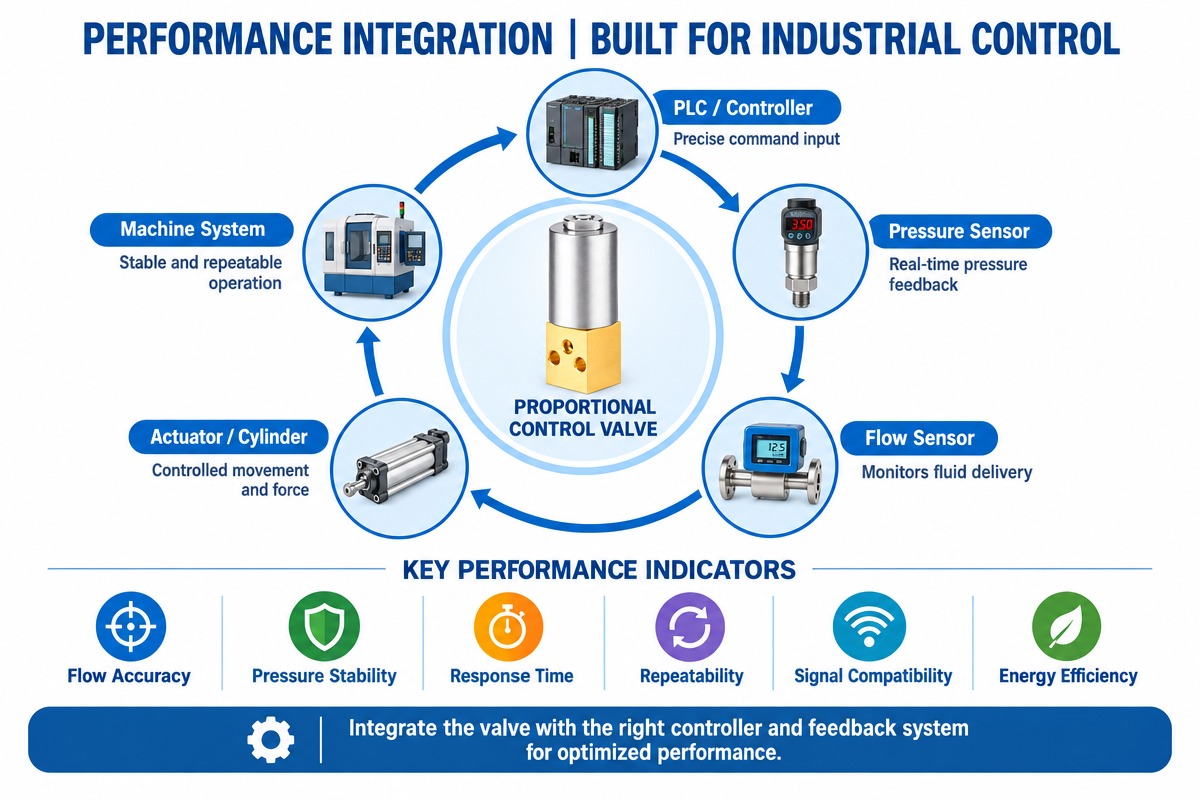
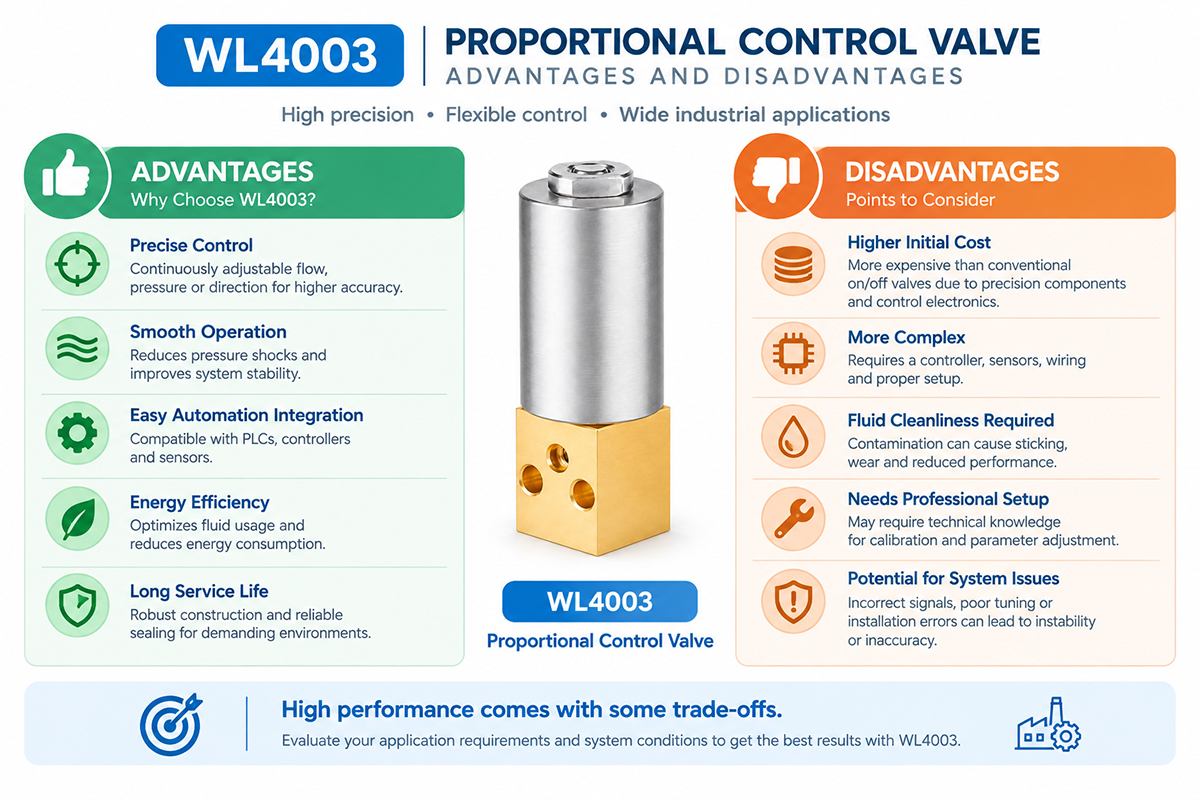
 Benefits and Drawbacks of Proportional Control Valve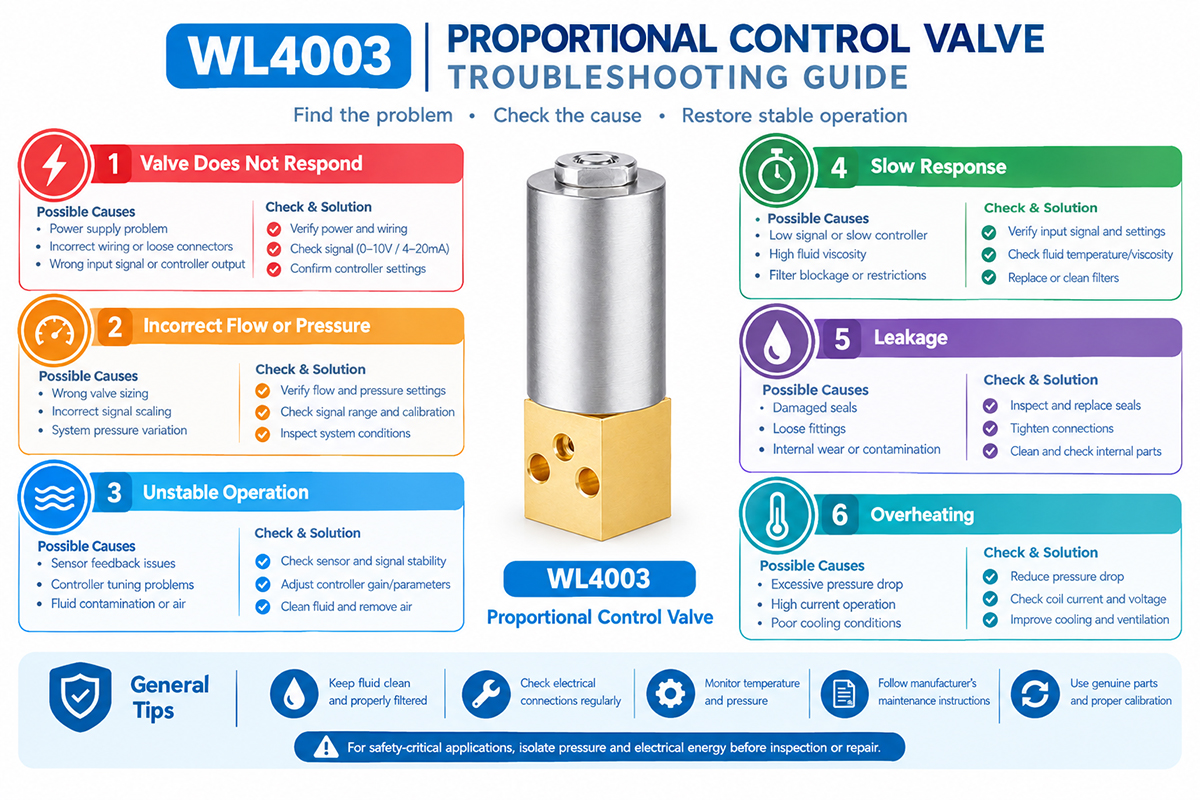
How to Select a Proportional Control Valve
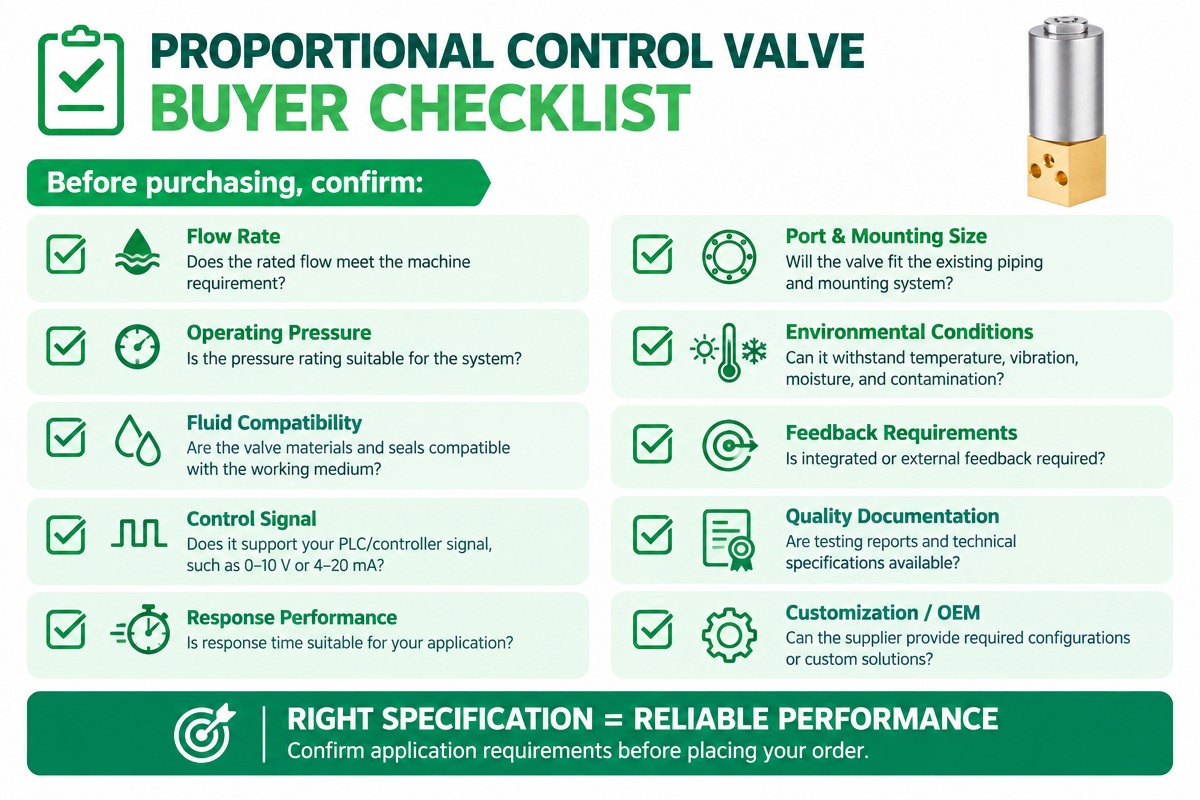
Selection of the right proportional control valve depends on matching the valve to the fluid system, operating conditions, control requirements and automation architecture.
1.The control function is identified.
Identify whether the valve has to control flow, pressure, direction, or the combination of these functions. The control characteristics would be different for different valve configurations.
2.Flow requirements definition.
Calculate the minimum, normal and maximum flow rate required. Select the valve with enough flow capacity, but don’t over size the valve. Over sizing will lead to poor controllability at low flow rates.
3.Operating pressure verification.
Verify the system normal and maximum pressure. The rated pressure of the valve should have a reasonable safety margin for the actual operating conditions.
4.Fluid consideration.
Check the fluid type, viscosity, temperature, cleanliness and chemical compatibility. Different fluids – hydraulic oil, water based fluids, compressed air and others – may require different valve materials and sealing system.
5.Selection of the control signal.
Check the valve and controller compatibility. The common industrial signals are 0-10 V and 4-20 mA. Check signal range, electrical power, current requirements and wiring plan.
6.Response properties characterization.
Consider the response time, hysteresis, repeatability, linearity and resolution. High-speed machines may need faster dynamic response than simple process-control applications.
7.Installation requirements verification.
Check the port size, mounting arrangement, overall dimensions, connection type and installation space availability.
8.Environmental conditions consideration.
Temperature, humidity, vibration, dust, water exposure and corrosive environment affect the enclosure and material selection.
9.Feedback needs determination.
High-precision applications can provide much higher control accuracy with closed-loop feedback using pressure, flow or position sensors.
10.Lifecycle requirements consideration.
Check not only the purchase price, but also maintenance, spare parts, service life, energy consumption, commissioning requirements and total cost of ownership.
Tips to Avoid Common Design Mistakes
Do not over size the valve. Excess capacity complicates low-flow control.
Don’t forget pressure drop. Poor pressure drop calculation could cause the valve instability.
Select valve for actual fluid. Fluid and seal compatibility is crucial.
Check for electrical compatibility. Check voltage, current, signal type, polarity and controller requirements.
Consider the response time. Machine performance is limited by the valve dynamics.
Don’t put the sensor in the wrong place. Feedback sensors must be accurate reflection of the controlled process.
Consider fluid cleanliness. Contaminated fluid causes the valve spool sticking and early wear.
Provide filtration. Filtration prevents the valve from premature wear.
Think temperature changes. Temperature affects fluid viscosity and electronic performance.
Allow adequate space for installation. Provide the wiring, maintenance and replacement space as required.
Change the control system. If Gain or Signal Scaling is not appropriate, the valve operation is either unstable or incorrect.
See fail-safe operation. Describe the valve function during the power or controller failure.
Test in actual operating conditions. Not all system level problems can be detected by factory and bench tests.