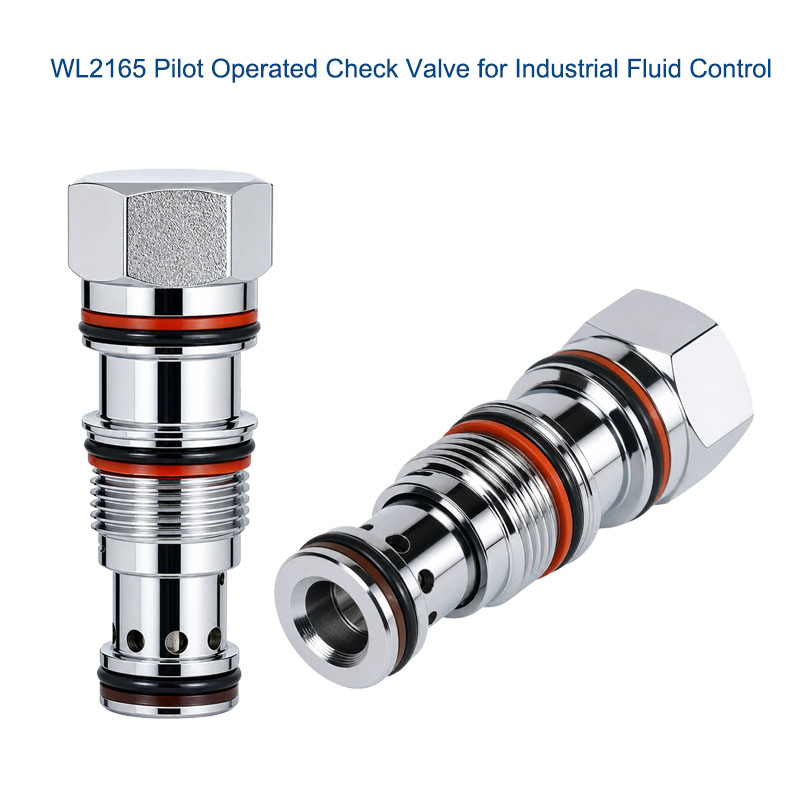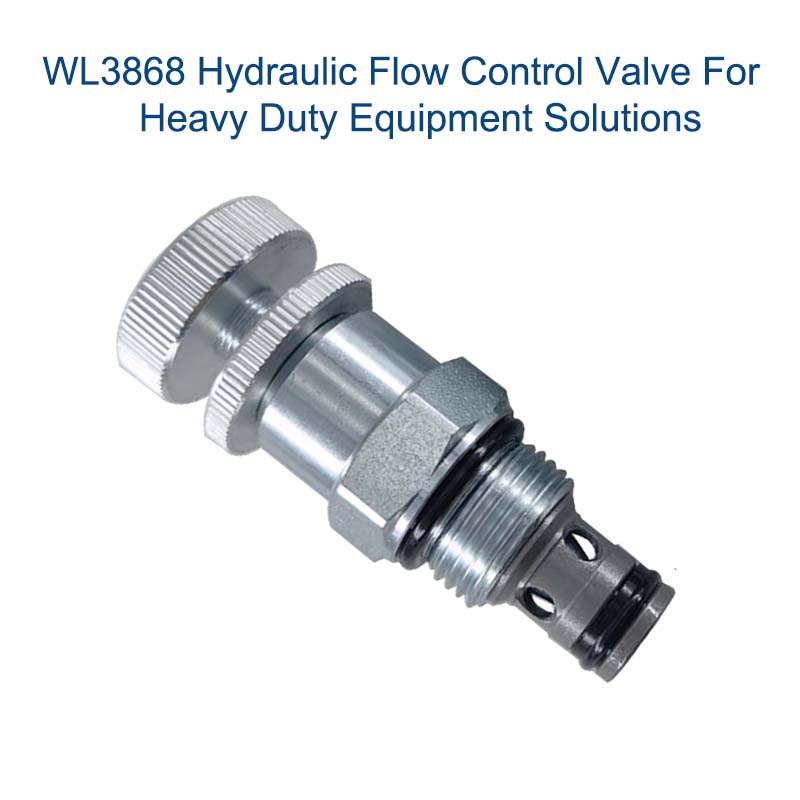
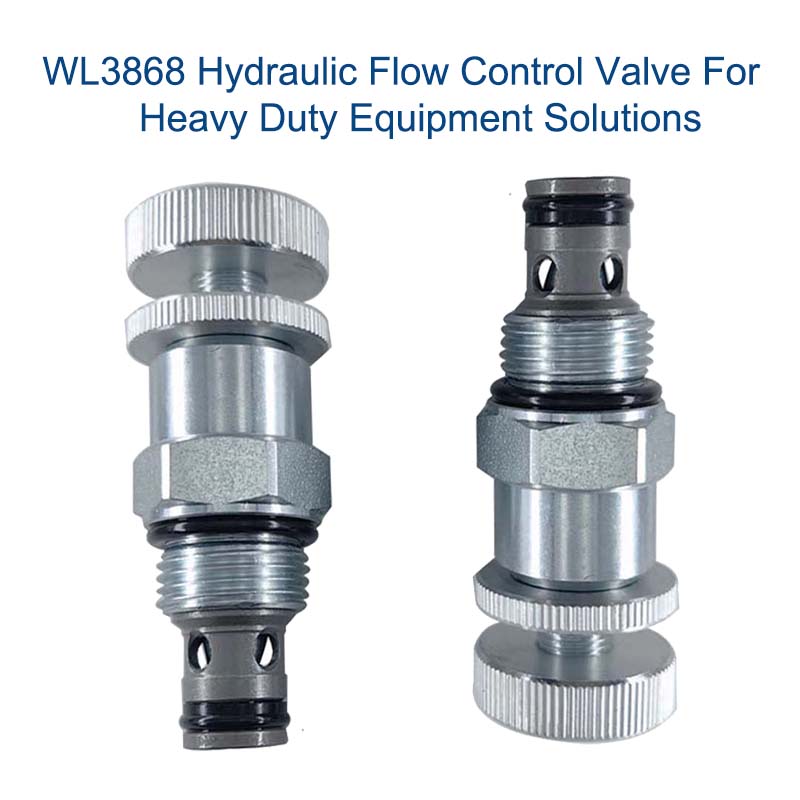
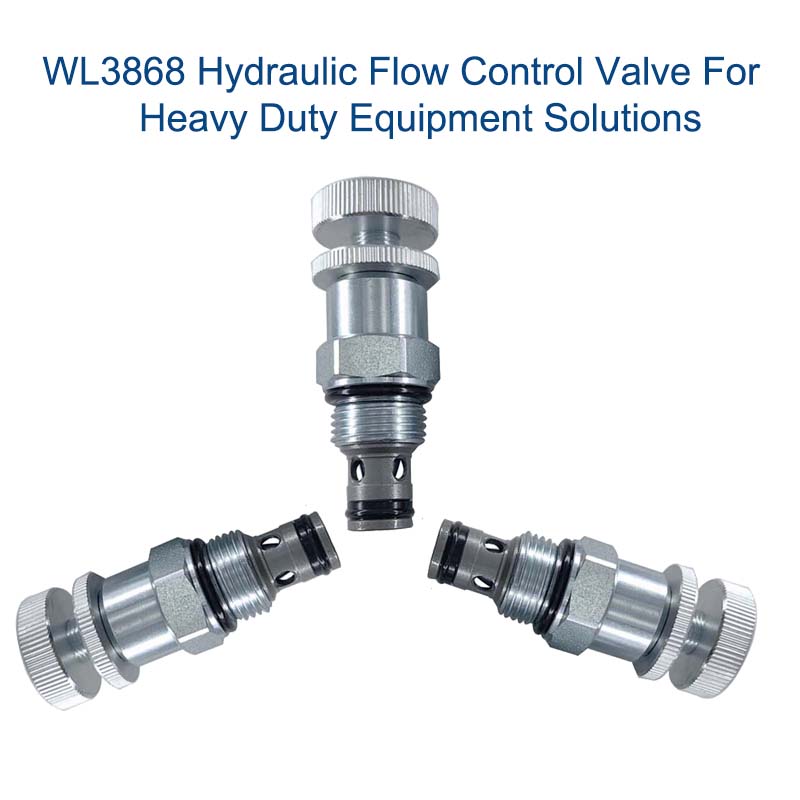
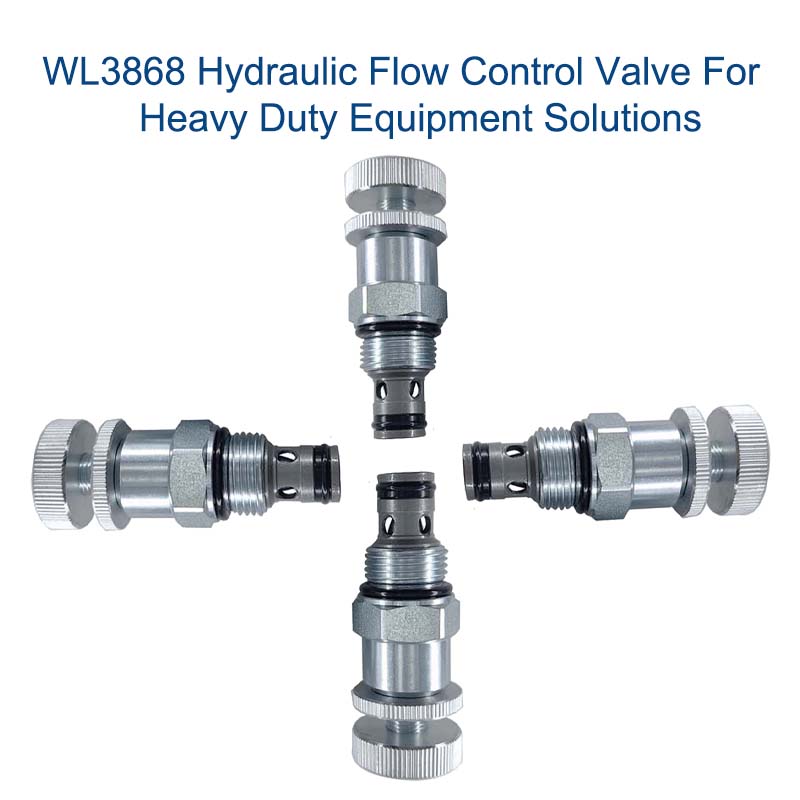
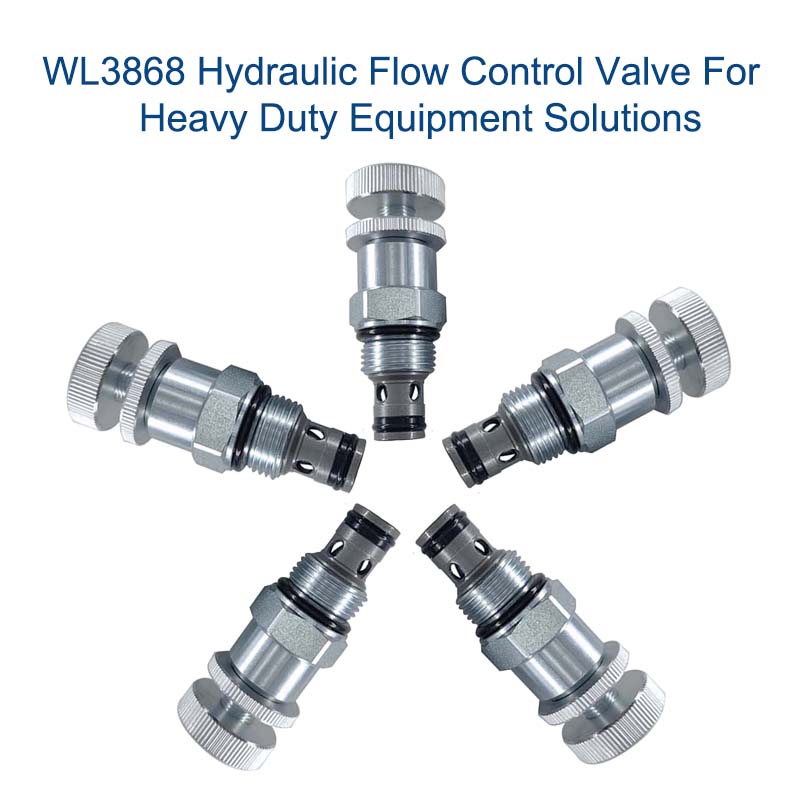
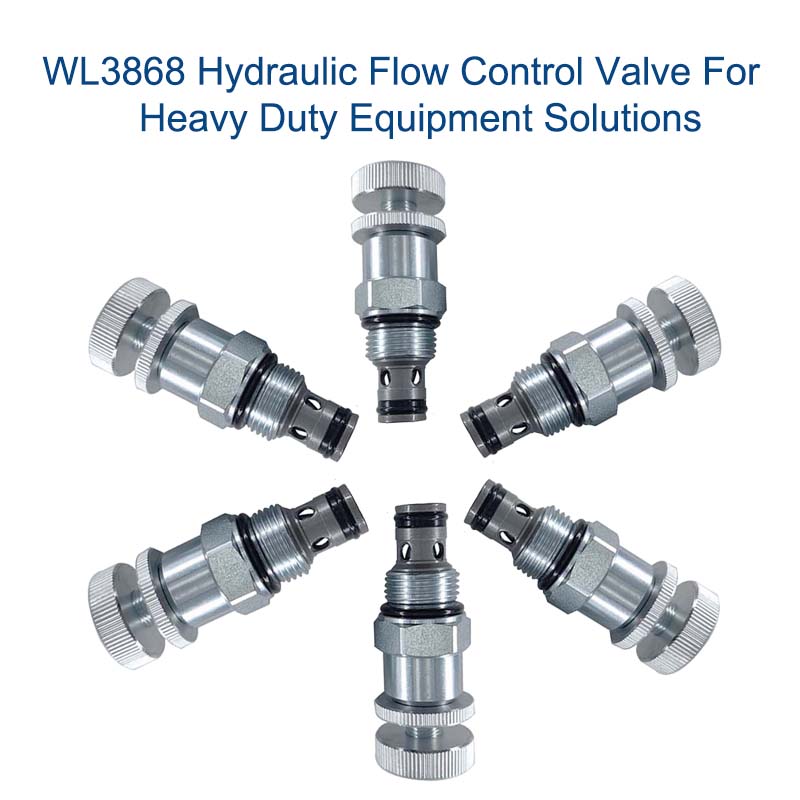
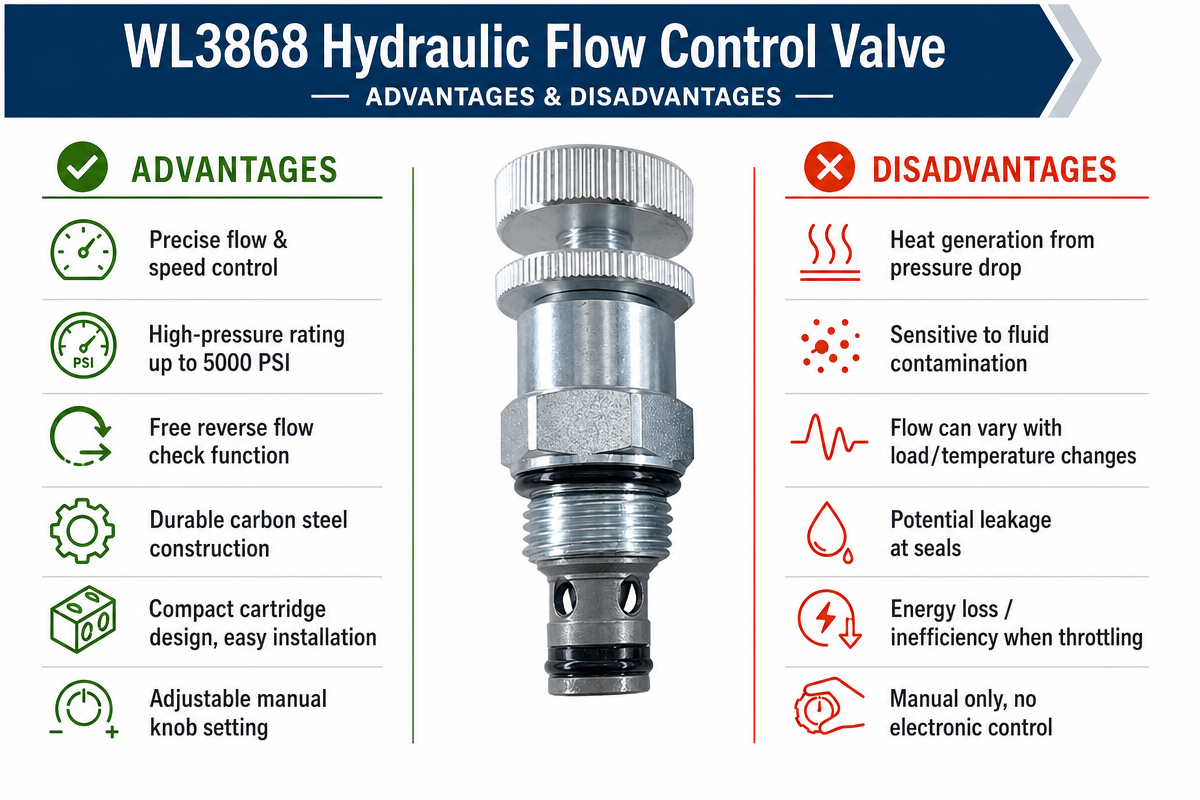
Hydraulic Flow Control Valve for Industrial equipment Systems
Industrial Hydraulic Flow Control Valve Solutions
High Performance Hydraulic Flow Control Valves
Adjustable Hydraulic Flow Control Valve Solutions
Smart Hydraulic Flow Control Valve for Industry solutions
Hydraulic Flow Control Valve for Mobile Equipment guide
Hydraulic Flow Control Valve for Industrial equipment Systems
Industrial Hydraulic Flow Control Valve Solutions
High Performance Hydraulic Flow Control Valves
Adjustable Hydraulic Flow Control Valve Solutions
Smart Hydraulic Flow Control Valve for Industry solutions
Hydraulic Flow Control Valve for Mobile Equipment guide

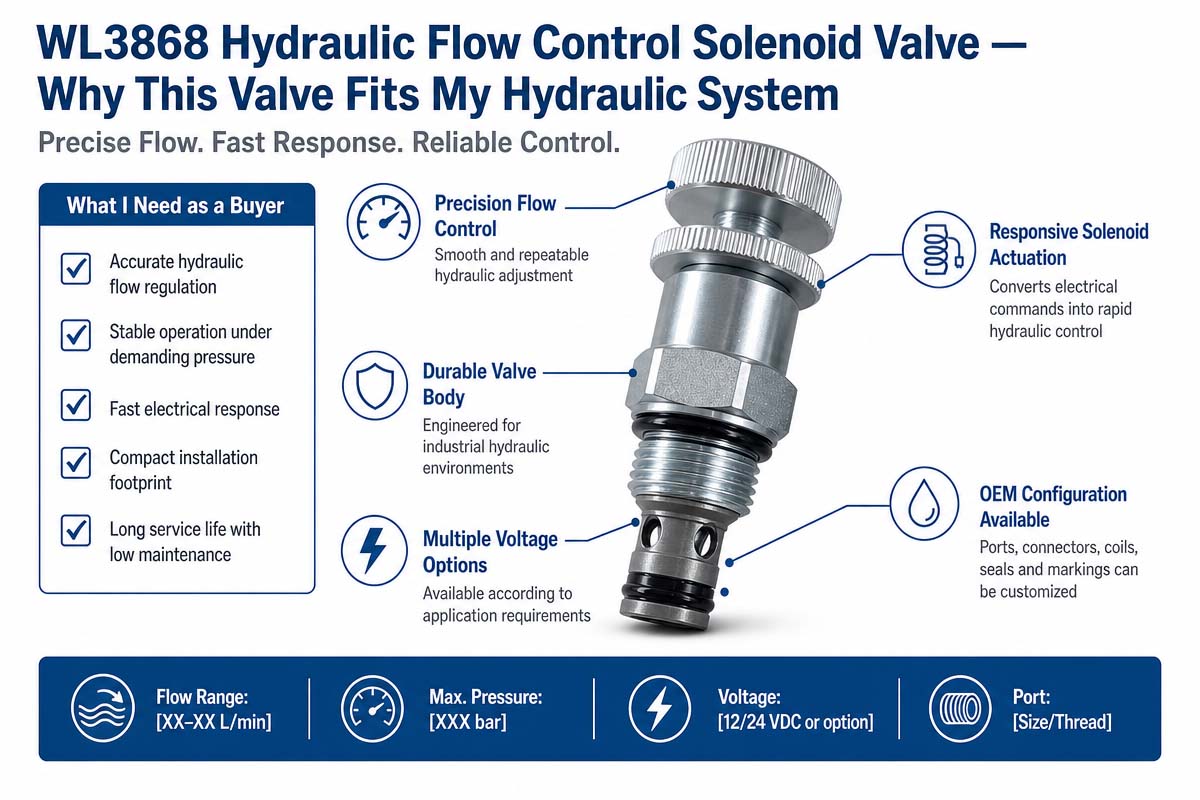
WL3868 Hydraulic Flow Control Valve for Mobile Machinery Solutions

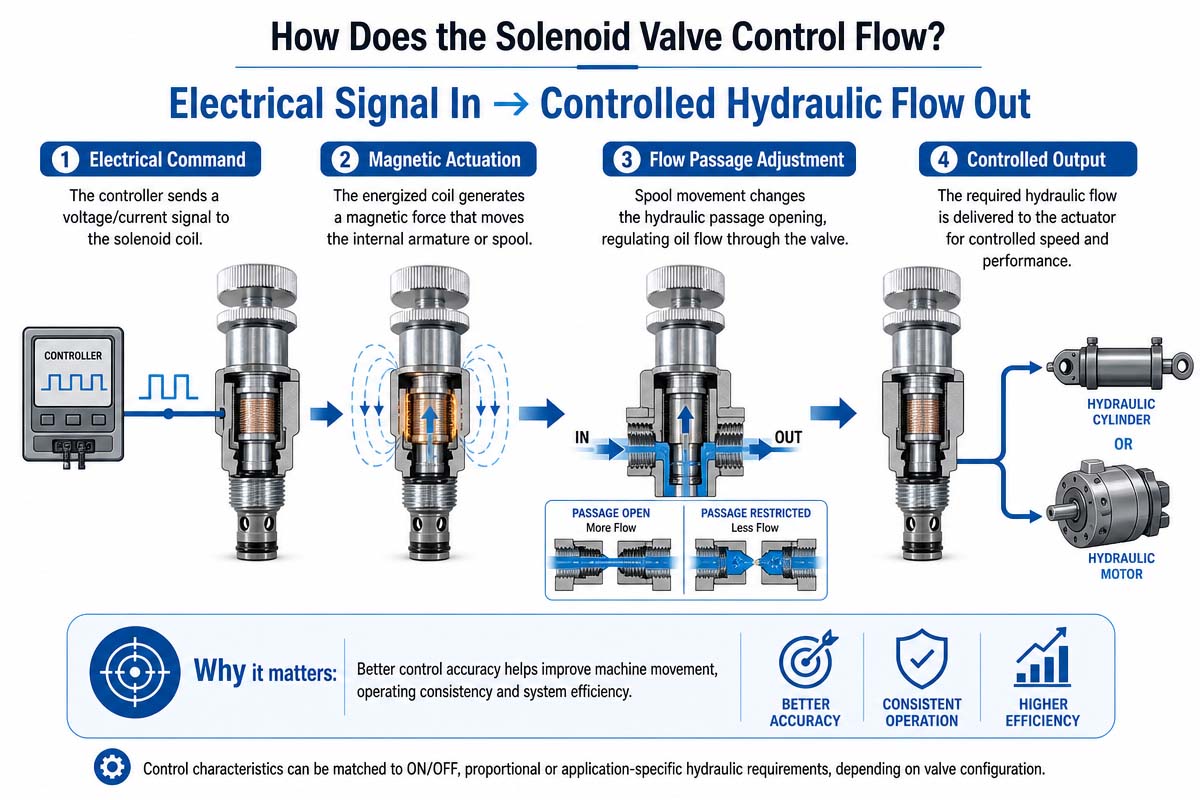
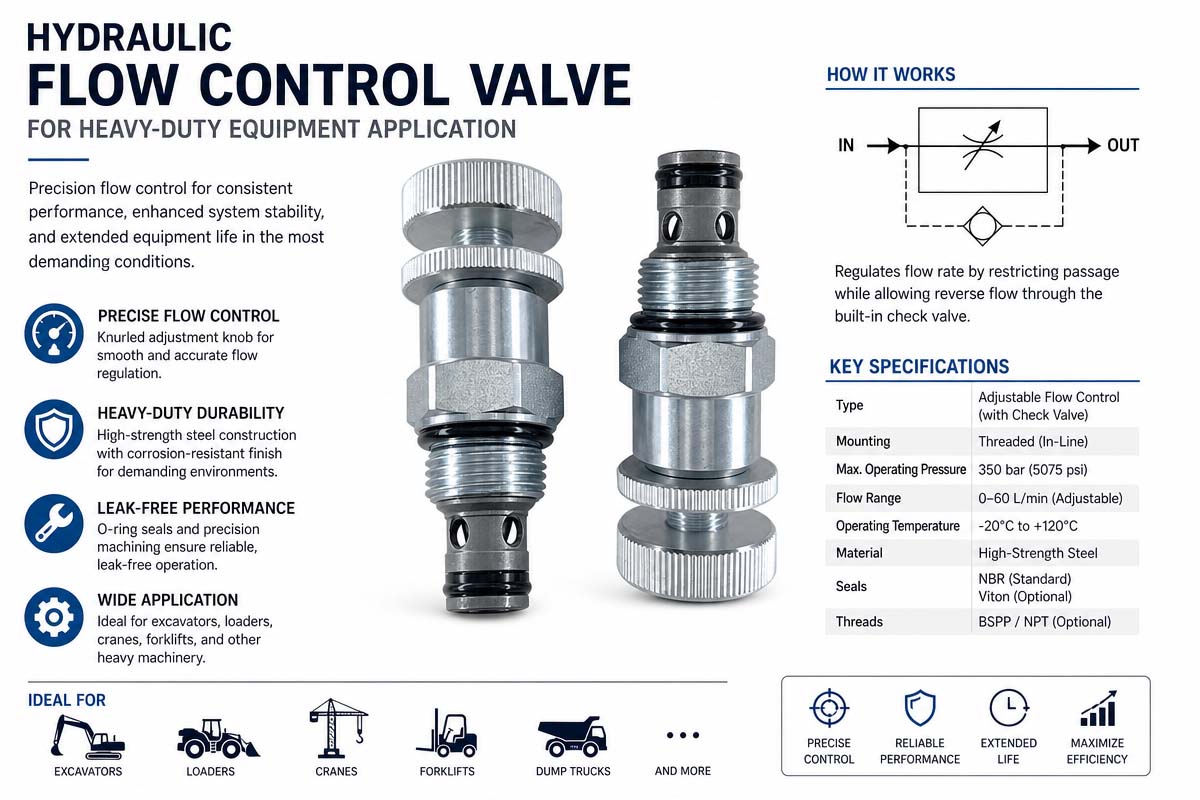
The hydraulic flow control valve is used to regulate the flow of hydraulic fluid to control the motion and speed of hydraulic actuators. It is a very important component in the systems that include cylinders or hydraulic motors to run at a controlled and predictable rate.

The valve can control the speed of extension and retraction of the cylinder, rotation of the motor, movement of the machine, and the response of the hydraulic system as a whole.

The hydraulic flow control valves include designs with adjustable or fixed orifices, pressure compensation, check functionality, proportional control, or electronic control depending upon the requirements of the application.

The applications of flow control valves in industries include presses, machine tools, injection molding machines, lifting devices, conveyors, and automated production machines. Mobile vehicle applications include excavators, loaders, agricultural machinery, cranes, aerial work platforms, and other heavy-duty mobile vehicles.

The correct choice of flow control valve can give smooth motion control, improved productivity, operator control, and component life while reducing hydraulic shocks. The correct specification depends upon flow, pressure, temperature, fluid compatibility, control, and installation requirements.

Hydraulic Flow Control Valve Product Overview

The hydraulic flow control valve is used in industrial and mobile equipment to regulate the flow of hydraulic fluid. The hydraulic flow control valve regulates the adjustable, pressure-compensated, proportional, or electronically controlled flow depending upon the model. It is used to control the actuator velocity and provide the stability of hydraulic motion under different working conditions.

The typical designs can withstand high working pressure and harsh environments but still gprovidereliable metering performance. The possible configurations can include different sizes of ports, flow ranges, pressure ratings, mounting arrangements, adjustment mechanisms, and control interfaces.

The hydraulic flow control valve is suitable for use in hydraulic power units, mobile hydraulic circuits, industrial machines, construction equipment, agricultural machines, and heavy-duty vehicle systems.

What Does a Hydraulic Flow Control Valve Do?

A hydraulic flow control valve is used to control or regulate the flow of hydraulic fluid between the pump and the actuator.

Here is the basic process:

Pump → Actuator → Flow Control Valve → Return Line

As the hydraulic fluid enters the valve, there is an internal metering element that controls the size of the passage through which the fluid passes.

Basic operation

1. Flow generated by hydraulic pump

The pump supplies the circuit with pressurized hydraulic oil.

2. Fluid enters the flow control valve.

oThe valve receives hydraulic flow from the pump or another part of the circuit.

3. Flow measurement

The volume of oil that flows through the valve is controlled by an adjustable or fixed orifice.

4. Variations in actuator speed

The rate of flow controls the speed of a hydraulic cylinder or motor.

5. Excess flow is managed.

In pressure-compensated designs the valve can maintain a stable flow regardless of changes in the load pressure.

For instance, a cylinder receiving 10 L/min will cycle faster than one receiving 5 L/min, all other operating conditions being equal.

The Features of Hydraulic Flow Control Valves

The hydraulic flow control valve provides accurate flow control, rugged construction, and reliable operation under harsh hydraulic conditions. The typical features include adjustable flow rate, compact design, high pressure capability, low leakage, corrosion-resistant materials, and compatibility with most hydraulic fluids. The pressure-compensated types have more constant flow under changing load pressure. Some designs have reverse-flow check functionality, enabling free flow in the opposite direction. The proportional and electronically controlled designs give variable flow due to electrical input. Depending upon the application, the valve can include fast response, high repeatability, temperature resistance, contamination tolerance, and flexible mounting arrangements for industrial and mobile hydraulic systems.

Custom Hydraulic Flow Control Valve Product Video

Custom Hydraulic Flow Control Valve Product Detailed Display

Custom Hydraulic Flow Control Valve DataSheet

Brand Weilong Technology Model Number WL3868
Rated Voltage (V) DC 24V, 0.5A to 2.0A Rated Power (W) 5W to 20W
Work Mode Hydraulic Pilot Operated Check Valve Working Pressure (Mpa) 80–315 MPa
Airflow Rate 1 L/minute Reset Time(s) 1 S On, 1S Off
Service Life 200 Thousand Times Certification CE, ROHS, ISO9001,
Material Superior Magnet Iron Lead Wire Length (mm) 200 MM
Install Style Screw Tolerance of Dimension ± 0.1 MM
Water-proof None Insulation Class B
Hi-Pot Test AC 600V 50/60Hz 2s Non-excitation Holding Force 0
Working Temperature -10°C-100°C Duty Cycle 1-100%
Thread Depth (mm) / Payment Term TT, or LC at Sight
Sample Order Yes. Warranty 1 Year
MOQ 1000 pcs Supply Ability 5000 pcs per week
Delivery Time 30 Days Port of Loading Shenzhen

Smart Hydraulic Flow Control Valve or Pilot-Operated Check Valve: Which Should You Choose?

Hydraulic Flow Control Valve or Pilot-Operated Check Valve

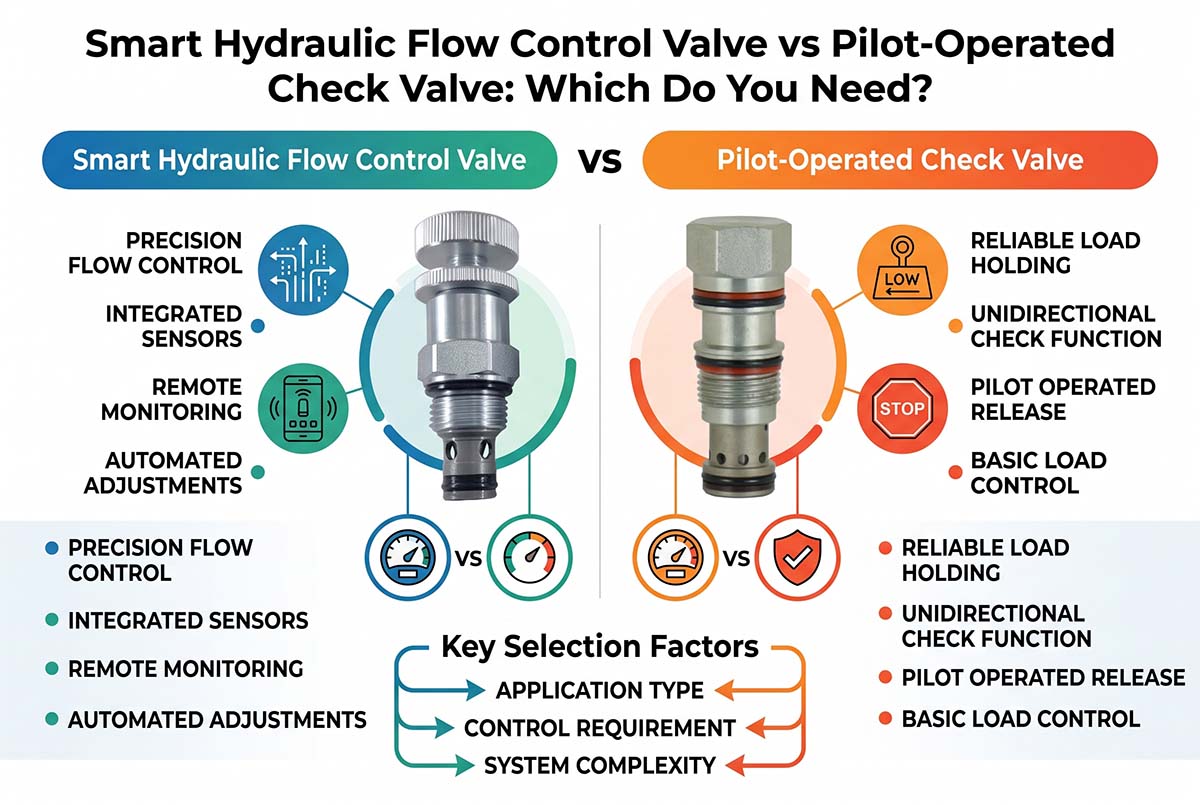
A smart hydraulic flow control valve and a pilot-operated check valve solve different hydraulic control problems. Which one you will choose depends mainly on whether you need to control the flow and speed of an actuator or hold the load and control the direction of locking.

Smart Hydraulic Flow Control Valve

The main function of the smart hydraulic flow control valve is flow control. In advanced variants the flow may be dynamically controlled by proportional solenoids, electronic controllers, sensors, and algorithms of feedback.

The main task of such a valve is controlling the speed of an actuator.

For example, the speed of an excavator boom may be varied depending on the operator command, machine mode, load, and working conditions. The hydraulic flow may be controlled by a smart flow control valve.

Some common advantages include:

Flow regulation

  • Electronically adjustable
  • Improved actuator speed regulation

Compatibility with machine controllers

Closed-loop control potential

  • Flexibility in changing operating conditions
  • Potential of machine automation

Thus, flow regulation becomes a valuable feature of intelligent mobile machines like modern construction, agricultural, lifting, forestry, and other machinery.

Pilot-Operated Check Valve

A pilot-operated check valve has different main functions.

The main function of this valve is preventing fluid flow in one direction in a controlled manner and maintaining the position of an actuator or load until pilot pressure is applied.

Say, for example, you have a hydraulic cylinder supporting a heavy load. A pilot-operated check valve will prevent uncontrolled oil flow and maintain the position of the cylinder when the directional valve is neutral.

Common advantages include:

  • Load retention
  • Prevention of unwanted actuator movement
  • Controlled hydraulic flow blocking
  • Enhanced load security
  • Protection against some types of uncontrolled movement

However, the pilot-operated check valve is not a device for steady flow control. Which do you choose?

To control dynamically the speed of an actuator, use a smart hydraulic flow control valve.

It will be especially useful in case the machine works at variable speeds, proportional control, electronic commands, sensor feedback, and machine controller integration are necessary.

In case the main requirement is load retaining, choose a pilot-operated check valve to maintain the position of a hydraulic actuator or load.

In some heavy-duty mobile applications you may need both.

For example, an aerial work platform uses flow control to provide smooth cylinder movement and pilot-operated check valves to maintain the position of the platform or boom safely.

For that reason the two components should not be considered direct substitutes. They solve different hydraulic problems.

In simple terms:

To control speed, use a flow regulation valve.

To hold load, use a check valve, pilot operated.

To hold the load securely and control movement, use both components in the hydraulic circuit.

Smart flow control valves become the controllable solution for electronically controlled hydraulics in next-generation mobile machinery, while pilot-operated check valves will still have their role in load holding and direction blocking.

Direct Comparison

Requirement Smart Flow Control Valve Pilot-Operated Check Valve
Control actuator speed Excellent Limited
Variable flow regulation Excellent No
Electronic control Available Usually limited
Load holding Application-dependent Excellent
Prevent reverse flow. Possible Excellent
Dynamic machine control Excellent Limited
Heavy load positioning Good with suitable design Excellent
Automation Excellent Limited
Main function Flow regulation Load holding


Hydraulic Flow Control Valve Industrial Application

Custom Hydraulic Flow Control Valve Industrial Application Guide

Hydraulic flow control valves are used in many industrial and mobile hydraulic systems where controlled actuator speed and smooth motion are required.

They control the motion of cylinders in excavators, loaders, cranes, bulldozers, and other construction equipment. Controlled flow enables the operators to have smooth boom, arm, bucket, steering, and attachment motion.

These valves are used in agricultural machinery like tractors, harvesters, sprayers, planters, and implements to control the hydraulic cylinders and motors. The precision flow control may improve implement positioning and operating uniformity.

These valves are used in industrial machinery such as hydraulic presses, machine tools, injection molding machines, lifting systems, conveyors, production lines, and material handling equipment. They control actuator speed and synchronize the machine motions.”

These valves are also used in heavy-duty mobile vehicles like aerial work platforms, refuse trucks, forestry equipment, mining equipment, and special transport equipment.

Automated hydraulic systems where precise and repeatable motion is required may also use flow control valves. They support advanced motion control with proportional control, sensors, and electronic controllers.

The valve is mainly used to regulate hydraulic flow so that the machines can work more efficiently, safely, and

predictably.

What makes the hydraulic flow control valve so popular for mobile heavy-duty vehicle solutions?

Hydraulic flow control valves become especially important in mobile heavy-duty vehicle solutions because these machines work in very variable environmental conditions.

Unlike stationary industrial equipment, mobile machinery operates under conditions that change constantly and include:

  • Cargo
  • Engine Rpm
  • Pump flow
  • Hydraulic pressure
  • Terrain
  • Temperature
  • Speed of vehicle
  • DRAFT Operator input

This makes predictable hydraulic movement very difficult.

A flow control valve becomes a very effective tool for controlling the speed of the actuator under changing working conditions. For example, an excavator needs low-speed, accurate movement to position a bucket but high-speed movement to work quickly.

Compact installation

There are limited installation spaces for mobile machinery. Hydraulic valves of compact construction can be directly installed in manifolds or hydraulic blocks, reducing piping needs.

Enhanced controllability

The flow of the hydraulic fluid is regulated to assure that cylinders and hydraulic motors move at required speeds. This enables operators to better control heavy equipment.

More productivity per machine

Predictable hydraulic movement improves the predictability of the machine’s actions and cycle time.

Compatibility with electronics

Modern mobile machinery combines hydraulics with electronics, sensors, joysticks, and vehicle controllers. Intelligent flow control valves become a connection between the hydraulic and software sides of the machine.

Environmental difficulties

Mobile valves must withstand vibration, shocks, dust, temperature variation, and high-pressure operation.

That is why hydraulic flow control valves become an effective bridge between traditional hydraulic energy and new intelligent mobile machinery.


The Pros and Cons of Hydraulic Flow Control Valves

Hydraulic Flow Control Valve Advantages and Disadvantages I

The Pros of Hydraulic Flow Control Valves

Hydraulic flow control valves provide an excellent benefit in controlling the speed of actuators and the motion of machinery.

Advantages

Precision speed regulation

This enables engineers to control the flow of hydraulic fluid and consequently the motion of actuators.

Energy efficient

Proper regulation of the flow may reduce sudden acceleration of the actuator and enhance the stability of the machine.

Versatile application

Valves may be used with hydraulic cylinders and motors in industrial and mobile equipment.

Increased productivity

With the controlled speed of the actuator, the machinery becomes more consistent when conducting repetitive tasks.

The Cons of Hydraulic Flow Control Valves

Pressure-compensated versions

The more sophisticated valves may offer better regulation of the flow under varying conditions.

Electricals incorporation

Proportional valves may be combined with sensors and controllers for automatic motion control.

Disadvantages

Energy losses

Throttling may convert some of the hydraulic energy to heat, especially when regulating excess hydraulic flow.

Generation of heat

Continuous pressure drop through a restrictive valve increases the temperature of the hydraulic system.

Susceptibility to contamination

Contaminated hydraulic fluid affects small metering passages and other precision elements of the valve.

Complicated nature

Sophisticated proportional or intelligent valves require proper calibration and electrical control.

High price

An ordinary fixed flow control component is cheaper than a pressure-compensated or intelligent valve.

Consequently, selection of valves requires compromises on the above aspects.

Hydraulic Flow Control Valve Troubleshooting

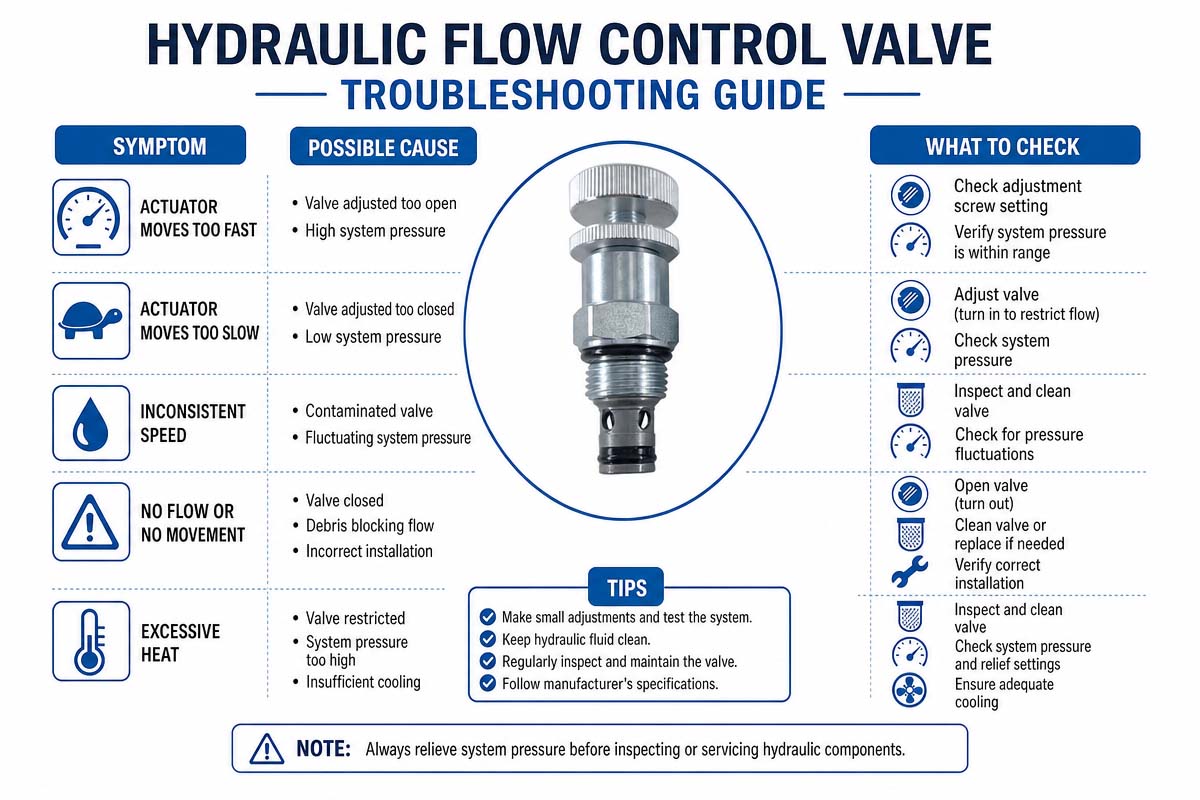
Hydraulic Flow Control Valve Troubleshooting Guide

Problems with hydraulic flow control valves usually include uneven speed of the actuator, overheating, slow response, instability of motion, leaking, absence of flow, or all of the above-mentioned.

Trouble 1. The actuator is sluggish.

Check the valve restriction setting and make sure the pump flow, the condition of the filter, and the viscosity of the hydraulic oil are normal.

Trouble 2. Actuator speed changes with the load.

A simple throttling valve may not compensate for varying load pressure. To obtain constant flow, consider a pressure-compensated version.

Trouble 3. Excessive temperature of the hydraulic fluid

Check for high pressure drop across the valve. An improperly sized or restrictive valve may convert a lot of hydraulic power to heat.

Trouble 4. Motion instability

Look for contamination, air in the hydraulic system, stuck spools, improper valve adjustment, or instable conditions of the load.

Trouble 5. Valve leakage

Check seals, fittings, mounting areas, and internal valve wear. External leakage must be corrected immediately to avoid safety and environmental problems.

Trouble 6. Lack of flow to actuator

Position of the check valve, blockage, movement of the spool, electrical signals in electronically controlled valves, and upstream hydraulic pressure.

Trouble 7. Valve response inconsistency

Check the purity of the hydraulic fluid, electrical control signals, sensor feedback, temperature, and calibration of the valve.

The troubleshooting process should include flow, pressure, temperature, contamination, mechanical state, and control signals.

8 FAQs On Custom Hydraulic Flow Control Valves

1. How to choose the right hydraulic flow control valve for my application?

Think about the required flow, maximum working pressure, type of actuator, temperature, hydraulic fluid, port size, control method, and load conditions. If the load varies greatly, a pressure-compensated valve will give you more consistent actuator speed. In automated machines, proportional or intelligent flow control valves may be more appropriate.

2. What is the flow and pressure capacity of a Hydraulic Flow Control Valve?

The allowed flow and pressure depend on the design and model of the valve. Buyers must consider the rated flow, maximum working pressure, pressure drop curve, and operating range recommended by manufacturers. Never pick up a valve depending only on pipe or port size because a lot of flow through an improperly sized valve will result in pressure loss and heat generation.

3. Do hydraulic flow control valves improve machine efficiency?

Yes, if selected and used appropriately. A flow control valve will improve the precision of actuator speed and will make its movement smoother. However, ordinary throttling will produce pressure losses that will generate heat. If energy efficiency is crucial, then pressure-compensated, proportional, or load-sensing hydraulics are to be considered.

4. Do I want a fixed or adjustable hydraulic flow control valve?

A fixed valve is fine in case you do not need to change the flow of hydraulic fluid. If the speed of an actuator must be changed during machine commissioning or operation, you should opt for an adjustable valve. If you want to accelerate the machine automatically, then proportional or intelligent flow control valves may be better suited.

5. How long does a hydraulic flow control valve last?

Cleanliness of hydraulic fluid, pressure, temperature, duty cycle, flow conditions, and quality of installation and maintenance influence the life span of the valve. Properly designed valves working in the allowed limits may last long enough. Cleanliness of hydraulic fluid and regular inspection are especially important for heavy-duty mobile equipment.

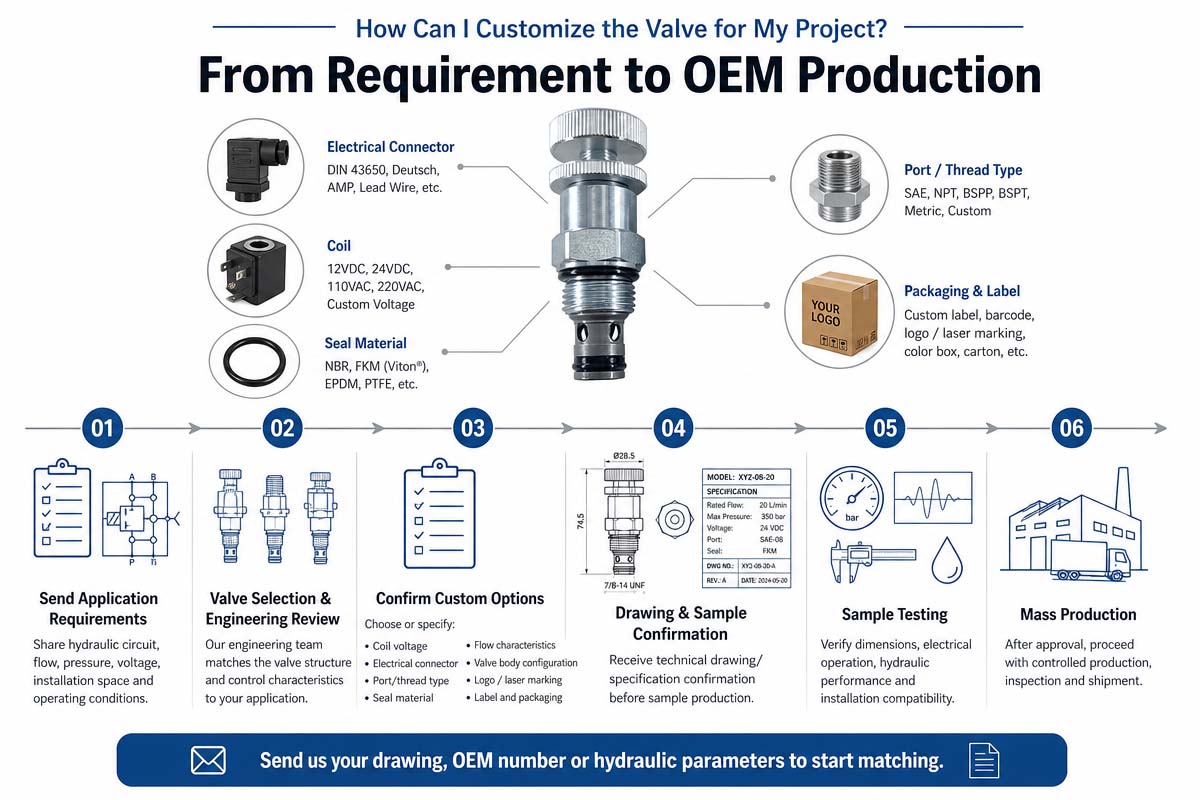
6. Is it possible to customize the valve to my hydraulic system?

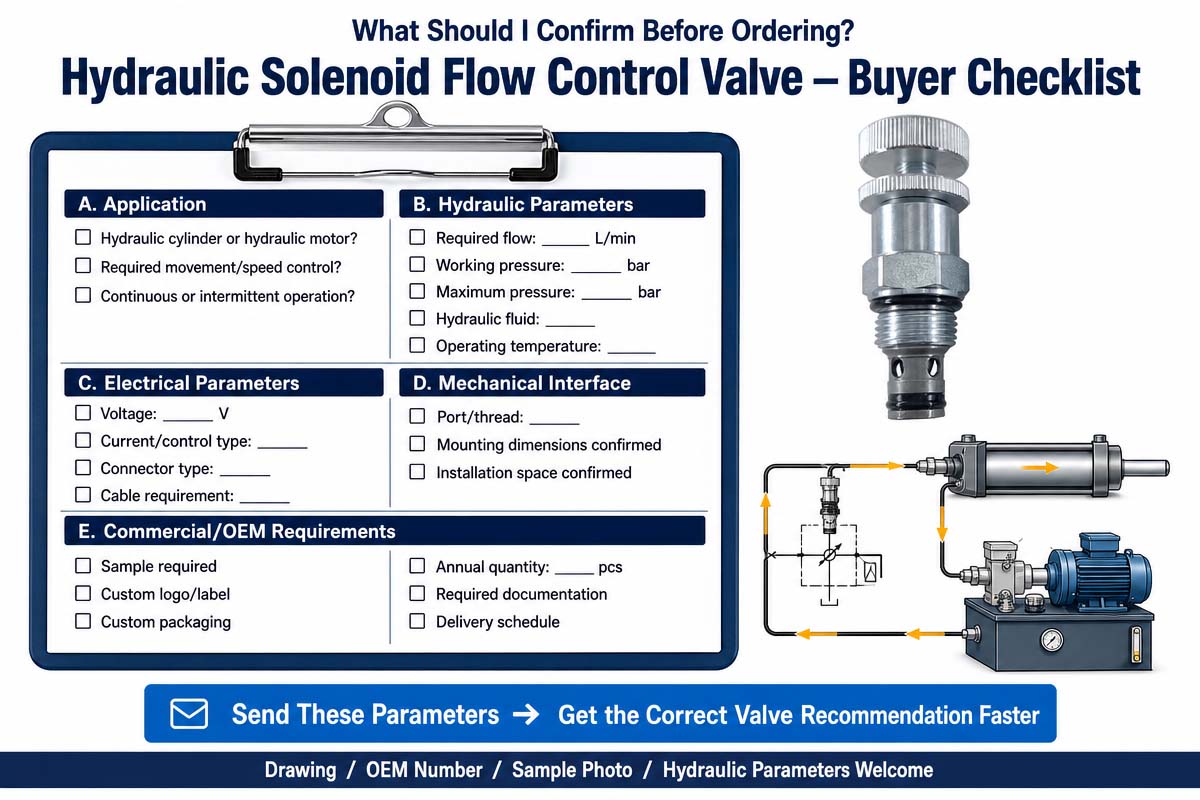
Many hydraulic valve providers offer flow range, pressure rating, port configuration, mounting type, materials, sealing, adjustment, and electronics as customization options. In case of OEM projects, the buyer must provide the hydraulic schematic and key parameters of the valve for system matching.

7. What is the difference between hydraulic flow control valve and pilot operated check valve?

The main function of a flow control valve is the flow regulation and speed control of an actuator. The main function of a pilot-operated check valve is load holding and prevention of hydraulic movement. They cannot be considered substitutes. Some heavy-duty machines may use both valves.

8. What questions should I ask a supplier before buying a hydraulic flow control valve?

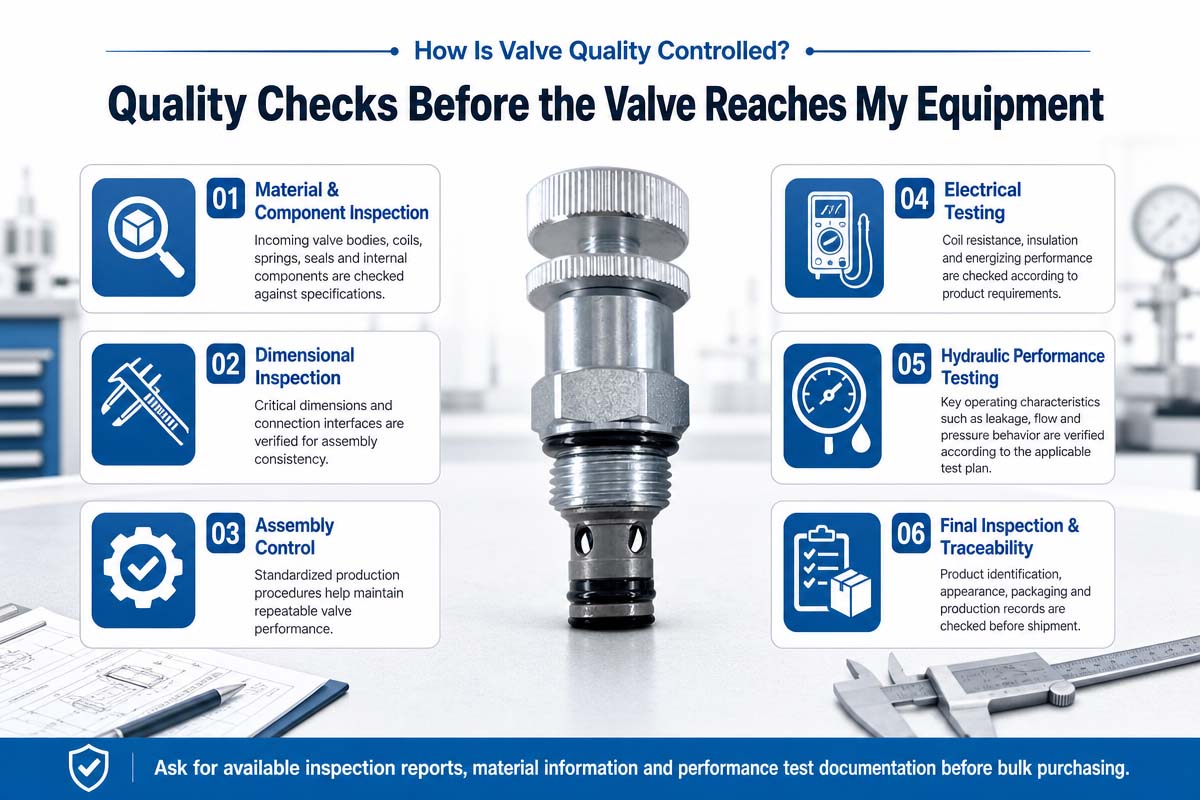
Ask the supplier about rated flow, operating pressure, pressure drop, control accuracy, response time, compatibility with hydraulic fluids, temperature range, leakage characteristics, type of connection, testing standards, customization options, lead time, warranty, and technical support. In case of OEM projects, also ask about performance data and engineering assistance for system integration.

How to Pick a Hydraulic Flow Control Valve
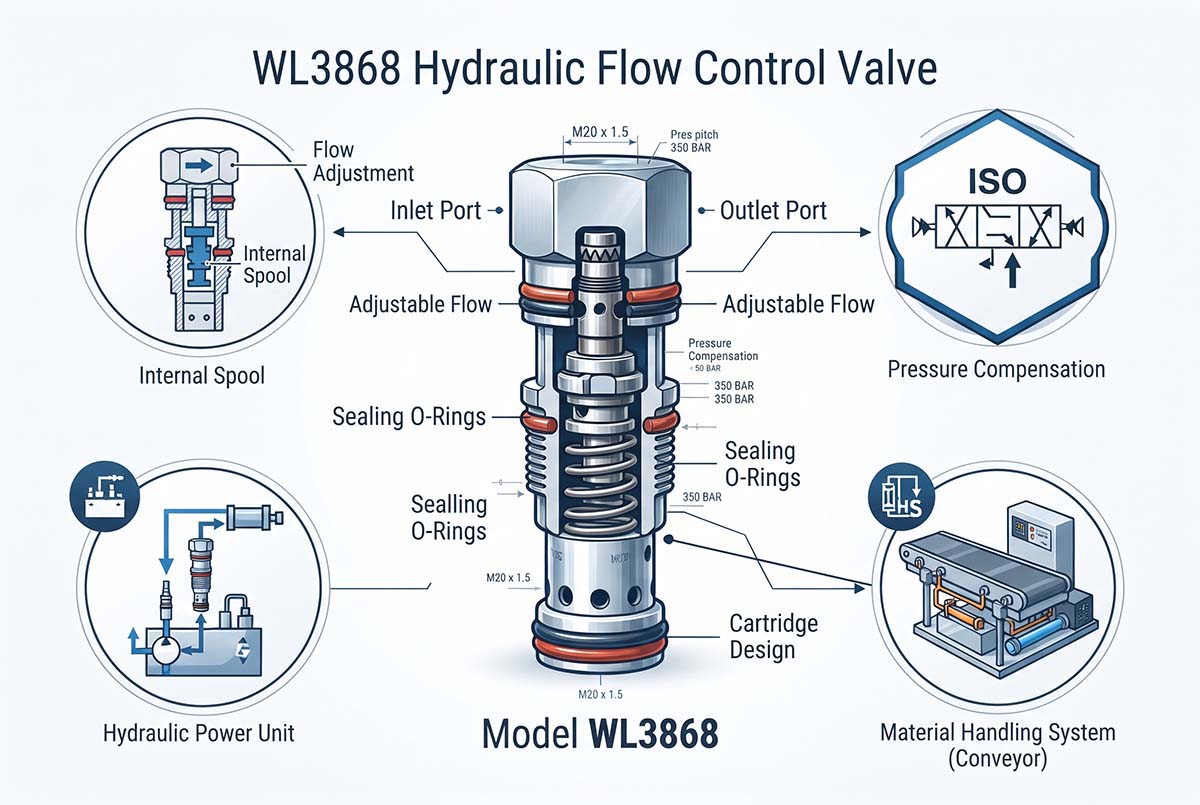
Hydraulic Flow Control Valve Industrial Application Guide

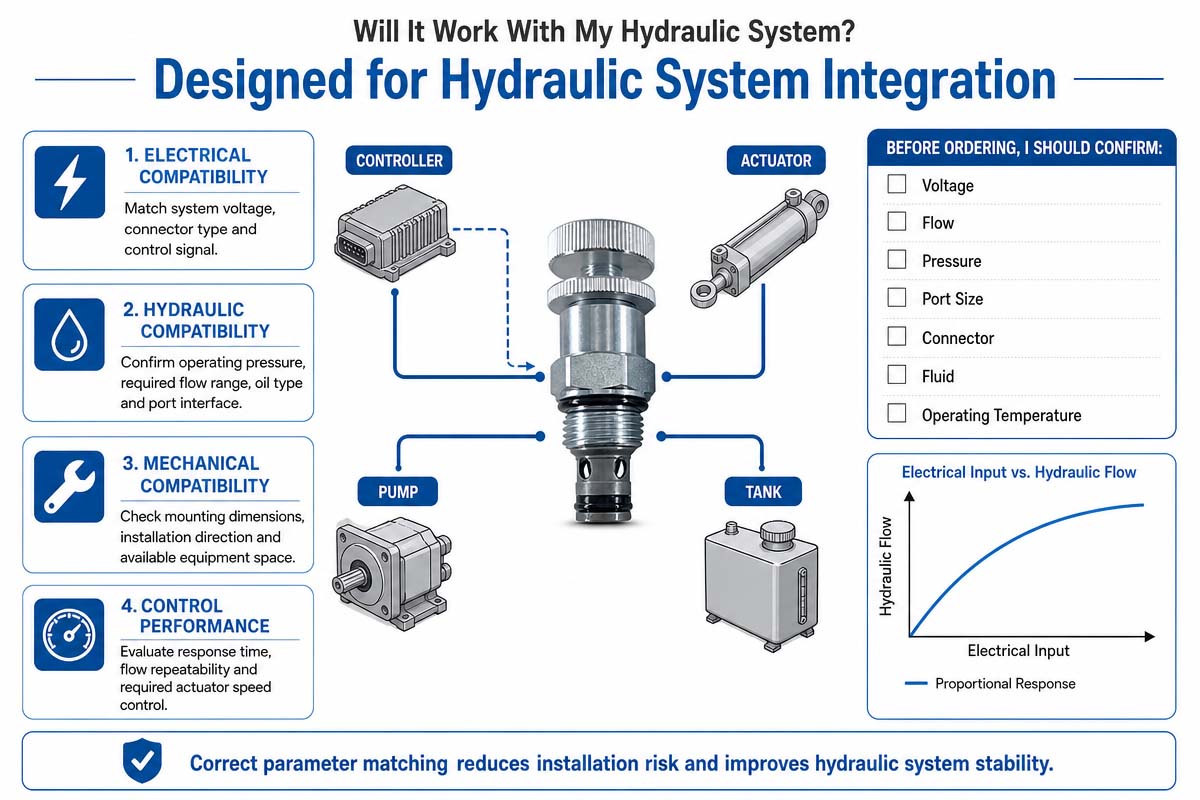
Matching of the port size of a hydraulic flow control valve alone is not enough to select the proper valve. The valve should be selected for the whole hydraulic circuit and its working principle.

1. Calculation of flow rate required

Calculate the minimum, normal, and maximum flow rates. The flow range of the valve should cover the requirements of the application with minimal pressure drop.

2. Inspection of the operating pressure

Calculate the pressure in the system, normal and maximum. Then select a valve with the proper working pressure rating and sufficient safety factor.

3. Determine the speed requirements for the actuators

The speed of actuators, especially of cylinders, depends greatly on hydraulic flow and effective piston area. Select the valve and then calculate the required extension and retraction speed.

4. Selection of the control method

Choices:

  • Fixed flow control
  • Manual adjustable flow rate

Pressure-compensated flow control

  • Proportional flow control
  • Control of electric flow

The proportional or electronically controlled valve can be more suitable for automated equipment.

5. Consider load variation

A simple restrictive valve may provide inconsistent speed if the actuator undergoes significant changes in the load pressure. A pressure-compensated flow control valve can provide stable flow under varied load conditions.

6. Verify reverse-flow requirements

Some applications require free reverse flow. The flow control valve with an integral non-return valve may be appropriate for such situations.

7. Check the hydraulic fluid

Verify the compatibility with hydraulic oil, viscosity range, temperature, and contamination level.

8. Selection of the proper connection

Check the port size, thread standard, mount configuration, installation orientation, and available space.

9. Consider accuracy of response and control

Accuracy, repeatability, response time, hysteresis, and controllability are critical for machines with precise motion requirements.

10. Assess the environmental conditions

For mobile equipment, you must consider factors such as vibration, shock, dust, moisture, temperature extremes, and corrosion.

Thus, the proper valve is the one that satisfies the requirements of flow, pressure, actuator velocity, control precision, environment, and the system architecture simultaneously.

How to Avoid Common Mistakes in Hydraulic Flow Control Valve Design

Some design mistakes can make the hydraulic system less efficient and unreliable.

1. The valve size shouldn’t be selected only based upon the port size.

But a large port doesn’t mean that the valve can handle the required flow properly. You have to always look at the manufacturer’s rated flow and pressure drop curves.

2. Reduce pressure loss

A too-tight valve wastes energy and creates heat. Select the proper flow range and don’t create unnecessary restrictions.

3. Don’t forget about load variation

The simple throttle valve may not provide the consistent actuator speed in case of great load variations. You have to consider the necessity of pressure compensation.

4. Watch the cavitation risk

Overrestriction, especially of the return or inlet side of an actuator, may result in significant pressure drop and cavitation.

5. Be careful about the contamination

Contamination in the hydraulic system can cause spool sticking, flow instability, leakage, and early valve failures. Filtration has to match system requirements.

6. Don’t forget about heat generation

The pressure losses transform hydraulic energy into heat. The whole circuit has to be evaluated from the perspective of thermal balance.

7. Define practical tolerances

The manufacturing tolerances are so tight that they just increase the cost and don’t provide any improvements in system performance.

8. Consider dynamic behavior

The valve response in rapid load change is important for mobile machinery. Static flow specifications may not describe the real-world behavior completely.

9. Ensure compatibility with control architecture

The hydraulic valve has to be compatible with the intended control strategy in case the machine uses electronic control, sensors, and CAN-based communication.

10. Test in real operating conditions

The prototype testing has to include the maximum load, minimum temperature, maximum temperature, pressure fluctuations, vibration, and contamination.
Get A Free Quote Now

Contact Form

Related Products

Related News

Scroll to Top

Get A Free Quote Now !

Contact Form
If you have any questions, please do not hesitate to contact us.
Weilong Solenoid Company Culture