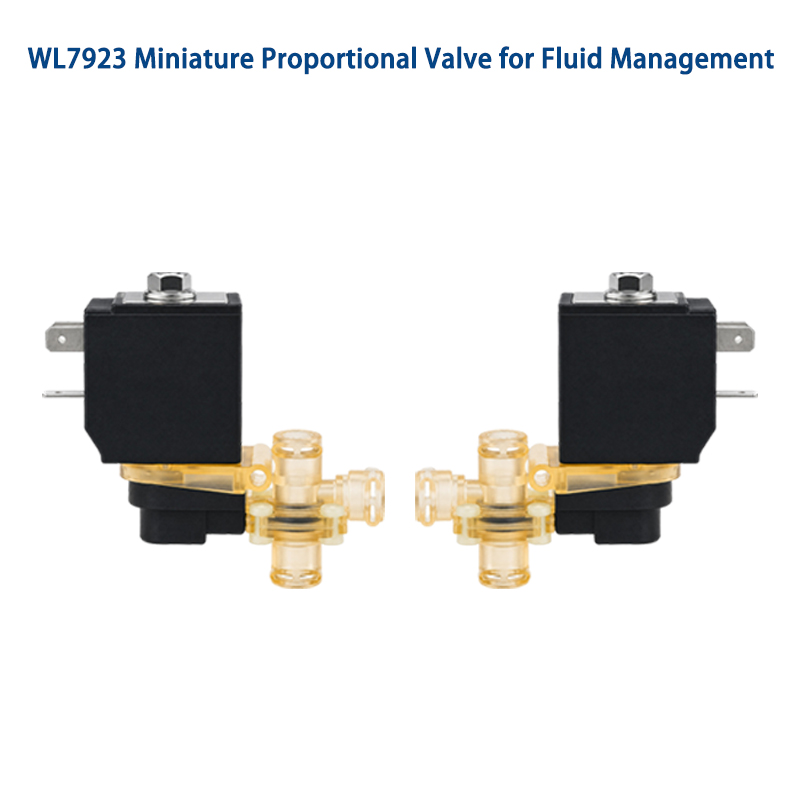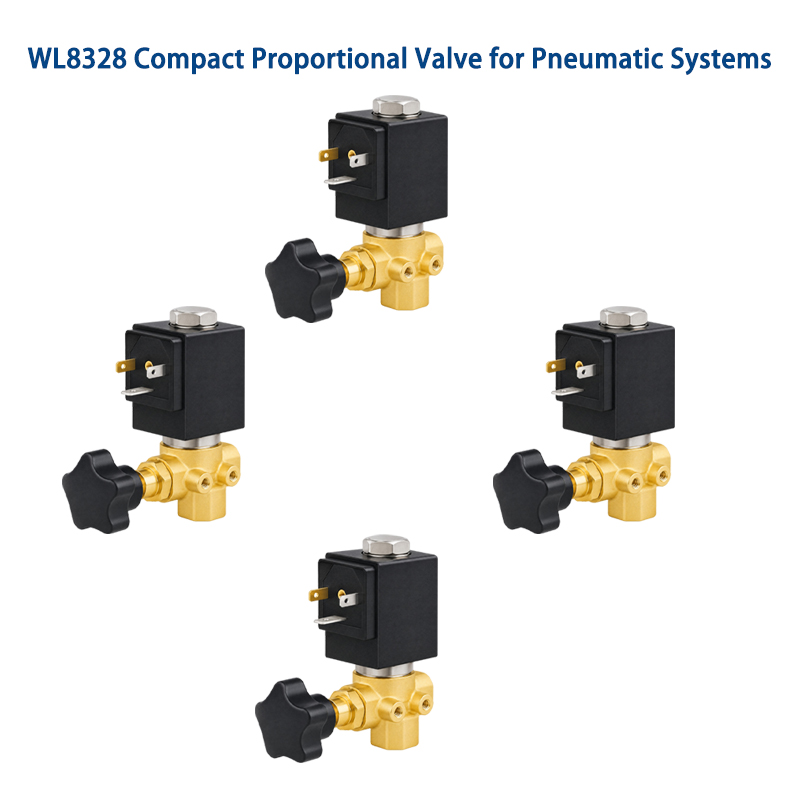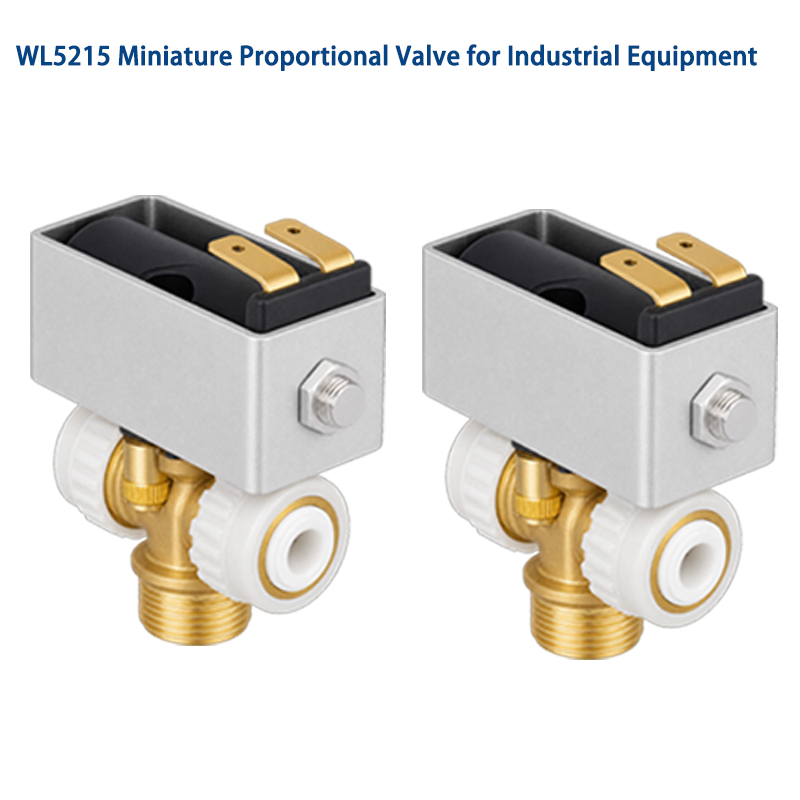
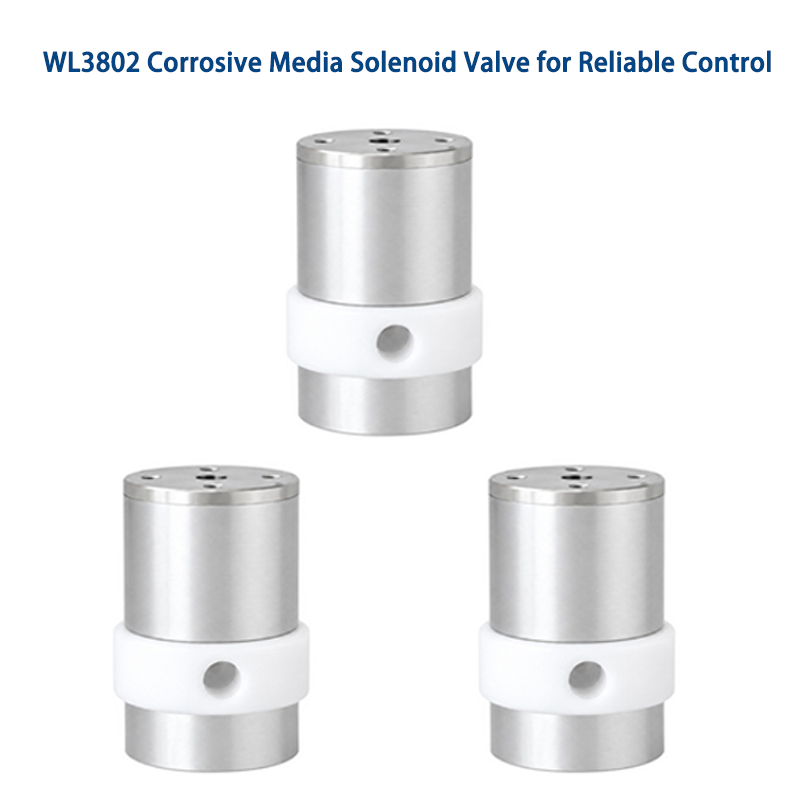
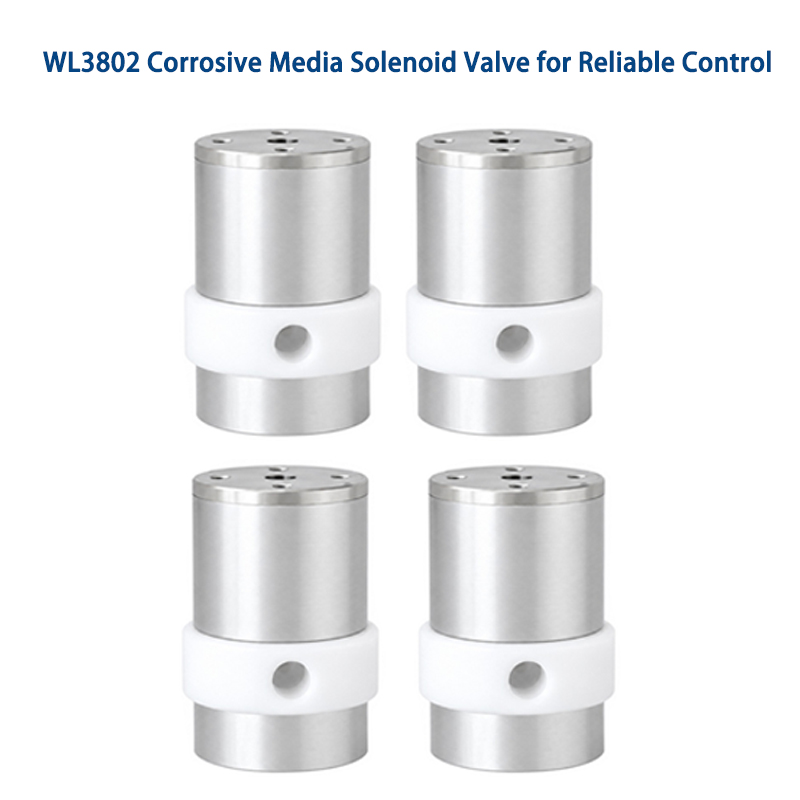
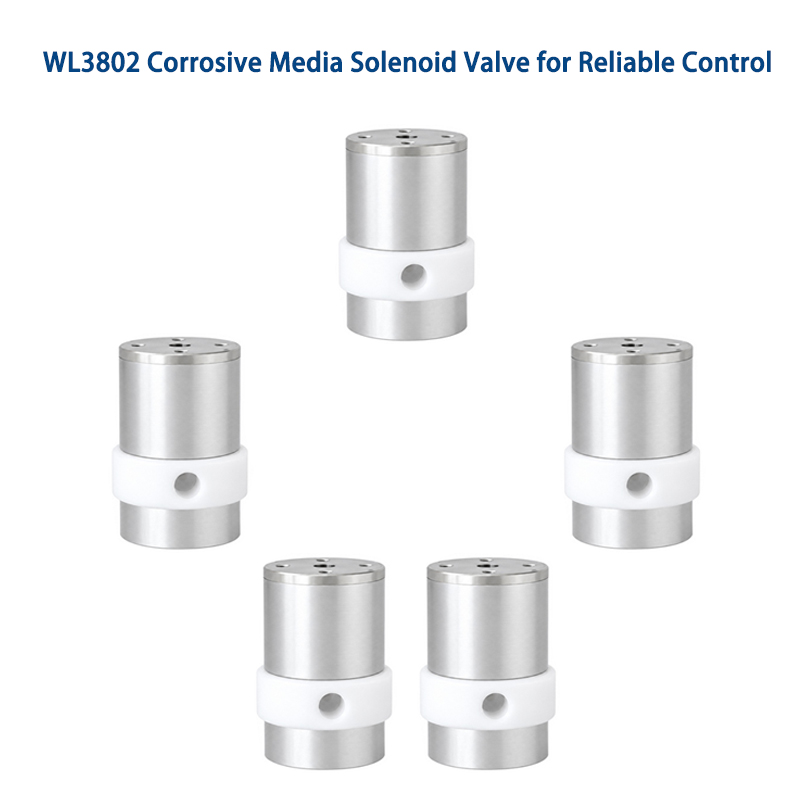
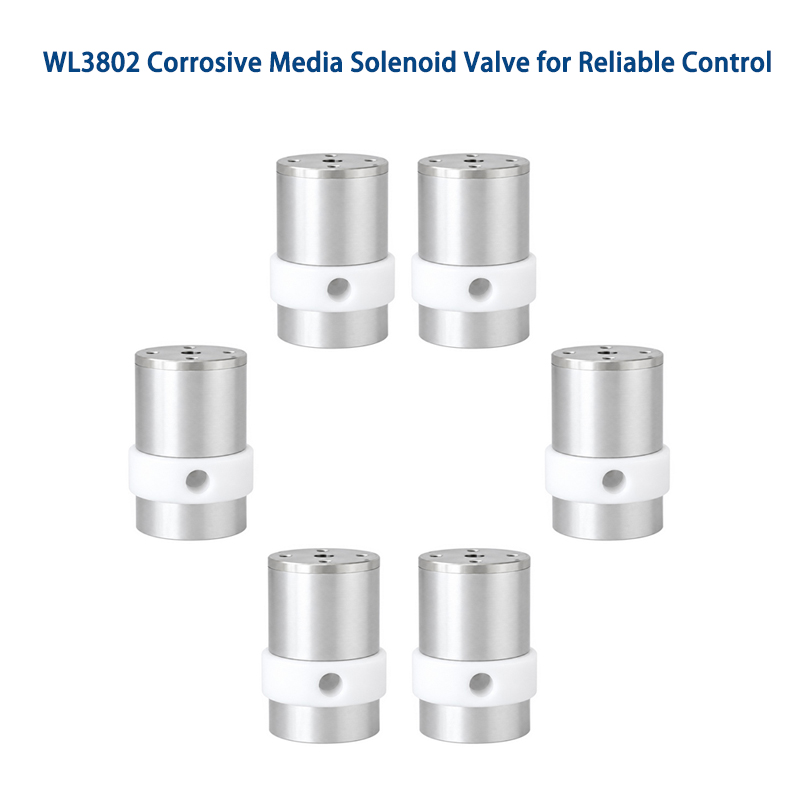
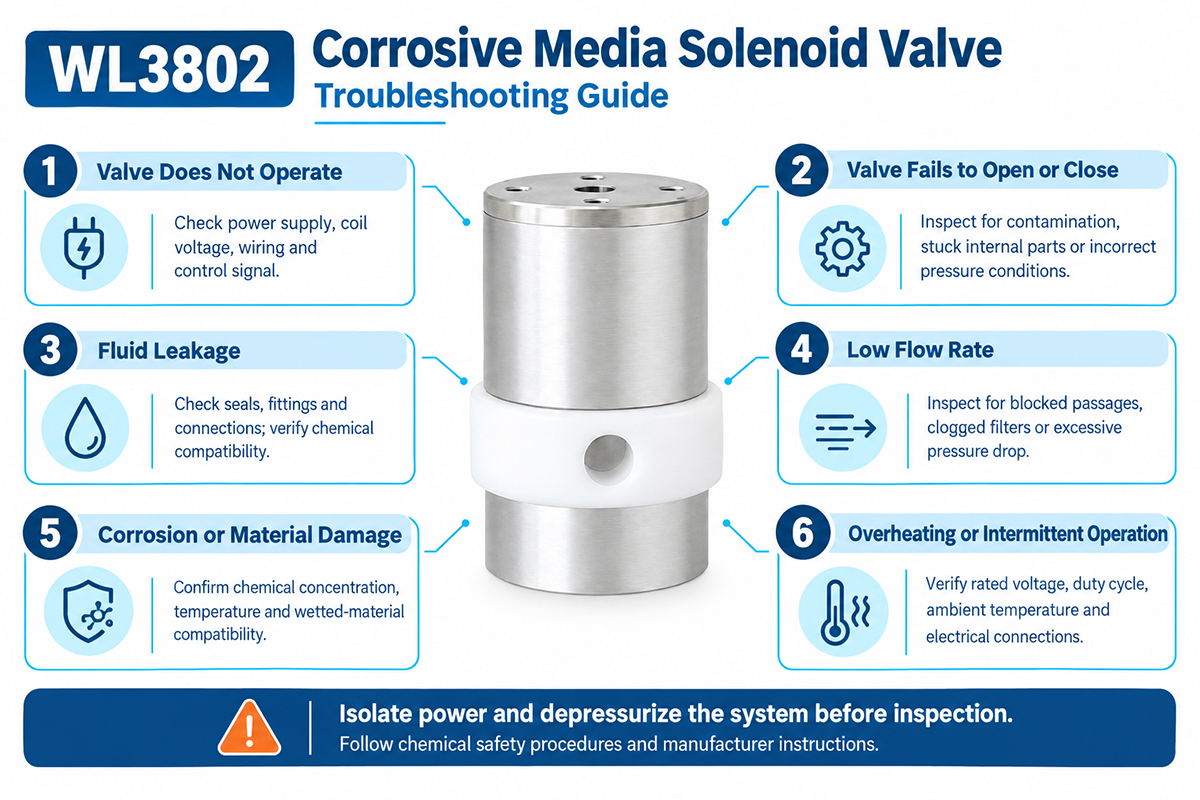
How to Select a Corrosive Media Solenoid Valve
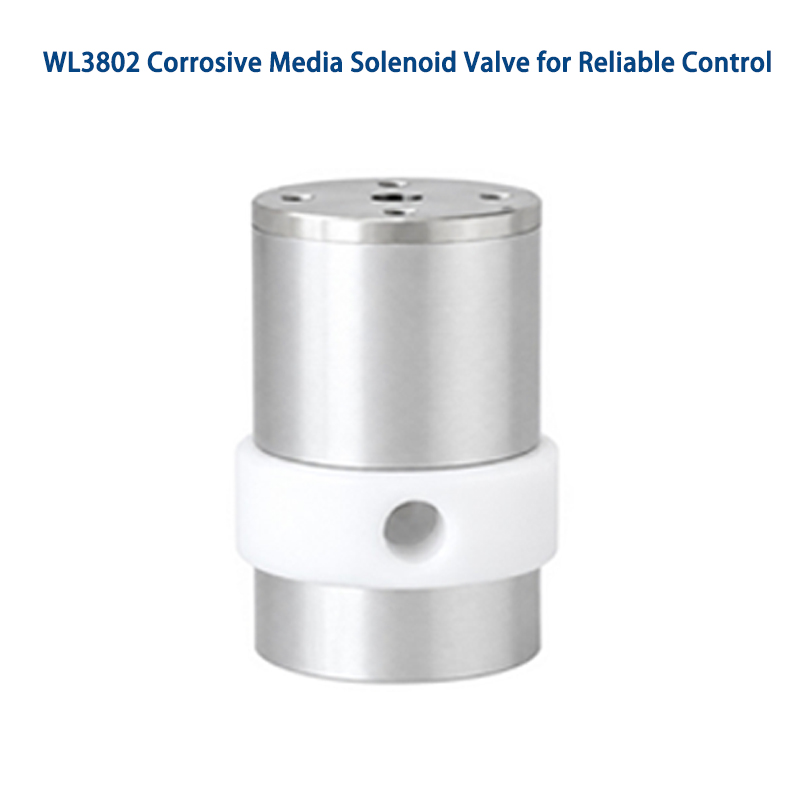
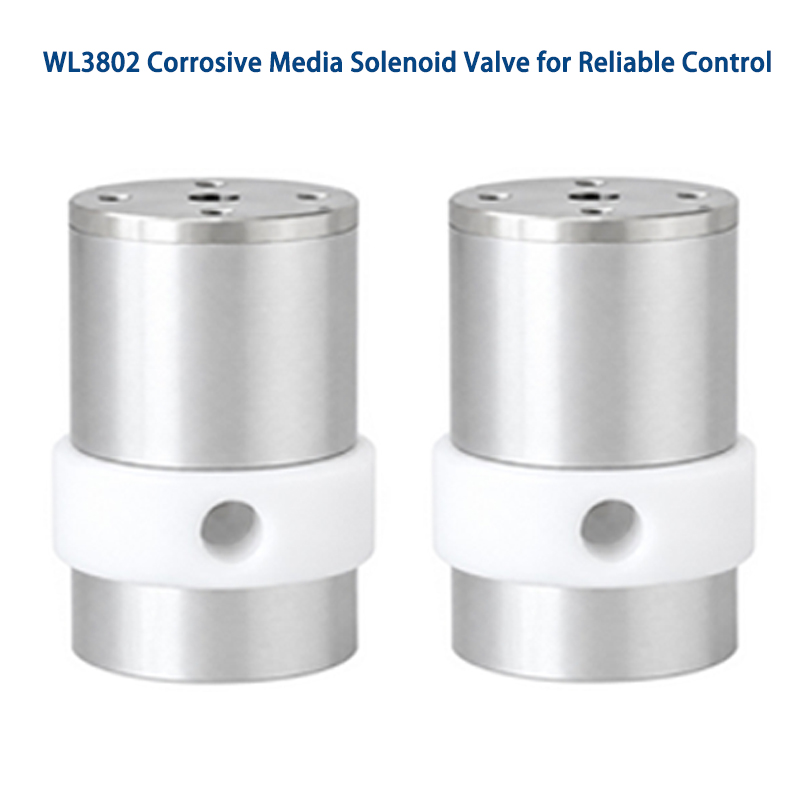
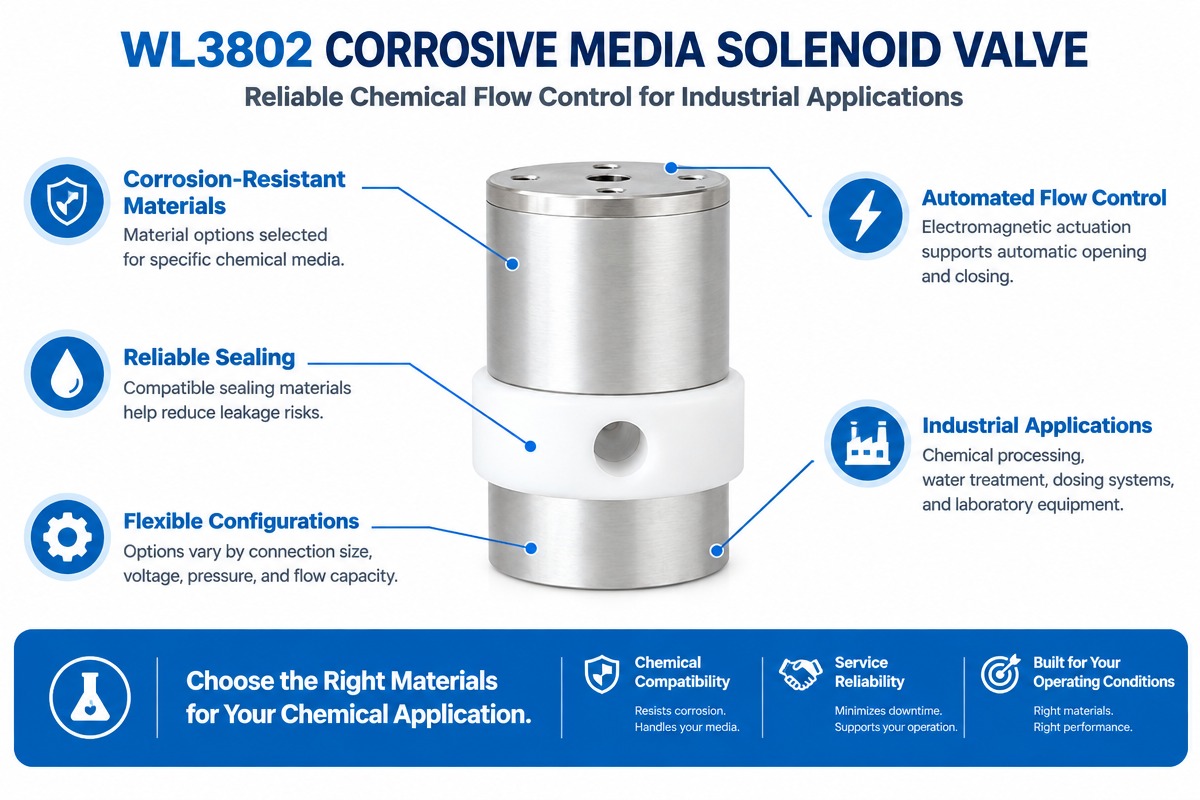
The factors to consider when selecting a Corrosive Media Solenoid Valve are chemical compatibility, operating conditions, valve construction and control requirements. Choosing the right products increases reliability and reduces maintenance and the chances of leakage or unexpected equipment failure.
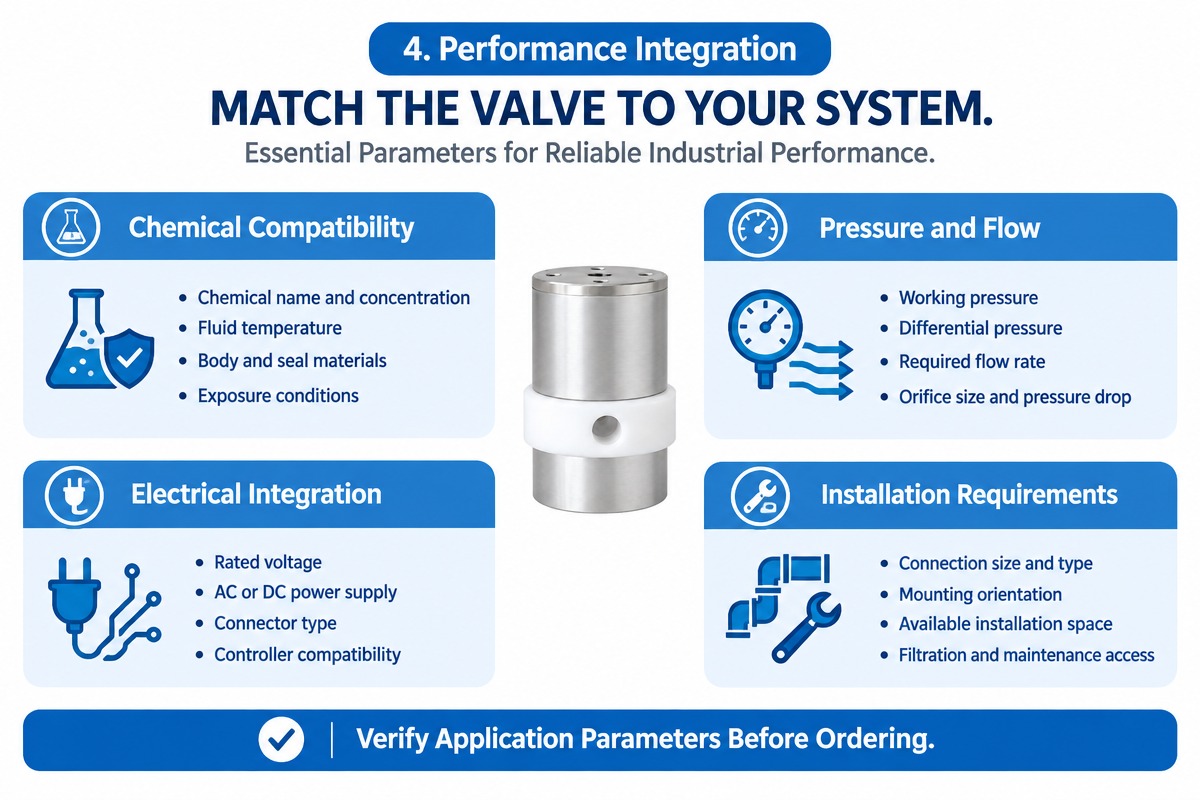
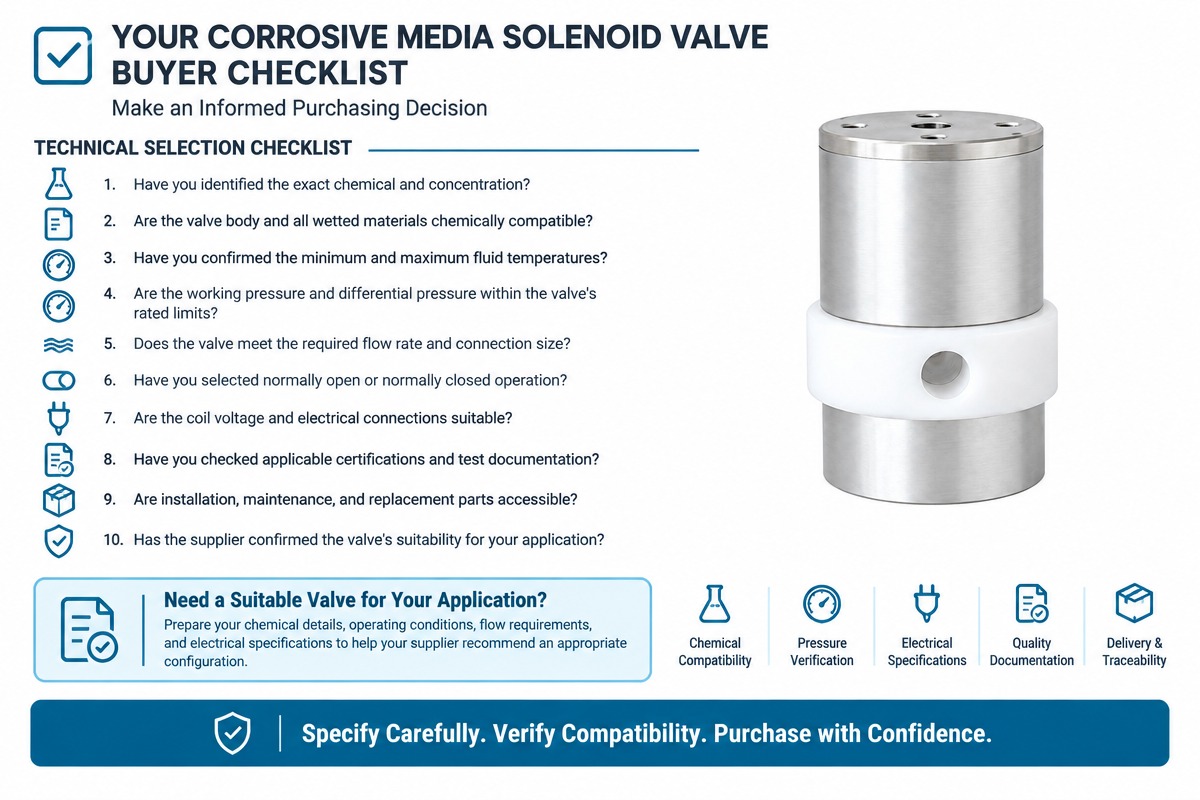
1.Determine the working fluid. Determine the precise chemical name, concentration, purity, and possible contaminants. The same chemical, at different concentrations, may affect materials differently. Determine if the medium is acid, alkaline or oxidizing, or mixed.
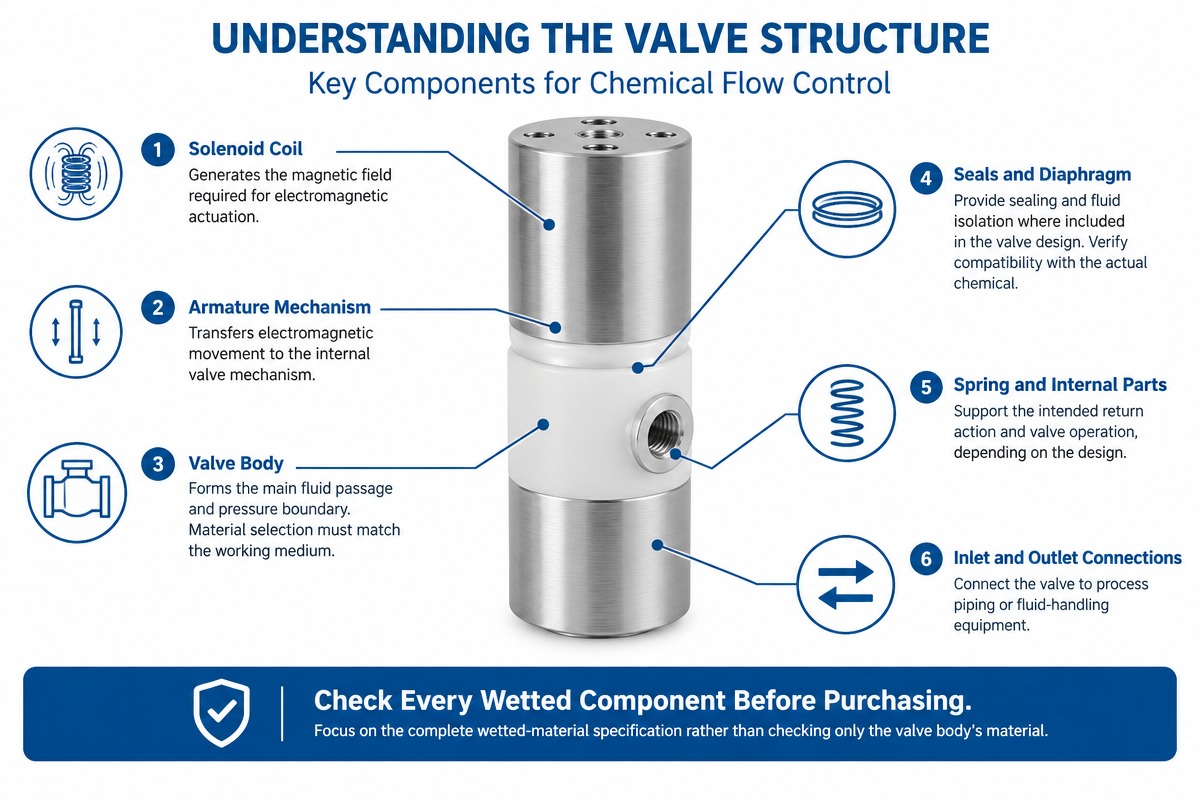
2.Check compatibility of wetted material. Check valve body, seals, diaphragm, armature enclosure, spring and other parts in contact with the medium. Different materials such as PTFE, PVDF, PVC, stainless steel etc. have different limits of chemical resistance. Do not assume that corrosion resistance of the body means compatibility of all internal components. Check manufacturer’s recommendations and reliable data on chemical compatibility.
3.Check temperature and pressure. Check minimum and maximum fluid temperatures, ambient temperature, working pressure and pressure fluctuations. Select the valve so that it will be within its rated limits under actual operating conditions.
4.Determine the necessary flow capacity. Calculate the required flow rate, fluid viscosity, connection size and allowed pressure drop. Select a suitable orifice and flow coefficient. Poorly sized or oversized systems can impact control performance and system efficiency.
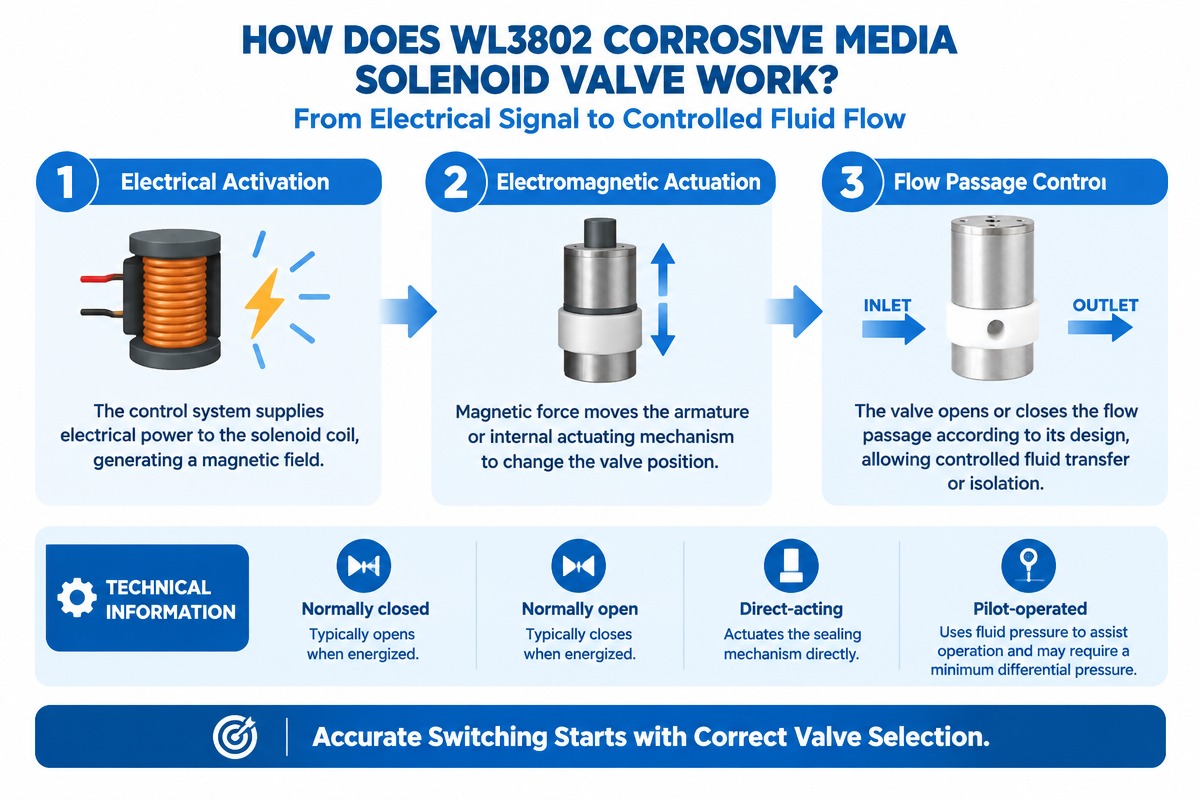
5.Choose the working principle. Direct-acting valves can be used in low-flow applications and systems with little or no differential pressure, depending on model specification. Pilot operated valves can handle higher flow rates but may require a minimum pressure differential.
6.Select electrical properties. Match the match coil voltage, AC/DC supply, power consumption, connector type and electrical protection rating to the control system and the installation environment.
7.Check the installation requirements. Think about orientation for mounting, piping arrangement, back pressure, filtration, access for maintenance and whether normally open or normally closed operation is appropriate.
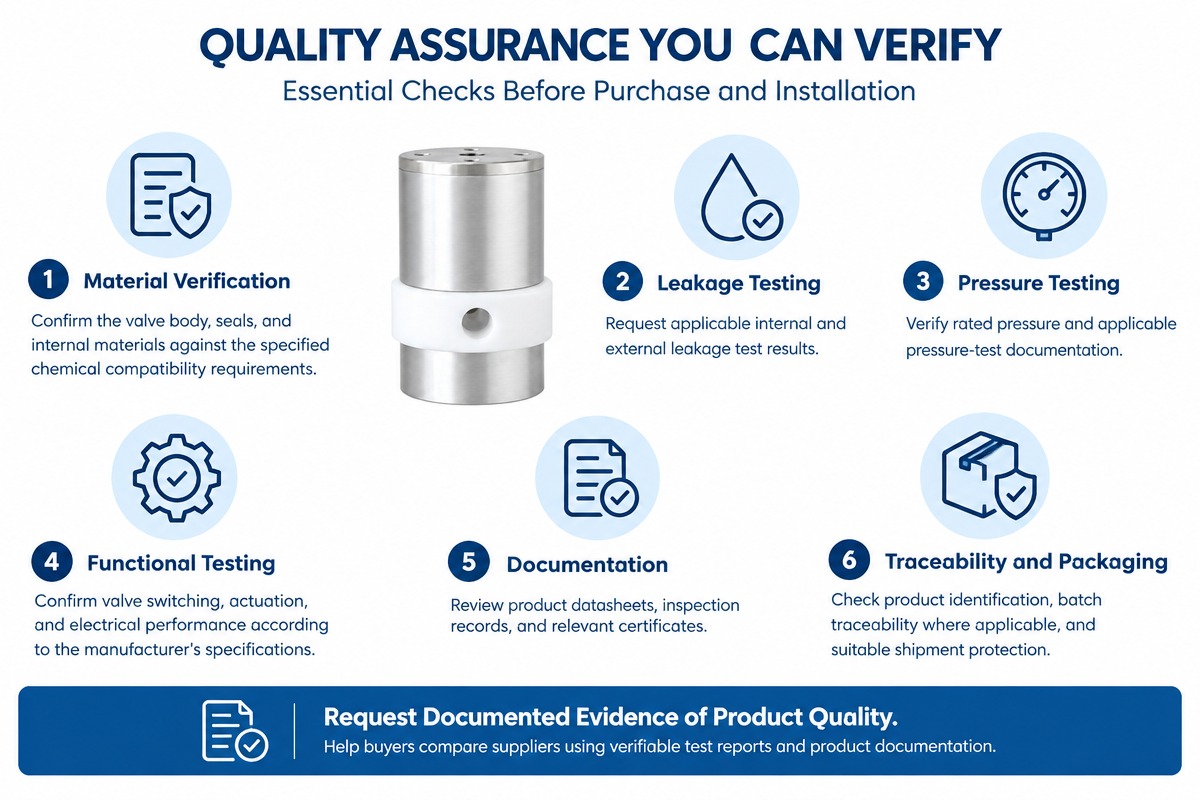
8.Assess quality and lifecycle costs. Check pressure ratings, leakage specs, cycle life, relevant certifications, availability of spare parts and manufacturer support.
Finally, inform the supplier the chemical, concentration, temperature, pressure, flow rate and electrical requirements. Confirm the complete wetted-material spec before ordering.
Tips to Avoid Common Mistakes in Design
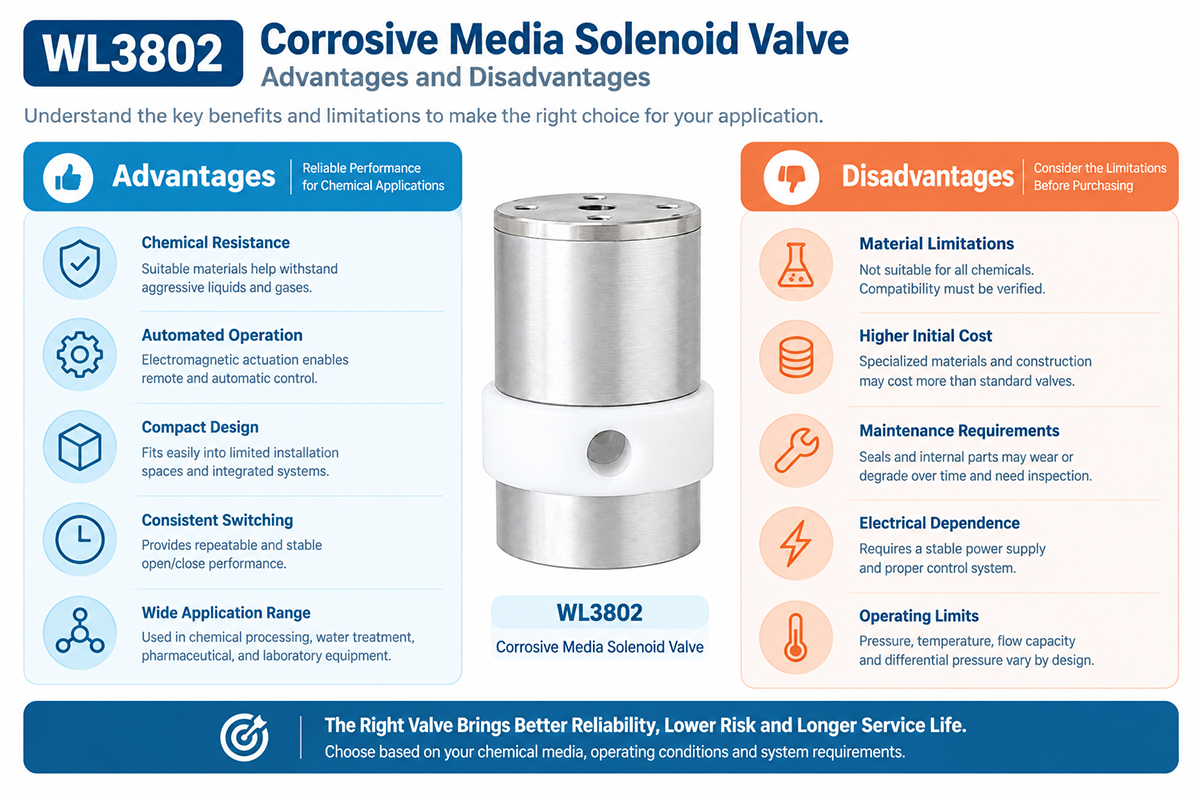
You can’t just select a valve that has chemical-resistant on it to design a reliable Corrosive Media Solenoid Valve system. There are several common mistakes that can compromise safety, performance and service life.
-Chemical concentration disregard: Material resistance is a function of concentration, temperature and exposure time. Assess the actual process fluid rather than its generic chemical name.
– Checking only the valve body: Seals, diaphragms, springs and internal parts can come into contact with the medium and have to be checked separately for compatibility.
– Wrong seals: A seal made of the wrong elastomer can swell, harden, crack or lose its sealing force. Real world seal compatibility check.
– Ignored pressure requirements: Check max working pressure, pressure surges, back pressure and min differential pressure for pilot operated designs.
– Valve oversizing: An orifice larger than necessary will increase costs and make the system harder to control precisely.
– Don’t ignore temperature limits: it’s not only the temperature of the fluid, but also the surrounding environment including heat produced close to the coil.
– Selecting a wrong default position: Decide whether the valve should be normally open or normally closed in the event of a power failure according to the process risk assessment.
– Electrical protection is often overlooked. Match the coil and enclosure for moisture, dust, ambient conditions and any hazardous-area requirements.
– Contamination neglect: Particles can clog small passages or deteriorate sealing surfaces. Use suitable filtration when recommended by the manufacturer.
– Skipping validation: Test the assembled system under representative operating conditions and follow applicable safety procedures before putting it into service.
Good design starts with a complete specification sheet and documented compatibility of materials. Involving the valve manufacturer early can help to avoid costly redesigns, minimize downtime and improve the reliability of chemical handling equipment.