The gearbox oil control solenoid Advantages
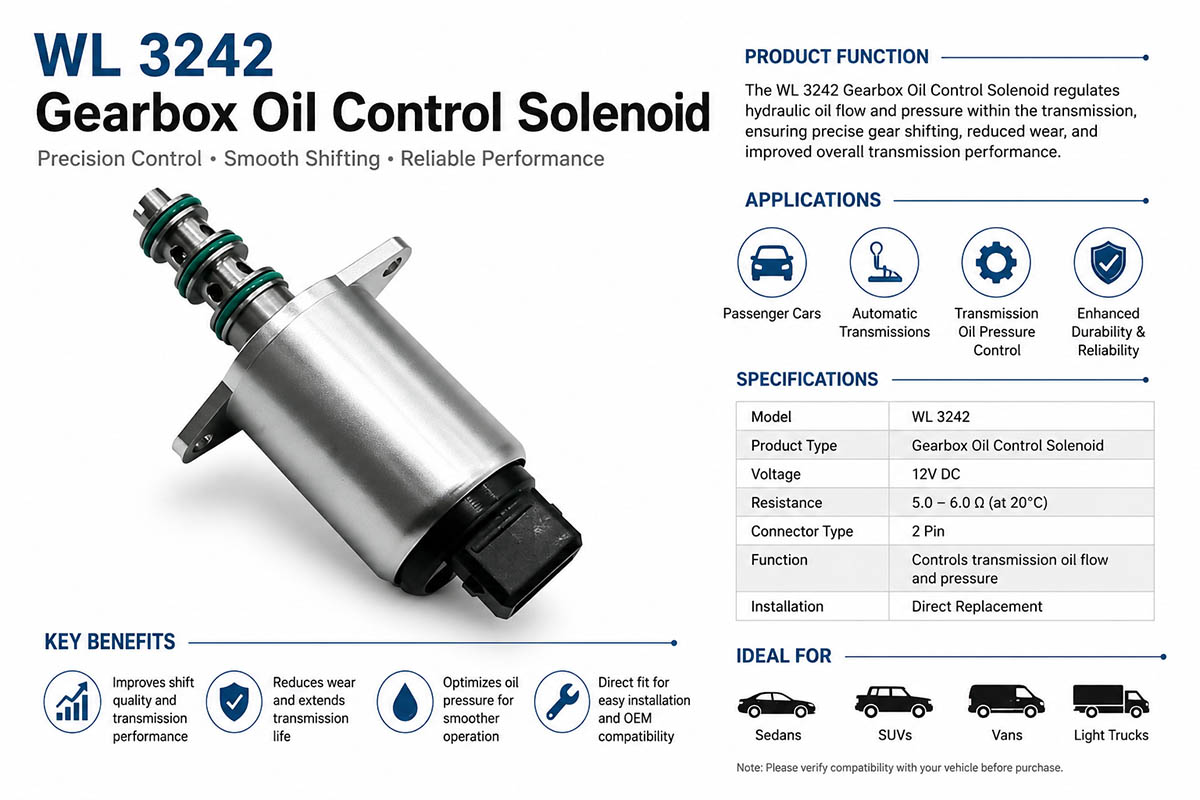
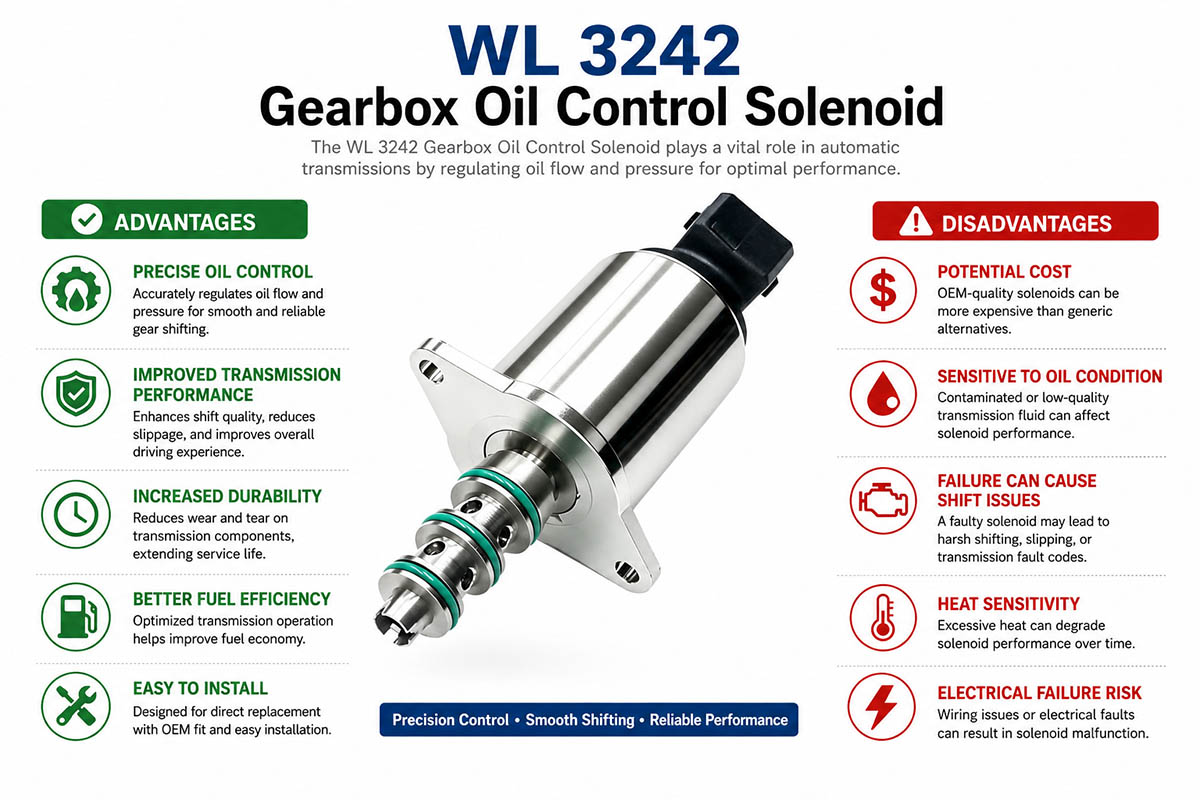
The gearbox oil control solenoid allows for precise control of the pressure and flow of the transmission hydraulic fluid, thus enabling smooth gear shifting. They increase driving comfort and minimize the shock from the transmission fluid slipping. The proper regulation of the hydraulic fluid increases fuel economy and reduces transmission wear. Modern Gearbox Oil Control Solenoids are small and fast and can be easily installed as OEM replacements. Premium quality solenoids are produced to last longer and operate steadily under high-temperature conditions.
Besides, solenoids that control gearbox oil protect the transmission. The solenoid maintains the right hydraulic pressure, ensuring no transmission overheating, clutch malfunction, or other issues.
The gearbox oil control solenoid Disadvantage
Gearbox oil control solenoids are efficient but may stop functioning due to dirtiness, overheating, or electrical or internal wear. As a result, delayed shifting, hard gear changes, slipping gears, and warning lights on the dashboard appear. Some OEM solenoids are costly compared to aftermarket options.
Troubleshooting, diagnosing, installing, or replacing the transmission solenoid requires specific knowledge and tools; otherwise, unstable solenoid resistance, solenoid leakage, or short service time may occur.
Gearbox Oil Control Solenoid Troubleshooting
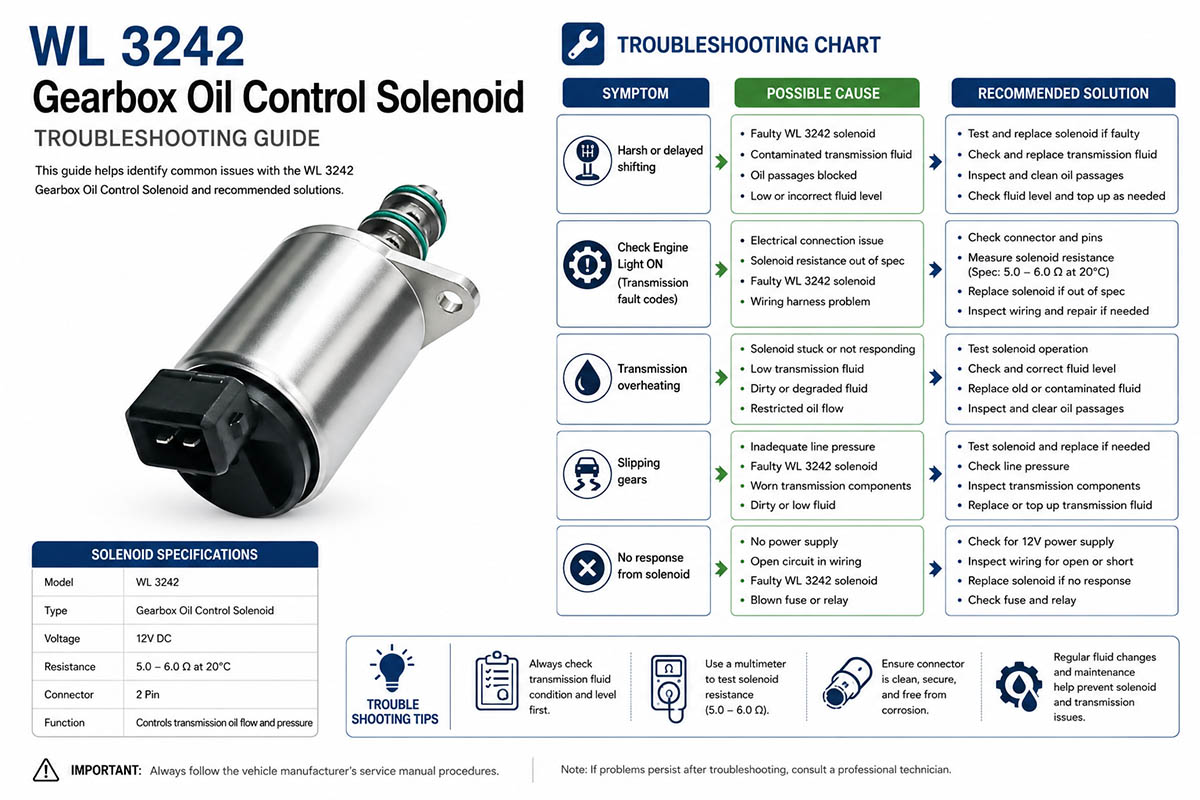
Gearbox oil control solenoid failure results in a range of transmission issues, including gear shift delay, rough shifting, slipping gears, overheating, and warning lights on the dashboard. Troubleshooting helps to define the reason behind the solenoid failure and eliminate the problem before damaging the transmission.
One of the most common reasons for transmission problems is the gear shifting delay or rough shifting of the gears. It occurs because of improper solenoid functioning in terms of pressure of the transmission fluid, its contamination, sticking, or electrical failure. Contamination or degradation of the transmission fluid clogs hydraulic channels and causes a slow response. Replacing the transmission fluid and flushing the valve body may help solve the problem.
Slipping transmission or unsteady shifting of gears may occur because of a lack of hydraulic pressure. Such issues can be because of a faulty solenoid coil, damaged valve spool, or worn seals of the solenoid. Verify the amount of transmission oil inside the valve body. It is important to verify the electrical contacts and resistance of the solenoid. Every Gearbox Oil Control A solenoid should maintain a certain resistance value. In case a solenoid does not function or is dead, one should check wiring, fuses, connections, and coil condition before replacement.
Overheating of the transmission and the appearance of fault codes and warning lights require scanning the transmission control module using diagnostics. The reason for a fault code is usually an open circuit, short circuit, or malfunction of solenoids. Preventive maintenance of the transmission helps avoid premature transmission failure and increases its longevity.
How can I know my gearbox coil control solenoid is faulty?
A defective gearbox coil control solenoid leads to shifting delays or errors, slippage, and even a lack of gear changes. Symptoms include hard or delayed shifting, stuck transmission gears, a check engine light, and unusual noises. All this is due to improper control of transmission fluid flows. You will need to diagnose the issue using an OBD-II scan or by visiting a specialist.
If your car emits unusual noises while changing gears, this means that your gearbox probably has some problems. Various malfunctions, including damaged solenoids, are the primary reasons for gearbox malfunctions. Failure to correct the fault might result in expensive repairs later.
Fortunately, diagnosing a faulty transmission solenoid is effortless. Here’s everything you need to know about its main symptoms and solutions.
1. Late of steady shifting
A gearbox coil control solenoid changes gears depending on data received from various sensors. A transmission control module (TCM) decides when to shift and sends a signal to turn on solenoids responsible for controlling fluid pressure in the valve body.
Delayed or unstable shifting occurs when the solenoid can no longer perform its tasks properly. A common symptom of a faulty solenoid is a delay in the process of switching between Park or Reverse and Drive gears.
However, if the problem persists, you should understand that you need to visit a repair center as soon as possible since delayed or inaccurate shifts can be caused by other factors. For instance, modern vehicles often experience TCM and range sensor failures. Fortunately, diagnosing transmission problems with solenoids today is quick thanks to scanners or diagnostics software.
2. Gear Stuck in Transmission
If your car stays stuck in certain gears (especially first or second gear) or goes into limp mode, there may be a problem with your solenoid.
Limp mode is a mechanism used in modern cars for limiting performance in order to protect the engine or transmission system from more damage. Limp mode often locks engine rpm and limits vehicle operation to only two gears or one. This means you won’t be able to accelerate or drive safely until you visit the repair shop. Limp mode usually signals that you should run an OBD-II scan.
3, No Gear Changes or Skipping
When the transmission fails to change gears or skips some of them, it may be caused by a malfunctioning solenoid that interrupts communication between the transmission control module and gearbox.
The check engine light turns on.
Even though the name suggests that the check engine light shows an engine problem, it often indicates transmission faults. A failing solenoid is usually what turns on this light in modern cars.
Modern cars have sensors located inside their transmission systems. Therefore, a failing transmission solenoid usually causes the appearance of specific trouble codes in the system. To detect what is wrong with your car, you will need to run the trouble code scanner, such as OBD-II.
4. Leaks in Transmission
This is the point at which the transmission switches from the selected gear to neutral and can no longer hold it. This issue becomes obvious once you try to increase speed by accelerating or slowing the vehicle.
If you experience the described symptoms, it is safe to say that there is something wrong with your solenoid that controls transmission fluid pressure. Therefore, the transmission fails to stay in gear when required.
5. Unusual Sound
Strange noises coming from your vehicle transmission can be another signal that there is something wrong with your solenoid. Clunks, grinding, or whining from your transmission is usually associated with malfunctioning solenoids.
These unusual noises appear in the course of improper fluid pressure management and irregular shifting.
6. Hard or Rough Shifts
Your vehicle shifts hard or roughly if you feel a jerking movement while accelerating or decelerating. Solenoids are responsible for much more than just determining which gear to engage.
In addition to choosing the gear, they regulate whether it is possible for the transmission to stay stable or switch to the next gear when required.
7. Downshifting Problems
Transmission solenoid failure can also cause downshifting problems. In case your vehicle does not downshift while braking, you might want to run a diagnosis of your transmission system
8. Transmission Overheating
As a rule, a transmission overheats if there is a problem with solenoids. As we already mentioned, a failing solenoid causes improper fluid pressure, which results in friction and overheating.
If your car features a light that warns you about transmission temperature, a faulty solenoid may be the reason why it turns on now.
9. Bad Fuel Economy
Poor transmission performance due to solenoid problems is likely to affect vehicle fuel efficiency and economy.
10. What to do if you have a bad transmission solenoid?
You can see that there are many reasons to suspect malfunctioning solenoids in your transmission. Once you notice several signs of transmission problems mentioned above, it is time you visited a repair center and ran a diagnosis using an OBD-II scan.
The most popular solution for solenoid problems is replacing a faulty part. However, you will need to stress-test other drive components to avoid missing anything.
11. Conclusions:
Various problems with transmission solenoids might affect gearbox performance in many ways, causing shifting problems and overheating. Ignoring these symptoms can cost you quite a lot later. On the contrary, you can solve the problem at an early stage if you notice some important signs.