Irrigation Solenoid Valve for Smart Water Control
Durable Irrigation Solenoid Water Valve Solutions
Automatic Irrigation Solenoid Valve Manufacturer
Reliable Solenoid Valve for Irrigation Systems
Electric Irrigation Solenoid Valve 12V 24V DC
Waterproof Irrigation Solenoid Valve Supplier
Irrigation Solenoid Valve for Smart Water Control
Durable Irrigation Solenoid Water Valve Solutions
Automatic Irrigation Solenoid Valve Manufacturer
Reliable Solenoid Valve for Irrigation Systems
Electric Irrigation Solenoid Valve 12V 24V DC
Waterproof Irrigation Solenoid Valve Supplier

WL2727 Irrigation Solenoid Valve Manufacturer

An irrigation solenoid valve is an important part of an automated water irrigation system that uses electricity to control water flow. It is connected to an irrigation controller or timer, and when the timer opens, the valve opens to allow water to flow. This is an efficient and automated means of controlling water flow.

Most irrigation solenoid valves require 3V ,6V and 12V to function, making them safe for use outdoors. It is made of plastic or brass, and its solenoid coil is waterproof.

An irrigation solenoid valve is used for garden irrigation, agriculture, greenhouse irrigation, and lawn irrigation. It is an efficient and reliable water control device for modern irrigation systems.

How to Select an Irrigation Solenoid Valve ?

Product Overview

An irrigation solenoid valve is an electrically operated automatic control valve for an irrigation system that ensures water flow control for irrigation systems. These valves are used for automatic control of irrigation systems, and their structure provides a waterproof solenoid coil, a strong valve body, and a strong diaphragm for water flow control. These valves are available in different sizes and voltage types, and their stable operation and long life make them suitable for outdoor usage. These valves are suitable for garden irrigation, agricultural water supply, and greenhouse and sprinkler irrigation systems.

How Reliability Irrigation Solenoid Valve work ?

Fast Response Irrigation Solenoid Valve

Irrigation Solenoid Valve Datasheet

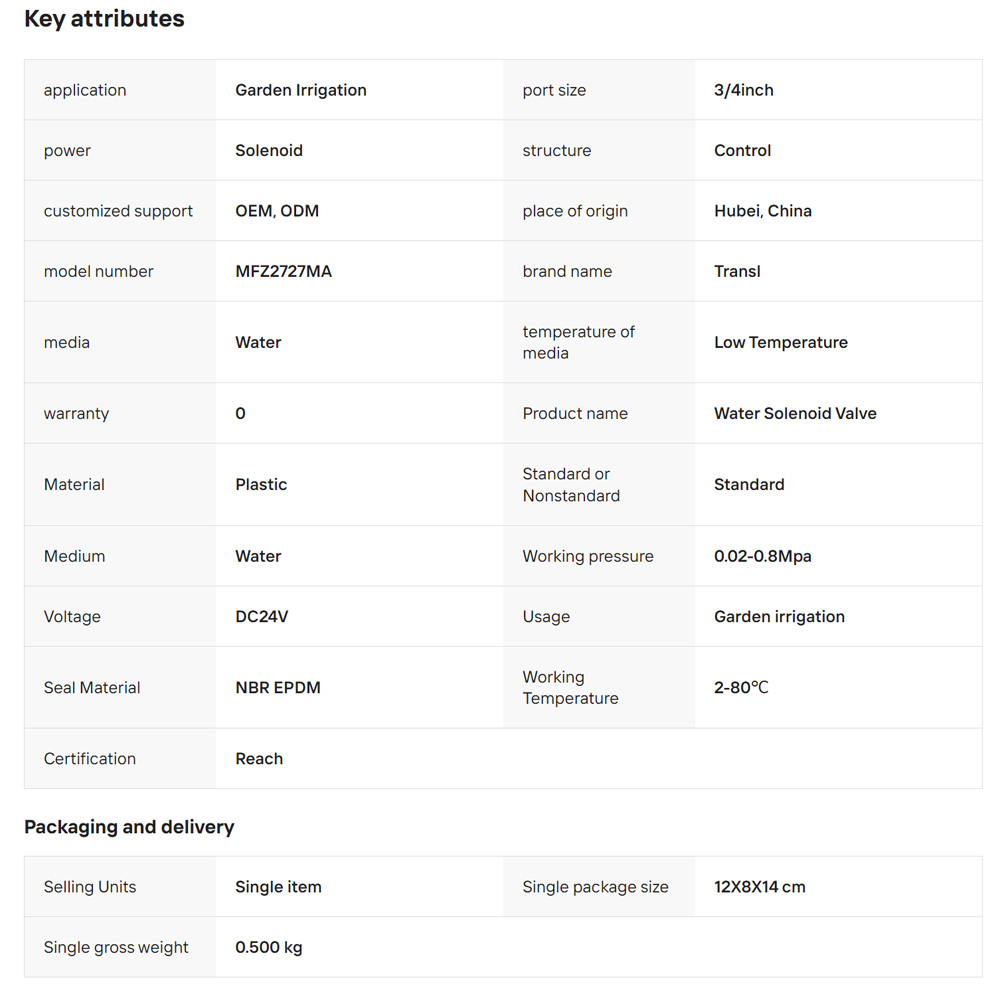
WL2727 irrigation Solenoid Valve Datasheet

WL 2727 Irrigation Solenoid Valve application
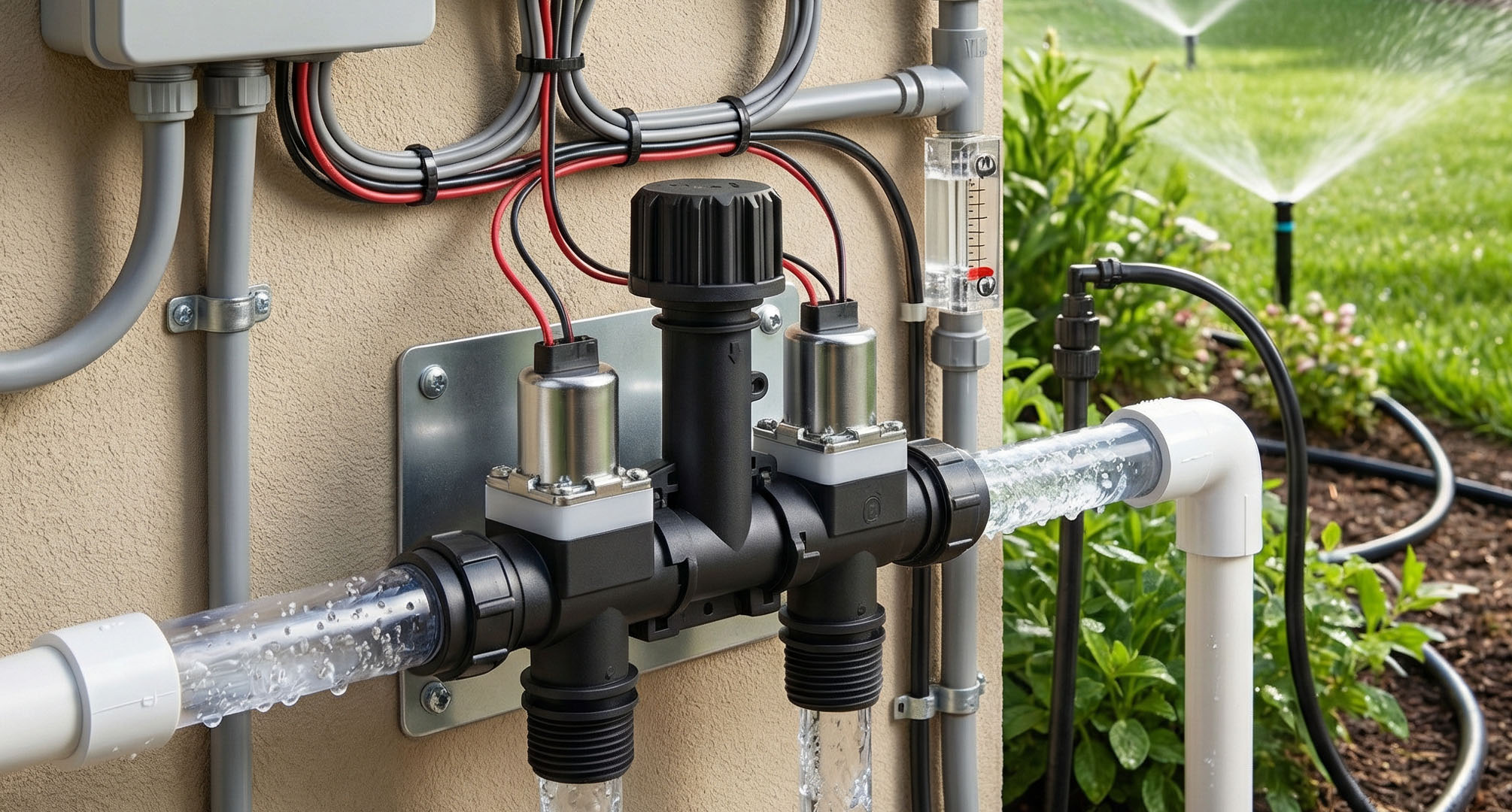
WL2727 watering valve application

Irrigation solenoid valves are used in automatic irrigation systems for various applications in residential, commercial, and agricultural areas. Garden irrigation systems make use of irrigation solenoid valves to control the water flow to the lawn sprinklers or drip irrigation systems installed in gardens.

Agricultural irrigation systems make use of irrigation solenoid valves to control the water distribution to the fields or areas of crops.

Greenhouse irrigation systems make use of irrigation solenoid valves to maintain the accurate moisture level of the plants.

Landscape irrigation systems are used in gardens of parks, golf courses, or other areas where large areas of land are to be irrigated with the help of irrigation solenoid valves that are designed to give reliable service even under operating conditions.

Irrigation solenoid valves also find applications in smart irrigation systems, which use automated systems to control the watering time depending on the weather. In such systems, water efficiency and costs are minimized

Irrigation Solenoid Valve Adv. & Disadvantage
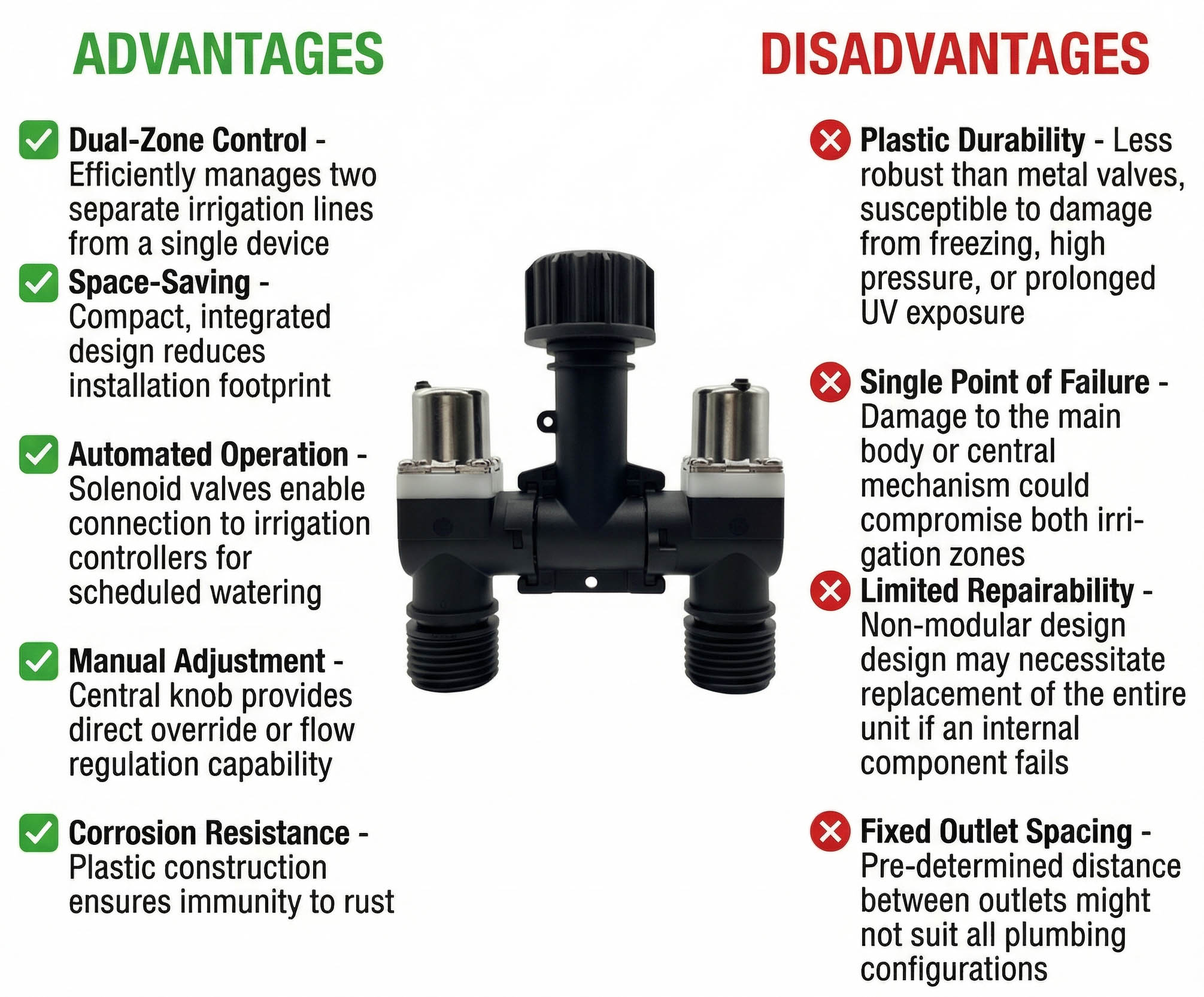
Irrigation Control Valve Advantages and Disadvantages

Advantages
Irrigation solenoid valves offer the advantage of automation, which does not require manual intervention. The system allows the user to set the watering time, thus maximizing water efficiency. The system also operates at low voltage, thus offering safety benefits. The waterproof coils also offer the advantage of reliable operation under rain and humid conditions.
The system also offers the advantage of fast switching, which allows stable operation. The system is compact and thus allows for easy installation. The system also offers the advantage of durability due to the use of plastic and brass materials, which offer resistance to corrosion.
The system also allows the use of timers, which offer the advantage of automation.


Disadvantages
Irrigation solenoid valves also face the disadvantage of requiring electricity, which may not be available for irrigation systems. The system also requires a minimum water pressure to operate. The system may also face the disadvantage of unstable operation if the pressure is low. The system also faces the disadvantage of damage due to impurities, which may affect the diaphragm. The system also faces the disadvantage of heat and power consumption due to the continuous flow of current to the coils.


WL2727 Irrigatino Solenoid Valve FAQ

What is an irrigation solenoid valve?

An irrigation solenoid valve is an electrically operated valve used for controlling water flow automatically in irrigation systems. When connected to an electrical source, the solenoid valve uses magnetic force to open the valve, thereby allowing water to flow through it.

2. How does an irrigation solenoid valve work?

The irrigation solenoid valve works by using electrical power to produce a magnetic force, which opens the valve, thereby allowing water to flow through it. The valve opens by lifting the plunger using the solenoid coil, which opens the diaphragm, thereby allowing water to flow through it.

3. What voltage options are available?

The irrigation solenoid valve operates on various voltages, including 6V, 12V, 24V, and 24V AC.


4. What is the normal working pressure range?

The irrigation solenoid valve operates within a range of 0.02 MPa to 0.8 MPa.


5. What materials are irrigation solenoid valves made of?

Typically, the materials used in the construction of irrigation solenoid valves are reinforced nylon or plastic for the valve case to provide better corrosion resistance and light weight. The interior of the valve case may consist of materials such as stainless steel plungers, rubber diaphragms, copper solenoid coils, and sealed connectors.


6 How long does an irrigation solenoid valve last?

Irrigation solenoid valves have a lifespan of about 1 to 5 years. This period can vary depending on the water and voltage used in the irrigation system. Proper maintenance of the valve also ensures longer life.

7 Why does an irrigation solenoid valve fail to open?

There are many possible causes of failure of the irrigation solenoid valve to open. These may include insufficient voltage, blocked filter in the inlet valve, broken diaphragm, and wrong electrical wiring. Low water pressure may also cause failure to open. Proper voltage and cleaning of the inlet valve help to resolve the problem and get the valve functioning normally.


8. Can irrigation solenoid valves be customized?

Irrigation solenoid valves can be customized according to the requirements of the application. Customization options are also available in voltage rating, thread size, cable length, pressure rating, connector type, and material type.

9 How to install an irrigation solenoid valve?

The valve should be installed according to the flow direction arrow on the valve body. Sealing of threaded connections ensures that there is no leakage. The valve can be installed either horizontally or vertically. Clean water supply and proper wiring guarantee efficient irrigation system operation.

How to Select an Irrigation Solenoid Valve ?

To select an irrigation solenoid valve, it is necessary to consider different parameters for the selection of a suitable solenoid valve for an irrigation system.
First, it is necessary to determine the voltage rating of the irrigation controller you want to operate with. Most irrigation systems utilize 12V or 24V AC or DC solenoid valves.
Second, it is important to choose the right valve size according to the diameter of the irrigation pipes and the flow rate of the water needed for irrigation systems. The most common valve sizes are 1/2″, 3/4″, and 1″.
Third, it is necessary to determine the working pressure range of the irrigation solenoid valve, which varies from 0.02 MPa to 0.8 MPa.
The material of the irrigation solenoid valve is also important for irrigation systems. For garden irrigation, plastic solenoid valves are more appropriate, but brass solenoid valves are more suitable for industrial or agricultural irrigation systems.
The waterproof performance of the irrigation solenoid valve should also be considered, especially when it is installed outdoors. The coil protection rating should be 65 or more.
The power consumption of the irrigation solenoid valve is another important factor, especially for battery-powered irrigation systems.
The quality of the irrigation solenoid valve from the manufacturer is also important, as high-quality solenoid valves can ensure better sealing performance, longer lifespan, and more stable performance.
The proper selection of the irrigation solenoid valve can improve irrigation efficiency, reduce maintenance costs, and ensure the reliability of irrigation systems.


Get A Free Quote Now

Contact Form

Related Products

Related News

Scroll to Top

Get A Free Quote Now !

Contact Form
If you have any questions, please do not hesitate to contact us.
Weilong Solenoid Company Culture