High Force Linear Tubular Solenoid
DC Linear Tubular Solenoid Solutions
Industrial Linear Tubular Actuator
Tubular Solenoid for Automation
Push Pull Linear Tubular Solenoid
Compact Tubular Solenoid Design
High Force Linear Tubular Solenoid
DC Linear Tubular Solenoid Solutions
Industrial Linear Tubular Actuator
Tubular Solenoid for Automation
Push Pull Linear Tubular Solenoid
Compact Tubular Solenoid Design

WL2551 Linear Tubular Solenoid Guide

The linear tubular solenoid is a compact electromagnetic device that has a high force output. The linear tubular solenoid is used as a linear actuator that can be used to make objects move. The linear tubular solenoid has a cylindrical housing that keeps it stable. The linear tubular solenoid has many applications because it can be used with various voltage supplies. The linear tubular solenoid has a high magnetic field strength that makes it more stable.

Linear tubular solenoids are small cylinders that are very powerful and can produce a lot of linear force. They are very responsive, quiet, and can operate many times without failing. They are available with different voltage ratings and can be customized for stroke length, force, shaft style, and mounting style. The steel housing that covers the solenoid makes it more durable and keeps dust and vibrations from entering. The tubular solenoid is more effective at removing heat than the open-frame solenoid. These solenoids are very good for precision control and automation. Their simplicity makes them very durable and easy to incorporate with other devices.

Custom Tubular Solenoid Factory

How does a linear tubular solenoid work?

If you apply a DC supply current to the solenoid coil, the copper wire will allow current to pass through it. This generates a magnetic field around the copper wire. The magnetic field attracts the iron core towards the center of the solenoid. This causes the iron core to move in a straight line.

When the current supply is stopped, a return spring will push the iron core back to its original position.

WL2551 Linear Tubular Solenoid Video

Fast Response DC Tubular Solenoid

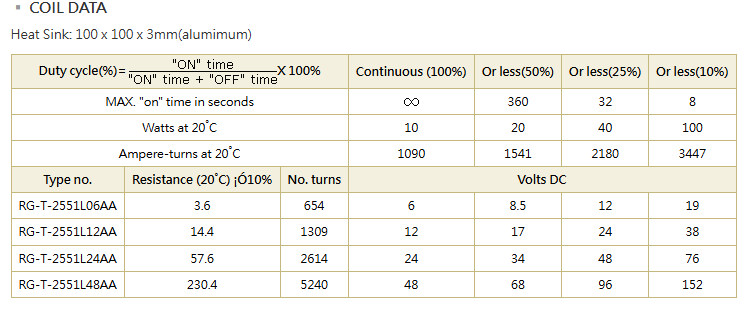
WL2551 Linear Tubular Solenoid Datasheet

Datasheet of WL2551 Tubular Solenoid

WL2551 Linear Tubular Solenoid For Automation Actuators

Size: φ25.4*51.5mm

Plunger: φ12mm

Voltage: DC24V

Stroke: 0-12mm

Force: 1-10N

Power: 40W

Current: 1.67A

Resistance: 14.4Ω

Life: ≥200,000 times

Working Cycle: 0.1s On, 1s Off


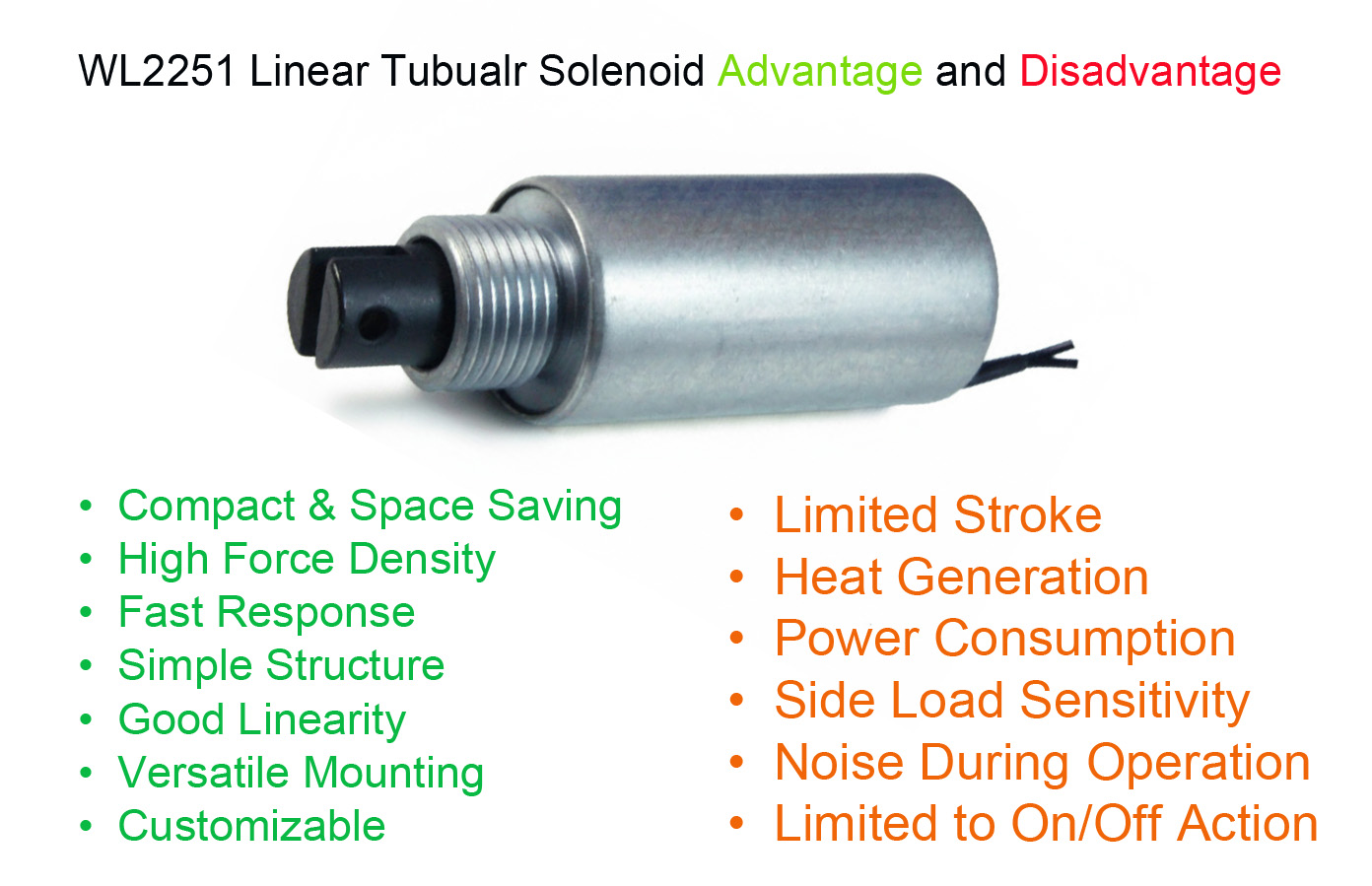
WL2551 Linear Tubular Solenoid Adv. and Disadvantage

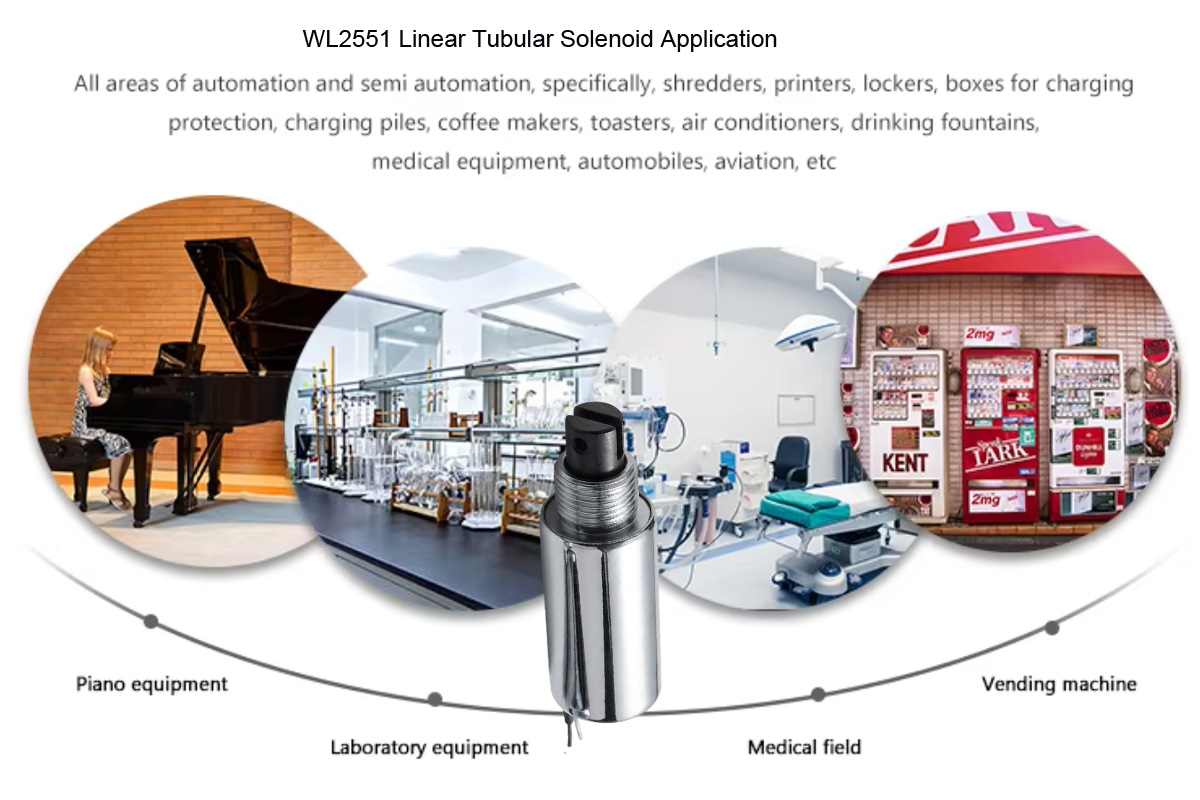
WL2551 linear Tubular Solenoid Application

Linear tubular solenoids are widely used in business and industry where precision linear motion is necessary. Linear tubular solenoids are used to regulate locking mechanisms, sorting devices, and mechanical latches. These solenoids enable safe release mechanisms in vending machines and ticket vendors. Smart home devices incorporate tubular solenoids into door locks, cabinet locks, and access control devices that determine which person can access a facility. In medical devices, tubular solenoids are used for compact actuator modules, diagnosis devices, and fluid control valves where precision and reliability are critical. In automobile devices, tubular solenoids are used for electronic switch devices, fuel control devices, and gearbox locks. Compact solenoids are used for household devices such as coffee makers, washing machines, and printers.

Linear tubular solenoids are ideal for OEM applications that require high cycle life and consistent performance since they react fast and are adjustable. Their power and efficiency make linear tubular solenoids significant devices in making smart devices and automating things.

Advantages and Disadvantages of Linear Tubular Solenoids

WL2551 Linear Tubular Solenoid Advtange and Disadvntage

 Pros and Cons of Linear Tubular Solenoid
Small and space-saving
The cylindrical shape fits readily into tight locations, making it perfect for automation, valves, locks, and small machines.
High Density of Force
It has a significant push/pull force for its size, which makes it good for short-stroke actuation.
Quick Response
Quickly transitioning between on and off states, making it good for high-speed uses.
Easy to Understand Structure
Not many moving parts, dependable, and simple to set up and keep up with.
Good Linearity
The tube’s uniform magnetic field gives the stroke a fairly steady force.
Mounting that works with a lot of different designs.
Can be changed
Can be set up for duty cycle, stroke, voltage, and force.
Drawbacks
Stroke Limit
Longer strokes make the effective force drop a lot, which isn’t good for moving long distances.
Making Heat
When coils are used continuously, they heat up, which might lower performance or require cooling.
Power Use
Needs constant electricity to stay in place; latching versions help but cost more.
Sensitivity to Side Load
If radial forces are used, they may wear out or get stuck.
Noisy While Working: You may hear a “click” when the plunger hits the core.
Only able to turn on and off
Not made for precise proportional control without special drivers.

FAQ Of WL2551 linear Tubular Solenoid

1. What exactly is a linear tubular solenoid and how does it work?

A linear tubular solenoid is an electromechanical device that converts electrical energy to linear mechanical motion. It consists of a copper wire wound in a cylindrical shape around a hollow cylinder referred to as a yoke, as well as a movable ferromagnetic plunger. Whenever electric current flows through the copper wire, a magnetic field develops that causes a linear motion of the plunger either in pushing or pulling action. Whenever the electric current is switched off, the magnetic field disappears, and a return spring causes the plunger to move back to its original position.

2. What are the main advantages of the tubular design compared to other solenoids?

The tubular configuration has several advantages compared to other conventional solenoids. Some of the advantages include:

Magnetic Efficiency: This type of configuration is efficient in this regard.

Durability: This type of configuration is also efficient.

Force: This type of configuration is efficient.

Smooth Motion: This type of configuration is efficient.

3. What are the typical applications for these solenoids?

Tubular linear solenoids have a wide range of uses in different industries, including:

Automation: These types of solenoids are used to control conveyor belts.

Medical: These types of solenoids are also used to control medical equipment, such as infusion pumps.

Locking and Safety Products: Electronic locks, door latches, and access control devices .

Automotive Systems: Fuel injectors and transmission control .

Office and Vending Machines: Printers, copiers, and vending machine dispensers .

4. What key specifications should I consider when choosing a linear tubular solenoid?

When selecting a solenoid, the application requirements must be carefully evaluated. The key specifications are:

Stroke Length: The distance the plunger must travel to accomplish the task .

Force Output: The force required to move the load the required stroke length. The force decreases with stroke length .

Voltage: The available voltage supply (usually 12V DC or 24V DC) .

Duty Cycle: The ratio of “on” time to “off” time. This is important in thermal management because a continuous duty cycle is different from a short duty cycle .

Operating Environment: Temperature, humidity, exposure to dust or moisture .

5. Can tubular solenoids be customized for specific needs?

Yes, flexibility is a major advantage of tubular solenoids. Manufacturers offer a wide range of customization options to meet the needs of the application .

Common customizations are:

Electrical Parameters: Custom voltages and power supplies .

Mechanical Specifications: Custom stroke lengths, force curves, and mounting styles .

Connector Types: Custom lead wires or connectors .

Shaft Types: Custom plunger shaft sizes, lengths, and end styles .

6. What are the common voltage options available?

However, custom voltages are also available. The standard operating voltages for DC tubular solenoids are 12V DC , 18V DC 24V DC ,36V DC and 48V DC.

7. How much current will this solenoid draw, and will it run continuously?

The amount of current drawn by the solenoid will depend upon its resistance value and the applied voltage. Since the formula for finding the value of the current drawn by the solenoid is I = V/R, the more the required value of the force, the more will be the value of the current drawn by the solenoid. It will run continuously only if its duty cycle is 100%. It will run continuously only if it is designed for continuous operation, as it will then be able to dissipate the heat. It will fail if it is designed for intermittent operation only, as it will then be unable to dissipate the heat .


8. Do these solenoids require any maintenance?

Tubular linear solenoids are designed for minimum maintenance, as they are enclosed types . However, for better performance, it is recommended that they be checked regularly. It is recommended that they be checked regularly for better performance and longer life. Special kits are available for use in automotive transmissions, as they are considered to be critical components. These kits are required for replacement of bushings for smooth operation of the solenoid. However, for general industrial applications, they are considered “fit and forget” types, as they will continue to run for their life without any problems.

Checklist for Choosing a Linear Tubular Solenoid Summary

Here is a checklist that you can use to make the process more efficient by talking to the manufacturer or examining the datasheet for the product you need.

Mechanics: How long is the stroke needed, and how much force is required at the end of that stroke, in terms of length in mm and force in Newtons?

Action: Is it required to pull or push, and is it required to be safe or latch?

Electronics: What is the supply voltage, in Volts? What is the required duty cycle?

What is the environmental temperature range? Are there issues with dust and water? Are there issues with corrosion?

Lifecycle: How many times will the product need to be used during its lifespan? Note that some solenoids can be cycled up to 25 or 50 million times.

By going through these factors, you can quickly narrow down the thousands of linear tubular solenoids available to the one that will work best, last the longest, and be the most efficient for you. Before you finish the design, it is always a good idea to examine the datasheet for the product, and if possible, to actually try out the solenoid in the real world.

1 What exactly is a linear tubular solenoid and how does it work?

A linear tubular solenoid is an electromechanical device that converts electrical energy to linear mechanical motion. It consists of a copper wire wound in a cylindrical shape around a hollow cylinder referred to as a yoke, as well as a movable ferromagnetic plunger. Whenever electric current flows through the copper wire, a magnetic field develops that causes a linear motion of the plunger either in pushing or pulling action. Whenever the electric current is switched off, the magnetic field disappears, and a return spring causes the plunger to move back to its original position.

2, What are the main advantages of the tubular design compared to other solenoids?

The tubular configuration has several advantages compared to other conventional solenoids. Some of the advantages include:

Magnetic Efficiency: This type of configuration is efficient in this regard.

Durability: This type of configuration is also efficient.

Force: This type of configuration is efficient.

Smooth Motion: This type of configuration is efficient.

3. What are the typical applications for these solenoids?

Tubular linear solenoids have a wide range of uses in different industries, including:

Automation: These types of solenoids are used to control conveyor belts.

Medical: These types of solenoids are also used to control medical equipment, such as infusion pumps.

Locking and Safety Products: Electronic locks, door latches, and access control devices .

Automotive Systems: Fuel injectors and transmission control .

Office and Vending Machines: Printers, copiers, and vending machine dispensers .

4. What key specifications should I consider when choosing a tubular solenoid?

When selecting a solenoid, the application requirements must be carefully evaluated. The key specifications are:

Stroke Length: The distance the plunger must travel to accomplish the task .

Force Output: The force required to move the load the required stroke length. The force decreases with stroke length .

Voltage: The available voltage supply (usually 12V DC or 24V DC) .

Duty Cycle: The ratio of “on” time to “off” time. This is important in thermal management because a continuous duty cycle is different from a short duty cycle .

Operating Environment: Temperature, humidity, exposure to dust or moisture .

5. Can tubular solenoids be customized for specific needs?

Yes, flexibility is a major advantage of tubular solenoids. Manufacturers offer a wide range of customization options to meet the needs of the application .

Common customizations are:

Electrical Parameters: Custom voltages and power supplies .

Mechanical Specifications: Custom stroke lengths, force curves, and mounting styles .

Connector Types: Custom lead wires or connectors .

Shaft Types: Custom plunger shaft sizes, lengths, and end styles .

6. What are the common voltage options available?

However, custom voltages are also available. The standard operating voltages for DC tubular solenoids are 12V DC and 24V DC .

7. How much current will this solenoid draw, and will it run continuously?

The amount of current drawn by the solenoid will depend upon its resistance value and the applied voltage. Since the formula for finding the value of the current drawn by the solenoid is I = V/R, the more the required value of the force, the more will be the value of the current drawn by the solenoid. It will run continuously only if its duty cycle is 100%. It will run continuously only if it is designed for continuous operation, as it will then be able to dissipate the heat. It will fail if it is designed for intermittent operation only, as it will then be unable to dissipate the heat .

8. Do these solenoids require any maintenance?

Tubular linear solenoids are designed for minimum maintenance, as they are enclosed types . However, for better performance, it is recommended that they be checked regularly. It is recommended that they be checked regularly for better performance and longer life. Special kits are available for use in automotive transmissions, as they are considered to be critical components. These kits are required for replacement of bushings for smooth operation of the solenoid. However, for general industrial applications, they are considered “fit and forget” types, as they will continue to run for their life without any problems.

Get A Free Quote Now

Contact Form

Related Products

Related News

Scroll to Top

Get A Free Quote Now !

Contact Form
If you have any questions, please do not hesitate to contact us.
Weilong Solenoid Company Culture
